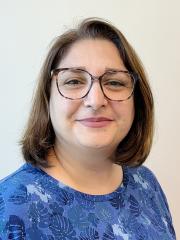
Dr. Nafiseh Khalaj is a Postdoctoral Research Fellow at The University of Queensland's School of Public Health, specializing in mixed-methods health research focused on cancer screening programs for Aboriginal and Torres Strait Islander peoples. Her work intersects Indigenous health equity, musculoskeletal biomechanics, and chronic injury management. Education: PhD in Biomechanics (2019) from The University of Queensland's School of Health and Rehabilitation Sciences, with earlier research in musculoskeletal disorders and pediatric motor skills. Research interests include: Aboriginal and Torres Strait Islander health disparities, chronic ankle instability, osteoarthritis biomechanics, and orthotic interventions for spinal deformities. She employs both quantitative and qualitative methods to address health inequities and musculoskeletal dysfunction. Publications span 12 journal articles and 3 conference papers, with recent work emphasizing Indigenous health advocacy and housing determinants of wellbeing. Active in collaborative programs like the First Nations Cancer & Wellbeing Research Program. Advising and grants: No formal advisees listed, though involved in multidisciplinary research teams. Grants not explicitly detailed in provided materials. Labs/Teams: Core member of the First Nations Cancer & Wellbeing Research Program, contributing to culturally responsive healthcare initiatives.
Professor Lyndon Ormond-Parker is a Professor in Digital Inclusion & Engagement in Indigenous Communities at RMIT University's School - Media & Communication. He holds dual roles as Principal Research Fellow (0.5EFT) at the ARC Centre of Excellence for Automated Decision-Making and Society, and an ARC Research Fellow at the Australian National University's Centre for Heritage and Museum Studies. His work focuses on digital inclusion, cultural heritage repatriation, policy development, and Indigenous technology use. Key Research Areas: Digital Divide in Remote Communities, Indigenous Cultural Heritage, Policy Advocacy Collaborations: Telstra, ARC-funded initiatives, First Nations advisory groups Research Interests: Digital Inclusion , Indigenous Communities , Cultural Heritage Preservation , and Policy Implementation . His projects address equitable access to technology in remote First Nations communities and repatriation of cultural materials. Recent publications analyze digital gap challenges in communities like Tennant Creek, Erub Island, and the West Kimberley region. His work bridges technology access with sociocultural equity, emphasizing UN Sustainable Development Goal 10 (Reduced Inequalities). Scientific Awards: ARC Research Fellowship Service Roles: Member of First Nations Digital Inclusion Advisory Group, Australian Communications & Media Authority's Consumer Forum He advises on heritage policy and lectures in graduate/undergraduate courses, blending academic rigor with 'on country' learning methodologies.
Reinhold Muller is a Professor at James Cook University's College of Medicine and Dentistry, specifically within the Department of Public Health, Tropical Medicine and Rehabilitation Sciences. His work spans multiple disciplines with a strong focus on Indigenous health, epidemiology, and emergency medicine in the Australian context, particularly in Queensland and remote communities. Dr. Muller's research interests are extensive and interdisciplinary, focusing primarily on Indigenous health issues, epidemiological methods, emergency department practices, ultrasound diagnostics, and public health interventions. His work frequently addresses health disparities in remote and Indigenous communities, with particular attention to injury prevention, alcohol policy impacts, nutritional status, and healthcare access. He has developed expertise in medical education, particularly in ultrasound training methodologies, and has contributed significantly to understanding the epidemiology of various health conditions in tropical and remote settings. Analysis of Dr. Muller's publication record reveals a strong emphasis on practical, community-based health research with immediate clinical applications. His work spans public health interventions, diagnostic methods, epidemiological studies, and medical education innovations. A notable trend is his consistent focus on addressing health disparities in Indigenous and remote communities through evidence-based approaches. His research frequently employs robust epidemiological methods and often involves multidisciplinary collaborations across medical specialties. Co-authored the textbook "Epidemiology" published by Oxford University Press Developed and validated assessment tools for Indigenous cognitive health Conducted significant research on alcohol management plans in remote communities Published extensively on ultrasound applications in various clinical settings Dr. Muller has been involved in numerous research grants focused on Indigenous health, emergency medicine, and public health interventions in remote communities. His collaborative approach is evident through his extensive co-authorship network spanning multiple institutions and disciplines. His research has directly informed health policy and clinical practice, particularly in the areas of injury prevention and healthcare delivery in remote settings. Dr. Muller has supervised numerous research projects and has been instrumental in developing research capacity in regional and remote health contexts. His work frequently involves collaboration with clinical teams across James Cook University Hospital and other regional health services, focusing on improving healthcare delivery systems and developing evidence-based interventions for vulnerable populations.
Professor Harvey Whiteford is Director of Policy and Epidemiology at the Queensland Centre for Mental Health Research (QCMHR) and holds a primary appointment as Professor of Population Mental Health at the School of Public Health, The University of Queensland. He also serves as an Affiliate Professor in the Global Health Department at the Institute of Health Metrics and Evaluation, University of Washington. His research focuses on psychiatric epidemiology, burden of disease measurement, mental health policy, and service reform. MBBS, The University of Queensland MPH, Queensland University of Technology PhD, Australian National University Fellow, Royal Australian & New Zealand College of Psychiatrists Harvey Whiteford's research spans global mental health, with a focus on service coverage for disorders like depression and anxiety, crisis support models, and disparities in mental health access for Aboriginal and Torres Strait Islander populations. He contributes to policy through national frameworks and international collaborations like the Global Burden of Disease Study. Scientific awards and honors include his role in shaping Australia's Mental Health Strategy and leadership in the World Bank's mental health initiatives. He has advised governments and organizations such as the World Health Organisation and the Commonwealth government.
Amanda Keddie is a Professor of Education at Deakin University , affiliated with the School of Education under the Faculty of Arts and Education . Her research focuses on gender , masculinities , and social justice in educational contexts. Key Partners: eSafety Commission, Victoria Police, OurWatch, Australian Research Council Geographic Scope: Australia, England, USA Research Themes include: addressing gender-based violence through education, analyzing online harms for young men, and developing frameworks for gender justice in schools. She emphasizes the importance of Nancy Fraser’s theories on economic, cultural, and political justice in educational systems. Article Trends (2024–2025) show a focus on school autonomy reforms in Australia, healthy masculinities , and the intersection of digital culture with gendered experiences. Her work critically examines neoliberal policies and their impacts on teacher professionalism and student equity . Books: Teaching Boys: Developing Classroom Practices That Work , The Affective Intensities of Masculinity , Young Men’s Online Lives Practical Tools: Working with Men and Boys for Social Justice Assessment Tool Supervision: Available for Masters by Research and PhD candidates. Grants: Funded by the Australian Research Council , eSafety Commission , and AMSANT (Aboriginal Medical Services Alliance Northern Territory).
Professor Jon Wardle serves as Foundation Director of the National Centre for Naturopathic Medicine and holds the Maurice Blackmore Chair of Naturopathic Medicine at Southern Cross University. He maintains significant international influence through visiting positions at Boston University, University of Washington, and University of Oxford, while serving on the World Health Organization and National Health and Medical Research Council committees. His leadership spans public health policy, integrative medicine systems, and traditional knowledge protection. His educational foundation includes a Bachelor of Health Science (ACNM), Postgraduate Certificate in Health Economics, Master of Health and Medical Law (University of Melbourne), Master of Public Health (University of Queensland), and PhD (University of Queensland). These qualifications underpin his interdisciplinary approach to health systems research. Wardle's research centers on integrating traditional medicine into contemporary healthcare frameworks, with emphasis on regulatory systems, cultural safety, and health equity. His work critically examines therapeutic pluralism in global contexts, particularly regarding Indigenous knowledge protection, migrant health disparities, and pandemic response equity. He develops evidence-based frameworks like the Contemporary Implementation of Traditional knowledge and Evidence (CITE) to bridge traditional practices with modern health systems. Analysis of his 15 most recent publications reveals dominant themes: traditional medicine governance (35% of works), pandemic impacts on vulnerable populations (20%), complementary medicine regulation (15%), and women's health integration (10%). His methodological approach combines qualitative analysis with systematic reviews, focusing on policy implementation gaps across Australian, African, and global contexts. A notable trend is the increasing emphasis on decolonizing health research and stakeholder-driven policy development. As Editor-in-Chief of Advances in Integrative Medicine and editorial board member for seven other journals, Wardle shapes scholarly discourse in the field. His leadership extends to convening the Public Health Association of Australia's complementary medicine special interest group and chairing World Federation of Public Health Associations initiatives. Wardle actively supervises higher degree research students through Southern Cross University's Graduate School, focusing on integrative medicine policy and traditional knowledge systems. His NHMRC Natural Therapies Working Committee role directly influences Australian health funding priorities, while WHO collaborations drive global standard-setting for traditional medicine integration. The National Centre for Naturopathic Medicine operates as his primary research hub, facilitating collaborations with 14-country networks studying naturopathic practice patterns. Current projects include Sub-Saharan Africa traditional medicine governance frameworks and Australian military complementary medicine utilization studies, positioning the Centre at the forefront of evidence-based integrative health policy development.
Dr. Dashiell Moore is a Discovery Early Career Researcher Award (DECRA) Fellow in English and Writing at the University of Sydney, affiliated with the Discipline of English and Writing within the Faculty of Arts and Social Sciences. His research focuses on literary and historical connections between island carceral sites, including plantations, reserves, and detention centres, with a particular emphasis on Australian, Pacific, and Caribbean writing. He holds a BA (Honours) and PhD (University of Sydney), and is a Fellow of the Higher Education Academy (Advance HE). Moore’s academic work spans world literature, postcolonial theory, Indigenous studies, and environmental humanities. His current DECRA project challenges Australia’s insular identity by analyzing carceral narratives in literature. He co-edited Lionel Fogarty in Poetry and Politics (Palgrave Macmillan, 2025) and authored The Literary Mirroring of Aboriginal Australia and the Caribbean (Oxford UP, 2024). His research has appeared in top journals like Textual Practice , Small Axe , and Australian Literary Studies . Awards: DECRA Fellowship, Roderick Visiting Fellowship, Vice Chancellor's Teaching Award, Educational Innovation Award. Grants: ARC Discovery Early Career Researcher Award for "Archipelagic Connections in Australian and Pacific Literature" (2024). Labs/Teams: Leading the DECRA-funded project on island narratives and co-editing initiatives on Lionel Fogarty’s poetry.
Connie Locher is an Associate Professor at the University of Western Australia (UWA), affiliated with the School of Allied Health, Pharmacy UWA Medical School, and the Institute for Paediatric Perioperative Excellence. She holds a PhD in Natural Product Chemistry from Charles Darwin University and a Staatsexamen in Pharmacy from the University of Tübingen. Her research focuses on natural product chemistry, particularly the analysis of Western Australian honeys and traditional medicinal plants, as well as paediatric formulations and complementary medicines. Education: PhD in Chemistry, Northern Territory University (2000) Staatsexamen in Pharmacy, University of Tübingen (1995) Research interests include bioactive compound isolation, honey formulations for wound care, and the role of wellness in health communities. She is a core member of UWA’s Centre for Optimisation of Medicines and actively contributes to the Cooperative Research Centre for Honey Bee Products (CRC HBP). Notable awards include Excellence in Teaching Awards (2014, 2017) and grants totaling 11 projects, such as the CHIPMUNK initiative for paediatric drug formulations and studies on honey’s antibacterial properties. Her work aligns with UN Sustainable Development Goals related to health and well-being. Lab and team involvement includes collaborations in CRC HBP Program 2 and leadership in honey testing methodologies, contributing to 80+ research outputs and datasets.
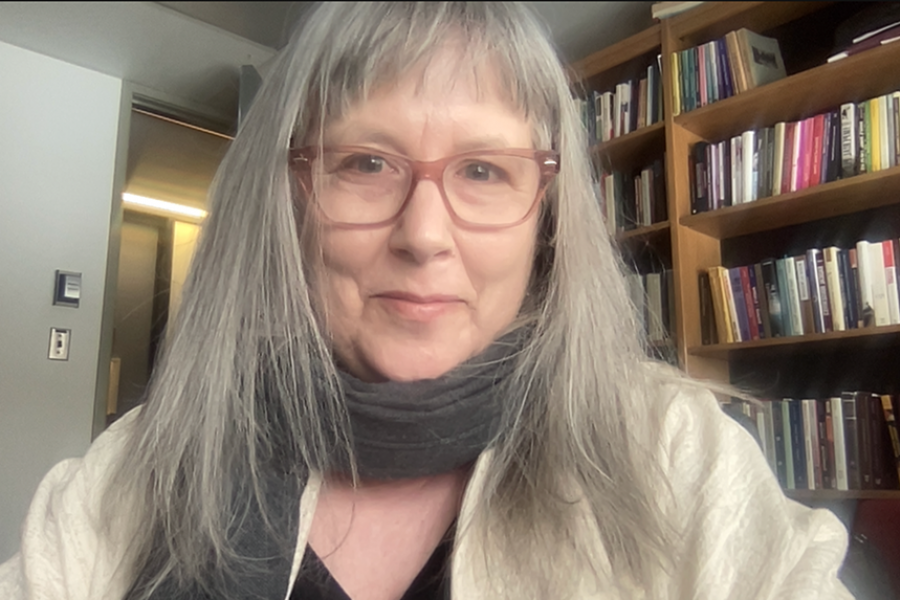
Adele Perry is a Distinguished Professor in the Department of History and Women's and Gender Studies at the University of Manitoba's Faculty of Arts, where she has worked since 2000. She also serves as Director of the Centre for Human Rights Research, focusing on colonial histories in northwestern North America through feminist and decolonizing frameworks. Her academic credentials include a PhD in History from York University (1998), an MA in History from York University (1992), and a BA in History and Women's Studies from Simon Fraser University (1991). Perry's research spans Colonialism, Canadian History, Gender Studies, and Water History, examining intersections of power, race, and gender in settler colonial contexts. Her work consistently engages Indigenous perspectives and critiques systemic indifference in historical narratives, with particular emphasis on British Columbia and Western Canada. Her publications reveal a sustained exploration of colonial structures across time, from 19th-century imperial networks to contemporary Indigenous experiences. Key themes include resource governance, gendered violence, transnational connections, and the material consequences of colonial indifference, often through collaborative Indigenous-settler scholarship. Scientific recognition includes: Fellow of the Royal Society of Canada (2017) Aboriginal History Best Book Prize (2019) Alexander Kennedy Isbister Award (2019) Canadian Historical Association Clio Award (2002) Hilda Neatby Award for Women's History (2014) Perry actively mentors graduate students at Master's, PhD, and post-doctoral levels, supervising research on colonialism and gender. Her grant-funded projects include community-engaged work like the Manitoba Day Award-winning HIST 3442 blog, demonstrating commitment to accessible scholarship that bridges academic and public spheres. As Centre for Human Rights Research Director, she leads interdisciplinary teams advancing human rights scholarship through decolonial frameworks, fostering partnerships with Indigenous communities and advocacy organizations to transform historical understanding into contemporary justice initiatives.
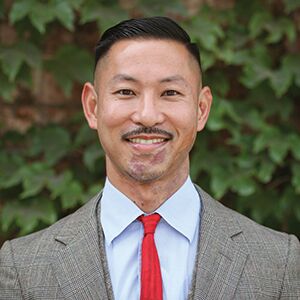
Jih-Fei Cheng is Associate Professor and Chair of the Department of Feminist, Gender, and Sexuality Studies at Scripps College, where he teaches and researches at the intersection of science, media, surveillance, and social movements. He holds a PhD in American Studies and Ethnicity with an emphasis in Visual Studies from the University of Southern California, an MA in Asian American Studies from UCLA, and a BA in Communication from UC San Diego. His interdisciplinary scholarship engages feminist, queer, and decolonial theories to analyze the political economies of virology, global health, and racial capitalism. His research centers on the historical and transnational entanglements of science, empire, and social justice. Key areas include the institutionalization of queer politics, the geopolitics of HIV/AIDS, and the racialized foundations of virology. His co-edited volume AIDS and the Distribution of Crises (Duke UP, 2020) rethinks the pandemic as a network of overlapping crises shaped by colonialism and neoliberalism. He is currently working on a book project titled Materialist Virology , which historicizes virology within Euro-American empire. Cheng’s recent publications span journals such as History and Technology , Radical History Review , and GLQ , with 2025 articles on financial contagion and reservoirs signaling his continued engagement with interdisciplinary frameworks linking finance, disease, and history. His work often collaborates with artists and activists, exemplified by writings on Candice Lin’s art and co-organized dialogues on care and intravention during the pandemic. He has been recognized with multiple awards, including the Lavender Graduation Award (2023, 2016), Professional Development Grants (2019–2020, 2016–2017), and fellowships from USC and the American Antiquarian Society. His teaching and service reflect a deep commitment to LGBTQIA inclusion, racial justice, and community-based scholarship. Lavender Graduation Award for providing safe and inclusive spaces for LGBTQIA students, Queer Resource Center, The Claremont Colleges (2023) Professional Development Networks Grant at The Claremont Colleges (2019–2020) Diversity Teaching Award Nominee, The Claremont Colleges (2018) EnviroLab Asia Research and Conference Award (2017–2018) Lavender Graduation Award (2016) Professional Development Networks Grant (2016–2017) Research Fellow, Summer Institute for the Center for Historic American Visual Culture, American Antiquarian Society (2014) Visual Studies Summer Research Award, USC (2014) New Directions Fellow, USC Center for Feminist Research (2011–2012) Tritia Toyota Fellowship (2001–2002) Cheng has advised and collaborated with numerous scholars and activists, though no formal advisees are listed. His work is deeply rooted in community engagement, having previously worked in HIV/AIDS social services and served on the Board of Directors at the HIV League. He was managing editor of American Quarterly (2010–2013) and has taught at UCLA and Hunter College. His research is supported by interdisciplinary networks and collaborative projects, including digital humanities initiatives and art-theory praxis. He is involved in multiple collaborative research and publishing projects, often working with artists like Candice Lin and scholars such as Alexandra Juhasz and Nishant Shahani. His recent special issue on 'Reservoirs' brings together scholars from anthropology, media studies, and philosophy to rethink historical and ecological crises. His lab-like collaborative environments include feminist media praxis collectives and interdisciplinary workshops on crisis, care, and decolonial knowledge.
Campbell Drake is a Senior Lecturer in Interior Architecture at the University of Technology Sydney's School of Architecture within the Faculty of Design, Architecture and Building. Registered as an architect in New South Wales and Victoria with over 15 years of professional experience, he specializes in sustainable eco-tourism development in environmentally sensitive locations. His work bridges academic research and practical application through partnerships with government and non-government agencies focused on Indigenous infrastructure and housing. Education: PhD from RMIT University (2012-2018) Masters of Research Architecture from Goldsmiths College, University of London (2009-2010) Bachelor of Architecture from RMIT University (1999-2005) Dr. Drake's research centers on the interaction between urban infrastructure and social formation within remote communities, particularly investigating socio-architectural relations in Indigenous contexts. His work explores how infrastructure can enhance wellbeing, cultural practices, and environmental sustainability. He specializes in participatory design methods that empower communities through culturally responsive approaches that integrate Indigenous knowledge systems. His research spans sustainable tourism development in Indonesia, Indigenous housing policy in Australia, cultural burning practices, and the spatial politics of tourism infrastructure, demonstrating a commitment to decolonizing design practices and creating architecture that serves community needs. His recent publications reveal a clear trajectory toward evaluating specific programs (like the Roads to Home Program and Wreck Bay housing strategy) while simultaneously developing theoretical frameworks for culturally responsive architecture. There's a consistent focus on Indigenous infrastructure, housing, and participatory design methodologies, with increasing attention to the intersection of traditional knowledge systems with contemporary design practices in remote Australian communities. His work bridges practical implementation with critical theoretical analysis of power dynamics in architectural practice. Scientific Awards: 2018 UTS Teaching and Learning Awards: Indigenous Professional Capabilities High Commendation Interior Design/Interior Architecture Educators Association Teaching Award (2018 Third place finalist) 2018 AILA Research, Policy & Communication Landscape Architecture Award International Interior Design Association 2014 Global Excellence Awards Dr. Drake supervises Masters and PhD students with a focus on Indigenous architecture and sustainable design. His funded research includes culturally responsive design principles for Aboriginal housing, evaluations of the Wreck Bay Village housing program, Roads to Home evaluations for Gulargambone & Bowraville Reserves, and solar lighting projects for Namoi and Gingie Reserves. His grants come from diverse sources including the NSW Aboriginal Land Council, National Indigenous Australians Agency, and Department of Planning Industry and Environment, reflecting the practical impact of his work. As a founding member of UTS TIISHA (The Indigenous Infrastructure and Sustainable Housing Alliance), Dr. Drake leads collaborative research projects focused on 'health enabling infrastructure' to address structural factors of Indigenous disadvantage. TIISHA works with multiple Aboriginal Land Councils and government agencies to evaluate and implement housing and infrastructure programs that respect cultural values and community needs, demonstrating his commitment to creating tangible benefits for Indigenous communities through architectural practice.
Dave Armstrong is a Professor and Director of Placement at the University of Western Ontario, holding the Canada Research Chair (CRC). He leads the Centre for Computational and Quantitative Social Science (CCQSS) and earned his PhD from the University of Maryland. His work focuses on statistics, data mining, and political conflict analysis. PhD, University of Maryland Director, Centre for Computational and Quantitative Social Science (CCQSS) His research explores: Non-linearity in statistical models and its impact on effect sizes The Costs of Contention project analyzing political conflict consequences Visualization techniques for pairwise statistical comparisons using Shiny and D3.js Recent publications span urban-rural divides, municipal governance, and statistical methodology. Awards include a five-year Norwegian Social Science Research Council grant (2016), editorial board membership at the American Journal of Political Science (2013), and undergraduate research stipends (2010).
Dr. Bill Baker is a Senior Lecturer in Drama, Visual Arts & Music Education at the University of Tasmania's School of Education, College of Arts, Law and Education (CALE). With a career spanning 35 years, he specializes in arts education, technology-enhanced learning (TELT), and the scholarship of teaching and learning (SoTL). His research focuses on youth resilience through arts participation, particularly in community youth orchestras, and the preparation of pre-service teachers in arts pedagogy. Dr. Baker holds a Doctor of Education (RMIT, 2002), a Master of Education (Arts Administration, RMIT, 1997), and a Bachelor of Music Education (University of Melbourne, 1988). He has received multiple awards, including Senior Fellow of the Higher Education Academy (2019) and Honorary Life Member of the Australian Society for Music Education (2021). His funded projects include the Tasmanian Community Fund Grant and Australia-ASEAN Council grants for youth orchestra research. His peer-reviewed publications (over 40) address arts education, online teaching methodologies, and the social impacts of music participation. Current research collaborations include partnerships with the Tasmanian Youth Orchestra and institutions like University of Southern Queensland and The University of Melbourne. Dr. Baker supervises HDR students in arts participation, leadership, and teacher education reforms. Scientific Awards: Vice Chancellor's Teaching Excellence Award Vice Chancellor’s Citation for Outstanding Contribution to Student Learning CALE Teaching Excellence Award Senior Fellow, Higher Education Academy (UK) Honorary Life Member, Australian Society for Music Education Supervision & Teaching: Dr. Baker has supervised numerous HDR students, including completed PhDs on contemporary music pedagogy and Masters theses on visual arts education. He coordinates units in the Master of Teaching and Bachelor of Education degrees, emphasizing technology integration and reflective practice.
Professor Chris Lawrence is an Aboriginal health and wellbeing researcher affiliated with the University of Technology Sydney's Faculty of Information Technology, where he currently serves as Associate Dean Indigenous. He holds a PhD in Indigenous health and lifestyle choices and a Master's in Applied Epidemiology. His research focuses on leveraging technology to address health disparities among Indigenous populations, particularly through projects like the NHMRC Tripartite study on Indigenous Resilience and the ARC-funded technology gap-closing initiative. Education: PhD in Indigenous Health, Master of Applied Epidemiology Affiliations: Former Head of Centre for Indigenous Technology Research and Development Key research interests include Indigenous data sovereignty, digital mental health solutions for Aboriginal youth, and culturally sensitive technology design. His work aligns with UN Sustainable Development Goals related to health equity and innovation. Recent projects include PRO Tic III (Indigenous Data Sovereignty in the Global South) and SoundSmiles (digital mental health tool for youth). He has collaborated internationally with institutions like Harvard University. Awards: Fulbright Indigenous Scholarship (Harvard), ARC Grant (2016) Professor Lawrence has advised multiple research grants and led interdisciplinary teams in technology co-design initiatives. His lab focuses on community-driven tech solutions rooted in Indigenous knowledge systems.
Dr Ross Johnston is an Honorary Associate Professor in the School of Historical and Philosophical Inquiry at The University of Queensland. With a career spanning over five decades, his work focuses on Australian history, particularly colonial Queensland, environmental development, and Aboriginal studies. He has published extensively, including the book The Call of the Land: A History of Queensland to the Present Day (1982), and contributed 14 journal articles between 1970 and 2015. His research spans Colonial settlement patterns Indigenous interactions Environmental policy Land development Political and social history . His recent article trends examine Aboriginal cultural heritage Transnational environmental reforms Colonial maritime labor Goldfields archaeology Historical geography Biographical critiques . He has supervised multiple PhD and Master's theses, including works on media disasters, colonial immigrants, and soldier settlements. Dr Johnston can be reached at w.johnston@uq.edu.au.