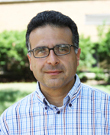
Grace Morgan is an Associate Professor at the School of Chemistry, University College Dublin , with expertise in spin crossover complexes, magnetic switching in transition metals, and CO2 conversion catalysis. Her academic journey includes a BSc (Hons) and PGCE from Queen's University Belfast and a PhD from Oxford University.
Martijn ML Reitsma is a postdoctoral researcher at the Advanced Research Center for Nanolithography (ARCNL) in the EUV Plasma Processes group since August 2024. He previously obtained his MSc (2020) and PhD (2024) in Theoretical Physics from the University of Groningen, Netherlands, where he was affiliated with the van Swinderen Institute’s Atoms, Ions and Molecules group. Education: MSc in Theoretical Physics, University of Groningen (2020) PhD in Theoretical Physics, University of Groningen (2024) Research Focus: Martijn’s work centers on theoretical atomic physics, computational methods, and plasma processes. His PhD research utilized ab initio electronic structure calculations to study atomic energies, hyperfine structures, and isotope shifts, contributing to nuclear moment evaluations and relativistic basis set development. Currently, he investigates the electronic structure underlying 13.5 nm EUV light emission in laser-driven tin plasmas at ARCNL, supporting nanolithography advancements. Current Role: At ARCNL, Martijn collaborates with Oscar Versolato’s Plasma Theory and Modeling team to unravel fundamental plasma dynamics for EUV light generation, combining his expertise in atomic structure with applications in applied physics and materials science.
Dr. Mariana Kozlowska is a Group Leader and KIT Associate Fellow at the Institute of Nanotechnology, Karlsruhe Institute of Technology (KIT). She leads the DNA Unit of the Virtual Materials Design platform, focusing on multiscale modeling of soft matter and natural materials to understand molecular dynamics, assembly, and interfacial phenomena in chemistry, biology, and physics. Her research integrates density functional theory (DFT) , molecular dynamics simulations , and multiscale modeling to investigate spectroscopic properties, photophysical phenomena in metal-organic frameworks (MOFs) , molecular adsorption, and noncovalent interactions. Current projects include virtual design of chiral alignment materials and photoswitchable MOF conductance, supported by the Carl Zeiss Stiftung and DFG Priority Program. Dr. Kozlowska’s work has been recognized through grants like the Brigitte-Schlieben-Lange-Programm and 3D Matter Made to Order Cluster of Excellence. Her interdisciplinary approach bridges computational modeling with experimental validation, particularly in biomolecular assembly and functional materials design . She has also contributed to science communication via initiatives like Creative Discussions about Science and the ADAMED SmartUP program. Research Focus: Multiscale materials modeling, soft matter assembly, MOF electronic properties Key Collaborations: Prof. Burkhard Luy (Virtmat), Prof. Maria Andrea Mroginski (DAAD grant)
Prof. Dr. Annie Powell serves as Research Unit Chair for Cluster Chemistry at the Institute of Nanotechnology (INT) at Karlsruhe Institute of Technology (KIT) in Germany. She leads a prominent research group focused on synthesizing and characterizing molecular cluster compounds and framework structures of transition metals and rare earth elements for nanoscopic applications. Her research spans five interconnected domains: Molecular Magnets: Development of Single Molecule Magnets (SMMs), including a record-breaking Mn 19 compound with S = 83/2 ground spin state, and pioneering work on 3d-4f systems where Dy(III) ions introduce crucial magnetic anisotropy MOFs and SMOFs: Creation of Super Metal Organic Frameworks using large coordination clusters as building units, including structures with Dy 36 and Y 79 rare earth clusters Biomimetics: Development of sophisticated models for biological systems, including a 4Mn/1Ca system representing the Oxygen Evolving Centre of Photosystem II Processing of Coordination Compounds: Transformation of coordination arrays into novel materials through thermolysis, yielding structures with potential battery applications Multifunctional Materials: Integration of multiple properties like porosity and magnetic ordering in single materials Recent research has centered on butterfly-shaped 3d-4f clusters, where her group has demonstrated how ligand design, bridge rigidity, and crystal packing critically influence magnetic properties. Her work on photoexcited coordination compounds has revealed fundamental relationships between optical and magnetic properties, opening new possibilities for optomagnetic materials. A major contribution was the discovery of a Dy 3 triangle that serves as the archetype for Single Molecule Toroids (SMTs), significantly advancing 4f chemistry in molecular magnetism. Professor Powell is recognized for her strong commitment to diversity in science, with her research group historically comprising members from varied religious, ethnic, and gender backgrounds. She is actively involved in the DFG-funded Collaborative Research Centre '4f for Future' which advances both scientific research and gender equality in this field. In October 2024, she will celebrate her 65th birthday with an international symposium dedicated to 4f chemistry and diversity in science.
Neil Henson serves as a Senior Scientist at Pacific Northwest National Laboratory (PNNL), a position he has held since 2017 after spending 20 years at Los Alamos National Laboratory. His expertise centers on computational chemistry applications for energy security and nuclear forensics. PhD Chemistry, University of Oxford MA (Oxon) Chemistry, University of Oxford BA (Oxon) Chemistry, University of Oxford Dr. Henson's research spans Computational Chemistry , Inorganic Chemistry , and Materials Chemistry , with specialized focus on homogeneous/heterogeneous catalysis, energy storage materials, actinide systems, and nuclear forensics. Recent work investigates iodine chemistry in nuclear accident scenarios through PNNL's Chemical Dynamics Initiative, emphasizing radiochemical transmutation effects on short-lived isotopes using simulation and data-driven approaches. Analysis of his 15 most recent publications (2012-2025) reveals consistent computational focus on nuclear-related chemistry, particularly radioiodine behavior and actinide systems. His work predominantly employs density functional theory (DFT) and molecular dynamics, bridging chemistry, materials science, and nuclear engineering with strong emphasis on real-world applications like reactor safety and nuclear forensics. No scientific awards were documented in the source material. While no student advisees are listed, Dr. Henson's research appears supported by PNNL initiatives including the Chemical Dynamics Initiative. His work integrates computational modeling with experimental data interpretation, particularly for nuclear security applications. Dr. Henson actively contributes to PNNL's Chemical Dynamics Initiative, focusing on chemical processes in nuclear environments. His research connects with broader laboratory efforts in computational chemistry, materials science for energy storage, and nuclear forensics, utilizing advanced simulation tools for complex real-world scenarios.
Professor Parthapratim Biswas serves as an Assistant Professor in the Department of Physics at the University of Southern Mississippi, where he has maintained an active research and teaching role since 2006. His academic foundation includes a Ph.D. in Condensed Matter Theory from Jadavpur University and prior degrees from the University of Burdwan. His educational qualifications are detailed as follows: Ph.D. in Condensed Matter Theory, Jadavpur University, India (2000) M.Sc. in Physics, University of Burdwan (1993) B.Sc. (Honors in Physics), University of Burdwan (1991), recipient of the P.N. Sinha prize (University Gold Medal in Physics) Biswas specializes in Theoretical Condensed Matter and Materials Physics, with concentrated expertise in structural and electronic properties of complex disordered materials and glasses. His research integrates computational modeling with theoretical frameworks to investigate amorphous systems, particularly hydrogenated amorphous silicon and silica networks, addressing fundamental questions about atomic arrangements and electronic behaviors in non-crystalline solids. Analysis of his 2017-2018 publications reveals consistent focus on disordered solids through multiple methodological lenses. Key research trajectories include diffraction peak analysis in silica, computational scattering studies, vibrational dynamics in hydrogenated silicon, and defect modeling. His work demonstrates strong integration of first-principles simulations with experimental observables, particularly in characterizing void structures and vibrational lifetimes. His notable scientific recognitions include: P.N. Sinha prize (University Gold Medal in Physics), University of Burdwan (1991) CSIR Junior Research Fellowship (1995-1999) CSIR Senior Research Fellowship (1995-1999) Professor Biswas maintains an active research group affiliated with the Chain Technology Center at USM, as evidenced by his group website. His international postdoctoral experience across four countries informs his collaborative approach to materials physics research, while his teaching portfolio spans graduate and undergraduate physics curriculum including advanced mechanics, quantum theory, and data visualization.
Dr. Guido Carim Junior is the Discipline Head (Aviation) at Griffith University's School of Engineering and Built Environment since 2018. With a PhD in Industrial & Transport Engineering and extensive industry experience, he leads over 600 students across aviation programs while advancing research in safety systems, pilot training, and technology integration. Education: PhD in Engineering, Federal University of Rio Grande do Sul (2016) MSc in Industrial & Transport Engineering, Federal University of Rio Grande do Sul (2009) BSc in Aviation Science, Pontifical Catholic University of Rio Grande do Sul (2006) His research bridges aviation safety, human factors, and educational innovation. Key areas include digital checklist design, Safety-II principles, and simulation-based training. He has supervised 5 PhD candidates and implemented the Griffith Flight Procedures Laboratory with VR simulators. Recent publications focus on Industry 4.0, aviation safety data analytics, and pandemic impacts on crew competency. He advocates for evidence-based training reforms and diversity in pilot education. Professional activities span airline safety consulting, program directorship of aviation degrees, and advisory roles for industry projects. Current funded grants include timber construction research and AI-driven safety systems. Teaching excellence recognized through multiple university awards, with a lab-based experiential learning approach.
Emily Crabb is an Assistant Professor of Physics at Centre College, where she joined the faculty in 2022. She serves as the Dual-Degree Engineering Program Advisor and is affiliated with the Department of Physics within the Faculty of Science. Her academic training includes dual bachelor’s degrees in Physics and Computer Engineering from the University of Pittsburgh and a PhD in Physics from the Massachusetts Institute of Technology. BS: Physics, University of Pittsburgh BSE: Computer Engineering, University of Pittsburgh PhD: Physics, Massachusetts Institute of Technology Her research lies at the intersection of computational condensed matter physics and materials science, with a strong emphasis on simulating atomic-level interactions using supercomputers. She investigates lithium-ion transport in battery electrolytes and light-matter interactions in magnetic metamaterials, integrating undergraduate researchers into her projects. Her work bridges fundamental physics with practical applications in energy storage and advanced materials. The published articles reflect a consistent focus on computational modeling of energy materials, particularly batteries, using classical and ab initio molecular dynamics. There is a growing trend toward data infrastructure development, as seen in her 2023 paper on cloud-based platforms for polymer simulation data, indicating a shift toward scalable, collaborative computational research. Scientific Awards and Grants: Co-Investigator on DOE EPSCoR Grant: 'Light-matter Interactions in Artificial Spin Lattices' NERSC supercomputing time allocation ACCESS supercomputing time allocation Crabb has been actively involved in securing external research funding and computing resources, enabling high-level simulations. She mentors undergraduate researchers and integrates them into her funded projects. She teaches foundational courses such as General Physics I (PHY 210), General Physics II (PHY 230), and Thermodynamics and Statistical Mechanics (PHY 360), contributing significantly to physics education at the undergraduate level. She is a member of the American Physical Society and continues to advance research in computational materials physics through simulation-driven discovery, with future work likely expanding into machine learning-aided analysis and open science platforms for materials data.
Liesbeth M.C. Janssen is an Associate Professor at Eindhoven University of Technology, leading the Soft Matter and Biological Physics group and affiliated with the Institute for Complex Molecular Systems (ICMS). Her research focuses on non-equilibrium systems, including glass formation, active materials, and bio-inspired matter, using theoretical and computational approaches. Academic Background: PhD in Theoretical Chemistry (cum laude, Radboud University Nijmegen, 2012); postdoctoral work at Columbia (2012–2015) and Düsseldorf (2015–2017). Research: Develops novel statistical physics frameworks for materials far from equilibrium, with applications in self-healing plastics, cancer research, and memory storage. Recent Publications integrate machine learning with soft matter dynamics, spanning topics like glass aging , active material design , and living matter modeling . Her work aligns with UN Sustainable Development Goals (SDGs) for smart and sustainable materials. Awards & Grants: NWO Vidi (2020) Mildred Dresselhaus Award (2015/2016) Alexander von Humboldt Fellowship (2016) DFG Research Grant (2018) European ITN Grant (2019) Leadership: Chair of Soft Matter and Biological Physics (2022–now), KNAW Young Academy member (2020–), Heineken Young Scientists Awards jury (2024).
Dr. Marvin Krenz is a Postdoctoral Researcher in Theoretical Materials Physics at the Department of Physics, Faculty of Natural Sciences, University of Paderborn. He works in the research group led by Professors U. Gerstmann and W.G. Schmidt, focusing on computational approaches to materials science problems. His research spans theoretical materials physics with emphasis on quantum mechanical phenomena in condensed matter systems. Krenz specializes in ab initio simulations, density functional theory calculations, and modeling of excited-state dynamics in semiconductor interfaces and nanomaterials. His work bridges computational physics with experimental validation in areas like exciton transfer, polaron formation, and photochemical reactions. Analysis of his publication record shows a consistent focus on computational materials science with increasing sophistication in modeling complex quantum phenomena. His recent work demonstrates expertise in simulating interface physics, ultrafast dynamics, and defect-related electronic properties in novel materials systems. Dr. Krenz maintains an active research agenda with publications in high-impact journals including Physical Review Letters and Physical Review B, indicating strong contributions to the field of theoretical condensed matter physics.
Massimo Olivucci is a Research Professor at Bowling Green State University's College of Arts and Sciences, affiliated with the Center for Photochemical Sciences and Chemistry Department. He has served at the institution since 2006 and directs the Laboratory for Computational Photochemistry and Photobiology. Contact details include his office at 302 Physical Sciences Laboratory Building and phone number 419.372.7606. Ph.D., University of Bologna, Italy (1988) M.S., University of Bologna, Italy Dr. Olivucci specializes in computational investigations of photochemical processes, focusing on the reactivity of organic and biological molecules in electronically excited states. His work emphasizes mapping photon-induced molecular motion through photochemical reaction paths involving conical intersections and singlet/triplet surface crossings. Key methodologies combine ab-initio quantum chemical methods with molecular mechanics for studying light-driven reactions in complex systems like proteins and solvated molecules. As Director of the Laboratory for Computational Photochemical Sciences, he leads research initiatives that bridge theoretical chemistry with practical applications in photoreceptor biology and dye photophysics. His work provides foundational insights into non-adiabatic reaction dynamics and energy transfer processes.
Dr Alex Epstein is a Research Associate at the Yusuf Hamied Department of Chemistry, University of Cambridge. His work focuses on the chemistry of circular polymers, particularly the mechanisms and computational modeling of hydrolysis and depolymerization processes for sustainable material design. Research Interests: Materials Chemistry for recyclable polymers Computational modeling of polymer degradation Hydrolysis kinetics and mechanisms Microbial platforms for customizable plastics Recent Publications highlight his contributions to polydiketoenamine systems, magnetic resonance methodologies, and machine learning approaches for predicting polymer behavior under varying pH conditions. His work bridges theoretical and applied research in circular materials and chemical recycling.
Prof. Dr. Uwe Gerstmann is a Professor at the Theoretical Materials Physics department of the University of Paderborn, leading the research group Quantum Materials Modelling. His work focuses on computational approaches to materials science challenges, particularly in optoelectronic and magnetic materials. Projects: Understanding triplet exciton transfer at organic-inorganic interfaces; Tailored Nonlinear Photonics in TRR 142 Teaching: Courses on Spintronics, Computational Spectroscopy, and Quantum Materials Modelling Research Trends include: defect engineering in lithium niobate, surface adsorption phenomena, plasmonic nanostructures, and relativistic effects in magnetic systems. His publications emphasize ab initio calculations and materials for quantum technologies.
Binju Wang is a Professor in the Department of Chemistry at Xiamen University's College of Chemistry and Chemical Engineering, promoted to this rank in 2018 after completing his PhD at the same institution. His academic foundation includes a BS from Harbin Institute of Technology (2007) and PhD from Xiamen University (2012). His educational background: BS in Chemistry, Harbin Institute of Technology, 2007 PhD in Chemistry, Xiamen University, 2012 Professor Wang's research centers on computational enzymology, specializing in multiscale simulations of metalloenzyme catalysis mechanisms, biological electron transfer processes, and protein design/biosynthesis. He employs quantum mechanical/molecular mechanical (QM/MM) methods and molecular dynamics to investigate enzyme reaction pathways, with significant contributions to understanding oxygen activation in cytochrome P450s, lytic polysaccharide monooxygenases, and nonheme iron enzymes. His work bridges computational chemistry and biochemistry to elucidate fundamental mechanisms with implications for enzyme engineering. Analysis of his 15 most recent publications (2019-2021) reveals a dominant focus on oxygen activation mechanisms across diverse metalloenzyme systems, electron transfer dynamics, and reactive oxygen species utilization. His computational approaches consistently uncover novel reaction pathways in enzymes critical for biocatalysis and metabolic engineering, with publications spanning top journals including JACS, Nature Catalysis, and ACS Catalysis. Scientific awards: No awards are documented in the provided information. Advising and grants: The text contains no details regarding student mentorship, grant funding, or research collaborations. Labs and teams: No information is provided about laboratory facilities, research groups, or team structures.
Eleonora Pavoni is a Researcher at the Department of Sciences and Engineering of Matter, Environment and Urbanism of Marche Polytechnic University . Research Focus : Nanotechnology, Materials Science, and Computational Modeling Key Topics : Graphene-based devices, Ferroelectric materials, ROS protection, Pyroelectric energy harvesting, and Bio-sensing Her work spans ab initio simulations and experimental validation of nanomaterials for biomedical and electronic applications, including: Development of graphene transistor biosensors for viral particle detection Investigation of Hafnium/Zirconium oxide heterostructures for microwave energy conversion Computational analysis of LDH nanomaterials for pollutant capture and electrooxidation The 15 most recent publications reflect her expertise in: Electronic Materials : Graphene diodes, SnSe nanosheets, and semiconductor interfaces Biomedical Engineering : Nanoparticle-based ROS protection and biosensors Computational Methods : DFT calculations, multiscale modeling, and pseudopotential comparisons