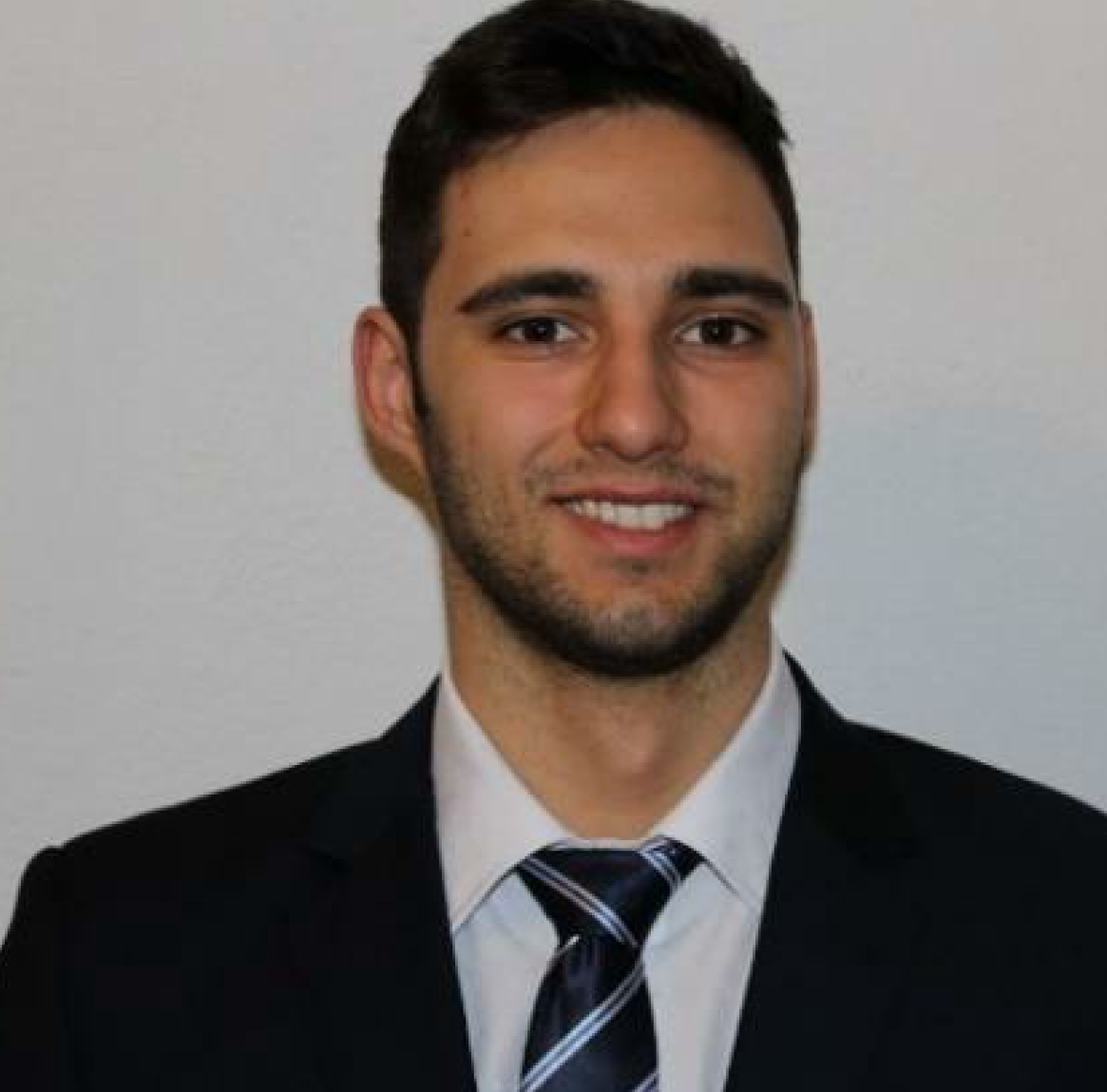
Sebastian Dorl is a researcher at the Fachhochschule Oberösterreich (University of Applied Sciences Upper Austria) , affiliated with the Research Center Hagenberg and the ASiC (Applied Systems and Cybernetics) group. His work spans bioinformatics, machine learning, and data-driven modeling, with a focus on proteomics data analysis, spectral library search algorithms, and industrial process optimization.
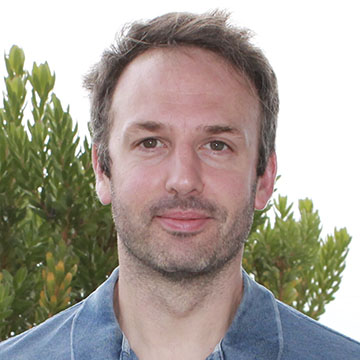
Gayaneh Issayan is a Researcher at the University of Applied Sciences Wels, affiliated with the ASiC Center of Excellence Energy. Her work focuses on thermochemical and sorption-based energy storage systems, with expertise in mathematical modeling, microwave desorption, and sensor technology for state-of-charge determination. Key research areas include renewable energy integration, energy transition, and optimizing storage applications through experimental validation and fixed bed modeling. She collaborates on projects like GaSe, ICE4H&C, and RESINET, targeting green hydrogen, ice storage systems, and energy grid resilience. Her recent publications highlight advancements in microwave desorption efficiency and real-time monitoring of zeolite-based storage materials. She participates in conferences such as EuroSun and IRES, contributing to interdisciplinary energy solutions.
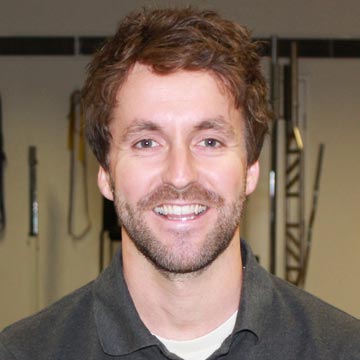
Alois Resch is an Assistant Professor at the University of Applied Sciences Upper Austria, affiliated with the Research Center Wels and ASiC Center of Excellence Energy. He holds a Dr. techn. (Doctor of Technology), BSc, and MSc. His research focuses on advancing renewable energy technologies through interdisciplinary approaches. Research interests include: Photovoltaic-thermal hybrid systems and spectral splitting techniques Thermal energy storage optimization for district heating networks Mathematical modeling of energy grids and resilience enhancement Economic analysis of renewable integration in heating/cooling systems Recent publications (2022-2023) predominantly explore thermal energy storage solutions, district heating networks, and sensor technologies for energy systems. This reflects a consistent focus on improving efficiency and economic viability of renewable thermal technologies. Active research projects: ICE4H&C - ICE-Heating and Cooling (2024-2025): Developing ice storage systems for residential buildings RESINET (2021-2022): Enhancing resilience of renewable energy grids FTI OÖ Methodenentwicklung (2018-2022): Optimization methods for energy flow networks Leads research at the ASiC Center of Excellence Energy focusing on hybrid solar collectors and thermal storage systems. Serves as reviewer for journals including Solar Energy and Electrical Engineering .
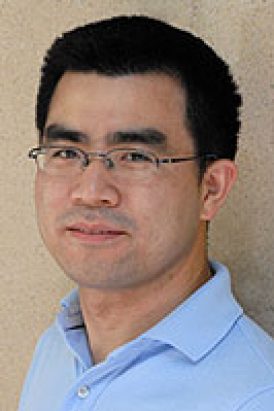
Hong Zeng is an Advanced Lecturer at the Stanford Language Center, affiliated with the Center for East Asian Studies. They teach courses in First-Year Modern Chinese and Graduate Studies in Chinese, focusing on language instruction and pedagogy. Their academic role emphasizes language education and curriculum development in East Asian studies. Located at K216 Stanford, CA, contactable via hzeng@stanford.edu or (650) 725-6023. Research interests span language education methodologies, Chinese language acquisition, and the application of technology in language instruction. Recent publications highlight contributions to network engineering, including scalable data center architectures and fault detection systems. Prior teaching roles include consistent course offerings from 2021-2024, reflecting expertise in foundational Chinese language education. No formal awards are listed, but their work in both language pedagogy and networking demonstrates interdisciplinary engagement.
Dr. Ari Kulmala serves as Professor of Practice at Tampere University's Faculty of Information Technology and Communication Sciences in the Computing Sciences department. With extensive industry experience in System-on-Chip (SoC) architecture and design, he specializes in ASIC and FPGA development for applications spanning 5G telecommunications, cloud acceleration, machine learning, security, and ultra-low-power mobile chips. His research focuses on System-on-Chip (SoC) design , with particular emphasis on heterogeneous architectures, RISC-V implementations, and hardware-software co-design for autonomous systems. Recent work includes secure SoC development for nano-UAVs, FPGA-based cryptographic acceleration, and agile chip development methodologies. The article collection demonstrates expertise in SoC architecture (10+ years), with evolving focus from foundational network-on-chip analysis (2008-2009) to modern implementations in RISC-V (2023-2024), cloud security acceleration (2019), and VR/4K video processing (2017-2018). Key technical areas include clock domain management, resource sharing, and performance optimization across various domains. As an industry leader in chip development organizations, Kulmala has worked across Telecom infrastructure (5G) Cloud acceleration Machine learning/AI Security hardware Ultra-low-power IoT Mobile chip design His work spans both academic research and practical implementation, including patents and commercial applications.
Piotr Otfinowski is a full-time Professor at AGH University of Science and Technology, affiliated with the Faculty of Electrical Engineering, Automatics, Computer Science and Biomedical Engineering, Department of Metrology and Electronics. His research focuses on advanced electronics, detector systems, and integrated circuit design, with expertise in photon-counting technologies, ASIC development, and signal processing for high-energy physics and synchrotron applications. Research Interests: His work spans: Design of ultra-fast imaging detectors for synchrotrons CMOS-based readout circuits for particle/photon detection Algorithms for pile-up compensation and spatial resolution enhancement In-pixel neural networks for real-time pulse analysis High-rate X-ray detection systems Publication Trends: Recent articles (2021-2025) emphasize photon-counting ASICs, interpixel communication, energy-resolved imaging, and detector optimization for experiments at facilities like ALICE (CERN) and synchrotrons. Dominant themes include small-pixel designs, neural network hardware implementations, and solutions for high-flux environments. Collaborations: Involved in international projects including ALICE (CERN) and the SPHIRD initiative for next-generation synchrotron detectors.
Professor Sklavos Nikolaos serves in the Computer Hardware and Architecture Department at the University of Patras, where he leads research in hardware security and cryptographic engineering. His academic profile demonstrates deep expertise in securing embedded systems and IoT devices through innovative hardware implementations. His research spans Hardware Security , Cryptographic Engineering , Cybersecurity , Hardware Design , and Embedded Systems with particular focus on lightweight cryptography for resource-constrained environments. Current investigations include quantum-resistant security architectures, privacy-preserving e-health systems, and secure implementations for 5G/6G communications. His work bridges theoretical cryptography with practical hardware constraints, emphasizing side-channel attack resistance and energy efficiency. Analysis of his recent publications reveals strong trends in hardware-accelerated cryptography (particularly FPGA/ASIC implementations), IoT security frameworks , and privacy mechanisms for healthcare applications . Notable subfields include lightweight cryptographic standards, hardware trojan detection, and security for tinyML devices. His research consistently addresses real-world constraints like area minimization, power efficiency, and latency requirements while maintaining robust security guarantees. Professor Sklavos actively supervises doctoral, master's, and undergraduate thesis projects while teaching advanced courses in Cybersecurity, Embedded Systems, and Hardware Security. He maintains the SCYTALE research group focused on cryptographic engineering and hardware security solutions. His educational initiatives include integrating hands-on cybersecurity training for 5G/6G technologies into STEM curricula.
Francesco Piro is an Early Stage Researcher (ESR 12) at CERN, affiliated with the STREAM project's Work Package 4 (Validation and Qualification). As a member of the ATLAS design group, his work focuses on analog and mixed-signal circuit design for monolithic CMOS sensors used in particle detectors and accelerator beam monitoring. Host Institution: CERN Education: BSc and MSc in Electronics Engineering from University of Naples Federico II (IT), Master Thesis at University of Geneva (Département de Physique Nucléaire et Corpusculaire) His research interests center on radiation-hard electronics and semiconductor detector development, particularly for high-energy physics applications. His work bridges circuit design and sensor characterization through laboratory measurements and testbeam experiments, aiming to optimize performance while reducing costs via industrial CMOS processes. The article he co-authored demonstrates his focus on CMOS sensor innovation for tracking particles in high-luminosity environments, with potential applications in medical imaging and digital cameras. This aligns with his broader expertise in ASIC development and device physics. Francesco collaborates internationally at CERN and contributes to advancing pixel detector technology. His spare time activities include swimming, sailing, and spearfishing, reflecting his passion for marine environments.
Associate Professor Ross Clark is an academic at the School of Health, University of the Sunshine Coast (UniSC), specializing in Sports and Exercise Science. He holds an NHMRC R.D. Wright Biomedical Fellowship (2015–2018) and is an Honorary Fellow at the Murdoch Childrens Research Institute, Melbourne. Clark earned his PhD and undergraduate degrees from Central Queensland University, followed by a Post-Doctoral Fellowship at the University of Melbourne. His research focuses on developing custom hardware, software, and clinical tools to improve patient assessment and treatment in clinical and elite sports settings. Key areas include gait/balance assessment systems deployed in hospitals globally and technologies used by professional sports teams (e.g., rugby league, AFL). He has published over 115 journal articles across clinical populations such as stroke, traumatic brain injury, and pediatric pre-term birth. **Grants & Awards:** NHMRC Career Development Fellowship ($420,000) 2014 International Society for Posture and Gait Research Promising Young Scientist Award 2013 VESKI Victoria Fellow – Life Science **Research Themes:** Clinical outcome measurement and registry creation Hardware/software design for physical function assessment Biomechanics of gait, balance, and strength Tele-rehabilitation and clinical trials **Advising:** Supervised 15+ postgraduate students (PhD/Masters) and 25 honours students. Active in multidisciplinary projects like the Murdoch Childrens Research Institute collaboration. **Technology Impact:** Tools used at Singapore General Hospital, Cincinnati Children’s Hospital, and sports apparel companies like ASICS Oceania.
Professor David Opar is a leading expert in sports injury research and prevention, particularly focusing on hamstring injuries. As Director of ACU's SPRINT Research Centre and Injury Program Lead, he bridges laboratory research with applied strategies for elite athletes. His team collaborates with global sports organizations to develop evidence-based prevention and treatment protocols. Notable contributions include co-inventing the NordBord, a device assessing eccentric hamstring strength. Opar holds a PhD from Queensland University of Technology (2010) and has been at ACU since 2013, progressing from Lecturer to Professor. His research spans muscle biomechanics, injury risk factors, and rehabilitation efficacy, supported by over $6.5M in grants. He has authored/co-authored over 100 peer-reviewed papers and serves on editorial boards for journals like the British Journal of Sports Medicine. Awards include the Sports Medicine Australia ASICS Medal and RMIT Institute Award. Education: Bachelor of Applied Science (Human Movement), RMIT University (2008) PhD in Sports Injury Research, Queensland University of Technology (2010) Research Interests: Hamstring muscle structure/function Eccentric training adaptations Preventive strategies in field sports Post-injury rehabilitation outcomes Grants/Funding: $4M Hamstring Injury Index Project (2021-2025) $696K Qatar National Research Fund (2016-2020) Labs/Teams: Leads the SPRINT Centre’s Injury Research Program, collaborating with FIFA, AFL, and NBA teams.
Dr Jack Hickey is a Lecturer in the School of Behavioural and Health Sciences at Australian Catholic University (ACU), Melbourne, and a member of the SPRINT Research Centre’s Injury Program. He holds HDR Supervisor accreditation (Provisional) and is an ESSA Accredited Exercise Physiologist since 2012. His research focuses on hamstring strain injury rehabilitation, clinical assessment tools, and exercise progression strategies. Dr Hickey completed his PhD at ACU (2018), earning the ESSA Medal for outstanding contributions to exercise science. He practices at the ACU Exercise Lifestyle Clinic, specializing in musculoskeletal and sports injury rehabilitation for athletes and post-surgical patients. Education: PhD in Exercise Science (ACU, 2018) Bachelor of Applied Science (Human Movement, RMIT University) Research Interests: Hamstring injury mechanisms and prevention Objective strength testing methodologies Evidence-based rehabilitation protocols Awards: 2018 ESSA Medal (most outstanding PhD thesis) 2017 ASICS Medal (best conference paper) Australian Government Research Training Scholarship (2015–2018) Grants & Projects: $10,000 ACU Faculty of Health Sciences grant (2019–present) for 'Hamstring neuromechanics during rehabilitation exercises.' Clinical & Consultancy Roles: Consultant for AFL, Australian Winter Olympic Institute, Cricket Australia, and NRL. Private practice specializing in musculoskeletal and sports injury rehabilitation. Labs/Teams: SPRINT Research Centre Injury Program at ACU.
Junjie Zhu is a Professor in the Department of Physics at the University of Michigan, specializing in experimental high energy physics. He conducts research at CERN's Large Hadron Collider (ATLAS experiment) and previously worked on the D0 experiment at Fermilab's Tevatron Collider. His research focuses on Standard Model measurements, new physics searches, and detector upgrades. PhD in Physics from University of Maryland (2004) Bachelor's in Modern Physics from University of Science and Technology of China (2000) His work involves electroweak physics, including precision measurements of W/Z bosons and Higgs boson searches. He leads muon spectrometer electronics upgrades for ATLAS and has developed ASICs for detector systems. His team's research spans vector boson scattering, triboson production, and diboson processes. His publications demonstrate a focus on high-energy collider experiments (Tevatron and LHC), detector technology R&D, and Standard Model validation. Key contributions include W boson mass/width measurements and Higgs discovery efforts. Scientific awards include: DOE Early Career Award US ATLAS Fellow Alvin Tollestrup Award APS Fellow Kavli Frontiers of Science Fellow He has supervised 7 PhD students and leads the NSF-supported UM-CERN summer REU/HST programs. His lab operations include commissioning of the New Small Wheel sTGC detector and maintenance of the ATLAS Monitored Drift Tube frontend electronics.
John Tarrant is a Professor at the UWA Law School, affiliated with The University of Western Australia. He holds extensive legal qualifications including a Doctor of Juridical Science (SJD) and has practiced as a barrister in multiple Australian jurisdictions and New Zealand. Previously, he worked in the mining and petroleum industries as a company director. His research focuses on contract law, equity, trusts, military law, and legal education. His work contributes to UN Sustainable Development Goals related to justice and institutions. His publications analyze topics like property rights, military legal frameworks, and financial regulation reform. Education: BA, BSc, BCom, LLB (Honours), LLM (ANU), SJD (W.Aust.), and certifications in taxation, finance, and legal education. His research trends reflect deep engagement with contractual obligations, property theory, and military legal challenges. He has supervised three academic works, though specific student names are not listed. His grant-funded project explored the High Court's property concept history. No specific awards are mentioned, but his prolific output suggests significant scholarly impact. His work often intersects with practical legal reforms and educational methodologies.
Dr. Michael Lupberger is an early career researcher affiliated with the University of Bonn's Faculty of Mathematics and Natural Sciences, specifically the Physikalisches Institut. He is a member of the TRA Matter Steering Committee, focusing on gaseous detectors, fast timing systems, and data acquisition technologies for particle and nuclear physics. His work co-leads projects in neutron detector development and collaborates with Prof. Desch and Prof. Ketzer on experiments like COMPASS and AMBER. Lupberger also extends the Scalable Readout System (SRS) to future facilities like the European Spallation Source and MAGIX. His research emphasizes high-performance data acquisition, machine learning on FPGA, and precision timing in detector systems. Research Interests: Lupberger's expertise lies in advanced detector technologies, including Micromegas and GEM-based systems. He develops robust timing detectors with sub-25 picosecond precision and integrates cutting-edge electronics like the VMM ASIC into SRS. His work bridges particle physics instrumentation with neutron science, emphasizing scalability and radiation resilience. Recent efforts include optimizing photocathode materials and exploring FPGA-driven machine learning for real-time data processing. Key Contributions: Lupberger co-authored papers on PICOSEC Micromegas detectors, scalable readout systems, and neutron detector applications. He actively contributes to international collaborations (RD51, LCTPC) and leads projects advancing detector R&D for future colliders and spallation sources. His innovations aim to enhance precision, reliability, and computational efficiency in experimental physics.
Gerald Steinmaurer is a researcher at the ASiC Center of Excellence Energy within the University of Applied Sciences Wels. His work focuses on renewable energy systems, battery storage, smart grids, and decarbonization strategies. He actively contributes to projects addressing grid stability, prosumer integration, and hydrogen energy solutions. Research Interests Steinmaurer specializes in renewable energy integration, particularly through smart grid automation and energy communities. His research explores flexibility provision in low-voltage grids, hydrogen storage systems, and mathematical modeling for decarbonization. He investigates electrochemical energy storage, photovoltaics, and greenhouse gas reduction methods. Projects BioH2Region (2024–2027): Developing renewable hydrogen and green gases in Bavaria-Austria regions. Indek-Met (2024–2026): Designing cost-effective mathematical methods for industrial decarbonization. OpenGrid4PV (2024–2026): Enhancing PV feed-in capacity in distribution grids using smart solutions. BABA Emissionen (2024–2026): Battery-based energy storage for emission-free mobile electrical energy. ICE4H&C (2024–2025): Innovating heating and cooling systems for residential buildings. Collaborations He collaborates with institutions like Land Oberösterreich and Future Energy Technologies, focusing on energy transition and grid optimization. His work bridges academia and industry through partnerships with electrical engineering firms.