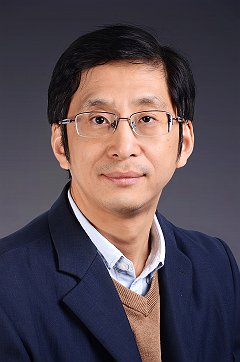
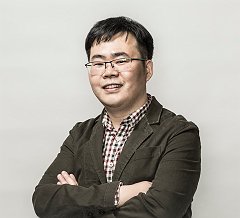
Thomas Degueule is a researcher at CNRS (Centre National de la Recherche Scientifique) in France, actively contributing to software engineering research since 2015. He serves on program committees for major conferences including ASE, ICSE, and SLE, with primary research interests in Software Evolution, Empirical Software Engineering, and Domain-Specific Languages. His work focuses on breaking change analysis in APIs and libraries, client-library compatibility testing, and dependency management. He develops practical tools like Roseau for source-based breaking change detection and investigates semantic versioning impacts in ecosystems like Maven Central. His empirical approach leverages large-scale repository analysis to address real-world software maintenance challenges, particularly in Java ecosystems. Recent publications (2023-2025) show consistent contributions to breaking change analysis and compatibility testing, appearing in top venues like ASE, ICSE, and ISSTA. His research bridges theoretical insights with practical tooling for software evolution challenges, demonstrating strong empirical methodology and tool-oriented contributions. No scientific awards are documented in the available information. Degueule has advised no publicly listed students and holds no mentioned research grants. His organizational roles include Program Co-Chair for SLE 2023 and committee positions across multiple conferences, reflecting significant service to the software engineering community.
Hongyu Zhang is a Professor and Dean of the School of Big Data and Software Engineering at Chongqing University, China, and an Honorary Professor at The University of Newcastle, Australia. Previously, he served as a Lead Researcher at Microsoft Research Asia and an Associate Professor at Tsinghua University, China. He received his PhD from the National University of Singapore in 2003. His academic journey spans prestigious institutions, combining industry research experience with academic leadership. Dr. Zhang's research interests focus on intelligent software engineering, software analytics, data-driven software engineering, software fault management, testing and debugging, and software maintenance and reuse. His work centers on improving software quality and productivity by mining and analyzing vast amounts of software data. Over the years, he has developed innovative methods that apply data mining, machine learning (including deep learning), and information retrieval techniques to extract knowledge from software data and solve complex software engineering problems. His research spans three major areas: intelligent programming (code search, code summarization, code generation), intelligent quality prediction (defect prediction, cloud failure prediction, performance prediction), and intelligent fault detection and diagnosis (log-based fault detection, crash-based fault localization, bug report analytics). His recent publications demonstrate a clear trend toward integrating large language models and deep learning techniques with traditional software engineering practices. The research spans intelligent programming assistance, code security, UI automation, distributed systems optimization, and performance analysis. His work increasingly focuses on practical applications of AI in software engineering, with emphasis on real-world impact in industrial settings, particularly in microservices, cloud systems, and large-scale software development environments. 8 ACM Distinguished Paper Awards Best Paper Award: How Long Will it Take to Mitigate this Incident for Online Service Systems? David Lorge Parnis Fellowship Senior Member of IEEE Distinguished Member of ACM Distinguished Member of CCF Fellow of Engineers Australia (FIEAust) Recognized in The Australian's Top Researchers special edition as leading researcher in Software Systems World's Top 2% Scientists (career-long) Dr. Zhang has successfully advised numerous PhD and Master's students who have gone on to prominent positions at leading technology companies and academic institutions worldwide. His research has been supported by significant grants including Australian Research Council Discovery Projects (as Lead CI) and multiple National Science Foundation of China projects. His work has made tangible impacts in industry, most notably through the Microsoft Developer Assistant project which received over 450K downloads in 2016. He leads research groups focused on intelligent software engineering and software analytics, with strong collaborations between Chongqing University, The University of Newcastle, and Microsoft Research. His teams develop practical tools for code intelligence, log analysis, and fault diagnosis that are deployed in real-world online service systems.
Song Wang is an Associate Professor in the Department of Electrical Engineering and Computer Science at York University's Lassonde School of Engineering since May 2024. Previously, he served as an Assistant Professor at the same institution from July 2019 to May 2024. He earned his Ph.D. in Computer Engineering from the University of Waterloo in December 2018 under Prof. Lin Tan, an MS degree from the Chinese Academy of Sciences in June 2014 under Profs. Ye Yang and Wen Zhang, and BE and BHRM degrees from Sichuan University in June 2011. Dr. Wang's research focuses on the intersection of Software Engineering and Artificial Intelligence, with two main thrusts: 1) leveraging AI technologies to address software reliability challenges (AI for SE), and 2) developing software reliability techniques to improve AI infrastructure systems (SE for AI). His specific interests include software testing, program analysis, software reliability, and machine learning applications in software engineering. His research has led to tools that have detected hundreds of true bugs across various open-source projects. His recent publications reveal a strong focus on applying large language models to software engineering tasks, analyzing vulnerabilities in deep learning libraries, and developing techniques for software testing and reliability. The research spans multiple subfields including API testing, vulnerability detection, bias analysis in generated code, and automated assurance case generation. TOSEM Distinguished Reviewer Award 2023 APSEC'23 Distinguished Paper Award ACM SIGSOFT Distinguished Paper Award (ICPC 2022) ACM SIGSOFT Distinguished Paper Award (ICSE 2020) Best Paper Award at PROMISE 2019 Dr. Wang actively mentors students at all levels, currently supervising multiple PhD and MASc students. His research group has produced numerous publications in top-tier software engineering venues, including ICSE, FSE, ASE, and TOSEM. He also serves on the editorial board of ACM TOSEM and has been involved in organizing major conferences like ASE and CASCON.