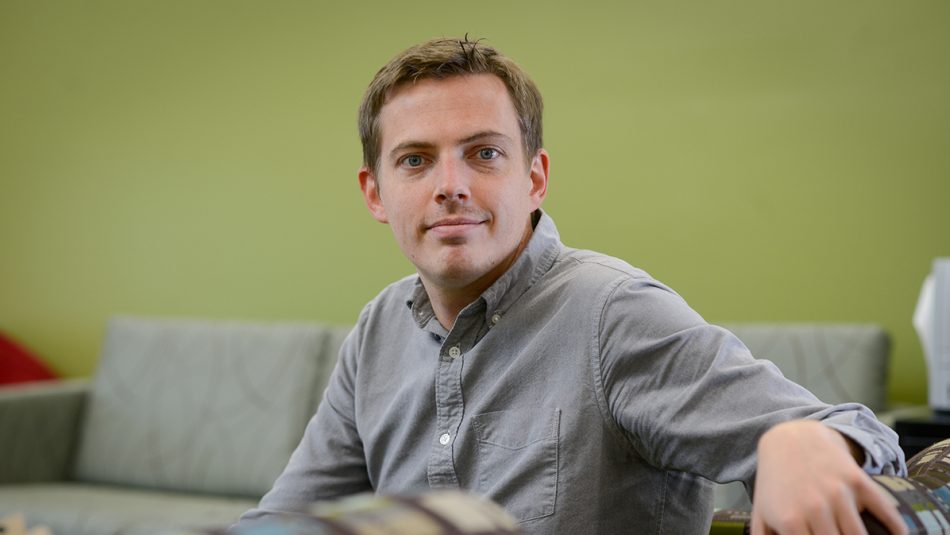
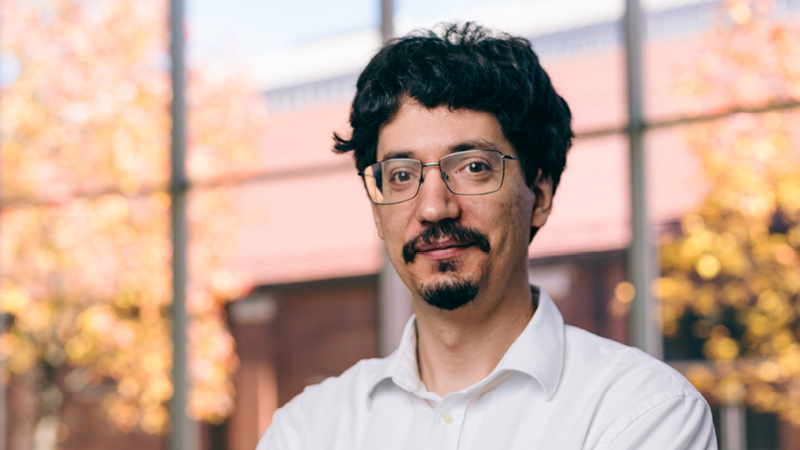
Dr. Maikel Verouden is a Lecturer and Researcher at Wageningen University & Research's Biometris (merged Mathematical and Statistical Methods group and Business Unit Biometris). He holds a PhD in Biosystems Data Analysis from the University of Amsterdam and has expertise in statistics, statistical genetics, R programming, and software development. His roles include teaching courses on statistics and R, managing IT infrastructure for Biometris, and representing the Plant Science Group on WUR's IT User Council. Education: PhD in Biosystems Data Analysis (2012, University of Amsterdam), MSc in Chemistry (2005, University of Amsterdam), and BSc in Environmental Analytical Chemistry (1998, HAN University of Applied Sciences). Research focuses on statistical software development (e.g., R packages for genomic analysis), proficiency testing in statistics, and systems biology of microorganisms. He has contributed to projects like the BrAPI interface for plant breeding and the Integrated Breeding Platform. His work bridges statistical methodologies with practical applications in agriculture and life sciences. As IT contact, he coordinates technical support for Biometris, liaising with IT facilities and managing high-performance computing resources. His open-source contributions include R packages like 'brapir' for Breeding API integration.
Jesus Joaquin Garcia Molina is a Professor in the Department of Computer Science and Systems Engineering at the Universidad de Murcia's Faculty of Informatics. He holds a Doctorate from the same university with a thesis on the conformational and dynamic study of flexible macromolecules (1988). His research focuses on database systems, model-driven engineering, NoSQL technologies, and software modernization. He is actively involved in projects related to schema evolution, user interface generation from wireframes, and AI applications in healthcare and education. Key research areas include database schema management, cross-platform data migration, and the development of unified query languages like Skiql. He has contributed to frameworks such as Guizmo for automated UI generation and tools for reverse-engineering legacy systems. His work bridges theoretical computer science with practical applications in software development and education technology. Recent publications emphasize NoSQL schema evolution, AI-driven radiology support systems, and the integration of interactive educational content in social robots. His interdisciplinary approach spans computer science, medicine, and pedagogy, with notable contributions to both academic and applied domains.
Jason A. Clark is a Professor and Head of Research Optimization, Analytics, and Data Services (ROADS) at Montana State University (MSU) Library. He holds an MLS from the University of Wisconsin-Madison (2003), an MA from the University of Vermont (2002), and a BA from Marquette University (1996). His work focuses on semantic web development, metadata systems, and AI ethics in libraries. Clark has led initiatives such as the Open SESMO project and contributed to standards like RO-Crate. He is a recipient of the 2024 MUS Teaching Scholar and MSU Public Engagement Fellow awards. Education: M.L.S., University of Wisconsin-Madison, 2003 M.A., University of Vermont, 2002 B.A., Marquette University, 1996 Key Roles: Lead, Research Informatics (MSU Library, 2020–present) Head, Special Collections & Archival Informatics (2017–2020) Clark’s research explores algorithmic literacy, machine UX, and ethical AI in libraries. His recent work includes leveraging reinforcement learning for scholarship accessibility and developing frameworks for responsible AI in archives. He has authored over 50 publications and led grants funded by IMLS and the Council on Library and Information Resources (CLIR). Awards and Recognition: MUS Teaching Scholar (2024) MSU Public Engagement Research Fellow (2024) Leading Change Institute Fellow (2019) Library Journal Mover and Shaker (2015) Grants and Outreach: Clark oversees projects like the National Forum on Web Privacy and the RE:Search initiative. He chairs the DLF eResearch Network and contributes to open science initiatives such as the Barcelona Declaration on Open Research Information. Labs/Teams: Leads the ROADS team at MSU Library, focusing on data-driven solutions for research, analytics, and library services.
Arvind Varsani is a Professor in the School of Life Sciences at Arizona State University (ASU), with affiliations to the Biodesign Center for Fundamental & Applied Microbiomics, the Center for Evolution and Medicine, and the Central Arizona-Phoenix Long Term Ecological Research program. He holds the title of Senior Global Futures Scientist within the Global Futures Scientists and Scholars initiative. He earned a Ph.D. in Molecular Virology from the University of Cape Town (South Africa) and a B.Sc. in Biological Sciences from Loughborough University (England). His research focuses on molecular virology, viral evolution, and ecosystem dynamics, utilizing advanced techniques like transmission electron microscopy, next-generation sequencing, and bioinformatics to study viral diversity across plants, animals, and extreme environments such as Antarctica. Varsani’s work emphasizes understanding viral dynamics in ecosystems, particularly in the Ross Sea Antarctic ecosystem, and explores how climate change impacts viral evolutionary trajectories. His lab investigates viral interactions within microbiomes, phytobiomes, and avian systems, with notable collaborations on circoviruses in penguins and viral surveillance in wildlife. He has pioneered studies on viral metagenomics, geminivirus recombination, and anellovirus evolution, contributing to ICTV taxonomy updates. Key projects include tracking viral emergence via wastewater surveillance, studying Antarctic viral communities, and analyzing viral diversity in birds, marine mammals, and insects. His research outputs span over 200 publications, highlighting discoveries in bacteriophage ecology, Antarctic virus dynamics, and One Health approaches to viral threats.
David Rasmussen serves as an Assistant Professor in the Department of Plant Pathology at North Carolina State University and is affiliated with the Bioinformatics Research Center. He joined NC State in January 2018 through the Chancellor’s Faculty Excellence Program cluster hire in Emerging Plant Disease and Global Food Security, where he develops phylogenetic methods for tracking pathogen transmission across human and agricultural systems. His academic background includes: Bachelor's degree from Reed College Ph.D. from Duke University under Dr. Katia Koelle ETH Zürich Postdoctoral Research Fellowship with Dr. Tanja Stadler Rasmussen's research centers on computational phylogenetics to analyze pathogen evolution using genomic data. He investigates transmission dynamics of human viruses (dengue, HIV, influenza) and agricultural pathogens, with emphasis on fitness trade-offs during host adaptation and genetic mechanisms of pathogen emergence . His group integrates experimental plant virus work with phylogenetic modeling to address food security threats, developing methods for genomic epidemiology that quantify evolutionary constraints. Key innovations include algorithms for recombination-aware inference and frameworks for optimizing genomic surveillance. Analysis of his 2022-2025 publications reveals three dominant themes: (1) Methodological advances in phylodynamic modeling (e.g., recombination-aware phylogeography, Markov decision processes for sampling optimization), (2) Quantification of viral fitness trade-offs across host species through meta-analyses and experimental evolution, and (3) Applications to critical pathogens including SARS-CoV-2, tomato viruses, and antimicrobial-resistant bacteria. His work bridges computational theory with agricultural and public health applications. Scientific recognition includes: ETH Zürich Postdoctoral Research Fellowship NSF CAREER Award (2022) for "Deconstructing the Fitness Tradeoffs that Limit Viral Host Range" Supported by NSF funding and the Chancellor’s Faculty Excellence Program, Rasmussen leads an active research group focused on genomic epidemiology of emerging pathogens. His work involves extensive international collaboration through workshops across Africa, Asia, and Europe. As a core member of the Emerging Plant Disease cluster, he contributes to NC State's mission of combating agricultural threats through interdisciplinary research, developing tools for pathogen surveillance and host adaptation prediction. Current projects couple experimental evolution of plant viruses with phylogenetic analysis to identify genetic determinants of host jumps. Rasmussen operates within NC State's Emerging Plant Disease and Global Food Security research cluster, which integrates plant pathology, genomics, and agricultural science to address crop-threatening pathogens. His laboratory develops computational pipelines for pathogen genome analysis while collaborating with experimentalists on plant virus systems, contributing to NC State's leadership in agricultural biosecurity and food supply protection.
Assistant Professor at the Polytechnic University of Catalonia 's Barcelona School of Informatics , specializing in Computer Architecture and Genomic Data Security . Research focuses on: Secure genomic information representation (MPEG-G, FAIR principles) Medical device cybersecurity (MedSecurance project) Privacy-preserving health data systems (HIPAMS, GIPAMS) Digital rights management for multimedia and health content Watermarking techniques for data leak detection Recent publications address cybersecurity challenges in interconnected medical devices, reversible fingerprinting for genomic data, and compliance with international standards like ISO/IEC 23092. Key collaborators include researchers from health informatics and multimedia standardization fields.
Jason Clark is a Lecturer and Lead for Research Informatics at Montana State University (MSU) Library, where he directs digital scholarship initiatives and researcher services. His work integrates library science with technology, focusing on semantic web development, metadata, digital libraries, and information systems. Lead, Research Informatics, Montana State University (2020–present) Head, Special Collections & Archival Informatics, MSU (2017–present) Head, Library Informatics & Computing, MSU (2014–2017) Digital Initiatives Librarian, MSU (2005–present) His research interests include information retrieval, metadata and semantic web, machine learning for user experience, digital libraries, and interface design. He emphasizes practical applications of technology in libraries, such as improving search UX, building knowledge graphs, and enabling web-scale discovery through structured data. His recent publications reflect a strong trend in leveraging semantic web technologies, APIs, and user data to enhance library services. Themes include privacy-aware service design, dataset search, citation harvesting, and responsive/mobile library applications. His work bridges theoretical information science with real-world implementation. Participatory Approaches for Designing and Sustaining Privacy-Oriented Library Services (2020) Building a Dataset Search for Institutions (2019) Citations as Data (2017) The Open SESMO Project (2017) Linked Data is People (2017) Clark has advised on digital library projects and taught courses on information technology tools. He has authored influential books such as Responsive Web Design in Practice (2015) and Building Mobile Library Applications (2012), contributing significantly to library technology practice. His career began in software development before transitioning into library informatics, giving him a unique interdisciplinary perspective. He is actively involved in building digital infrastructure at MSU, including web services, APIs, and metadata systems. His leadership in digital access and computing reflects a long-term commitment to innovation in academic libraries.
PD Dr. Jürgen Schiller is a Principal Investigator at the University of Leipzig, with his office located at Härtelstr. 16-18, Room 152.1, 04107 Leipzig. His research focuses on advanced analytical techniques for lipid and biomolecule characterization, particularly using mass spectrometry and NMR spectroscopy. Dr. Schiller leads a research team consisting of: Dr. Kathrin Engel, research associate Dr. Jenny Leopold, research associate and coordinator of SFB 1423 Johanna Schubarth, doctoral student Patricia Prabutzki, doctoral student Dr. Schiller's primary research interests center around lipidomics and advanced analytical techniques. His work extensively utilizes MALDI-TOF mass spectrometry and various NMR spectroscopy methods to analyze complex lipid structures, particularly phospholipids and glycosaminoglycans. He has made significant contributions to understanding lipid composition in various biological systems including sperm, adipose tissue, and joint tissues. His research has important implications for understanding metabolic disorders, reproductive health, and inflammatory processes. A key aspect of his work involves developing and refining analytical methods that combine different techniques, such as coupling thin-layer chromatography with mass spectrometry, to achieve more comprehensive lipid characterization. Analysis of Dr. Schiller's most recent publications (2022-2023) reveals several key research trends. His work continues to focus on methodological advancements in lipid analysis, particularly with MALDI-TOF mass spectrometry. There is a strong emphasis on studying oxidized lipids and their biological relevance, as well as investigating the relationship between lipids and glycosaminoglycans in disease processes. His research spans multiple biological systems, from human health (focusing on adipose tissue, joint diseases, and reproductive health) to animal models and even insect physiology. The interdisciplinary nature of his work is evident in collaborations across fields including immunology, metabolism, and infectious disease. Dr. Schiller actively mentors the next generation of scientists, currently supervising two doctoral students. His laboratory appears to be well-integrated into larger research initiatives, as evidenced by Dr. Leopold's role as coordinator of SFB 1423 (a Collaborative Research Center, which in the German research system represents a significant, long-term funded research program). His laboratory specializes in advanced lipid analysis techniques, with particular expertise in: MALDI-TOF mass spectrometry for lipid characterization NMR spectroscopy (particularly 31P NMR) for phospholipid analysis Thin-layer chromatography coupled with mass spectrometry Analysis of oxidized lipids and their biological implications Lipid composition studies in reproductive biology and metabolic disorders
Maciej Maselko is an Associate Professor in Applied BioSciences at Macquarie University. His research focuses on insect genome engineering to advance biotechnology applications, including genetic biocontrol of disease-vectoring mosquitoes and bioremediation of environmental contaminants. He leads projects on transgenic animal systems, synthetic biology-based solutions for invasive species control, and sustainable biomanufacturing in insects. Education: PhD in Molecular and Cell Biology (Oregon State University, 2011) BS in Biological Sciences (University of Alaska Anchorage, 2005) Research Interests: Dr. Maselko's work integrates genetic engineering and synthetic biology to address global challenges such as disease vector control, environmental pollution, and agricultural sustainability. His lab develops transgenic insects for biocontainment, population replacement strategies, and bioremediation using microbial enzymes expressed in insect hosts. Current projects include cane toad genetic manipulation, amphibian disease resistance engineering, and phytase production in black soldier flies. Collaborations: Active collaborations span institutions globally, with a focus on ecological and agricultural applications of genetic engineering. Projects involve partnerships in Australia, the US, and other regions. Grants & Projects: Principal Investigator for multiple grants including 'Sustainable biomanufacturing of phytase enzymes' (2023–2026) and 'Control of cane toads by genetic manipulation' (2023–2027). Lead on initiatives like 'Preventing disease-caused extinctions in amphibians' (2022–2025) and 'Insecticide-resistant honey bees for pollination security' (2023). Labs & Teams: His research group operates at the intersection of molecular biology, ecology, and engineering, with a focus on translating lab discoveries into real-world solutions for environmental and agricultural challenges.
Yulei Sui is an Associate Professor at the School of Computer Science and Engineering, University of New South Wales (UNSW), where he conducts research at the intersection of programming languages, software engineering, and machine learning. His work focuses on developing open-source frameworks for static analysis and verification to enhance software reliability and quality. He currently serves as Program Chair for LCTES 2024, SAS 2025, and ISSRE 2025, and is a program committee member for numerous top-tier conferences including PLDI, OOPSLA, and ICSE. His educational background includes a PhD from UNSW, where he has been a faculty member since completing his studies. His research interests span program analysis, software verification, machine learning applications in software engineering, and the intersection of programming languages with natural language processing and code LLMs. He leads the development of SVF (Static Value-Flow), an open-source framework for code analysis and verification, which has gained significant traction in both academic and industrial settings. His recent publications demonstrate a strong focus on improving the precision and efficiency of static analysis techniques, particularly in areas like context-free language reachability, pointer analysis, typestate analysis, and vulnerability detection. His work often bridges theoretical advances with practical applications, resulting in tools that address real-world software reliability and security challenges. Several of his papers have received distinguished paper awards at top conferences including ICSE and FSE. ICSE Distinguished Paper Award (2025) FSE Distinguished Paper Award (2024) OOPSLA 2022 Distinguished Artifact Award Australian Research Council Future Fellowship Fellow of Engineers Australia (FIEAust) Professor Sui actively mentors PhD students and undergraduate thesis candidates, with numerous students having completed their research under his supervision. He has secured significant research funding including ARC Discovery Projects and an ARC Future Fellowship. His community service includes editorial roles for IEEE Transactions on Software Engineering and IEEE Transactions on Reliability, demonstrating his standing as a leader in the software engineering research community.
Jean-Yves Tinevez is the Head of the Image Analysis Hub (IAH) at the Institut Pasteur in Paris, France. He serves as a Principal Investigator for key image analysis software projects and is a central figure in the institute's bioimage analysis community. His research is fundamentally centered on bioimage analysis and open-source software development . His primary interests include single-particle tracking , machine and deep learning for image segmentation , the creation of custom analysis pipelines , and the development of extensible software platforms like TrackMate, MaMuT, and JDLL. His work bridges the gap between complex biological imaging data and quantitative scientific discovery. The recent publications he is associated with highlight a strong trend in methodological innovation for bioimage analysis. The focus is on creating powerful, accessible software tools (e.g., SAMJ, CellTracksColab, JDLL, GeNePy3D) and enhancing existing ones (e.g., TrackMate 7) to leverage state-of-the-art AI and computational techniques. While his core expertise is in developing the tools, these tools are applied to diverse biological problems, such as host-pathogen interactions , single-cell analysis in microfluidics , and cellular and tissue morphometrics . Head of Facility, Image Analysis Hub, Institut Pasteur (Current) Principal Investigator, TrackMate, Institut Pasteur (Completed) Principal Investigator, MaMuT, Institut Pasteur (Completed) Member, Advanced Light Microscopy initiative, Institut Pasteur Member, Artificial Intelligence at the Institut Pasteur initiative Steering Committee Member, NEUBIAS Tinevez plays a vital role in training and knowledge dissemination . He is a regular instructor for the Institut Pasteur's PhD training programs and has led numerous workshops on Fiji/ImageJ, Python for image analysis, and advanced bioimage analysis. The IAH, under his leadership, operates as a collaborative core facility with a strong commitment to open science and quality management (ISO-9001:2015 certified). He fosters extensive collaborations with research units across the Institut Pasteur and beyond. The facility provides infrastructure, walk-in support, and develops custom tools to empower researchers, effectively acting as a grant-funded service that enables a vast amount of research across the campus. The Image Analysis Hub, led by Tinevez, is a core technological facility within the Institut Pasteur's Center for Technological Resources and Research (C2RT) and the Research and Resource Centre for Scientific Informatics (C2RI). It operates a dedicated analysis room with specialized workstations and offers remote access via virtual machines. The hub is involved in several transversal projects, including the Advanced Light Microscopy initiative and the application of Artificial Intelligence in biomedical research at the institute.
Antonio Bianchi is an Assistant Professor in the Department of Computer Science at Purdue University, co-founder of the PurSec Lab. His research focuses on enhancing security of edge devices such as smartphones, IoT devices, drones, and embedded systems. He has developed novel techniques in program analysis, binary analysis, fuzzing, reverse engineering, program repair, and binary patching. He is a core member of the Shellphish, OOO, and Nautilus CTF teams and won third place in the DARPA Cyber Grand Challenge. Education: PhD in Computer Science, UC Santa Barbara (2018) MSc in Computer Science, University of Illinois at Chicago (2012) MSc and BSc in Computer Engineering, Politecnico di Milano (2012 and 2008) Research Interests: His work spans software and systems security, with a focus on automated vulnerability detection, secure patching, and defense mechanisms for edge devices. He has published extensively at top venues like USENIX Security, IEEE S&P, and NDSS, and received awards including the NSF CRII Award and Purdue's Undergraduate Advising Award. Articles Overview: His recent work includes groundbreaking studies on Bluetooth protocol vulnerabilities, robotic vehicle patch validation, and secure IoT firmware updates. Articles often combine formal methods with practical tools like angr and fuzzing techniques. Awards: Seed for Success Acorn Award (Purdue, 2023 & 2024) Undergraduate Advising Award (Purdue CS, 2024) Best Paper Award at WOOT 2020 NSF CRII Award (2019) Advising & Grants: He has advised PhD students now in academia and industry, and secured grants totaling over $10M from agencies like DARPA, NSF, and industry partners (Lockheed Martin, Google). His lab focuses on projects like FIREFLY (cyber-physical systems modeling) and DICER (assured patching). Labs & Teams: Co-founder of the PurSec Lab at Purdue, focusing on edge device security. Collaborates with Shellphish team on CTF competitions and automated hacking research.
Wilma Russo is a Full Professor of Computer Engineering at the University of Calabria's Department of Computer Engineering, Modeling, Electronics and Systems (DIMES). She holds a degree in Physics from the University of Naples (1975). Her research focuses on distributed/parallel systems in heterogeneous environments, with current interests in agent-based computing, content delivery networks, and Internet of Things. Her publications demonstrate sustained innovation in IoT architectures, agent-based modeling, and edge computing solutions. Recent work emphasizes methodological frameworks for IoT integration and opportunistic service paradigms.
Dr. Domenico Striccoli is an Associate Professor in the Department of Electrical and Information Engineering at the Polytechnic University of Bari, Italy. He holds a Dr. Eng. Degree (2000) and Ph.D. in Electronic Engineering (2004) from Politecnico di Bari. His office contact is +39 080 5964225. Research focuses on advanced networking technologies: Internet of Things architectures and security Information Centric Networking paradigms Low Power Wide Area Networks optimization Nanocommunication systems Network performance modeling and evaluation Awards include Best Impact Contribution runner-up at RESTART Workshop (2024) and 2nd Best Paper at ICT-DM Conference (2023). Teaching includes Multimedia Systems and Telecommunication Signal and System for Aerospace courses.
Dr. Vitor Jesus is a Lecturer in Software Engineering and Cybersecurity at Aston University's School of Computer Science and Digital Technologies. His research focuses on privacy-enhancing technologies and cybersecurity frameworks for distributed systems, with particular emphasis on: Consent management architectures and standardization Blockchain-based auditing and data provenance IoT security in smart environments Privacy-preserving data sharing models As co-chair of the COnSeNT workshop series and BSI expert for ISO standards development, he contributes to international privacy frameworks. Funded projects include CyberAlarm (crowd-sourced threat intelligence) and EVBatteries4Planet (supply chain visibility).