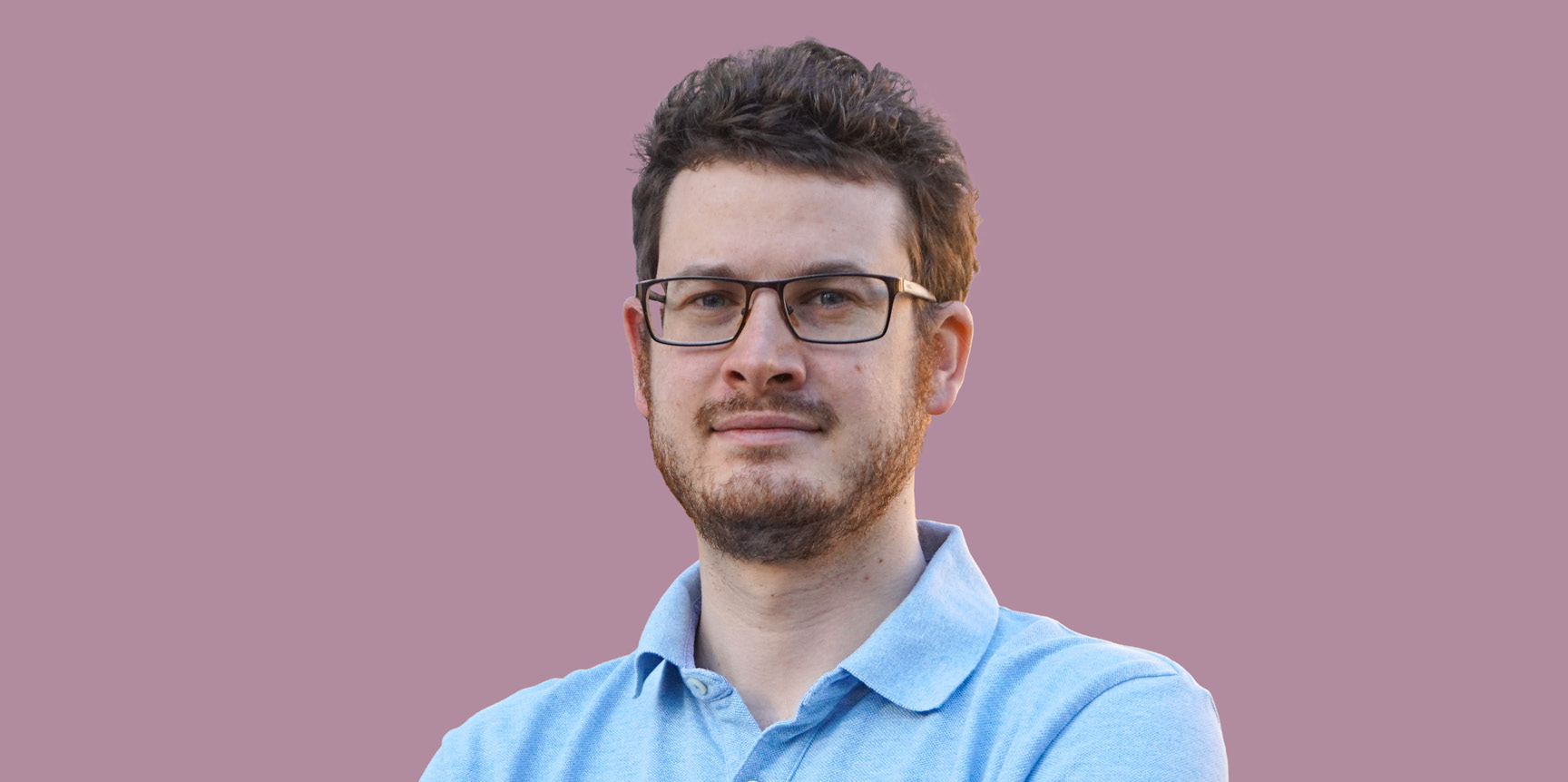
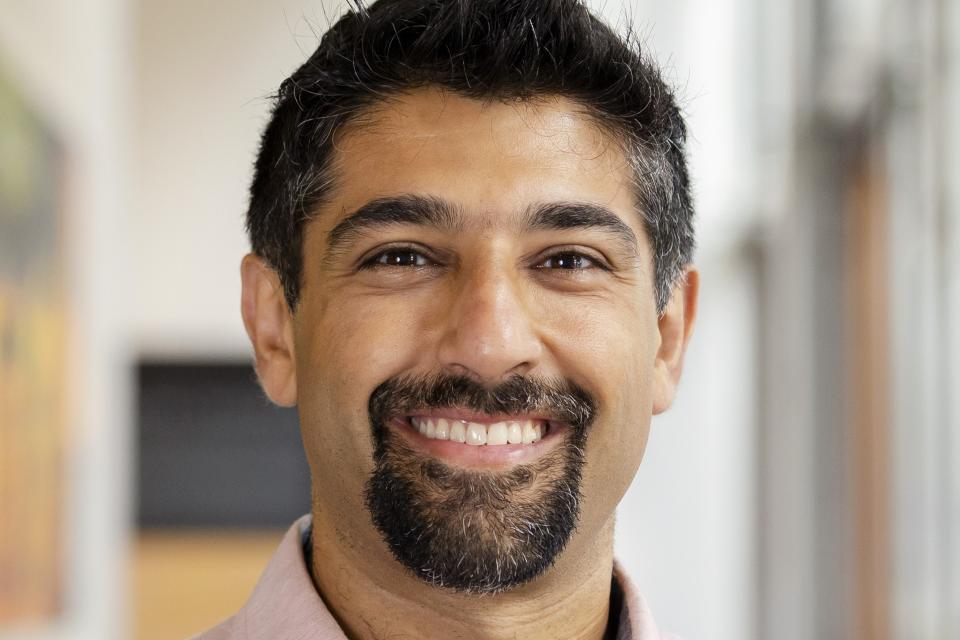
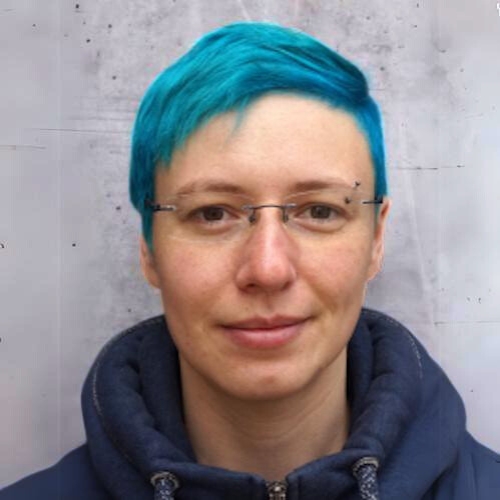
Florian Tramèr is an Assistant Professor of Computer Science at ETH Zurich, leading the SPY Lab. His research focuses on computer security, privacy, and adversarial machine learning, particularly studying vulnerabilities in deep learning systems. He holds a PhD from Stanford University and previously worked at Google Brain. Education: Bachelor's and Master's from EPFL (Switzerland), PhD from Stanford University. Research Interests: Adversarial machine learning, privacy-preserving technologies, cryptography, and evaluating AI safety through frameworks like AgentDojo. His work addresses societal impacts of rapidly deployed machine learning systems. Awards: Two Best Paper Awards at ICML 2024, CAIS SafeBench competition win, Google/Amazon Research Awards. His research has been featured in Nature , Science , and The Economist . Labs/Teams: SPY Lab (ETH Zurich), part of the Information Security Institute and ZISC. Associated with ETHZ AI Center. Advises PhD students on AI safety and security topics.
Manoj Singh Gaur is a Professor in the Department of Computer Science and Engineering at Malaviya National Institute of Technology Jaipur (MNIT Jaipur), India. With a publication record spanning over two decades from 2003 to present, he has established himself as a prominent researcher in computer security and architecture. His work primarily focuses on network security, Android security, and Network-on-Chip architectures, with extensive collaborations with researchers from institutions worldwide including University of Padua (Italy), University of Southampton (UK), and other Indian institutions. Dr. Gaur's research interests encompass a broad spectrum of cybersecurity challenges, particularly in mobile and cloud environments. His work addresses critical issues such as Android malware detection, information leakage prevention, DDoS mitigation in cloud environments, and secure deduplication techniques. In computer architecture, he has made significant contributions to Network-on-Chip design, fault tolerance mechanisms, and power-efficient router microarchitectures. His research methodology often combines theoretical analysis with practical implementation, resulting in solutions that address real-world security and performance challenges. Analysis of his recent publications (2020-2023) reveals a continued focus on mobile security, particularly Android application security, with numerous papers on vulnerability detection, permission analysis, and information leakage prevention. Simultaneously, his work in Network-on-Chip architectures demonstrates sustained interest in fault-tolerant routing algorithms and performance optimization for multi-core systems. The interdisciplinary nature of his research, bridging security and architecture concerns, represents a distinctive contribution to the field. Dr. Gaur has mentored numerous students who have co-authored publications with him, indicating an active research group focused on cutting-edge security and architectural challenges. His collaborative approach is evident in the diverse set of co-authors spanning multiple continents, reflecting international recognition of his expertise.
Laura South serves as a Visiting Assistant Professor in the Department of Computer Science at Williams College. She joined the institution after completing her PhD at Northeastern University in 2024 under Michelle Borkin's supervision. Her research centers on digital accessibility , with dual specialization in: Photosensitive epilepsy safety in interactive media (VR, data visualizations, social platforms) Assistive technologies for visual impairments (3D-printed braille systems) Notable contributions include seizure-risk mitigation frameworks for dynamic content and empirical evaluations of tactile interfaces. Her 15 most recent publications (2020-2024) reveal three dominant research trajectories: Photosensitivity safety mechanisms across immersive platforms (6 papers) Accessibility extensions for visualization systems (5 papers) Novel evaluation methodologies for inclusive design (4 papers) Key venues include CHI, IEEE VIS, and ACM TOCHI. Laura teaches human-computer interaction and introductory programming courses. Her educational background includes dual B.S. degrees in Computer Science and Statistics from Colorado State University (2018), followed by a Ph.D. in Computer Science from Northeastern University (2024).
Helmut Schauer is an Associate Professor affiliated with the Department of Software Engineering at Vienna University of Technology (TU Wien). His work focuses on programming verification, educational technology, and mobile application development. He has supervised multiple diploma theses including Programming for Smartphones (2014) and Blended Assessment (2014). Research interests include formal methods in software engineering, mobile computing frameworks, and innovative educational tools for competency assessment. His 1989 publication Programmentwicklung und Verifikation remains foundational in programming methodology. No scientific awards are explicitly mentioned. Advising activities include guiding students in mobile development, assessment systems, and entrepreneurship education. Active in curriculum design for technology-enhanced learning environments.
Carlos Badenes-Olmedo is a Post-Doctoral Researcher at the Polytechnic University of Madrid’s Faculty of Informatics, part of the Ontology Engineering Group (OEG). He holds a Master’s in Artificial Intelligence (2015) and a Computer Science Engineering degree (2006) from the same institution. Previously, he worked in industry for 8+ years as a software architect specializing in real-time data and M2M communications. He collaborates with the TEDECO group on data mining using Call Detail Records (CDRs). Research Focus: Ontology Engineering, Machine Learning, Information Retrieval, Exploratory Search, Recommender Systems, Multilingual Document Similarity, Public Procurement Analysis, and Clinical Data Mining (e.g., polypharmacy studies). His work includes developing cross-lingual search engines, knowledge graphs for public procurement (e.g., EU Contract Hub), and health-related ontologies (e.g., Drugs4Covid). Key Projects: Led development of the Corpus Viewer platform for analyzing research documents, created the FarolApp for light pollution monitoring using Linked Data, and contributed to the librAIry framework for distributed text mining. Active in public procurement transparency initiatives and biomedical knowledge graph construction. Skills: Natural Language Processing, Topic Modeling, REST APIs, Docker, Linked Data, and open-source tool development (e.g., TBFY Harvester). Collaborates internationally on EU-funded projects and publishes extensively in top venues like K-CAP, ISWC, and IEEE conferences. Teaching: Delivers tutorials on hybrid NLP techniques, cross-lingual document exploration, and semantic search. Involves in educational experiments like LEGO® Serious Play in software engineering education.
Barbara J. Wold is the Bren Professor of Molecular Biology and Merkin Institute Professor at the California Institute of Technology (Caltech), where she has held continuous faculty appointments since 1978. Her leadership roles include Director of the Beckman Institute (2001-2011) and Director of the Merkin Institute (2019-2023), reflecting her significant institutional impact. Her academic journey began with a B.S. from Arizona State University (1973) followed by a Caltech Ph.D. (1978). She advanced through Caltech's faculty ranks from Research Fellow (1978) to Assistant Professor (1981-1988), Associate Professor (1988-1996), Professor (1996-2002), Bren Professor (2003-), and Merkin Institute Professor (2024-). Dr. Wold's research centers on transcriptional networks in mouse and human systems, integrating molecular biology, cellular biology, developmental biology, biochemistry, and biophysics . Her work pioneers single-cell and spatial transcriptomics approaches to decode gene regulation across tissues and developmental stages, with particular emphasis on cellular heterogeneity and regulatory dynamics. Analysis of her 2022-2025 publications reveals dominant themes in large-scale collaborative genomics , including leadership in the Human Cell Atlas and ENCODE projects. Key methodological contributions span spatial transcriptomics for kidney disease modeling, cross-strain mouse genomics, long-read RNA-seq validation, and ethical frameworks for international data sharing, demonstrating her dual focus on technical innovation and responsible science. Her distinguished career is marked by two named professorships: the Bren Professorship (2003) and Merkin Institute Professorship (2024), recognizing her transformative contributions to molecular biology. As a decades-long Caltech faculty member and institute director, Dr. Wold has mentored numerous graduate students and secured substantial research funding, though specific advisee names and grant details are not publicly listed. Her current leadership in the Merkin Institute continues to drive interdisciplinary biomedical research. Her laboratory operates at the nexus of the Beckman Institute and Merkin Institute ecosystems, leveraging Caltech's strengths in engineering and quantitative biology to advance transcriptional network research through cutting-edge genomic technologies and computational approaches.
Seyed Mak Ahmad is a Lecturer at the University of California, Davis , affiliated with the School of Business and Department of Management & Organizations. Pursuing a Ph.D. in Computer Science with a focus on visualization, he holds an M.S. in Computer Science from Sonoma State University (2017) and a B.S. in Computer and Electrical Engineering from UC Davis (2004). With over 20 years of tech industry experience, he has worked as a software engineer and product manager at Instagram, Salesforce, and Google, contributing to products like Instagram Reels, Google partner platform, and Istio. He is also fluent in Swedish and Farsi. Education : Ph.D. (in progress) in Computer Science, UC Davis; M.S. in Computer Science, Sonoma State University (2017); B.S. in Computer and Electrical Engineering, UC Davis (2004) Mak Ahmad specializes in Visualization and Human-Computer Interaction , with research interests extending to Machine Learning and Technology Management . His recent publications explore AI's role in education, API design, and data governance, reflecting interdisciplinary expertise bridging technical systems with human-centric applications. His industry experience includes co-founding aip.dev and working on scalable solutions at Microsoft Azure AI as a guest lecturer. Teaching activities span courses like Introduction to Data Visualization , Implementing Machine Learning on the Cloud , and Machine Learning with Python in advanced business and analytics programs.
Barton P. Miller is a Vilas Distinguished Achievement Professor and the Amar & Balinder Sohi Professor of Computer Sciences at the University of Wisconsin, Madison, where he has made significant contributions to computer science research and education. As a faculty member in the Computer Sciences Department within the College of Engineering, he directs major research initiatives including the Paradyn Tools project and leads cybersecurity efforts as Chief Scientist of the DHS-funded Software Assurance Marketplace (SWAMP) research center. Miller received his B.A. degree from the University of California, San Diego in 1977, and M.S. and Ph.D. degrees in Computer Science from the University of California, Berkeley in 1980 and 1984. His educational background laid the foundation for his pioneering work in software testing and analysis. His research spans multiple critical areas of computer science, with a primary focus on binary code analysis and instrumentation , software security , and distributed and parallel program performance . Miller is particularly renowned for founding the field of Fuzz random software testing in 1988 and dynamic binary code instrumentation in 1992. His work bridges theoretical computer science with practical applications, addressing real-world challenges in high-performance computing systems, cybersecurity, and scalable distributed systems. His research has direct applications in national security through his work with DHS and TrustedCI, the NSF Cybersecurity Center of Excellence. Miller's publications reveal a consistent focus on binary analysis tools, security vulnerability detection, and performance optimization techniques. His recent work shows increasing emphasis on ransomware analysis, GPU performance optimization, and practical security tool development for developers. The trajectory of his research demonstrates how foundational work in binary instrumentation has evolved to address contemporary cybersecurity challenges while maintaining relevance to high-performance computing environments. Among his notable honors, Miller is a Fellow of the ACM and recipient of the prestigious Jean-Claude Laprie Award in Dependable Computing , an R&D 100 Award , and multiple best paper awards including at HPDC 2009 and CCGrid 2018. His contributions to the field have been recognized through distinguished lectureships at institutions including Ben Gurion University and IBM T.J. Watson Research Center. As an educator, Miller has mentored numerous students and taught courses spanning operating systems, software security, and distributed systems. He has received teaching awards and developed educational resources including free and open software security training materials. His work with TrustedCI has focused on cybersecurity for scientific communities, helping researchers secure their computational infrastructure while maintaining research productivity. Miller also co-directs the MIST software vulnerability assessment project in collaboration with colleagues at the Autonomous University of Barcelona. Miller directs the Paradyn Tools project, which investigates program scalability and binary program analysis technologies for use in HPC, systems design, and cyber-security. His work extends to practical applications through collaborations with government agencies including DHS and the U.S. Secret Service Electronic Crimes Task Force. His research group has developed tools like Dyninst, MRNet, and the Wisconsin Safety Analyzer that have become foundational in their respective domains.
Jana Lasser is Professor for Data Analysis at the University of Graz and leads the Complex Social & Computational Systems research group at the interdisciplinary IDea_Lab. She is also Associate Faculty at the Complexity Science Hub Vienna (CSH), reflecting her deep engagement with complex systems research across institutions. Her educational background includes a PhD in Physics from Georg-August-University of Göttingen, based on research at the Max Planck Institute for Dynamics and Self-Organization. She held postdoctoral and visiting positions at the Medical University of Vienna, Graz University of Technology (as a Marie Curie Fellow), and RWTH Aachen (as interim professor) before joining the University of Graz in 2024. Her research centers on emergent phenomena in complex social systems, using machine learning, data science, NLP, and computational modeling. Key interests include misinformation, counterspeech, social media algorithms, mental health in academia, and pattern formation in geophysical systems. She is a leading voice in open science, data literacy, and reforming academic culture. Her recent publications (2023–2025) reveal a strong interdisciplinary trend, bridging computational social science, public health, political communication, and geophysics. Many papers focus on misinformation, political discourse, and algorithmic governance, often using large-scale social media data. Others explore mental health, academic labor, and foundational geophysical processes, demonstrating her wide-ranging analytical expertise. ERC Starting Grant 101160928 (DeSiRe) FWF standalone project P 37280-N netidee SCIENCE prize Open Knowledge Fellow of the Wikimedia Foundation (2019/2020) Marie Curie Fellow Jana Lasser actively mentors and advises through her leadership of major research projects and initiatives. She leads the Survey Special Interest Group in the COST Action on Researcher Mental Health and co-founded the Network Against Abuse of Power in Science. Her research has been supported by prestigious grants including an ERC Starting Grant and FWF funding. She has developed and taught numerous open-access courses in computational social science, Python, and data literacy, emphasizing reproducibility and educational outreach. She leads the Complex Social & Computational Systems research group at IDea_Lab and is a key figure in the Complexity Science Hub Vienna. Her work on the Schwurbelarchiv and agent-based models for healthcare resilience demonstrates her leadership in building and utilizing large-scale data infrastructures for societal benefit.
Matthias Hauswirth is an Associate Professor at the Università della Svizzera italiana (USI) in Lugano, Switzerland, leading the Lugano Computing Education (LuCE) research lab . His work focuses on programming education, conceptual change in learning, and notional machines. He actively contributes to Swiss high school informatics teacher training programs and maintains the programming misconceptions repository . Education: Not explicitly detailed in provided texts Research: Centers on programming education, language design for learning, and empirical studies of programming practices Publications: Span 2011-2025 with emphasis on educational tools, Java analysis, and graphics-based learning Service: Program committee roles in OOPSLA, SPLASH, ICER, and co-organizer of SPLASH-E 2016 Projects: ExpressionTutor.org, PyTamaro, Progmiscon.org
Grzegorz Kołaczek is a faculty member at the Faculty of Information and Communication Technology at Wrocław University of Science and Technology, affiliated with the Department of Computer Science and Systems Engineering . His research focuses on cybersecurity , intrusion detection , and security modeling with specific interests in Trust-based security frameworks IoT cybersecurity Anonymity protocols Fraud detection in digital systems . His recent publications emphasize the intersection of cybersecurity and emerging technologies , particularly in Internet of Things environments and e-commerce platforms. Key research trends include collaborative intrusion detection , adaptive user interfaces , and machine learning for threat analysis . Contact: grzegorz.kolaczek@pwr.edu.pl
Dr. Gabriele Irle is a Researcher at the Leibniz Institute for Knowledge Media (IWM) in Tübingen, Germany, affiliated with the institute since 2017. She works in the e-teaching Transfer lab and serves as deputy Postdoc speaker since 2025. Her editorial role in the Future Space initiative advances science communication for digital education within the Kompetenzverbund lernen:digital network. Education: PhD in Information Science (University of Hildesheim, 2012-2017) Magister Artium in International Information Management (University of Hildesheim/Université de Montréal, 2006-2012) Research Focus: Dr. Irle investigates digital learning ecosystems, specializing in educational technology integration, teacher competency development, VR/AR applications in classrooms, and information-seeking behaviors. Her work bridges theoretical frameworks with practical implementations in higher education and K-12 settings. Publication Analysis: Her 15 most recent works (2017-2025) demonstrate strong thematic coherence in educational technology. Dominant trends include: 1) Virtual/Augmented Reality in pedagogical contexts, 2) Digital competency frameworks for educators, 3) Infrastructure development for knowledge sharing (e.g., Digital Learning Map database), and 4) Psychological dimensions of information processing in digital environments. Projects & Grants: Future Space – Kompetenzverbund lernen:digital (2023-2026): Developing visions for digitally-enhanced teaching BMBF-Meta project "Digitalisation in Education" (Digi-EBF) – Teacher Education (2018-2023): Funded by German Federal Ministry of Education Digital Learning Map 2020 (2017-2018): Cataloging success factors in digital higher education Collaborations: As deputy Postdoc speaker, she coordinates early-career researcher initiatives. Her lab (e-teaching Transfer) focuses on translating research into practical educational solutions through workshops, online resources, and community engagement.
Zhechen Hou is a Research Fellow at the University of Western Australia's School of Earth and Oceans, affiliated with the Oceans Institute. His research focuses on developing techniques to prepare carbonate samples with field-representative engineering properties and investigating microscopic sediment behaviors. He collaborates with the Centre for Microscopy, Characterisation and Analysis (CMCA) and works within the ARC Industrial Transformation Research Hub for Transforming Energy Infrastructure through Digital Engineering (TIDE ITRH). Previously, he served as a Research Associate at the ARC Industrial Transformation Research Hub on Offshore Floating Facilities. His educational background includes: PhD in Offshore Geotechnical Engineering from University of Western Australia (2017-2020) MSc (Cum Laude) in Offshore and Dredging Engineering from Delft University of Technology (2014-2016) BEng in Ocean and Naval Engineering from Tianjin University (2010-2014) Hou's research spans offshore geotechnics, soil-fluid-structure interaction, and renewable energy infrastructure. His work integrates centrifuge testing, numerical modeling, and data mining to address challenges in offshore pipeline/cable design, pile foundations, and wind farm installations. Recent publications demonstrate a strong focus on time-dependent soil behavior, seabed infrastructure interactions, and damage assessment of submarine systems. His scientific recognitions include: Faculty Scholarship for International Research Fees (2017) ITRH Offshore Floating Facilities Scholarship (2017) Cum Laude distinction (2016) Hou actively collaborates with the Centre for Offshore Foundation Systems (COFS) and contributes to industry standards development, including the API-ISO subsea infrastructure design guidelines. His work bridges academic research and industrial applications for both traditional energy and renewable energy sectors.
V.Prof.Dr. Nevzudin Buzađija is an Associate Professor at the Software Engineering Department , Faculty of Philosophy, University of Zenica, Bosnia and Herzegovina. He holds leadership roles as Head of the Software Engineering Department and Vice Dean for Teaching and Student Affairs at the Polytechnic Faculty. Research focuses on Software Engineering , Blended Learning , Blockchain Applications , and Educational Technology Courses taught include Computer Architectures , Databases , and Informatics Methodology across multiple departments Pioneer in applying fuzzy logic and blockchain to educational systems Recent Publications highlight advancements in: DevOps Methodology for modern software development Microservices with RabbitMQ message brokers Smart Contract optimization and blockchain for digital certificates Scratch Programming in K-12 education Artificial Intelligence for multimedia content analysis His work bridges academic research and educational practice , with significant contributions to curriculum design and ICT integration in transitional economies.
Gregory Bruich is a Lecturer in the Department of Economics at Harvard University, affiliated with the Faculty of Arts and Sciences. His research focuses on public economics, with expertise in econometrics and labor economics. He is a highly awarded educator, recognized by students and institutions including the Rhodes Trust and Harvard College. He teaches Ph.D.-level econometrics and large undergraduate courses like Economics 1123 and Economics 50 (co-taught with Raj Chetty). His advising work has produced seven Hoopes Prize-winning theses, supported by FAS research grants. He also develops online courses on EdX addressing social and economic disparities through big data analysis. Education: Ph.D. in Economics from Harvard University. Teaching roles include Economics 2110 (Ph.D.), Economics 1123 (undergraduate), and API 202 Z at Harvard Kennedy School. His research grants and advising span over thirty senior theses across Economics, Applied Math, Social Studies, and Statistics. Awards: John R. Marquand Award, Rhodes Inspirational Educator Award, multiple teaching commendations Advising: Faculty Adviser for 30+ senior theses; three FAS grants for Hoopes Prize-winning work Online Education: Co-developed EdX courses like 'Big Data Solutions for Social and Economic Disparities' His technical contributions include econometric tools for robust variance estimation and statistical testing methods, shared via Stata code repositories.