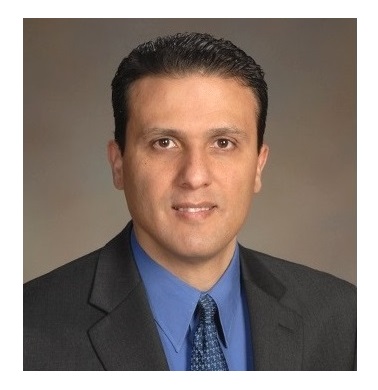
Dr. Wahab Hamou-Lhadj is a Professor and Chair at the Department of Electrical and Computer Engineering , Concordia University, and an Affiliate Researcher at NASA JPL, Caltech . He leads research in Artificial Intelligence for IT Operations (AIOps) , Software Observability , and Model-Driven Engineering , focusing on improving the reliability of digital systems in AI-driven environments.
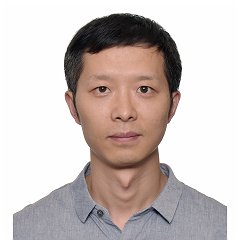
Yintong Huo is a tenure-track Assistant Professor in the Department of Computer Science at Singapore Management University (SMU), School of Computing and Information Systems. He joined SMU in early 2024 after completing his PhD at The Chinese University of Hong Kong (CUHK) under Prof. Michael R. Lyu. His academic journey includes a Bachelor's degree from the University of Electronic Science and Technology of China. Education: PhD in Computer Science and Engineering, The Chinese University of Hong Kong (2024) Bachelor's degree, University of Electronic Science and Technology of China Huo's research focuses on intelligent software engineering , particularly empowering AI models (especially LLMs) for software development, testing, and operations. His work spans AI4SE, LLM4SE, AIOps, code intelligence, and multimodal software engineering . Two flagship projects define his current research: LogPAI - an open-source AI platform for automated log analysis adopted by leading tech companies, and WebPAI - a multimodal intelligence project for automatic webpage development. His research addresses critical challenges in software reliability, log analysis, and UI code generation through innovative applications of AI. His recent publications reveal a strong trend toward multimodal approaches in software engineering , combining vision and language models for UI code generation, and increasingly sophisticated applications of LLMs for log analysis and software reliability. Huo's work demonstrates exceptional impact, with multiple papers accepted at top-tier venues including ASE, ICSE, and FSE with high acceptance rates (e.g., 9.5% for ASE'25). Scientific Awards: ICSE Distinguished Reviewer Award (2025) ISSRE Distinguished Reviewer Award (2024) IEEE Open Software Services Award (2022, for LogPAI with 3k+ GitHub stars and 70k+ downloads) ACM SIGSOFT CAPS Travel Grants (ASE'23, ICSE'24, FSE'24) Nomination for Best Teaching Assistant Award (2022) National Scholarship (2019) Huo actively mentors students at multiple levels, currently supervising PhD students Shi Ying Chang and Dan Huang (co-supervised with Prof. David Lo), research engineer Minxing Wang, and visiting students including Shiwen Shan. His undergraduate mentee Truong Hai Dang will intern at Apple Inc. He maintains strong industry connections, with his LogPAI project adopted by world-leading tech companies. Huo serves on program committees for major conferences including ASE'25, ICSE'26, and FSE'26, and is recruiting fully-funded PhD students and research assistants for projects in AI4SE and multimodal software engineering. Huo leads the LogPAI and WebPAI research initiatives, which have evolved into substantial open-source projects with significant industry adoption. His team focuses on practical applications of AI in software engineering, with particular emphasis on reliability and usability in real-world systems. The research environment benefits from SMU's strong position in software engineering research, where the university ranks No. 2 globally in Software Engineering according to CSRankings (2020-2025).
Muskaan Singh is a Lecturer in Data Analytics at the Intelligent Systems Research Centre (ISRC) within the School of Computing, Engineering and Intelligent Systems at Ulster University . A member of the Cognitive Analytics Research Lab (CARL) , her work bridges Natural Language Processing (NLP) , Artificial Intelligence , and Practical Applications in domains ranging from machine translation to biomedical diagnostics. Education: PhD in Machine Translation (Thapar Institute of Engineering and Technology, 2016-2020) Master’s in Machine Translation (IIIT Hyderabad, India) Her research spans NLP and AI with applications in code-switched language modeling , depression detection , social media analytics , and medical diagnostics . She has developed multilingual tools for automatic minuting, including DeepCon and ALIGNMEET , and contributed to EU-funded projects like ROXANNE (criminal network analysis) and ELITR (European Live Translator). Key scientific awards include first prizes in international NLP competitions (EVAL4NLP, LT-EDI, SMM4H) and recognition at EMNLP , ACL , and COLING . She received the Inclusion and Diversity Grant (EMNLP 2021) and GHC Scholarship (2019). Current projects include AI-EPOCMON (AI-Enabled Point-of-Care Monitoring) and T3-NCP (crime prevention for safer communities). Dr. Singh has supervised grants from UKRI and Alzheimer’s Research UK , focusing on AI for health and IT operations . Her team at ISRC collaborates globally with institutions in Switzerland , Czech Republic , and India . She also leads research for the Center for Data Science and Artificial Intelligence at IIIT Lucknow, India.
Max Planck Institute for Security and PrivacyGermany
Heng Li is an Assistant Professor in the Department of Computer Engineering and Software Engineering at Polytechnique Montreal, Canada. He leads the Measurement, Observation, and Optimization of Software and its Evolution (MOOSE) lab, focusing on software engineering research with emphasis on observability, log analysis, and performance engineering. His work bridges academic research with practical industry applications, drawing from his prior experience as a software engineer at Synopsys and BlackBerry. Education: Ph.D. in Computing from Queen's University, Canada M.Sc. from Fudan University, China B.Eng. from Sun Yat-sen University, China Heng Li's research spans multiple critical areas in modern software engineering. His primary focus is on software monitoring and observability , where he develops techniques to make software systems more transparent and understandable during operation. He has made significant contributions to software log mining , creating novel approaches for parsing and analyzing log data to detect anomalies and performance issues. His work in intelligent operations of software systems applies machine learning to automate various aspects of software operations. Additionally, he researches software performance engineering and mining software repositories to understand development practices and improve software quality. An analysis of Dr. Li's recent publications reveals a strong focus on practical applications of software analytics. His work consistently addresses real-world challenges in software observability, particularly log analysis and performance monitoring. A notable trend is his exploration of machine learning applications in software operations (AIOps), with increasing emphasis on efficient algorithms for log processing and anomaly detection. His research shows a progression from foundational techniques in log parsing to more sophisticated approaches for performance regression detection and privacy preservation in software logs. Many of his papers include empirical studies from industry settings, demonstrating his commitment to bridging the gap between academic research and industrial practice. Professional Service: Program Committee member for multiple top software engineering conferences including ASE, ICSE, ESEC/FSE Active participation in workshops and special tracks related to software analytics and AIOps Dr. Li leads the MOOSE (Measurement, Observation, and Optimization of Software and its Evolution) laboratory at Polytechnique Montreal. The lab focuses on developing innovative techniques for monitoring software systems, analyzing their behavior through logs and performance metrics, and optimizing their operation. Current projects in the lab include advanced log parsing algorithms, performance regression detection systems, and privacy-preserving techniques for software logs. The lab maintains strong connections with industry partners to ensure research relevance to real-world challenges.
George Pallis is a Professor in the Department of Computer Science at the University of Cyprus, where he also serves as Associate Director of the Laboratory of Internet Computing. He is a programme director for the Master in Data Science and leads major international research initiatives funded by the European Commission, national agencies, and industry partners such as Google. His academic foundation includes a BSc and PhD in Informatics from Aristotle University of Thessaloniki, Greece. PhD, Department of Informatics, Aristotle University of Thessaloniki, Greece, 2006 BSc, Department of Informatics, Aristotle University of Thessaloniki, Greece, 2001 Dr. Pallis’s research focuses on Distributed and Internet Computing , with specialized interests in Big Data Analytics, Cloud/Edge/Fog Computing, Content Delivery Networks, and Online Social Networks . His work bridges theoretical innovation and practical deployment, particularly in scalable and energy-efficient computing infrastructures. He has contributed to international standards through the German Institute for Standardization (DIN) and has developed frameworks for cloud elasticity, fog emulation, and misinformation detection. His 15 most recent publications reflect a strong trend in edge and fog computing, AI-driven analytics, privacy-preserving data processing, and misinformation detection . These works span high-impact venues such as IEEE IC2E, IEEE/ACM SEC, IEEE CloudCom, and IEEE BigData, with increasing integration of machine learning and human-in-the-loop systems. Dr. Pallis has received multiple scientific awards, including: Best Paper Award, IEEE CloudCom 2024 Best Paper Award (2nd place), IEEE/ACM UCC 2023 Best Paper Award, IEEE IoTDi 2022 Best Student Paper, IEEE ISCC 2022 Best Paper, IEEE BigData 2016 Best Paper, ICSOC 2014 Best Demo Award, ACM/IEEE SEC 2020 World’s Top 2% Scientists (Stanford) Golden Core Member, IEEE Computer Society He has supervised several PhD students in areas such as fog computing emulation, big data in entrepreneurship, and polarization detection. His research is supported by over 5.5 million euros in grants from the European Commission (e.g., RAINBOW, UNICORN, ICARUS), the Research Promotion Foundation in Cyprus, and industry. He has served as General Chair of IEEE/ACM SEC 2024 and IEEE IC2E 2024, and as Editor-in-Chief of IEEE Internet Computing (2019–2023), now holding the Emeritus title. He is currently Associate Editor for the Computing Journal (Springer). Dr. Pallis leads the Laboratory of Internet Computing, a hub for research in cloud, edge, and social computing. The lab develops tools like Fogify for emulation, RAINBOW analytics, and Check-It for fake news detection, fostering collaboration across academia and industry.
Arie van Deursen is a Professor in Software Engineering at Delft University of Technology, where he is affiliated with the Department of Software Technology within the Faculty of Electrical Engineering, Mathematics, and Computer Science (EEMCS). He previously served as head of department from 2016-2023 and currently chairs the Software Engineering Research Group (SERG). He is also the scientific co-director of AI4SE, a five-year collaboration between JetBrains and TU Delft investigating novel uses of artificial intelligence in software engineering. His research interests span software engineering, software testing, trustworthy AI, language models for code, software architecture, human aspects of software engineering, and digitalization in the financial and public sector. His work often bridges academic research with practical industry applications, as evidenced by his co-founding of two companies: The Software Improvement Group (2000) and PerfectXL (2010/2013). Recent publications show a strong focus on large language models in software engineering contexts, with multiple 2024-2025 papers examining code generation quality, multilingual code comments, contamination-free code datasets, and license infringement concerns in LLM training data. His research demonstrates significant engagement with the challenges and opportunities presented by AI in software development. AIWare 2024 ACM SIGSOFT Distinguished Paper Award ASE 2024 ACM SIGSOFT Distinguished Paper Award CAIN 2023 Distinguished Paper Award CSCW 2015 ACM SIGCHI Best Paper Award EASE 2016 Best Paper Award Professor van Deursen has (co-)supervised 50 PhD students and 100 MSc students throughout his career. He serves on the Advisory Council on IT Assessment (AcICT) of the Dutch government (since 2022) and the Advisory Board of ING Bank Netherlands (since 2024). He was elected as a fellow of the Netherlands Academy of Engineering (NAE) in 2023. He leads the AI4SE lab, which hosts 10 PhD students, dozens of MSc and BSc students, and collaborates with many TU Delft faculty members and JetBrains specialists. The lab focuses on investigating novel uses of artificial intelligence in software engineering, with particular attention to practical applications and industry relevance.
Salmans is a Research Fellow at the DigiTech Centre within the Digital Futures Institute at the University of Suffolk, affiliated with the Research Directorate. His work bridges academia and industry through consultancies, training, and knowledge dissemination. He holds a PhD in Data Analytics (specializing in NLP) from Ulster University, along with Master's and Bachelor's degrees in Software Engineering and IT. Education: PhD in Data Analytics (NLP specialization), Ulster University (2020) MSc Software Engineering, Alhamd Islamic University (Pakistan) BSc Information Technology, Alhamd Islamic University (Pakistan) Research focuses on NLP, AIops, and applied data analytics with industry collaboration. Key areas include transformer models (BERT/ERNIE/RoBERTa), IT incident prediction, and agritech AI. His work is funded by UKRI, EPSRC, and the Turing AI Fellowship. Recent publications explore cybersecurity in WordPress (2024), AIops frameworks (2023), and neural POS tagging (2023). His research demonstrates a strong focus on practical applications across IT, agriculture, and language processing. Received the FHEA fellowship (2023) for teaching contributions. Secured £350k UKRI grants for agritech projects, including 'Agri-KG' and 'Agri-F2P', advancing AI-driven agricultural decision-making. Previously managed a £1M EPSRC-funded project with AllState for infrastructure incident prediction. Lab/Team Affiliations: Lead researcher in the DigiTech Centre's NLP group and collaborator in Ulster University's Intelligent Systems Research Centre.
Professor Damien Coyle is the Director of the Bath Institute for the Augmented Human at the University of Bath, where he leads cutting-edge research in artificial intelligence, machine learning, and human-computer interaction. His work is centered on brain-computer interfaces (BCI), neurotechnology, and cognitive computing, with applications in healthcare, rehabilitation, and intelligent systems. His research interests include Brain-Computer Interfaces , Spiking Neural Networks , Deep Learning , Emotion Recognition , Virtual and Extended Reality , and Neurofeedback Systems . He applies advanced AI techniques to decode neural signals, enabling real-time interaction between the brain and external devices. His interdisciplinary approach integrates neuroscience, computer science, and engineering. His recent publications from 2023–2024 reveal a strong focus on anomaly detection in industrial systems , EEG-fMRI data fusion for inner speech decoding , multi-level IT incident prediction using AI , and enhancing neurofeedback with immersive VR . These works demonstrate a trend toward multimodal data integration, real-time BCI applications, and AI-driven decision support in both clinical and technological domains. He has supervised numerous students and collaborators, many of whom are co-authors on his publications. His research is frequently published in top-tier IEEE and Springer conferences. He actively contributes to the advancement of neuroadaptive technologies and is involved in high-performance computing for BCI calibration. His leadership in organizing major conferences further underscores his influence in the field.




/prod01/channel_2/media/uniofsuffolk/website/content-assets/images/staff-profile-photos/research/Salman-Ahmed.jpg)