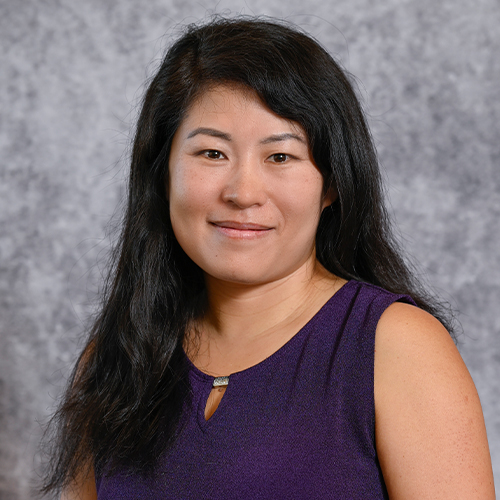
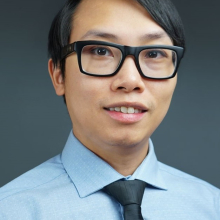
Dr. Min Chi is a Professor in the Department of Computer Science at North Carolina State University, where she joined in 2013 as a Chancellor's Faculty Excellence Program cluster hire in the Digital Transformation of Education. Her academic journey includes a Ph.D. and M.S. in Intelligent Systems from the University of Pittsburgh and a B.E. in Information Science and Technology from Xi'an Jiaotong University, China. She completed postdoctoral fellowships at Carnegie Mellon University's Machine Learning Department and Stanford University's Human Sciences and Technologies Advanced Research Institute. Dr. Chi's research focuses on the development and empirical evaluation of cutting-edge Artificial Intelligence, Deep Learning, and Reinforcement Learning frameworks tailored for addressing human-centric challenges. Her work spans multiple domains including advanced learning technologies, AI and intelligent agents, data sciences and analytics, and human-computer interaction. She has made significant contributions to intelligent tutoring systems, healthcare applications, nuclear power systems, and humanitarian efforts such as food distribution and disaster relief. Her publication record demonstrates a strong focus on applying AI techniques to real-world educational challenges, with recent work examining metacognitive knowledge transfer, reinforcement learning for pedagogical policy induction, and deep learning approaches for proactive help in educational settings. Her research also extends to healthcare applications, food distribution systems, and other socially impactful domains. 10 Best Paper, Best Student Paper, and Outstanding Paper Awards Prestigious Alcoa Foundation Engineering Research Achievement Award NSF CAREER Award Dr. Chi leads multiple significant research projects funded by the National Science Foundation, National Institutes of Health, and the Department of Energy, with a total funding exceeding $7 million. Her work bridges theoretical advances in AI with practical applications that address critical societal challenges in education, healthcare, and humanitarian operations.
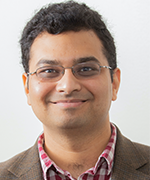
Harish Ravichandar is an Assistant Professor at the School of Interactive Computing , Georgia Institute of Technology, and a core faculty member of the Institute for Robotics and Intelligent Machines (IRIM) . He leads the Structured Techniques for Algorithmic Robotics (STAR) Lab , focusing on structured computational frameworks and learning algorithms with inductive biases to enhance robot efficiency, reliability, and self-sufficiency in human-robot collaboration and complex applications like dexterous manipulation and multi-agent coordination. His research bridges robot learning , human-robot interaction , and multi-agent systems , emphasizing stable, frugal, and safe skill acquisition from human demonstrations. Key themes include intention inference , trajectory optimization , and heterogeneous team coordination , often leveraging Koopman operators , hypernetworks , and graph-based methods . Scientific recognition includes the NSF CAREER Award , IEEE MRS Best Paper Award , and Georgia Tech’s College of Computing Outstanding Post-Doctoral Research Award . His work also received the ASME DSCC Best Student Paper Award and P&W Institute Graduate Fellowship . Harish’s educational background includes a Ph.D. in Electrical and Computer Engineering from the University of Connecticut (2018) , an M.S. from the University of Florida (2014) , and a B.E. in Instrumentation and Control Engineering from Anna University (2012) . He previously held postdoctoral and research scientist roles at Georgia Tech before his current position.
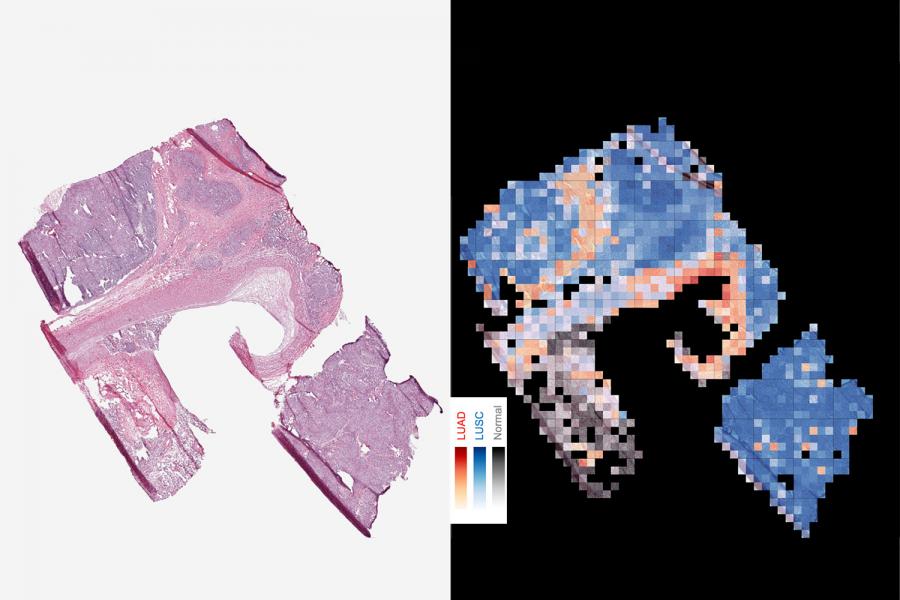
Narges Sharif Razavian is an Assistant Professor at NYU Grossman School of Medicine , holding appointments in both the Department of Population Health and Department of Radiology . She earned her PhD from Carnegie Mellon University and completed postdoctoral training at New York University's Courant Institute in Computer Science's Machine Learning group. Research focuses on applying Machine Learning and Artificial Intelligence to healthcare challenges, including Predictive Analytics for disease outcomes, Biomarker Discovery , and Medical Imaging analysis. Recent publications highlight her work on AI-driven diagnosis in oncology (lung and pancreatic cancer), hematoma expansion prediction in neurology, and real-time models for infectious disease outcomes (e.g., COVID-19). She utilizes Electronic Health Records (EHRs) and multimodal data to develop clinical decision support systems, with applications in public health surveillance and personalized medicine. Contact: Email | Phone: 212-263-2234 | Office: 227 East 30th Street, 6th Floor, Room 639, New York City
Joseph A. Campbell is an Assistant Professor in the Department of Computer Science at Purdue University, leading the Collaborative AI for Machines and People (CAMP) Lab. He holds a Ph.D., M.S., and B.S. in Computer Science and Computer Engineering from Arizona State University. Before academia, he worked as a software engineer for five years. Prior to Purdue, he was a Postdoctoral Fellow at Carnegie Mellon University's Robotics Institute. His research focuses on explainable machine learning and robotics, particularly how agents use explanations for self-improvement and decision-making. Key areas include theory of mind in multi-agent systems, lifelong learning, and interpretable transfer learning. His work bridges robotics and AI, with applications in human-robot interaction and prosthetic control. Notable publications include advancements in reinforcement learning with language models, multi-agent collaboration frameworks, and methods for enhancing state estimation in robots. His research has been presented at top conferences like NeurIPS, EMNLP, and CoRL. Dr. Campbell maintains an active GitHub profile (joe-campbell) with repositories such as Interaction Primitives for robotics applications. His lab, CAMP, explores AI systems that collaborate effectively with humans and other machines.
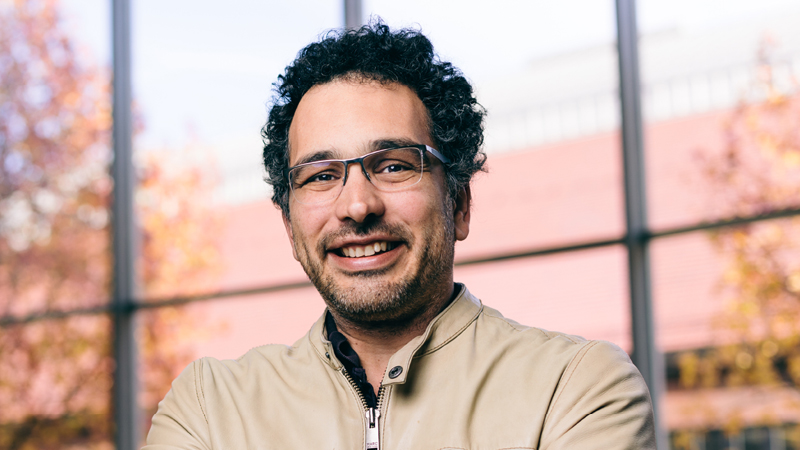
Bruno Felisberto Martins Ribeiro is an Associate Professor of Computer Science at Purdue University, joining the department in Fall 2015. His research focuses on endowing machine learning algorithms with robust invariant representations for relational and temporal data, emphasizing causal and associational tasks. Key research areas include Networking and Operating Systems, Artificial Intelligence, Machine Learning, and Natural Language Processing. He holds a Ph.D. in Computer Science from the University of Massachusetts Amherst (2010). Education: Ph.D., Computer Science, University of Massachusetts Amherst, 2010 Research Interests: Explores invariances in mathematics and machine learning to improve model robustness. Key topics include graph and tensor invariances, causal relationships, adversarial robustness, and applications in recommendation systems, robotics, and drug discovery. His lab’s work has advanced counterfactual task frameworks and causal reasoning in machine learning. Recent Contributions: Recent publications address zero-shot generalization in graph neural networks, causal discovery methods, and defenses against adversarial attacks. His work spans conferences like ICML, NeurIPS, and SIGCOMM. Awards: Best Paper Award at ACM CODASPY 2021 Best Paper Award at SIGMETRICS 2016 Best Paper Award at IEEE NetSciCom 2014 Advising & Students: Supervises current PhD students Beatrice Bevilacqua, Jincheng Zhou, and Yucheng Zhang, along with MSc student Ipsit Mantri. Notable former students include S Chandra Mouli (Meta), Yangze Zhou (Spotify), and Jianfei Gao (Vector Institute). Labs & Teams: Leads research in invariant representations and causal ML, collaborating with institutions like Stanford during his sabbatical. His work bridges theory and practice, impacting areas like network analysis and AI-driven healthcare.
Oliver S. Cossairt is an Adjunct Associate Professor at Northwestern University's departments of Computer Science and Electrical and Computer Engineering. He leads the Computational Photography Lab , focusing on computational imaging, optics, and display technologies. His work bridges computer vision, graphics, and optical engineering to design novel imaging systems with applications in medical, astronomical, and scientific domains. Education: Ph.D. Computer Science, Columbia University (2011) M.S. Media Arts and Sciences, MIT Media Lab (2003) B.S. Physics, Evergreen State College (2003) Research Interests: Cossairt develops imaging systems that combine optical innovations with computational methods to enhance performance and functionality. Key areas include computational displays, depth sensing, and high-precision 3D imaging. His work emphasizes practical applications like medical imaging, holography, and non-line-of-sight sensing. Awards: NSF CAREER Award (2015–2020) Best Paper Award at ICCP 2011 NSF Graduate Research Fellowship (2008–2011) Teaching & Funding: Taught courses on computational photography and computer vision. Secured grants from NSF, NIH, and industry partners (e.g., Samsung, Omron) for projects like Coherent Computational Imaging and Snapshot 3D Holographic Microscope . Labs & Teams: Directs the Computational Photography Lab, collaborating with institutions like Argonne National Labs and museums for projects in cultural heritage imaging.
Ugur Cetintemel is the Khosrowshahi University Professor of Computer Science at Brown University, where he has been since completing his PhD at the University of Maryland in 2001. His research focuses on data management systems, database systems, distributed systems, and stream processing, with recent work integrating AI techniques into database systems. He teaches courses such as Database Management Systems and Data Science fundamentals. Notable contributions include the Aurora and Borealis stream processing engines, S-Store for transaction processing, and DBPal for natural language interfaces. His work emphasizes scalable, efficient systems for large-scale data challenges. Education: PhD in Computer Science, University of Maryland, 2001 MS in Computer Science, Bilkent University, 1996 BS in Computer Science, Bilkent University, 1994 Research Interests: Data management, stream processing, distributed systems, predictive analytics, and AI integration with databases. Key projects include optimizing database systems for modern hardware, developing real-time stream processing frameworks, and exploring interactive data exploration techniques. Grants & Advising: Extensive contributions to grants and collaborations, though specific grant details are not listed. Supervises graduate students in areas like database systems and machine learning integration. Part of the Brown Data Management Group. Labs/Teams: Leads research within the Brown Data Management Group, focusing on advancing database systems for big data and real-time analytics.
Dr. Ryan Carney is an Associate Professor of Digital Science at the University of South Florida's Department of Integrative Biology (College of Arts and Sciences). His research bridges paleontology and epidemiology, using cutting-edge technologies like 3D imaging, AI, and VR/AR. He studies dinosaur biomechanics (e.g., Archaeopteryx flight mechanics) and mosquito-borne diseases (e.g., malaria, Zika) through NSF/NIH-funded collaborations with agencies like NASA and the CDC. His work integrates citizen science platforms (iNaturalist, Mosquito Alert) for disease surveillance and develops AI tools for mosquito classification. Education: PhD (Brown), MPH/MBA (Yale), B.A.'s in Biology & Art (UC Berkeley) Lab: SCA 107 (focuses on digital paleontology and disease modeling) Research interests span dinosaur functional morphology, epidemiological modeling using GIS/remote sensing, and translating science through immersive technologies. He received awards like the National Geographic Emerging Explorer and multiple USF teaching/research accolades. Awards: CAS Liberal Arts Teaching Award, Outstanding Research Achievement, etc. Grants include NSF funding for AI-driven mosquito surveillance and NIH support for disease control. His lab's innovations include the Global Mosquito Observations Dashboard (GMOD) and VR reconstructions of prehistoric species.
Dr. Steven H. H. Ding is an Assistant Professor at McGill University's School of Information Studies, specializing in cybersecurity, machine learning, and data mining. His research focuses on AI-driven solutions for malware detection, software vulnerability analysis, and reverse engineering. He holds a PhD from McGill University and has been supported by BlackBerry Cylance and DRDC. His work bridges theoretical advancements with practical applications in military systems and avionics cybersecurity. Dr. Ding earned his PhD in 2019 with notable awards including the FRQNT Doctoral Research Scholarship and McGill's Dean’s Graduate Award. His educational background includes degrees from McGill, Concordia University, and the University of Shanghai for Science and Technology. His research interests span cybersecurity domains such as zero-day malware identification, code obfuscation countermeasures, authorship verification for digital forensics, and AI applications in avionics anomaly detection. He actively contributes to open-source tools like the Kam1n0 MapReduce-based assembly clone search system. Recent work emphasizes adversarial machine learning for evasive malware generation, transformer-based anomaly detection in avionics, and automated SBOM generation for firmware analysis. His publications reflect a focus on real-world cybersecurity challenges in both civilian and defense sectors. Dr. Ding leads the L1NNA Lab and collaborates with industry partners on cutting-edge projects. His contributions include novel techniques for phishing detection leveraging large language models and innovative approaches to reverse engineering software composition in JavaScript applications.
Professor Peter Y. K. Cheung is a Professor of Digital Systems at Imperial College London, holding dual affiliations within the Department of Electrical and Electronic Engineering and the Dyson School of Design Engineering. His work focuses on reconfigurable systems, FPGA architectures, and high-level synthesis tools. He co-founded one of the UK's leading FPGA research groups with Professor Wayne Luk, addressing challenges in variability mitigation, reliability, and application-specific FPGA deployments. His research spans Field-Programmable Gate Arrays (FPGAs) Reconfigurable computing Neural network acceleration Cryptographic protocols Embedded systems He has pioneered techniques such as logic shrinkage for FPGA-based neural networks and developed frameworks like LUTNet for efficient inference. His contributions also include fault-tolerant FPGA designs and methodologies for distributed computation protocols. Key collaborations include work with the Department of Computing on FPGA-based AI acceleration and cybersecurity applications. His recent work explores edge computing, secure decentralized systems, and pandemic modeling using adaptive control strategies. Notable projects include the DSCS protocol for secure distributed computation, acceleration of gravitational wave detection algorithms, and energy-efficient CNN implementations. His research bridges hardware-software co-design with real-world applications in healthcare, finance, and aerospace.
Yuankai (Kenny) Tao is an Associate Professor of Biomedical Engineering at Vanderbilt University's School of Engineering and an SPIE Faculty Fellow. He directs the Graduate Studies program in Biomedical Engineering and leads research in optical imaging systems for clinical diagnostics and therapeutic monitoring in ophthalmology, gastroenterology, and oncology. His lab develops technologies like intraoperative OCT and SECTR, focusing on noninvasive subcellular visualization and biomarker monitoring. Collaborations span engineering, basic sciences, and medicine to translate innovations into clinical tools. Education: Ph.D., Biomedical Engineering, Duke University M.S., Biomedical Engineering, Duke University B.S.E., Biomedical Engineering and Electrical Engineering, Duke University Research Interests: Biomedical optics, optical coherence tomography (OCT), image-guided surgery, therapeutic monitoring, big data analytics, and high-throughput imaging for drug discovery. His work bridges engineering and medicine, emphasizing real-time feedback systems and interdisciplinary innovation. Grants & Labs: Director of the Vanderbilt Institute for Surgery and Engineering (VISE)-affiliated lab, focusing on surgical imaging and translational research. Projects include automated instrument tracking, SECTR systems, and AI-driven imaging analysis. Collaborations involve clinicians and researchers across disciplines.
Aditya Prakash is an Associate Professor and Associate Chair for Academic Affairs in the School of Computational Science and Engineering at Georgia Tech. He holds a PhD from Carnegie Mellon University (2012) and a B.Tech from IIT Bombay (2007). His research focuses on data science, machine learning, and AI applied to epidemiology, healthcare, security, and urban computing. His work has led to impactful tools used by organizations like CDC, ORNL, and Walmart. Notable awards include the NSF CAREER Award (2018) and IEEE's 'AI Ten to Watch' (2017). Education: PhD (Computer Science, CMU, 2012), B.Tech (IIT Bombay, 2007) Research Interests: Epidemic forecasting, network analysis, healthcare informatics, and large-scale data-driven solutions for societal challenges. He has authored over 80 papers and holds two patents. His lab develops methods for disease modeling, urban infrastructure analysis, and cybersecurity. Key projects include the NSF-funded BEHIVE initiative for pandemic prediction and collaborations with MIDAS network for infectious disease modeling. Awards: NSF CAREER, Facebook Faculty Award, IEEE AI Recognition, and multiple best-paper awards. His group advises students across PhD, MS, and undergraduate levels, with notable alumni in academia and industry. Labs & Affiliations: Core faculty at ML@GT (Machine Learning Center) and IDEaS (Institute for Data Engineering and Science). Active in organizing conferences like AAAI, KDD, and SIGMOD.
Gaetano Valenza is an Associate Professor of Bioengineering at the University of Pisa, Italy, where he leads the Neuro-Cardiovascular Intelligence Lab at the Enrico Piaggio Research Centre. He holds affiliations with the Neuroscience Statistics Research Laboratory at MIT and has served as a Research Fellow at Harvard Medical School and Massachusetts General Hospital. His academic work spans bioengineering, computational physiology, and affective computing. His research focuses on statistical and nonlinear biomedical signal and image processing , cardiovascular and neural modeling , and physiologically interpretable artificial intelligence . He develops wearable systems for physiological monitoring, with applications in autonomic nervous system assessment, brain-heart interactions, and mental health. His work has led to novel metrics such as the Sympathetic and Parasympathetic activity indices derived from ECG. The 15 most recent publications reflect a consistent trend in brain-heart interplay , complexity analysis of physiological signals , explainable AI in healthcare , and virtual reality applications in mental health . His work integrates advanced signal processing, nonlinear dynamics, and machine learning to decode emotional and cognitive states from physiological data. Dr. Valenza is a Senior Member of IEEE and serves on several technical committees. He is an active editorial leader, currently serving as Associate Editor for IEEE-EMBC , Plos One , Complexity , and Scientific Reports , and has guest-edited special issues in Philosophical Transactions of the Royal Society A and IEEE Journal of Biomedical and Health Informatics . He has led or participated in numerous international research projects, including FP7 and H2020 initiatives such as NEVERMIND and EXPERIENCE. He teaches courses in Biostatistics, Probability & Biostatistics, and Advanced Image Processing at the University of Pisa. As lab head and project coordinator, he leads a multidisciplinary team working on neuro-cardiovascular intelligence, wearable systems, and AI-driven mental health interventions.
Dr. Zara Ersozlu is a Senior Lecturer in Mathematics Education within the School of Education at the University of Newcastle, Australia. With a distinguished international career spanning multiple continents, she has held academic positions at prestigious institutions including North Carolina State University (USA), Gazi and Gaziosmanpasa Universities (Turkey), National Taiwan Normal University (Taiwan), The University of Western Australia, Murdoch University, and Deakin University. Her academic journey includes tenured positions as an Associate Professor and leadership roles as Department Head and Chair in teacher education disciplines. Currently, she teaches undergraduate and postgraduate courses in mathematics education, including Effective Pedagogies in Primary Mathematics, K-6 Mathematics, K-6 Numeracy, and Digitally Supported Learning. Dr. Ersozlu earned her Doctor of Philosophy from Firat University in Turkey and her Master of Art from Sakarya University. Her extensive academic preparation is complemented by five years of practical teaching experience in public schools prior to entering academia. This blend of theoretical knowledge and practical classroom experience informs her approach to teacher education and educational research. At the broadest level, Dr. Ersozlu's research investigates solutions to real-life problems impacting people's well-being, success, and capacity to achieve. Her scholarly work spans primary and secondary mathematics education, the psychology of mathematics (including metacognition, self-regulation, and anxiety), cross-cultural educational studies, teacher education, virtual simulated learning environments, and educational assessment. She has increasingly focused on the transformative potential of AI and machine learning in education, exploring how these technologies alter teaching, learning, and research processes. Her methodological expertise encompasses both quantitative and qualitative approaches, allowing her to effectively analyze both small and large educational datasets. Analysis of Dr. Ersozlu's recent publications reveals a strong emphasis on mathematics anxiety, teacher education, and the integration of technology in learning environments. Her work demonstrates a consistent focus on practical applications of educational research to address real-world challenges in mathematics education. The interdisciplinary nature of her research connects educational psychology, technology integration, and cross-cultural perspectives, with particular attention to how these elements intersect in teacher preparation and student learning outcomes. 2023 ATEA Research Recognition Award from the Australian Teacher Education Association 2021 Fellow of the Higher Education Academy (Advance HE, UK) 2010 Fellowship Program for Postdoctoral Researchers from the Council of Higher Education of Turkey Dr. Ersozlu is deeply committed to mentoring the next generation of scholars, currently supervising four PhD students and having successfully guided ten students to completion. Her grant portfolio includes significant funding for projects such as Best Practice Guidelines for RPL in Initial Teacher Education Programs ($60,000), Exploring the Reciprocal Relationship Between Mathematics Anxiety and Mathematical Resilience ($2,599), and multiple conference travel awards. She serves as an Associate Editor for several prominent journals including the International Electronic Journal of Mathematics Education and as Editor for Interdisciplinary STEM Education. Her editorial work reflects her standing as a respected voice in mathematics education research. Dr. Ersozlu's academic leadership extends to her role in developing innovative teaching approaches that integrate virtual simulation technology and learning analytics. Her work with TeachLivE™, a mixed-reality classroom simulation platform, demonstrates her commitment to creating authentic learning experiences for teacher education students. Through these initiatives, she bridges the gap between educational theory and classroom practice, preparing future educators to effectively implement evidence-based teaching strategies in diverse learning environments.
Professor Omer Rana serves as Professor of Performance Engineering and International Dean for the Middle East at Cardiff University's School of Computer Science and Informatics. He also holds the prestigious position of Cross-Council Research Director for the UK National Edge AI Hub, demonstrating his leadership in national research initiatives. Previously, he led the Complex Systems research group and served as Dean of International for the Physical Sciences and Engineering College at Cardiff University. Professor Rana is a Fellow of both the Learned Society of Wales and the Higher Education Academy, and serves on the Advisory Board of the Welsh Ethnic Minority Professors Initiative (WEMPI). His research expertise centers on the intersection of intelligent systems and high performance distributed computing, with particular focus on applying intelligent techniques to resource management in distributed systems. His scholarly contributions span edge computing, cloud computing, Internet of Things (IoT), artificial intelligence, cybersecurity, federated learning, privacy-preserving systems, and sustainable computing. Professor Rana has published extensively in top-tier journals and conferences, with recent work emphasizing practical applications in industrial automation, smart buildings, and sustainable computing solutions. Professor Rana's publication record demonstrates consistent leadership in edge computing and distributed systems research, with a growing emphasis on practical implementations across diverse application domains. His work bridges theoretical computer science with real-world technological challenges, particularly in industrial automation, smart environments, and sustainable infrastructure. Fellow of the Learned Society of Wales Fellow of the Higher Education Academy Professor Rana actively supervises postgraduate students and has secured significant research funding for projects related to edge computing, IoT, and distributed systems. His international collaborations span Europe, Asia, and the Middle East, reflecting his global influence in the field. He serves as a sought-after keynote speaker, workshop chair, and panel moderator at major international conferences including IEEE/ACM Utility and Cloud Computing (UCC) and IEEE Edge Computing. He leads multiple research initiatives, most notably as Cross-Council Research Director for the UK National Edge AI Hub, where he shapes national research directions in edge computing and AI. His work has practical applications across industrial automation, smart building management, electric vehicle infrastructure, and sustainable computing solutions.