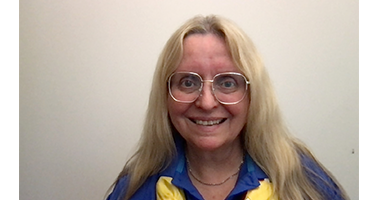
Anne C. Elster is a Professor and Director of the Heterogeneous and Parallel Computing Lab (HPC-Lab) at NTNU's Department of Computer Science, with additional roles as HPC Leader at the Center for Geophysical Forecasting and Senior Research Fellow at the Oden Institute. She holds board positions at NTNU and its Faculty of Information Technology. Her research spans: High-Performance Computing : GPU acceleration, auto-tuning, and heterogeneous systems Machine Learning : Applied to optimization and computational geosciences Parallel Algorithms : For scientific computing and real-time simulations Her recent publications (2021-2024) focus on GPU auto-tuning, quantum-HPC integration, distributed systems, and ML-driven geophysical data analysis, with strong emphasis on performance optimization across architectures. Awards and honors: IEEE Computer Society Distinguished Contributor (2021) IEEE Distinguished Speaker (2019-2022) IEEE Senior Member (2000) She has supervised 100+ master's students, 15+ PhDs, and secured major grants including EU H2020 projects. Current Post Docs focus on HPC acceleration and AI applications. Her HPC-Lab collaborates with CERN, Equinor, and international universities, specializing in GPU-accelerated scientific computing and tools for performance portability.
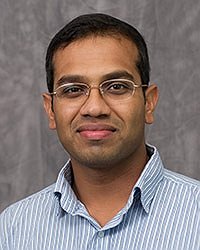
Mayur Naik is the Misra Family Professor in the Department of Computer and Information Science at the University of Pennsylvania's School of Engineering and Applied Science. He holds office in Room 642B, Amy Gutmann Hall and maintains an active research program focused on the intersection of programming languages and artificial intelligence. Before joining UPenn, he was faculty at Georgia Institute of Technology and a researcher at Intel Labs, Berkeley. Naik received his PhD in Computer Science from Stanford University in 2008 under Alex Aiken, a Masters from Purdue University in 2003 under Jens Palsberg, and a Bachelors from BITS Pilani in 1999. He grew up in Goa, India. His primary research interests center around neurosymbolic programming, which combines symbolic reasoning with machine learning to create more accurate, interpretable, and domain-aware AI systems. His group develops language design, learning algorithms, and compiler optimizations in this space, with their most mature effort being the Scallop neurosymbolic programming language and compiler toolchain. He also conducts research in trustworthy AI for healthcare applications and AI-enabled programming tools that improve programmer productivity. Analysis of his recent publications shows a strong trend toward neurosymbolic programming frameworks (Scallop, TorchQL), LLM-assisted program analysis (IRIS), and applications of these techniques to security, healthcare, and computer vision. His work consistently bridges theoretical foundations with practical implementations, often releasing open-source systems. Misra Family Professor (endowed chair, effective July 2024) Multiple distinguished paper awards (PLDI 2019, FSE 2015, PLDI 2014) Test-of-Time Paper Awards (FSE 2013, FSE 2012, EuroSys 2011) His student Elizabeth Dinella won the 2025 ACM SIGSOFT Outstanding Dissertation award Naik has advised numerous PhD students who have gone on to faculty positions at top institutions including Peking University, University of Toronto, Ashoka University, Bryn Mawr College, and Johns Hopkins University. His research is supported by grants from NSF, Google, Amazon, and other industry partners. His lab maintains active collaborations with clinicians and bioinformatics researchers to apply neurosymbolic programming to healthcare problems. His research group, which includes current PhD students and postdocs, develops practical open-source systems and applies them to diverse domains including computer vision, cybersecurity, medicine, and bioinformatics. The group maintains strong industry connections with Google, Microsoft, Amazon, and other tech companies.
Myoungsoo Jung is the KAIST Endowed Chair Professor and Full Professor at Korea Advanced Institute of Science and Technology, holding primary appointment in the School of Electrical Engineering with additional affiliations in the School of Semiconductor System Engineering, Graduate School of AI Semiconductor, Graduate School of System Architect, and Graduate School of AI. His research focuses on cutting-edge computer architecture and operating systems with specialization in memory and storage systems. Professor Jung's research interests span computer architecture, operating systems, flash memory, solid-state drives, non-volatile memory, file systems, parallel processing, and heterogeneous computing. He has pioneered work in CXL-based memory expansion, computational SSDs, and memory disaggregation technologies that are transforming modern data centers and AI infrastructure. His recent publications demonstrate significant advancements in CXL-driven architectures, computational storage, and memory systems. The research trends show increasing integration of storage and memory technologies with AI workloads, particularly in large-scale graph processing, federated learning, and billion-scale data management. His team's work frequently appears in top-tier venues including ISCA, HPCA, SOSP, and USENIX ATC. Hall of Fame, IEEE/ACM ISCA (2024) Digital Innovation Award from Minister of Science and ICT (2024) CES Innovation Award Winner, CXL-Enabled AI Accelerator (2025) Korea Innovative Startup Award, Ministry of Science and ICT (2025) Samsung Best Paper Award Winner (Grand Prize) (2022) Professor Jung has successfully advised numerous PhD students including Miryeong Kwon (recipient of KAIST Outstanding PhD Dissertation Award) and Donghyun Gouk. His CAMEL research lab has secured over $13M in funding from sources including DOE, NSF, and Korean government agencies. The lab maintains strong industry partnerships with Samsung, SK Hynix, and Panmnesia, focusing on translating research into practical systems. Current projects include CXL-based memory expansion, computational SSDs for AI acceleration, and next-generation storage architectures for hyperscale data centers.