- Code Intelligence
- Transfer Learning
- AI4SE
- +۵ مورد دیگر
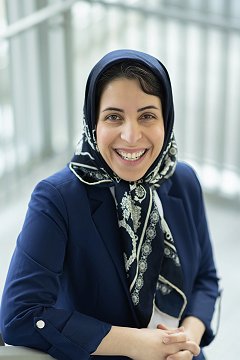
Fatemeh Hendijani Fard is an Assistant Professor in the Department of Computer Science at the University of British Columbia's Okanagan campus. She serves as a graduate student supervisor and teaches courses in Computer Science and Data Science. Dr. Fard is a member of the CITECH program and MMRI, part of the Killam family of scholars, and an active member of both IEEE and ACM. Her research focuses on the intersection of Natural Language Processing and Software Engineering, with particular emphasis on developing code intelligence models for low-resource programming languages like R. She conducts empirical studies and develops techniques to improve the computational efficiency of code-language models while making them accessible to communities with restricted GPU access. Her work strongly advocates for Diversity and Inclusion in STEM, particularly for underrepresented females. Analysis of Dr. Fard's recent publications reveals a strong research trajectory in adapting Large Language Models for code intelligence with a focus on efficiency and accessibility. Her work spans multiple dimensions including code summarization, method name prediction, code search, code clone detection, and program repair, with special attention to low-resource programming languages. A notable trend is her exploration of adapter-based approaches for knowledge transfer that reduce computational requirements while maintaining performance. Izaak Walton Killam Memorial Scholarship Alberta Innovates Technology Futures (AITF) NSERC Discovery NSERC CREATE Mitacs Accelerate UBC Start-up Fund Dr. Fard has secured significant research funding including NSERC Discovery, NSERC CREATE, Mitacs Accelerate, and UBC Start-up funds to support her work on code intelligence for low-resource programming languages. She actively serves as a graduate student supervisor, guiding research in areas related to code representation learning and mining software repositories. Her service to the academic community is extensive, having served on program committees for major conferences including FSE, MSR, ASE, SANER, and ICSME across multiple years. Dr. Fard leads research initiatives focused on making code intelligence accessible to communities working with understudied programming languages. Her team conducts empirical studies and develops new techniques specifically designed for low-resource languages, with particular attention to the R programming language. This work addresses diversity and inclusion in AI tools by ensuring developers with limited computational resources can benefit from advances in neural networks and automated tools.