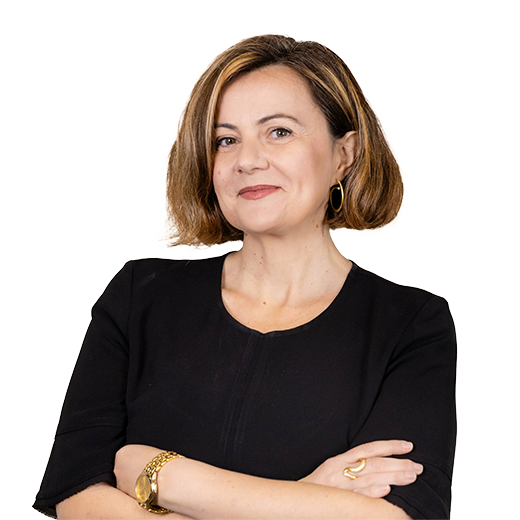
Prof. Wim Desmet is a full professor at the Faculty of Engineering Science and head of the Department of Mechanical Engineering at KU Leuven . His research focuses on advanced modeling techniques for mechanical systems, including: noise and vibration control in automotive and industrial systems computational acoustics and interval field uncertainty modeling metamaterials for broadband vibroacoustic performance AI-driven diagnostic systems in renewable energy and manufacturing Current research projects address challenges in electric vehicle drivetrains, wind turbine monitoring, and multi-physical digital twin development. He actively contributes to academic governance as: Managing Director of KU Leuven Head of Subdivision HIST Chair of multiple executive committees Member of 15+ academic and administrative councils
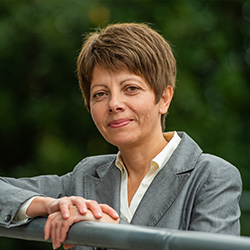
Anders Björn is a Professor at the Department of Mathematics (MAI) at Linköping University (LIU), affiliated with the Analysis and Mathematics Education (ANDI) division. His research focuses on Nonlinear Potential Theory , particularly p-harmonic functions , quasiminimizers , and Newtonian Sobolev spaces in metric spaces. He co-leads the research group in this area and contributes to Analysis on Metric Spaces . He teaches undergraduate and graduate courses, including Real Analysis and Functional Analysis . Organizational Roles: Organizer of the Mathematical Colloquium, Local Representative for Svenska Matematikersamfundet (Swedish Mathematical Society). Editorial Work: Former Technical Editor for Acta Mathematica (2004–2015) and Arkiv för Matematik (1993–2015), both published by Institut Mittag-Leffler. His research explores foundational questions in mathematical analysis, blending pure mathematics with interdisciplinary applications. He emphasizes understanding properties of solutions to differential equations in general settings, akin to constructing an 'identikit' of mathematical phenomena. His work is published in collaboration with the ANDI group, and he actively engages in promoting mathematics through outreach and academic service.
Mehmet Uğur KAHRAMAN is an Assistant Professor at the Department of Interior Architecture and Environmental Design at Antalya Bilim University, where he has served since 2017. Previously, he held a faculty position at Kayseri Nuh Naci Yazgan University (2015–2017). His academic journey includes a Doctorate from Hacettepe University (Interior Architecture and Environmental Design), a Master of Design (Interior Design) from Swinburne University of Technology (Australia), and a Bachelor’s degree from Hacettepe University’s Department of Interior Architecture and Environmental Design. Before academia, he worked as a construction site manager at KG Architecture in Istanbul, co-founded the food and beverage brand 'Shot&Bite' in Ankara, and later served as a designer at QUBİ Design Office. His research focuses on integrating artificial intelligence into design education, neurocognitive aspects of spatial design, sustainable materials, and pedagogical innovations in interior architecture education. He has authored over 20 peer-reviewed articles on topics ranging from AI-driven furniture design to multisensory hospitality spaces. His work bridges theoretical research with practical applications, such as developing curriculum models for design studios and exploring waste-to-art construction techniques. KAHRAMAN’s studies also address health impacts of building materials and the psychological dimensions of housing during crises like the COVID-19 pandemic. He maintains active research collaborations, particularly in Turkey and Australia, and has contributed to public infrastructure projects involving material conservation and adaptive reuse. His educational philosophy emphasizes student-centered learning, interdisciplinary approaches, and leveraging digital tools for contemporary design challenges.
Christian Müller is a Researcher at the Agents and Simulated Reality unit of the German Research Center for Artificial Intelligence (DFKI), focusing on robust artificial intelligence applications for cybersecurity and perception systems in autonomous environments. His work bridges collaborative AI models with security-critical domains like vehicular communication (V2X) and 3D object detection. Projects: BERTHA (Behavioral Replication for Autonomous Vehicles), B5GCyberTestV2X (Cybersecurity Testing for V2X), MOMENTUM (Hybrid AI Trustworthiness), BSI_SiKI2 (Symbolic AI Security), KAI (AI Interior Development Tool). His research emphasizes adversarial training, consensus mechanisms, and hybrid AI architectures to enhance system reliability. Recent publications span topics including semi-supervised learning, high-definition voxel grids, and V2X security frameworks.
Marianna Cavada is a Senior Lecturer at the Manchester School of Architecture (MSA), where she leads the MA Architecture & Urbanism program as the Prototype Urbanism Lab Lead and serves as the Department International Lead. Her research focuses on AI-driven urbanism, smart and liveable cities, and policy design for sustainable urban transformation. Education: PhD in Civil Engineering (2019, University of Birmingham) PG Dip Architecture (International) RIBA II (2008, Huddersfield University) BA Hons Architecture RIBA I (2005, Huddersfield University) BA Hons Interior Design (2001, De Montfort University) Marianna bridges theoretical and practical urbanism through collaborations with local policymakers (Lancaster City Council, Karystos Municipality) and international bodies like the WHO. Her work addresses inequality, climate emergency, and global health within the UN Sustainable Development Goals framework. She contributed to the British Academy-funded 'Caring-with Cities' project and EPSRC initiatives including Liveable Cities and the Green Infrastructure Corridors program. Her research outputs include the book The Little Book of Smart Cities and publications on topics ranging from CO2 emissions in smart cities to gamification in post-pandemic urban evaluation. Marianna has presented at institutions such as the University of Birmingham, Donghua University, and Xi’an Jiaotong University, and has led workshops like the Smart Cities Alliance in Birmingham. Key Scientific Awards: First Prize – Peter Stead Award (2008) Higher Commendation in PG Dip Architecture (2008) Marianna supervises PhD projects in AI Urbanism, Smart Cities, Liveable Cities, and Urban Engineering. Her professional background includes architectural practice in the UK (ATKINS), UAE (Al Falah project), and China (GDG Ltd, Twin Cities), alongside academic roles at the University of Birmingham and Lancaster School of Architecture. She operates from the Manchester Technology Centre and maintains memberships in the International Society for Urban Health and the Royal Institution of Chartered Surveyors (RICS).
Dr. Lucia Florescu is a Lecturer in Medical Imaging and Wellcome Trust Fellow at the University of Surrey, within the School of Computer Science and Electronic Engineering. Her research focuses on developing advanced imaging techniques, including optical tomography, computed tomography, and AI-driven reconstruction algorithms for biomedical applications. She has held roles such as Lead Physicist at Elekta, Associate Research Scientist at Columbia University, and postdoctoral fellowships at institutions like UCLA and NASA's Jet Propulsion Laboratory. Her research interests span optical-CT gel dosimetry, Cherenkov light-based dosimetry, and image-guided radiation therapy. She actively supervises PhD students in topics like deep learning for tomographic reconstruction and CAR-T cell therapy optimization via photoacoustic imaging. Dr. Florescu has published extensively on nonreciprocal broken-ray tomography, Cherenkov light emission in radiation therapy, and interior tomography improvements. Her work integrates physics, AI, and medical applications to enhance diagnostic and therapeutic imaging accuracy. She holds a Wellcome Trust Fellowship and has mentored numerous students in both postgraduate and undergraduate projects, covering areas like sparse-view CT reconstruction and interior tomography challenges.
Dr. Haleh Sadeghi is a researcher affiliated with the Department of Mechanical, Aerospace & Civil Engineering at the University of Manchester, contributing to the Thomas Ashton Institute. She specializes in occupational safety and risk assessment in construction, with a focus on fuzzy logic methodologies and sustainable practices. Her work aligns with UN Sustainable Development Goals related to safe and sustainable infrastructure. Education: Holds a Doctor of Philosophy (PhD) in Mechanical, Aerospace & Civil Engineering. Research Interests: Her research revolves around safety risk assessment in construction sites, decision-making frameworks, modular construction safety, and the integration of fuzzy logic systems. She explores deterrents to green technologies like green walls and evaluates the impact of Building Information Modeling (BIM) on safety and project efficiency. Article Trends: Recent work emphasizes predictive safety models for tower cranes, automated risk assessment systems, and hybrid methodologies for analyzing accidents and deterrents. She also investigates the adoption barriers of sustainable practices in construction projects. Grants and Advising: No specific grants or student advising details are listed in the provided sources. Collaborations include international partners on projects involving fuzzy-based systems and safety frameworks. Labs/Teams: Active within the Thomas Ashton Institute, focusing on engineering solutions for safer construction practices and sustainable infrastructure development.
Pablo José Fernández Galdo is a faculty member at the University of A Coruña, affiliated with the University College of Industrial Design and the Department of Civil Engineering. His expertise lies in Engineering Projects, with a strong focus on industrial design, product development, and additive manufacturing. He is an active member of the research group 'Observatorio para el diseño e innovación en movilidad, medios de transporte y automoción', contributing to innovation in transportation and mobility systems. His research interests span Industrial Design , Product Development , Additive Manufacturing , Automotive Design , Urban Furniture , and Smart Mobility . He emphasizes design methodology, sustainability, and user-centered innovation, particularly in educational and real-world applications. His work integrates design with engineering principles to solve contemporary mobility challenges. The recent articles and project concepts reflect a strong trend toward future mobility , including autonomous vehicles, electric transportation, shared urban mobility, and habitat vehicles for sports tourism. Many projects are linked to industry collaborations, especially with SEAT/Cupra, indicating applied research with commercial relevance. There is a recurring focus on design for experience , adaptability , and innovation in public and personal spaces . He has supervised numerous final-year and master's theses, mentoring students in advanced design projects. His collaborative work includes publications in engineering education and service-learning practices, highlighting his commitment to pedagogical innovation. His research has been supported through various R&D contracts with entities such as Fundación PRODINTEC, TELEVES S.A., CTAG, and LOREFAR S.L., demonstrating strong industry engagement. He has contributed to books and journal articles, particularly in the domain of design education and applied engineering. He is involved in designing experimental projects, models, and prototypes, often in collaboration with students and other researchers. His work environment fosters innovation through hands-on workshops and real-world design challenges, especially in the context of sustainable and intelligent mobility solutions.
Prof. Dan van Eijk is a Professor at Delft University of Technology (TU Delft), affiliated with the Faculty of Industrial Design Engineering and the Department of Industrial Design Engineering. His work focuses on Human-Centered Design, Human Factors, and the integration of AI and XR (Extended Reality) into healthcare and technology. He has contributed to projects such as SPLASH, developing innovative bathing solutions, and has advised on cross-cultural surgical training using immersive technologies. Education details are not explicitly listed, but his research interests emphasize applying design principles to healthcare, mobility, and sustainability challenges. His recent publications explore XR-enhanced robotic surgery, smart environments, and VR prototyping for inflight lavatories. Prof. van Eijk holds ancillary roles as a consultant for organizations like Van Eijk Consultancy, Spark design & innovation, and Loughborough University. His work bridges academic research with practical applications in design innovation and human factors engineering. He teaches courses such as Packaging for Designers and Advanced Concept Design , fostering students' ability to create user-centric solutions. His research and consultancy activities reflect a commitment to advancing design methodologies in both academic and industrial contexts.
Dr. Jin Woo is a Senior Lecturer in Building Science at RMIT University's School of PCPM. He focuses on sustainable/green building design, indoor environmental quality (IEQ), and evidence-based design. His research bridges architectural design with occupant well-being, emphasizing energy efficiency and user-centric approaches. Woo has supervised PhD/Masters research on topics including AI-aided net-zero design, daylighting systems, and healthcare facility management. Key accomplishments include awards for his thesis on sustainable urban development (2007) and universal design competition (2006). He holds editorial roles at the Australasian Journal of Construction Economics and Building and is a member of the International Society of Indoor Air Quality and Climate (ISIAQ). Industrial experience includes roles as a registered architectural engineer and interior architect. Teaching interests span green building operation, environmental comfort, and post-occupancy evaluation. Recent research outputs (2020–2024) address ventilation strategies in aged care facilities, school classroom air quality, and BIM-based performance monitoring. Over 30 peer-reviewed articles and 15+ conference papers reflect his contributions to building science and sustainable design.
Dr David Preston is Senior Lecturer and Platform Leader for Strategy & Identity on the BA (Hons) Graphic Communication Design course at Central Saint Martins, University of the Arts London. A Senior Fellow of the Higher Education Academy, he lectures and researches at the intersection of design history, theory and practice, with an emphasis on branding, typography and social-purpose communication. Education PhD History & Theory of Corporate Design, University of the Arts London (2019) PGCert Learning & Teaching, Centre for Learning and Teaching in Art & Design, UAL (2011) BA (Hons) Graphic Design, Central Saint Martins (2004) Foundation in Art & Design, Arts University Bournemouth (2001) Research Interests Dr Preston’s scholarship interrogates design as labour , focusing on the cognitive and procedural dimensions of the design process. Bridging design history, theory and contemporary practice, his work explores how programmatic branding emerged in post-war Britain and how its legacy shapes contemporary professional routines. Current themes include: History and theory of corporate identity systems Socially-engaged brand strategy and graphic design Experiential and peer-learning pedagogies Material cultures of design administration and hidden labour Publications & Dissemination His forthcoming monograph The Development of Corporate Design in Post-war Britain (Bloomsbury, 2025) consolidates a decade of archival and practice-led research. Complementing this, Preston has delivered invited keynotes and guest lectures at Aalto University, University of Connecticut, Willem de Kooning Academy and the Royal College of Art, among others. Scientific Awards & Fellowships Senior Fellow, Higher Education Academy (2023–present) Fellow, Higher Education Academy (2011–present) Innovate UK ‘Outstanding’ status for Knowledge Transfer Partnership with FreshBritain (2016–2018) Knowledge Exchange & Grant Activity Preston leads live industry briefs that embed students in real-world challenges. Notable projects include: Principal Investigator, Innovate UK Knowledge Transfer Partnership (£61k) – re-designing brand-vision methodology for FreshBritain (2016–2018) Co-creator, ‘Positioning for Purpose’ brand-strategy project with FreshBritain (2025) Contributor, KQ Labs accelerator with Crick Institute (2022) Graduate consultancy collaborations with Warner Media, Swiss Re, Department for Work and Pensions, Mother Agency and others Doctoral Supervision & Labs Dr Preston currently supervises practice-based PhD candidates exploring graphic communication for the deafblind community and AI-mediated ‘cute’ aesthetics. His ‘Strategy & Identity’ platform functions as an academic studio-lab where historical insight, strategic thinking and social impact converge.
Denis Lalanne is a full Professor in the Department of Informatics at the University of Fribourg, leading the 'human-building interaction' group at the Smart Living Lab and directing the Human-IST institute . He specializes in Human-Computer Interaction (HCI), focusing on multimodal interaction, visual analytics, and Human-Building Interaction (HBI). His work bridges computer science with architecture and urban design to improve building occupants' comfort and accessibility. His research spans topics such as assistive technologies for visually impaired individuals, energy-efficient lighting systems, and predictive models for indoor environmental quality. He has led projects like the Human-IST Lab and SWICE (Sustainable Well-being in Energy Transition), emphasizing interdisciplinary collaboration between academia, industry, and public institutions. Key contributions include the development of frameworks for human-centric lighting, wearable sensors for urban comfort analysis, and empathic systems to enhance HCI. His work is published in top venues like ACM Transactions on Accessible Computing , IEEE , and CHI . Education and career highlights include a PhD from EPFL (Swiss Federal Institute of Technology), postdoctoral research at IBM’s USER Group, and prior teaching roles at the University of Avignon. He is a Swiss representative at IFIP TC13 and has organized major conferences like IHM 2016.
Professor Jang Yoon is a faculty member in the Department of Computer Engineering at Sejong University, South Korea. He currently holds the position of Daeyang Distinguished Professor and leads the Data Visualization Lab. His academic journey includes postdoctoral research at the Swiss National Supercomputing Center (2007-2009), ETH Zurich (2009-2011), and Purdue University (2011-2012). His educational background includes a Bachelor's degree from Seoul National University in Electrical Engineering (2000), and Master's and Doctoral degrees from Purdue University in Electrical and Computer Engineering (2002 and 2007). His academic progression at Sejong University shows his appointment as Assistant Professor (2012-2016), Associate Professor (2016-2022), and Professor (2022-present). Professor Jang's research spans multiple domains within data science and visualization, with primary focus on data visualization, visual analytics, and their applications in various domains. His work bridges theoretical computer science with practical applications in traffic analysis, healthcare, and smart city infrastructure. He has developed innovative techniques for spatiotemporal data visualization, volume rendering, and causal analysis in complex datasets. His recent publications (2023-2025) demonstrate a strong focus on integrating deep learning with visualization techniques, particularly in traffic analysis, volume rendering, and large language model interpretability. His work shows a clear trajectory toward combining causal inference with visual analytics, applying these methods to urban traffic systems, structural health monitoring, and public relations analysis. Professor Jang has served in numerous leadership roles in major visualization conferences including IEEE VIS, IEEE PacificVis (as General Chair in 2023), EuroVis, and HCI Korea conferences. His service contributions include program committee memberships and chair positions across multiple prestigious conferences in the visualization field. His laboratory work focuses on practical applications of visualization techniques with numerous patents registered in Korea. His research has resulted in multiple practical systems for traffic analysis, VR sickness detection, data quality improvement, and eye-tracking applications. The lab maintains strong industry connections through applied research projects addressing real-world problems.
Dr. Jason Hicken is an Associate Professor in the Mechanical, Aerospace, and Nuclear Engineering Department at Rensselaer Polytechnic Institute (RPI), and co-director of the Rensselaer Augmented and Virtual Environment. His research focuses on computational fluid dynamics, aerodynamic shape optimization, and simulation-based design. He holds a Ph.D. in Aerospace Engineering from the University of Toronto Institute for Aerospace Studies (2009), with postdoctoral training at Stanford University. Notable awards include the AFOSR Young Investigator Award (2015) and NSF CAREER Award (2016). His research interests span high-order numerical methods, entropy-stable discretizations, and optimization techniques for complex systems. He has contributed to advancing finite-difference operators, summation-by-parts schemes, and multi-disciplinary design optimization. His work bridges computational engineering and applied mathematics, addressing challenges in fluid dynamics, thermal systems, and aerospace applications. His lab, the Optimal Design Lab (http://www.optimaldesignlab.com/), develops innovative tools for engineering design optimization. Key achievements include developing entropy-stable numerical frameworks and integrating machine learning techniques for preconditioning in advection-dominated flows. His research has been applied to electric motor design, thermal management systems, and additive manufacturing. Awards recognize his contributions to foundational methods in computational engineering and aerospace optimization.
Eunhwa Yang is an Associate Professor and Curriculum Committee Chair at the School of Building Construction, Georgia Institute of Technology. She holds a Ph.D. in Human Behavior and Design from Cornell University and an MS in Building Construction from Georgia Tech. Her research focuses on the interplay between built environments and human outcomes, employing Bronfenbrenner’s ecological systems theory to study workplaces, campuses, and homes. Key areas include sustainable building practices, facility management optimization, and aging-in-place strategies for individuals with mild cognitive impairment. As an advocate for innovative teaching methods, Dr. Yang has developed facility management courses using active learning and service learning approaches. She has led workshops on pedagogical strategies at GT’s Center for Teaching and Learning and Cornell’s Center for Teaching Excellence. Professional affiliations include the International Facility Management Association (IFMA) and CoreNet Global, where she has received young researcher awards and fellowships. Her recent work emphasizes data-driven solutions for energy performance contracting, hybrid workspaces, and inclusive housing designs. The Workplace Ecology Lab under her direction explores environmental factors influencing sleep health, workplace safety, and aging-in-place technologies. Over 15 years of grant-funded research has produced impactful studies on green leasing, building lifecycle analysis, and multi-stakeholder decision-making in urban transformation projects. Awards: IFMA Fellowships, IAPS Workshop Grant Grants: CoreNet Global Academic Challenges, IAPS sponsored projects Labs: Workplace Ecology Lab at Georgia Tech School of Building Construction Dr. Yang’s advisory work supports facility managers, corporate real estate directors, and designers in optimizing space utilization through evidence-based strategies. Her research bridges environmental science, architectural design, and human behavior studies to create healthier, more equitable built environments.


.jpeg)