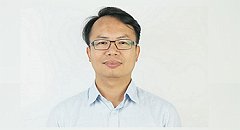
Wei Huo is a researcher at the Institute of Information Engineering, Chinese Academy of Sciences, specializing in software security and engineering. His work focuses on vulnerability detection, program analysis, and cybersecurity across diverse systems including cloud infrastructure, firmware, and web applications. His research interests encompass Software Security , Program Analysis , Binary Analysis , and AI-driven security techniques . He develops practical tools for identifying vulnerabilities in Kubernetes ecosystems, baseband firmware, and binary code, with emphasis on real-world applicability in industrial contexts. Analysis of his publications (2019-2025) reveals a consistent focus on empirical security studies and tool development. Key trends include cloud-native security (Kubernetes), firmware analysis (printers/baseband), and AI-enhanced binary similarity detection, demonstrating progression from component-level to system-level security challenges. While no specific awards are documented in the source material, his contributions to top venues like ASE, ICSE, and ISSTA reflect significant impact in software engineering research. His work bridges academic rigor with practitioner-oriented solutions, particularly in vulnerability management and automated testing. Wei Huo actively contributes to the security research community through publications addressing critical infrastructure vulnerabilities, though details about student supervision or grant funding are not available in the provided text.
Hoa Khanh Dam is Professor and Deputy Head of School (Research) & Head of Postgraduate Studies in the School of Computing and Information Technology at the University of Wollongong, Australia. He serves as Co-Director of the Decision System Lab where he leads research at the intersection of Software Engineering and Artificial Intelligence. His research focuses on developing AI-driven solutions for software quality, cybersecurity, and productivity enhancement. Key interest areas include: AI/IoT autonomous and cyber resilient systems Software Analytics and Mining Software Repositories Large Language Models for software engineering tasks Defect prediction and vulnerability analysis Agile project management optimization Analysis of Dam's 12 publications from 2018-2025 reveals consistent application of machine learning to software engineering challenges. His work shows progressive evolution from traditional ML techniques toward LLM-based frameworks, with major contributions in defect prediction (DeepJIT), vulnerability analysis, microservice recommendation, and agile effort estimation. The research demonstrates strong industry relevance through practical implementations in code review, component prediction, and security systems. Dam co-leads the Decision System Lab at UOW, which develops intelligent decision support systems using AI and data analytics. The lab's work bridges theoretical AI advancements with real-world software engineering applications, particularly in cybersecurity and autonomous systems development.
Professor Yuan Miao is a distinguished academic at Victoria University (VU), serving as Professor in the College of Arts, Business, Law, Education & IT and Head of the Information Technology Program. With a PhD from Tsinghua University's Automation Department, his academic journey spans prestigious institutions including the University of Melbourne and Nanyang Technological University in Singapore before settling at VU where he has been Professor since January 2010, following his Associate Professorship from August 2004 to December 2009. Education: BSc, Shandong University, China MEng, Tsinghua University, China PhD, Tsinghua University, Automation Department, China Professor Miao's research centers on Large Language Models (LLMs) and Generative AI, where he has identified critical barriers in practical applications including limited memory length in systems like ChatGPT and Gemini, contradictory explanations, lack of local knowledge integration, and significant errors in text-data hybrid reasoning (up to 38%). His innovative solutions involve cognitive map graphs and rational intelligence models to create customized AI systems. His work spans diverse application areas including human knowledge modeling, multimodal interaction, healthcare analytics (particularly dementia detection), cybersecurity, and robotics powered by rational intelligence. Analysis of Professor Miao's recent publications reveals a strong focus on integrating LLMs with specialized knowledge domains across healthcare, cybersecurity, and social media analysis. His research consistently addresses practical limitations of current AI systems while developing novel frameworks for more reliable and context-aware applications. The interdisciplinary nature of his work is evident in publications spanning medical informatics, cybersecurity analytics, and educational technology. Scientific Recognition: Two articles in fuzzy cognitive map modeling ranked among top 10 most cited works since 2000 (Google Scholar 2000-2016) Development of adversarial dataset based on SQuAD 2.0 that reduced BERT and ELECTRA accuracy from ~90% to ORCID identifier 0000-0002-6712-3465 with 138 peer-reviewed publications Professor Miao actively supervises PhD and Master's students across diverse research topics including access control systems, healthcare analytics, cybersecurity, and social behavior analysis. His research has secured substantial funding from both industry giants (Microsoft, Amazon, Oracle, Google) and government bodies (Australia Research Council, Data61, Singapore's NRF), with recent projects including Digital Transformation for Construction Industry ($1.258 million), Western Health SharePoint Development ($68,000), and Big Data Analysis for Domestic Violence Research (US$100,000). His current grant portfolio demonstrates strong industry-academia collaboration addressing real-world challenges. Professor Miao leads research teams focused on rational intelligence systems that overcome current LLM limitations, with particular emphasis on creating practical AI solutions for healthcare, cybersecurity, and smart city applications. His work with Maribyrnong City Council on the Smart City at Footscray Park project ($850,000) exemplifies his commitment to applying advanced AI research to community-level challenges.
Brian Fitzgerald holds the Frederick A Krehbiel II Chair in Innovation in Business and Technology at the University of Limerick and serves as Director of Lero - the Irish Software Research Centre. He is a globally recognized leader in software engineering and information systems research with significant contributions to open source, agile methodologies, and global software development. His research interests focus on software development methodologies, particularly in open source, inner source, crowdsourcing, agile, lean, BizDevOps, and continuous software engineering. Fitzgerald's work bridges theoretical foundations with practical applications in global software engineering contexts. The trends in his recent publications demonstrate a consistent focus on empirical studies of software development practices, with increasing attention to large language models, community dynamics in open source, and scaling agile methodologies in enterprise environments. His research spans both theoretical frameworks and practical applications across multiple software development domains. AIS Fellow award recipient LEO Award for outstanding lifetime contribution to the IS discipline (2024) President of the Association for Information Systems (2020) Fitzgerald has secured over €115 million in peer-reviewed research funding, including a notable €6 million project with Huawei. He serves as General Chair for major conferences including the 49th International Conference on Software Engineering (ICSE) in Dublin 2027 and previously chaired the 37th International Conference on Information Systems (ICIS) in 2016. His leadership extends to directing Lero, Ireland's national software research center that coordinates researchers across nine third-level institutions. As Director of Lero, Fitzgerald oversees a major research center focused on critical software domains including driverless cars, automation, artificial intelligence, and cybersecurity. His work connects academic research with industry applications through collaborations with major technology companies and government initiatives.
Shui Yu is a Professor of the School of Computer Science in the Faculty of Engineering and Information Technology at the University of Technology Sydney (UTS), where he also serves as the Deputy Chair of the UTS Research Committee. His academic career spans over 20 years in Australia and 7 years in China, with additional teaching experience in Hong Kong and Indonesia. He has developed more than 10 units in cybersecurity, computer science, data analytics, and computer games, serving as the Course Director for Computer Science undergraduate programs. Professor Yu's research interests center on cybersecurity, privacy, networking aspects of Big Data, and applied mathematics for computer science. He pioneered the field of 'networking for big data' in 2013 and edited the seminal book 'Networking for Big Data' published in 2015. His work has practical applications in industry, including Amazon Cloud's auto-scale strategy against distributed denial-of-service attacks. Current research focuses include privacy and security concerns associated with big data, security issues in smart grids, anonymous transactions on Blockchain, and anonymous communication for web browsing privacy. Analysis of his recent publications reveals a strong research trajectory spanning cybersecurity, privacy-preserving technologies, networking for big data, and applied mathematics. His work shows increasing focus on quantum-resistant cryptography, federated learning security, and adversarial robustness in AI systems. The interdisciplinary nature of his research bridges theoretical foundations with practical applications in IoT, blockchain, and cloud environments. Fellow of IEEE (2023) Distinguished Lecturer of IEEE Communications Society (2018-2021) Distinguished Visitor of IEEE Computer Society (2022-2024) Professor Yu has secured numerous research grants from the Australian Research Council, including current projects on privacy and fairness in high intelligence models (DP240100955), improved security and privacy for online platforms (LP220200808), and secure blockchain for financial applications (LP220100453). He has served on editorial boards of multiple IEEE journals including IEEE Communications Surveys and Tutorials, IEEE Communications Magazine, and IEEE Internet of Things Journal. His service extends to organizing major conferences such as IEEE Globecom 2015 and IEEE INFOCOM 2016-2017.
Atiye Sadat Hashemi is a Research Fellow at the Academy of Information Technology, Halmstad University. Her work bridges machine learning and healthcare innovation, with a focus on developing secure and interpretable AI models for medical applications. She maintains an active research profile through publications and collaborative projects in data-driven healthcare solutions. Research Focus: Her expertise spans machine learning applications in disease surveillance, precision medicine, and adversarial robustness. Key areas include: Optimizing ML for real-time disease outbreak detection using anomaly detection Advancing personalized treatment strategies through data-driven models Enhancing model security against adversarial attacks in critical domains Developing privacy-preserving synthetic health data generation techniques Publication Trends (2022-2024): Her recent works demonstrate a consistent focus on healthcare-AI integration, with emphasis on: Anomaly detection systems for epidemiological monitoring Privacy-enhancing technologies for medical data Explainable AI methods for clinical decision support Robustness improvements for safety-critical ML applications Methodologies frequently involve generative adversarial networks, graph neural networks, and time-series analysis.
Ramin Karim is a Professor and Head of Subject in the Department of Civil, Environmental and Natural Resources Engineering at Luleå University of Technology. His research focuses on operation and maintenance technology, with expertise in railway systems, industrial cybersecurity, structural health monitoring, and the application of advanced analytics in asset management. He leads the Operation, Maintenance and Acoustics division, emphasizing interdisciplinary approaches to solving complex engineering challenges. Key research areas include predictive maintenance strategies for railway infrastructure, cybersecurity frameworks for Industry 5.0, and the integration of metaverse technologies in industrial contexts. His work often involves data-driven methodologies such as point-cloud processing, game theory for cyber threat modeling, and digital twin concepts. Recent publications highlight his contributions to railway maintenance policy optimization, health monitoring of ground support systems in mining, and cybersecurity challenges in industrial systems. He has co-authored over 50 peer-reviewed articles, many appearing in high-impact journals like International Journal of Systems Assurance Engineering and Management and Frontiers in Virtual Reality . Ramin Karim’s research also explores emerging technologies like federated learning for digital twins, blockchain applications in railways, and human-centric predictive health management systems. His work aligns with initiatives such as the Reality Lab Digital Railway, aimed at advancing sustainable and digitally enabled transportation solutions.
David Ebert is a Gallogly Chair Professor of Electrical and Computer Engineering at the University of Oklahoma (OU), where he serves as Director of the Data Institute for Societal Challenges. He is also an Adjunct Professor at Purdue University and leads the Department of Homeland Security’s Visual Analytics Center of Excellence (VACCINE). Education: Ph.D., M.S., B.S. in Computer Science from The Ohio State University Research Interests : His work spans visual analytics , human-computer teaming , trustable AI , and data science with applications in energy/climate resiliency, defense/security, health, and digital humanities. Recent projects include predictive visual analytics for public safety and social media spambot detection. Scientific Awards : IEEE Fellow IEEE Computer Society vgTC Technical Achievement Award National Science Foundation's InTRO grant University Faculty Scholar DHS S&T Award of Excellence Leadership Roles : Associate Vice President of Research and Partnerships at OU, with directorships in multiple research centers focused on visual analytics and information assurance.
Dr. Hamed Aboutorab is a Lecturer at the School of Business, UNSW Canberra, specializing in applying artificial intelligence (AI) to supply chain management, risk analysis, and organizational resilience. His work integrates data analytics, machine learning, and decision-support systems to enhance operational efficiency and stability in complex environments. He focuses on proactive risk identification, cyber security in smart farming, and AI-driven models for supply chain disruptions. Research Interests: AI applications in logistics and risk management Cyber threats in agricultural systems Reinforcement learning for supply chain optimization Transformer-based models for risk analytics Teaching: ZBUS3102 Project Management ZBUS8302 Logistics Management Publications: Over 15 peer-reviewed articles in journals like Expert Systems with Applications , Automation in Construction , and Computers and Security . Recent work includes systematic reviews on supply chain risks and cyber threat hunting techniques. Labs/Teams: Engaged in interdisciplinary projects combining AI, cyber security, and supply chain innovation at UNSW Canberra.
Marco MAMEI is a Full Professor at the Department of Engineering Sciences and Methods (DISMI) of the University of Modena and Reggio Emilia. His research focuses on digital twins, pervasive computing, and smart city technologies. He leads projects like NOUS (European cloud services) and MODENA AUTOMOTIVE SMART AREA, emphasizing Industry 5.0 and human-centric manufacturing. MAMEI teaches courses on Data Science, Pervasive Computing, and Cloud Services in Management and Engineering programs. His work bridges IoT, edge computing, and AI to solve challenges in energy systems, urban mobility, and disaster management. Roles: Full Professor, DISMI Director Affiliations: NOUS Project Lead, MODENA AUTOMOTIVE SMART AREA Research spans: IoT/Edge/Cloud Continuum Digital Twin Entanglement Metrics (ODTE) AI-Driven Telecom Security Smart Grid Optimization Publications (2025): 8+ papers on digital twin applications, accessibility theory, energy forecasting, and pandemic modeling. Recent work emphasizes fluid computing architectures and federated learning in decentralized systems. Teaching includes: Data Science & Management Pervasive Computing Programming Fundamentals Student reception: Mondays 14-17.
Dr. Andria Procopiou is a Lecturer in Artificial Intelligence and Cybersecurity at the University of Central Lancashire Cyprus, serving as Course Leader for the MSc Computing program and Deputy Course Leader for the MSc Cybersecurity. She holds a PhD in Computer Science (City, University of London, 2022), an MSc in Human-Computer Interaction (University College London, 2014), and a BSc in Computer Science (University of Surrey, 2013). Her research spans AI applications in sports analytics, cybersecurity for smart cities/IoT, hate speech detection, and metaverse safety. She has led modules in User Experience Design, Penetration Testing, and Cybersecurity. Research interests include AI-driven solutions for sports injury prediction, real-time DDoS detection in IoT networks, and ethical challenges in the metaverse. Her work emphasizes explainable AI (XAI) for transparency in decision-making systems. She has published extensively in journals like Wireless Communications and Mobile Computing and conferences such as IEEE CYBER and the International Conference on Human-Computer Interaction. Education: PhD Computer Science (City University London), MSc HCI (UCL), BSc Computer Science (University of Surrey) Key Roles: Course Leader (MSc Computing), Deputy Course Leader (MSc Cybersecurity) Administrative Contributions: Module leadership in AI, Cybersecurity, and Digital Forensics Her recent publications address critical issues like privacy concerns in smart campuses, gender-based hate speech in virtual spaces, and injury patterns in professional football using data analytics. She collaborates with industry on IoT security solutions and metaverse governance frameworks.
Seif Haridi is a Professor at KTH Royal Institute of Technology in Stockholm, Sweden, specializing in parallel and distributed computing systems. He holds dual roles as Chair-Professor of Computer Systems and Chief Scientific Advisor at RISE SICS. His research integrates systems engineering with theoretical foundations, focusing on programming systems, distributed computing, and big data technologies. Key contributions include co-designing SICStus Prolog, the Mozart Programming System, and Apache Flink, as well as leading the development of HOPS, a European big data platform awarded the IEEE Scale Prize 2017. He has led major EU projects like EIT-Digital’s cloud computing initiative and co-founded startups such as LogicalClocks and HiveStreaming. His teaching includes courses on distributed algorithms and peer-to-peer computing at KTH. Notable awards include the European Data Science Technology Innovation 2019. His work spans systems like HOPS, Flink, and Kompics, emphasizing scalability and robustness in distributed environments. Current projects include CDA (Continuous Deep Analytics) and ExtremeEarth for geospatial data analysis. Research interests include distributed algorithms, consensus protocols, and cloud-native systems. His lab’s contributions to scalable storage (e.g., HopsFS) and stream processing (Apache Flink) highlight his impact on both academia and industry.
Dr. Shahriar Kaisar is the Deputy Head of the Department of Accounting, Information Systems and Supply Chain at RMIT University, Australia. He holds a PhD from Monash University and a master's degree from the University of Saskatchewan. His research focuses on data analytics, cybersecurity, AI, health informatics, ad-hoc networks, and emerging technologies. Dr. Kaisar has held academic roles in Australia, Canada, and Bangladesh. Research Interests: His work spans generative AI in education, cyberthreat detection, health informatics, and decentralized networking. Notable projects include frameworks for cybersecurity in power grids and AI-driven decision-making systems. Teaching & Supervision: He supervises PhD students on topics like platform economy value creation and AI-driven cybersecurity. Taught courses include Digital Business Security, Practical Cybersecurity in Business, and Networking in Business. Awards: No specific awards are listed, but his work appears in top-tier journals such as Journal of Information Security and Applications and Future Generation Computer Systems . Collaborations: Active in global research networks, with a focus on interdisciplinary projects involving industry 5.0, sustainable cities (UN SDG 11), and smart infrastructure.
Dr. Alexios Mylonas is a Senior Lecturer at the University of Hertfordshire, affiliated with the School of Physics, Engineering & Computer Science and the Department of Computer Science. He leads the Cybersecurity and Computing Systems Research Group and is a founding Chapter Leader for OWASP Dorset. His research focuses on IoT security, incident response, web security, fraud detection, and adversarial machine learning. Education: PhD in Information and Communication Security (Athens University of Economics and Business) MSc in Information Security (Royal Holloway, University of London) BSc (Hons) in Computer Science (Athens University of Economics and Business) Research Interests: His work spans cybersecurity domains including IoT security, privacy preservation, digital forensics, and adversarial machine learning applications. Recent projects include AI-driven cybersecurity solutions (e.g., AI4CybSec) and tools like STATOS for malware analysis. Grants & Projects: AI4CybSec: Artificial Intelligence for Cyber Security (2022–2023, Co-Investigator) Labs/Teams: He directs the Cybersecurity and Computing Systems Research Group, fostering interdisciplinary collaborations in threat detection and secure system design.
Jiangfeng Zhang is an Associate Professor in the Department of Automotive Engineering at Clemson University's College of Engineering, Computing and Applied Sciences. His research focuses on electric vehicle technologies, battery management, renewable energy integration, and smart grid solutions. Research Areas: His work spans battery optimization, grid resilience, autonomous vehicle control, and sustainable energy planning. Recent projects include solid-state battery advancements, V2G integration, and AI-driven energy management. Publication Trends: His articles predominantly address optimization challenges in electric mobility and grid stability, utilizing machine learning, game theory, and control systems. Key themes include decarbonization, cyber-physical security, and renewable integration under uncertainty.