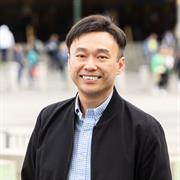
Prof. Xiong Zehui is a Full Professor at the School of Electronics, Electrical Engineering and Computer Science, Queen's University Belfast. He leads the iConnect Lab, focusing on intelligent computing and networking innovations. His research spans wireless networks, IoT, edge intelligence, semantic communications, generative AI, and the Metaverse. Education includes a PhD in Computer Science and Engineering from Nanyang Technological University (Singapore). He has held visiting roles at Princeton University and the University of Waterloo. Recognized in Forbes Asia 30U30, he serves as editor for flagship journals like IEEE Journal on Selected Areas in Communications and chairs international conferences. Research interests emphasize scaling intelligent systems, network efficiency, and secure connectivity. Over 250 peer-reviewed papers and numerous best paper awards highlight his impact. Awards include the IEEE Asia Pacific Outstanding Young Researcher Award and IEEE VTS Early Career Award. Labs/Teams: iConnect Lab (Intelligent Computing and Networking Innovation Lab) PhD supervision focus: Edge Generative AI, Mobile On-device LLM, Semantic Networking
Jesse Davis is a Professor at the Department of Computer Science , KU Leuven , actively contributing to the Machine Learning group and the Sports Analytics Lab . He is part of the Faculty of Engineering Science and the Leuven.AI Institute . Ph.D. in Computer Sciences from University of Wisconsin-Madison (2007) M.S. in Computer Sciences from University of Wisconsin-Madison (2005) B.A. in Computer Science from Williams College (2002) His research focuses on machine learning, data mining, big data analytics, and sports analytics, with significant work in: Transfer learning and Markov logic networks Anomaly detection and semi-supervised learning Medical NLP and biomechanical data analysis Soccer performance metrics and tactical analysis His recent work explores spatio-temporal data analysis in sports and explainable AI for medical applications, with collaborations spanning finance, healthcare, and semiconductor manufacturing. Notable scientific awards include: Best Paper Award (Applied Data Science Track) at KDD 2019 Best Technical Paper Award at Intelligence Analysis Workshop He advises numerous PhD and Master's students in areas like: Football analytics Tree ensemble compression Medical question-answering systems Biomechanical load prediction His lab develops tools such as: GSSL for Markov network structure learning TODTLER for transfer learning Alchemy system for Markov logic networks
Dr. Quazi Mamun is an Associate Professor and Higher Degree Research (HDR) Coordinator at the School of Computing, Mathematics and Engineering, Charles Sturt University (CSU). With over 23 years of experience, he is a leading researcher in cybersecurity, AI-driven security, IoT, blockchain, and distributed systems. PhD in Distributed Computing (Monash University, 2007–2011) MSc in Global Information and Telecommunication Studies (Waseda University, Japan) BSc in Computer Science and Engineering (Bangladesh University of Engineering and Technology) His research focuses on AI-driven cybersecurity (machine learning models for threat detection), blockchain and IoT security (lightweight cryptography), and secure smart environments (AI-based smart cities). Recent publications highlight trends in blockchain data retrieval , cross-domain adversarial attacks , and sensor network integration with healthcare . Key research grants include: $5M – Japan Science and Technology Agency (2024–2029) $120K – Connectivity Innovation Network (2023–2026) $180K – Cyber Security CRC (2020–2023) $25K – GSK Global (2022–2023) Scientific honors include: Vice-Chancellor's Award for Excellence (2016) Excellence Award (Research) (2024) Best Paper Awards at IEEE/ACM conferences (2017, 2022) Innovation Networks grant for IoT security (2023) He oversees research groups such as the Data Mining Research Group (DaMRG), Cyber Security Research Group (CSRG), and Advanced Network Research Group (ANRG), while mentoring 8 PhD students and delivering keynote speeches globally.
Kok-Leong Ong is a Professor of Business Analytics at RMIT University's College of Business & Law, where he serves as Director of the CoBL Technology Initiative, Director of the Enterprise AI and Data Analytics Hub, and Head of the Department of Information Systems and Business Analytics. With over $1.4 million in research grants, he specializes in translating analytics and machine learning into practical business applications across multiple verticals including e-Commerce, public health, sports, urban studies, marketing, and learning. His research has consistently ranked in the top 25% and 5% of works in their domains according to Altmetric. Professor Ong's research spans Business Analytics, Artificial Intelligence, Machine Learning, and Information Systems, with a focus on making data actionable through analytics-2-business translation, automation, and applications. His work addresses critical challenges in cybersecurity for wearable health devices, ECG-based authentication systems, federated learning privacy, carbon accounting for maritime transport, and AI-driven solutions for vehicle damage detection. He has developed frameworks for operationalizing analytics in business contexts and has made significant contributions to mHealth applications for infant care and breastfeeding support. Among his notable scientific achievements, Professor Ong has received two VC's Teaching Awards and was named one of Australia's Leading Data Academics by CDO Magazine in 2021. He has secured over $1.4 million in research funding and serves on prestigious conferences including KDD and PAKDD. His research has been recognized for its high impact, with many works ranking in the top percentiles of their respective fields. Professor Ong actively supervises numerous research students across diverse topics including human-aligned AI, securing LLMs for financial applications, cyber risks in enterprise AI systems, ECG authentication security, and AI transformation for SMEs. He previously played a key role in establishing Australia's first Business Analytics degree and led La Trobe Business School's analytics program from 2015 to 2019 before joining RMIT in September 2021. Through the Enterprise AI and Data Analytics Hub and his role with RMIT University's Digital3 board, Professor Ong leads initiatives focused on bridging the gap between advanced analytics capabilities and business value creation. His work emphasizes practical implementation of AI and analytics solutions that address real-world challenges across multiple industry sectors.
Jatinder Singh is a Professor at the RC Trust and Principal Research Associate (equivalent to Research Professor) at the Department of Computer Science & Technology, University of Cambridge. He is primarily affiliated with the University of Duisburg-Essen, Germany, where he leads the Compliant and Accountable Systems research group within the Law department. His work operates at the critical intersection of computer science, legal frameworks, and societal impact, focusing on practical implementations that align technology with regulatory requirements while addressing user and community concerns. Research interests center on accountability mechanisms for AI systems, responsible development practices, data governance, and privacy/security in emerging technologies. He examines governance, agency, trustworthiness, and transparency gaps in algorithmic systems through interdisciplinary socio-technical lenses. Current work addresses bias in LLMs, stakeholder participation frameworks, and human rights implications in domains like healthcare, maritime enforcement, and consumer IoT, emphasizing contextual awareness and real-world applicability. His 15 most recent publications (2025-2024) reveal dominant trends in AI transparency, fairness proxy development, and legal-compliance engineering. Key focus areas include stakeholder involvement in AI governance, bias mitigation in language models, data justice applications for vulnerable populations, and operationalizing human-centered AI in clinical settings. The work consistently bridges technical implementation with regulatory frameworks like the EU Cyber Resilience Act and GDPR. Scientific Awards: No awards or fellowships were mentioned in the provided text. Advising and Grants: The text does not specify PhD/Master's students or grant details. As leader of an active research group publishing high-impact work on EU regulations and human rights, he likely directs funded projects and mentors early-career researchers, though concrete evidence is absent in the source material. His position suggests involvement in interdisciplinary grant consortia addressing socio-technical challenges. Labs and Teams: Singh leads the Compliant and Accountable Systems research group at University of Duisburg-Essen, which collaborates across university-wide clusters including Artificial Intelligence and Society, Human-AI Interaction, Trustworthy Human Language Technologies, and Verification of Machine Learning. The group develops frameworks for legal compliance in AI, focusing on demonstrable accountability through tools for transparency, bias auditing, and stakeholder engagement in real-world deployments.
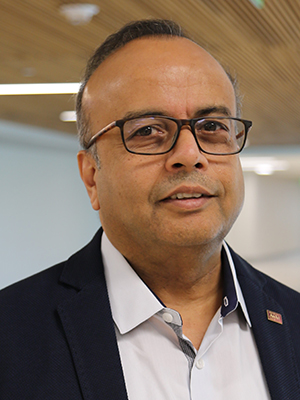
Prasad Enjeti is a Professor and Texas Instruments Jack Kilby Chair in Electrical & Computer Engineering at Texas A&M University, College of Engineering. With expertise in power electronics and renewable energy systems, he has significantly advanced grid-connected technologies, energy storage, and power quality solutions. Ph.D., Electrical Engineering, Concordia University (1988) M.S., Electrical Engineering, I.I.T. Kanpur (1982) B.S., Electrical Engineering, Osmania University (1980) His research focuses on power electronic converters for renewable energy integration, solid-state transformers, high-temperature power systems, grid-edge intelligence, and cybersecurity in distributed energy systems. He has pioneered innovations in AC/DC microgrids, droop control, and advanced filtering technologies. Recent publications emphasize cybersecurity for renewable systems, wide-bandgap semiconductor applications, and AI-driven power electronics optimization. He holds 20+ patents and has supervised 29 Ph.D. and over 50 Master's students, many now in leading academic and industrial positions. IEEE Fellow (2000) R. David Middlebrook Technical Achievement Award (2012) Best Paper Awards at PCIM (2014), IEEE IAS IPCC (2003, 2002, 1998, 1996) NSF Research Initiation Award (1990) Texas A&M Faculty Fellow (1996-97, 2001) He leads the Power Electronics Intelligence at the Network Edge (PINE) research group, with significant contributions to eVTOL energy systems, cryptocurrency mining load analysis, and secure peer-to-peer energy transactions.
Dr. Rebekka Burkholz is a tenured faculty member at the CISPA Helmholtz Center for Information Security in Saarbrücken, Germany, leading the Relational Machine Learning Group . Her research bridges machine learning and complex network science to develop robust, data-efficient models with applications in molecular biology. Previously, she held positions at Harvard T.H. Chan School of Public Health and ETH Zurich. PhD in Systems Design (2016) from ETH Risk Center Mathematics and Physics BSc/MSc from TU Darmstadt Her work focuses on sparse training methods and theoretical deep learning , addressing challenges like computational efficiency and adversarial robustness. Recent publications explore: Sparse training via implicit sparsification GNN optimization through rescaling and rewiring Integration of domain knowledge in biomedical modeling Theoretical guarantees for batch normalization and lottery tickets Scientific awards include: Zurich Dissertation Prize (2016) CSF Best Contribution Award (2016) She actively advises PhD students and collaborates with interdisciplinary teams in biostatistics and systems biology.
Matti Vilkko is a Professor in Control Engineering at Tampere University's Faculty of Engineering and Natural Sciences , specifically within the Automation Technology department. He serves as Head of the Automation and Mechanical Engineering Unit. Research Focus: Industrial process control, mathematical modeling, state estimation, and optimization of metallurgical and energy systems Key Projects: Future Electrified Mobile Machines (FEMMa), Circular Economy of Water (CEIWA), Social Energy Ecosystems (ProCem), Green Electrification (HYGCEL) His work combines control theory with industrial applications, particularly in copper smelting optimization, green hydrogen systems, and smart energy networks. Recent publications show expertise in: Machine learning for wind turbine cybersecurity ASM1 calibration for wastewater treatment EU regulatory impacts on hydrogen infrastructure Finite element analysis of paperboard mechanics Price-based coordination in metallurgical processes He leads interdisciplinary collaborations across Finland, integrating automation technology with energy systems, materials science, and industrial ecology.
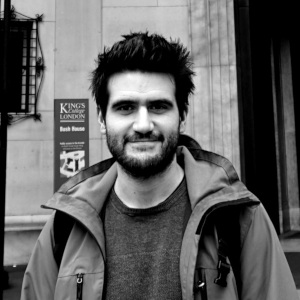
Martim Brandão is a Lecturer (Assistant Professor) in Robotics and Autonomous Systems at King’s College London, where he leads the Responsible Robotics and AI (RRAI) Lab and serves as Co-Director of the UKRI Centre for Doctoral Training in Safe and Trusted AI. His research focuses on ethical, explainable, and safe AI and robotics, with applications in human-robot interaction, motion planning, fairness, and societal impact. His research interests include: Explainable AI and Motion Planning Fairness and Bias in AI Systems Human-Robot Interaction and Social Robotics Adversarial Robustness in Robotics Value Alignment and Ethical AI Inclusive and Participatory Robotics Design His recent publications (2023–2025) reflect a strong trend toward socially responsible robotics, focusing on fairness in navigation, explainability of planning failures, worker-centered agricultural robotics, environmental justice in drone delivery, and the dangers of bias in drowsiness detection and LLM-driven robots. His work emphasizes user understanding, societal impact, and ethical safeguards in autonomous systems. He has advised and collaborated with numerous students and researchers across diverse topics in robotics and AI. He is actively involved in shaping responsible robotics through: Leadership in the RRAI Lab Co-directing a national CDT in Safe and Trusted AI Developing fairness-aware algorithms Advocating for inclusive and ethical design practices His lab and research group focus on: Responsible Robotics and AI Explainability in Multi-Agent Planning Fairness in Coverage and Navigation Human-Centered Evaluation of AI Systems
Dr. Tingting Li is a Lecturer (Assistant Professor) in Cyber Security at Cardiff University's School of Computing and Informatics and a member of the Centre for Cyber Security Research. She also holds an Honorary Research Fellow position at Imperial College London, reflecting her ongoing research collaboration. Her work bridges artificial intelligence and cybersecurity, with a focus on protecting critical systems such as cyber-physical systems (CPS), industrial control systems (ICS/SCADA), and autonomous vehicles. BEng (Hons) in Information Security, Xidian University, China MSc in Computing, Imperial College London PhD in Artificial Intelligence, University of Bath Dr. Li’s research interests lie at the intersection of AI and cybersecurity, particularly in automated cyber defense , diversification/deception strategies , and symbolic AI for knowledge representation . She investigates how AI can enhance the resilience of critical infrastructures through intelligent, adaptive defense mechanisms. Her recent work explores quantum-inspired reinforcement learning and machine learning models for proactive threat mitigation in complex systems. Her recent publications demonstrate a strong trend in applying advanced AI techniques—especially deep reinforcement learning, LSTM networks, and Bayesian models—to cybersecurity challenges in industrial and autonomous systems. These works span domains like IoT malware suppression, network diversity for ICS resilience, and automated compliance checking, reflecting a multidisciplinary approach combining security, AI, and systems engineering. Dr. Li has secured significant research funding, including a grant from the Alan Turing Institute (2024–2025) on AI safety in autonomous cyber defense, a RITICS/NCSC-funded project on diversity-based cybersecurity (2021–2022), and an EPSRC-funded project on metric-driven cybersecurity frameworks for critical national infrastructure (2021–2023). She actively supervises PhD students in areas including cybersecurity for autonomous vehicles, moving target defense, and cyber-physical system security. Her team includes Iryna Bernyk, Sanyam Vyas, Victoria Marcinkiewicz, Ellis Doran, Stephen Morris, and Sam Braithwaite. She also leads teaching modules on databases (CM6125/CM6625) and cybersecurity (CM6224/CM6724). Dr. Li’s research is conducted within the Centre for Cyber Security Research at Cardiff University, where she collaborates with experts in AI, security, and critical infrastructure protection. Her work is highly interdisciplinary, involving partnerships with institutions like Imperial College London and funding bodies such as EPSRC, NCSC, and the Alan Turing Institute.
Davide Careglio is a Professor at the Department of Computer Architecture, Faculty of Computer Science of Barcelona (FIB), Universitat Politècnica de Catalunya (UPC). He is a principal researcher in the CBA - Broadband Communication Systems and Architectures group and the IDEAI-UPC - Intelligent Data Science and Artificial Intelligence Research Group. Academic Rank: Professor Department: Department of Computer Architecture School: Faculty of Computer Science of Barcelona University: Universitat Politècnica de Catalunya Email: davide.careglio@upc.edu His research focuses on next-generation networking technologies, particularly in the domains of 5G/6G, AI-driven network automation, optical and elastic networks, energy efficiency, and the Recursive Internetwork Architecture (RINA). His work integrates machine learning and artificial intelligence to enhance network performance, security, and sustainability. He has made significant contributions to multicast routing, QoS assurance in RINA networks, and delay modeling in multidomain environments. The recent publications highlight a strong trend toward integrating AI and machine learning into network control, particularly for 6G services and secure distributed AI. His work spans modeling, simulation, and real-world experimentation, with applications in smart buildings, vehicular networks, and telecom infrastructure. Key themes include latency estimation, energy optimization, network programmability, and time-sensitive networking. Davide Careglio has been involved in prestigious EU-funded projects such as HORIZON 2020 and HORIZON EUROPE, including initiatives like ALLIANCE, SUNSET, and PRADIOT. He has also contributed to the Erasmus+ HEDY project, focusing on AI in education. He has advised PhD students, including D. Sembroiz, whose thesis focused on smart building IoT platforms. He actively collaborates with leading researchers such as Luis Velasco, Josep Solé-Pareta, and Salvatore Spadaro. He serves on the scientific committees of major conferences including IEEE GLOBECOM, IEEE ICC, and ICTON. He is a member of the CBA and IDEAI-UPC research groups at UPC, which are at the forefront of innovation in optical networking, AI for networks, and sustainable telecom infrastructures. These groups lead projects in programmable, knowledge-defined, and self-managed networks.
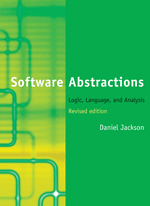
Prof. Daniel N. Jackson is a Professor of Electrical Engineering and Computer Science at MIT, serving as Associate Director of the Computer Science and Artificial Intelligence Laboratory (CSAIL) and Director of the Middle East Education Through Technology (MISTI MIT-MEET) initiative. His research focuses on software dependability, formal methods, and design analysis, particularly through the Alloy framework. Jackson emphasizes lightweight formal methods to reduce development costs and enhance software safety, with applications in cybersecurity, autonomous systems, and safety-critical software. His work includes developing tools like Bluefish for declarative diagram composition and Riffle for reactive systems. He explores ethical software design frameworks to address dark patterns and advocates for concept-centric development. Jackson's contributions span academic publications, educational initiatives, and industrial collaborations, aiming to bridge formal methods with practical software engineering challenges. Recent projects involve certified control systems for autonomous vehicles, end-to-end dependability cases, and model checking for security flaws. His research integrates interdisciplinary approaches, combining programming languages, static analysis, and human-centered design principles.
Professor Kenneth Payne is a Professor of Strategy at King's College London's Defence Studies Department, part of the Faculty of Social Science & Public Policy. His research focuses on the intersection of political psychology, strategic studies, and artificial intelligence. He has authored influential books like I, Warbot (2021) and Strategy, Evolution, and War (2018), exploring AI's transformative impact on conflict and decision-making. Payne has advised governments, NATO, and appeared before parliamentary committees in the UK and Netherlands. His work bridges evolutionary theory, modern warfare, and AI ethics, with recent contributions to debates on autonomous weapons and reliable AI in defense. Key affiliations include the Cyber Security Research Group (CSRG) and King's Cybersecurity Centre. His awards include a Visiting Fellowship at Oxford University's Department of International Relations (2008). He teaches strategic studies, AI's role in conflict, and has supervised PhD students in related fields. Payne's research projects include studies on geopolitics, post-traumatic stress in combat troops, and counterinsurgency strategies in Iraq.
Athina Sachoulidou is an Assistant Professor in Criminal Law at the Faculty of Law, NOVA University of Lisbon. She holds degrees from Aristotle University of Thessaloniki (BA 2011, M.Sc. 2014), University of Heidelberg (LL.M. 2015, PhD 2018), and was a Max Weber Fellow at the European University Institute (2018). Her research spans corporate criminal liability, medical criminal liability, and the intersection of criminal justice with emerging technologies. BA, Law – Aristotle University of Thessaloniki (2011) M.Sc., Medical Law and Bioethics – Aristotle University of Thessaloniki (2014) LL.M., German Law – University of Heidelberg (2015) PhD, Law – University of Heidelberg (2018) Her research focuses on doctrinal and interdisciplinary approaches to criminal liability of legal persons, medical criminal liability, and the impact of big-data-driven technologies on criminal justice. She actively explores how AI systems challenge traditional legal frameworks while advocating for regulatory innovation. Recent publications highlight trends in EU legislation on digital evidence, AI integration into law enforcement, and comparative analysis of Greek criminal procedure. These works emphasize corporate criminal liability in digital contexts, data privacy, and cross-border judicial cooperation. DAAD award for outstanding performance (2015) Max Weber Fellowship (2018) Grant to publish PhD thesis (2018, 2019) Ruprecht-Karls award (2018) 2nd Award for working paper (2020) Athina advises PhD students and participates in research teams like ‘Big Data im Diskurs’ and networks including ECLAN and ELI. She has been involved in conferences on bioethics, criminal procedure reforms, and EU criminal law, with media engagement via the TRACE podcast (2023). Her work bridges academic rigor with practical applications in technology-driven criminal justice systems.
Anahita Khojandi is an Associate Professor in the Department of Industrial and Systems Engineering at the University of Tennessee, Knoxville, where she also holds the Heath Endowed Faculty Fellow in Business & Engineering title. She is also a Joint Associate Professor at the Bredesen Center for Interdisciplinary Research and Graduate Education and served as the Director of the Reliability and Maintainability Engineering Program from 2021 to 2024. Her interdisciplinary research spans healthcare, transportation, environmental engineering, and advanced manufacturing. Education: PhD in Industrial Engineering, University of Pittsburgh MS in Industrial Engineering, University of Pittsburgh BS in Industrial Engineering, Sharif University of Technology, Tehran, Iran Her research focuses on decision-making under uncertainty, reinforcement learning, Markov decision processes, and predictive analytics. These methodologies are applied to critical domains such as sepsis prediction, Parkinson’s disease treatment using wearable sensors, intelligent transportation systems, nuclear safety, and green infrastructure resilience. She integrates machine learning with stochastic modeling to improve real-time decision-making in complex systems. The recent publications highlight a strong trend toward AI-driven solutions in healthcare and infrastructure, with emphasis on explainability, anomaly detection, and real-time adaptation. Her work frequently appears in high-impact journals such as Management Science , IEEE Transactions , and Nuclear Technology , reflecting both methodological rigor and practical relevance. Scientific Awards and Honors: AAAS Rapid Response AI Fellow (2024) NIH AIM-AHEAD Fellowship in Leadership (2023) First Place, Harvey J. Greenberg Research Award (INFORMS, 2022) Best Paper Award, OMEGA Journal (2020, 2021) INFORMS Senior Member (2024) Teaching Award, IISE DAIS Division (2024) Khojandi has advised numerous graduate students and postdoctoral researchers, many of whom are co-authors on her publications. Her research has been supported by the National Science Foundation (NSF), National Institutes of Health (NIH), Department of Energy (DOE), and other federal and institutional grants. She actively contributes to professional service, including leadership roles in INFORMS, where she served as Chair of the Diversity, Equity, and Inclusion Committee and currently serves as Vice President of Membership and Professional Recognition. She leads research initiatives at the intersection of industrial engineering and data science, often in collaboration with the Health Innovation Technology & Simulation (HITS) Lab and the Center for Transportation Research. Her lab focuses on developing AI-enabled decision support tools for clinical and operational environments, with future work targeting autonomous systems, personalized medicine, and climate-resilient infrastructure.