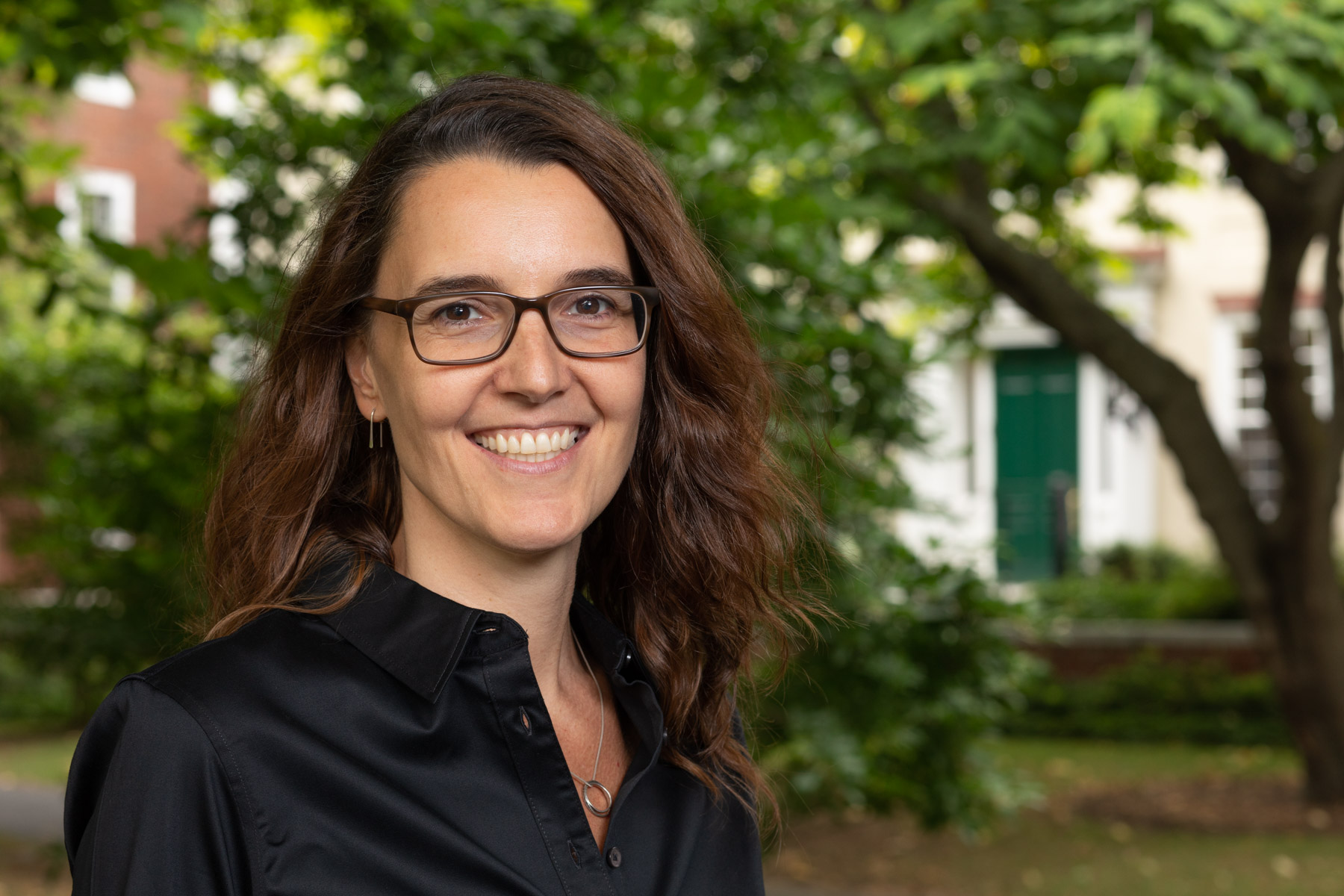
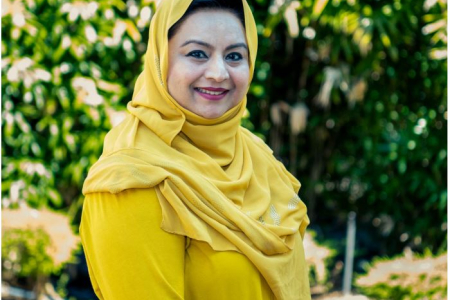
Eva Ascarza is a Professor of Business Administration in the Marketing Unit at Harvard Business School (HBS) . She co-founded the Customer Intelligence Lab at HBS's D 3 Institute, focusing on responsible and effective customer data utilization. Research Interests include: Customer retention and churn analysis Algorithmic bias in marketing AI Field experimentation (A/B testing) for targeting optimization Customer lifetime value (CLV) modeling Dynamic personalization strategies Scientific Awards and Recognitions: 2023 Weitz-Winer-O'Dell Award (winner) 2022 Paul E. Green Award (PNAS publication) 2020 Marketing Science Institute (MSI) Scholar 2019 Erin Anderson Award for Emerging Female Scholar 2018 Paul E. Green Award (JMR publication) 2014 Frank M. Bass Outstanding Dissertation Award Her articles demonstrate cutting-edge applications of statistical modeling , Bayesian methods , and fair AI frameworks in modern marketing challenges.
Paolo Gardoni is the Alfredo H. Ang Family Professor and an Excellence Faculty Scholar in the Department of Civil and Environmental Engineering at the University of Illinois Urbana-Champaign, with additional professorial appointments in Industrial & Enterprise Systems Engineering and Biomedical & Translational Sciences. He also serves as Director of the MAE Center and Editor-in-Chief of Reliability Engineering & System Safety. Education Ph.D. in Civil Engineering, University of California, Berkeley (2002) M.A. in Statistics, University of California, Berkeley (2001) M.Eng. in Structural Engineering, University of Tokyo (1997) Laurea (BS+MS equivalent) in Structural Engineering, Politecnico di Milano (1997) Research Interests Gardoni’s scholarship integrates probabilistic methods with large-scale infrastructure systems to advance reliability, risk, and life-cycle analysis. His work quantifies the performance of deteriorating systems under natural and anthropogenic hazards, models societal impacts of disasters, and develops decision frameworks for sustainable and resilient infrastructure. He also examines ethical, social, and legal dimensions of risk, and investigates optimal strategies for hazard mitigation, disaster recovery, and climate adaptation. Across more than 250 refereed journal papers, he has advanced sub-fields ranging from probabilistic mechanics and earthquake engineering to catastrophe bond pricing and engineering ethics, leveraging tools such as stochastic differential equations, Bayesian networks, and physics-informed machine learning. Awards & Honors Alfredo Ang Award on Risk Analysis and Management of Civil Infrastructure (ASCE, 2021) Best Paper Awards in ASCE Journal of Sustainable Water in the Built Environment (2019) and Geotechnical Research (2018 Telford Premium Prize) Fellowships and named professorships: Alfredo H. Ang Family Professor, Excellence Faculty Scholar, and courtesy or honorary professorships at Tsinghua, IIT Guwahati, Tongji, Jianghan, and Loughborough universities. Research Leadership & Funding Gardoni has secured over $58 million in research funding from NSF, DHS, NIST, USAID, Qatar National Research Fund, and other agencies. He directs the MAE Center—formerly an NSF Engineering Research Center—focused on multi-hazard engineering approaches, and is Editor-in-Chief of Reliability Engineering & System Safety (Elsevier, IF 9.4). He founded and formerly led the journal Sustainable and Resilient Infrastructure (Taylor & Francis) and serves on editorial boards of nine additional journals. Advising & Mentorship He has graduated 27 PhD and 35 Master’s students, many of whom now hold faculty positions worldwide. His group maintains an active pipeline of doctoral and post-doctoral researchers working on resilience analytics, infrastructure monitoring, and risk-informed decision-making. Laboratories & Collaborations He leads the MAE Center and is affiliated with the Critical Infrastructure Resilience Institute (CIRI) and the Biomedical and Translational Sciences group. International collaborations span the UK (Loughborough), India (IIT Guwahati), and China (Tsinghua, Tongji, Jianghan), fostering cross-disciplinary research in reliability and resilience engineering.
Prof. Dr. Pinar Yolum Birbil is a leading researcher in Responsible AI at the Faculty of Science , Utrecht University . Her work bridges Artificial Intelligence , Privacy and Data Protection , and Software Agents , focusing on Human-Centered AI and Trustworthy Systems . She is part of the AI & Data Science and Responsible AI research groups. PhD in Computer Science, North Carolina State University (2003) MS in Computer Science, North Carolina State University (2000) BSc in Computer Engineering, Marmara University (1998) Her research explores Privacy Preservation in collaborative systems, Computational Theory of Mind for human-agent coordination, and Norm-Based AI Systems . Recent projects include the Hybrid Intelligence Center and tools like PANOLA for privacy support. She investigates how AI can balance user autonomy , ethical norms , and societal values in applications ranging from urban planning to healthcare. Her scientific publications (2023-2025) span topics like Explainable Privacy , Trust in Hybrid Teams , and AI for Diabetes Management , appearing in venues such as JAIR , AAMAS , and ACM TOIT . She emphasizes collaborative AI , with contributions to multiagent simulations and privacy-preserving mechanisms . Scientific Awards : NC State University Alumni Hall of Fame (2017) Woman Entrepreneur of the Year (Microsoft Turkey & KAGIDER, 2017) Bogazici University Academic Encouragement Award (multiple years) Best Paper Award at ESAW 2009 She supervises a dynamic research group with PhD students working on Hybrid Intelligence , Computational Ethics , and Privacy Modeling . Her projects often involve interdisciplinary collaboration with institutions like TNO and the Transforming Cities Hub .
Tianxi Cai, ScD, holds the John Rock Professorship in Population and Translational Data Sciences at the Harvard T.H. Chan School of Public Health and is a Professor of Biomedical Informatics at Harvard Medical School. She directs the Translational Data Science Center for a Learning Health System (CELEHS). Her work bridges clinical and basic science data to advance personalized medicine and disease understanding. Institution: Harvard University Departments: Biostatistics (T.H. Chan School) and Biomedical Informatics (HMS) Key Roles: Faculty member since 2002, NIH-funded researcher, and leader in EHR data analytics Research focuses on biomarker evaluation, predictive modeling, high-dimensional data analysis, and survival analysis. Collaborates with the I2B2 Center to integrate clinical and genomic data. Active in developing semi-supervised learning methods for noisy EHR data and real-world evidence generation. Funding : Recent grants include NIH projects on rheumatoid arthritis treatment response (R01AR080193, R21AR078339) and semi-supervised EHR denoising (R01LM013614). Co-leads initiatives on chronic disease endpoints using multi-source data (U01FD007929). Labs/Teams : Directs CELEHS and leads the Cai Lab, focusing on translational data science and machine learning applications in healthcare.
Professor Beatrice Heuser is a distinguished academic in the Department of Politics within the School of Social & Political Sciences at the University of Glasgow. Her career spans multiple prestigious institutions across Europe, including King's College London, University of Reading, and visiting professorships at Sciences Po Paris, Bundeswehr University Munich, and MGIMO. She maintains significant affiliations with major strategic research institutes including Chatham House, RUSI, IFRI, and IRSEM. Education: BA from Bedford College London, MA from LSE, DPhil from Oxford (St Antony's/St John's), Habilitation from University of Marburg Professional Experience: Former Director of Studies at German Bundeswehr's military history research office, NATO Headquarters consultant, and extensive teaching across European institutions Her research centers on strategic studies with particular focus on the cultural dimensions of warfare, nuclear strategy, and the historical evolution of strategic thought. Key research areas include strategic culture, military exercises as political instruments, laws of war development, and European defense policy. Her work bridges historical analysis with contemporary security challenges, examining how cultural narratives shape strategic decision-making from antiquity to the nuclear age. Professor Heuser's recent publications demonstrate consistent scholarly output across strategic theory, military history, and contemporary security issues. Her work shows particular emphasis on the conceptual foundations of strategic culture, historical analysis of warfare evolution, and practical applications to modern security challenges including nuclear deterrence and asymmetric warfare. The interdisciplinary nature of her research connects political theory, historical analysis, and security studies. She actively supervises graduate students in strategic theory, nuclear strategy, insurgency studies, and defense policy-making within NATO/EU contexts. Her teaching portfolio includes War and International Relations, Defense Policy, and Strategic Theory courses.
Maher Elshakankiri is an Assistant Professor, Teaching Stream at the University of Toronto's Faculty of Information. He holds a Ph.D. in Computer Engineering from Ain Shams University (Egypt), followed by a postdoctoral fellowship at the University of Regina. His research focuses on IoT, Wireless Sensor Networks (WSN), and pedagogical integration of technology and gaming. He has supervised over 100 student projects and authored a book on WSNs. Education: Ph.D. in Computer Engineering, Ain Shams University, Egypt M.Eng., B.Eng. in Engineering, Ain Shams University, Egypt Postdoctoral Fellowship, University of Regina, Canada Research Interests: IoT in healthcare, agriculture, and sports Active learning classrooms and technology in education Wireless communication protocols (V2V, UAV, RFID) Leadership & Grants: Director, Bachelor of Information (BI) Program (2024–present) Coordinator, Information Systems and Design (ISD) Concentration (2023) SSHRC Grant: 'Gaming in teaching towards a more inclusive class' (2022–2023) Professional Activities: Member, SCC IoT & Digital Twins Standards Committee Reviewer for journals including Wireless Networks , Telematics and Informatics , and Computational Intelligence Technical Program Committee member at multiple conferences Teaching: Courses include INF1340 (Programming for Data Science), INF1005/1006 (IoT Workshops), and INF452 (Information Design Coding).
David Martens is a Professor of Data Science at the University of Antwerp , where he directs the Applied Data Mining Research Group within the Faculty of Business and Economics . He also serves as Chair of the Department of Engineering Management and Director of the Antwerp Center on Responsible AI . His academic work spans data mining , interpretable machine learning , and the societal impact of AI . PhD in Applied Economic Sciences (KU Leuven, 2008) Director, Antwerp Center on Responsible AI Chair, Department of Engineering Management Martens' research focuses on responsible AI and data ethics , with applications in finance, public policy, and behavioral analysis. His recent publications emphasize counterfactual explanations , LLM interpretability , and privacy implications in AI systems. His articles reveal trends in Explainable AI (XAI) , including narrative-driven explanations , graph neural networks , and ethical challenges like monetization risks and algorithmic bias. Keywords span Computer Science , Artificial Intelligence , and Behavioral Data . Martens is a leading voice in data science ethics , authoring the book Data Science Ethics: Concepts, Techniques, and Cautionary Tales (Oxford University Press, 2022). He combines academic rigor with industry experience, having consulted for banks, telecom firms, and startups in fraud detection and digital advertising .
Professor Daniel Rueckert is a leading academic in Artificial Intelligence and Medical Imaging, holding dual positions at Imperial College London (as Professor of Visual Information Processing) and Technical University of Munich (Alexander von Humboldt Professor for AI in Medicine and Healthcare). He obtained his MSc from Technical University Berlin (1993) and PhD from Imperial College London (1997), followed by postdoctoral work at King’s College London. At Imperial, he led the Department of Computing (2016–2020) and founded the Biomedical Image Analysis group. His research focuses on AI-driven medical image analysis, including algorithms for image reconstruction, registration, and clinical decision support. His research interests span AI applications in healthcare, machine learning for medical imaging, and computational methods for clinical diagnostics. Notable contributions include over 500 publications and 60+ PhD graduates, with key works in federated learning, cardiac motion analysis, and biomarker development. Awards include the Leibniz Prize (2025), Royal Academy of Engineering Fellowship (2015), and multiple ERC grants. He leads the BioMedIA research group and is an editorial board member of Medical Image Analysis . Recent publications highlight advancements in AI-driven medical imaging, such as secure federated learning frameworks and deep learning models for disease prediction. His work bridges academic and industrial sectors through initiatives like IXICO, an Imperial spin-out. Current affiliations include roles at both Imperial and TUM, emphasizing interdisciplinary collaboration in healthcare technology. Advising and grants: Supervised over 60 PhD students and 40 post-docs. Secured grants including ERC Synergy (2013) and ERC Advanced (2020). Active in labs focused on biomedical image computing and AI in healthcare systems. Collaborative efforts include the BioMedIA group and TUM’s AI initiatives. Labs/teams: Leads the Biomedical Image Analysis group at Imperial and the TUM AI in Medicine team. Collaborates extensively on projects like cardiac imaging analysis and federated learning for healthcare.
Prof. Dr.-Ing. Rüdiger Daub serves as Professor and Chair of Production Engineering and Energy Storage Systems at the Technical University of Munich (TUM), operating within the Department of Mechanical Engineering. His leadership encompasses research direction, academic supervision, and strategic development of battery production technologies at TUM's Garching campus (Boltzmannstr. 15), with active industry collaborations driving innovation in sustainable manufacturing. Daub's research program pioneers advanced production methodologies for lithium-ion and solid-state batteries, focusing on electrode manufacturing, electrolyte filling, and cell assembly processes. His work investigates critical parameter interdependencies affecting battery safety and performance, developing inline monitoring systems and digital twin technologies for real-time process optimization. Key contributions include moisture control in electrode production, electrochemo-mechanical characterization of solid-state systems, and robotics solutions for deformable object assembly, all integrated with machine learning for quality assurance in industrial settings. Analysis of his 2023-2025 publications reveals a dominant research trajectory toward solving production bottlenecks in next-generation energy storage. The work demonstrates increasing integration of computational modeling with empirical validation, particularly in solid-state battery manufacturing and high-voltage electrolyte systems. A notable trend is the cross-pollination of robotics, computer vision, and uncertainty quantification techniques to address complex assembly challenges and distribution shifts in quality monitoring, reflecting industry's urgent need for adaptable, data-driven production systems. Leading TUM's specialized laboratories for battery cell production, Daub's team maintains comprehensive facilities for electrode calendering, electrolyte filling, and cell assembly with integrated tracking and tracing capabilities. The research infrastructure supports collaborative projects with automotive OEMs and battery manufacturers to develop scalable production processes, emphasizing environmental sustainability through water-based electrode production and footprint optimization. Current initiatives focus on digital factory modeling and prelithiation technologies for next-generation battery systems.
Dr. Md Manjurul Ahsan serves as a Research Assistant Professor in the Department of Industrial & Systems Engineering at the University of Oklahoma, where he develops AI-driven solutions for healthcare diagnostics and advanced manufacturing optimization. His work bridges theoretical AI advancements with practical industrial and medical applications. Education: Ph.D. in Industrial and Systems Engineering, University of Oklahoma M.S. in Industrial Engineering, Lamar University B.S. in Industrial and Production Engineering, Shahjalal University of Science and Technology Research Focus: Dr. Ahsan specializes in Artificial Intelligence with technical depth in Machine Learning , Deep Learning , and Computer Vision to solve critical challenges in healthcare diagnostics and additive manufacturing . His research emphasizes Explainable AI to enhance model trustworthiness and deployment efficiency across Cyber-Physical-Social Systems, with significant contributions to Aerospace and Defense applications. Publication Trends: Recent work (2023-2025) reveals a strategic expansion from core manufacturing applications into medical AI (diffusion models for diagnostics), cultural preservation (NLP for Dravidian languages), and geopolitical AI analysis. His publications consistently address data imbalance challenges while advancing digital twin integration in quality control systems. Scientific Recognition: GCOE Dissertation Excellence Award (2023) International Student Scholarship (2022) Outstanding Academic Achievement in Engineering (2022) IEEE IEMCON Best Paper Award (2020) Netti Vincent Boggs Engineering Excellence Award (2020) Research Leadership: As director of the Sooner Additive Manufacturing Laboratory , Dr. Ahsan leads cross-disciplinary teams developing real-time monitoring systems using FARO arms and CMM metrology. His postdoctoral work at Northwestern University (2023-2024) advanced AI deployment frameworks, resulting in 60+ peer-reviewed publications with multiple papers ranking in engineering's top 1% for citations.
Ann B. Lee is a Professor and Co-Director of the PhD Program in Statistics at Carnegie Mellon University , with a joint appointment in the Department of Statistics & Data Science and the Machine Learning Department. Prior to joining CMU, she held positions as a J.W. Gibbs Assistant Professor at Yale University and a visiting research associate at Brown University. PhD in Physics, Brown University MSc/BSc in Engineering Physics, Chalmers University of Technology, Sweden Her research focuses on statistical methodology for complex data in the physical sciences , emphasizing trustworthy inference, uncertainty quantification, and integration of classical statistics with machine learning. Recent work includes likelihood-free inference, calibrated forecasting, and diagnostics for generative models. The STAMPS research group , which she co-founded in 2018, hosts weekly meetings and public webinars. In Fall 2024, STAMPS will transition into a CMU Research Center. Recent publications span likelihood-free inference , climate modeling , and astronomy . Notable collaborations include applications to hurricane intensity guidance , galaxy redshift estimation , and cosmological parameter biases . She mentors PhD students and has advised multiple award-winning researchers, including ASA Best Student Paper Award winners. Her teaching includes advanced courses on probability, regression, and AI for climate sciences.
Maria Apostolaki is an Assistant Professor of Electrical and Computer Engineering at Princeton University. Her research focuses on designing secure, reliable, and high-performance networked systems, integrating expertise in networking, security, blockchain, and machine learning. She holds a Ph.D. from ETH Zurich (2021) and an M.Eng. from the National Technical University of Athens (2015). Education: Ph.D., ETH Zurich 2021 | M.Eng., NTUA 2015 Her work investigates challenges in network security, distributed systems, and adversarial resilience. Notable contributions include SABRE (protecting Bitcoin from routing attacks) and TANGO (collaborative route control). She has advised multiple graduate students in computer science and engineering. Key honors include the NSF CAREER Award and the IRTF/IETF Applied Networking Research Prize (2018). Her lab explores cutting-edge topics like contextual robustness in ML-driven network functions and formal methods for secure systems. Advising: 6 advisees in COS/ECE domains Grants: NSF CAREER Award, innovation grants for AI/robotics Her TANGO framework enables secure cross-domain routing, while recent work addresses vulnerabilities in Ethereum PoS and BGP routing protocols.
Dr. Frank Rudzicz is an Associate Professor in the Faculty of Computer Science at Dalhousie University. His research lies at the intersection of artificial intelligence, natural language processing, and healthcare, with a focus on developing machine learning systems that improve clinical decision-making, patient outcomes, and accessibility in medicine. He holds a BSc from Concordia University (2004), an MEng from McGill University (2006), and a PhD from the University of Toronto (2011). His research interests include Natural Language Processing, Machine Learning, Healthcare, Speech Technologies, Explainable AI, and Fairness in ML. Dr. Rudzicz's recent publications span a wide range of topics, including Alzheimer's detection through speech analysis, surgical outcome prediction, mental health monitoring, privacy in AI, and the application of large language models in clinical settings. His work consistently emphasizes ethical AI, patient privacy, and real-world clinical integration. He has received several awards, including a Best Paper award at EMNLP 2020, a Best Student Paper award at ICASSP 2021, and the ISCA Best Student Paper award in 2013. His research has been published in top-tier journals such as Nature Scientific Reports , JAMA Network Open , IEEE Access , and Frontiers in Human Neuroscience , as well as leading conferences including NeurIPS, ACL, ICML, and Interspeech. Dr. Rudzicz supervises a dynamic research group working on AI for health, with active projects in voice-based diagnostics, ambient clinical documentation, explainable AI for surgery, and wearable-based monitoring for chronic diseases. He collaborates widely across disciplines, including with clinicians, neuroscientists, ethicists, and public health experts. He is also involved in major initiatives such as the Genetics Navigator study and Bridge2AI-Voice, aiming to build ethically sourced, diverse biomedical datasets. His lab actively explores the societal implications of AI in healthcare, including fairness, trust, and resistance to malicious fine-tuning.
Dr. Farha Sattar is a Lecturer in Education (Mathematics) at the Faculty of Arts and Society, Charles Darwin University. With over thirty years of teaching experience in Mathematics, Science education, GIS, Remote Sensing, and e-Learning technologies at undergraduate and postgraduate levels, Dr. Sattar brings extensive expertise to her academic role. She holds a PhD in Geospatial Science from Charles Darwin University, focusing on Spatial Mathematical Modelling for 3D Gully Mapping and Erosion Quantification. Her educational background includes: PhD in Geospatial Science (Three Dimensional Gully Mapping and Erosion Quantification within a Geoinformatics Framework), Charles Darwin University (2012) Prior academic experience at several Asian and European universities Dr. Sattar's research spans multiple interdisciplinary fields with a strong focus on the intersection of education and technology. Her primary research interests include Mathematics Education, STEM Education, Geoscience Education, Spatial Mathematical Modelling, Drone Technology, Remote Sensing, Geographic Information Systems, and Innovative Pedagogies such as experiential learning and inquiry-based approaches. She has developed expertise in cognitive development, particularly in fostering critical and creative thinking skills through iSTEM approaches. An analysis of Dr. Sattar's recent publications reveals a consistent trajectory toward integrating emerging technologies like drones, augmented reality, and geospatial artificial intelligence into educational contexts. Her work demonstrates a progression from foundational geospatial research on erosion mapping to innovative applications in STEM education. Recent publications increasingly focus on drone technology for educational purposes, spatial data infrastructure for policy development, and computational thinking development through technology-enhanced learning. Dr. Sattar has received numerous accolades for her contributions to education and research: NT Science Week Awards – Inspired NT STEM Hero of the Year award (2021) Long Service Recognition Award (2023) Finalist, CDU Alumni Award (2023) Multiple Best Presentation Awards (2008, 2010, 2017) Australian College of Educators - 2021 College Medal Nominee As a supervisor, Dr. Sattar mentors postgraduate research students including Ayesha Farhan, who is working on "A Framework for Cognitive Development: Fostering Critical and Creative Thinking Skills, Using iSTEM Approach." She actively secures research funding through various projects such as "DBELaSTEM: Drone-Based Experiential Learning and STEM Education," "STEM_D & VR: Youth STEM Learning and Empowerment with Drones and VR," and "CodProg Drone Lab." Her research is supported by grants from NT Government projects and other external funding sources. Dr. Sattar leads the CodProg Drone Lab, an innovative research space exploring drone technology applications in education. She is a certified drone pilot and aeronautical radio operator, which enables her to bridge theoretical knowledge with practical applications. Her work with the "Flying Forward: Drones, STEM Equity, and Indigenous Empowerment" initiative demonstrates her commitment to community engagement and addressing educational disparities through technology.
Lorin Schöni is a PhD candidate at ETH Zürich, actively contributing to the Security, Privacy and Society research group since October 2022. Concurrently, he serves as a Lecturer at the Department of Humanities, Social and Political Sciences, where he teaches the course Focus on the Human: Human-Centered Security and Privacy Lab (Autumn Semester 2025, Unit 851-0391-00L). His research focuses on human-centered approaches to cybersecurity , particularly through three key domains: Human-Computer Interaction - Investigating design decisions that influence user behavior in digital security contexts Extended Reality Applications - Developing immersive training systems for phishing prevention Usability Engineering - Creating intuitive security interfaces with explainable AI components Recent publications highlight his work at the intersection of autonomous motivation theory and personalized cybersecurity training , with notable presentations at top venues including CHI 2025 and SOUPS 2024. His research aims to transform security from a restrictive framework into a collaborative partnership between users and digital systems, as emphasized in his award-winning work on human-centered cybersecurity.