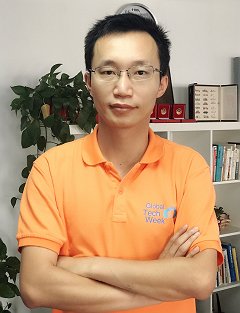
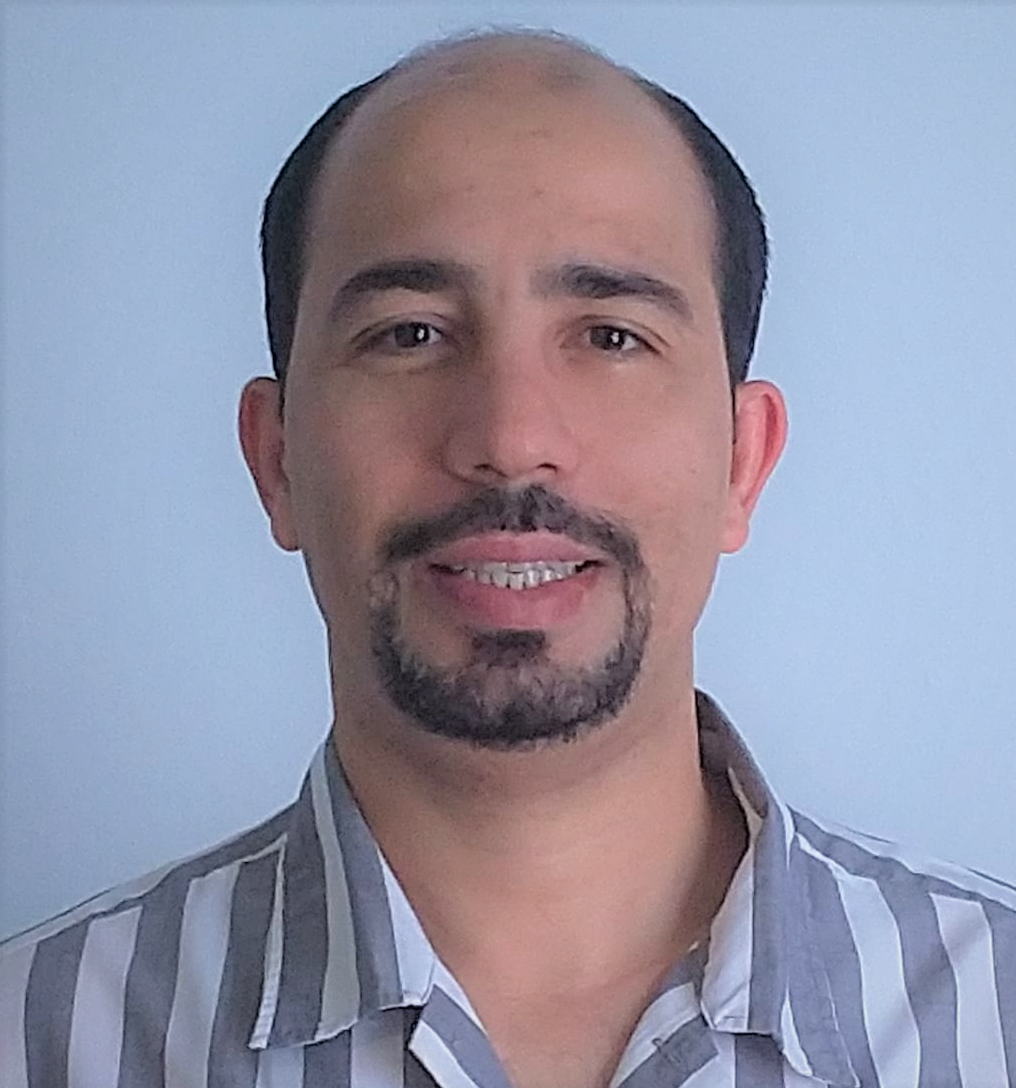
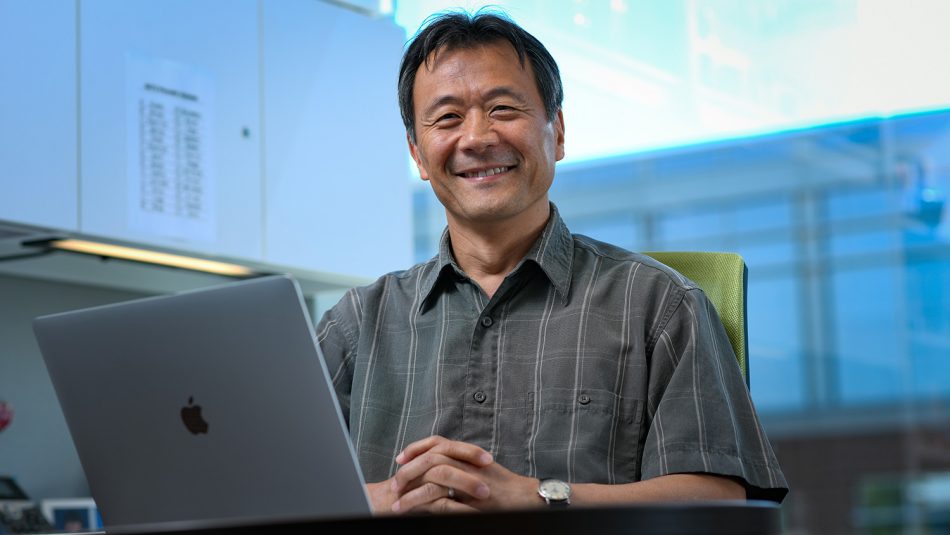
Zhenyu Chen is a Full Professor and Director of the iSE Laboratory at Nanjing University, specializing in AI-driven software testing methodologies. His research bridges artificial intelligence and software engineering with dual focus areas: leveraging AI to enhance testing processes ( AI for Testing ) and validating AI/ML systems ( Testing for AI ). His research interests center on deep learning framework testing , crowdsourced testing optimization , and Large Language Model applications in verification . Recent work demonstrates innovative approaches to metamorphic testing of neural networks, LLM-based test report analysis, and security hardening of code models against backdoors. Key contributions include the development of mooctest.com and frameworks like DevMuT for mutation testing of deep learning APIs. His publication trajectory reveals evolving focus from crowdsourced testing (2018-2020) to deep learning system validation (2021-2023) and current emphasis on LLM-powered testing solutions. Major venues include ASE, ICSE, and ISSTA where he serves regularly on program committees.
Gregory Gay is an Associate Professor in the Interaction Design and Software Engineering division within the Department of Computer Science and Engineering at Chalmers University of Technology and the University of Gothenburg, Sweden. His academic profile spans numerous software engineering conferences where he has served as committee member, program chair, and active researcher since at least 2018. Dr. Gay's research focuses on the intersection of software engineering and artificial intelligence, with particular emphasis on: Software Testing and Analysis Search-Based Software Engineering AI for Software Engineering (AI4SE) AI Engineering Automation of development tasks Software Carbon Footprint and sustainability His recent publications demonstrate a strong trend toward applying AI and optimization techniques to software testing challenges, with increasing focus on sustainability aspects of software development. Many studies take an industrial perspective, examining real-world applications in automotive software systems. His work blends theoretical foundations with practical applications, making significant contributions to both academic research and industrial practice in software engineering. Dr. Gay has been actively involved in numerous top software engineering conferences including ASE, ICSE, ESEC/FSE, ISSTA, and ICST, serving on program committees and organizing tracks. His research methodology typically combines optimization, artificial intelligence, and machine learning to help developers deliver complex systems in a safe, secure, and efficient manner.
Dr. Jifeng Xuan is a Professor and Deputy Dean at the School of Computer Science, Wuhan University, China. He founded the CSTAR (Centre of Software Testing, Analysis and Reliability) and holds editorial roles at Empirical Software Engineering and PLOS One . Previously, he was a postdoctoral researcher at INRIA Lille-Nord Europe (France) and earned his PhD from Dalian University of Technology. Research Interests: His work focuses on software testing, debugging, automated program repair, software data analysis, and search-based software engineering. He integrates AI/ML techniques for tasks like log analysis, fuzz testing, and vulnerability detection, with applications in robotics, microservices, and Android development. Publication Trends: Recent articles (2022–2025) emphasize AI-driven software engineering, including LLM-based repair, reinforcement learning for testing, and deep learning surveys. Security (vulnerability logs) and empirical studies on industrial challenges (e.g., C program repair) are recurring themes. Awards & Honors: ACM SIGSOFT Distinguished Paper Award (2025) IEEE TCSE Distinguished Paper Award (2025) CCF NASAC Youth Software Innovation Award (2024) Outstanding Doctoral Dissertation Award, China Computer Federation (2014) Luojia Young Scholar (2015) Student Advising & Labs: Actively recruits PhD and master students for CSTAR Lab. Research areas include automated debugging, testing tools (e.g., Mergebot, FastLog), and AI-generated code assessment. No specific grants listed.
Haipeng Cai serves as an Associate Professor in the Department of Computer Science and Engineering at the University at Buffalo, SUNY. His academic work spans software engineering, program analysis, and software security with particular emphasis on adaptive analysis techniques for mobile and distributed systems. His research interests center on adaptive/data-driven static and dynamic analysis for security applications targeting mobile apps, distributed systems, and multilingual software. Current work focuses on enhancing vulnerability detection, cross-language bug analysis, and automated security tooling through machine learning approaches. His lab produces tools like VinJ for vulnerability data generation and PolyFax for multilingual software characterization. Recent publications reveal strong trends in multilingual system security and AI-enhanced analysis , with 15+ papers since 2022 addressing cross-language vulnerabilities, Android security, and learning-based vulnerability detection. His work bridges theoretical program analysis with practical security applications in real-world software ecosystems. As an active academic contributor, he serves on program committees for major conferences including ASE, ICSE, and FSE, and will deliver a keynote at PROMISE 2025. His leadership includes journal-first paper chair roles and session chair positions at top software engineering venues. Dr. Cai maintains an active research presence through his personal website , GitHub repository ( github.com/chapering ), and academic social media profiles, with consistent contributions to the software engineering research community since 2018.
Shui Yu is a Professor of the School of Computer Science in the Faculty of Engineering and Information Technology at the University of Technology Sydney (UTS), where he also serves as the Deputy Chair of the UTS Research Committee. His academic career spans over 20 years in Australia and 7 years in China, with additional teaching experience in Hong Kong and Indonesia. He has developed more than 10 units in cybersecurity, computer science, data analytics, and computer games, serving as the Course Director for Computer Science undergraduate programs. Professor Yu's research interests center on cybersecurity, privacy, networking aspects of Big Data, and applied mathematics for computer science. He pioneered the field of 'networking for big data' in 2013 and edited the seminal book 'Networking for Big Data' published in 2015. His work has practical applications in industry, including Amazon Cloud's auto-scale strategy against distributed denial-of-service attacks. Current research focuses include privacy and security concerns associated with big data, security issues in smart grids, anonymous transactions on Blockchain, and anonymous communication for web browsing privacy. Analysis of his recent publications reveals a strong research trajectory spanning cybersecurity, privacy-preserving technologies, networking for big data, and applied mathematics. His work shows increasing focus on quantum-resistant cryptography, federated learning security, and adversarial robustness in AI systems. The interdisciplinary nature of his research bridges theoretical foundations with practical applications in IoT, blockchain, and cloud environments. Fellow of IEEE (2023) Distinguished Lecturer of IEEE Communications Society (2018-2021) Distinguished Visitor of IEEE Computer Society (2022-2024) Professor Yu has secured numerous research grants from the Australian Research Council, including current projects on privacy and fairness in high intelligence models (DP240100955), improved security and privacy for online platforms (LP220200808), and secure blockchain for financial applications (LP220100453). He has served on editorial boards of multiple IEEE journals including IEEE Communications Surveys and Tutorials, IEEE Communications Magazine, and IEEE Internet of Things Journal. His service extends to organizing major conferences such as IEEE Globecom 2015 and IEEE INFOCOM 2016-2017.
Simon Bell is a Professor at the Estonian University of Life Sciences (full-time) and holds a part-time Professorial role at the University of Edinburgh. He serves as the Head of the Department of Landscape Architecture and Chair of the Landscape Architecture Program. Previously, he was President of the European Council of Landscape Architecture Schools (2012–2018). His research focuses on outdoor recreation landscapes, wellbeing, forest landscapes, and Soviet-era rural landscapes. He earned a PhD from Estonian University of Life Sciences in 2009, an M.Phil (1981–1983), and a BSc (1976–1979). Education: PhD in Landscape Architecture, Estonian University of Life Sciences (2007–2009) M.Phil in Environmental Studies, 1981–1983 BSc in Forestry/Landscape Architecture, 1976–1979 Research interests span the intersection of environmental design and public health, with a particular emphasis on urban blue-green spaces, their impact on mental health, and the preservation of cultural landscapes. His work often involves transdisciplinary approaches, such as participatory GIS methods and community co-created interventions. He has contributed to international projects like COST Actions TU1201 and TD1106, focusing on urban agriculture and allotment gardens. Notable publications include studies on generative AI in landscape representation, the role of university campus design in student wellbeing, and cross-country analyses of nature exposure and wellbeing. His research highlights the importance of spatial variation, environmental aesthetics, and the socio-ecological impacts of urban development. Awards include the 2022 European Council of Landscape Architecture Schools Lifetime Achievement Award and a 2002 Travelling Fellowship from the Japan Society for the Promotion of Science. He has led over 18 projects, such as 'Linking Up Environment, Health and Climate' (€875,000) and 'Modernist Reinventions of the Rural Landscape' (€201,525). His administrative roles include coordinating the Eastern Baltic Network of Landscape Architecture Schools and leading initiatives to popularize European environmental policies. He collaborates internationally, with projects in China, Spain, and Poland, emphasizing cross-border and inter-disciplinary research.
Dr. Yaser Al Mtawa is a faculty member with a focus on the Internet of Things (IoT), Wireless Sensor Networks, Cyber-Physical Systems, and Network Security. His research spans Smart Home Security, SDN-based Networking, Reliability, and Quality of Service (QoS). Education: PhD in Computer Science from Queen's University, Canada Research Interests: Dr. Al Mtawa investigates IoT and its intersections with AI/Machine Learning, Autonomous Networks, and Traffic Engineering. His work optimizes network reliability, security, and efficiency using advanced computational methods. Publication Trends: Recent articles focus on SDN optimization, anomaly detection, federated learning security, and IoT applications in agriculture. Keywords include Machine Learning, Network Reliability, and Wireless Technologies. Teaching: He teaches courses such as Operations Research in Computer Science , Wireless Networking Paradigms , and Advanced Internet Programming , emphasizing learner-centered environments and practical applications. Research Team: Supervises current MSc students (MD Imtiaz Ahmed, Sayed Saminur Rahman, Tanvir Ornob) and past students (Mohammadreza Khorramfar, Arnold Brendan Osei), fostering interdisciplinary collaboration in IoT and network security.
Marc Alier Forment is an Associate Professor at the Universitat Politècnica de Catalunya (UPC), affiliated with the Department of Services and Information Systems Engineering within the Faculty of Informatics of Barcelona (FIB). He is also associated with the Institut de Ciències de l'Educació and serves as Coordinator of the Doctoral Program in Engineering, Science, and Technology Education. His research is conducted through the UPC EduSTEAM - STEAM University Learning Research Group. His research interests span Educational Technology , Artificial Intelligence in Education , Learning Management Systems , Open Source in Education , Ethics in Computing , Sustainability in Education , Mobile Learning , Learning Analytics , and Privacy in EdTech . He emphasizes ethical, secure, and sustainable applications of technology in higher education, particularly in engineering contexts. The recent scholarly output highlights a strong focus on the integration of AI in education (especially through the LAMB framework), ethical implications of generative AI, privacy in learning analytics using edge and fog computing, and innovative pedagogical methods in computer science education. His work increasingly bridges technical computing with humanistic concerns such as ethics, privacy, and social responsibility. Best Paper Award TEEM'22 Premis de Programari lliure 2005 de l'AGAUR VI Premi Davyd Luque a la innovació en les TIC Best interoperability innovation: Moodle simple learning tools for interoperability consumer – Spain Marc Alier Forment has led and participated in numerous educational innovation and R&D+i projects, particularly focused on Moodle/LMS integration, mobile learning, open-source educational tools, and the development of ethical and privacy-preserving technologies. He has mentored and collaborated extensively with colleagues on curriculum development, particularly in embedding sustainability and ethics into computing education. His work is central to UPC’s digital education strategy, especially through the Atenea platform. He leads and contributes to the UPC EduSTEAM research group and has been instrumental in developing STEAM-based lecturer training programs. His projects often involve interdisciplinary collaboration across computing, education, and social sciences, aiming to create holistic, responsible technological solutions for learning.
Lorraine Li is an Assistant Professor in the Department of Computer Science at the University of Pittsburgh, affiliated with the Interdisciplinary Science Program (ISP) and the School of Computing and Information. She holds a PhD from the University of Massachusetts Amherst (2022) and conducted postdoctoral research at AI2's Mosaic team. Her work focuses on NLP, machine learning, and socially responsible AI systems. Education: PhD in Computer Science (UMass Amherst, 2022) Research explores evaluation frameworks for commonsense knowledge, model interpretability, and ethical AI applications in domains like education and law. Key interests include probabilistic models, long-tail reasoning, and geographic robustness in LLMs. Recent publications address confirmation bias in reasoning chains (ACL 2025), geographically diverse prompting (CVPR 2024), and uncommon scenario reasoning (NAACL 2024). She co-organized the AAAI 2024 Make symposium and serves on committees for ACL, EMNLP, and NAACL. Grants: Pitt Cyber funding (2024) Lab: Pitt NLP Seminar group
Professor Daniel P. Robinson holds the position of Professor and MS Program Director in the Department of Industrial and Systems Engineering at Lehigh University. Previously, he served as a Postdoctoral Researcher at the University of Oxford and Northwestern University, and as an Assistant Professor at Johns Hopkins University. His research focuses on computational optimization and its applications in data science, machine learning, and computer vision, with a particular emphasis on healthcare and algorithm design. Education: Ph.D. in Mathematics from the University of California, San Diego; postdoctoral training at Oxford University and Northwestern University. Research Interests: Dr. Robinson’s work bridges mathematical optimization and data science, emphasizing algorithm design for continuous optimization problems. His areas include computational optimization, machine learning, data science, and computer vision applications. He has contributed to fair machine learning frameworks, stochastic optimization algorithms, and neural network compression techniques. His publications span top-tier journals and conferences such as Mathematical Programming, SIAM Journal on Optimization, and ICML. Notable grants include NSF funding for optimization research. He co-founded Johns Hopkins’ Mathematical Institute for Data Science (MINDS) and helped establish the JHU Master of Science in Data Science program. Scientific Awards: Twice recipient of the Professor Joel Dean Award for Excellence in Teaching. Advising & Grants: As MS Program Director, he oversees academic programs. His grants include over $1M from the Office of Naval Research and NSF support. He collaborates on projects like scalable subspace clustering and privacy-preserving machine learning. Labs/Teams: Leadership roles in Lehigh ISE’s optimization programs, fostering interdisciplinary research in data science and optimization.
Jing Jiang is a prominent researcher at Singapore Management University, specializing in Natural Language Processing (NLP), Computational Linguistics, and Artificial Intelligence. His work spans diverse areas including Vision-Language Models, Machine Translation, Knowledge Graph Reasoning, Sentiment Analysis, and Social Media Discourse Modeling. Key contributions include frameworks for consistent client simulation in mental health counseling and counterfactual contrastive prefix-tuning for many-class classification. He has pioneered methods in zero-shot VQA with interpretable reasoning graphs , cross-lingual understanding with universal syntax , and modularized zero-shot architectures . His research often combines theoretical insights with practical implementations, as seen in works on stereotypical bias in vision-language models (VLStereoSet), tensorized self-attention for dependency modeling, and collaborative relation-augmented attention for knowledge graph completion. Jing Jiang's collaborations span global experts in NLP and AI, with co-authors from institutions like SMU, Waseda University, and Microsoft Research.
Venkatesh R. Bellamkonda, M.D. is an Assistant Professor of Emergency Medicine and Consultant at Mayo Clinic's Department of Emergency Medicine. He also serves as Chair for Education within the department. His primary affiliation is with Mayo Clinic College of Medicine. Education : MD: Northeastern Ohio Universities College of Medicine (2006) BS in Natural Science/Chemistry: University of Akron (2001) Residencies: General Psychiatry (2007), Emergency Medicine (2010) Fellowships: Emergency Ultrasound, Teaching, and Basic Research Skills Research Interests : Healthcare Quality: Applying Lean Six Sigma and process improvement strategies. Medical Education: Innovations in curriculum design and asynchronous learning. Point-of-Care Ultrasound: Standardizing ultrasound techniques to enhance diagnostic accuracy. Healthcare Innovation: Exploring AI, 3D video, and smart technologies to optimize care delivery. Articles Trends : Recent work focuses on: School learning models' impact on emergency psychological health visits. Pain management communication and opioid-prescribing disparities. Disparities in emergency department wait times based on patient demographics. Virtual recruitment strategies for residency programs. Awards : 2022 Above and Beyond Recognition Program 2019 Leadership Award (ACEP Quality Improvement) 2016 Teacher of the Quarter (Mayo Emergency Medicine) 2010 Chief Resident Award Grants/Advising : Active in quality improvement initiatives and residency education programs. Leads multiple committees focused on medical education and patient safety. Labs/Teams : Involved in the Mayo Clinic Quality Academy and ACEP's Quality and Patient Safety Section committees.
Noboru Matsuda is an Associate Professor in the Department of Computer Science at North Carolina State University, affiliated with the Chancellor’s Faculty Excellence Program cluster in Digital Transformation of Education . He leads the Innovative Educational Computing Laboratory and is an affiliate of the Center for Educational Informatics . His research bridges artificial intelligence , cognitive science , and education to develop adaptive learning technologies. Master of Science in Math Education, Tokyo Gakugei University Ph.D. in Intelligent Systems, University of Pittsburgh Matsuda’s work focuses on intelligent tutoring systems , generative AI for educational content, and adaptive online courses . He has pioneered methods like PASTEL (evidence-based learning engineering) and explored SimStudent , a teachable agent for tutor learning. His studies span question generation , metacognitive scaffolding , and AI-driven skill modeling . Recent publications highlight trends in large language models for education , automated content validation , and student-agent interaction . Though no scientific awards are explicitly listed, his leadership in educational computing and cross-disciplinary research underscores his impact. Matsuda’s lab continues to innovate infrastructure for adaptive learning systems with embedded ITS technologies.
Emmanuel Dupoux is a Professor at École des Hautes Études en Sciences Sociales (EHESS), affiliated with the School of Advanced Studies in Social Sciences and the Laboratory of Cognitive Science and Psycholinguistics (LSCP). His work bridges cognitive science, computational linguistics, and machine learning to study infant language acquisition and social cognition. Co-creator and director of EHESS Cognitive Science Master program Former LSCP laboratory director (1998-2009) Current research focuses on textless speech modeling and ecological audio analysis Research areas include: Modeling early language acquisition mechanisms using Bayesian models and HMM Investigating phonological 'deafness' and critical age plasticity Studying social cognition development through infant-toddler experiments His technical contributions span speech processing toolkits like Shennong, emergent communication frameworks (STOP dataset), and innovative approaches to self-supervised speech modeling. Recent publications demonstrate breakthroughs in: Topography-inspired CNN designs for better memory efficiency Prosody-aware generative spoken language models (pGSLM) Textless emotion conversion systems He actively explores how machine learning can reverse-engineer infant language learning processes from ecological audio data, with applications in neurodegenerative disease diagnostics. Key collaborations include: INRIA's Cognitive Machine Learning (CoML) team Facebook AI Research (FAIR) partnerships VoxPopuli multilingual speech corpus development
Jie Wang is a Professor of Computer Science at the University of Massachusetts Lowell's R. Miner School of Computer and Information Sciences. He joined UMass Lowell in 2001 as a Full Professor and chaired the department for 9 years from 2007 to 2016. He serves as Director for China Partnership of the US-based Consortium for Mathematics and Its Applications (COMAP) since 2011. Prior to UMass Lowell, he was Assistant Professor and then Associate Professor of Computer Science at the University of North Carolina. Professor Wang's research spans multiple areas including text mining algorithms and systems, data modeling, combinatorial optimizations, network security, wireless sensor networks, and computational complexity theory. His work has evolved from theoretical foundations in computational complexity (1980s-early 2000s) to practical applications in data analysis, intelligent text automation, and AI systems. His recent publications focus on AI-Oracle machines, LLMs, text mining, document engineering, and network security. His research portfolio demonstrates a clear evolution from theoretical computer science to applied research with practical impact. The publications show increasing focus on AI, text mining, and document engineering in recent years, while maintaining foundations in algorithm design and network security. His work bridges theoretical computer science with real-world applications across multiple domains. Honorary Advisor (2013) - NeoUnion Hong Kong Education Science Culture Organization MHE Scholar (2012) - Ministry of Higher Education, China PMYR Award for Major New Initiatives (2010) - University of Massachusetts Lowell Teaching Excellence Award (2002) - University of Massachusetts Lowell Nominee of Board of Governors' Teaching Excellence Award (2000) - University of North Carolina Professor Wang has graduated 18 PhD students and is currently directing 5 PhD students. His research has been funded by the National Science Foundation, IBM, Intel, and other companies totaling approximately $4.8 million. He is active in professional service, including chairing conference program committees, serving as journal editors, and as editor-in-chief of a book series on mathematical and interdisciplinary modeling. His laboratory work focuses on text mining systems, network security applications, and computational models for practical problems.