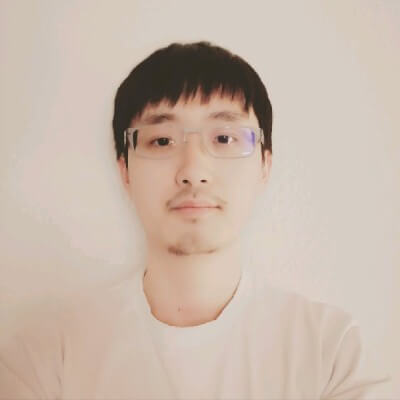
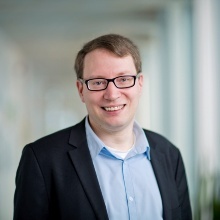
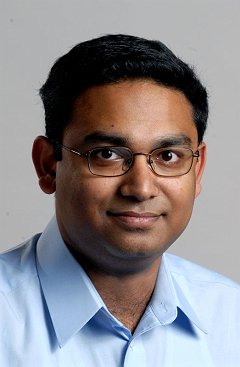
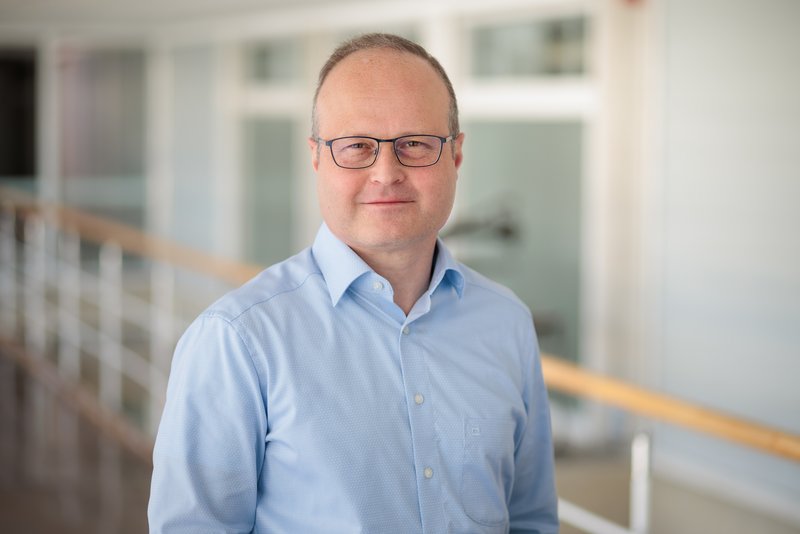
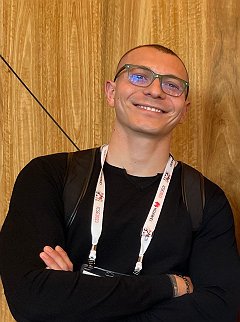
Yan Zhang is a scientific leader at Meshcapade and a guest lecturer at ETH Zurich's Computer Vision and Learning Group (VLG). He previously served as a postdoctoral researcher at ETH Zurich (2020-2023) and research intern at Max Planck Institute for Intelligent Systems (2018-2020). His research focuses on generative human foundation models, human motion and behavior synthesis, 3D human perception, and applications in AR/VR, embodied AI, and interactive avatars. He has pioneered methods for scene-conditioned motion generation, contact-aware reconstruction, and egocentric interaction modeling. His recent publications (2025-2020) span Real-time motor models for avatars (PRIMAL, ICCV'25) Diffusion architectures for motion (RoHM, CVPR'24) Scene-population algorithms (Odysseus, CVPR'22) Physics-aware reconstruction (EgoHMR, ICCV'23) Whole-body grasping models (SAGA, ECCV'22) Multi-modal datasets (EgoBody, ECCV'22) Scientific recognition includes the Qualcomm Innovative Fellowship Europe 2023 . He organized workshops at CVPR'25, ECCV'24, and ECCV'22, and served on senior program committees (AAAI'26) and area chairs (CVPR'25). As co-supervisor, he mentored student projects on diffusion-based hand motion capture, 3D pose estimation, body-scene interaction, and mixed reality navigation at ETH Zurich (2020-2023). His work bridges computer vision, machine learning, and computer graphics to advance human-centric AI systems.
Prof. Dr.-Ing. Richard Membarth is a Research Professor for System-on-a-Chip and AI at the Edge Computing at Technische Hochschule Ingolstadt (THI). He is affiliated with the Hardware-Software Co-Design group and holds a secondary position at the German Research Center for Artificial Intelligence (DFKI) Saarbrücken. Co-creator of DSL frameworks like AnyDSL and Hipacc Key contributor to MetaDL (AI metaprogramming) and PRIME (predictive rendering) His research bridges GPU computing , domain-specific languages , and compiler technology , with recent work on Vulkan SPIR-V compilation and device-driven SpMV algorithms . Notable awards include the HiPEAC Paper Award (2018) and multiple Best Paper Awards for his compiler frameworks.
Prof. Margret Keuper is a Professor in the Department of Computer Vision and Machine Learning at the Max Planck Institute for Informatics. Her research focuses on advancing machine learning and computer vision techniques, with an emphasis on model fairness, adversarial robustness, and multimodal interactions. She leads interdisciplinary projects exploring topics such as dataset analysis, generative models, and climate action through visual narrative analysis. Research Interests: Her work bridges theoretical foundations and practical applications in domains like adversarial training, image classification robustness, and robotics perception. She explores how vision-language models can be steered to align with human biases and develops methods for data-efficient learning and interpretability. Recent Contributions: Recent work includes FAIR-TAT (model fairness via adversarial training), VSTAR (video synthesis), and TikZero (zero-shot graphics program generation). Her publications in top venues like CVPR, ICCV, and ICLR highlight contributions to both methodological innovation and real-world impact. Collaborations: Works closely with researchers across Max Planck and academic partners, focusing on projects such as sensor layout optimization, climate discourse analysis via social media imagery, and domain-aware foundation model fine-tuning.
Eric Medvet is a professor specializing in evolutionary computation, genetic programming, and robotics. He is actively involved in research areas such as neuroevolution, soft robotics, and modular robotics. His work bridges theoretical advancements in evolutionary algorithms with practical applications in robotics and AI. Roles: Conference chair for EuroGP (2020-2022), co-chair of multiple workshops and sessions. Key Research: Focus on genetic programming, embodied intelligence, and the design of adaptive robotic systems. Research Interests: His work emphasizes the development of scalable and interpretable AI systems, particularly through evolutionary methods applied to robotics. He explores topics like neuroevolution for soft robots, quality diversity algorithms, and the integration of machine learning with evolutionary computation. Publications: His recent work highlights trends in interpretable AI, modular robotics control, and evolutionary algorithms for complex systems. Notable contributions include studies on MAP-Elites, graph-based genetic programming, and the application of LLMs in automated testing. Grants & Labs: Developed frameworks like JGEA for evolutionary computation experiments. Collaborates on projects integrating evolutionary methods with real-world robotics applications.
Dr. Pascal Reuss is a Researcher at the Intelligent Information Systems (IIS) Division within the Institute of Computer Science , University of Hildesheim . His work focuses on Case-Based Reasoning (CBR) systems, Multi-Agent Systems , and Knowledge Management applications. Active in CBR framework development and game-based AI research Teaching Computer Science III (Databases) for winter 2025/26 Participating in university sustainability initiatives like Stadtradeln 2024/25 Reuss contributes to AI education through practical implementations in gaming environments and has developed visualization tools for CBR agent behavior. His research spans multi-agent collaboration , dynamic case bases , and domain-specific language implementations for knowledge maintenance. Notable contributions include: Co-developing the FEATURE-TAK framework for knowledge extraction Designing case factories for distributed CBR systems Implementing finite state machines for tactical game agents Creating CBR-based fitness planning systems His work appears in various CBR and Game Development publications from 2011-2024. The research demonstrates practical applications of CBR in aircraft maintenance diagnostics , training plan generation , and educational technology contexts.
Leif Kobbelt serves as a University Professor at RWTH Aachen University, leading the Computer Graphics Group within the Department of Computer Science (Informatik 8). His research focuses on advancing geometry processing, interactive visualization, and computer graphics through innovative algorithmic solutions and interdisciplinary collaborations. Professor Kobbelt's research program centers on geometry acquisition and processing, with significant contributions to mesh generation, surface reconstruction, and neural rendering techniques. His work bridges theoretical geometry with practical applications in computer vision, photo-realistic image synthesis, and multimedia data transmission, often involving collaborations with industry partners and international research teams funded by DFG and EU sources. Recent publications (2023-2025) reveal a strategic integration of deep learning with traditional geometry processing, particularly in Gaussian splatting for real-time rendering, NeRF-based 4D content generation, and robust mesh Boolean operations. His group maintains leadership in quad mesh optimization and surface mapping while expanding into immersive visualization techniques for complex data analysis. The group has earned recognition through prestigious awards: Günter Enderle Best Paper Award at Eurographics 2023 Best Paper Award (1st place) at Symposium on Geometry Processing 2022 Honorable Mention for Best Paper at ACM Symposium on Virtual Reality Software and Technology Funding from Deutsche Forschungsgemeinschaft and European Union programs supports the group's research infrastructure and international collaborations. The team actively supervises graduate theses while developing open-source software tools that translate theoretical advances into practical industry applications, particularly in digital fabrication and immersive visualization systems. The Computer Graphics Group operates as a central hub for visual computing research at RWTH Aachen, maintaining strong ties with both academic institutions and technology companies. Their recent work on virtual reality educational tools and high-fidelity 3D reconstruction systems demonstrates commitment to knowledge transfer and real-world impact beyond traditional publication venues.
Steffen Becker is a Professor at the University of Stuttgart's Faculty of Computer Science, Electrical Engineering and Information Technology, affiliated with the Institute for Software Engineering's Software Quality and Architecture group. His work focuses on software engineering, cloud systems, model-driven engineering, and cybersecurity. He leads research in architectural modeling tools like Slingshot, GUI testing frameworks (ViMoTest), and hardware security analysis. Recent studies explore AI integration in testing, education, and automotive systems (CARISMA). Research interests include elasticity modeling, self-adaptive systems, and educational technology. His 2025 publications address issues like end-user hardware comprehension, FPGA security, and LLM-driven test generation. Notable tools developed include the Slingshot Simulator for cloud-native systems and Gropius for cross-component issue management. Becker contributes to both theoretical advancements and practical implementations in software quality, security, and cloud infrastructure. Key Areas: Software Architecture, Cyber-Physical Systems, Testing, Reverse Engineering Tool Developments: ViMoTest, Slingshot, Gropius Education Focus: Online programming pedagogy and curriculum innovation His work bridges foundational research with industry applications, addressing challenges in automotive computing, cloud elasticity, and human-centric security awareness. Recent efforts emphasize explainable hardware (XHW) and AI's role in qualitative analysis automation.
Koushik Sen is a Professor in the Department of Electrical Engineering and Computer Sciences at the University of California, Berkeley. His research focuses on developing software tools and methodologies to enhance programmer productivity and software quality, with expertise in Software Engineering, Programming Languages, and Formal Methods. Education: B.Tech from Indian Institute of Technology, Kanpur M.S. and Ph.D. in Computer Science from University of Illinois at Urbana-Champaign Research Focus: Professor Sen pioneers automated testing techniques including concolic testing and DART (Directed Automated Random Testing). His work bridges formal methods with practical software development, emphasizing bug detection, program synthesis, and AI-driven software analysis tools. Recent innovations include machine learning approaches for code recommendation and fuzzing. Publication Trends: His recent publications (2019-2023) demonstrate strong emphasis on fuzzing techniques, program synthesis, and AI/ML applications in software engineering. Notable domains include smart contract security, automated testing, and developer tooling, with frequent collaborations in top-tier conferences. Awards and Honors: NSF CAREER Award (2008) Sloan Foundation Fellowship (2011) IFIP TC2 Manfred Paul Award (2010) Okawa Foundation Research Grant (2015) Multiple ACM SIGSOFT Distinguished Paper Awards UIUC Distinguished Alumni Educator Award (2014) Leadership: Active program committee member for premier conferences (PLDI, ICSE, ISSTA) and keynote speaker. His research is supported by NSF, Okawa Foundation, and Sloan Foundation.
Jasmin Blanchette is a Professor of Theoretical Computer Science and Theorem Proving at the Institute for Informatics, Ludwig-Maximilians-Universität München (LMU), where he also serves as Dean of Studies for Computer Science since January 2024. He is additionally affiliated as a guest researcher with the VeriDis group at Loria in Nancy, France. His research lies at the intersection of automated and interactive theorem proving, with a focus on higher-order logic and proof automation. Key projects include the development of tools like Sledgehammer, Nitpick, and Zipperposition, and foundational work on (co)datatypes and higher-order superposition. His recent publications reflect a strong trend in formalizing and verifying automated reasoning techniques, especially in higher-order logic, with applications in proof automation, SMT solving, and logical verification. Articles frequently appear in top venues such as CADE, ITP, and the Journal of Automated Reasoning. CADE 2023 Best Paper Award for 'Verified given clause procedures' FroCoS 2023 Best Paper Award (with Visa Nummelin and Sander Dahmen) IPA Dissertation Award (awarded to his student Petar Vukmirović) Dutch 'cum laude' distinction (awarded to his student Anne Baanen) Dutch Prize for ICT Research 2022 Blanchette has advised numerous PhD and postdoctoral researchers, many of whom are now active contributors to the formal methods community. He has received significant research grants through projects like Matryoshka and Nekoka. He is also the editor-in-chief of the Journal of Automated Reasoning and plays a central role in organizing key conferences such as ITP, CADE, and CPP. He leads an active research group at LMU, consisting of postdocs and PhD students working on topics such as higher-order superposition, formalization of voting systems, categorical logic, and proof search heuristics. The team collaborates closely with international groups, including those at Inria and TU Wien.
Prof. Wolfgang Blochinger is a Professor in the Department of Computer Science at Reutlingen University, specializing in Services Computing and IT Security. He leads teaching programs in Wirtschaftsinformatik (Business Informatics) at both Bachelor and Master levels, focusing on foundational topics such as Programming Basics, Operating Systems, IT Security, Cloud Computing, and Big Data Technologies. His research emphasizes Cloud Computing and High Performance Computing, particularly in elasticity control, parallel processing, and cloud resource optimization. His research projects include developing elastic parallel systems for HPC applications, cloud migration strategies, and automated cloud service generation. Notable contributions involve frameworks like TASKWORK for elastic task parallelism and the Elasticity Description Language for cloud applications. He has published extensively on serverless computing, cost-efficient cloud resource utilization, and container-based isolation techniques. Prof. Blochinger collaborates with industry partners through the university's labs, including the AI-Reallabor AIDA and Cloud Lab. His work bridges academia and industry, addressing real-world challenges in distributed systems and cloud infrastructure. Current research trends focus on self-tuning cloud services and adaptive parallel algorithms for scalable computing environments.
Martin Diehl is a computational materials scientist affiliated with KU Leuven (Departments of Computer Science and Materials Engineering) and the Max-Planck-Institut für Eisenforschung GmbH in Germany. His work focuses on crystal plasticity simulations, computational materials engineering, and multi-physics modeling of metallic systems. Research interests include: Crystal plasticity finite element method (CPFEM) and spectral solvers Microstructure evolution and damage mechanics Machine learning applications in materials design Development of the DAMASK simulation toolkit Multi-phase steel alloys and heterogeneous deformation Integrated computational materials engineering (ICME) Key trends in his publications since 2021 highlight advancements in: Multi-physics DAMASK framework for coupled chemo-mechanical and thermal simulations AI-driven inverse design of steel microstructures Damage modeling in dual-phase steels Collaborative software development for materials science Experimental-simulation integration for stress-strain partitioning High-resolution spectral methods for finite strain analysis He actively collaborates with institutions like Harbin Institute of Technology, University of Oxford, and research groups across Europe and Asia.
Wolfgang Stammer is a PostDoc researcher in the Machine Learning Group at TU Darmstadt's Computer Science Department. His work focuses on making AI models more interpretable and interactive, particularly in explainable AI (XAI), neuro-symbolic architectures, and systematic compositionality challenges in neural networks. He completed his Ph.D. in Machine Learning at TU Darmstadt (2019–2025), an M.Sc. in Computer Science at Goethe University Frankfurt (2016–2018), and a B.Sc. in Cognitive Science at the University of Osnabrück (2011–2015). Research Interests : Stammer's research bridges gaps between human understanding and AI capabilities. Key areas include: Explainable AI (XAI) and interactive machine learning (XIL) Neuro-symbolic integration for logical reasoning and visual concepts Mitigating shortcut learning and confounding factors in datasets Concept discovery and program synthesis for interpretable models Publications : His work spans foundational contributions to AI benchmarks (e.g., V-LoL, SLR-Bench) and frameworks (Neural Concept Binder, Revision Transformers). Recent studies highlight AI's limitations in systematic generalization and propose solutions for aligning reinforcement learning agents with human values. Grants & Labs : He contributes to the Machine Learning Lab at TU Darmstadt and co-organized workshops like the Interactive Machine Learning Workshop @ AAAI 2022. His research bridges theoretical advances with practical applications in healthcare and ethical AI systems.
Dr. rer. nat. Joscha Grüger is a researcher at the Experience-based Learning Systems department of the University of Trier . His work bridges artificial intelligence, medical informatics, and software engineering, focusing on AI-driven solutions for healthcare and data-intensive applications. Current research projects include: KI-AIM : AI-based anonymization in medicine KIAFlex : Interactive AI assistance for predictive and flexible control in discharge management DaTreFo : Encrypted data stewardship for medical research Pre-OnkoCase : Case-oriented decision support for skin cancer treatment His publications highlight expertise in probabilistic programming, IoT-enhanced event logs, and clinical decision support systems. Collaborations span international conferences like Petri Nets 2025, ICCBR, and RCIS. Contact: Joscha.Grueger@dfki.de .
Dr. Antonio Mastropaolo is an Assistant Professor of Computer Science at William & Mary, USA. His research lies at the intersection of Artificial Intelligence, Natural Language Processing, and Software Engineering, with a strong emphasis on the automation of SE-related practices. He promotes explainability, efficiency, and optimization from both model-centric and output-centric perspectives. His research interests focus on the reliability and efficiency of AI systems for software engineering. He investigates robustness and adaptability of foundation models like GitHub Copilot, as well as documentation and summarization of code components. His work addresses critical challenges in AI-driven software development including transparency, scalability, and developer productivity. His publication portfolio shows a strong trend toward neurosymbolic approaches that combine neural learning with symbolic reasoning. Recent articles explore quantization of large code models, code summarization optimization, and resource-efficient AI for software engineering. His work spans both theoretical foundations and practical applications, with emphasis on empirical validation of AI techniques in real-world SE contexts. Distinguished Reviewer Award for service on FSE'25 program committees Distinguished Reviewer Award at ASE 2024 Distinguished Paper Award for 'Unveiling ChatGPT's Usage in Open Source Projects' at MSR'24 Distinguished Paper Award for 'How do Hugging Face Models Document Datasets, Bias, and Licenses?' at ICPC'24 Dr. Mastropaolo advises PhD students, with Saima recently starting her PhD journey with a publication in FORGE 2025. He received an NSF Grant (#2451058) in April 2025 for research on efficient and responsible AI for software engineering. His service includes committee membership for major conferences including ASE, ICSE, ICSME, and FSE across multiple tracks including Research Papers, NIER, and Tool Demonstrations.
Jingling Xue is a Scientia Professor at the School of Computer Science and Engineering at the University of New South Wales (UNSW) in Sydney, Australia. As an IEEE Fellow of the Computer Society, he leads the Programming Languages and Compilers research group, focusing on practical applications of compiler optimization and program analysis techniques. His work bridges theoretical foundations with real-world software systems, particularly in developing open-source tools for large-scale program analysis. Professor Xue received his B.Eng and M.Eng degrees from Tsinghua University in 1984 and 1987, respectively, followed by a PhD from the University of Edinburgh in 1992. His academic journey has established him as a leading figure in programming languages and compiler technology. Xue's research spans programming languages, compiler technology, and program analysis with emphasis on practical relevance. His current projects include compiler techniques for improving parallelism and locality, pointer/alias analysis for million-line-scale programs, and static/dynamic analysis for detecting bugs and security vulnerabilities in real-world applications like web browsers and Android apps. His group actively develops open-source tools to support scientific replicability and reproducibility in these areas. His recent publications demonstrate a strong focus on applying program analysis techniques to modern challenges including AI compilers, homomorphic encryption, security vulnerability detection, and graph processing systems. The work shows evolution from traditional compiler optimization to addressing emerging domains like privacy-preserving computation and deep learning systems while maintaining rigorous theoretical foundations. Scientific Awards: Best Paper Award at CGO'13 Best Paper Award at CGO'16 Distinguished Paper Award at ECOOP'16 Distinguished Paper Award at ICSE'18 Distinguished Paper Award at ISSTA'19 Distinguished Paper Award at ASE'19 Distinguished Artifact Award at ISSTA'23 Best Artifact Award at FSE'23 Distinguished Paper Award at ASE'23 Test-of-Time Award at CGO'21 Professor Xue has successfully supervised 30 PhD students to completion, many of whom now work as professors or researchers in academia and industry. He has served as Program Chair for major conferences including LCTES'13, CC'18, CGO'20, and General Chair for LCTES'20. His group currently focuses on memory safety in Rust, smart contract analysis, AI compilers, compilation for privacy-preserving computation, and adversarial attacks in deep learning. The Programming Languages and Compilers group maintains strong connections with industry partners, translating theoretical advances into practical tools for real-world software development challenges. Their work on pointer analysis, memory safety, and compiler optimizations continues to influence both academic research and industrial practice.