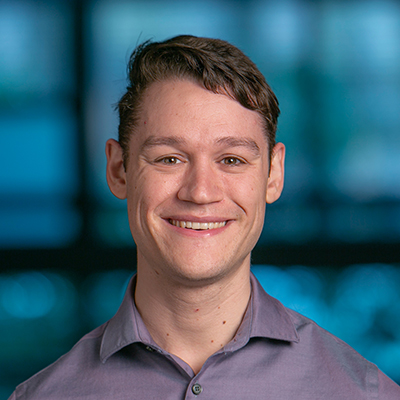
Jeff Alstott is a Professor of Policy Analysis at the RAND School of Public Policy, serving as the Director of RAND's Center for Technology and Security Policy (TASP) . He holds a concurrent role as a Senior Information Scientist at RAND and directs a program on technology forecasting and improving R&D investment returns at the National Science Foundation. Previously, he held leadership roles in the U.S. government, including the White House as Director for Technology and National Security at the National Security Council and Assistant Director for Technology Competition and Risks at the Office of Science and Technology Policy. Prior to that, he was a program manager at IARPA, focusing on AI, biosecurity, and science forecasting, and has held academic and research positions at MIT, Singapore University of Technology and Design, the World Bank, and the University of Chicago. Education : Doctorate in complex networks from the University of Cambridge; MBA and bachelor's degrees from Indiana University. Alstott's research spans artificial intelligence , technology forecasting , complex networks , and science and technology policy . His recent publications focus on AI security , existential risk from advanced technologies , and collaborative frameworks for AI safety , reflecting his expertise in balancing technological innovation with national and global security. He has contributed to understanding AI model weight protection , cybersecurity challenges , and policy implications of emerging technologies . Alstott has received recognition for his work, including being part of an award-winning team on technology counterintelligence . His policy recommendations and technical research have informed federal strategies for responding to advanced technologies , emphasizing the need for proactive governance and cross-sector collaboration.
Professor Siân Bayne is a leading academic in digital education at the University of Edinburgh , where she serves as Assistant Principal for Education Futures and directs the Centre for Research in Digital Education . Her work bridges critical theory and practical innovation in higher education. Interdisciplinary research on digital education and futures studies Leadership in the Edinburgh Futures Institute and Moray House School of Education and Sport Global impact through UNESCO collaborations and UKRI GCRF projects Bayne’s research explores higher education futures , utopian theory , and digital enhancement , with a focus on: AI’s role in teaching and learning Ethical implications of educational technologies Anonymous social media in academic spaces Speculative scenarios for educational systems Global South digital education models Augmented reality applications in assessment Her 15 most recent publications span 2017-2025 , covering critical perspectives on: Generative AI and educational innovation Utopian design in universities Data governance in learning analytics Augmented reality pedagogy Digital cultural heritage Scientific recognition includes: IASH Sabbatical Fellowship (2023) Bayne leads Higher Education Futures initiatives and partners with institutions worldwide, including: UNESCO Global Education and Technology Report World Bank collaborations European university leadership programs She also drives major research centers like: Centre for Research in Digital Education UKRI GCRF Urban Disaster Risk Hub
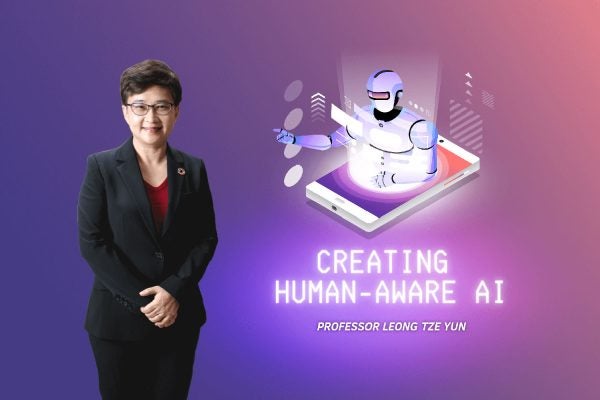
LEONG Tze Yun is a Professor in the Department of Computer Science at the School of Computing, National University of Singapore (NUS). She holds S.B., S.M., and Ph.D. degrees in Computer Science from the Massachusetts Institute of Technology (MIT). Her academic career spans both research and industry experience, with significant contributions to the fields of artificial intelligence and health informatics. Dr. Leong's educational background includes: Ph.D. in Electrical Engineering & Computer Science, Massachusetts Institute of Technology S.M. in Electrical Engineering & Computer Science, Massachusetts Institute of Technology S.B. in Computer Science & Engineering, Massachusetts Institute of Technology Her primary research interests focus on responsible AI, dynamic decision-making, neurocognitive modeling, reinforcement learning, artificial general intelligence, and biomedical and health informatics. Her work bridges the gap between theoretical AI development and practical healthcare applications, with an emphasis on ethical considerations and human-centered design. She directs the Medical Computing Laboratory at NUS, a multidisciplinary research program exploring human-aware decision modeling in complex environments. Analysis of her recent publications reveals a strong trend toward responsible AI development, with significant contributions to reinforcement learning techniques, causal inference methods, and applications of AI in healthcare. Her work increasingly integrates ethical considerations with technical AI development, particularly evident in her 2024 publications on medical AI and human values. Her scientific recognition includes: Fellow of the American College of Medical Informatics (ACMI) Founding Fellow of the International Academy of Health Sciences Informatics (IAHSI) Member of Eta Kappa Nu (Honor Society for Electrical Engineers) Dr. Leong has supervised numerous doctoral and master's students throughout her career, many of whom have gone on to prominent positions at institutions like Google, Netflix, Mayo Clinic, and academic institutions worldwide. Her advisory work extends to significant policy development, including contributions to WHO guidance on ethics and governance of AI for health. She currently serves on the World Health Organization (WHO) Expert Group on Ethics and Governance of AI for Health, the World Economic Forum (WEF) AI Governance Alliance, and the Advisory Council on AI in Uzbekistan. Her laboratory work focuses on developing adaptive systems that evolve with changing technical functionalities, system infrastructures, usage patterns, and operational contexts, with applications spanning prediction and decision analytics, human-aware robotics, game artificial intelligence, personalized education, and assistive care for elderly with neurocognitive disorders.
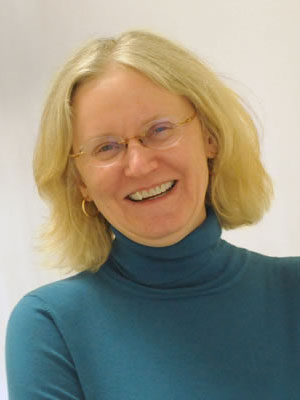
Judy Hoffman is an Associate Professor in the College of Computing at Georgia Institute of Technology, with a joint appointment in the School of Interactive Computing and affiliation to the Machine Learning Center . She received tenure in April 2025 after joining Georgia Tech as an Assistant Professor. Her research focuses on enabling AI systems that are reliable, fair, and resource-efficient. PhD in Electrical Engineering and Computer Science (2016, UC Berkeley) Postdoctoral Fellowships at Stanford (2017) and UC Berkeley (2018) Former Research Scientist at Facebook AI Research Her work intersects computer vision and machine learning , with specialization in domain adaptation , adversarial robustness , and algorithmic fairness . She has published over 40 peer-reviewed articles, including the award-winning DeCAF (ICML 2024 Test of Time Award) and co-founded Women in Computer Vision (2015), which has sponsored ~40 women annually to premier conferences. ICML Test of Time Award (2024) NSF CAREER Award (2022) PAMI Distinguished Young Researcher (2023) Samsung AI Researcher of the Year (2021) Dr. Hoffman has served as Program Chair for CVPR 2023, Associate Editor for T-PAMI (2021-2023), and co-organizer of workshops at major AI conferences. She has delivered over 70 invited talks and contributes to open-source projects like cycada_release (567 stars) and lsda (47 stars).
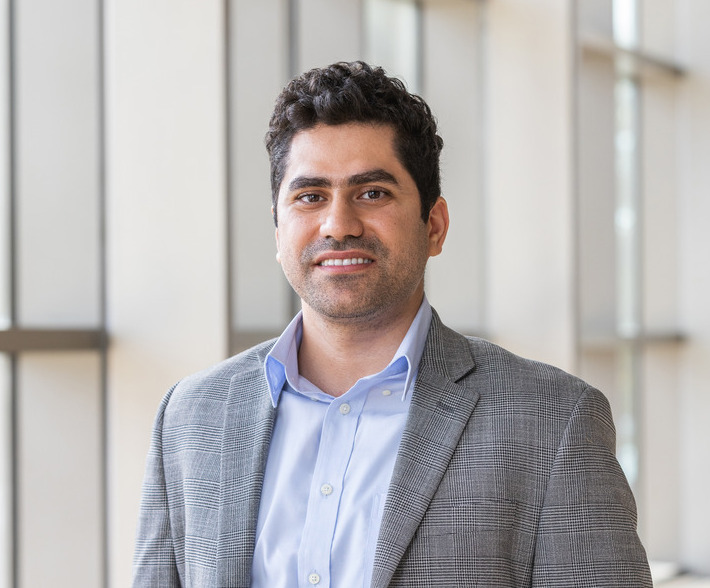
Mahdi Khodayar is an Assistant Professor of Computer Science at the University of Tulsa . He holds a Ph.D. in Electrical Engineering from Southern Methodist University (2020) and M.Sc./B.S. degrees in Artificial Intelligence and Software Engineering from K.N. Toosi University of Technology (2015, 2013). His research focuses on AI and machine learning applications in power systems, transportation systems, computer vision, and spatiotemporal pattern recognition. B.Sc. in Computer Engineering (2013), K.N. Toosi University of Technology M.Sc. in Artificial Intelligence (2015), K.N. Toosi University of Technology Ph.D. in Electrical Engineering (2020), Southern Methodist University Khodayar’s research bridges deep learning with energy systems , including fault detection in power grids, renewable energy forecasting, and traffic scene understanding. His work leverages graph neural networks , reinforcement learning , and generative models for robust spatiotemporal analysis. Recent publications highlight his focus on graph-based architectures for power systems, hybrid deep reinforcement learning in energy forecasting, and unsupervised domain adaptation in remote sensing. His work integrates physics-informed modeling with probabilistic frameworks . Scientific Awards : NSF ECCS Division Funding (2022) US DOT FHWA Grant (2023) Zelimir Schmidt Award for Early Career Research (2023) Honors Student Award (2015), K.N. Toosi University Khodayar has been funded by the NSF , US Department of Transportation , and the TU Cyber Fellows program . He serves as an associate editor for IEEE Transactions on Transportation Electrification and other journals.
Tzu-Mao Li is an Assistant Professor in the Department of Computer Science and Engineering (CSE) at the University of California, San Diego (UCSD), affiliated with the Center for Visual Computing. His research focuses on differentiable graphics algorithms, combining classical visual computing with modern machine learning techniques. He holds a Ph.D. from MIT CSAIL under Frédo Durand and a postdoc at MIT and UC Berkeley with Jonathan Ragan-Kelley. His work spans rendering, programming languages for graphics, Monte Carlo methods, and inverse problems. Education: B.S. and M.S. from National Taiwan University (2011-2013), advised by Yung-Yu Chuang. Ph.D. from MIT CSAIL (Computer Graphics Group), advised by Frédo Durand. Postdoctoral research at MIT and UC Berkeley with Jonathan Ragan-Kelley. Research Interests: Differentiable rendering, Monte Carlo integration, programming language design for visual computing, physical simulation, adversarial machine learning, and applications in computer vision and robotics. Key areas include rendering algorithms (path tracing, bidirectional methods), optimization techniques (MCMC, gradient-based), and neural representations (SDFs, neural fields). Publications focus on advancing rendering algorithms, differentiable systems, and applications in inverse problems. Notable contributions include edge sampling for differentiable rendering, warped-area sampling, and diffusion models for BSDF sampling. Awards: ACM SIGGRAPH 2020 Outstanding Doctoral Dissertation Award, multiple Best Paper Awards at SIGGRAPH, and oral presentations at ICCV. Teaching: Courses include CSE 167 (Computer Graphics), CSE 168 (Rendering), and CSE 272 (Advanced Image Synthesis), emphasizing physically-based methods and programming.
Qianwen Wang is a tenure-track Assistant Professor in the Computer Science department at the University of Minnesota, Twin Cities. Her research combines interactive visualization with interpretable machine learning to foster intuitive, efficient, and reliable Human-AI collaboration. She actively seeks motivated students, research assistants, and interns to join her dynamic research team at UMN CS. Dr. Wang's research focuses on three primary themes: Human-AI Collaboration, where she designs tools to facilitate Human-AI interaction; Automatic & Intelligent Visualization, where she develops techniques to make visualizations accurately interpreted and easily used; and VIS+(X)AI in Biomed/Healthcare, where she studies how visualization and explainable AI can promote scientific discoveries in biomedicine and healthcare. Her work has made significant contributions to visualization, human-computer interaction, and bioinformatics, with particular applications in biomedical knowledge graphs and single-cell omics analysis. Her recent publications demonstrate a strong trend toward integrating visualization with large language models and graph neural networks for biomedical applications. She has published extensively at top venues including IEEE VIS, ACM CHI, and Nature Medicine, with a focus on making AI systems more interpretable and useful for domain experts, particularly in healthcare contexts. Her work often bridges theoretical advances in visualization with practical applications in genomics and healthcare. Two IEEE VIS Honorable Mention Awards (2022, 2024) Best Paper Award from IMLH@ICML 2021 Two Best Abstract Awards from BioVis ISMB (2021, 2022) HDSI Postdoctoral Research Fund Award Research covered by MIT News and Nature Technology Features Dr. Wang actively contributes to the academic community through service roles including General Chair for ISMB BioVis, VisNotes and Poster Chair for IEEE PacificVis, and Program Committee member for IEEE VIS, ACM CHI, and ACM IUI. Her research has been supported by various grants that enable her team to develop innovative visualization techniques and explore their practical applications in biomedical domains. Her research group maintains an active presence in the visualization and HCI communities, with members participating in major conferences and workshops. The lab focuses on creating tools that bridge the gap between complex AI models and human understanding, with particular emphasis on making these technologies accessible and useful for domain experts in biomedical research.
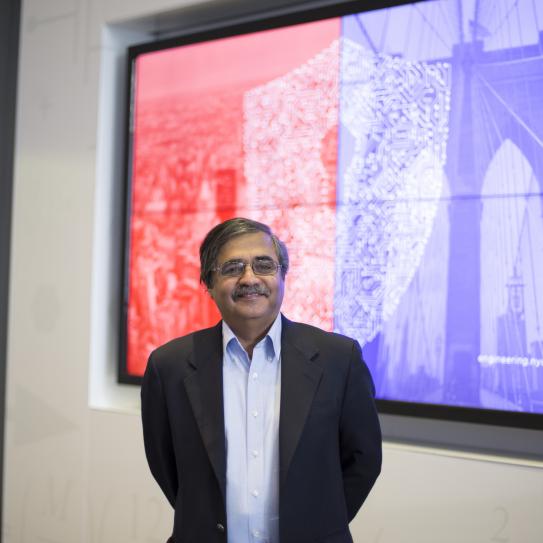
Nasir Memon is a Professor of Computer Science and Engineering at the New York University Tandon School of Engineering and concurrently serves as the Dean of Engineering at NYU Shanghai. He has been a faculty member at NYU Tandon since September 1998. Memon is a co-founder of NYU's Center for Cyber Security (CCS) and NYU Abu Dhabi, and the founder of key initiatives such as the OSIRIS Lab, CyberSecurity Awareness Week (CSAW), the NYU Tandon Bridge program, and the Cyber Fellows program. His work focuses on advancing cybersecurity education and addressing systemic biases in AI-driven systems. Education: Ph.D., Computer Science, University of Nebraska Master of Science, Mathematics, Birla Institute of Technology and Science (BITS), Pilani Bachelor of Engineering, Chemical Engineering, BITS, Pilani Research Interests: Media Forensics and Authentication Biometric Security and Privacy Data Compression and Privacy-Preserving Techniques Network Security and Incident Response AI Ethics and Fairness in Machine Learning Cybersecurity Education and Workforce Development Awards and Honors: IEEE Fellow (2010) SPIE Fellow (2014) Jacobs Excellence in Education Award (2002) NSF CAREER Award (1997) Advising and Grants: Advises Ph.D. students like Anubhav Jain and Govind Mittal, and mentors Master’s students such as Rishit Dholakia. Recipient of NSF grants and funding from NYU Abu Dhabi and Indiana University Bloomington for projects like computational tools for fact-checking and AI-driven bias mitigation. Labs and Teams: Directs the OSIRIS Lab, a leading research group in cybersecurity and AI. Leads initiatives at the NYU Center for Cybersecurity (CCS) and collaborates with NYU Abu Dhabi’s Center for Cyber Security.
James McCann is an Associate Professor at the Carnegie Mellon Robotics Institute, where he leads the Carnegie Mellon Textiles Lab. He has been a faculty member since May 2017 after working at Disney Research Pittsburgh. McCann's academic journey includes a PhD from Carnegie Mellon advised by Nancy Pollard, followed by a postdoc at Adobe Research and a period developing video games. McCann's research focuses on building creative tools that operate in real-time and build user intuition, with particular emphasis on textiles fabrication and machine knitting. His work spans computer-aided fabrication, simulation, graphics, and creative tools development. He has pioneered systems for machine knitting design, including compilers for knitting instructions and tools for automatic conversion of 3D meshes to knitting patterns. His recent publications demonstrate a strong trend toward computational textiles, with significant contributions to knitting semantics, deployable textile structures, and applications of machine knitting in healthcare and robotics. McCann's work bridges computer science, robotics, and textile arts, creating practical systems for once-off manufacturing with industrial knitting machines. McCann actively mentors students, with current PhD candidates working on solid knitting machines, knit calibration, and assistive devices. His teaching portfolio includes courses on Real-Time Graphics, Algorithmic Textiles Design, and Game Programming. He has taught at CMU since 2017, developing innovative courses that blend computer science with physical fabrication. As director of the Textiles Lab, McCann oversees research projects spanning machine knitting, robotic painting, and real-time graphics systems. His lab develops practical tools for creators, emphasizing intuitive interfaces and real-time feedback that lower barriers to advanced fabrication techniques.
Gail E. Kaiser is a Professor of Computer Science and the Director of the Programming Systems Laboratory (PSL) in the Computer Science Department at Columbia University. She has been with Columbia University since 1985, becoming a full Professor in 1998. Prof. Kaiser's research spans software engineering, program analysis, software testing, and software security, with recent focus on addressing challenges in AI/ML systems testing and security. Prof. Kaiser received her PhD in Computer Science from Carnegie Mellon University in 1985 and her ScB in Computer Science and Engineering from MIT in 1979. Her dissertation at CMU was titled "Semantics for Structure Editing Environments" under advisor Nico Habermann, and at MIT she completed "Automatic Extension of an Augmented Transition Network Grammar for Morse Code Conversations" under advisor Al Vezza. Prof. Kaiser's research interests primarily focus on software engineering following a systems building approach, with recent emphasis on static and dynamic program analysis techniques to improve software reliability and security. Since 2005, she has investigated testing "non-testable" programs, particularly in machine learning, data mining, and scientific computing applications where traditional testing oracles are insufficient. She has developed novel techniques and tools for detecting bugs and verifying repairs in complex systems. Concurrently, she has worked on collaboration environments for computational scientists, creating knowledge sharing and domain-aware environments to support scientific workflows. Prof. Kaiser's recent publications demonstrate a strong focus on the intersection of software engineering and artificial intelligence. Her work addresses critical challenges in testing AI systems, code understanding through deep learning, vulnerability detection, and educational tools for computational thinking. There's a clear evolution from traditional software engineering topics toward AI/ML applications, with particular emphasis on metamorphic testing for non-testable systems, code similarity analysis, and educational applications. Prof. Kaiser has received numerous prestigious awards throughout her career: Distinguished Journal Award (10 Years) from 18th IEEE International Conference on Software Testing, Verification and Validation (ICST), April 2025 Best Research Paper Award at 24th IEEE International Conference on Source Code Analysis & Manipulation (SCAM), October 2024 Distinguished Reviewer Awards for ASE 2024 and FSE 2024 ACM SIGSOFT Distinguished Paper Award for "CONCORD: Clone-aware Contrastive Learning for Source Code", July 2023 Best Student Paper Award at ICCE 2021 Multiple ACM SIGSOFT Distinguished Paper Awards dating back to 2014 Presidential Young Investigator in Software Engineering and Software Systems from NSF (1988-1993) Prof. Kaiser has chaired Columbia's doctoral program since 1997 and served on editorial boards including IEEE Internet Computing and as a founding associate editor of ACM Transactions on Software Engineering and Methodology. Her lab has been continuously funded by major agencies including NSF, NIH, DARPA, ONR, NASA, and numerous companies. Current grants include significant NSF funding for secure containers architecture, learning semantics of code for software assurance, and finding semantic security bugs. As Director of the Programming Systems Laboratory (PSL), Prof. Kaiser leads research in software systems, program analysis, and software testing. The lab has developed numerous tools and techniques for software reliability and security, with recent focus on challenges in AI/ML systems. Her work bridges theoretical foundations with practical applications, often resulting in deployable tools that address real-world software engineering challenges.
Andrew Head is an Assistant Professor at the University of Pennsylvania in the Computer and Information Science department. His research focuses on human-computer interaction, programming, and reading, particularly in developing technology for interactive reading and reasoning. He advises PhD students Alyssa Hwang, Hita Kambhamettu, Litao Yan, Jeffrey Tao, and Jessica Shi, and co-leads the Penn Human-Computer Interaction (Penn HCI) group with Danaé Metaxa. His work is published in top venues like ACM CHI, UIST, and ICSE. Research Interests: Andrew's work bridges interactive systems with programming environments, aiming to enhance how scientists and programmers interact with their tools. Key areas include AI-assisted code understanding, math notation accessibility, and medical note interpretation through interactivity. He employs user studies to identify needs and builds interactive systems to address them. Recent Article Trends: His publications emphasize systems-centric HCI approaches, integrating AI into code and document interfaces. Topics span code explanation (e.g., Ivie), property-based testing (e.g., Tyche), math notation augmentation (e.g., FreeForm), and medical informatics (e.g., Explainable Notes). Recent work also explores notebook environments (e.g., Bolt-on, Tyche) and literate programming (e.g., Colaroid). Scientific Awards: Distinguished Paper Award, ICSE 2024 Best Paper Awards at CHI (2024, 2023, 2022, 2019), UIST (2023, 2018), and others. Nominated for Best Paper at CHI 2023 and VL/HCC 2015. Advising & Grants: Andrew advises multiple PhD students and has secured significant grants, including a $1M NSF award for 'Property-based Testing for the People' (2024). His group collaborates with Penn’s MindCORE center and teams like PLClub and PennNLP. Labs & Teams: He co-leads the Penn HCI group, which works closely with other Penn research teams and labs. The group focuses on creating interactive tools that enhance scientific and programming workflows, supported by grants and cross-institutional partnerships.
Jian Huang is an Associate Professor of Electrical and Computer Engineering at the University of Illinois at Urbana-Champaign (UIUC), holding a 100% appointment since August 2024. He is also an affiliated Associate Professor in Computer Science and serves as the Y. T. Lo Faculty Fellow in ECE. Huang leads the Systems Platform Research Group and received his Ph.D. in Computer Science from Georgia Institute of Technology in August 2017, where his dissertation earned the College of Computing Dissertation Award. His research focuses on Computer Architecture, Memory and Storage Systems, AI Infrastructure, Distributed Systems, and Systems Security . Huang has pioneered work in sustainable AI infrastructures, modular data centers, neural processing unit virtualization, and ransomware-aware storage systems. His research has been featured in top-tier conferences including ISCA, MICRO, ASPLOS, OSDI, SOSP, and USENIX ATC, with over 50 publications and multiple patents issued worldwide. Huang's research has significant industry impact, with some work transferred into products and featured in popular media outlets including ACM CACM, TechXplore, and Science Daily. His work on non-volatile memory and storage systems has received extensive coverage, with some projects generating over 50 media reports. Among his notable achievements are the ACM SIGMICRO Early Career Award, NSF CAREER Award, IEEE Micro Top Picks (three times), USENIX Best Paper Award, and the MICRO Best Paper Runner Up in 2024. He has secured over $4.01M in grants ($11.12M with collaborators) from NSF, DARPA, Army Research Office, and industry partners. ACM SIGMICRO Early Career Award NSF CAREER Award IEEE Micro Top Picks (three times) USENIX Best Paper Award MICRO Best Paper Runner Up (2024) Google Faculty Research Award NetApp Faculty Fellowship Award Huang actively contributes to the academic community as program co-chair of NVMW'23 and organizer of HotInfra'23. He currently advises 12 Ph.D. students, 1 master student, and multiple undergraduates. His teaching innovations include developing ECE522: Emerging Memory/Storage System and revising ECE511: Computer Architecture with cutting-edge content.
David B. Lindell is an Assistant Professor in the Department of Computer Science at the University of Toronto, with affiliations to the Vector Institute and AXL. He is a founding member of the Toronto Computational Imaging Group. His research focuses on physically based intelligent sensing, integrating physical models, signal processing, and AI to advance sensing systems. Notable projects include imaging around corners, through scattering media, and developing machine learning algorithms for 3D scene reconstruction. Education: Ph.D. in Computational Imaging from Stanford University (advisor: Gordon Wetzstein). Awards include the 2024 Ontario Early Researcher Award and the Best Student Paper at CVPR 2025. His work combines computational imaging with applications in computer graphics and autonomous systems. Research interests span non-line-of-sight imaging, single-photon sensing, and neural representations. Key contributions include the Light-Cone Transform (Nature 2018), confocal diffuse tomography (Nature Communications 2020), and AutoInt (CVPR 2021). His lab develops systems for 3D reconstruction, transient imaging, and photon-efficient sensors. Selected grants and support: NSF CAREER Award, DARPA REVEAL program, and KAUST Visual Computing Center funding. Active collaborations with industry and academic institutions on autonomous driving and medical imaging applications.
Gustavo Alonso is Full Professor at the Department of Computer Science (D-INFK) of ETH Zurich and Head of the Institute for Computing Platforms . He has been at ETH since 1995, first as a post-doc, then as Assistant Professor from April 1998, and promoted to Full Professor in October 2001. Within the Systems Group he leads the Information and Communication Systems Research Group . Education: 1989 – Telecommunications Engineering (undergraduate), Madrid Technical University (UPM-ETSIT), Spain 1992 – M.S. Computer Science, University of California, Santa Barbara (UCSB) 1994 – Ph.D. Computer Science, University of California, Santa Barbara (UCSB) Research Interests: His work spans databases, distributed systems, cloud-computing architecture, FPGAs, hardware acceleration for data science, parallel and reconfigurable computing . The group investigates how modern heterogeneous hardware—from GPUs to SmartNICs—can be integrated into data-processing systems to achieve orders-of-magnitude performance gains, energy savings, and new functionality such as in-network computation and serverless acceleration. Scientific Awards & Honors: Fellow of the ACM (Association for Computing Machinery) Fellow of the IEEE (Institute of Electrical and Electronics Engineers) Distinguished Alumnus, Department of Computer Science, UC Santa Barbara Four Test-of-Time / Most Influential Paper Awards across databases, programming languages, cloud computing, and software engineering Labs & Projects: He directs the Information and Communication Systems Research Group within the Systems Group ( systems.ethz.ch ). The lab develops open-source platforms such as Coyote v2 for FPGA abstractions, Shuhai for HBM benchmarking, and MicroRec for micro-second recommendation serving, while collaborating with industry on SmartNICs, serverless analytics, and cloud-scale data analytics.
Rafał Jończyk is an Assistant Professor at the Department of Pragmatics, Faculty of English, Adam Mickiewicz University in Poznań, Poland, where he conducts research at the intersection of psycholinguistics, affective neuroscience, and bilingualism. His work primarily investigates how emotional processing differs between native and second languages using neurophysiological methods, particularly EEG. With a Ph.D. in English Linguistics from Poznań (2015) and postdoctoral experience at Pennsylvania State University, he has established himself as a leading researcher in bilingual emotional processing. His research interests span Affective Neuroscience , Experimental Pragmatics , Psycholinguistics , Bilingualism and Emotion , and the Neurophysiology of Creativity . His methodology heavily relies on EEG to examine language processing, with particular focus on emotional language comprehension and production in bilingual contexts. His work has demonstrated how bilinguals process emotional content differently in their native versus second languages, revealing reduced sensitivity to negative content in the second language. Jończyk's research program has evolved from early work on hemispheric specialization for emotional words to sophisticated EEG studies of emotional anticipation and metaphor processing in bilinguals. His most recent work explores hyperscanning methodologies to study real-time bilingual communication and the neural correlates of creative thinking in bilingual contexts. His publications show a clear progression from foundational studies of emotional word processing to increasingly complex investigations of emotional communication in naturalistic contexts. Cognitive Neuroscience Society Post-doctoral Fellows Award (2018) START scholarship for most talented young Polish scientists (2018) Scholarship from the Minister of Science and Higher Education (2020) Travel Grant Award for International Symposium on Bilingualism (2013) As Principal Investigator, Jończyk leads two major National Science Center projects examining psychophysiological correlates of affective language processing in bilinguals (2016-2018) and neurophysiological correlates of emotional speech production in bilingualism (2021-2025). He also participates in multiple international collaborations including NSF-funded research on divergent thinking in engineering education. His editorial roles include Topic Editor for Brain Sciences and Associate Editor for Applied Psycholinguistics, reflecting his standing in the field. He teaches courses in Psycholinguistics, Emotions in Social Communication, and Creativity and Language at the university level.