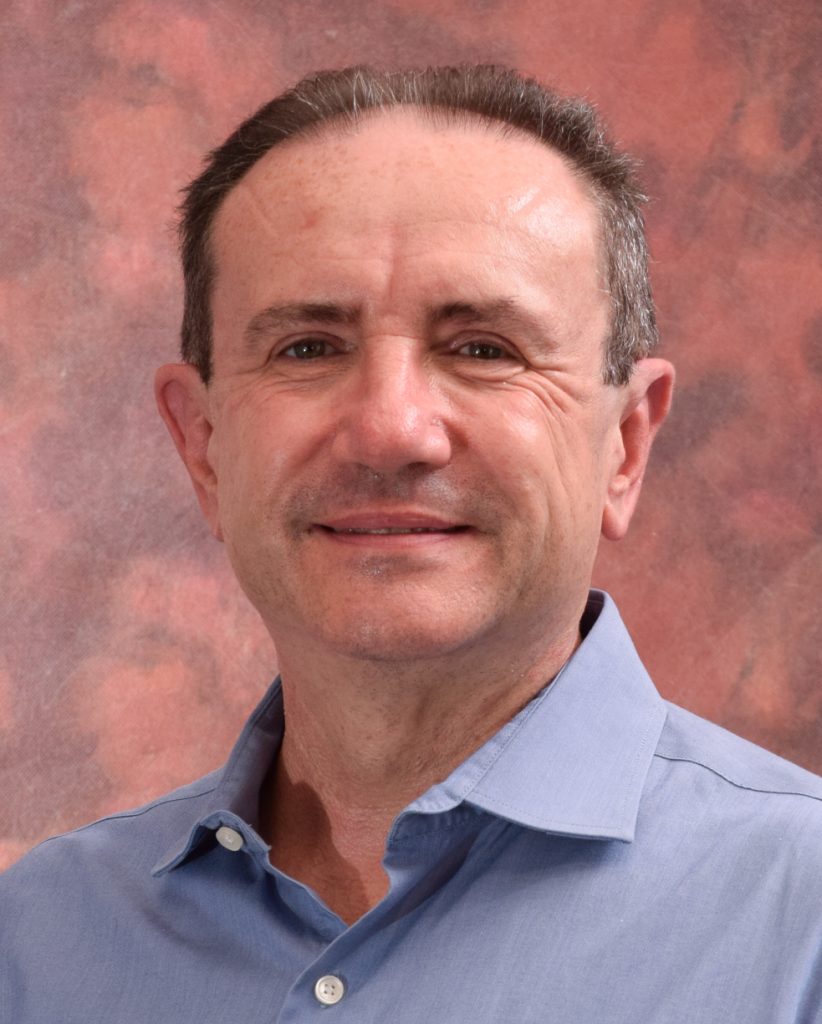
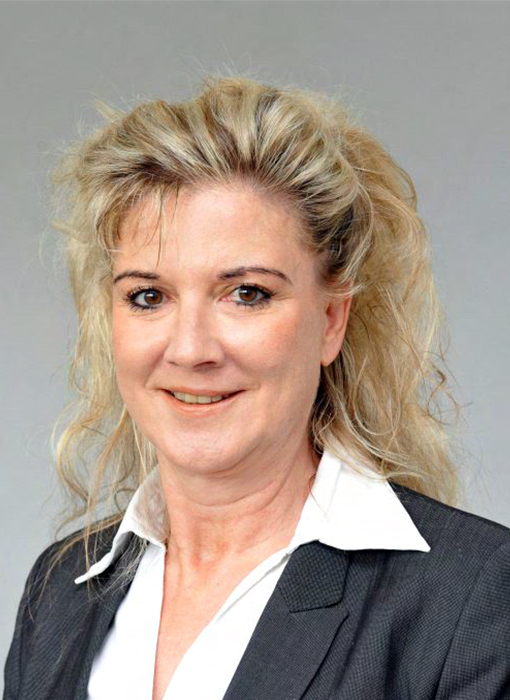
Prof. Leon van der Torre is a full professor of computer science at the University of Luxembourg, affiliated with the Lab for Intelligent and Adaptive Systems (ILIAS). He specializes in formal models of reasoning and interaction in intelligent systems, with research spanning deontic logic, argumentation theory, cognitive robotics, and compliance technologies. He was granted the Bao Yugang Chair Professorship at Zhejiang University (2023) and has held visiting positions, including at Stanford University's CSLI (2013). His research focuses on integrating logical formalisms with computational systems to address normative reasoning, multiagent coordination, and ethical AI. Key contributions include work on argumentation frameworks, deontic logic applications, and formal models of normative systems. He teaches courses such as 'Introduction to Intelligent Systems' and 'Game Theory', reflecting his expertise in AI and computational reasoning. Prof. van der Torre actively participates in international conferences (e.g., DEON, PRIMA) and has authored over 400 publications. His work bridges theoretical foundations with practical applications, addressing challenges in AI ethics, legal reasoning, and multiagent systems coordination.
Daniel Campbell is a Lecturer in Web Development & Web AI at the Computer Science department of Edge Hill University. His work contributes to UN Sustainable Development Goals related to health and innovation. He is affiliated with the Centre for Intelligent Visual Computing and the Data and Complex Systems Research Centre. Education: He completed his Doctoral Thesis in 2018 titled 'An Ontology-Driven Approach To Personalised mHealth Application Development' under supervisors E. Pereira, G. McDowell, and C. Balakrishna. Research focuses on mHealth applications, ontology-driven frameworks, machine learning for health monitoring, and software engineering practices like bug prediction and open-source repository analysis. Recent projects include a Knowledge Exchange initiative with the water industry (2024-2026) as a Co-Investigator. His articles explore topics ranging from accelerometer-based elderly activity prediction to automated classification of software repository messages. Collaborations span institutions globally, with active engagement in topics like healthcare technology and user-centric design.
Katarzyna Wac is a researcher at the University of Geneva affiliated with the Faculty of Economics and Management and the Information Science Institute . Her work bridges Digital Health , Mobile Computing , and Human-Computer Interaction , focusing on leveraging wearable devices, smartphones, and AI for health and quality of life (QoL) quantification. Research Themes: Digital biomarkers for Alzheimer's and migraines, QoL assessment via ubiquitous computing, peer- and self-reported behavioral data, and QoE of mobile applications. Labs: Leads the mQoL Lab , a platform for interactive, mobile, and wearable-based studies. Her recent publications explore Transformer models for health data analysis, social robots in homecare, and ethical frameworks for digital mental health. She has contributed to standards for proxy-reported QoL measures and personalized drug delivery systems in digital health. The multimodal integration of emotional signals and context-aware QoS/QoE provisioning for m-health services are recurring technical themes. Key collaborations include the MobiHealth project and COPD24 , translating future internet technologies into telemonitoring solutions. Her work spans from foundational studies on mobile cognition to applied ambulatory assessment of affect and health risks.
Fabrizio Riguzzi is a Full Professor at the Department of Mathematics and Computer Science of the University of Ferrara, Italy. His academic career spans over two decades at the same institution, having served as Associate Professor (2014-2020) and Assistant Professor/Ricercatore (1999-2014). He is an active researcher in the fields of Logic Programming and Statistical Relational Artificial Intelligence with numerous publications and leadership roles in international conferences. His educational background includes: PhD in Electronic and Computer Engineering from the University of Bologna (1999) Laurea in Computer Engineering from the University of Bologna (1995) Riguzzi's research focuses on probabilistic approaches to artificial intelligence, particularly probabilistic logic programming and statistical relational AI. His work bridges symbolic reasoning with probabilistic methods, developing frameworks for uncertain knowledge representation and reasoning. He has made significant contributions to probabilistic answer set programming, neuro-symbolic integration, and applications in areas like network intrusion detection and knowledge graph completion. His research demonstrates how logical formalisms can be enhanced with probabilistic reasoning to tackle real-world problems with uncertainty. An analysis of his recent publications reveals a strong trend toward integrating neural and symbolic approaches in AI, with significant work on probabilistic answer set programming frameworks. His research spans theoretical foundations of probabilistic logic programming, practical implementations, and applications in cybersecurity, knowledge graphs, and decision-making under uncertainty. The interdisciplinary nature of his work connects computer science theory with practical AI applications. His notable awards include: Alain Colmerauer 10-Year Test-of-Time Award at ICLP 2021 Best Paper Award for "BUNDLE: A Reasoner for Probabilistic Ontologies" at RR-2013 Highly Commended Paper Award for "Probabilistic declarative process mining" at KSEM 2010 Riguzzi has supervised several PhD students to completion, including Elena Bellodi, Riccardo Zese, and Giuseppe Cota, who have gone on to win prestigious awards for their theses. He has served in numerous editorial roles, including Associate Editor of the Journal of Artificial Intelligence Research and Editor in Chief of Intelligenza Artificiale. His leadership extends to organizing major conferences like ILP 2018 and serving on program committees for top AI venues including IJCAI, AAAI, and ECAI. He is a member of the ML@unife research group and has developed several online systems including cplint, TRILL, and an Online AUC calculator. His work has fostered collaborations across the AI research community, particularly in the areas of probabilistic logic programming and neuro-symbolic AI.
Johannes Bjerva is a Full Professor at Aalborg University's Department of Computer Science (Campus Copenhagen), leading the Copenhagen branch and conducting interdisciplinary NLP research integrating linguistic typology. His work focuses on low-resource languages, language model security, and societal AI impact. PhD (University of Groningen, 2017): Thesis on multitask/multilingual lexical modeling M.A. & B.A. in Computational Linguistics (Stockholm University) Research interests span linguistically-informed NLP , language model security , and low-resource language technology . Current projects include the DFF Sapere Aude grant (2025) for language model detection security and the LM2-SEC project (2025–2030). His 2024 ACL paper on embedding inversion security and 2024 EMNLP paper on typological diversity exemplify recent work. Scientific awards include: 2021: Teacher of the Year (AAU Computer Science) 2019: Google Cloud research credits 2022: Carlsberg Semper Ardens (5M DKK) 2024: Novo Nordisk Data Science grant (~10M DKK) Supervision includes 8 PhD students across projects like CreoleVal and HiFi-KPI . He serves on the Industrial Researcher Committee at Innovation Fund Denmark and is a member of Det Unge Akademi (2023–2028).
Claudio Ulises Cortes Garcia is a Professor at the Department of Computer Science , Technical University of Catalonia, and leads the IDEAI-UPC (Intelligent Data Science and Artificial Intelligence Research Group) and KEMLG (Knowledge Engineering and Machine Learning Group). He is affiliated with the Barcelona Supercomputing Center (BSC-CNS) and the Barcelona School of Informatics (FIB). With a Doctor en Informática (PhD in Computer Science) and Ingeniero Industrial y de Sistemas (Industrial and Systems Engineering) degrees, his work spans Artificial Intelligence , Intelligent Agents , and Assistive Technology . His research integrates European Programs and Internet with applications in Second Life and Software . His recent publications focus on Post-COVID cognitive effects , AI ethics , and agent-based modeling for urban water management. He received the Doctor Honoris Causa from Universitat de Girona in 2024 and has collaborated on projects like DIGITAfrica and HUB D'INNOVACIÓ PEDIÀTRICA . His work bridges Neuroscience , Environmental Modeling , and Digital Humanities , with over 650 activities recorded in his academic career. ORCID : 0000-0003-0192-3096 WoS Researcher ID : B-7284-2009 Scopus Author ID : 7004065770
Jorge Louçã is a Full Professor in the Department of Information Science and Technology at ISCTE-IUL, where he has been a faculty member since 2000. He is also an Integrated Researcher at ISTAR-Iscte, the Research Center in Information Sciences, Technologies and Architecture, and leads the research group The Observatorium . He holds a PhD in Computer Science and Artificial Intelligence from Université Paris Dauphine and the University of Lisbon, and completed his Aggregation in Complexity Sciences in 2019. PhD in Computing – University of Lisbon & Université Paris-Dauphine (2000) Master’s in Informatique: Intelligent Systems – Université Paris-Dauphine (1995) Aggregation in Complexity Sciences – ISCTE-IUL (2019) His research centers on computational modeling of social systems, focusing on data-intensive analysis of human communication, knowledge generation in large networks, and the dynamics of complex systems. He founded the Doctoral Program in Complexity Sciences and has been instrumental in advancing the field through international collaborations such as the UNESCO Unitwin network for the Complex Systems Digital Campus and participation in the Conference on Complex Systems (CCS/ECCS). The recent publications highlight a strong interdisciplinary focus, combining network science, data analysis, and social theory. Key themes include the modeling of malaria transmission, information diffusion in social media, structural inequality in education, and the dynamics of opinion and popularity. His work often employs agent-based models, temporal network analysis, and entropy-based measures, reflecting a deep integration of computational and theoretical approaches. Research Methods for Doctorate in Complexity Sciences Advanced Topics in Complexity Sciences Data Science Fundamentals Development for the Internet and Mobile Applications Web Interfaces for Data Management Advanced Network Analysis Jorge Louçã has supervised over a dozen doctoral and master’s students, with completed theses on topics such as malaria modeling, information diffusion, temporal networks, and social inequality. His research has been supported by projects like NESS (Non-Equilibrium Social Science in ICT and Economics), reflecting his leadership in interdisciplinary science. He has held significant academic management roles, including Director of the Department of Information Science and Technology and head of multiple degree programs. His work continues to bridge computer science, social science, and policy, positioning him as a key figure in the global complexity science community.
Elin Nyman is the Head of the Department of Biomedical Engineering (IMT) and an Associate Professor at Linköping University. She leads the department, fostering an environment of trust and collaboration. Her research focuses on systems biology and e-health, integrating mathematical models with experimental data to advance drug development and clinical tools. She supervises students in both the Faculty of Science and Engineering and the Faculty of Medicine and Health Sciences, examining courses like TMBI28 and 8BKG45. Her research interests include systems biology, particularly in drug development and AI applications in healthcare. Key projects involve robust metabolic measurements, AI-driven diagnostic tools (M4-health), and knowledge-driven drug development with AstraZeneca. Recent publications highlight liver steatosis dynamics, IL-10 feedback mechanisms, and insulin resistance modeling. Her work bridges interdisciplinary collaboration, such as a course combining medical and engineering students to develop digital health solutions. She contributed to a SEK 13 million grant for AI-based crime-solving using detailed analyses and AI. Current affiliations include the Division of Biomedical Engineering (MT) and IMT department.
Adam M. Brandenburger is the J.P. Valles Professor at the Leonard N. Stern School of Business, New York University, with additional appointments as Distinguished Professor at the Tandon School of Engineering, Faculty Director of the NYU Shanghai Program on Creativity + Innovation, and Global Network Professor. He previously served as a professor at Harvard Business School from 1987 to 2002. His academic foundation includes a B.A., M.Phil., and Ph.D. from the University of Cambridge. His research focuses on game theory , epistemic game theory , quantum game theory , and business strategy . He has made foundational contributions to the understanding of rationality, belief hierarchies, and the intersection of quantum mechanics with decision theory. His work spans economics, philosophy, computer science, and cognitive neuroscience, reflecting a deeply interdisciplinary approach. The recent publications show a strong trend toward integrating quantum foundations , information theory , and behavioral economics . Themes include epistemic reasoning in non-classical systems, the role of symmetry in strategic interactions, and the neural basis of decision-making. His work increasingly explores the limits of classical probability and cognition, using tools from quantum information and sheaf theory. While no formal scientific awards are listed, his publications in Nature Communications , Econometrica , and Philosophical Transactions of the Royal Society indicate high scholarly impact. His collaborations with leading researchers across disciplines suggest a central role in advancing interdisciplinary science. He advises and collaborates extensively, though specific students are not listed. His leadership in the NYU Shanghai Program on Creativity + Innovation highlights his commitment to global education and innovation. He has not received any grants explicitly mentioned, but his sustained publication output suggests active funding support. He is associated with research initiatives bridging game theory, quantum information, and cognitive science. His recent unpublished work on quantum-assisted observatories and large language models points to forward-looking research at the intersection of AI, quantum technology, and strategic reasoning.
Martin Hilbert is a Professor at the University of California, Davis, jointly affiliated with the Department of Communication and Computer Science. He is a leading scholar in digital technology, algorithmic systems, and computational social science, and chairs the campus’s designated emphasis in Computational Social Science. His work bridges theory and practice, integrating information theory with social science to understand the digital age. Education: Ph.D., Communication, Annenberg School of Communication, University of Southern California, 2012 Ph.D., Economics and Social Sciences, Friedrich-Alexander University Erlangen-Nuremberg, Germany, 2006 Dipl.-Kfm. (Master of Business Administration), Friedrich-Alexander University Erlangen-Nuremberg, Germany, 2003 Professor Hilbert's research focuses on the digital transformation of society, using formal tools from information theory to analyze AI and algorithmic systems. His work spans digital ethics, cognitive biases, and the evolution of communication in networked environments. He is particularly known for his pioneering study on global information capacity and early warnings about algorithmic manipulation in politics. His recent publications reveal a consistent trend of applying information-theoretic frameworks to social and digital phenomena, with a strong emphasis on measuring algorithmic impact, digital inequality, and the interplay between human cognition and automated systems. His work frequently appears in high-impact journals across disciplines, reflecting its interdisciplinary nature. Professor Hilbert has made significant contributions to public policy, having designed the first digital action plan for Latin America and the Caribbean at the United Nations and served as an Economic Affairs Officer for 15 years. His technical assistance has reached over 20 countries and major corporations. He is also an innovator in digital education, with online courses taken by over 100,000 students worldwide. Advising and Grants: Chairs the Designated Emphasis in Computational Social Science at UC Davis Teaches graduate and undergraduate courses in information theory, digital technology, and computational social science Has received research support through academic and policy-oriented grants (specifics not listed) Labs and Teams: He is associated with the Center for Computational Science (C2) and the Center for Science and Society (CSS) at UC Davis, which support interdisciplinary research on digital systems and their societal implications. These centers foster collaboration between computer scientists, social scientists, and policymakers.
Peter Danholt is an Associate Professor at the School of Communication and Culture, Aarhus University, affiliated with the Department of Digital Design and Information Studies, the Centre for Science-Technology-Society Studies, and the SHAPE – Shaping Digital Citizenship research initiative. His work spans multiple interdisciplinary domains, focusing on the sociotechnical dimensions of digital systems in healthcare, welfare, and organizational contexts. His research interests include IT in healthcare , pervasive computing , gender and technology , organizational change , and qualitative research methods . He employs ethnographic and fieldwork-based approaches to study how digital technologies reshape work practices, citizenship, and care relations. His work often draws on Science and Technology Studies (STS), Actor-Network Theory, and relational ontologies. The recent publications highlight a consistent focus on digital healthcare systems (e.g., Teledialogue), data-driven governance , and the ethical implications of surveillance in welfare . Themes such as vulnerability, privacy, and citizen agency recur across his research, particularly in projects involving digital interventions in social work and patient care. Principal Investigator : Shaping Digital Citizenship – SHAPE (Independent Research Fund Denmark, 2022–2023) Collaborative Projects : CDC: Cultures of Data Collaboration , Teledialog , Håndhygiejne projektet , Sundhedsbarometer projektet He has contributed extensively to academic discourse through journal articles, conference papers, and book chapters, with a strong emphasis on ethnographic depth and theoretical innovation. His public engagement includes media contributions on AI, digital ethics, and urban technology. He has participated in organizing workshops and conferences, including EASST2010 and SHAPE Workshop (2024), and has delivered lectures on technoscience, surveillance, and welfare technology. His collaborations extend across Denmark and internationally, reflecting a robust network in STS and digital society research.
Prof. Petra Ahrweiler is a full professor of Sociology of Technology and Innovation at the Johannes Gutenberg University Mainz (since 2013), with a focus on social simulation and innovation policy. She previously served as Director of the EA European Academy for Technology Assessment (2013–2017) and held a professorship at University College Dublin. Her research explores technology-society interactions, innovation networks, and AI ethics, emphasizing participatory approaches and policy modeling. She leads initiatives like the TISSS LAB and Sensorithm Digital Transformation Lab, focusing on AI, climate action, and societal impact. A recipient of fellowships from acatech and AcademiaNet, she also served as ESSA President (2020–2022). Education: PhD in Social Sciences from the Free University of Berlin (on AI), Habilitation from the University of Bielefeld (simulation in science studies). Former roles include research at MIT (USA) and leadership at the Innovation Research Unit (IRU), UCD. Research Interests: Her work bridges sociology and computational modeling, addressing topics like participatory AI, innovation dynamics, and policy simulation. Recent foci include culture-sensitive AI, climate action catalysts, and pandemic response modeling. She co-leads major projects such as AI FORA, CECAN, and PEERE, advancing interdisciplinary collaboration. Awards & Leadership: Acatech and AcademiaNet fellowships, ESSA presidency, and leadership in international research consortia. Her work emphasizes ethical AI, societal engagement, and systemic innovation. Labs & Teams: Core leader of TISSS LAB (Technology Innovation & Simulation Science) and the Sensorithm Lab, which develop adaptive sensor systems and participatory AI tools. Collaborates globally on digital transformation and social simulation.
Gabriele Baratto is an Assistant Professor of Criminology at the Faculty of Law, University of Trento, where he is also a senior researcher in the eCrime research group and a member of the Centre for Security and Crime Sciences (CSSC), a joint initiative with the University of Verona. He teaches courses including Digital Criminology, Transnational Organized Crime, Urban Security, and Financial Crime, and serves as an academic specialist for the UNICRI-UPEACE LL.M. in Cybercrime and Cybersecurity. PhD in International Studies (Criminology), University of Trento (2019, cum laude) Master’s Degree in Law, University of Trento (2013, 110/110 with honors) LL.M. in Cybercrime, Cybersecurity and International Law (cum laude), UNICRI-UPEACE-CSSC Scientific High School Diploma, Giorgio Dal Piaz, Feltre (2006) His research focuses on the intersection of crime and digital society, with expertise in cybercrime, human trafficking, migrant smuggling, hate speech, counterfeit goods, urban security, and financial crime. He investigates how digital technologies transform criminal behaviors and how law enforcement and prevention strategies can adapt. His work emphasizes multidisciplinary approaches combining criminology, law, and information science. Baratto has led and contributed to numerous EU-funded research projects such as qAID (Asset and Interest Disclosure), EU CYBER VAT (VAT fraud), HATEMETER (online anti-Muslim hate), and www.surfandsound.eu (human trafficking). His recent publications and conference presentations explore deepfake pornography, conversational AI for victim support, digital human trafficking, and organized cybercrime. His work bridges academic research with practical policy and law enforcement applications. Best Workshop Presentation 2018, Italian Society of Criminology He has advised government bodies and law enforcement, including the Trento Public Prosecutor, Guardia di Finanza, and EUROPOL. He has delivered guest lectures at universities in Italy, Spain, Switzerland, and the UK, and conducted training for police, public officials, and educators on topics like cyberbullying, human trafficking, and digital crime. He serves as a reviewer for journals such as Trends in Organised Crime and Humanities & Social Sciences Communications , and was a guest editor for a special issue on cybercrime. Baratto is actively involved in public engagement and knowledge transfer, participating in seminars, workshops, and public events on restorative justice, prison reform, and digital risks. Through his startup Intellegit, he applies research to real-world security challenges. His work consistently emphasizes the societal impact of digital crime and the need for innovative, interdisciplinary solutions.
Oleg Lashinin is an active researcher in the field of Recommender Systems , with a focus on Machine Learning , Temporal Modeling , and User Behavior Analysis . He has contributed to 15 recent publications spanning 2021–2025, including conference papers at ECIR, SIGIR, RecSys, and workshops like KaRS@RecSys and ORSUM@RecSys. His work explores advanced techniques such as Self-Attention Models , Time-Aware Item Weighting , and Cost-Constrained Recommendations . Key research trends in his publications include Deep Learning for sequential recommendation tasks, Crowdsourcing for explanation evaluation, and Temporal Dynamics in user behavior. Notable projects include the GPT3RecBot Telegram chatbot and the RecBaselines2023 dataset for benchmarking recommender systems.
Leonard P. Wesley is an Associate Professor at the Computer Science Department, College Of Science, San Jose State University. With a Ph.D. and M.S. in Computer Science from University of Massachusetts and a B.A. in Physics and Math from Northeastern University, his work spans bioinformatics, pharmaceutical discovery, machine learning, robotics, and evidential reasoning. He has published extensively on SVM/QSAR-based drug prediction, autonomous systems, and uncertainty management. Ph.D., University of Massachusetts - Computer Science M.S., University of Massachusetts - Computer Science B.A., Northeastern University - Physics and Math His research focuses on developing predictive models for drug discovery, autonomous robotics, and data analytics. Recent publications emphasize SVM applications in medical diagnostics and pharmaceutical modeling. He has contributed to conferences in aerospace, robotics, and biotechnology, with invited talks at NASA and Los Alamos National Laboratory. 3D-QSAR & SVM prediction of drug inhibitors Evidential decision analytics Autonomous robotic control PCA/SVM-based sepsis diagnostics Hybrid network congestion management Professor Wesley teaches courses in artificial intelligence, bioinformatics, and advanced programming. His lab investigates applications of machine learning in biotechnology and aerospace, including biomarker identification and CFD expert systems. He has served as session chair at international conferences and collaborated with institutions like NASA and Advanced Decision Systems.