
Theresa Scharl-Hirsch is a Senior Scientist and Deputy Scientific Director at the Core Facility Bioinformatics, University of Natural Resources and Life Sciences, Vienna (BOKU). She holds concurrent appointments at the Institute of Statistics, BOKU, and has extensive experience in bioprocess modeling, machine learning, and statistical computing. Her work bridges biochemical engineering with advanced data science methodologies. Her research focuses on real-time monitoring of biopharmaceutical processes, clustering of high-dimensional data (particularly RNA sequencing), and application of explainable machine learning techniques. She has developed statistical models for process optimization and quality prediction in antibody capture and protein purification, with a strong emphasis on industrial implementations using R programming. Key trends in her publications include three-way data analysis, matrix-variate Gaussian mixture models, and permutation-based variable importance methods for deep learning architectures. Her work spans bioprocess engineering, bioinformatics, and industrial data science applications.
جستجوی استاد راهنمای دانشگاهی
برای مسیر پژوهشیتان، استاد راهنما، استاد دانشگاه و پژوهشگر مناسب را پیدا کنید و با آنها ارتباط بگیرید.
نمایش ۷۳۶-۷۵۰ از ۷٬۳۰۵ استاد راهنما
اطلاعات پروفایلها از صفحات عمومی دانشگاهها گرفته شده و ممکن است بهروز نباشد.
Olga Russakovsky is an Associate Professor in the Computer Science Department at Princeton University. She serves as Associate Director of the Princeton AI Lab and Chair of the Board of Directors at AI4ALL, a nonprofit dedicated to diversity in AI leadership. Her research focuses on computer vision, machine learning, human-computer interaction, and fairness in AI. She specializes in developing AI systems that reason about the visual world, emphasizing fairness, accountability, and transparency. Her work integrates computer vision with ethical AI frameworks, and she is affiliated with Princeton’s Center for Statistics and Machine Learning and Center for Information Technology Policy. Her publications address biases in datasets, explainable AI, and generative models. Her recent research trends include: Bias detection in datasets (e.g., CelebA, ImageNet) Interactive and explainable AI systems Generative models like diffusion and vision-language integration Deepfake detection and AI forensics Conceptual learning and few-shot training Scientific awards: NSF CAREER Award for fairer computer vision systems Co-founder of AI4ALL and Stanford AI4ALL outreach programs She advises students through AI4ALL initiatives and leads the Visual AI Lab, which focuses on robust, inclusive AI development. Her work bridges technical innovation with societal impact, particularly in diversity-focused education.
Jonathan Bellمشاهده پروفایل
دانشیار
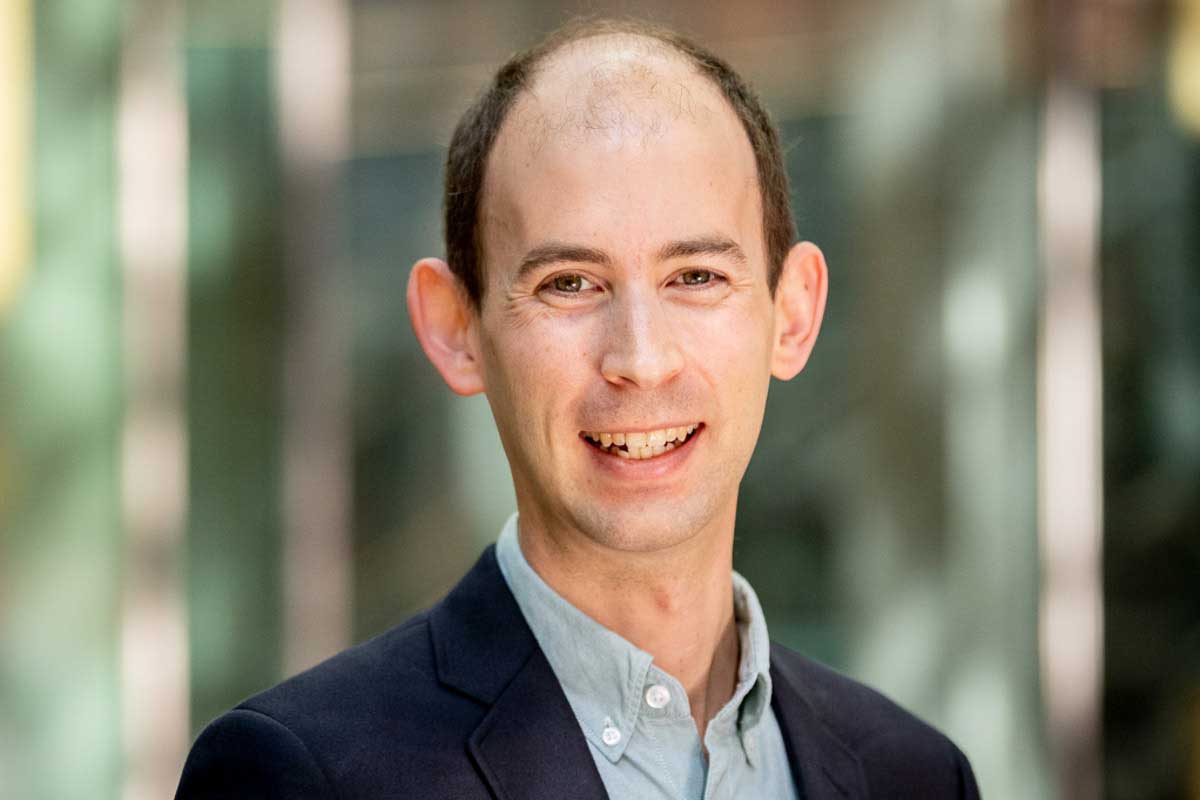
Jonathan Bell is an Associate Professor at Northeastern University in the Khoury College of Computer Sciences , with prior appointments at George Mason University. His research spans Software Engineering , Program Analysis , and Ethics of Artificial Intelligence . PhD in Computer Science from Columbia University (2011) Recipient of the 2020 Dahl-Nygaard Junior Researcher Prize and NSF CAREER award His research focuses on: Resolving flaky tests in Continuous Integration systems Advancing dynamic taint tracking (e.g., Phosphor ) Formalizing software supply chain vulnerabilities Addressing ethical dimensions in automated decision-making Recent publications span flaky test prediction, semantic versioning analysis, and ethics of opaque AI systems. He co-founded the Clowdr open source project and a related startup. Awards include: 2020 Dahl-Nygaard Junior Researcher Prize 2025 NSF CAREER award 2019 GMU Teacher of Distinction award He advises PhD students like Liam DeVoe and Katherine Hough, and serves on committees for conferences such as ICSE , PLDI , and ASE . Contact: j.bell@northeastern.edu | jon@jonbell.net

Jilles Vreeken is a Professor of Computer Science at Saarland University and tenured faculty at the CISPA Helmholtz Center for Information Security, where he leads the Exploratory Data Analysis research group. He is also an ELLIS Fellow and Faculty of the Saarbrücken Unit on AI and ML. His work bridges theoretical foundations with practical applications in causal inference, unsupervised learning, and exploratory data analysis. Dr. Vreeken's research focuses on developing theory and algorithms for answering fundamentally exploratory questions about data: "what is going on in my data?", "what causes what and how?", and "what can we learn from this model?" without making unnecessary or unjustified assumptions. He takes a principled approach based on information theory to identify what is worth knowing, then develops efficient algorithms for extracting useful interpretable results. His work spans causal inference under realistic conditions (including hidden confounding, selection bias, and non-i.i.d. data), summarizing complex data and models in understandable terms, and combining these threads to create more robust and useful models across diverse data types. His recent publications demonstrate a strong trend toward causal discovery in increasingly realistic settings, including non-stationary time series, event sequences, and scenarios with hidden confounders. He has made significant contributions to federated learning, interpretable machine learning, and pattern mining. His work consistently applies information-theoretic principles to develop methods that are both theoretically sound and practically useful for extracting insights from complex data. Dr. Vreeken has received numerous prestigious awards including: IEEE ICDM'18 Tao Li Award for Excellence in Research IEEE ICDM'18 Best Paper Award UdS-CS'15 Busy Beaver Teaching Award ACM SIGKDD'11 Best Student Paper Award ACM SIGKDD'10 Doctoral Dissertation Runner-Up Award ECML PKDD'09 Best Student Paper Award As an advisor, Dr. Vreeken has mentored numerous doctoral researchers to completion, including Dr. Osman Ali Mian, Dr. David Kaltenpoth, Dr. Boris Wiegand, Dr. Sebastian Dalleiger, Dr. Janis Kalofolias, Dr. Jonas Fischer, Dr. Alexander Marx, Dr. Panagiotis Mandros, Dr. Kailash Budhathoki, Dr. Roel Bertens, Dr. Koen Smets, and Dr. Michael Mampaey. He has secured significant research funding as PI for multiple projects including "AI for Prediction and Therapy Guidance in Acute Stroke" (HAICU, 2025-2028), "Neuro-Explicit Models of Language, Vision and Action" (RTG, DFG, 2023-2028), and "Crushing Antimicrobial Resistance using Explainable AI" (HAICU, 2021-2024). Dr. Vreeken leads the Exploratory Data Analysis (EDA) research group at CISPA, which focuses on developing theory and algorithms for discovering novel insights from data, learning inherently interpretable models, and drawing reliable causal conclusions. The group has produced numerous influential algorithms and frameworks in causal inference, pattern mining, and exploratory data analysis, with applications spanning healthcare, materials science, and cybersecurity.
Timothy Baldwin is a Professor at the University of Melbourne, School of Computing and Information Systems, with additional affiliation at Mohamed bin Zayed University of Artificial Intelligence in UAE. His research spans natural language processing, large language models, and multilingual AI systems. His research interests focus on the safety, reliability, and ethical aspects of large language models. He investigates bias evaluation and debiasing techniques, uncertainty quantification methods, fact-checking systems, and multilingual model safety. His work addresses critical challenges in making AI systems more transparent, reliable, and culturally aware, with particular attention to low-resource languages and cross-cultural differences. Baldwin's recent publications demonstrate a strong focus on evaluating and improving the safety of language models across diverse linguistic contexts, developing tools for fact verification, and understanding the internal mechanisms of large language models. His research shows increasing emphasis on practical applications with real-world impact, particularly in multilingual settings and safety-critical domains. His scientific contributions include foundational work on multilingual NLP, bias mitigation techniques, and frameworks for evaluating LLM safety across different cultural contexts. His research has been published in top-tier venues including ACL, NAACL, EMNLP, and ICLR. Baldwin actively mentors students and junior researchers, with frequent collaborations with Haonan Li, Xudong Han, and Fajri Koto, among others. His research group appears to focus on practical applications of NLP with strong ethical considerations, particularly regarding model safety and cultural sensitivity.

- Marketing
- Product Development
- Consumer Behavior
- +۳ مورد دیگر
Martin Schreier is a Professor and head of the Institute for Marketing Management at the Vienna University of Economics and Business (WU). His research focuses on marketing, product development, consumer behavior, and user-driven innovation. A key finding from his work demonstrates that crowdsourced product ideas yield higher sales and gross margins compared to designer-generated products, as evidenced by a Japanese enterprise study showing €10 million revenue growth over three years. His studies also highlight how labeling products as user-ideated enhances consumer trust and sales performance. Schreier's research spans diverse topics, including the psychological drivers of customization, blockchain applications in marketing, and the role of consumer communities in innovation. Recent studies examine generative AI in luxury product co-creation, groundedness in retail experiences, and ethical implications of crowdsourcing. His work bridges academic insights with real-world applications, advising companies on leveraging user creativity and designing effective innovation incentives. He has published extensively on the economic and psychological impacts of consumer-driven innovation, with a focus on cross-cultural differences and market-specific strategies. His findings challenge traditional R&D models, emphasizing the commercial potential of user participation in product development across non-luxury sectors.
Kathleen Liddellمشاهده پروفایل
مدرس ارشد
- Intellectual Property Law
- Medical Law
- Bioethics
- +۷ مورد دیگر
Kathleen Liddell is the Herschel Smith Senior Lecturer of Intellectual Property Law at the University of Cambridge, where she serves as the Founding Director of the Cambridge Centre for Law, Medicine and Life Sciences and is a member of the Cambridge Centre for IP and Information Law. She holds degrees including a D.Phil from Oxford, LLB (hons) and BSc from Melbourne, and an MBioeth from Monash. With experience in both academic and practical legal settings, including private practice and public sector legal services for a health department, Dr. Liddell brings a comprehensive perspective to her interdisciplinary work at the intersection of law, medicine, and technology. Dr. Liddell's educational background reflects her interdisciplinary approach: D.Phil in Law from the University of Oxford, focusing on regulation of controversial genetic technologies in morally pluralist societies LLB (hons) and BSc from the University of Melbourne MBioeth from Monash University Her research focuses on health, medicine and society, with particular emphasis on intellectual property frameworks that govern medical innovation. Dr. Liddell examines how intellectual property rights both help and hinder the translation of medical discoveries into effective clinical treatments, and how these frameworks could be modified to be more effective and just. She leads international collaborations investigating intellectual property law across five key areas of bioinnovation: pharmaceutical repurposing, antibiotics, biologics, rare diseases, and machine-learning based precision medicine. Her work also addresses legal challenges in pre-mortem interventions for organ transplantation, regulatory gaps in healthcare, and the application of theoretical insights from regulatory and political theory to biomedical controversies. Dr. Liddell employs diverse legal methodologies including statutory and case law analysis, normative analysis drawing on moral philosophy, regulatory theory, empirical investigations (interviews, surveys, patent mapping), and expert meetings. She has made significant contributions to understanding the impact of patent law on life sciences innovation, particularly regarding genetic technologies, precision medicine, and diagnostic tools. Her notable scientific contributions include: Principal investigator for a major research project on intellectual property rights, precision medicine and genomic medicine (2015-2018) International collaborations on intellectual property law in bioinnovation Empirical studies on the impact of patent law on medical innovation Research on regulatory frameworks for emerging health technologies Analysis of legal implications for organ transplantation and antimicrobial resistance Dr. Liddell actively supervises research theses at all levels, including PhD students, and teaches across various courses including Law and Ethics of Medicine, Law, Medicine and Life Sciences, Intellectual Property, and the Law PhD Research Methodologies course. She also serves as a Senior Fellow at the University of Melbourne, teaching 'Law and Emerging Health Technologies.' Her research has significant practical applications, informing policy development in areas such as: Intellectual property frameworks for medical innovation Regulation of diagnostics and pharmaceuticals Legal aspects of precision medicine and genomic medicine Machine learning applications in healthcare Stem cell and regenerative medicine Gene editing technologies

- Construction Industry
- Climate Change
- Engineering
- +۷ مورد دیگر
Christian Koch is a Professor and Head of Section at the University of Southern Denmark (SDU) Civil and Architectural Engineering, Department of Technology and Innovation, where he leads research on construction industry dynamics, climate change mitigation, and digital transformation. His work bridges institutional theory with practical challenges in sustainable development and organizational innovation. SDU Climate Cluster EU SAND Project Participant Creative Construction Conference Chair Research interests include circular economy implementation, blockchain in construction logistics, lean construction methodologies, and AI applications for safety analysis. His studies focus on institutional entrepreneurship, interorganizational networks, and policy impacts on construction practices, particularly in Denmark and Sweden. Recent article trends analyze machine learning for accident report analysis, blockchain-enabled resource marketization, and climate-resilient infrastructure. Notable awards include the Taylor and Francis Best Theoretical Paper (2025), SCC Fast Track Award (2024), and CME Best Paper on Societal Challenges (2022). Scientific awards include: Taylor and Francis Best Theoretical Paper (2025) SCC Fast Track November 2024 CME Best Paper Transformative Impact (2022) Best Paper Creative Construction Conference (2025) He actively participates in public discourse through media engagements on construction safety, climate adaptation, and sustainable sand extraction for green transitions.
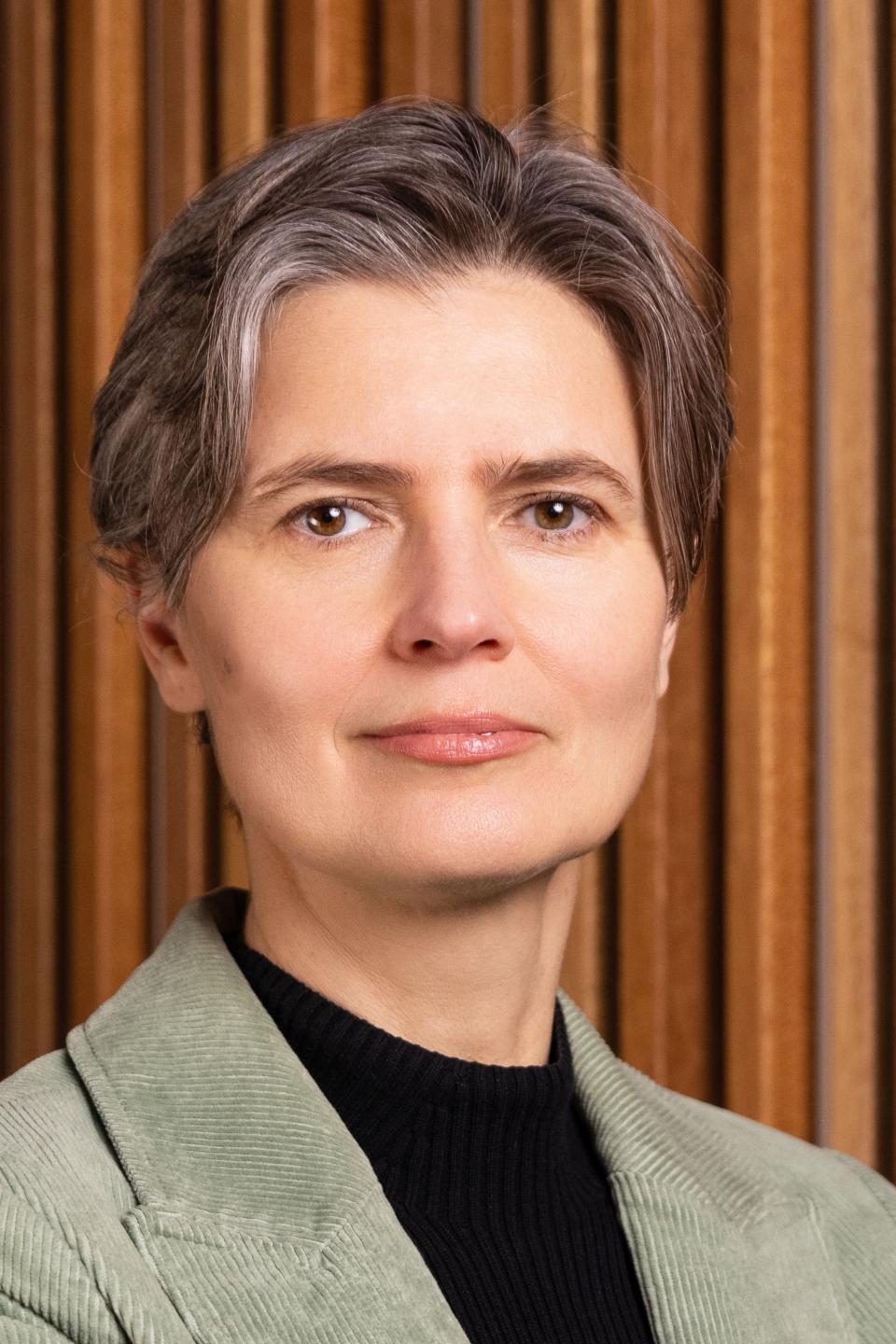
Adriana Iamnitchi is a Full Professor and Key Domain Chair for Computational Science at Maastricht University's Faculty of Science and Engineering, affiliated with the Department of Advanced Computing Sciences. Her research focuses on computational social science, social media dynamics, and misinformation detection. Her primary research interests include: Analysis of coordinated information campaigns across social platforms Development of LLM-based synthetic data generation for social media research Polarization quantification in multi-community networks Policy compliance frameworks for digital regulation (e.g., EU's Digital Services Act) Ethical AI applications for content moderation and transparency Her recent publications (2023-2025) demonstrate strong focus on: Cross-platform disinformation detection using multimodal embeddings Generative AI for synthetic social media datasets Quantitative analysis of toxicity monetization in creator economies Regulatory compliance automation for content transparency

- Data Fusion
- Intelligent Interaction
- Fuzzy Logic
- +۴ مورد دیگر
Anna Wilbik is a Professor in Data Fusion and Intelligent Interaction at the Department of Advanced Computing Sciences, Faculty of Science and Engineering, Maastricht University (The Netherlands). Her research bridges data understanding and human-machine synergy in complex systems, focusing on multi-criteria decision making, explainable AI, and data fusion techniques. PhD in Computer Science (with honors), Systems Research Institute, Polish Academy of Science (2010) Postdoctoral Fellow, University of Missouri (2011) Stanford University TOP500 Innovators Program Alumnus Research Pillars: Intelligent human-machine interaction for joint decision making Data fusion methods for heterogeneous data integration Contextualized multi-criteria decision frameworks Fuzzy logic and linguistic summaries for explainability Federated learning systems Article Trends: Recent work focuses on intuitionistic fuzzy sets for knowledge-intensive processes, federated learning with uncertainty handling, and linguistic summarization techniques for interpretable AI. She actively explores explainability , collaborative business models , and driver behavior analysis through attention-based models. Professional Leadership: Vice-chair of IEEE Fuzzy Systems Technical Committee Organizer of IEEE World Congress on Computational Intelligence (2024)
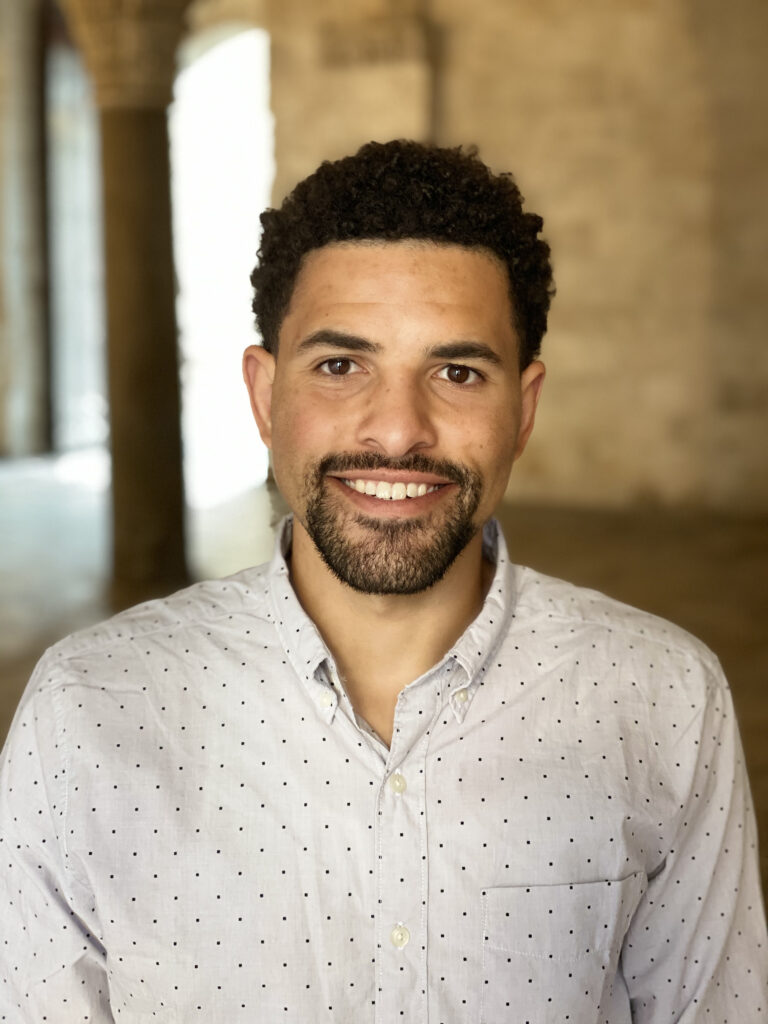
Christopher L. Dancy is the Harold and Inge Marcus Industrial and Manufacturing Career Development Associate Professor at Pennsylvania State University, holding appointments in Industrial and Manufacturing Engineering, Computer Science and Engineering, and African American Studies. He directs the THiCC Lab and serves as an affiliate faculty member in the Institute for Computational and Data Sciences and the Center for Socially Responsible AI. His research lies at the intersection of human behavior, computational systems, and sociocultural structures. Drawing on theoretical perspectives from computational cognitive science and Black studies, he focuses on the racialization and antiblackness embedded in AI systems. His methodological toolkit includes computational cognitive modeling, human behavioral studies, and design considerations for socioculturally aware AI systems. Professor Dancy's publications highlight his expertise in integrating generative models with cognitive architectures, addressing systemic bias in AI, and developing frameworks for socially responsible AI. His work spans conferences like SBP-BRiMS and journals exploring computational models for social good.
Professor Steven J. Murdoch is a faculty member at the University College London (UCL) in the Department of Computer Science . He holds a Royal Society University Research Fellow position and leads the Information Security Research Group . He is affiliated with Christ’s College as a bye-fellow, and is a Fellow of the Institution of Engineering and Technology (IET) and the BCS . His work bridges security engineering , privacy-enhancing technologies , and legal-technical intersections . Academic Leadership : Program chair and general chair for major conferences like Privacy Enhancing Technologies Symposium and Financial Cryptography . Research Contributions : Notable for exposing vulnerabilities in EMV protocols , designing blockchain-based fair exchange protocols , and analyzing malware delivery ecosystems . Scientific Awards : Received the IRTF Applied Networking Research Prize 2020 for internet-wide scanning methodologies. Professional Impact : Active in Tor Project and critical infrastructure analysis, including the Post Office Horizon scandal . Email: s.murdoch@ucl.ac.uk .

Zijin Zhangمشاهده پروفایل
استادیار
Zijin Zhang is an Assistant Professor of Business Analytics at the Carroll School of Management, Boston College. She holds a Ph.D. in Technology & Operations from the University of Michigan's Ross School of Business and a B.S. in Mathematics and Statistics from Nanjing University. Her office is located in Fulton Hall 454B at Boston College. Her research centers on data-driven decision-making in operations management, organized around three pillars: Engineering value : Designing algorithms for real-time decisions under uncertainty Economic value : Optimizing data acquisition costs versus decision impact Social value : Examining ethical implications of data practices and technology regulation Applications span retail operations, AI markets, and public-sector resource allocation. Recent publications focus on algorithmic decision-making in operations management, with recurring themes of data optimization, fairness in resource allocation, and policy impact analysis. Methodologies combine optimization, game theory, and machine learning. Awards & Honors: Rackham Doctoral Intern Fellowship (2024) Michigan Ross China Research Award (2023) First Prize, National Olympiad Informatics (2013) Thomas William Leabo Fellowship (2022-2023) DSI Doctoral Research Showcase Finalist (2025) Teaching includes Operations Management (TO 313) at University of Michigan with a 4.9/5.0 evaluation score. She has received multiple research grants including Rackham Research Grant (2024) and Ross School Doctoral Grant (2022). Engages in academic service as INFORMS conference session co-chair (2024) and PhD program panels. Maintains industry connections through past internships at Oracle and CITIC Group.

Jed Stiglitz is a Professor of Law and Associate Dean for Academic Affairs at Cornell Law School. His research focuses on administrative law, law and artificial intelligence, and the intersection of legal reasoning with machine learning. He is affiliated with Cornell University and the College of Arts and Sciences, and his work addresses trust and accountability in the administrative state.

Jukka Sihvonenمشاهده پروفایل
استادیار
Jukka Sihvonen is an Assistant Professor at the Department of Accounting, Aalto University School of Business. His expertise spans financial accounting, digital transformation, and artificial intelligence in finance. He teaches and supervises master’s and doctoral programs in financial accounting, Big Data, and business technologies, and contributes to executive education. PhD in Finance (University of Vaasa, 2013) Visiting scholar at Norwegian School of Economics, Copenhagen Business School, Umeå University, Goethe University, European Central Bank, and Bank of Finland His research interests focus on digital transformation in accounting, AI applications, climate risk disclosures, cybersecurity, and servitization in business models. Recent publications address rare earth investments, LGBTQ+ policies, audit digitalization, and supply chain leadership. His 15 most recent articles highlight interdisciplinary trends in AI-driven finance, ESG compliance, and digital risk management. Key journals include European Accounting Review, International Review of Financial Analysis, and Industrial Marketing Management. Scientific Awards: Researcher of the Year (2021) Teacher of the Year (2022) AFAANZ Best Paper Award (2022) EFA Outstanding Paper Award (2011)
نمایش نتایج تا ۷۵۰ مورد اول. برای یافتن نتایج دقیقتر، جستجوی خود را با فیلترها محدود کنید.