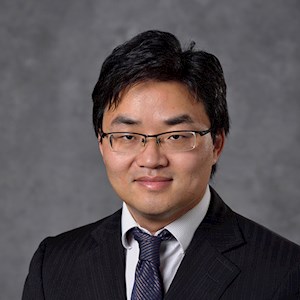
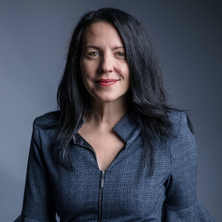
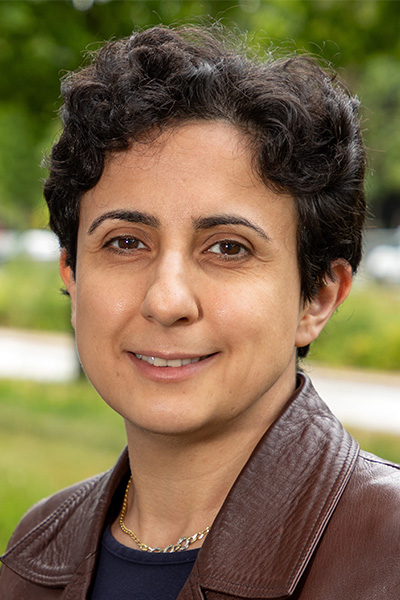
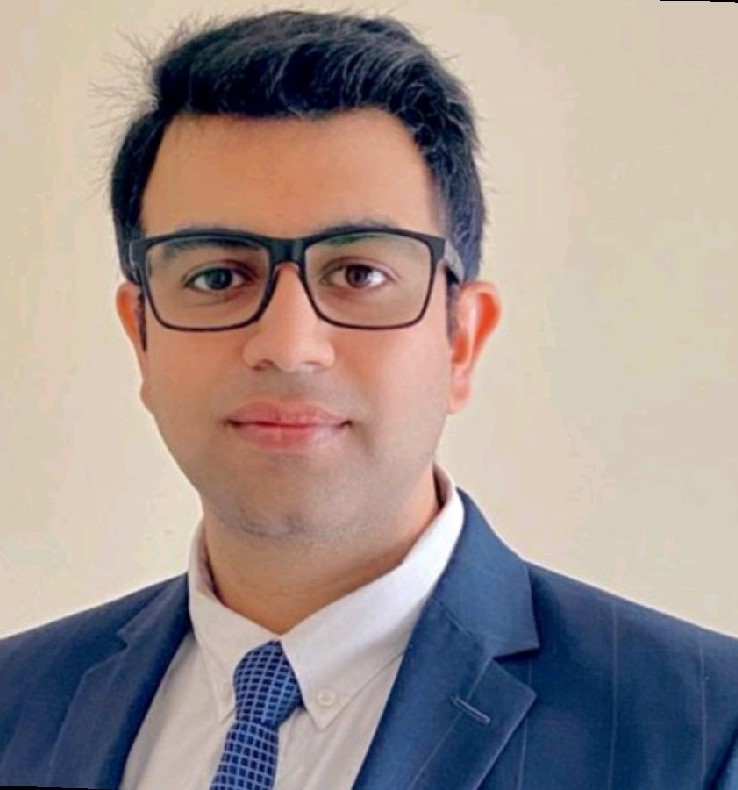
Vittorio Solina is a Researcher at the Department of Mechanical, Energy and Management Engineering (DIMEG) of the University of Calabria, specializing in industrial systems simulation and digital twin technologies. His work spans Industry 4.0/5.0 applications, supply chain optimization, and human-robot collaboration. Affiliation: University of Calabria Academic Role: Researcher (Legge 240/10) Research Focus: Digital twins, simulation modeling, sustainable manufacturing His research emphasizes advanced simulation tools for decision support, including applications in Industry 4.0 , Smart Manufacturing , and Agri-Food Supply Chains . Recent work explores adaptive simulation optimization for Industry 5.0 and 5G-enabled robotics. Key publication trends include: (1) Digital twin integration for supply chain resilience (2024-2025), (2) Simulation automation methodologies (2025), and (3) Human-robot collaboration frameworks (2024).
Robert West is an Associate Professor at EPFL (École polytechnique fédérale de Lausanne) in the School of Computer and Communication Sciences , leading the Data Science Lab (dlab) . His research focuses on Natural Language Processing , Machine Learning , and Computational Social Science , analyzing human-generated data from the web, social media, and online platforms. Education : PhD in Computer Science (2016) - Stanford University MSc in Computer Science (2010) - McGill University BSc in Computer Science (2007) - Technische Universität München Research Interests : West develops algorithms for analyzing large-scale web data, with emphasis on multilingual NLP , social network analysis , and AI ethics . His work bridges machine learning with social science to understand digital human behavior. Scientific Awards : ICWSM’22 Adamic–Glance Distinguished Young Researcher Award Google Faculty Research Award Facebook Research Award Multiple Outstanding Paper Awards at ICWSM and WWW Advising & Grants : He advises 12 PhD students and has secured funding from the Swiss National Science Foundation , Swiss Data Science Center , and industry partners. His lab maintains collaborations with Microsoft Research and CROSS . Labs & Collaborations : West leads the Data Science Lab at EPFL, which focuses on web-scale data analysis , privacy-preserving machine learning , and AI for social good . The lab develops tools like Wikispeedia and Quotebank for public data exploration.
Daniel M. Roy is a Full Professor at the University of Toronto, with cross-appointments in the Department of Computer Science, Department of Statistical Sciences, and Department of Electrical and Computer Engineering. He serves as Research Director at the Vector Institute and holds the CIFAR Canada AI Chair. Research Focus: Foundational principles of prediction, inference, and decision-making under uncertainty across machine learning, statistics, mathematical logic, applied probability, and computer science. Scientific Contributions: Key work in learning theory, statistical network analysis, probabilistic programming, and information-theoretic frameworks for generalization. Awards: ICML 2024 Best Paper Award for "Information Complexity of Stochastic Convex Optimization" and promotion to Full Professor in 2024. Student Advising: Actively mentors Ph.D. candidates and postdoctoral researchers with strong quantitative backgrounds, particularly at the intersection of machine learning, statistics, and computer science. Email: daniel.roy@utoronto.ca
Professor Simon Buckingham Shum is a leading academic in Learning Informatics at the University of Technology Sydney (UTS), serving as inaugural Director of the Connected Intelligence Centre since 2014. His work bridges Human-Computer Interaction, Educational Technology, and Learning Analytics to develop AI-driven tools like OnTask that enhance student belonging through personalized feedback. Key research areas: Human-Computer Interaction, Learning Analytics, AI in Education, Collective Intelligence Recent work focuses: LLM-augmented qualitative analysis, Belonging Analytics frameworks, and ethical AI implementation in education CIC received the 2024 Vice-Chancellor’s Student Experience Award for scaling OnTask across multiple faculties. His contributions span over 30 years, including founding roles at The Open University’s Knowledge Media Institute and innovations in Open Educational Resources (OER), SocialLearn, and FutureLearn platforms. Notable awards: 2024 Student Experience Award (OnTask), Fellow of the Royal Society of Arts (RSA), DEFI STRI Researcher at University of Cambridge Education: B.Sc. in Psychology (York), M.Sc. in Ergonomics (UCL), PhD in Human-Computer Interaction (York) He leads multidisciplinary collaborations with teams across Business, Law, and Education faculties, pioneering tools like Theme Explorer and Qreframer bot. His recent focus on the "metacrisis" reframes educational technology’s role in addressing global systemic challenges through transdisciplinary approaches.
Ming Hu is a Professor and University of Toronto Distinguished Professor of Business Operations and Analytics at Rotman School of Management, University of Toronto. He serves as Area Coordinator for the Operations Management & Statistics Area and holds editorial leadership roles including Editor-in-Chief of Naval Research Logistics and Associate Editor for multiple top journals. MS in Applied Mathematics, Brown University (2003) PhD in Operations Research, Columbia University (2009) His research focuses on sharing economy , social operations , and platform economics , examining how operational decisions can maximize societal benefit. Key areas include crowdfunding , two-sided markets , crowdsourcing , and group buying , with applications to DEI , sustainability , and AI-empowered operations . Recent work analyzes spatial operations in delivery systems, algorithmic fairness , and climate change adaptation in agricultural supply chains. His publications span top journals like Management Science and Operations Research , covering topics from blockchain traceability to quantum-inspired optimization . Scientific recognitions include: Wickham Skinner Early-Career Research Award (2016) Best Operations Management Paper in Management Science (2017) 2018 Poets & Quants Best 40 Under 40 MBA Professors As an Amazon Scholar (2022–) and Chair of Chain Analytics Institute (2023–), he bridges academic research with industry applications in AI-driven logistics and sustainable operations.
Julian McAuley is a Professor in the Department of Computer Science and Engineering at the University of California, San Diego's Jacobs School of Engineering. His research spans recommender systems, machine learning, natural language processing, music information retrieval, and multimodal learning. He maintains an active research group with numerous PhD students and postdocs working on cutting-edge AI problems. His research interests focus on developing advanced algorithms for personalized recommendation systems, with particular emphasis on sequential recommendation, multimodal learning, and integrating large language models with traditional recommendation approaches. His work bridges the gap between theoretical machine learning and practical applications across multiple domains including e-commerce, music, and healthcare. McAuley has published extensively in top-tier conferences including NeurIPS, ICML, KDD, SIGIR, and ACL, with his most recent work exploring the intersection of large language models and recommendation systems. His publications reveal a strong trend toward multimodal approaches that combine text, vision, and audio for more comprehensive understanding and recommendation. He has received significant research funding from major technology companies including Google, Amazon, Facebook, Adobe, and Samsung, as well as government agencies like the National Science Foundation and Department of Defense. His work has practical applications across multiple industries, with a focus on improving user experience through better personalization. McAuley advises numerous PhD students who have gone on to successful careers at leading technology companies and academic institutions. His former students include Wang-Cheng Kang and Jianmo Ni at Google DeepMind, Chris Donahue and Zachary Lipton as assistant professors at CMU, and Ruining He at Google Deepmind.
Jiliang Tang is an MSU Foundation Professor in the Department of Computer Science and Engineering at Michigan State University (MSU), part of the College of Engineering. He holds a PhD from Arizona State University (2015) and previously worked as a research scientist at Yahoo Research. His research focuses on graph machine learning, trustworthy AI, and applications in education and biology. He has received numerous awards, including the 2022 AI's 10 to Watch, IAPR J.K. Aggarwal Award, and NSF CAREER Award. Education: PhD in Computer Science, Arizona State University, 2015 (Advisor: Huan Liu) Research Interests: Graph Neural Networks (GNNs) and Deep Learning on Graphs Trustworthy AI: Safety, Robustness, and Fairness AI+X Applications: Education Technology and Biological Data Analysis His work bridges theoretical advancements and practical applications, with contributions to graph representation learning, privacy in generative models, and educational AI systems. Awards & Recognition: Over 8 best paper awards (or runner-ups) Rock Star Award from Association of Chinese Scholars in Computing Extensive media coverage for innovations in AI education and biology Grants & Projects: NSF CAREER Award (2019) for research on signed networks Co-PI on a $1.7M grant for 5G research Leadership in projects like DSE Lab and Data Science initiatives Labs & Teams: Directs the Data Science and Engineering (DSE) Lab at MSU, focusing on advancing AI for real-world challenges. The lab collaborates with industry leaders and publishes widely in top conferences (e.g., KDD, SIGIR, ACL).
Christopher S. Tang is a UCLA Distinguished Professor and Edward W. Carter Chair in Business Administration at the Anderson School of Management , where he researches global supply chain management with a focus on social innovation in developing countries . He also serves as Senior Associate Dean for Global Initiatives and Faculty Director of the Center for Global Management . Education: Ph.D. in Management Science (1985, Yale University) M.Phil. in Administrative Science (1983, Yale University) M.A. in Statistics (1983, Yale University) B.Sc. in Mathematics (First Class Honors, 1981, King’s College, University of London) His research explores the intersection of corporate responsibility and supply chain innovation , addressing topics like microfinancing , mobile platforms for developing economies , direct agricultural procurement , and disaster response logistics . He emphasizes visibility, integrity, and agility in uncertain environments. Recent work highlights AI adoption benefits for supply chains , strategies to reduce forced labor risks , and policy impacts on ride-sharing platforms . His research bridges operations management and social justice , advocating for environmental stewardship alongside business growth. Scientific Awards: Salzberg Medallion (2017) Lifetime Fellow, INFORMS (2011) Responsible Research in Management Award (2017) Teaching Excellence Award (multiple years, UCLA-NUS) Dean’s Excellent Service Award (2014) As an influential adviser and consultant , Tang has worked with Amazon, HP, IBM, Nestlé, GKN , and Accenture . He has taught at Stanford University, UC Berkeley, Hong Kong University of Science and Technology , and served as visiting professor at Cambridge University and the Institute of Advanced Study at HKUST .
Associate Professor Nicole Hartley serves as MBA Director at UQ Business School and Future of Health Research Hub Lead at The University of Queensland. With 19 years of academic experience across institutions in Sydney and Queensland, she holds appointments across multiple faculties including Business, Economics and Law; Health, Medicine and Behavioural Sciences; and Engineering, Architecture and Information Technology. Her academic affiliations span the Centre for the Business and Economics of Health, Centre for Enterprise AI, and Queensland Digital Health Centre. Dr. Hartley is an internationally recognized research academic specializing in services marketing and digital technology. Her research interests encompass service technology, virtualized services, customer preference and adoption, new media, service innovation, and corporate digital responsibility. She particularly focuses on customer perceptions in response to technological disruption in service delivery, with special emphasis on healthcare services. Her work bridges business, technology, and healthcare domains, examining how digital transformation affects consumer behavior and service experiences. Her extensive publication record demonstrates consistent research output across multiple disciplines, with recent work concentrating on telehealth implementation, corporate digital responsibility, consumer trust in digital environments, and healthcare service innovation. The interdisciplinary nature of her research connects marketing theory with practical healthcare applications, particularly in the context of digital transformation and service delivery. Dr. Hartley has successfully supervised numerous PhD candidates to completion and currently mentors several doctoral students working on topics ranging from sustainable consumption to healthcare innovation and digital service experiences. Her research has been supported by significant funding from Queensland Health, NHMRC, and other organizations, focusing on telehealth, digital service transformation, and healthcare innovation. As Director of MBA and Executive Education at UQ Business School, Dr. Hartley combines her academic expertise with practical industry experience, having previously worked as Marketing Manager/Director in tourism, education, and communication industries in Australia and the UK. She is an award-winning educator with expertise in marketing strategy, digital media, consumer behavior, and experiential industry-based projects.
Sotirios Liaskos is an Associate Professor in the School of Information Technology at the Faculty of Science, York University. He is a leading researcher in requirements engineering and conceptual modeling, with a focus on goal models, empirical evaluation, and model-driven engineering. Research Interests: Requirements Engineering Goal and Conceptual Modeling Empirical Software Engineering Model-Driven Design and Automation Uncertainty and Decision-Theoretic Reasoning in Models Applications in Blockchain and Reinforcement Learning His recent work emphasizes the empirical validation of modeling constructs, the integration of decision theory into goal models, and the automated generation of secure workflows and AI training environments. He has led and co-authored numerous experimental studies on model comprehensibility and semantic quality. Publication Trends: His publications consistently appear in top venues like ER, RE, and iStar. The last five years show a strong trend toward empirical evaluation of modeling languages, decision-theoretic goal models, and applications of goal modeling in emerging domains such as blockchain and reinforcement learning simulation design. Scientific Contributions: Developed frameworks for empirical evaluation of modeling language ontologies (Peira framework). Advanced decision-theoretic approaches to goal modeling under uncertainty. Pioneered model-driven methods for generating blockchain simulators and reinforcement learning environments. Conducted foundational empirical studies on the comprehensibility of contribution links and visualization alternatives in goal models. Advising and Collaboration: He has advised several researchers including Ibrahim Jaouhar, Wisal Tambosi, Mehrnaz Zhian, and Saba Zarbaf. He maintains a highly collaborative research profile with frequent co-authorship with John Mylopoulos, Shakil M. Khan, and other international researchers. He has served as a co-editor for multiple iStar workshop proceedings, indicating leadership in the goal-oriented requirements engineering community. Labs and Teams: While no specific lab name is mentioned, his work is closely associated with research groups focused on requirements engineering and conceptual modeling, likely within York University’s software engineering research cluster. His collaborations span institutions in Canada, Europe, and beyond.
Thompson S.H. Teo is a Professor in the Department of Analytics and Operations (DAO) at the National University of Singapore (NUS) Business School. He holds editorial roles in top journals including European Journal of Information Systems, International Journal of Information Management, and Communications of the AIS. His research spans information systems strategy, business-IT alignment, e-commerce, sustainability, and AI's societal impacts. With over 200 publications, he ranked #143 globally in 2023 among business scientists (research.com) and was recognized in Stanford's top 2% global scientists (2021-2023). Awards include the Best Associate Editor Award (2017) and AIS Distinguished Membership. Thompson's research interests include IT adoption, cyberloafing, supply chain digitalization, and green innovation. He teaches courses on innovation, Industry 4.0, and strategic IT at undergraduate, masters, and executive levels. Notable contributions include frameworks for commute experience analysis and AI adoption market signals. His work bridges theory and practice, addressing challenges in sustainability, organizational behavior, and digital governance. Affiliations: NUS Business School, Distinguished Editorial Advisory Board (IJoIM), Senior Member (INFORMS) Grants & Leadership: Extensive editorial leadership, supervised China Scholarship Council PhD students, and executive programs on innovation design thinking. Key Contributions: Over 270 publications, four co-edited books on IT/e-commerce, and policy-relevant studies on environmental regulations and green tech adoption. His research often employs mixed methods (e.g., QCA for corruption analysis, PLS-SEM for cyberloafing models) and addresses global issues like fake news mitigation via ChatGPT and pandemic-era customer engagement in short videos.
Noah A. Smith is an Adjunct Professor of Computer Science and Engineering at the University of Washington. His work focuses on computational linguistics, machine learning, and natural language processing. He holds a Ph.D. in Computer Science from Johns Hopkins University (2006). His research explores ethical AI applications, multimodal systems, and foundational aspects of language models. Key research areas include: Ethical considerations in NLP, such as detecting rights abuses through text analysis Efficient decoding and alignment strategies for large language models Large-scale evaluation frameworks for multitask and multimodal generation Understanding pretraining dynamics and data composition effects Recent work emphasizes transparency in language models (e.g., tracing outputs to training data) and improving alignment through human feedback. He has contributed to open-source projects like OLMo and Dolma, advancing reproducibility in NLP research. No awards explicitly listed in provided texts. No specific advising or grant details available, though extensive publication output indicates active research involvement.
Gerald Reiner serves as Head of the Institute for Production Management at the Vienna University of Economics and Business (WU), within the Department of Information Systems and Operations Management. He holds a Magister Degree, doctorate, and Habilitation in Business Administration from WU. His academic career includes positions as full professor in Production Management and Logistics at the University of Neuchatel (Switzerland, 2007-2014) and Universitaet Klagenfurt (Austria, 2014-2018), where he also served as head of the department of Operations, Energy, and Environmental Management. Dr. Reiner has held visiting professorships at Aston Business School (UK), HEC Lausanne (Switzerland), University of Bergamo, and Università Cattolica del Sacro Cuore in Milan (Italy). His research spans several critical areas including Industry 4.0 implementation, integrated capacity and inventory management, humanitarian logistics operations, circular supply chains, and operations management for base of the pyramid contexts. His work particularly focuses on practical applications addressing food waste reduction, sustainable manufacturing, and blockchain technology in supply chains. His publication portfolio demonstrates a clear evolution toward digital transformation in operations, with recent focus on hydrogen production systems, AI integration in manufacturing, and blockchain applications for food supply chain transparency. The research shows increasing emphasis on sustainability integration within traditional operations management frameworks, particularly addressing European manufacturing challenges and food system inefficiencies. Publication Excellence Award 2021 (2023) Researcher of the month (January 2023) Highly Commended paper in the 2017 Emerald Literati Network Awards for Excellence ISIR Service Award (2014) Emerald Outstanding Paper Award (2013) Dr. Reiner coordinates multiple significant international research projects including EU-project 'Keeping Jobs in EU', EU/Ecsel-project 'Power Semiconductor and Electronics Manufacturing 4.0', 'Integrated Development 4.0', and 'Artificial Intelligence in Manufacturing leading to Sustainability and Industry 5.0'. His current projects focus on FOODIS (cross-border ecosystem for innovation in food supply chains), Circular Design implementation, and blockchain applications for banana supply chains. He actively supervises research teams working on food waste reduction, sustainable packaging systems, and AI applications in operations management.
Shiva Nejati is a Professor at the University of Ottawa 's School of Electrical Engineering and Computer Science . He holds a PhD in Computer Science from the University of Toronto and previously worked as a Senior Scientist (2012-2019) and Scientist (2009-2012) at the SnT Centre (University of Luxembourg) and Simula Research Laboratory. Research focus: Software engineering for cyber-physical systems (autonomous vehicles, IoT), blending formal verification, machine learning, and search-based testing Key tools developed: ARIsTEO, SOCRaTEs, SimCoTest, EPIcuRus Editorial roles: Associate Editor for EMSE Journal (2025–), ASE Journal (2025–), IEEE Transactions on Software Engineering (2020–2024) His work combines formal methods , empirical software engineering , and AI/ML to address verification challenges in complex systems, particularly through evolutionary algorithms and surrogate modeling . Notable collaborations include industry partners in telecommunications, automotive, and aerospace sectors. Recent publications emphasize large language models for requirements analysis, adversarial testing of vision systems, and multi-objective optimization for test generation. His Sedna Research Lab actively trains graduate students in these cutting-edge methodologies.
Dr. Vishal Sharma is a Senior Lecturer in the School of Electronics, Electrical Engineering and Computer Science at Queen's University Belfast. His research focuses on Cyber-Physical Systems (CPS), 5G/6G Security, Unmanned Aerial Vehicles (UAVs), Blockchain, and Digital Twins. He has held roles at institutions like Singapore University of Technology and Design (SUTD) and Soonchunhyang University, South Korea. Notable achievements include Best Paper Awards at ICCMIT 2017, IEEE SITE 2024, and HUCAPP/VISIGRAPP 2025. He leads the Innovation-by-Design Lab and is a Fellow of the Higher Education Academy (FHEA). Research Interests: Cyber Defence, UAV Security, Secure Computing, Network Security, and Sustainable Edge Computing. He has collaborated on projects like RapidRANDefender (QRICSec) and Traceable Procurement for Net-Zero Processes. Awards include the Royal Society International Exchanges Committee appointment (2025) and QUB's Individual Performance Award (2024). Grants and Projects: Principal Investigator for projects such as Exploring Operational Capabilities of Arm Morello for UAV Security (2023) and TUDOR: Ubiquitous 3D Open Resilient Network (2023). Active in editorial roles for IEEE Communications Magazine and IET Networks. His work aligns with UN Sustainable Development Goals (SDGs) related to climate action and innovation. Publications span 150+ articles in top journals/conferences, with a focus on secure communication, edge computing, and UAV networks. Supervises PhD students in cyber defence, AI security, and distributed ledger technologies.