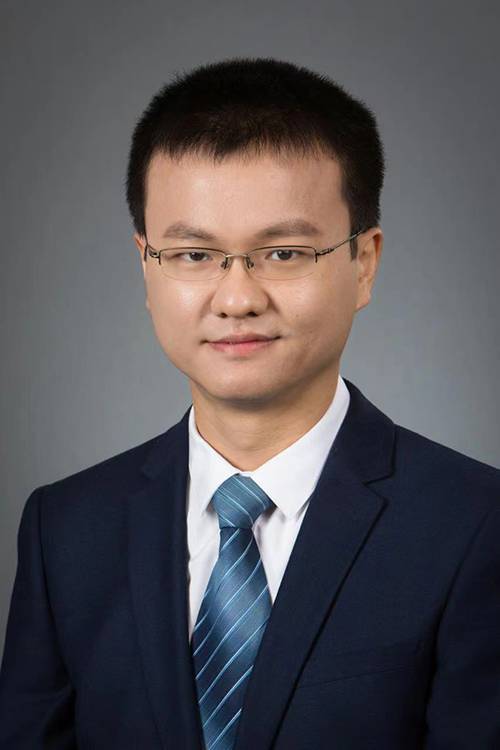
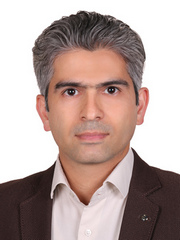
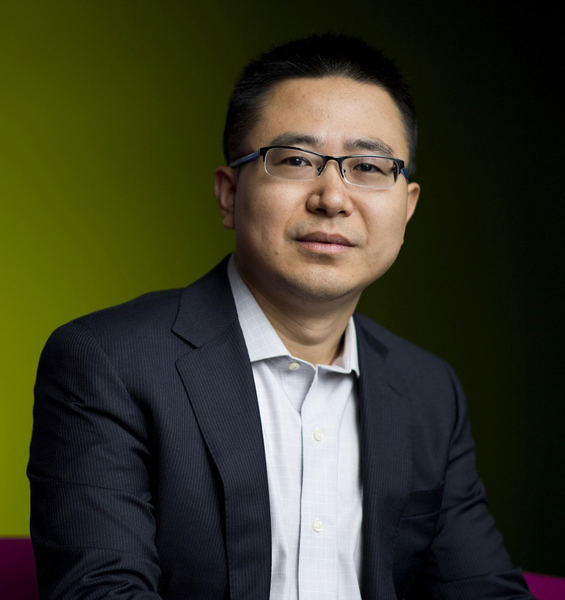
Shuo Yu is an Assistant Professor of Information Systems and Quantitative Sciences at the Rawls College of Business, Texas Tech University, and serves as the Wetherbe Professor in Management Information Systems. He directs the MIS Doctoral Program and teaches courses such as Big Data Security, Information Security, and Data Analytics Tools. Yu holds a PhD from the University of Arizona (Management Information Systems) and a BBA from Tsinghua University (Information Management). His research focuses on data science applications in healthcare analytics, cybersecurity, and e-commerce. Key areas include interpretable deep learning, text mining, and mobile health technologies. Notable projects include SilverLink, a smart home monitoring system for senior care using wearable sensors and machine learning. Yu’s publications span journals like MIS Quarterly and IEEE Transactions, emphasizing innovations in health profiling, fall prevention, and recommendation systems. His work integrates techniques such as Hidden Markov Models, Generative Adversarial Networks, and Bayesian networks. No scientific awards are listed. He is actively involved in advising doctoral students and contributes to the Association for Information Systems (AIS).
Dr. Ahmed Abdeen Hamed is a former Assistant Professor of Data Science and Artificial Intelligence at Norwich University and a former Research Team Leader in Clinical Data Science. He holds a Ph.D. from the University of Vermont (2014) and has extensive industry experience in pharmaceutical research. His work focuses on computational methods for drug discovery, network analysis, and AI-driven healthcare solutions, particularly in drug repurposing for diseases like COVID-19. He has developed algorithms such as MolecRank and NeoNet, and holds a patent for specificity-based molecule ranking systems. Education: PhD in Data Science (University of Vermont, 2014). Research Interests: Network-based drug discovery, biomedical informatics, AI in healthcare, clinical data science, and combating misinformation using machine learning. His recent work emphasizes leveraging clinical trials and biomedical literature to predict treatment efficacies through computational frameworks. Key Contributions: First inventor on a molecule ranking patent (2021), co-developer of the CovidX algorithm for drug repurposing, and supervisor of PhD students/postdoctoral fellows. Collaborates with Sano teams to advance clinical research through AI. Awards: FastCompany Most Creative (2016) Industry Impact: Contributed to a multi-million dollar grant for a recommendation engine startup. Labs/Teams: Currently part of Sano's research teams, focusing on computational clinical research and interdisciplinary collaborations.
Dragi Kimovski is a Habilitated Assistant Professor in Distributed Systems at Klagenfurt University, Austria, focusing on Edge Computing and AI. He previously held roles at the University of Innsbruck and the University of Information Science and Technology in Macedonia. His research spans Edge/Fog/Cloud computing, multi-objective optimization, and high-performance computing. He has coordinated major projects like 6GContinuum and KärtnerFog, and led initiatives such as DataCloud and ASPIDE. His teaching includes courses on Distributed Computing, Cloud Computing, and IoT. He is the co-creator of the Carinthian Computing Continuum and maintains a blog on Edge AI World. His work emphasizes sustainable and efficient computing solutions for emerging technologies. Education: Not explicitly listed in the provided text. Research Interests: Edge Computing, Fog Computing, Cloud Computing, Multi-objective Optimization, High-Performance Computing, AI in Distributed Systems. His work addresses challenges in resource management, latency reduction, and scalability across heterogeneous environments, with applications in healthcare, IoT, and 6G networks. Projects: 6GContinuum (Coordinator): Focuses on AI services over 6G networks. KärtnerFog (Scientific Coordinator): Develops adaptive Fog infrastructures over 5G. DataCloud (WP5 Leader): Manages Big Data pipelines on the Computing Continuum. ASPIDE (Scientific Coordinator): Advances exascale programming models for data processing. Teaching: Klagenfurt University: Courses include Distributed Computing, IoT, Cloud Computing, and Advanced Programming. University of Innsbruck: Taught Advanced Parallel and Distributed Systems. University of Information Science and Technology: Courses in High-Performance Computing and Network Architectures. Labs/Teams: Co-created the Carinthian Computing Continuum, an automated SDN testbed for Edge computing research. Active in interdisciplinary teams addressing extreme data processing and sustainable computing.
Muhammed-Fatih Kaya is a postdoctoral researcher and research coordinator at the Chair of Information Systems and Intelligent Systems within the Faculty of Economics and Social Sciences at the University of Hohenheim. He also heads the Business Information Systems Service Center, which manages program administration and academic advising for Business Information Systems programs at the Universities of Hohenheim and Stuttgart. Dr. Kaya earned his Master of Science in Business Informatics from the Universities of Hohenheim and Stuttgart and completed his doctorate in machine learning in August 2022 with the grade 'summa cum laude' (very good with distinction). His dissertation focused on 'Automated Pattern Recognition of Communication Behavior in Electronic Business Negotiations.' His research spans multiple domains at the intersection of artificial intelligence and business processes, with primary interests in natural language processing, machine learning, pattern recognition, predictive analytics, electronic negotiations, and negotiation support systems. Dr. Kaya's work consistently applies AI techniques to understand and improve business communication and negotiation processes, demonstrating a strong trajectory from foundational pattern recognition research to current applications of deep learning in digital negotiations. Dr. Kaya's scholarly contributions reveal an evolving research focus that has progressed from analyzing communication patterns in negotiations to exploring cutting-edge AI applications in business contexts, with increasing emphasis on practical implementations of machine learning in business processes and educational frameworks for AI competencies. Springer Group Decision and Negotiation Young Researcher Award (2019) Springer Best Paper Award at the International Group Decision and Negotiation Conference in Tokyo (2023) Dr. Kaya serves actively in academic service roles, including as a member of the editorial board of the Group Decision and Negotiation Journal since 2023 and as a reviewer for various business information systems publications. He participates in the ABBA: AI for Business | Business for AI project coordinated by the University of Hohenheim. His committee work includes membership on the Master's program admissions committee (since 2019), Bachelor and Master Study Committees (since 2020), the Senate Commission for Studies and Teaching (since 2020), and the Faculty Council of the Faculty of Economics and Social Sciences (since 2022). As head of the Business Information Systems Service Center, Dr. Kaya oversees program management and academic advising for the joint Bachelor's and Master's programs in Business Information Systems at the Universities of Hohenheim and Stuttgart, demonstrating his commitment to both research excellence and educational leadership.
Pengyu Hong is a Professor of Computer Science at Brandeis University's Michtom School of Computer Science and an affiliated faculty member at the Benjamin and Mae Volen National Center for Complex Systems. His expertise spans Machine Learning, Bioinformatics, Materials Science, and FinTech, with a focus on interdisciplinary applications in healthcare, molecular biology, and complex systems analysis. Education: Ph.D. in Computer Science, University of Illinois at Urbana-Champaign M.E. in Computer Science, Tsinghua University B.Eng. in Computer Science, Tsinghua University Research Interests: Hong's lab develops advanced machine learning techniques for analyzing heterogeneous data (images, text, financial data), with notable contributions in glycomaterials analysis, clinical outcome prediction, and active nematics modeling. His work bridges computational methods with biomedical and material science challenges, including NMR spectroscopy analysis and molecular property prediction. Publications: Recent work focuses on machine learning applications in glycan sequencing, fairness analysis in medical algorithms, and optical flow techniques for fluid dynamics. The lab also maintains benchmark datasets like GlycoNMR for carbohydrate analysis. Labs & Teams: Hong leads research at the Volen National Center for Complex Systems, integrating computational approaches with experimental systems biology and materials science.
Dr. Xiaoyun Shao is a Professor of Civil and Construction Engineering at Western Michigan University (WMU), serving as faculty advisor and director of the Laboratory of Earthquake Structural Simulation. Her expertise spans structural engineering, seismic analysis, real-time hybrid simulation, and natural hazard mitigation. She holds a Ph.D. from the University of Buffalo and M.S./B.S. degrees from Tongji University. As a Professional Engineer (PE) in Michigan, she focuses on advancing experimental methods for infrastructure resilience. Education: Ph.D. in Structural Engineering, University at Buffalo, SUNY (2004) M.S. in Structural Engineering, Tongji University, China (2001) B.S. in Structural Engineering, Tongji University, China (1998) Research Interests: Real-time hybrid simulation techniques for coupled systems (e.g., vehicle-bridge, train-bridge) Seismic response of soft-story wood-frame buildings and retrofit strategies Dynamic behavior of offshore wind turbines and floating structures Advanced materials in construction (elastomeric adhesives, SMA devices) BIM interoperability and digital twin applications Her lab develops innovative testing platforms, including distributed real-time hybrid systems for floating wind turbines and full-scale seismic experiments. Recent work includes interdisciplinary collaborations on adhesive roof construction and computational methods for NHERI projects. Awards and Recognition: Not explicitly listed in provided text. Advising and Grants: Leads the LESS lab’s Ph.D. recruitment for 2025, focusing on natural hazard engineering. Collaborates with teams on NSF-funded projects involving hybrid testing and energy systems. Labs/Teams: Director of WMU’s Laboratory of Earthquake Structural Simulation; member of interdisciplinary teams analyzing floating offshore wind turbines and seismic retrofits.
Vassilis P. Plagianakos is an Associate Professor at the Department of Computer Science and Biomedical Informatics, University of Thessaly, Greece. He has held visiting academic roles at the University of the Aegean, University of Patras, and University of Central Greece. He currently serves as the Department Head and Director of the postgraduate program Informatics and Computational Biomedicine in the School of Sciences. His research focuses on machine learning, neural networks, bioinformatics, and parallel computing with applications in healthcare and education. Education : Bachelor’s in Mathematics (1996), University of Patras Ph.D. in Mathematics (2003), University of Patras Research Interests : Plagianakos explores neural networks, evolutionary algorithms, and machine learning applications in bioinformatics, medical diagnosis, and educational technology. His work bridges computational methods with real-world challenges in healthcare (e.g., precision medicine) and STEM education (e.g., flipped classrooms, AI integration). Recent Trends in Publications : Recent work emphasizes predictive precision medicine using big data, blockchain scalability solutions, and AI ethics in automated content detection. He has pioneered methods like the HCER hierarchical clustering-ensemble regressor and developed tools for analyzing single-cell RNA sequencing data. Professional Activities : Member of IEEE Neural Networks Society, IEEE BBTC, and former Board Member of the Hellenic AI Society. Active in collaborative projects like CrowdHEALTH for policy-driven health data analytics.
Sean C. Rife is Professor of Psychology at Murray State University, co-founder of scite.ai, and Head of Academic Relations at Research Solutions, Inc. His work focuses on moral/political psychology, metascience, and AI's role in research evaluation. PhD in Psychology (Kent State University, 2014) MA in Sociology (East Tennessee State University, 2009) MA in Experimental Psychology (East Tennessee State University, 2008) BS in Psychology (North Georgia College and State University, 2005) His research explores ideology-personality connections, social media's influence on moral expression, and AI-driven tools to quantify scientific progress. He advocates for open science practices and has led large-scale replication efforts across multiple countries. Key projects include scite (AI-enhanced citation analysis), statcheck implementation, and TAPAS text similarity analysis. He has developed tools like psyLex and liwcR for linguistic analysis and research evaluation. Recent publications focus on terror-management theory validation, political orientation's impact on pandemic perception, and AI applications for citation classification. His work intersects psychology, data science, and academic technology development. Contact: Office: 209 Wells Hall, Murray State University Email: srife1@murraystate.edu, srife@researchsolutions.com Phone: 270-809-4404
Umer Farooq is a Professor at Dhofar University's College of Engineering, specializing in Electrical and Computer Engineering. His research spans interdisciplinary areas including artificial intelligence, nanotechnology, educational technology, and cybersecurity. He has contributed to over 90 publications since 2002, focusing on topics such as neural networks, federated learning, IoT security, and biomedical applications. His work bridges theoretical advancements with practical implementations in fields like medical imaging, renewable energy systems, and smart education platforms. Research interests emphasize innovative solutions at the intersection of engineering and computing. Notable contributions include federated learning frameworks for education, neural network-based medical diagnostics, and secure IoT systems. Recent trends in his publications highlight advancements in machine learning for healthcare, nonlinear dynamics in electronic systems, and sustainable energy solutions. No scientific awards or grants are explicitly listed in the provided texts. Collaborations span global institutions, reflecting his active role in international academic networks.
Els Lefever is an Associate Professor at Ghent University, where she works with the LT3 (Language and Translation Technology) research team. Her position focuses on computational linguistics and natural language processing research, with strong ties to both theoretical and applied aspects of language technology. Dr. Lefever earned her PhD in Computer Science from Ghent University in 2012 with her dissertation titled "ParaSense: Parallel Corpora for Word Sense Disambiguation." Her academic journey began as a computational linguist at the R&D department of Lernout & Hauspie Speech Products before transitioning to academia. Els Lefever's research spans multiple areas within computational linguistics with particular expertise in multilingual natural language processing. Her work focuses on computational semantics, cross-lingual word sense disambiguation, and multilingual terminology extraction. Recent research directions include automatic detection of irony in online text, argumentation mining in social media, sentiment analysis of financial news, language modeling for low-resourced languages, and computational approaches to Byzantine Greek epigrams. Her research demonstrates a consistent pattern of bridging theoretical computational linguistics with practical applications across diverse language domains and historical periods. Professor Lefever actively supervises PhD research on several cutting-edge topics including terminology extraction from comparable corpora, event extraction and sentiment mining of financial news, language modeling for low-resourced languages, argumentation mining in social media, and the automatic detection of links between Byzantine Greek epigrams. Her supervision portfolio demonstrates her commitment to advancing multiple frontiers of computational linguistics simultaneously. As an educator, Professor Lefever teaches courses in Terminology and Translation Technology, Language Technology, Localisation, Digital Text Analysis, and Digital Humanities. Her teaching reflects her research interests, providing students with both theoretical foundations and practical skills in language technology applications. The LT3 research group, where Professor Lefever is a key member, maintains strong connections with both academic and industry partners. The group has participated in numerous international conferences and shared tasks including SemEval competitions across multiple years, demonstrating consistent contributions to benchmark datasets and evaluation methodologies in natural language processing.
Antonina Puchkovskaia is a Lecturer in Digital Humanities at King's College London's Department of Digital Humanities, within the Faculty of Arts & Humanities. Previously, she was an Associate Professor at ITMO University (Russia), where she founded and led the Digital Humanities Center. She holds a PhD in Cultural History from Saint-Petersburg State University (2016) and was a Willard McCarty Fellow at King’s College (2018-2019). Recognized as a promising academic by the British Academy in 2022, her work bridges cultural history, spatial humanities, and digital heritage. Research interests include technical processes shaping humanities data, spatial humanities, and digital public humanities critique. She explores cultural data visibility and representation, particularly in GLAM sectors. Teaching focuses on undergraduate and postgraduate digital humanities courses globally. Notable projects include the Pages of Early Soviet Performance (PESP) and analyzing national anthems' characteristics. Key publications address Gulag literature digitization, race in Slavic scholarship, and NLP applications for historical texts. She organizes conferences, including Lev Manovich talks, and participates in Princeton's DH Slavic Group.
Dr. Mahdi Jampour is a Researcher at the Centre for the Study of Manuscript Cultures (CSMC), University of Hamburg, and a member of the Cluster of Excellence ‘Understanding Written Artefacts’ (UWA). He holds a Ph.D. in Computer Science (Artificial Intelligence) from Graz University of Technology (2016), with postdoctoral research at Iran Telecommunication Research Center (ITRC) (2016–2017). He previously served as Assistant Professor at Quchan University of Technology (2017–2024) and led Project RFA05 (2022–2025) focusing on visual pattern similarity in written artefacts. Education: Ph.D. in Computer Science (Artificial Intelligence), TU Graz, Austria (2016) Postdoctoral Fellowship, ITRC, Iran (2016–2017) Assistant Professor, Quchan University of Technology (2017–2024) Research Interests: Dr. Jampour specializes in applying AI and computer vision to cultural heritage preservation, including palimpsest analysis, historical document digitization, and pattern recognition. His work integrates generative models, deep learning, and semi-supervised methods to address challenges in manuscript analysis and multispectral imaging. Publications Trends: Recent work focuses on generative AI for palimpsest deciphering, dataset creation for sports and cultural heritage analysis, and facial expression recognition surveys. His articles bridge computer science with digital humanities, emphasizing cultural artifact preservation through technological innovation. Awards: Kazemi-Ashtiani Award (2019) Chamran Award (2017) KUWI Prize (2015) Marshal Plan Fellowship (2015) Best MSc Thesis Award (2009) Advising & Grants: Led UWA’s Project RFA05 (2022–2025) and contributed to international preservation initiatives like the Timbuktu Manuscript Training Project. His research is supported by grants from the Iran National Elites Foundation and the Iranian Ministry of Science. Labs & Collaborations: Active in CSMC’s labs, including the Written Artefact Profiling Guide and Mobile Lab Container projects. Collaborates with institutions globally on digitization and cultural heritage safeguarding.
Dr. Ahmed Taiye Mohammed holds a Postdoctoral research fellowship at Linnaeus University's Department of Cultural Sciences, Faculty of Arts and Humanities in Växjö, Sweden. He earned his Master's and PhD from Northern University of Malaysia (UUM) with a thesis on text anomaly detection. His research focuses on Digital Humanities (DH), AI applications in education, and computational thinking for non-engineers. He teaches courses like Digital Humanities Research Methods, Programming for DH, and AI in Healthcare. Key research projects include InKuiS (innovative cultural entrepreneurship) and AI for ISP (supporting academic writing via ChatGPT). He collaborates with Linnaeus University Centre for Data Intensive Sciences (DISA) on e-health initiatives. Recent publications explore AI in K-12 education, automated library classification, and text mining for archaeology. His work spans AI ethics, DH methodologies, and interdisciplinary applications of computational tools. Teaching responsibilities include over 10 courses at undergraduate/master's levels, emphasizing practical skills in DH technologies. Active in developing AI-based educational tools like CHAT4ISP-AI and exploring generative AI for academic writing support. Research also involves social media ecosystems, data mining practices, and satellite image classification using SVM techniques.
Dr. Victoria-Sophie Osburg is an Associate Professor in Marketing at MBS Education, specializing in sustainability marketing, responsible consumption, and AI-driven service interactions. She joined MBS in 2021 and holds roles as Guest Editor for the Journal of Business Ethics and Journal of Business Research . Her research focuses on ethical dimensions of marketing in luxury industries, digital transformation of services through AI, and consumer behavior in sustainable contexts. She teaches Socially-Responsible Marketing, Consumer Psychology, and Marketing Communications across undergraduate, postgraduate, and executive programs (EMBA/DBA) in multiple countries, including the UK, France, Germany, Hong Kong, and Singapore. Osburg’s recent work explores societal attitudes toward service robots, ethical fashion production, and the impact of brand activism on luxury brands. Her articles frequently address cross-cultural consumer dynamics, sustainability claims, and technology adoption in service sectors. Awards: None explicitly listed in the provided text. She has advised numerous students (no names provided) and collaborates on grants related to AI ethics, sustainable luxury, and digital marketing innovations. Her research lab teams focus on bridging CSR practices with consumer behavior analytics.
Yun Fu is a tenured Professor in the Department of Electrical and Computer Engineering at Northeastern University, with a joint appointment in the Khoury College of Computer Science. He has established himself as a leading researcher in Artificial Intelligence, with over 500 publications in top-tier venues including IEEE/ACM transactions and major AI conferences. His work spans both theoretical foundations and practical applications, with significant impact in computer vision and machine learning. Professor Fu earned his Ph.D. in Electrical and Computer Engineering from the University of Illinois at Urbana-Champaign. His academic career progressed from Assistant Professor at SUNY Buffalo to his current position as tenured Professor at Northeastern University, where he has held appointments since 2012. His educational background includes a Beckman Graduate Fellowship at UIUC (2007-2008). His research focuses on advancing Artificial Intelligence with particular emphasis on Computer Vision, Pattern Recognition, and Machine Learning. His seminal work includes the "Residual Dense Network for Image Super-Resolution" presented at CVPR 2018, which was ranked among the Top 10 Most Influential CVPR papers. His research interests span image processing, anomaly detection, multimodal learning, and trajectory prediction, with applications ranging from healthcare to consumer technology. Analysis of his recent publications reveals a strong trend toward developing efficient and robust AI systems that bridge computer vision with language understanding. His work increasingly focuses on multimodal learning, trajectory prediction for multi-agent systems, anomaly detection in complex environments, and model validation techniques for black-box systems, while maintaining practical applications in real-world scenarios. Professor Fu's extensive recognition includes: Fellow of IEEE (2018), OSA (2019), SPIE (2018), IAPR (2016), AAIA (2021), and AAAI (2025) Member of Academia Europaea (2022) and European Academy of Sciences and Arts (2023) Fellow of National Academy of Inventors (2023) Multiple Young Investigator Awards from NAE, ONR, ARO, IEEE, ACM, and INNS 12 Best Paper Awards from major conferences Industrial Research Awards from Google, Amazon, Samsung, JPMorgan, and others Professor Fu has successfully mentored numerous Ph.D. students who now hold prominent positions in academia and industry at institutions including Amazon, Microsoft, Meta, Adobe, and major universities. His entrepreneurial ventures include founding Giaran (acquired by Shiseido in 2017) and co-founding TVision Insights, demonstrating his commitment to translating research into real-world impact. He has secured significant research funding from both government agencies and industry partners. As the PI and Founding Director of the SmiLe Lab at Northeastern University, Professor Fu leads a dynamic research group focused on advancing the state-of-the-art in AI and Computer Vision. The lab fosters interdisciplinary collaboration across computer science, electrical engineering, and applied mathematics, with ongoing projects in efficient deep learning, multimodal understanding, and practical AI applications.