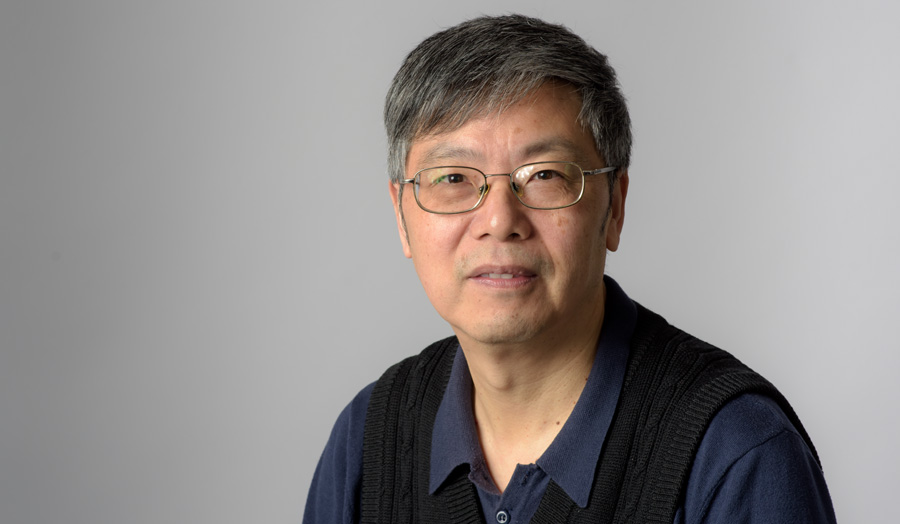
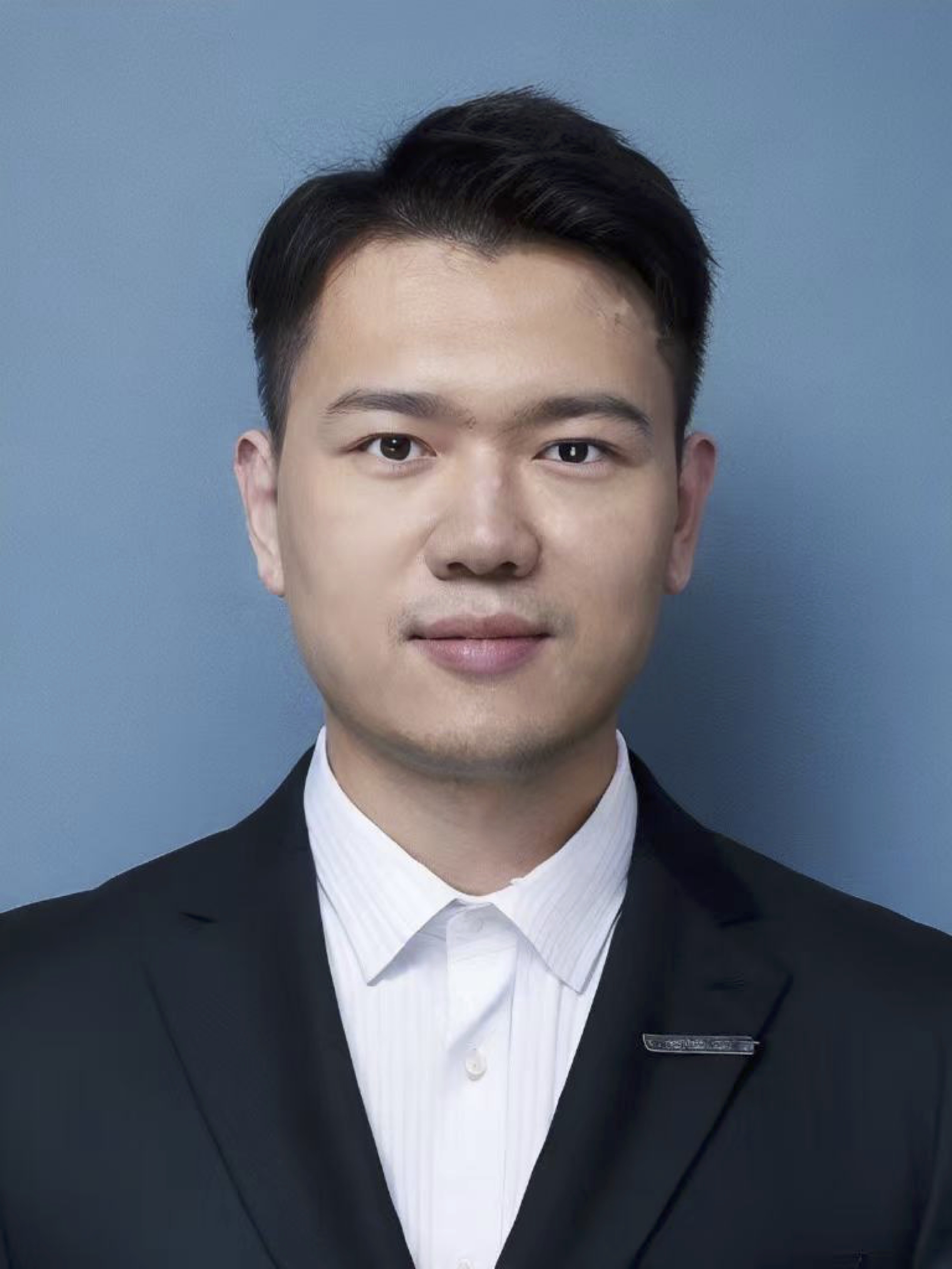
Dr. Tingkai Wang is a Senior Lecturer in the School of Computing and Digital Media at London Metropolitan University. His research focuses on mobile robots, intelligent systems, artificial intelligence, control systems, image/signal processing, and virtual reality. He teaches the Programming for Computer Science module and has led projects like the Virtual Environment and Simulation System (2000-2002) and Navigation and Control of Mobile Robots (1995-1998). His work emphasizes interdisciplinary approaches, combining expert systems, neural networks, and fuzzy logic to address challenges in autonomous systems. Notable contributions include AGV navigation algorithms, hybrid control systems, and predictive modeling. Over 30 publications span robotics, control engineering, and AI applications. He collaborates internationally and has presented at venues like the International Conference on Intelligent Systems Engineering and the IEEE Conference on Engineering in Medicine and Biology. Dr. Wang’s expertise bridges theoretical modeling and practical implementation, with applications in manufacturing automation, environmental monitoring, and industrial management systems. His current research continues exploring adaptive control mechanisms and AI-driven robotics solutions.
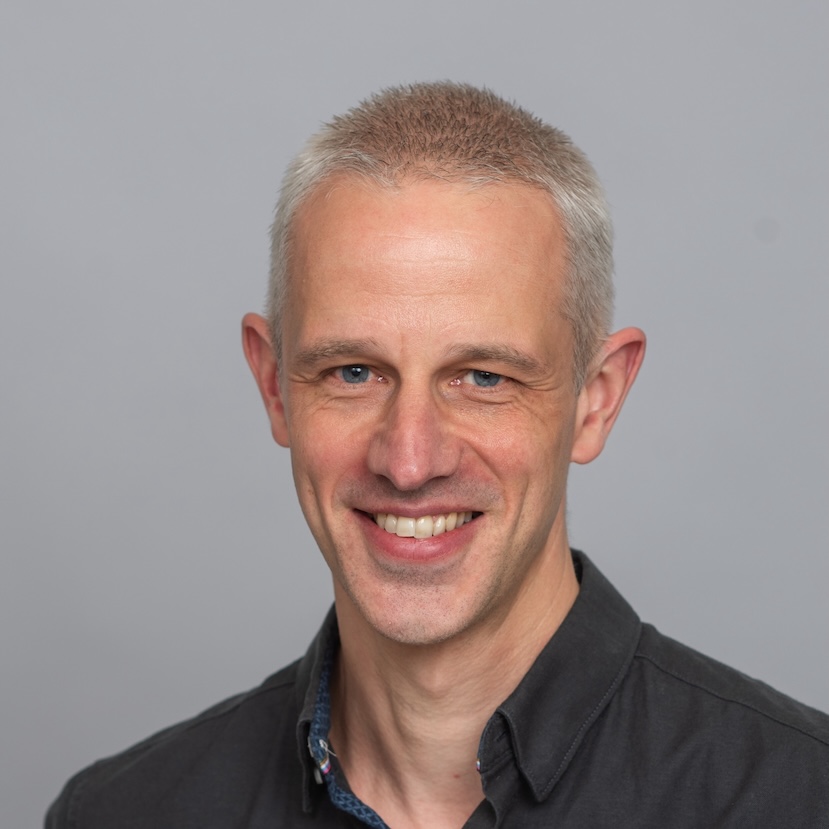
Travis Wiens is an Associate Professor in the Department of Mechanical Engineering at the University of Saskatchewan. His research focuses on fluid power systems, acoustic sensing, dynamic modeling, mining mechatronics, and artificial intelligence applications in engineering. He holds a B.Sc., M.Sc., and Ph.D. in Mechanical Engineering from the same institution, completed in 2002, 2004, and 2008 respectively. His research interests emphasize innovative solutions for hydraulic control systems, pipeline resonance reduction, and mining safety through acoustic technologies. He has developed low-cost electrohydrostatic actuators and explored additive manufacturing in valve design. Notable contributions include vibrational data communication tools for extractive industries and machine learning models for mine roof stability assessment. Dr. Wiens teaches ENGC 01A - Introduction to Fluid Power Components . His work bridges theoretical fluid dynamics with practical applications in energy efficiency, structural health monitoring, and biomimetic systems. Ongoing research trends include integrating AI with hydraulic systems and advancing non-destructive testing methods for infrastructure integrity. His publications highlight interdisciplinary approaches, combining mechanical engineering principles with computational modeling, neural networks, and mechatronics. Collaborative efforts focus on mining safety, oil and gas infrastructure, and sustainable hydraulic technologies.
David Parker is Professor of Computer Science at the University of Oxford and a Tutorial Fellow at Trinity College. His research focuses on formal verification methods for checking system correctness, particularly quantitative verification techniques for probabilistic systems. As leader of the PRISM and PRISM-games projects, he develops tools for analyzing safety, reliability, and performance properties in complex systems. Current research explores verification of AI systems, robust decision-making under uncertainty, and multi-agent systems using stochastic games. His work bridges theoretical foundations with applications in autonomous systems, robotics, and healthcare technology. Recent publications demonstrate advancements in probabilistic temporal logic, robust policy learning, and bisimulation techniques for Markov models. These works consistently emphasize formal guarantees for safety-critical applications and novel approaches to model checking. ETAPS Test-of-Time Tool Award (2024) HVC Award (2016) Professor Parker mentors PhD students in verification, control synthesis, and AI safety, with research funded by ERC, EPSRC, and industrial partners. He serves on editorial boards for Formal Aspects of Computing and ACM Transactions on Autonomous Systems.
Prof. Bayu Jayawardhana is a Full Professor in Mechatronics and Control of Nonlinear Systems at the University of Groningen, affiliated with the Faculty of Science and Engineering. He leads the Jayawardhana Group focusing on opto-mechatronics and advanced nonlinear control theories. His roles include Director of Engineering and Scientific Director of the Engineering and Technology Institute Groningen. He holds editorial positions in journals like International Journal of Robust and Nonlinear Control and European Journal of Control . Education: PhD in Control and Power Group from Imperial College London (2006), M.Eng from Nanyang Technological University (2003), and B.Eng from Institut Teknologi Bandung (2000). Research interests span opto-mechatronics for high-tech systems, nonlinear control, and systems biology. Key projects include digital twins for energy optimization, control of ocean energy systems, and modeling of cryogenic actuators for telescopes. His work integrates AI and model-based methods for high-performance systems. Notable awards include the 2016 FSE Faculty Teacher of the Year Award and the Ben Feringa Impact Award (2020). He advises on ventures like Ocean Grazer B.V. and Sencilia B.V. Teaching includes graduate courses on nonlinear control, opto-mechatronics, and fitting dynamical models to data. His research labs include the Groningen Centre for Systems and Control and the Data Science and Systems Complexity Center.
Vijay K. Shah is an Assistant Professor in the Electrical and Computer Engineering Department at North Carolina State University, leading the NextG Wireless Lab. His research focuses on advancing wireless communication and network technologies for beyond 5G/6G systems, including O-RAN architecture, spectrum management, and AI-driven network optimization. Education: Ph.D. in Computer Science, University of Kentucky (2019) Bachelor's in Computer Science and Engineering, National Institute of Technology, Durgapur (2013) Research emphasizes open radio access networks (O-RAN), mmWave testbeds, and cross-layer optimization. Recent work highlights include ORAN-Bench-13K (LLM benchmarking), ZT-RIC (zero-trust security frameworks), and Milli-O-RAN (reconfigurable mmWave networks). His contributions span O-RAN applications (xApps/rApps), satellite-terrestrial coexistence, and AI-driven positioning systems. Experimental validations include 3GPP-compliant 5G positioning and adversarial attack defenses. Publications reflect expertise in O-RAN architecture evolution, spectrum policy tools (ASCENT), and UAV-based network coordination (GLIDE). Current projects explore LEO satellite constellations and resilient disaster response networks. Labs/Teams: Head of the NextG Wireless Lab at NC State, focusing on prototype development in O-RAN, 6G, and secure AI-driven networks.
Prof. Huiyu Zhou is a Professor of Machine Learning at the School of Computing and Mathematical Sciences, University of Leicester . He leads the Biomedical Image Processing Lab (BIPL) and serves as Deputy Director of the Research Centre for Artificial Intelligence, Data Analytics and Modelling (AIDAM) , and a member of the Apollo-Leicester Centre for Digital Health and Precision Medicine (CDHPM) . Previously, he held roles as Reader at the University of Leicester and Lecturer at Queen’s University Belfast. Education: BEng in Radio Technology, Huazhong University of Science and Technology, China MSc in Biomedical Engineering, University of Dundee, UK PhD in Computer Vision, Heriot-Watt University, UK His research focuses on AI applications in biomedical imaging , robotics , and health informatics . Current projects include advancing medical image analysis, secure learning systems, and interdisciplinary collaborations in precision medicine. He chairs editorial boards for journals like IEEE Transactions on Human-Machine Systems and Pattern Recognition , and serves as Associate Editor for ICRA and Area Chair for BMVC and IJCAI. Prof. Zhou holds administrative roles such as PGR Director of CMS (2022–2025) , MSc Programme Director (2018–2019) , and coordinates MSc Distance Learning in Informatics . He reviews grants for global bodies including Horizon Europe, UKRI, and the Wellcome Trust, and assesses faculty promotions in the UK, China/HK, Israel, and others. He also acts as an external examiner for institutions across the UK, Hong Kong, Australia, India, and China. Affiliations include the National Academy of Artificial Intelligence (NAAI) and collaborations in interdisciplinary teams for digital health and AI-driven biomedical research.
Valeriy Vyatkin is a Professor at the Department of Electrical Engineering and Automation, Aalto University. His research focuses on advancing industrial automation, control systems, and their integration with emerging technologies like machine learning and digital twins. He specializes in standards such as IEC 61499, addressing interoperability, formal verification, and performance optimization in distributed automation systems. Key research interests include: Physics-informed machine learning for industrial processes (e.g., steel rolling, reservoir engineering) Formal methods for control system validation and safety-critical applications Development of adaptive automation frameworks for Industry 5.0 challenges, including human-robot collaboration and energy systems Interoperability between legacy and modern industrial standards (OPAS, OPC UA) Recent work emphasizes real-time simulation, FPGA-based control prototyping, and AI-driven solutions for energy efficiency and sustainability in manufacturing, horticulture, and process industries. Publications span topics like robotic walker design, probabilistic model checking, and decentralized learning management systems. He collaborates on EU and industry-funded projects, focusing on digital twin implementation, edge computing, and virtual commissioning. His team develops tools for automated code generation, system migration, and anomaly detection in complex industrial settings.
Miguel Ángel Sotelo Vázquez is a full Professor at the University of Alcalá, leading the INVETT Research Group (Intelligent Vehicles and Traffic Technologies). He holds the Department of Automatic Control and specializes in autonomous systems, particularly in path planning, sensor fusion, and human-vehicle interaction. His research integrates machine learning, robotics, and control theory to address challenges in intelligent transportation systems. He earned his Ph.D. in 2001 with a thesis on autonomous vehicle navigation in partially known environments. His work emphasizes real-world deployment, explainable AI, and safety-critical systems. Recent projects focus on lane change prediction, pedestrian behavior modeling, and cybersecurity for autonomous systems. Key contributions include neuro-symbolic frameworks for decision-making, real-time multi-physics field reconstruction, and cross-cultural studies of pedestrian interactions. He collaborates internationally on urban mobility resilience and hydrogen refueling infrastructure. Research Highlights : Development of knowledge graph-based prediction architectures Experimental validation of human-vehicle interaction in VR environments Creation of the SCOUT trajectory prediction framework
Jiayun (Peter) Wang is a Postdoctoral Scholar Research Associate in the Department of Computing and Mathematical Sciences at the California Institute of Technology (Caltech). His research focuses on advancing AI-driven solutions in medical imaging, computational imaging, and computer vision. Current projects emphasize applying deep learning to diagnose ocular conditions like dry eye syndrome and improving 3D reconstruction techniques. Collaborations with institutions such as UC Berkeley, Microsoft, and NVIDIA highlight his interdisciplinary approach to solving real-world medical and imaging challenges. Research Interests: Medical AI and Healthcare Analytics Deep Learning Applications in Ophthalmology 3D Reconstruction and Scene Understanding Physics-Informed Neural Networks Compressed Sensing MRI Key Contributions: Developed machine learning models predicting dry eye-related outcomes using meibography images Pioneered physics-aware neural operators for ultrasound lung aeration mapping Advanced open-vocabulary 3D object detection systems Labs/Teams: Collaborates with Caltech's AI4Health initiative and NVIDIA's research group, contributing to medical imaging advancements through interdisciplinary teams.
Edward Jones-Imhotep is a historian of the social and cultural life of machines and currently a Professor and Director of the Institute for the History and Philosophy of Science and Technology (IHPST) at the University of Toronto’s Victoria College. He is on leave as Director during 2025-26 but remains an active faculty member. PhD, Harvard University Co-editor, MIT Press’s Inside Technology series Visiting Professor, University of Paris (Panthéon-Assas) Co-founder, Toronto TechnoScience Salon His research explores the historical boundaries between technology and nature, and the relationship between machines and the self, with a focus on underrepresented histories such as the Black technological self, technological underground, and failures of technology. His work bridges Science and Technology Studies (STS), History of the Modern Physical Sciences, History of Technology, and Cultural History of Technology. Notable trends in his articles include analyses of automata, AI, and mechanical failures from the 19th to 21st centuries, alongside interdisciplinary inquiries into race, ethics, and the Cold War. He frequently collaborates with scholars like William Turkel and Tina Adcock. 2018 : Sidney Edelstein Prize for The Unreliable Nation 2017 : Abbot Payson Usher Prize for “Malleability and Machines” Edward co-edits the Inside Technology series and engages with public discourse through the TechnoScience Salon. His projects, such as The Black Androids , connect historical technological narratives to contemporary debates in robotics and AI. Labs and teams include the IHPST and the TechnoScience Salon, which facilitate humanities-based science and technology discussions.
Ellen Kuhl serves as the Catherine Holman Johnson Director of Stanford Bio-X and the Walter B. Reinhold Professor in the School of Engineering at Stanford University. She holds dual appointments as Professor of Mechanical Engineering and, by courtesy, Bioengineering, leading interdisciplinary research at the convergence of physics, computation, and biology. Her academic credentials include: Habil., TU Kaiserslautern (2004) Ph.D., University of Stuttgart (2000) M.S., Leibniz University of Hanover (1995) B.S., Leibniz University of Hanover (1993) Kuhl pioneers Living Matter Physics , developing computational frameworks that integrate physics-based modeling with machine learning to simulate biological systems across scales. Her work spans cardiovascular dynamics (including the 400-member global Living Heart Project), neurodegenerative disease progression (Alzheimer's tau pathology), and sustainable food systems (mechanics of plant/fungi-based meats). Recent innovations focus on automated model discovery using constitutive neural networks to democratize simulation tools for soft matter systems, with applications in precision medicine and climate-resilient food innovation. Her lab actively bridges engineering fundamentals with urgent societal challenges in healthcare and planetary health. Her publication trajectory reveals accelerating integration of AI with biomechanics, particularly in automated constitutive modeling for diverse tissues and food materials. Key trends include uncertainty quantification in neural networks, physics-informed machine learning for digital twins, and democratization of simulation tools for non-experts – reflecting her commitment to accessible computational science. Major recognitions include: National Science Foundation Career Award (2010) Humboldt Research Award (2016) ASME Ted Belytschko Applied Mechanics Award (2021) ERC Advanced Grant (2024) Fellowships in ASME and AIMBE As Bio-X Director, Kuhl orchestrates major interdisciplinary initiatives connecting engineering with life sciences, securing substantial funding including the 2024 ERC Advanced Grant. Her leadership extends to the US National Committee on Biomechanics and World Council of Biomechanics, while her Living Heart Project demonstrates exceptional translational impact through industry/medical partnerships across 24 countries. The Living Matter Lab operates as a nexus for high-impact research, developing computational tools that transform cardiovascular medicine, decode neurodegenerative mechanisms, and engineer sustainable food alternatives. Current projects leverage AI to accelerate plant-based meat development, model elephant-trunk-inspired soft robotics, and personalize cardiac simulations – all unified by her vision of physics-driven machine learning for global challenges.
Peng Zhou is an Assistant Professor at the School of Advanced Engineering, The Great Bay University , and the Principal Investigator of the Embodied Manipulation Intelligence (EMAIL) Robotics Lab . His research integrates robotics, machine learning, and computer vision, with a strong focus on deformable object manipulation, robot perception, and task-motion planning. Education: Ph.D. in Robotics, The Hong Kong Polytechnic University (Supervised by Dr. David Navarro-Alarcon) Postdoctoral Research Fellow, The University of Hong Kong (Advised by Dr. Pan Jia) Exchange Ph.D. Student, KTH Royal Institute of Technology (Supervised by Prof. Danica Kragic) Research Interests: Dr. Zhou's work spans robotics , machine learning , and computer vision , with specialized expertise in deformable object manipulation , robot perception and learning , and task and motion planning . His lab, EMAIL, pioneers solutions for robotic manipulation of soft and deformable materials. Scientific Awards & Honors: 2024 : Track 3 Champion, Zhuhai International Dexterous Manipulation Challenge 2023 : IEEE R10 Outstanding Volunteer Award 2022 : Outstanding Young Researcher Award, National Engineering Research Center 2022 : Best AI Implementation Award, Hong Kong AI Open Competition 2022 : IEEE MGA Young Professional Achievement Award Editorial & Leadership Roles: Dr. Zhou serves as an Associate Editor for IEEE Robotics and Automation Letters and has organized key workshops like the IROS 2025 Workshop on Contact and Impact-aware Manipulation . He is also a Guest Editor for special issues in Electronics and Frontiers in Robotics and AI .
Prof. Dr.-Ing. Jürgen Teich is a full Professor and Chair for Hardware-Software Co-Design at the Department of Computer Science, Friedrich Alexander University Erlangen-Nuremberg (FAU). He serves as Head of Department Computer Science and Vice Dean of the Technical Faculty since August 2024, and has been Speaker of the FAU Research Center Embedded System Initiative (FAU ESI) since 2023. His educational background includes: Diploma degree in Electrical Engineering, University of Kaiserslautern (1989) Dr.-Ing. degree in Electrical Engineering, University of Saarland (1993) Habilitation (PD Dr.-Ing.) entitled "Synthesis and Optimization of Digital Hardware/Software Systems" (1996) Prof. Teich's research focuses on Embedded Systems , Invasive Computing , Hardware-Software Co-Design , and Reconfigurable Computing . His work spans from theoretical foundations to practical implementations, with particular emphasis on resource-constrained systems, many-core architectures, and energy-efficient computing. He has pioneered research in invasive computing paradigms that enable more efficient use of many-core processors by allowing applications to dynamically claim resources. His recent publications reveal a strong trend toward energy-efficient AI deployment on embedded devices , security of embedded systems , and novel memory technologies . There's a clear focus on practical implementations of machine learning on microcontrollers (TinyML), hardware acceleration for data processing, and innovative approaches to power management in self-powered systems. Among his notable scientific awards are: IEEE Fellow (since 2018) Member of Academia Europaea, Section Informatics (since 2011) Member of the National Academy of Science and Engineering (acatech) (since 2018) Member of the German Society of Humboldtians (since 2021) Prof. Teich has been Principal Investigator for numerous DFG-funded projects including SFB/Transregio 89 "Invasive Computing" (2010-2022), SFB 694, and multiple priority programs. He has coordinated large collaborative research efforts across Germany and internationally, with significant funding from DFG and other sources. His research group has produced influential work in embedded systems design and co-design methodologies. He leads the Hardware-Software Co-Design research group at FAU, which focuses on innovative approaches to embedded system design, invasive computing architectures, and efficient implementation of machine learning on resource-constrained devices. The group maintains strong collaborations with industry partners including Intel, Xilinx, and automotive companies.
Suren Jayasuriya is an Associate Professor at Arizona State University's The GAME School, with joint appointments in the School of Electrical, Computer and Energy Engineering (ECEE) and the Department of Arts, Media and Engineering (AME). He is also an Affiliate Faculty Member at the Mary Lou Fulton College for Teaching and Learning Innovation. His lab, the Imaging Lyceum, focuses on transdisciplinary research bridging computational imaging, computer vision, sensors, and STEAM education. Education Ph.D. Electrical and Computer Engineering, Cornell University (2017) M.S. Electrical and Computer Engineering, Cornell University (2015) B.S. Mathematics, University of Pittsburgh (2012) B.A. Philosophy, University of Pittsburgh (2012) Research Focus Dr. Jayasuriya's work integrates optics, computational photography, and machine learning to develop novel imaging systems. His research spans: Computational cameras and light transport analysis Atmospheric turbulence modeling and video restoration Neural volumetric reconstruction for sonar/radar STEAM education frameworks for K-12 teachers Philosophical aspects of imaging and representation His lab emphasizes interdisciplinary collaboration across engineering, arts, and humanities. Publication Trends Recent publications demonstrate strong focus on computational imaging (45%), AI/ML applications (30%), and educational technology (25%). Dominant themes include turbulence mitigation in videos, neural rendering for sonar/radar, sensor fusion, and AI curriculum development for middle schools. Work frequently appears in top venues like CVPR, SIGGRAPH, and IEEE Transactions. Awards Image Electronics Technology Excellence Award (IIEEJ, 2021) Best Demo Awards: IEEE ICCP 2019, MIRU 2018 Best Paper Award: IEEE ICCP 2014 ASEE Diversity Paper Finalist (2020) Teaching Honors: Fulton Top 5% Award (2019, 2021), ASU Game Changing Faculty (2021) Teaching & Advising Teaches graduate/undergraduate courses including Machine Vision (EEE 515), Minds and Machines (AME 400), and thesis supervision. Leads NSF-funded projects on computational imaging education and AI teacher training. Mentors students through the Imaging Lyceum lab with projects spanning optics, philosophy, and educational technology. Lab & Collaborations Directs the Imaging Lyceum, emphasizing Aristotle-inspired collaborative research. The lab works on: computational cameras, STEAM education, sensor development, and philosophical inquiries into imaging. Collaborates with Carnegie Mellon Robotics Institute and international partners. Funded by NSF, NEH, and industrial partners for projects in sonar imaging, heat resiliency sensing, and educational AI.
Maurizio Martina is a Full Professor at the Department of Electronics and Telecommunications (DET) of Politecnico di Torino. He is a member of the Interdepartmental Center PEIC - Power Electronics Innovation Center and serves as an Associate Editor for the IEEE Transactions on Circuits and Systems I (2018-2023). His research focuses include: Digital circuits and signal processing Machine learning hardware architectures RISC-V extensions and post-quantum cryptography VLSI design for edge computing and IoT Recent publications emphasize cryptographic hardware implementations (CHIMERA, Keccak co-processors), RISC-V integration methodologies, and privacy-preserving neural network frameworks. His work spans VLSI architectures for video processing, bio-inspired electronics, and error correcting codes, with applications in cybersecurity, robotics, and biomedical systems. Scientific Recognition : Premio Nazionale Innovazione (2013) Premio dei Premi (2014) He supervises 12 PhD students across cycles 35-40 in Electrical, Electronics and Communications Engineering, including: Valeria Piscopo (2024-in progress) Alessandra Dolmeta (2022-in progress) Luigi Giuffrida (2022-in progress) Walid Walid (2019-2023) As part of the VLSILAB Group , his research explores hardware accelerators for machine learning, post-quantum cryptography on RISC-V, and bio-inspired embedded systems. Teaching activities include courses on Integrated Systems Architecture and Hardware & Wireless Security at Politecnico di Torino and Università di Pavia.