Victor R. Leeمشاهده پروفایل
دانشیار
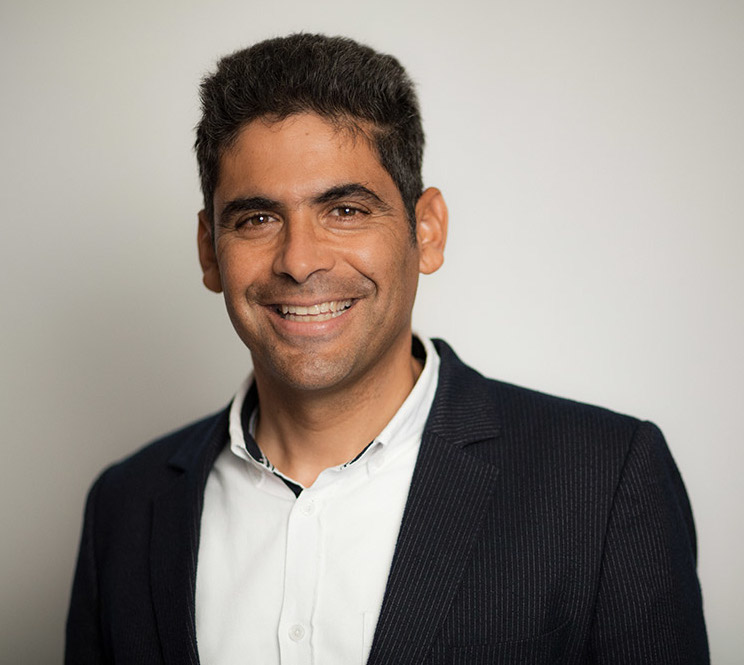
Victor R. Lee serves as an Associate Professor at Stanford University's Graduate School of Education, with his office located at CERAS Building (520 Galvez Mall, Suite 531) in Stanford, California. He is actively affiliated with the Center for Studies in Education and Technology (CSET), where he conducts interdisciplinary research at the intersection of technology and learning. Dr. Lee holds a Ph.D. in Learning Sciences from Northwestern University and earned dual Bachelor's degrees in Cognitive Science and Mathematics from the University of California, San Diego. His academic trajectory bridges technical disciplines with educational research, establishing a foundation for his work in data-intensive learning environments. His research program centers on two interconnected domains: data literacy development in K-12 contexts and STEM education innovation across diverse learning spaces. He investigates how individuals make meaning from data during inquiry-based learning, with particular emphasis on self-collected student data and the epistemological challenges of data sense-making. Concurrently, his STEM education work spans traditional classrooms, makerspaces, computer labs, and school libraries, examining engaged learning practices and conceptual change in mathematics and science. Current projects focus on identifying the specialized knowledge teachers require to effectively scaffold student interactions with complex real-world datasets. Recent publications (2023-2024) reveal a strategic pivot toward artificial intelligence education, examining both teacher preparation and student understanding of AI systems. His work demonstrates consistent methodological rigor through design-based research, classroom implementations, and analysis of student reasoning patterns, particularly regarding how learners conceptualize algorithmic processes in platforms like YouTube. As a core faculty member within CSET, Dr. Lee collaborates with multidisciplinary teams to develop and evaluate educational interventions that bridge theoretical learning sciences with practical classroom applications, with recent emphasis on AI literacy tools and data-enabled pedagogical approaches.