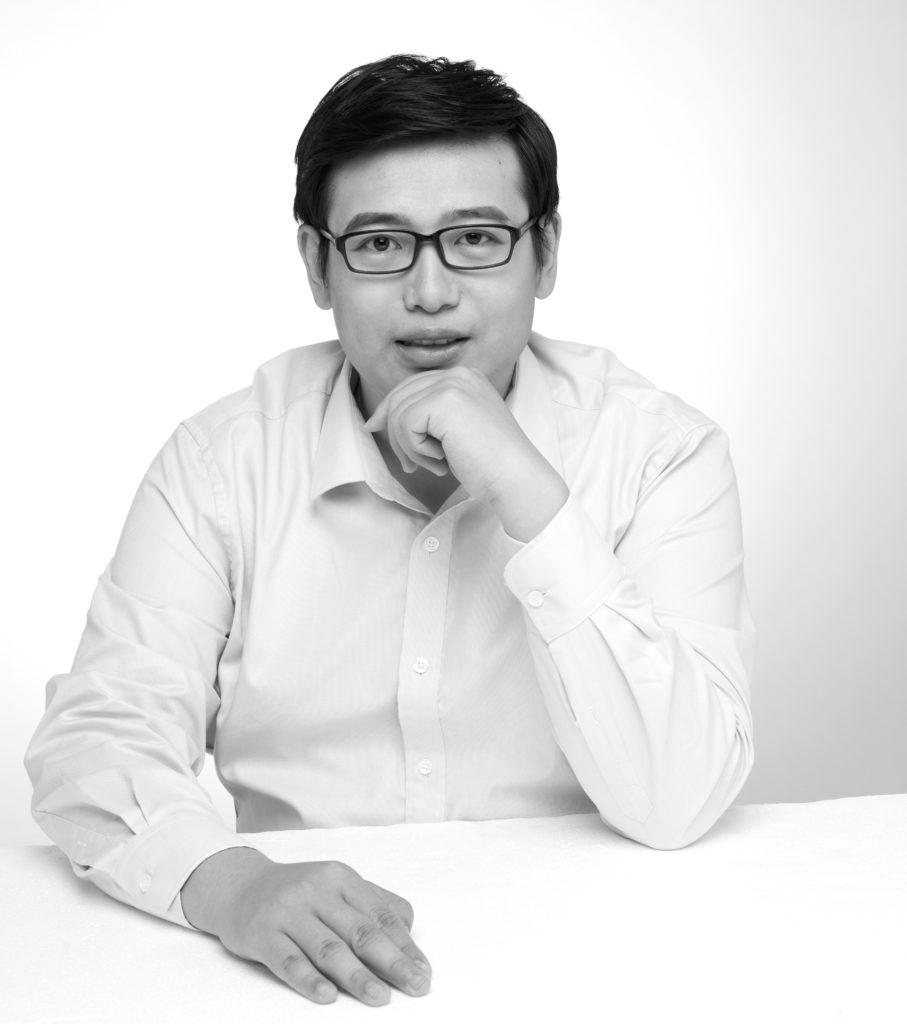
Fabio Palomba is an Associate Professor at the Department of Computer Science , University of Salerno, Italy. He earned a European PhD in Management & Information Technology (2017), funded by University of Salerno and University of Molise, under advisor Prof. Andrea De Lucia. His research spans software maintenance and evolution , empirical software engineering , and ML systems quality . Recipient of IEEE Computer Society Best PhD Thesis Award (2017) Multiple Distinguished Paper Awards from ACM/SIGSOFT and IEEE/TCSE Recipient of prestigious SNSF Ambizione grant (2019) and IEEE Rising Star Award (2023) His work investigates fairness-aware practices in ML , technical debt in AI systems , and LLM applications in software engineering . Recent studies focus on automated requirements generation via RECOVER, quantum software engineering , and socio-technical community smells in ML-enabled systems, with empirical analyses across large datasets. Key editorial roles include Elsevier's Information and Software Technology Journal (2022-), Springer's Empirical Software Engineering Journal (2021-), and IEEE Transactions on Software Engineering (2020-). He has served as program co-chair for SANER 2024 , ICPC 2021 , and multiple conference tracks. 16 Distinguished Reviewer Awards for his refereeing work Co-authored 80+ journal papers , 100+ conference papers , and advised 300+ theses
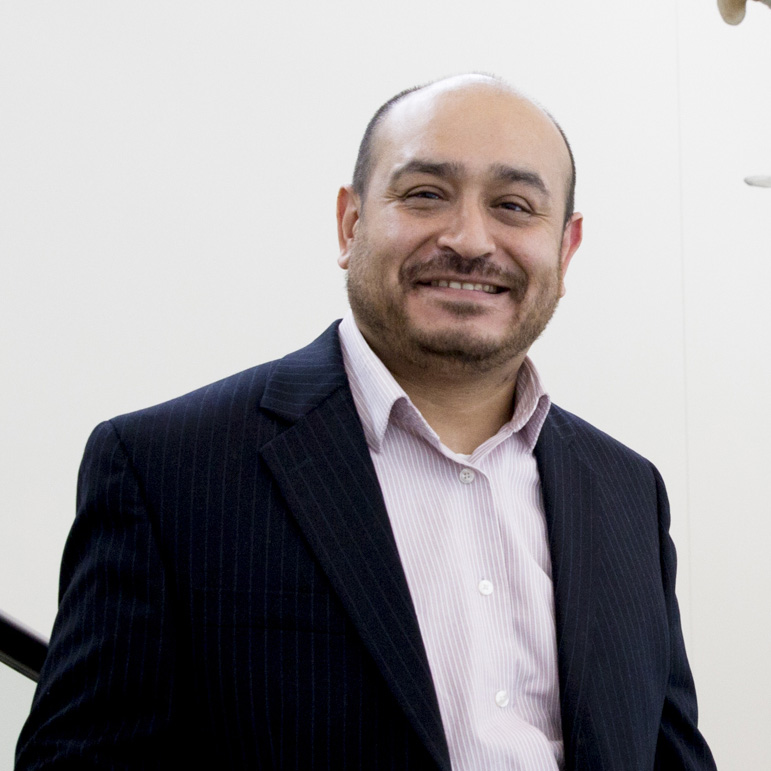
Pierre-Yves Schobbens is a Full Professor at the University of Namur, Faculty of Computer Science, specializing in software verification and formal methods. He serves as the Director of the Research Group on the Foundations of Computer Science (FOCUS) and holds leadership roles including President of the Research Center on Information Systems Engineering (PReCISE), Chair of the International Affairs Commission for the Faculty of Computer Science, and Chair of the Doctoral Commission for Exact Sciences at the university. Education: Bachelor in Philosophy, Université Catholique de Louvain (UCL), 1982 Master in Applied Mathematics and Economics, UCL, 1983 Master in Computer Engineering, UCL, 1984 Doctorate in Computer Science, UCL, 1992 Research Interests: Professor Schobbens specializes in software product lines, software verification, formal methods, agent-oriented software, and model checking. His research focuses on developing rigorous approaches for software development and verification, particularly in the context of variability-intensive systems. He has made significant contributions to the field of featured transition systems, which enable the verification of software product lines. His work bridges theoretical computer science with practical applications, addressing challenges in real-time systems, adaptive software, and database performance. Recent research directions include applying artificial intelligence techniques to software quality assurance, energy-aware computing, and the development of context-aware systems. Research Trends: Professor Schobbens' recent publications demonstrate a strong focus on the intersection of formal methods and emerging technologies. His work increasingly incorporates AI and machine learning techniques to address traditional software engineering challenges, particularly in software verification and testing. There's a notable emphasis on energy efficiency in computing systems, variability modeling for database performance testing, and the application of formal methods to self-adaptive systems. His research maintains a strong theoretical foundation while addressing practical concerns in software development. Scientific Awards: Most Influential Paper Award, VAMOS 2024 (ten-year award) Most Influential Paper Award, Software Product Lines Conference 2020 Most Influential Paper Award, International Requirements Engineering Conference 2016 Best Presentation Award, SAFECOMP 2012 Advising and Grants: Professor Schobbens has supervised 94 students across various levels. He leads multiple significant research projects including SQUAL.AI (Software Quality through Artificial Intelligence, 2025-2026), ERNEST (schEduler foR eNErgy autonomouS ioT, 2024-2025), and CYBEREXCELLENCE (Cyber Security Excellence project within the Walloon Region, 2022-2027). His research has been consistently funded since 1999, demonstrating sustained impact and relevance in his field. Laboratories and Research Teams: Professor Schobbens directs the Research Group on the Foundations of Computer Science (FOCUS) and is a key member of the Research Center on Information Systems Engineering (PReCISE). He also contributes to the Namur Digital Institute (NADI) and Namur Research Institute for Life Sciences (Narilis). His research group focuses on formal methods for software engineering, particularly addressing challenges in software product lines, model checking, and adaptive systems.
Professor Graham Morgan is a distinguished faculty member at Newcastle University's School of Computing, where he serves as a Professor in the Department of Computer Science. His research spans multiple domains within computer science with a particular focus on distributed systems, Internet of Things technologies, and the application of gaming technologies to healthcare solutions. He leads several research projects and collaborates extensively with both academic and industry partners across multiple disciplines. Professor Morgan's primary research interests include distributed systems architecture, software transactional memory, IoT simulation frameworks, and the development of serious games for health applications. His work has pioneered approaches that bridge computer science with healthcare, particularly in developing video game-based rehabilitation systems for stroke patients and other therapeutic applications. His recent work has expanded into explainable AI, 6G networking, and advanced simulation techniques for IoT environments. Professor Morgan's publication record demonstrates a clear evolution from foundational work in distributed systems and transactional memory to more applied research in healthcare technology and IoT. His most recent publications (2023-2026) show a strong focus on simulation frameworks for IoT and osmotic computing, explainable AI systems, and the application of AI in clinical decision support. He has developed several notable simulation tools including SimulatorOrchestrator, IoTSimSecure, and SimulatorBridger that address critical challenges in networked systems and healthcare delivery. Principal Investigator for multiple research grants in IoT and healthcare technology Supervisor for numerous PhD and Master's students in computer science Collaborator with healthcare professionals on clinical decision support systems Developer of simulation frameworks for IoT and osmotic computing environments Researcher in AI-enabled clinical decision aids and healthcare applications Professor Morgan leads research teams focused on IoT simulation, serious games for health, and explainable AI. His laboratory develops simulation tools that address real-world challenges in networked systems, energy efficiency, and healthcare delivery. Current projects include the development of 6G-ready simulators, deepfake detection systems, and AI decision aids for clinical settings. He maintains strong collaborations with medical professionals, particularly in stroke rehabilitation and clinical decision support, ensuring his technical research has direct healthcare applications.
Karl Norrman is an Industry doctoral student and Researcher at the Department of Theoretical Computer Science (TCS) at KTH Royal Institute of Technology, concurrently working as a Security Researcher at Ericsson Research since 2001. His academic appointment at KTH is part-time (20% time allocation), while he spends the majority of his time (80%) at Ericsson, where he holds the formal title of Expert Mobile Network Security. He is supervised by Professor Mads Dam for his doctoral studies and receives partial research funding from the Wallenberg AI, Autonomous Systems and Software Program (WASP). His educational background includes: PhD candidate in Computer Science at KTH Royal Institute of Technology, Department of Theoretical Computer Science (ongoing). Research focuses on formal modeling and proofs for cryptographic protocols using pen-and-paper proofs and mechanized proof-support tools such as Tamarin and EasyCrypt. Master's degree in Computer Science from Stockholm University, Department of Mathematics (2001). Thesis: "RTP Security in 3G Networks." During this work, he contributed to the development of the Secure Real-time Transport Protocol (SRTP), standardized in IETF as RFC 3711. Norrman's research centers on formal methods for security protocol verification , with particular expertise in cryptographic protocol analysis, modeling, and mechanized proof techniques. His work bridges theoretical computer science and practical security applications, focusing on making formal verification tools accessible for industrial adoption. Key research areas include 5G/6G security architectures, privacy-preserving mechanisms for mobile networks, authentication and key agreement protocols, and software security. He advocates for "goal oriented and motivated security designs" that balance theoretical rigor with practical implementation constraints while specializing in translating complex security requirements into implementable solutions for telecommunications infrastructure. Analysis of Norrman's publication history reveals a consistent evolution from foundational work on SRTP (2002-2007) through LTE security analysis (2014-2015) to pioneering 5G security research (2016-2020) and now 6G security exploration (2024). His work demonstrates methodological progression from analyzing existing protocols to designing novel security mechanisms and developing verification frameworks like OpenSAW. A distinctive pattern is his focus on industrial applicability —ensuring theoretical security models translate to real-world implementations, particularly evident in his work on USIM-compatible protocols and error-correcting authentication for noisy wireless channels. Recent publications increasingly address cross-domain challenges like secure federated learning in mobile networks, reflecting the expanding scope of telecommunications security. Professional engagement: Reviewer for ACM CCS 2023, EURO S&P 2023, ACM CCS 2022, NordSec 2022, Vietcrypt 2006, IEEE Telecommunications Journal Active contributor to 3GPP security standardization processes Co-author on multiple Ericsson whitepapers shaping industry security practices Norrman maintains a unique dual affiliation that enables direct translation of academic research into industrial security solutions. At KTH, he contributes to the Theoretical Computer Science group's formal methods research, while at Ericsson he applies these techniques to real-world security challenges in mobile network development. His work on OpenSAW exemplifies this bridge between academia and industry, creating practical tools for automated security testing of component-based software systems. This position allows him to identify emerging security challenges in next-generation networks while maintaining theoretical rigor in his approach.
Chuang Gan is a distinguished researcher holding dual positions as a Principal Research Staff Member at the MIT-IBM Watson AI Lab and an Assistant Professor at the University of Massachusetts Amherst. His work bridges academic research and industrial applications in artificial intelligence, with particular focus on advancing the frontiers of computer vision and multimodal learning systems. Dr. Gan's research interests span multiple interconnected domains within artificial intelligence. He specializes in video understanding, with deep expertise in representation learning, neural-symbolic visual reasoning, audio-visual scene analysis, and embodied intelligence. His work frequently integrates graph deep learning techniques with neuro-symbolic approaches to create more interpretable and robust AI systems. The recurring themes across his research portfolio include developing models that can understand physical dynamics from visual inputs, creating systems capable of embodied reasoning, and building bridges between symbolic and neural approaches to artificial intelligence. His publications reveal a strong trend toward increasingly sophisticated multimodal systems that integrate visual, auditory, and linguistic information. Over time, his work has evolved from basic video understanding tasks to complex embodied reasoning systems capable of physical simulation, 3D scene understanding, and multi-agent collaboration. A notable pattern is the progression from analyzing static scenes to understanding dynamic physical interactions and embodied agent behaviors in increasingly complex environments. Microsoft Fellowship Baidu Fellowship Dr. Gan's research has received significant recognition from major technology companies through prestigious fellowships and has been widely covered by leading media outlets including CNN, BBC, The New York Times, WIRED, Forbes, and MIT Tech Review. His work at the MIT-IBM Watson AI Lab provides him with access to substantial resources for cutting-edge AI research, while his academic position enables him to train the next generation of AI researchers. His collaborations with prominent researchers like Antonio Torralba demonstrate his integration within the top echelons of the computer vision and AI research community. At the MIT-IBM Watson AI Lab, Dr. Gan leads research initiatives focused on advancing video understanding and embodied intelligence. His work contributes to the lab's mission of developing AI systems that can perceive, reason about, and interact with the physical world in more human-like ways. His research group likely focuses on developing novel architectures for multimodal learning, creating benchmarks for physical reasoning, and building systems that can transfer knowledge between simulation and real-world environments.
Arthur G Richards serves as Professor of Robotics and Control within the Dynamics and Control department at the University of Bristol's School of Engineering Mathematics and Technology. His research specializes in trajectory optimization for aerospace applications, focusing on UAV autonomy, spacecraft rendezvous, and air traffic management through advanced optimization techniques. His educational foundation includes an M.Eng. from the University of Cambridge and S.M./Ph.D. degrees from MIT. Research interests center on solving complex aerospace challenges through: Non-convex optimization for obstacle avoidance in cluttered environments Robust model predictive control for real-time disturbance compensation Distributed optimization enabling large-scale vehicle cooperation Scalable algorithms for high-traffic scenarios with minimal fuel consumption Analysis of his 132 research outputs reveals evolving emphasis on reliability-aware UAV path planning, interpretable reinforcement learning for aircraft control, and swarm robotics with real-world validation. Recent work increasingly integrates machine learning with traditional control theory while addressing practical constraints like sensor noise and system failures. Professor Richards has supervised 22 research students and secured funding for 11 projects, including the active Aerial Robotics for Search and Rescue (2022-2026) and PORTAL (2022-2024) initiatives. His industry collaborations with Thales and focus on technology transfer demonstrate strong academic-industrial integration. He actively contributes to the Smart Networks for Sustainable Futures and Robotics research groups, developing frameworks for multi-robot systems that balance theoretical rigor with practical deployment requirements in conservation, inspection, and exploration scenarios.
Erik Otárola-Castillo is an Associate Professor in the Department of Anthropology at Purdue University, where he joined the faculty in 2015 and was promoted to Associate Professor. His interdisciplinary work bridges archaeology, human evolutionary biology, and biostatistics, focusing on prehistoric and modern hunter-gatherer populations and their responses to environmental change. His educational background includes: Ph.D. in Anthropological Science, Stony Brook University M.A. in Anthropology, Iowa State University B.A. in Anthropology, Stony Brook University Dr. Otárola-Castillo specializes in the evolution, ecology, and diversity of behavior in hunter-gatherer societies, with particular emphasis on climate change impacts and food availability effects on early North American native diets. As a computational anthropologist, he develops quantitative tools including 3D morphometrics software, statistical models for zooarchaeologists, and spatio-temporal analysis frameworks. His research integrates Geographic Information Systems (GIS) and Bayesian statistics to address core archaeological questions of space, time, and form, with applications ranging from bone surface modification analysis to human-megafauna interactions. Recent publications reveal a strong methodological trend toward Bayesian inference for archaeological hypothesis testing and computational morphometric analysis of artifacts and skeletal remains. Key thematic areas include lithic technology standardization, subsistence intensification mechanisms among Great Plains hunters, and health impacts of urbanization on indigenous Peruvian populations, demonstrating consistent application of quantitative rigor across diverse anthropological contexts. He is recognized as an international authority, evidenced by an invitation to contribute a review on Bayesian approaches to the Annual Review of Anthropology (2018). His work appears in high-impact journals including The Proceedings of the National Academy of Sciences (PNAS) and PLoS One. Dr. Otárola-Castillo directs the Laboratory for Computational Anthropology and Anthroinformatics (LCA), which develops open-source tools like geomorph and zooaRch for anthropological research. The lab's work enables advanced morphometric analysis and zooarchaeological quantification, supporting collaborative projects worldwide through computational innovation in data collection, analysis, and visualization.
Professor Song Jae-seung is affiliated with Sejong University in the Department of Information Security , where he leads the Software Engineering and Security Lab . His academic rank is Professor , with a focus on Internet of Things (IoT) , Machine-to-Machine (M2M) Communications , and Software Security . Research spans IoT/6G networking , Air-gap security , Semantic smart cities , and AI-driven security frameworks Active in international standardization via oneM2M and TTA PG 308 Serves as journal editor and conference TPC member for IEEE events Developed cloud-based conformance testing and optical attack analysis techniques Recent publications address 6G IoT interworking , XR services , and air-gap defense , reflecting trends in smart city security and AI-enabled IoT . No students or awards are explicitly listed in the provided data.
Professor Geoff Webb is a world-leading data scientist at Monash University , serving as Director of the Monash University Centre for Data Science within the Faculty of Information Technology . His research focuses on leveraging data science to enable evidence-based decision making and derive actionable insights through artificial intelligence, machine learning, and big data analytics. Core expertise in data mining , bioinformatics , and computational biology Developed Magnum Opus software and contributed to the Weka machine learning workbench Recipient of the Eureka Prize for Excellence in Data Science and leadership roles in major data mining conferences Research Interests Professor Webb's work spans artificial intelligence , machine learning , and data analytics , with a focus on black-box user modelling , interactive data analytics , and statistically-sound pattern discovery . His recent publications highlight advancements in Bayesian networks , time series analysis , and genomic data interpretation , demonstrating his interdisciplinary impact. Scientific Contributions AI in healthcare : EHR-ML framework for clinical records analysis Biological applications : KcatNet for enzyme prediction, PFresGO for protein function Data mining innovations : OPUS search algorithm, proximity forest techniques As a technical adviser to data science company Froomle , he bridges academic research with real-world applications. His work has been recognized through numerous research awards and leadership as Editor-in-Chief of Data Mining and Knowledge Discovery for a decade.
Pedro Ribeiro is a Lecturer at the Department of Computer Science , University of York. His research focuses on formal specification and verification of cyber-physical and autonomous systems, particularly using model-based approaches with domain-specific languages like RoboChart. His work addresses heterogeneous formal semantics to capture complex system behaviors, including timing, concurrency, and continuous dynamics. Recent publications highlight verification of robotic autonomous systems, safety assurance frameworks, and algebraic models for concurrency. Quantum computation Formal verification Concurrency theory Model-driven engineering He contributes to the development of tools like RoboTool and RoboStar, enabling combined proof, simulation, and testing for robotics applications.
Mayur Naik is the Misra Family Professor in the Department of Computer and Information Science at the University of Pennsylvania's School of Engineering and Applied Science. He holds office in Room 642B, Amy Gutmann Hall and maintains an active research program focused on the intersection of programming languages and artificial intelligence. Before joining UPenn, he was faculty at Georgia Institute of Technology and a researcher at Intel Labs, Berkeley. Naik received his PhD in Computer Science from Stanford University in 2008 under Alex Aiken, a Masters from Purdue University in 2003 under Jens Palsberg, and a Bachelors from BITS Pilani in 1999. He grew up in Goa, India. His primary research interests center around neurosymbolic programming, which combines symbolic reasoning with machine learning to create more accurate, interpretable, and domain-aware AI systems. His group develops language design, learning algorithms, and compiler optimizations in this space, with their most mature effort being the Scallop neurosymbolic programming language and compiler toolchain. He also conducts research in trustworthy AI for healthcare applications and AI-enabled programming tools that improve programmer productivity. Analysis of his recent publications shows a strong trend toward neurosymbolic programming frameworks (Scallop, TorchQL), LLM-assisted program analysis (IRIS), and applications of these techniques to security, healthcare, and computer vision. His work consistently bridges theoretical foundations with practical implementations, often releasing open-source systems. Misra Family Professor (endowed chair, effective July 2024) Multiple distinguished paper awards (PLDI 2019, FSE 2015, PLDI 2014) Test-of-Time Paper Awards (FSE 2013, FSE 2012, EuroSys 2011) His student Elizabeth Dinella won the 2025 ACM SIGSOFT Outstanding Dissertation award Naik has advised numerous PhD students who have gone on to faculty positions at top institutions including Peking University, University of Toronto, Ashoka University, Bryn Mawr College, and Johns Hopkins University. His research is supported by grants from NSF, Google, Amazon, and other industry partners. His lab maintains active collaborations with clinicians and bioinformatics researchers to apply neurosymbolic programming to healthcare problems. His research group, which includes current PhD students and postdocs, develops practical open-source systems and applies them to diverse domains including computer vision, cybersecurity, medicine, and bioinformatics. The group maintains strong industry connections with Google, Microsoft, Amazon, and other tech companies.
Thorsten Berger is a Professor and Head of the Chair of Software Engineering at Ruhr University Bochum, Germany. His office is located at MC 4.101 on the RUB campus, with contact details including phone (+49 (0) 234 32 25975) and email (thorsten.berger@rub.de). He's an active researcher with extensive service in the software engineering community, serving on program committees for major conferences including ICSE, FSE, ASE, and SPLC. Professor Berger's research primarily focuses on software engineering with specialization in variability management, software product lines, and robotics software engineering. His work bridges theoretical foundations with practical applications, particularly in behavior trees for robotic systems, configuration management, and domain-specific language engineering. His interdisciplinary approach connects software engineering with control theory and machine learning applications. Analysis of his recent publications reveals a strong trend toward robotics software engineering, with increasing focus on behavior trees, test-case specification, and runtime verification for robotic systems. His work also shows growing interest in machine learning integration with traditional software engineering practices, particularly in model integration and asset management for ML-enabled systems. The research demonstrates consistent evolution from foundational work in variability management toward more applied domains. His scientific achievements have been recognized with numerous awards: Multiple Most Influential Paper Awards (SLE 2024, VaMoS 2023, VaMoS 2020) Wallenberg Academy Fellowship VR Starting Grant from Swedish Research Council (2016) Best Paper Awards at Modularity (2015) and CSMR (2013) Distinguished Reviewer Awards from ASE, ICSE, and SPLC conferences ERC Starting Grant finalist (2019, 2020) Professor Berger has secured substantial research funding as Principal Investigator for multiple projects including Novel Techniques for Data-Driven Root-Cause Analysis and Variability Management (Volkswagen Infotainment), Properties and Verification Techniques for Behavior Trees (Phoenix Contact Foundation), and PrivacyE2E framework for AI-enabled systems (Federal Ministry of Education and Research). His Wallenberg Academy Fellowship and VR Starting Grant demonstrate his capacity to attract competitive early-career funding. He leads the Virtual Platform project funded by the Swedish Research Council and participates in EU-funded initiatives like CO4ROBOTS. As Head of the Chair of Software Engineering at Ruhr University Bochum, he leads a research group focused on advanced software engineering techniques with particular emphasis on variability-intensive systems. His team actively participates in international research collaborations including the Wallenberg Autonomous Systems Program (WASP) and has organized significant events like the Dagstuhl seminar 19191 on 'Software Evolution in Time and Space: Unifying Version and Variability Management.'
Matteo Camilli is an Associate Professor in the Department of Electronics, Information and Bioengineering (DEIB) at Politecnico di Milano, Italy, where he leads research in software engineering and verification. His academic journey includes positions as Assistant Professor at Free University of Bozen-Bolzano and postdoctoral research at the University of Milan and University of Bergamo. His educational background includes a PhD in Computer Science (2015), MSc in Computer Science (2012), and BSc in Computer Science (2009), all from the University of Milan. His doctoral research focused on combining advanced abstraction techniques and big data approaches to address state explosion problems in formal verification. Camilli's research primarily centers on software verification, testing, and methods to improve dependability of autonomous, cyber-physical, service-based, and ML-enabled critical systems. His work spans formal methods, model-based testing, uncertainty quantification, and design-time/runtime verification with applications to complex distributed systems. His recent publications reflect a growing focus on explainable self-adaptation, quality assurance for LLM-based systems, and managing uncertainty in adaptive systems. His publication record includes papers in top journals (TOSEM, TAAS, JSS, EMSE) and conferences (ICSE, ISSRE, ICST, ICSA). He serves on program committees for prestigious conferences including ICSE, ICSA, ICST, and ECSA, and is on the steering committee for the International Workshop on Formal Approaches for Advanced Computing Systems (FAACS). Camilli actively contributes to the academic community through conference organization, including serving as Program Committee Member for numerous conferences and as Program Co-Chair for the Software Architecture track at ACM SAC. He also serves as guest editor for special issues on automated testing and dependable AI systems. His teaching portfolio at Politecnico di Milano includes Software Engineering 2, Software Engineering for Automation, and Distributed Software Development. Previously at Free University of Bozen-Bolzano, he taught Systems Engineering and Verification and Reliability for Dependable Systems.
Zhen Dong is an Associate Professor at Fudan University, China, specializing in software engineering with a focus on software reliability and security, particularly in mobile computing. Previously, he was a PostDoc and Senior Research Fellow at the National University of Singapore under the guidance of Abhik Roychoudhury. His educational background includes: PhD in Computer Science from Heidelberg University (2017), advised by Prof. Artur Andrzejak Dr. Dong's research centers on developing techniques and tools for improving software reliability and security. His work spans mobile application testing, Android security, flaky test detection, and vulnerability localization. He has made significant contributions to the field of software testing and analysis, with a particular emphasis on practical applications for mobile systems. His research bridges theoretical foundations with real-world software engineering challenges. Analysis of Dr. Dong's recent publications reveals a strong focus on leveraging AI/ML techniques for software engineering tasks, particularly using LLMs for test automation and program analysis. His work consistently addresses critical challenges in mobile computing, especially Android application reliability and security. There's a clear trajectory toward more sophisticated analysis techniques, from traditional testing methods to AI-driven approaches. His notable scientific achievements include: ACM Distinguished Paper Award at ICSE'20 Best Paper Award at AsiaCCS'21 (1/370 submissions) ASE'22 Distinguished Reviewer Award Dr. Dong serves on the Board of Distinguished Reviewers for ACM Transactions on Software Engineering and Methodology and has been an active member of numerous program committees for top software engineering conferences including ICSE, ASE, and ISSTA. His service to the academic community extends to reviewing for prestigious journals such as IEEE Transactions on Software Engineering and Methodology and ACM Transactions on Software Engineering and Methodology. His research has been supported through various academic channels, enabling him to maintain an active lab focused on software testing and analysis, particularly for mobile platforms. The lab has produced numerous tools and techniques that have influenced both academic research and industrial practice in software reliability.
Sarab Sethi is a Lecturer in the Department of Life Sciences at Imperial College London, where he develops computational approaches for biodiversity monitoring through ecoacoustics. His work integrates machine learning, sensor technology, and ecological fieldwork to address conservation challenges, particularly in tropical ecosystems. His research focuses on advancing soundscape ecology through innovative methodologies including random forest analysis of avian migration patterns, development of low-power acoustic monitoring systems, and standardization of acoustic indices. Key contributions involve demonstrating how soundscapes predict species occurrence in tropical forests and creating open-source tools like the SAFE Acoustics network for real-time ecosystem monitoring. Recent publications reveal a strong trend toward scalable biodiversity assessment solutions, with increasing emphasis on robotics-assisted surveys, virtual acoustics validation, and robust machine learning models that function effectively under noisy field conditions. His work consistently bridges theoretical ecology with practical conservation applications. Dr. Sethi actively contributes to scientific discourse through peer review for high-impact journals including Nature , Nature Reviews Biodiversity , and Proceedings of the National Academy of Sciences , demonstrating significant scholarly engagement within the ecological research community. He leads the development of critical infrastructure for ecoacoustic research, including the Acoustic Index User's Guide and validation frameworks for ecoacoustic metrics, which enable standardized biodiversity assessment across global ecosystems. His fieldwork in Malaysian Borneo provides foundational data for tropical conservation applications.