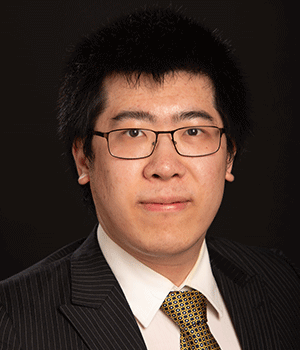
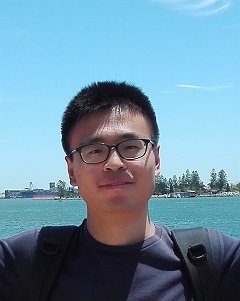
Prof. Xiaoming Fu is a Professor at the Institute of Computer Science, University of Göttingen, and Head of the Computer Networks Group. He also holds a secondary membership in the Center for Statistics. His research focuses on AI-driven networking, edge computing, federated learning, and video analytics. He teaches courses such as 'AI-Empowered Networking and Mobile Communications' and oversees multiple seminars and internships on topics like smart cities and network optimization. His work spans technical innovations in multi-agent systems, low-latency services, and resource-efficient machine learning. Recent articles highlight contributions to neural-optimized video streaming, privacy-preserving MARL, and cross-modal social media analysis. He collaborates on interdisciplinary projects involving mobility data, socioeconomic analysis, and quantum networks. Prof. Fu’s research integrates reinforcement learning, network architecture design, and distributed systems to address challenges in 5G/6G, IoT, and smart cities. His lab develops solutions for edge-cloud orchestration, video quality adaptation, and resilient resource allocation, with applications in both academia and industry.
Stephen MacNeil is an Assistant Professor at Temple University and founder of the dynamic undergraduate-driven Human-Computer Interaction (HCI) lab. His work bridges Artificial Intelligence , Computing Education , and Assistive Technologies , emphasizing community-driven design and innovative pedagogy . Focus areas: Generative AI in education, ethical implications of AI, and inclusive computing. Led a lab with over 55 student publications and 60 participants, fostering mentorship and resilience. Research Trends : Recent publications highlight Stephen's exploration of Large Language Models (LLMs) in programming education, AI-driven feedback systems , and assistive technologies for neurodiverse learners. Themes include ethical AI, collaborative learning, and mitigating biases in AI applications. Labs & Mentorship : Stephen's Temple HCI Lab empowers students to engage in cutting-edge research, emphasizing peer mentorship and real-world problem-solving. His lab's growth underscores his commitment to democratizing undergraduate research opportunities.
Professor Abbas Jamalipour is a distinguished academic at the University of Sydney, holding the position of Professor of Ubiquitous Mobile Networking within the School of Electrical and Computer Engineering. He earned his PhD in Electrical Engineering from Nagoya University, Japan, and is a Fellow of IEEE, IEICE, and Engineers Australia. His research focuses on wireless and mobile networking, with contributions to 5G/6G, IoT security, resilient communications, and vehicular networks. Jamalipour leads the Wireless Networking Group (WiNG) and serves as President of the IEEE Vehicular Technology Society. Research interests span resilient communication systems for disaster scenarios, IoT healthcare applications, and edge computing. He has authored eight books, over 550 technical papers, and holds five patents. Notable awards include the 2010 IEEE ComSoc Harold Sobol Award and the 2010 Royal Academy of Engineering UK Distinguished Fellowship. Jamalipour has served as Editor-in-Chief of IEEE Wireless Communications and holds leadership roles in major IEEE committees and conferences. Current projects include 4G+/5G networks, wireless-powered IoT, UAV-enabled heterogeneous networks, and vehicular network security. His research students are engaged in topics like IoT security, fog computing, and autonomous driving applications. Jamalipour’s work bridges theoretical advancements with practical implementations, emphasizing technology’s role in enhancing societal resilience and quality of life.
Glaucio de Carvalho is an Assistant Professor in the Department of Computer Science and Engineering at Brock University. He holds positions in both the Faculty of Engineering and the Department of Engineering. His research focuses on the intersection of Cybersecurity, Wireless Networks, Cloud Systems, and Critical Infrastructure, with particular emphasis on AI-driven solutions for 5G/6G networks, zero-trust security frameworks, and edge-cloud native security. He has a PhD in Computer Science from Ryerson University and a PhD in Electrical Engineering from the Federal University of Pará, Brazil. Education: Ph.D. Computer Science, Ryerson University, Canada Ph.D. Electrical Engineering, Federal University of Pará, Brazil (2005) M.Sc. Electrical Engineering, Federal University of Pará, Brazil (2001) B.Sc. Electrical Engineering, Federal University of Pará, Brazil (1999) Research interests include AI-empowered cybersecurity for 5G/6G, zero-trust architectures, security-aware resource management, and emergency response systems. His work addresses challenges in edge computing, cloud security, and wireless network dependability. Recent publications focus on 5G/6G security mechanisms, cloud firewall analysis, and energy efficiency in mobile networks. His 2020 paper on agile security in 5G won the CCCI Best Paper Award. Grants and advising details are not explicitly listed, but his work aligns with critical infrastructure security and network resilience. He maintains a personal website for further research insights.
Yan Zhang is a Professor in the Department of Informatics at the University of Oslo's Faculty of Mathematics and Natural Sciences, with a dual affiliation at Simula Research Laboratory in Oslo, Norway. Zhang leads cutting-edge research at the intersection of networking, artificial intelligence, and next-generation communication systems, with particular focus on digital twin networks, 6G technologies, and intelligent edge computing. Zhang's research interests span Internet of Things , Edge Computing , Digital Twin Networks , Wireless Communications , Vehicular Networks , and Federated Learning . Their work bridges theoretical foundations with practical implementations, addressing critical challenges in network architecture, resource optimization, and AI integration for future communication systems. Recent projects have focused on applying diffusion models to network optimization, developing secure federated learning mechanisms resistant to data poisoning, and creating energy-efficient solutions for maritime IoT networks. Analysis of Zhang's recent publication portfolio reveals a strong trend toward integrating artificial intelligence with next-generation networking infrastructure. The research demonstrates significant contributions to digital twin technology for 6G networks, with increasing focus on practical implementation challenges including location uncertainties, imperfect prediction conditions, and energy efficiency constraints. Zhang's work consistently addresses real-world deployment scenarios across multiple domains including intelligent transportation, maritime networks, and UAV swarms. Zhang has served as guest editor for special issues on Digital Twin for 6G Internet of Everything and Empowering Future Mobile Networks With Large Models, reflecting leadership in these emerging research areas. Current research directions include applying generative AI techniques like diffusion models to network optimization problems, developing robust security mechanisms for federated learning in IoT environments, and creating seamless service migration frameworks for mobile edge computing systems. Zhang's work frequently addresses the practical challenges of implementing theoretical concepts in real-world networking scenarios, with growing emphasis on energy efficiency and reliability under uncertain conditions.
Dr. Shuaiqi Shen is an Assistant Professor in Electrical Engineering at the University of Wisconsin-Milwaukee. His research covers embedded systems, edge intelligence, IoT security, and energy-efficient communications for networked applications. Current projects focus on adaptive AI for resource-constrained systems, cybersecurity in 6G networks, and efficient federated learning frameworks. Applications span connected vehicles, healthcare, and industrial IoT.
Prof. Jamal Bentahar is a Professor at the Concordia Institute for Information Systems Engineering (CIISE), part of Concordia University's Faculty of Engineering and Computer Science. His research focuses on intelligent agents, multi-agent systems, federated learning, reinforcement learning, cybersecurity, and their applications in healthcare, IoT, and autonomous systems. He leads research initiatives in AI-driven medical imaging, edge-cloud computing, and blockchain-empowered distributed systems. Key research areas include: Multi-Agent Systems: Formal verification of trust and commitments, group trust modeling, and distributed decision-making Federated Learning: On-demand client/model deployment, trust-aware optimization, and privacy-preserving frameworks Medical AI: Cardiac ultrasound analysis, CPR signal processing, and robotic telemedicine systems Edge/IoT Intelligence: UAV-enabled vehicular networks, energy-efficient LoRa gateways, and fog computing optimization His work bridges theoretical foundations (e.g., multi-valued model checking) with practical applications in healthcare robotics, smart city infrastructure, and autonomous vehicle safety. Recent publications highlight innovations in transformer-based reinforcement learning, spherical topic modeling, and explainable AI for cybersecurity. Prof. Bentahar's contributions include tools like MV-Checker for multi-valued verification and frameworks like CACTUS for cardiac ultrasound analysis. He actively publishes in top venues and serves as editor for special sections on federated learning and AI applications.
Sarogini Pease is a Lecturer in Intelligent Networks at Loughborough University, with expertise spanning AI, cyber-physical systems, and regulatory compliance in creative industries. She holds a PhD funded by EPSRC and BAE Systems, an LLB (Hons) in Law from the University of Essex, and advanced qualifications in Computer Science and Communications. Her research focuses on empowering developers and users with AI-driven tools to navigate legal challenges in AI/metaverse technologies, particularly data ownership, intellectual property, and algorithmic transparency. Key areas include semantic services, decision support systems, and interoperability frameworks for real-time regulatory compliance. Publications emphasize energy-efficient manufacturing, cyber-physical system design, and adaptive middleware for mobile networks. Notable contributions include semantic interoperability tools and embedded intelligence for future manufacturing systems. Awards include the CASE award from EPSRC/BAE Systems for her doctoral research. Her work bridges technical and legal domains, with grants from EPSRC and BAE Systems. She is affiliated with research groups focused on intelligent networks and semantic technologies, contributing to both academic and industrial collaborations.
Zhenhui Yuan is an Assistant Professor at the University of Warwick, School of Engineering, leading the Connected Robotics Lab. He holds a BEng in Software Engineering from Wuhan University (2008) and a PhD in Electronic Engineering from Dublin City University (2012). His research focuses on machine learning in networking, IoT, and robotics, with expertise in UAV communications, edge AI, and vehicular networks. Prior roles include Senior Lecturer at Northumbria University (2020–2023), Associate Professor at Hangzhou Dianzi University (2015–2019), and co-founder/CTO of RobSense Technology (2015–2019). He has received Best Paper Awards at IEEE ICCRE 2016 and IEEE BMSB 2014. His research interests span machine learning applications in networking, robotics, and IoT, with emphasis on UAV swarm systems, edge computing, and quality-of-service optimization. He serves as a Guest Editor for IEEE journals and chairs workshops on 6G-empowered robotic vehicles. He leads projects funded by the University of Warwick (£9k), British Academy (£9k), and Horizon Europe (£92k), among others. His work includes developing the Connected Robotics Lab’s testbeds for 5G emulation and drone swarm control. Key achievements include pioneering AirSlice (UAV network slicing), founding the SwarmLink radio, and advancing video quality metrics for 3D streaming. He actively supervises PhD candidates and collaborates on grants addressing holographic telesurgery, multimodal transport networks, and EV optimization. His labs focus on hardware-in-the-loop emulation and edge AI for robotic systems.
Marco Zennaro is a Research Scientist at the Abdus Salam International Centre for Theoretical Physics (ICTP) in Trieste, Italy, where he coordinates the Science, Technology and Innovation Unit. He concurrently serves as a Visiting Professor at KIC-Kobe Institute of Computing in Japan. He holds an M.Sc. in Electronic Engineering from the University of Trieste (Italy) and a Ph.D. from the KTH-Royal Institute of Technology (Stockholm, Sweden). His research specializes in ICT for Development (ICT4D) with a focus on deploying TinyML solutions in resource-constrained environments . Additional domains include wireless sensor networks, IoT infrastructure, and edge computing for sustainable development. He has delivered lectures on IoT and TinyML across over 30 countries. Dr. Zennaro actively contributes to global AI initiatives, including organizing workshops at AI for Good Summits (2021-2025) such as 'tinyML: Pioneering sustainable solutions in resource-limited environments' and 'Empowering innovative solutions at the edge' .
Ville Leppänen is a Professor of Software Engineering and Software Security at the University of Turku, where he also serves as Vice Dean of the Faculty of Technology and Head of the Software Engineering department since 2011. He leads the Software Development Laboratory at the Turku Centre for Computer Science (TUCS), focusing on cutting-edge research in software security and engineering. Professor Leppänen's research interests span software security, vulnerability management, third-party data leaks, privacy protection, and ICT for development. His recent work has examined data leakage in health services, municipal websites, and online pharmacies, as well as the role of Information and Communication Technologies in empowering grassroots innovation in East Africa. He has made significant contributions to understanding software vulnerability coordination and the application of code diversification techniques for security enhancement. His recent publications (2024-2025) demonstrate a strong focus on contemporary security challenges, particularly third-party data leaks across various domains including healthcare, voting systems, and municipal services. These works combine empirical analysis with practical security solutions, reflecting his commitment to addressing real-world security problems. Principal investigator for Allied ICT Finland (2018-2020) Project leader for Information and Cyber Security in Communication and Software Engineering Site leader for BalticSatApps (2017-2020) using satellite data Co-leader of GESEC and Geo-ICT projects with Tanzanian institutions Professor Leppänen has supervised numerous PhD and MSc students, with current PhD candidates working on topics ranging from open-source supply chain security to AI-based privacy protection tools. His supervision record demonstrates a commitment to developing the next generation of software security experts while addressing pressing industry and societal challenges. The Software Development Laboratory under his leadership provides a collaborative research environment where theoretical insights meet practical applications, with strong connections to both industry partners and international academic institutions.
Yao Wan is an Associate Professor at the School of Computer Science and Technology, Huazhong University of Science and Technology (HUST) in Wuhan, China. He leads the ONE Lab, focused on empowering machines to interact with the physical world through unified natural language interfaces (Language + X paradigm). He obtained his Ph.D. from Zhejiang University and has research visiting experience at Chinese University of Hong Kong, University of Technology Sydney, and University of Illinois Chicago. His research bridges Artificial Intelligence and Software Engineering, with core interests in: Natural Language Processing for code intelligence Large Language Model applications Multimodal learning across code, vision, and UI domains Program analysis and code generation Software engineering automation His publications demonstrate strong focus on applying transformer-based models to software engineering challenges, with recent work expanding into multimodal applications. Research spans code model security, GUI generation, data visualization, and compiler understanding, predominantly using deep learning approaches. Awards: IEEE TCSE Distinguished Paper Award for SANER 2025 publication He actively mentors students through the ONE Lab and serves on program committees for top conferences including ASE, ISSTA, and ICSE. He is seeking highly-motivated undergraduate researchers to join his team. The ONE Lab conducts cutting-edge research at the intersection of programming languages and artificial intelligence, with ongoing projects in code intelligence, multimodal learning, and LLM applications for software engineering.