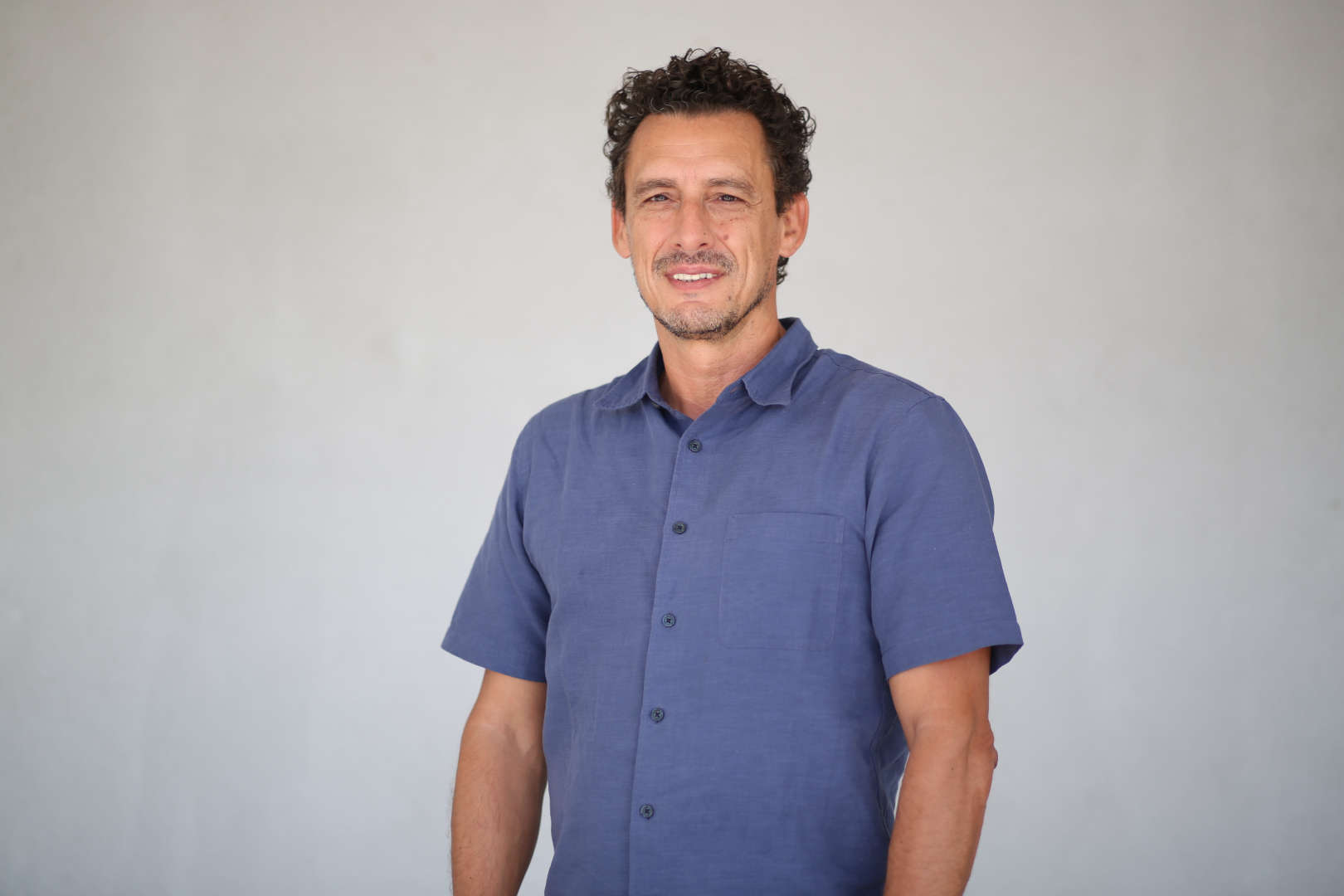
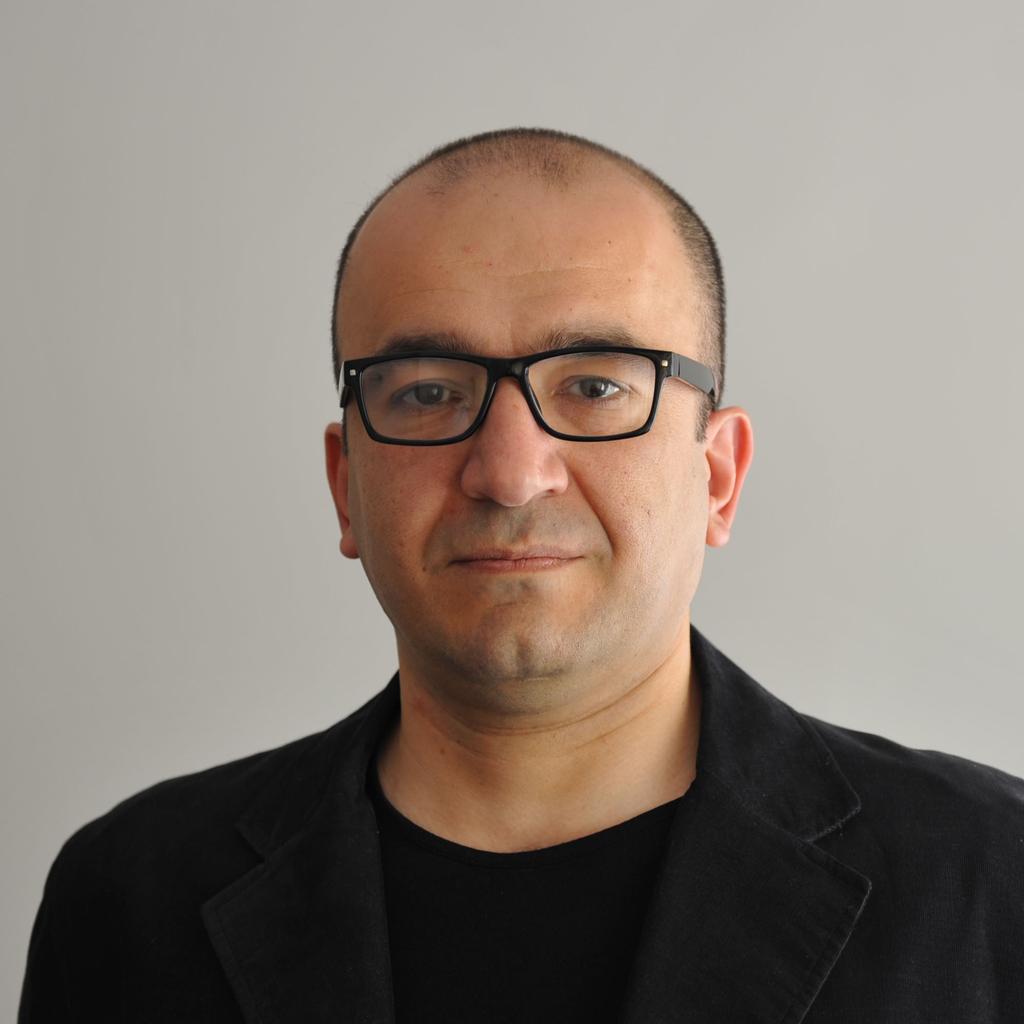
Fahad MEHMOOD is an Assistant Professor of Supply Chain and Logistics at EM Normandie since 2023. He holds a PhD and M.S. from the Politecnico di Torino, Italy. Previously, he taught at the University of Dubai and Lahore University of Management Sciences (LUMS). His research focuses on applying operational research to energy optimization, information systems, and supply chain management. He has published in journals like European Journal of Information Systems and Energy Policy . Education: PhD in Management Science, Politecnico di Torino, Italy (2015) M.S. in Management Science, Politecnico di Torino, Italy Research Interests: Energy flexibility and demand response programs Data-driven supply chain decision making Optimization models for energy systems Transportation economics and infrastructure Teaching: Courses include Optimization-based decision systems, Procurement & Logistics, and Production Management.
Rossella Pozzi is an Associate Professor of Mechanical Industrial Plants at LIUC - Carlo Cattaneo University. She holds a PhD in Integrated Business Management from the same institution and has conducted research at the Dalle Molle Institute for Artificial Intelligence in Lugano. Her expertise spans operations management, with a focus on materials management in finite-capacity systems and Lean Manufacturing in industrial contexts. She investigates the integration of Lean practices with Industry 4.0 technologies and the circular economy transition. As Principal Investigator for the TechFact research project (PRIN 2022 funded), she focuses on designing teaching factories to educate future engineers. She coordinates LIUC’s Lean Club and teaches executive programs on Operational Excellence and Industry 4.0. Her research emphasizes digital technologies’ impact on Lean systems, including data science applications for Lean practices and Industry 4.0-enabled circular transitions. She collaborates with major firms like Toyota, Schneider Electric, and Amazon, and has conducted gemba walks in Japanese and European manufacturing facilities. Her work bridges academic research with practical industrial applications, focusing on sustainable production systems and workforce development through innovative learning frameworks. Rossella leads initiatives addressing digital twin implementation challenges, supply chain redesign (e.g., Italian healthcare drugs distribution), and future workforce skills. She has published extensively on Industry 4.0’s role in manufacturing, circular economy frameworks, and educational strategies for engineers. Her projects often involve interdisciplinary collaboration and real-world case studies to drive actionable insights.
Violetta Giada Cannas is an Assistant Professor in Mechanical Industrial Systems at the School of Industrial Engineering, LIUC - Carlo Cattaneo University . She also serves as an Adjunct Professor at the Department of Management Engineering , Politecnico di Milano, where she earned her PhD in Management Engineering (2019) and European Doctorate. Her research focuses on Operations Management with specializations in Lean Manufacturing, Industry 4.0, and data-driven optimization of industrial processes.
Martin Cousineau is an Associate Professor in the Department of Logistics and Operations Management at HEC Montréal, specializing in the intersection of Operations Research and Artificial Intelligence applied to logistics, transportation, and healthcare. He holds a PhD from McGill University, an M.Sc. from HEC Montréal, and a B.Eng. in Mechanical Engineering from École Polytechnique de Montréal. He co-leads the Sustainable Health axis at Obvia and is a member of CIRRELT. His research focuses on decision support systems, healthcare logistics, and optimization methods for causal inference. Notable contributions include studies on pandemic supply chain resilience, electric vehicle routing, and AI-driven healthcare solutions. Recipient of the 2024 Excellence in Teaching Award and the 2023 Best Paper Award in Transportation Science, Cousineau has supervised over 30 master's theses and projects. He teaches courses such as Warehousing Systems Design and Supply Chain Analytics .
Alberto Ruiz Garcia is an Associate Professor at the University of Murcia , affiliated with the Faculty of Informatics and the Department of Computer Science and Systems Engineering . His research focuses on Computer Vision , Artificial Intelligence , and Multisensory Integration , with notable contributions to sensor systems, IoT-based agriculture, and electronic tongue technologies. He completed his doctoral thesis at the Universidad Complutense de Madrid in 1991, titled Mecanismos de integración multisensorial en un sistema de percepción artificial . Education: PhD in Computer Science from Universidad Complutense de Madrid (1991) Research Interests: His work spans mobile computing , computer vision applications , smart farming systems , and electrochemical sensing . He leads projects like FARMIT for crop quality monitoring and has developed frameworks such as QVision for real-time computer vision. Recent Work Trends: Recent publications emphasize few-shot learning for industrial safety, AI-driven agricultural monitoring, and innovative sensor technologies for quality control in irrigation and food analysis. His work bridges computer science with practical engineering challenges in robotics, environmental monitoring, and healthcare diagnostics. Labs & Teams: Member of research groups including Mobile Computing and Computer Vision and Computación Móvil y Visión Artificial , focusing on applied engineering and parallel programming for perception systems.
António Lucas Soares is an Associate Professor at the Department of Informatics Engineering, Faculty of Engineering, University of Porto, and a researcher at INESCTEC. He coordinates the Center for Enterprise Systems Engineering and Cluster Industry & Innovation at INESCTEC. His expertise lies in Information Systems with a focus on Collaborative Networks and Knowledge Management in industrial contexts. He directs the Master's program in Information Science (FEUP/FLUP) and holds executive roles in international academic organizations. His research emphasizes socio-technical design, digital platforms, and Industry 5.0 applications in manufacturing and logistics resilience. Research Interests: Socio-technical systems design Knowledge representation frameworks AI-driven supply chain transformations Augmented Reality applications Logistics 5.0 technologies Publications (2024) highlight advancements in requirements management frameworks, cognitive digital twins, and Industry 5.0 logistics innovations. His work bridges technical solutions with human-centered operational needs in industrial ecosystems. Advising: Supervised 10+ theses on topics like Scrum adoption, digital twins, and circular economy ecosystems. Active in grant-funded projects addressing manufacturing resilience and supply chain digitalization. Labs/Teams: Leads the Enterprise Systems Engineering Centre at INESCTEC, fostering interdisciplinary research in industrial informatics and collaborative networks.
Poorang Piroozfar is an Associate Professor and Reader at the School of Arch, Tech and Eng Built Environment, Architecture and Construction (BEACON) at the University of Brighton, UK. He leads the BEACON research group and previously directed the Built Environment Research Group (BERG). He is also founder of the Digital Construction Lab and the MAVRiC (Mixed, Augmented and Virtual Reality inter-Connected) research group. As an academic member of the EPSRC Centre for Doctoral Training in SEAHA, he collaborates across heritage, engineering, and arts sectors. His education includes a PhD in Mass Customisation from the University of Sheffield (2008) and a Master's in Urban Regeneration from the University of Tehran (1996). He holds dual professional certifications: MICEO (Registered Architect, Iranian Construction Engineering Organisation) and MCIAT (Chartered Architectural Technologist). Research interests focus on interdisciplinary topics including: mass customisation/personalisation in AEC, facade design and energy performance, BIM/BES technologies, off-site construction, AR/VR applications, and sustainable retrofitting of heritage buildings. He has supervised seven completed PhDs and currently advises two PhD students on smart cities and cultural heritage preservation. Key projects include TAPAS-DC (air quality solutions for schools), Round Hill community project (sustainable housing), and studies on AR/VR in construction. Awards include multiple best paper awards at international conferences such as SEEDS and ARCOM. He serves as an external examiner for architectural technology programs at multiple UK universities and actively participates in professional bodies like CIAT, reviewing journals and competitions.
Dr. Frank Ghansah is a Lecturer in Quantity Surveying at the Division of Construction, Property and Surveying, affiliated with the Digital x Data Research Centre since October 2023. He holds a PhD in Real Estate and Construction from the University of Hong Kong and advanced degrees from Kwame Nkrumah University of Science and Technology, actively supervising PhD students in sustainable construction research. His educational background includes: PhD in Real Estate and Construction, University of Hong Kong (2020-2023) MPhil in Project Management, Kwame Nkrumah University of Science and Technology BSc in Quantity Surveying and Construction Economics (First Class Honours), Kwame Nkrumah University of Science and Technology Dr. Ghansah's research centers on digital transformation for sustainable construction, with emphasis on BIM, digital twins, and AI applications to advance quality assurance, circular economy principles, and modular building methods. His work addresses critical challenges in low-carbon construction, smart building technologies, and supply chain resilience, particularly in developing contexts like Ghana. Analysis of his 43 publications (2020-2025) reveals dominant trends in pandemic-impacted construction logistics, digital twin implementations for carbon management, and circular procurement frameworks. His research bridges digital innovation with practical sustainability outcomes, showing increasing focus on AI-driven solutions and developing-world applications since 2023. Dr. Ghansah actively mentors PhD candidates and has secured major research funding including a HKD 5.31 million Collaborative Research Fund project on modular construction optimization and a RMB 5 million Theme-based Research Fund for digitalization initiatives. His peer-review activities span top journals like Engineering, Construction and Architectural Management and Smart and Sustainable Built Environment. As a core member of the Digital x Data Research Centre, he leads international collaborations on human-robot construction teams, circular economy frameworks, and offsite manufacturing. His current projects integrate Ghanaian case studies with global supply chain innovations to develop context-specific digital construction solutions for emerging economies.
Dr. Mohammed Albakri is a Lecturer at Salford Business School, University of Salford. He holds a PhD in Information Systems from the University of Manchester and is a Senior Fellow of the Higher Education Academy (SFHEA). His research focuses on digital transformation, data-driven decision-making, and the application of emerging technologies like AI, cloud computing, and cybersecurity in business contexts. He has authored over 60 research outputs and contributed to textbooks such as Information Systems Research: Foundations, Design and Theory . Dr. Albakri specializes in teaching digital transformation, information security, and innovation modules, with roles as Programme Director and Director of International Exchange. He supervises PhD students in areas including digital innovation and critical systems thinking. His recognitions include certifications in management education and SAP S/4HANA analytics. Research Interests: Digital Transformation Strategies Emerging Technology Integration Data Analytics for Decision Making Cybersecurity in Business Action Research Methodologies Teaching & Pedagogy: Specializes in active learning and industry-relevant curricula Develops modules like Digital Business, Information Security Management, and Live Innovation Projects Promotes academia-industry partnerships to enhance student employability Key Achievements: Over 60 peer-reviewed publications (2024 highlights include works on GCC cybersecurity and UK digital divides) Edited volumes on digital entrepreneurship and crisis management Recipient of SFHEA and Certified Management Educator credentials Lab/Team Affiliation: Member of the Salford Innovation Research Centre , focusing on translational research between theory and practice.
Dr. Samer Sarsam is an Assistant Professor in Coventry University's School of Strategy and Leadership. His research specializes in Business Analytics, Data Mining, Machine Learning, and AI-driven decision-making with applications in healthcare, finance, and education. He mentors undergraduate/postgraduate students and consults for tourism/healthcare industries. Research focuses on: Artificial Intelligence and predictive modeling Sentiment and opinion mining techniques Time-series analysis for behavioral prediction Text mining applications in healthcare Recipient of the 2021 Market Research Society Silver Medal for excellence in analytics research. Published extensively on machine learning applications, with recent work exploring generative AI in healthcare management (blood donation supply chains) and education. Consulting work helps organizations leverage data analytics for strategic decision-making across multiple sectors.
Souma Chowdhury is an Associate Professor in the Department of Mechanical and Aerospace Engineering and an Adjunct Associate Professor in the Department of Computer Science and Engineering at the University at Buffalo. His work focuses on nature-inspired computing, swarm systems, autonomous robotics, and UAV design, integrating AI, optimization, and physics-infused machine learning. He leads the ADAMS Laboratory, advancing robotics, human-swarm interaction, and energy systems. Education: PhD, Mechanical Engineering, Rensselaer Polytechnic Institute (2012) MS, Mechanical Engineering, Florida International University (2008) BTech, Indian Institute of Technology (2007) Research Interests: Swarm robotics and collective behavior Autonomous systems and UAVs Physics-aware AI and machine learning Multi-fidelity optimization and metamaterials Human-swarm interaction Energy systems and smart grids His recent work emphasizes real-time decision-making in robotics, space debris capture systems, and urban air mobility. Over 50+ publications demonstrate his contributions to AI-driven robotics and sustainable energy solutions. Awards: NSF CAREER Award (2021) SEAS Early Career Researcher of the Year (2019) Renewable Energy Top Paper Award (2015) Grants & Projects: $5K Summer Foundry funding (RPI, 2012) NYSERDA CleanTech funding (2012) Labs & Teams: ADAMS Laboratory (Autonomous & Distributed Agents for Multi-domain Systems) Develops open-source tools like SHaSTA for human-swarm collaboration
Symone Gomes Soares Alcalá is a Professor at the Federal University of Goiás (Brazil) and a former postdoctoral researcher at the IIT Connected Industry Chair (Madrid, Spain). She holds a Ph.D. in Electrical and Computer Engineering from the University of Coimbra (Portugal) and a B.Sc. in Computer Engineering from PUC-GO (Brazil). Her research focuses on applying Artificial Intelligence, Machine Learning, and Vision Systems to industrial contexts, including predictive maintenance, additive manufacturing, and supply chain optimization. Education : Ph.D. in Electrical and Computer Engineering, University of Coimbra (2015) B.Sc. in Computer Engineering, Pontifical Catholic University of Goiás (2009) Research Interests : Symone’s work integrates computational intelligence with industrial processes. Key areas include: AI-driven defect detection in additive manufacturing Machine learning for demand forecasting and inventory management Low-Code platforms for digital transformation Optimization of distributed production systems Predictive maintenance algorithms Her methodologies often involve ensemble learning, neural networks, and vision systems. Publications : Her articles span journals like IEEE Transactions on Industrial Informatics and Production Engineering , focusing on applications like defect detection, supply chain design, and adaptive learning systems. Recent work emphasizes AI in manufacturing and industrial IoT integration. Awards : Recipient of the CAPES Elsevier 2024 Award for impactful research in Exact Sciences in Brazil’s Central-West region. Grants & Collaboration : Her research has been supported by collaborations with institutions like the Portuguese Institute of Systems and Robotics (ISR-Coimbra) and industry partnerships. Projects include developing digital twin systems and optimizing additive manufacturing supply chains. Labs & Teams : She leads interdisciplinary teams at the Federal University of Goiás, focusing on AI applications in industry and collaborative R&D with the IIT’s Connected Industry group.
Chase Wu is a Professor in the Department of Data Science and Director of the Center for Big Data at New Jersey Institute of Technology (NJIT). He previously held the rank of Associate Professor in Computer Science. His research focuses on high-speed networks, big data systems, performance modeling, and machine learning applications. He leads projects funded by the National Science Foundation (NSF), including collaborative research on big data workflows and system performance evaluation. Wu has authored over 300 publications and holds an h-index of 37 with 6,77 citations. Research Interests: His work spans network optimization, big data transfer efficiency, blockchain security, and AI-driven systems. Notable contributions include frameworks for automated parameter tuning in software systems and intelligent scheduling algorithms for distributed computing. His team develops tools like PTSSBench for performance testing and SRGTNet for image retrieval. Grants & Projects: Two NSF-funded projects include the ESPRIT testbench for system evaluation and collaborative research on big data scientific workflows. He has secured federal grants totaling over $2M since 2015. Labs & Teams: Directs the Center for Big Data at NJIT, leading interdisciplinary teams in computational steering, edge intelligence, and cybersecurity solutions. His lab focuses on real-world applications like air quality monitoring systems and radiation detection networks.
Paul Roach is a Professor of Computing Mathematics at the University of South Wales, affiliated with the Faculty of Computing, Engineering and Science. He holds leadership roles including Head of Postgraduate Research Studies and co-leads the Mathematical Sciences submission to REF2021. With a PhD in Computer Science from Cardiff University (1990), his career spans research roles at Interface 4 Ltd and academic positions since 1994. His research focuses on mathematical modelling, system dynamics for social systems, and industrial processes like steel reheating furnaces. He has secured £700k in grants (total £2M projects) from EPSRC, European Commission, and others. Research interests include: Applications of System Dynamics in social modelling Price change analysis in collectible markets Healthcare pathway optimization (collaboration with NHS Health Boards) AI-driven container stowage planning Recent projects involve NHS-funded mental health clinical pathway analysis and EPSRC-supported furnace modelling. He has supervised 19 research students (16 completed, 3 ongoing) and co-authored over 50 publications. His work bridges theoretical mathematics with practical applications in engineering, healthcare, and logistics.
Dr. Roxana-Adela Chira is a Lecturer at Hochschule für Wirtschaft und Gesellschaft in Ludwigshafen and a Data Manager at Intersnack Deutschland SE. She holds a PhD in Astrophysics from the Max Planck Institute for Astronomy (MPIA) and ESO Garching. Her research focuses on star formation in molecular clouds, radiative transfer, and data management methodologies. She has contributed to understanding filament fragmentation and turbulence dynamics in astrophysical contexts. In industry roles, she specializes in data governance, machine learning, and optimizing data architectures for businesses. Education: PhD in Astrophysics (2018, MPIA/ESO), MSc in Astrophysics, BSc in Physics. Previous roles include Data Lead at PAKi Logistics and Software Developer at BARMER. Technical expertise includes Python, cloud architectures, and project management tools like Jira and Confluence. Research interests bridge academic and applied domains: stellar astrophysics, data-driven enterprise solutions, and AI applications in business intelligence.