Shunyuan Zhang is an Assistant Professor at Harvard Business School with research focusing on AI algorithms, economic inequality, and computer vision applications in business contexts. His work examines how algorithmic systems impact economic outcomes, particularly in sharing economy platforms like Airbnb. His research interests include AI algorithms, economic inequality, pricing algorithms, machine learning, computer vision, and the sharing economy. Zhang's work often combines technical computer vision approaches with economic analysis to understand platform dynamics. Zhang's recent publications demonstrate a strong focus on the intersection of AI, fairness, and economic outcomes. His work analyzes how algorithmic pricing affects racial disparities on platforms like Airbnb, and how visual content impacts demand in the sharing economy. His research employs sophisticated methodologies including deep learning, structural modeling, and causal inference. He has published in top journals and working paper series, with notable work including 'Can an AI Algorithm Mitigate Racial Economic Inequality? An Analysis in the Context of Airbnb' and 'What Makes a Good Image? Airbnb Demand Analytics Leveraging Interpretable Image Features.' Zhang collaborates extensively with leading researchers at Carnegie Mellon University and University of Toronto, particularly on topics related to algorithmic fairness and platform economics. His work has significant implications for both academic understanding and practical policy recommendations regarding algorithmic systems in marketplace contexts.
Dr. Rafeef Garbi is a Professor at the Department of Electrical and Computer Engineering, University of British Columbia, and the Founder/Director of the Biomedical Signal and Image Computing Laboratory (BiSICL). Her multidisciplinary research integrates artificial intelligence, computer vision, and medical imaging for clinical applications in pediatric orthopedics, oncology, and neurology. PhD (Chalmers University, Sweden), MSc (with distinction), Technical Licentiate Research Focus: Specializing in Medical Image Computing and Visual Computing , her lab develops AI-driven solutions for: Automated segmentation and analysis of multi-dimensional biomedical data Clinically-translatable biomarkers for disease assessment Computer-aided intervention systems in surgical contexts Scientific Leadership: UBC Killam Faculty Research Fellow Peter Wall Institute for Advanced Studies Early Career Scholar Senior IEEE Member & Founding IEEE EMBS Vancouver Section Member Key Collaborations: Active in the Medical Image Computing and Computer Assisted Intervention (MICCAI) Society and CAIDA: UBC ICICS Centre for Artificial Intelligence Decision-making and Action. Her team bridges engineering, medicine, and computational biology through translational research.
Dr. Zhenghao Chen is an Assistant Professor at the University of Newcastle. He holds a B.Eng. H1 and Ph.D. from the University of Sydney (2017 and 2022). His research focuses on Computer Vision, NLP, and Machine Learning, with expertise in Generative AI. He has published in top conferences like CVPR and journals such as IEEE T-IP. Awards include the Google Australia Prize and ACM SIGMM Outstanding Thesis Award. He previously worked at TikTok and Disney Research, and serves on program committees for major conferences. Research interests emphasize generative models and industrial applications. His publications span topics like image compression, facial recognition, and medical imaging. Awards highlight academic and industrial recognition. Teaching includes courses on visual signal understanding and video intelligence. Current roles include HDR recruitment and organizing international workshops.
Professor Masatoshi Okutomi is affiliated with the Department of Systems and Control Engineering at the School of Engineering, Institute of Science Tokyo. His research focuses on advanced medical imaging techniques, particularly in endoscopy and 3D reconstruction, leveraging deep learning and neural networks. Key interests include virtual chromoendoscopy for cancer detection, image restoration, and stereo matching under challenging conditions. His work bridges computer vision and healthcare, addressing real-world applications such as MRI reconstruction and foggy stereo matching. Notable contributions include developing lightweight medical segmentation networks for edge devices and advancing neural radiance fields (NeRF) for novel view synthesis. His research spans diverse domains: from improving video quality assessment to enhancing object detection in high-dynamic-range images. Collaborative projects emphasize practical solutions for medical diagnostics and robust image processing in adverse environments. Recent articles highlight advancements in temporally-consistent video restoration, few-shot view synthesis, and degraded image classification using knowledge distillation. These innovations underscore his commitment to pushing boundaries in both theoretical computer vision and applied medical technology.
Prof. Amir A. Zadpoor holds dual roles as Antoni van Leeuwenhoek Professor at TU Delft (Department of Biomechanical Engineering) and Professor of Orthopedics at Leiden University Medical Center. He leads the Additive Manufacturing Lab and specializes in biomaterials, tissue biomechanics, and orthopedic implants. His research focuses on 3D/4D printing, meta-biomaterials, and biodegradable metals for clinical applications. Key research interests include: designing function-tailored implants, antimicrobial biofunctionalized materials, and mechanically adaptive meta-implants. He has pioneered projects like 'Metallic clay' and 'Mechanobiology in-silico,' with applications in orthopedics and regenerative medicine. Notable awards include ERC grants, Vidi/Veni awards, and the Jean Leray Award. His lab develops deployable implants, self-folding origami lattices, and smart meta-implants. Ancillary roles include editorial positions at Springer Nature and directorships at Sylvanity/Zagres. Teaching includes courses on biomaterials, regenerative medicine, and computational biomechanics. Research outputs span over 150 peer-reviewed articles. Current priorities include sustainable biomaterials, AI-driven design optimization, and translating additive manufacturing innovations into clinical practice.
Maria Chiara Fiorentino is a Research Fellow at the Department of Information Engineering, Polytechnic University of Marche, Italy. Her work focuses on applying deep learning techniques to medical image analysis, particularly in ultrasound, MRI, and CT imaging. Education Master’s in Biomedical Engineering, Università Politecnica delle Marche (Honors) Ph.D. in Information Engineering, Università Politecnica delle Marche (Laude) Research Interests: Dr. Fiorentino specializes in deep learning for medical imaging, with applications in diagnosing neurodegenerative diseases like Parkinson’s, cardiovascular conditions, and musculoskeletal disorders. Her recent work includes federated learning for fetal ultrasound analysis, AI-driven vocal fold pose estimation, and domain adaptation in MRI segmentation. Scientific Awards: Paolo Marziali Thesis Prize for her Master’s research Gruppo Nazionale di Bioingegneria award for her Ph.D. thesis Publications: Dr. Fiorentino’s work spans fetal brain image synthesis, zero-shot learning robustness, and machine learning for catheterization management and stenosis detection.
Ian Sellers is Professor in Electrical Engineering at University at Buffalo's School of Engineering and Applied Sciences. He specializes in next-generation solar cells and materials for space photovoltaics, with appointments including Marie Curie Fellow (2004-2006) and Visiting Academic Fellow at Oxford (2009-2012). His research examines: Novel photovoltaic materials and architectures Ultra-low power electronic systems MEMS-based sensors and energy harvesters Beyond-CMOS computing technologies Recent publications demonstrate advances in ultra-low power sensor design (MEMS accelerometers), energy-efficient computing (MESO technology), and miniaturized imaging systems. The work shows consistent focus on optimizing power efficiency through innovations in circuit design, materials integration, and system architecture. Before joining UB, Sellers held positions as Presidential Professor at University of Oklahoma and Senior Research Scientist at Sharp Labs of Europe. His international collaborations include extended research stays in France and the UK.
Vahid Behzadan is an Assistant Professor in Data Science and Computer Science at the University of New Haven's Tagliatela College of Engineering. He leads the SAIL Lab, focusing on AI safety and security, particularly in autonomous systems like driverless cars and smart cities. His work addresses adversarial attacks on machine learning and reinforcement learning, with applications in cybersecurity and healthcare. Behzadan has held prior positions at Kansas State University, University of Nevada Reno, and University of Birmingham, UK. He holds a Ph.D. in Computer Science and an M.S. from the University of Nevada Reno, and a B.Eng. from the University of Birmingham. His research spans AI ethics, cybersecurity, and complex systems. Behzadan advises the UNH hacking team and actively participates in policy initiatives, including Connecticut's AI Working Group and the Connecticut AI Alliance. He has contributed to over 30 peer-reviewed articles and frequently engages in media discussions on topics like AI safety, facial recognition, and cybersecurity threats. Key research areas include adversarial machine learning, AI forensics, and ethical AI design. His work bridges theoretical advancements with real-world applications in transportation, healthcare, and national security. Behzadan collaborates with organizations such as the Transportation Research Laboratory (TRL) and Open Web Application Security Project (OWASP).
Jakub Macina is a Doctoral Fellow at the ETH AI Center and a PhD Candidate at ETH Zürich . He works in the intersection of Natural Language Processing and Learning Sciences as part of the Language, Reasoning and Education Lab (led by Prof. Mrinmaya Sachan) and the Professorship for Learning Sciences and Higher Education (led by Prof. Manu Kapur). Forbes 30 Under 30 in Science & Education 2023 Recipient of ETH AI Center Fellowship ( Co-founder of a health-tech startup with seed investment Research Interests : Focus on generative large language models (LLMs), dialogue tutoring systems , pedagogical alignment of AI models, and mathematical reasoning . His work explores: Reinforcement learning for pedagogical steering LLM evaluation frameworks Socratic question generation Stepwise error detection and remediation Student-teacher interaction modeling Publications span top conferences like EMNLP , ACL , NeurIPS , and RecSys , with particular emphasis on educational applications of LLMs and dialogue-based learning systems . Scientific Awards : Forbes 30 Under 30 in Science and Education (2023) 2nd Place in ACM IT SPY Computer Science Master's Thesis Competition (2017) ETH AI Center Fellowship (2021) Leadership & Teaching includes: Managing team of 6 data scientists Teaching Assistant for Machine Learning and NLP courses at ETH Zurich Developing large-scale ML pipelines for recommender systems Open-source contributions to Discourse and Google Summer of Code projects
Marina L. Gavrilova is a Professor at the University of Calgary, Canada. Her research focuses on biometric systems, computer vision, and machine learning with an emphasis on multimodal recognition and security applications. She has authored numerous publications in top journals and conferences, contributing to advancements in fields like emotion-aware de-identification, generative adversarial networks, and ethical AI frameworks in healthcare. Her work spans social behavioral biometrics, gait recognition, masked face recognition, and aesthetic-based person identification. Key contributions include frameworks for ethical AI in care systems, fusion algorithms for multi-biometric systems, and innovations in visual and audio signal processing. Collaborations with experts like Osvaldo Gervasi, Jon G. Rokne, and Padma Polash Paul highlight her interdisciplinary approach. Publications emphasize practical applications such as privacy-preserved biometrics, emotion detection from social media, and adaptive systems for template aging. Despite no explicit mention of grants or labs, her extensive co-author network and frequent citations indicate significant academic influence.
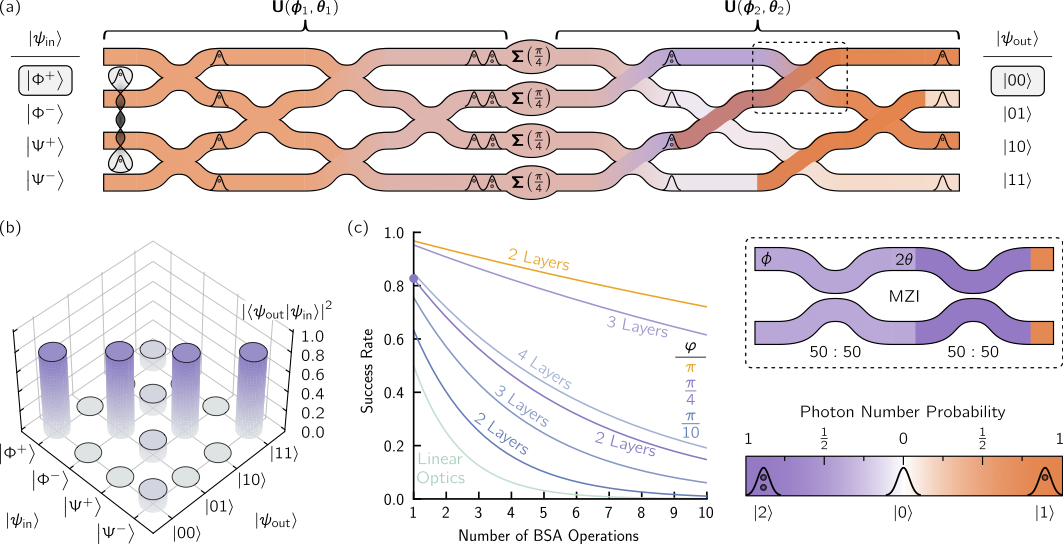
Bhavin J. Shastri is an Assistant Professor in the Department of Physics, Engineering Physics and Astronomy at Queen's University in Canada. His research explores the physics of light for computing , pushing frontiers in information and signal processing through photonic computing and quantum/neuromorphic photonics . He is affiliated with the Centre for Nanophotonics and NUCLEUS , a pan-Canadian photonic computing program funded by NSERC CREATE, bridging artificial intelligence and quantum information . Canada Research Chair & Principal Investigator Faculty Affiliate at Vector Institute (2020-) Editorial Board Member of JPhys Photonics (2019-) Member of IEEE Photonics Society Technical Affairs Council (2019-) Visiting Researcher Scholar at Princeton University (2018-) Shastri Lab members have access to world-class shared facilities, including the Centre for Nanophotonics (CFI-Innovation Fund), Nanofabrication Kingston , the Centre for Advanced Computing , and the Digital Research Alliance of Canada . The lab takes an interdisciplinary approach combining nanophotonics with complex systems on emerging substrates. His research focuses on silicon photonics , nanophonic processors , and photonic integrated circuits with applications to deep learning , nonlinear programming , and quantum information science . His articles show consistent exploration of quantum photonic neural networks , photonic memory systems , and optical signal processing for machine learning and quantum technologies . 2020 IUPAP Young Scientist Prize in Optics 2014 Banting Postdoctoral Fellowship 2012 D. W. Ambridge Prize 2011 IEEE Photonics Society Graduate Student Fellowship 2011 NSERC Postdoctoral Fellowship Multiple Best Student Paper Awards Shastri's lab supervises Ph.D. candidates and postdoctoral fellows working on quantum photonics , neuromorphic computing , and photonic AI systems . His recent work includes photonic tensor cores for scientific computing , quantum photonic neural networks , and all-optical memory systems. Shastri Lab designs programmable nanophotonic processors with potential to outperform microelectronic processors in energy efficiency and computational speeds by seven and four orders of magnitude respectively. Their work spans from device design to system-level implementations in optical computing for machine learning and quantum information processing .
Talal Shaikh is an Associate Professor at Heriot-Watt University's School of Mathematical and Computer Sciences in Dubai. He serves as Director of Undergraduate Studies and Programme Director for BSc Computer Science, BSc CS (AI), and MSc Software Engineering. With a decade of industry experience as a Chief Information Officer and Software Engineer, he bridges practical insights with academic research. Research Interests: Pervasive Computing, IoT/M2M, AI/ML, WiFi Sensing for Healthcare, Financial Machine Learning, Educational Technology Awards: Teaching Excellence Awards (2017/18), Fellow of the Higher Education Academy (FHEA), multiple Learning and Teaching Oscars (2016, 2017, 2018) His work spans Ubiquitous Computing and IoT , focusing on sensor networks and WiFi-based sensing for healthcare. In Artificial Intelligence , he applies ML to robotics, financial analytics, and educational innovation. Recent articles analyze Reinforcement Learning , Emotion Recognition , and WiFi Sensing applications. His teaching emphasizes student-centric learning, with over 100 supervised dissertations achieving distinctions. Collaborations include international conferences and interdisciplinary research in smart environments and adaptive systems.
Donato Romano serves as Associate Professor at The BioRobotics Institute of Scuola Superiore Sant'Anna, Italy, where he coordinates the Bio-Robotic Ecosystems Lab and co-founded the spin-off company HUBILIFE srl. His interdisciplinary work bridges robotics, biology, and AI to develop biohybrid systems for biodiversity preservation, sustainable environmental management, and life support in extreme scenarios including space exploration. With over 90 publications and an H-index of 27 (Scopus, March 2025), he has established significant academic leadership through editorial roles across 12+ international journals. Romano's educational foundation includes advanced degrees with honors: an M.Sc. in Agriculture Science and Technologies (2014) and a PhD in BioRobotics (2018), both from Scuola Superiore Sant'Anna. His academic journey includes visiting scholar positions at Khalifa University and substantial industry-academia collaboration through HUBILIFE srl, which commercializes bioinspired devices for human daily life improvement. His research program focuses on bioinspired and biomimetic robotics with particular emphasis on animal-robot interaction, biohybrid systems, and natural intelligence. Key projects address critical global challenges: SENSORBEES develops biohybrid environmental surveillance for ecological monitoring; REGOLIFE investigates lunar soil-terrestrial organism interactions for space agriculture; and OCEAN ROBOCTO explores marine ecosystem solutions. This work demonstrates a strategic progression from fundamental behavioral studies toward applied ecological and extraterrestrial systems. Analysis of his recent publications reveals strong trends in AI-driven behavioral analysis, with deep learning increasingly applied to entomological studies and pest management. The research spans agricultural applications (precision monitoring traps, larval detection systems), ecological conservation (biodiversity surveillance), and extreme-environment adaptation (lunar regolith studies). A distinctive feature is the consistent integration of biohybrid approaches where living organisms and robotic systems create synergistic capabilities exceeding either component alone. Romano's scientific recognition includes election as Junior Fellow of the Italian Academy of Engineering and Technology (2025), the Lucani fuori dal Comune award (2024), and multiple best-thesis prizes. His editorial leadership spans high-impact journals including IEEE Transactions on Medical Robotics and Bionics and Pest Management Science, where he serves as Associate Editor. As principal investigator, Romano coordinates major international projects totaling over €15M in funding: HORIZON-EIC's SENSORBEES (2024-2029), ASI's REGOLIFE (2024-2027), National Geographic's OCEAN ROBOCTO (2024-2026), and PRIN's COSMIC (2023-2025). His teaching portfolio includes PhD courses in Biosystems for Biorobotics and M.Sc. instruction in Bionics Engineering at Scuola Superiore Sant'Anna and University of Pisa. The Bio-Robotic Ecosystems Lab under Romano's direction pioneers biohybrid technologies where living organisms and robotic systems create integrated solutions. Current initiatives include SENSORBEES' environmental monitoring swarms, REGOLIFE's moonworm colonization systems, and HUBILIFE's commercial vector-control devices. The lab maintains active collaborations with space agencies, agricultural institutes, and conservation organizations, positioning biohybrid systems as next-generation tools for planetary-scale challenges.
Adlen Ksentini is a Professor at EURECOM, a leading graduate school and research center in Sophia Antipolis, France, specializing in digital science and communication systems. His extensive research focuses on next-generation mobile networks (5G/6G), network management, and the integration of artificial intelligence with telecommunications infrastructure. Dr. Ksentini actively contributes to major EU research initiatives including 6G-BRICKS and AC3, serving as a key researcher and project leader in the development of future network architectures. Dr. Ksentini's research interests center around network slicing, intent-based networking, edge computing, and the application of machine learning to network management problems. His work bridges theoretical advancements with practical implementations in 5G/6G systems, with particular emphasis on zero-touch network management, energy efficiency optimization, quality of service assurance, and the integration of large language models with network operations. His research has significantly contributed to the development of O-RAN (Open Radio Access Network) frameworks and the evolution of network automation. His recent publication trends reveal a strategic shift toward AI-native network architectures, with increasing focus on integrating large language models (LLMs) with network management systems. His work demonstrates a clear progression from traditional network management approaches to more autonomous, AI-powered systems capable of intent-based configuration, self-optimization, and predictive maintenance. The publications show strong emphasis on practical implementations within the 6G research ecosystem, addressing critical challenges in network slicing, resource allocation, and energy efficiency. As a research supervisor, Dr. Ksentini mentors several PhD students including Abdelkader Mekrache, Karim Boutiba, Bouziane Brik, and Houda Hafi, who frequently appear as co-authors on his publications. His research is primarily funded through major EU research projects such as 6G-BRICKS (Building Reusable Testbed Infrastructures for Cloud-to-Device Breakthrough Technologies) and AC3 (which focuses on Cloud Edge Continuum). Dr. Ksentini is actively involved with the 6G-BRICKS project consortium and the AC3 project team, where he contributes to developing next-generation network architectures that integrate communication, computing, and sensing capabilities. His work within these projects focuses on creating reusable testbed infrastructures and addressing security and trust management challenges in the cloud-edge continuum.
David E. Breen is a Professor in the Department of Computer Science within the College of Computing & Informatics (CCI) at Drexel University. He leads the Geometric Biomedical Computing Group and is affiliated with the Metadata Research Center and the Center for Biological Discovery from Big Data. His research spans interdisciplinary domains including biomedical image informatics, geometric modeling, textile modeling, and bio-inspired self-organization algorithms. Education: PhD, Computer and Systems Engineering, Rensselaer Polytechnic Institute MS, Computer and Systems Engineering, Rensselaer Polytechnic Institute BA, Physics, Colgate University His research interests focus on computational methods for biomedical applications, including shape and image analysis for cancer diagnosis, 3D reconstruction of biological tissues, and video analysis of animal behavior. He also investigates geometric modeling techniques for textiles and self-organizing systems. His work integrates computer science with biology, medicine, and engineering to solve complex problems in biomedical computing. The recent publications highlight a strong trend in computational modeling of textiles, biomedical image informatics, and AI-driven data analysis. Key themes include geometric modeling of knitted fabrics, deep learning for medical image classification, agent-based modeling of cancer metastasis, and metadata generation for biological image collections. His work bridges fundamental geometric algorithms with practical applications in healthcare and digital archives. Scientific Awards: No specific awards mentioned in the provided text. Breen has advised numerous students and collaborators across multiple domains, particularly in biomedical computing and textile modeling. His research has been supported through affiliations with major centers and collaborations with institutions such as Johns Hopkins University and the Max Planck Institute. He has been involved in projects related to NSF Center for Visual & Decision Informatics and has contributed to over 100 technical publications. He leads the Geometric Biomedical Computing Group , which conducts research at the intersection of biology, medicine, engineering, and computer science. The group develops algorithms and software for geometry-related computing problems in biomedical applications. Collaborations include the Drexel Integrated Laboratory for Cellular Tissue Engineering, Dr. Dan Marenda's Lab, and Dr. Aleister Saunder's Lab in Drexel's Biology Department.