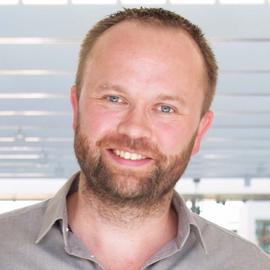
Anders Sundnes Løvlie is an Associate Professor at the IT University of Copenhagen , affiliated with the Media, Art & Design school and the Audio-Visual Computing department. As Head of Research Group , he leads projects focusing on Play, Culture, and AI. His research interests include Experience Design, Locative Media, Museum Studies, and Human-Computer Interaction (HCI), with a focus on integrating AI into cultural heritage spaces. Key projects include the Horizon 2020-funded GIFT project (2017–2019), which explored personalized hybrid museum experiences, and the ArtNet project (2022–2024), advancing image recognition in art. He also coordinated the SQM initiative (2018) for science journalism quality markers. His work bridges theory and practice, emphasizing participatory design in museums and ethical considerations of AI. Over 68 publications span conference proceedings, journals, and book chapters, often addressing AI in art, tangible interaction, and museum experience design. He has supervised 3 PhD students and actively collaborates internationally, appearing in 17 media contributions. Løvlie’s activities include editorial work for Digital Creativity journal and organizing workshops on design engagement and digital culture. His lab focuses on technologies that mediate art and science, such as interactive installations and generative AI tools.
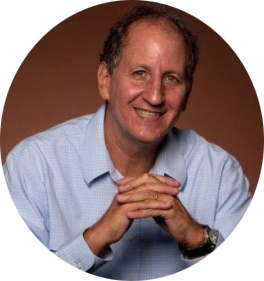
Liang He is an Associate Professor of Biomedical Engineering at the University of Oxford's Department of Engineering Science and an Official Fellow at Kellogg College. His research focuses on soft robotics, wearable robotics, and embodied artificial intelligence solutions for healthcare, including biosensors, haptic and VR technologies. He leads the Healthcare Biorobotics Lab (HBL) and contributes to The Podium Institute for Sports Medicine and Technology, developing AI-driven injury prevention systems in sports. Education: PhD in Medical Robotics (Imperial College London), MSc (University of Liverpool), BSc (Shanghai Jiao Tong University). Research Interests: Soft robotics, wearable robotics, augmented/virtual reality, machine haptics, generative AI for healthcare, and embodied tactile perception. He pioneered projects like the EPSRC Motion/RoboPatient initiatives (2017–2020) for medical training simulators and the Oxford Robotics Institute's soft-sensing skin program (2021). Professional Roles: Co-chair of the MPLS Division's Research Staff Forum (2022), member of Oxford's Research Staff Consultation Group, and recipient of the MPLS Enterprise & Innovation and Ideas2Impact Fellowships. Key Achievements: Developed sensorized laryngoscope training systems, magnetorheological elastomer valves for soft robots, and origami-based orthotic designs. His work bridges robotics, AI, and clinical applications, emphasizing tactile perception and embodied intelligence.
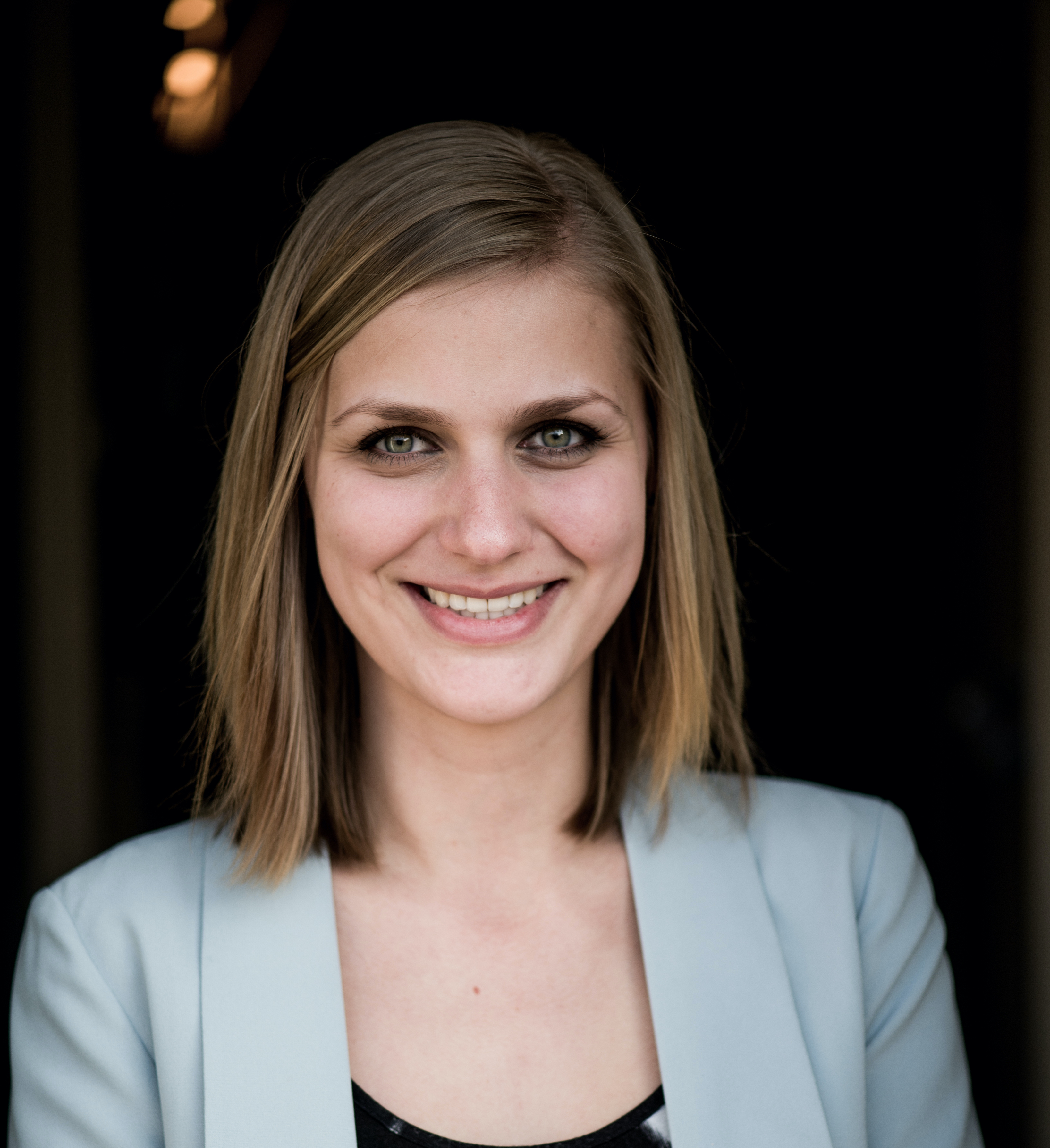
Dr. Mark Warschauer is a Professor of Education at the University of California, Irvine, and Director of the Digital Learning Lab. He holds affiliated appointments in Informatics, Language Science, and Psychological Science. His research focuses on digital learning, AI in education, and linguistically diverse student populations. With over 40 years of experience, he has taught globally and contributed to educational equity initiatives. Warschauer’s career began as a bilingual math and ESL teacher in San Francisco public schools, followed by roles in Hawaii, Moscow, and other international locations. He served as founding editor of Language Learning & Technology and inaugural editor of AERA Open . His honors include Fellow of the American Educational Research Association and membership in the National Academy of Education. His current research emphasizes generative AI applications in education, conversational agents for language learning, and computational thinking curricula for multilingual students. Recent work explores AI’s role in writing instruction, parent-child bilingual reading, and STEM education equity. Warschauer has authored numerous articles analyzing AI ethics, digital divides, and inclusive pedagogies. He advocates for community-driven curriculum design, particularly in underserved regions like Egypt and Mexico. Key Projects: Digital Learning Lab, Conversational Agent Research, CS4All Initiatives Grants & Collaborations: NSF-funded studies on AI in education, bilingual literacy programs His work bridges theory and practice, emphasizing equity and accessibility in technology-driven education.
April Yi Wang is a tenure-track Assistant Professor at the Department of Computer Science, ETH Zürich, leading the PEACH Lab. She holds core faculty roles at the Institute for Intelligent Interactive Systems and the ETH AI Center. Her research focuses on human-centered approaches in programming, education technology, and data science collaboration. She earned her PhD from the University of Michigan (2023) and MSc from Simon Fraser University (2018), advised by Steve Oney and Christopher Brooks. Education: PhD in Information Science, University of Michigan (2018–2023) MSc in Computer Science, Simon Fraser University (2016–2018) B.Eng in Computer Science, Zhejiang University (2013–2016) Research Interests: Human-Computer Interaction (HCI) Programming Support Systems Collaborative Data Science AI-Enhanced Education Literate Programming Accessibility in Technology Recent Work Trends: Her 2025 publications emphasize AI-driven educational tools (e.g., Math2Visual for math pedagogy, datAR for data literacy), emotion-aware moderation systems, and studies on workplace multitasking. Her work bridges HCI with computational education, focusing on intuitive programming interfaces and inclusive design. Awards: Gary M. Olson Award (2023), ACM CHI Honorable Mentions (2023/2020/2018), Rising Stars in EECS (2022). Grants: Innovedum funding for Coducate project (2025). Lab Focus: Designing expressive systems for programming and data literacy through visual/tangible interfaces, AI co-decomposition tools, and interdisciplinary metaphors. Teaching: Courses on Human-Computer Interaction, Educational Technology, and Mixed Reality at ETH Zürich.
Dr. Ali Mohammadi is a Senior Lecturer in the Department of Electronic & Electrical Engineering within the Faculty of Engineering & Design at the University of Bath. He leads innovative research in Micro-electromechanical Systems (MEMS) and serves as an Associate Editor for IEEE Sensors. His work is supported by multiple EPSRC-funded research projects with strong industry collaboration, totaling over £1.5 million across five projects. Dr. Mohammadi is embedded within several key research units: Electronics Materials, Circuits & Systems Research Unit (EMaCS), The Foundry: Centre for Digital, Manufacturing & Design, Centre for Bioengineering & Biomedical Technologies (CBio), and the Bath Institute for the Augmented Human. Dr. Mohammadi's academic background includes postdoctoral research at the Department of Engineering Science, University of Oxford (2016-2017) and the Department of Electrical and Computer Systems Engineering, Monash University, Australia (2014-2016). This foundation has enabled his interdisciplinary approach to micro/nano-electromechanical systems and electronic circuit design. His research program addresses fundamental challenges in micro/nano-electromechanical transducers and electronic interface circuits, with specific innovations in on-chip atomic force microscopy, implantable energy harvesters, and high precision coupled resonator sensors. These contributions span multiple UN Sustainable Development Goals, particularly advancing clean energy technologies and healthcare solutions. Dr. Mohammadi's work uniquely bridges electrical engineering, mechanical systems, and materials science to develop next-generation sensing and energy harvesting technologies with real-world applications. Analysis of his 48 research outputs reveals a clear trajectory from fundamental MEMS device development toward integrated sensor systems with practical applications. His most recent publications (2023-2025) demonstrate increasing integration of machine learning with precision sensing technologies, particularly for manufacturing condition monitoring and biomedical applications. The research shows progression from individual components to complete systems, with growing emphasis on real-time data processing at the sensor edge and human-machine interfaces. Dr. Mohammadi's professional standing includes: Member of the Institute of Electrical and Electronics Engineers (IEEE) Associate Editor of IEEE Sensors Journal As a doctoral supervisor, Dr. Mohammadi actively mentors students in Microelectromechanical Systems and Electronic Integrated Circuits. His research portfolio includes two active EPSRC projects: 'Transforming the use of Ansys simulation software within engineering curricula' and 'SENSYCUT- Sensor Enabled Systems for Precision Cutting,' demonstrating strong industry-academic collaboration. These projects focus on practical engineering solutions for manufacturing optimization, condition monitoring, and human-computer interaction, with direct applications in industrial settings. Dr. Mohammadi's research ecosystem spans multiple interdisciplinary centers at Bath. Within EMaCS, he advances fundamental electronic materials and circuit design. Through The Foundry, he contributes to digital manufacturing innovation. His CBio affiliation enables medical applications of his sensor technologies, while the Bath Institute for the Augmented Human provides context for human-centered applications of his tactile display research. This multi-faceted institutional integration allows his work to progress from laboratory prototypes to real-world implementations across healthcare, manufacturing, and human augmentation domains.
Prof. Dr. Siegfried Handschuh is a Full Professor for Data Science and Natural Language Processing at the Institut für Informatik (ICS-HSG), University of St. Gallen. His research focuses on advanced NLP techniques, financial text analysis, and AI-driven solutions in cybersecurity and education. He leads projects like CS-AWARE-NEXT, enhancing cybersecurity awareness in public institutions. Prof. Handschuh has authored over 100 publications, with recent work emphasizing transformer optimization, generative AI applications, and educational tools for argumentative writing. His team collaborates with companies like Rheasoft and Peracton on AI-powered financial analytics and cybersecurity systems. Education: Doctorate in Computer Science, specialized in knowledge representation and semantic web technologies. Research Interests: Data science, machine learning, financial NLP, cybersecurity, and AI in education. His work bridges academia and industry, addressing real-world challenges in finance, cybersecurity, and educational technology through innovative AI frameworks.
Dr. Merel Scholman is an Assistant Professor at Utrecht University within the Department of Languages, Literature and Communication and affiliated with the Institute for Language Sciences . Her research focuses on how people use language to create meaning through discourse relations , investigating cognitive processing of coherence markers in written, spoken, and visual communication. PhD in Language Science and Technology from Saarland University (summa cum laude, 2019) Research Master in Linguistics from Utrecht University (cum laude, 2015) Visiting researcher at Lancaster University and University of Edinburgh Her work combines theoretical psycholinguistics with computational modeling , using quantitative empirical methods like corpus analysis and crowdsourcing experiments. Recent research examines cross-modal discourse signals across Nigerian Pidgin , English , and European languages , while methodological contributions explore annotation reliability and experimental design. Publications demonstrate expertise in discourse markers , coherence relations , and low-resource NLP , with applications to gesture synthesis , spoken language analysis, and educational tools . She received the Veni grant for her project on natural discourse structure signals across modalities. As an educator, she contributes to the Communication and Information Sciences (BA) and Linguistics (RMA) programs, teaching courses like Writing Style as a Choice . Her methodological innovations in crowdsourcing and annotation frameworks have shaped discourse analysis practices in computational linguistics.
Santa Esmeralda Tejeda Torres serves as an Adjunct Researcher at Tecnológico de Monterrey's Institute for the Future of Education, where she contributes to the Socially Oriented Interdisciplinary STEM Education Research Group (SOI-STEM). Her work bridges physics education, technology integration, and gender-inclusive pedagogical approaches to advance STEM learning. Industrial Physicist Engineer, Tecnológico de Monterrey Master of Science in Educational Physics, Centro de Investigación del IPN PhD in Educational Innovation, Programas en Línea Her research centers on interdisciplinary STEM education with emphases on affective domains in mathematics learning, gender perspectives, and technology-enhanced environments. She pioneers applications of machine learning, augmented reality, and telepresence systems to overcome conceptual barriers in physics education while promoting equity. Her work examines kinematics graph interpretation, transversal competency development in engineering students, and sustainable educational technology ecosystems. Analysis of her 2017-2024 publications reveals evolving expertise from foundational physics education research toward cutting-edge AI integration. Key trajectories include gender-sensitive mathematics instruction, holographic telepresence for distance learning, and machine learning applications that enhance cognitive assessment. Her work consistently addresses UN Sustainable Development Goals for Quality Education and Gender Equality through technology-driven pedagogical innovations. Mexican Researcher Certification - Level 1 While specific student advisement details aren't documented, her teaching portfolio includes Applied Research Projects, Computational Modeling courses, and Scientific Writing Workshops. Her research group SOI-STEM operates within institutional frameworks supporting educational innovation grants, though specific funding sources aren't detailed in available materials. As a core member of the Socially Oriented Interdisciplinary STEM Education Research Group (SOI-STEM), she collaborates on developing equity-focused STEM initiatives that integrate emerging technologies with culturally responsive pedagogy, particularly targeting gender gaps in mathematics and physics education through affective domain interventions.