Jun.-Prof. Dr. Annette Rudolph is an Assistant Professor leading the AI and (Climate-Induced) Land Use Change research group at TU Berlin's Institute of Landscape Architecture and Environmental Planning. She holds a Diplom in Mathematics (TU Berlin, 2011) and a PhD in Meteorology (FU Berlin, 2018), with a habilitation thesis on geophysical fluid dynamics and data-driven methods (2023). Her research integrates AI, climate science, and geophysical fluid dynamics. Academic Roles: Head of FG KI und Landnutzungswandel (since 2023), Postdoc in SFB 1114 (2014–2022) Research interests focus on AI applications in environmental sciences, clouds-climate interactions, and fluid dynamics. Her work bridges theoretical meteorology with data science, including machine learning for precipitation modeling and climate analysis. Publications emphasize AI-driven climate modeling, geostatistical methods, and atmospheric dynamics. Notable contributions include a 2024 paper on deep learning for precipitation nowcasting and a 2023 study on CAPE-precipitation relationships using machine learning. She developed e-learning resources on geodata analysis using Python and R, and led DAAD-funded research in Oslo (2022). Current projects involve AI-driven land-use change analysis and climate impact modeling.
Jun Li is a Full Professor in the Department of Applied and Computational Mathematics and Statistics at the University of Notre Dame's College of Science. He specializes in developing statistical and computational methods for big data, with a focus on interdisciplinary applications in bioinformatics, machine learning, and data mining. His career includes tenure as an Assistant Professor (2012–2017) and promotion to Associate Professor (2017) before becoming Full Professor (2020). Dr. Li holds a Ph.D. in Statistics from Stanford University (2012), supervised by Robert Tibshirani, and earlier degrees from Tsinghua University: a B.E. in Automation (2004) and an M.S. in Pattern Recognition and Intelligent Systems (2007). Research Interests : Dr. Li’s work centers on advancing computational frameworks for handling large-scale datasets, integrating statistical rigor with algorithmic innovation. Recent themes include AI-driven code improvement, ethical LLM applications in HCI, and GUI automation. His methodologies emphasize human-AI collaboration and transparency in algorithmic systems. Publications : His 2025 work explores LLM vulnerabilities in GUI agents, AI-assisted education tools like GLITTER, and ethical challenges in HCI research. Earlier studies (2024–2023) address topics such as natural language database queries, privacy-preserving app promotion analysis, and multimodal task learning. Lab/Teams : Affiliated with Notre Dame’s computational statistics research groups, focusing on interdisciplinary projects bridging statistics, computer science, and applied mathematics. His work often involves collaborations with industry and academic partners to translate theoretical advancements into practical applications.
Guy Hoffman is Associate Professor and Associate Director of Undergraduate Affairs at Cornell University's Sibley School of Mechanical and Aerospace Engineering. He holds faculty appointments in Aerospace Engineering, Computer Science, Information Science, and Mechanical Engineering. Hoffman earned his Ph.D. in Human-Robot Interaction from MIT and M.Sc. in Computer Science from Tel Aviv University. His research explores computational, design, and social aspects of Human-Robot Interaction (HRI), with focus areas including: Embodied cognition for social robots Anticipation and timing in HRI Nonverbal behavior in human-robot collaboration Robotics for performing arts Non-anthropomorphic robot design Publications demonstrate interdisciplinary work spanning social robotics, adaptive interfaces, inclusive design, and AI education. Recent articles explore shadow-based interaction privacy, emotional conveyance through shape-changing interfaces, and cultural aspects of robot morphology. Major recognitions include: Andrew P. Sage Best Transactions Paper Award (IEEE, 2020) Dennis G. Shepherd Teaching Award (Cornell, 2019) Best Paper Award, IEEE/ACM HRI Conference (2015) His research group develops robotic platforms like Blossom and investigates human-robot collaboration in workspaces, inclusive play for children with mixed abilities, and open-source educational tools for AI literacy.
Sebastian Kube is an Assistant Professor in the Department of Materials Science & Engineering at the University of Wisconsin-Madison's College of Engineering, with additional affiliation in Mechanical Engineering. His research accelerates alloy development through autonomous discovery methods combining robotics, data science, and advanced characterization. Dr. Kube's educational background includes: Postdoctoral Researcher (2023), University of California Santa Barbara (Tresa Pollock Lab) PhD (2021), Yale University (Jan Schroers Lab) BS (2016), Giessen University His work focuses on refractory multi-principal element alloys for extreme environments (>1300°C) and metallic liquid structure-property relationships. He develops autonomous platforms to navigate complex parameter spaces, targeting improved glass forming ability and rapid solidification processing through B2 precipitation strategies and novel characterization techniques. Recent publications emphasize refractory high-entropy alloys, BCC-B2 systems, and metallic glasses, integrating experimental and computational approaches to decode phase stability, deformation mechanisms, and glass formation for accelerated materials design. Major recognitions include: 2025 DARPA Young Faculty Award 2024 ARPA-E IGNIITE Early Career Award RCSA Scialog Fellowship for Automating Chemical Laboratories He mentors graduate students through thesis courses (M S & E 790/890/990) and leads the Autonomous Alloy Discovery Lab, which develops robotic systems for high-throughput experimentation. Current projects target next-generation turbine alloys and environmentally sustainable materials for aerospace, energy, and defense applications.
Ke Yang serves as Assistant Professor in the Department of Computer Science at the University of Texas at San Antonio (UTSA), College of Sciences. He founded and leads the Cohort for AI REsponsibility (CAREAI) initiative, while also holding core faculty positions in UTSA's School of Data Science and MATRIX (AI Consortium for Human Well-being). Education: Ph.D. from New York University (supervised by Prof. Julia Stoyanovich) Research Focus: Dr. Yang's work centers on AI trustworthiness and responsibility , with specialized expertise in algorithmic fairness, data ethics, and human-centered data science. His research addresses critical challenges including Large Language Model hallucinations, explainable AI frameworks, and algorithmic accountability mechanisms. He actively develops open-source tools like Ranking Facts and FairDAGs to implement these principles in practical systems. Publication Trends: Recent work (2020-2025) demonstrates evolving focus from foundational fairness in ranking systems toward generative AI safety and medical applications. His publications show strong theoretical grounding combined with real-world implementation, particularly in privacy policy analysis and medical question-answering systems using causal inference techniques. Scientific Recognition: Pearl Brownstein Doctoral Research Award (NYU Tandon School of Engineering) CDS Postdoctoral Fellowship (University of Massachusetts) Professional Development: Dr. Yang has secured significant research funding including the CDS Postdoctoral Fellowship at UMass. His graduate work at NYU and Drexel University was fully supported by research assistantships, demonstrating consistent funding acquisition throughout his career. He actively contributes to academic community building through conference tutorials and educational initiatives. Research Ecosystem: He directs CAREAI at UTSA while collaborating across institutional boundaries through MATRIX and the School of Data Science. Previously, he contributed to the Data systems Research for Exploration, Analytics, and Modeling (DREAM) lab and Center for Data Science at UMass Amherst, maintaining continuity in his responsible AI research trajectory.
Thorsten Schoormann is an Associate Professor at Roskilde University's Department of People and Technology, specializing in Sustainable Digitalization. He holds a PhD in Information Systems from the University of Hildesheim (2019), along with MSc (2015) and BSc (2014) degrees in the same field. His research focuses on digital sustainability, circular economy, AI applications, and data ecosystems. He also held an Assistant Professorship at the Technical University of Braunschweig (2023–2025) and was a PostDoc at the University of Hildesheim (2020–2023). Research Interests: Digital transformation, sustainable business models, design science, and AI ethics. Awards: Multiple Best Associate Editor Awards (ECIS 2023/2024), Best Reviewer Award (PACIS 2022), and Best Paper in ICIS Track (2021). Activities: Organized conferences like INFORMATIK 2025 and Hawaii International Conference on System Sciences 2026; editorial roles in journals like European Journal of Information Systems . His work spans theoretical advancements in design science and practical implementations of sustainable technologies, with a focus on unlearning systems, data spaces, and AI-driven sustainability solutions.
Rosella Gennari is an Associate Professor in Computer Science at the Faculty of Engineering, Free University of Bozen-Bolzano, where she conducts research and teaches in Human-Computer Interaction (HCI). Her work is centered on designing interactive technologies for children, focusing on physical-digital (phygital) artefacts, Technology-Enhanced Learning (TEL), and inclusive design. She leads the Research Unit Human-Centred Intelligent Systems and is actively involved in institutional leadership, including serving on the Third-Mission Board. Ph.D. : Computer Science, Amsterdam University (2002) Postdoctoral Experience : CWI, Amsterdam (ERCIM Alain Bensoussan Fellow); FBK-irst, Trento Leadership : Scientific & Technological Coordinator of the FP7-EU TERENCE project Her research explores how children interact with and design smart technologies, including IoT and AI, through playful and tangible interfaces. She investigates socio-emotional learning, digital well-being, and responsible design, often employing participatory and action research methods. Her work bridges computer science, education, and social impact, aiming to empower young learners as co-creators of technology. The analysis of her recent publications reveals a strong trend in developing and evaluating toolkits and frameworks for children and pre-teens to engage in designing smart things, IoT systems, and sustainable cities. Her work consistently emphasizes inclusivity, reflection, and responsible design, often in collaboration with teachers and learners. The publications span top HCI venues and journals, demonstrating a focus on practical applications in educational settings and the impact of technology on young users. Scientific Awards and Recognition ERCIM Alain Bensoussan Fellowship for talented young researchers Editorial Board Member, Journal of Child Computer Interaction (Elsevier, Q1) Regular reviewer for top HCI conferences and journals Advising and Grants : While specific advisees are not listed, her leadership role in the FP7-EU TERENCE project and numerous other research initiatives indicates extensive experience in securing and managing competitive grants. She mentors students through her research group and teaching, fostering the next generation of HCI researchers. Her collaborative network is extensive, with frequent co-authorship with researchers such as Alessandra Melonio, Maristella Matera, and Mehdi Rizvi. Labs and Teams : She leads the Human-Centred Intelligent Systems research unit, which serves as her primary lab and team. This group focuses on placing humans at the center of computer science and information engineering research. She is also a core member of the organizing committee for the MIS4TEL international conference series, highlighting her role in building and sustaining a global research community in Technology-Enhanced Learning.
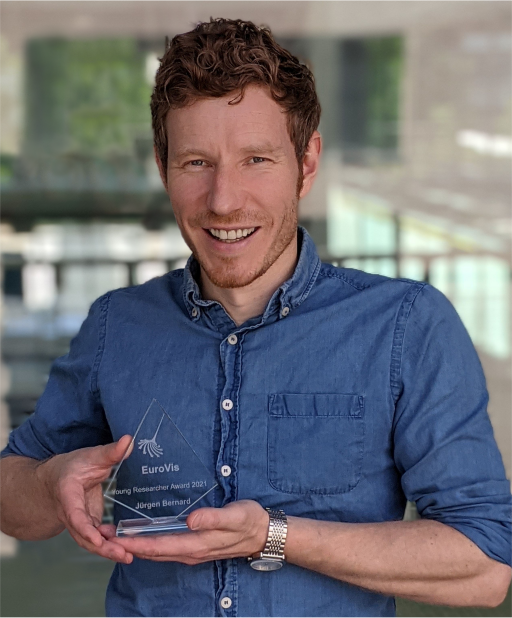
Jürgen Bernard is an Assistant Professor of Computer Science at the University of Zurich , leading the Interactive Visual Data Analysis (IVDA) Group . He is associated with the Digital Society Initiative (DSI) and holds a PhD in Computer Science from Technische Universität Darmstadt (2015) with a focus on time-oriented data analysis. His academic journey includes postdoctoral research at TU Darmstadt and the University of British Columbia. Education : Diploma in Computer Science (2009, TU Darmstadt) PhD in Computer Science (2015, TU Darmstadt) Research Interests : Dr. Bernard specializes in interactive visual data analysis , explainable machine learning , and human-centered AI . His work explores time series analysis , multivariate data exploration , and user-driven preference elicitation . He develops visual analytics systems for domains like healthcare , digital humanities , and industrial applications , with a particular focus on responsible AI and transparency in algorithmic systems . Research Trends : His publications emphasize interactive machine learning workflows , visual analytics for healthcare , and time-stamped event sequence analysis . Recent work includes LLM validation frameworks (Human-Data-Model Interaction Canvas) and personalized ranking systems funded by the Swiss National Science Foundation. He integrates temporal data with multivariate analysis across applications from medical manufacturing to chronic disease management . Scientific Recognition : EuroGraphics Young Researcher Award (2022) EuroVis Young Researcher Award (2021) Best Paper Awards at IEEE VIS (2021), EuroVA (2021, 2025) Dirk Bartz Prize (2017), Hugo-Geiger Preis (2016) Teaching & Grants : He teaches Interactive Visual Data Analysis (6 ECTS), Digital Health Seminars , and People-Oriented Computing . Currently leads a SNF Grant on Personalized Visual Analytics for multi-criteria decision support (2024-2028) with ETH Zurich's Prof. M. El-Assady.
Chao Liu is a Research Scientist at CNRS (French National Center for Scientific Research) since 2008, affiliated with the DEXTER team and the Department of Robotics, LIRMM at University of Montpellier, France. He earned his Ph.D. in Electrical & Electronic Engineering from Nanyang Technological University, Singapore (2006). Current research focuses on surgical robotics , haptics , teleoperation , and nonlinear control theory with applications in computer vision. His work addresses challenges in robotic-assisted telesurgery, including: Stable and transparent human-robot interaction through wave variable compensators and passivity filters Physiological motion compensation using spatio-temporal LSTM and dual Kalman filters EMG-based motion recognition for surgical skill assessment 3D soft-tissue reconstruction with stereo-endoscopes and deep learning Dr. Liu leads European and French projects like: TS2RT (CNRS-funded): Safer teleoperation with motion compensation ROBACUS (ANR-funded): Needle positioning with MPC control HaTUMoCo (CNRS-funded): Haptic teleoperation with uncertainty handling ARAKNES (EU-funded): Microrobotic systems for endoluminal surgery Scientific honors include Senior Member of IEEE and Member of Sigma Xi . He supervises Ph.D. and Master's students working on topics such as concentric tube robot optimization, haptic teleoperation, and EMG-based force estimation. Dr. Liu serves on IEEE Technical Committees for Telerobotics and Haptics , and as Technical Editor of IEEE/ASME Transactions on Mechatronics.
Alina Landowska serves as Assistant Professor in the Department of Cultural Studies at the Faculty of Humanities, SWPS University of Social Sciences and Humanities in Warsaw. Her academic profile integrates cultural studies, computational linguistics, and ethics, with significant contributions to understanding moral foundations in digital discourse and technological futures. Her educational background includes degrees in Management and Economics from Gdańsk University of Technology and European Integration from the Pontifical University of John Paul II in Krakow, complemented by international scholarship experiences: SDG Academy (United Nations) Tantur Ecumenical Institute, Jerusalem (University of Notre Dame) Baltic University Program, Uppsala Swedish Institute of Environmental Research, Kalmar Royal Danish Student Fund, Copenhagen Landowska's research investigates cultural evolution through computational discourse analysis, focusing on morality-technology intersections. She pioneers text-mining methodologies to examine moral foundations in social media, anticipatory rhetoric in digital communication, and value-based management frameworks. Her work bridges humanities with data science, analyzing polarization mechanisms and proleptic cues in online environments while exploring cooperation ethics in business contexts. Recent publications demonstrate methodological innovation in mapping technological futures through sentiment/emotion analysis and moral-value detection systems. Her article corpus reveals consistent thematic threads: digital rhetoric analysis (particularly prolepsis functions), moral psychology applications in AI/social media, and cultural evolution studies linking cooperation theory with business ethics. This interdisciplinary approach positions her at the nexus of computational social science and humanistic inquiry. No scientific awards or prizes are documented in her current professional profile. As an educator, Landowska mentors students in discourse analysis methodologies and socio-economic media studies while serving as executive coach with EMCC Poland. Her research leadership extends to co-founding the Institute for Development think tank and representing Employers of Poland at the OECD's Business and Industry Advisory Committee (2016-2018). She previously held vice-presidential roles in the Polish Association of Businesswomen. Landowska maintains active research affiliations with the Humanistic Management Center (University of Lucerne), International Council for Small Business (George Washington University), and ArgDiaP association. Her 2022-2024 tenure with New Ethos Lab advanced dialogue studies in persuasion frameworks, complementing her current work on digital rhetoric's ethical dimensions.
Leid Zejnilovic is an Assistant Professor at Nova School of Business and Economics (Nova SBE), where he co-founded the Data Science Knowledge Center and serves as Academic Director, and co-founded the Open and User Innovation Knowledge Center as Scientific Deputy Director. He also co-founded the Patient Innovation platform, enabling patients and caregivers to share self-made healthcare solutions. With a double PhD from Carnegie Mellon University and Católica-Lisbon School of Business and Economics, his career spans over 20 years of international consulting, academic entrepreneurship, and teaching at institutions like Imperial College Business School and Ludwig Boltzmann Institute. PhD in Strategy, Entrepreneurship and Technological Change (Carnegie Mellon University / Catholic University of Portugal, 2014) Master in Engineering and Public Policy (Carnegie Mellon University, 2012) Master in Information Technology (Dzemal Bijedic University, 2007) Bachelor in Telecommunications (University of Sarajevo, 2002) His research focuses on Technology and Innovation Management, Human-Computer Interaction, and data-driven solutions across healthcare, tourism, and education. He has published extensively in journals like California Management Review , PLoS ONE , and Marine Policy , with recent work analyzing big data in tourism, machine learning for oral health, and pandemic impacts on fisheries. As an Associate Editor for Data & Policy Journal , his contributions bridge academic research and real-world applications. Co-founding the Data Science for Social Good Foundation and leading over 100 talks in industry and academia, Zejnilovic's career emphasizes translating innovation into social and economic impact through platforms, policy, and education.
Benjamin Eysenbach is an Assistant Professor in the Department of Computer Science at Princeton University's School of Engineering and Applied Science since 2023. His research focuses on developing principled reinforcement learning (RL) algorithms that improve simplicity, scalability, and robustness in state-of-the-art systems, particularly through probabilistic inference techniques. Ph.D., Machine Learning, Carnegie Mellon University (2023) B.S., Mathematics, Massachusetts Institute of Technology Research interests center on reinforcement learning with emphasis on long-horizon reasoning, exploration strategies, and robustness. He explores intersections with probabilistic inference and self-supervised learning to enhance RL capabilities. Recent publications highlight trends in contrastive learning for goal-conditioned RL, temporal distance modeling , and hierarchical control . Key themes include reward-free learning, scalable architectures, and uncertainty quantification in decision-making systems. 2025: Junior Faculty Award for Excellence in Research and Teaching, Princeton School of Engineering and Applied Science Eysenbach's work bridges theoretical foundations with practical implementations in AI training frameworks, emphasizing performance optimization and safety mechanisms.
Dr. Todd D. Murphey is a Professor of Mechanical Engineering at Northwestern University's Robert R. McCormick School of Engineering and Applied Science. He serves as Director of Transformative Research and Director of the Master of Science in Robotics Program at Northwestern, leading initiatives in computational dynamics, control systems, and robotics. His work bridges engineering, neuroscience, and biomedical applications, with a focus on developing systems that interact effectively with humans and their environments. Dr. Murphey received his Ph.D. in Control and Dynamical Systems from the California Institute of Technology in 2002, with a thesis titled "Control of Multiple Model Systems." Prior to that, he earned a B.S. in Mathematics, summa cum laude, from the University of Arizona in 1997. Dr. Murphey's research centers on computational methods in dynamics and control, with applications spanning neuroscience, health science, robotics, and automation. His work in the Interactive & Emergent Autonomy Lab focuses on computational models of embedded control, biomechanical simulation, dynamic exploration, and hybrid control. The group develops mathematical approaches that lead to orders of magnitude improvement in computational efficiency for real-time implementation. Key application areas include assistive exoskeleton control, stabilization of energy networks, bio-inspired active sensing, entertainment robots, robotic exploration, and software-enabled stroke rehabilitation. Analysis of Dr. Murphey's recent publications reveals a strong emphasis on human-swarm interaction, algorithmic matter, and control of cyber-physical systems in uncertain environments. His work increasingly integrates information theory with physical systems, exploring how both autonomous and biological systems interact with environments to learn and improve behaviors. Recent trends show growing applications in rehabilitation technology, with particular focus on human-machine interaction in biomedical devices and embodied intelligence. Dr. Murphey has received numerous honors and awards for his contributions to robotics and engineering: Named Director of Transformative Research at Northwestern University (2025) Appointed IEEE Robotics and Automation Society Vice President of Publication Activities (2022) Co-recipient of Best Paper Award for IEEE Transactions on Robotics (2020) Appointed to Air Force Scientific Advisory Board (2019) Recipient of ABB Best Student Paper Award for CPL-SLAM research (2019) Cole-Higgins Award from Northwestern Engineering (2015) Dr. Murphey has supervised numerous graduate students including Taosha Fan, Giorgos Mamakoukas, and Ian Abraham, with research spanning robotic exploration using electrosense and mechanical contact, human-in-the-loop control, and shared control for rehabilitation devices. His lab has secured significant funding from the National Science Foundation, DARPA, and industry partners including Siemens and Ekso Bionics, supporting research in algorithmic matter, emergent behavior, and human-swarm collaboration. The Interactive & Emergent Autonomy Lab, led by Dr. Murphey, investigates how both autonomous systems and biological systems interact with their environments to learn and improve behaviors. Current projects include active learning and data-driven control, active perception in human-swarm collaboration, algorithmic matter and emergent computation, control for nonlinear and hybrid systems, cyber physical systems in uncertain environments, harmonious navigation in human crowds, information maximizing clinical diagnostics, reactive learning in underwater exploration, robot-assisted rehabilitation, and software-enabled biomedical devices. The lab collaborates with researchers across Northwestern and institutions including Georgia Tech, MIT, and industry partners.
Can Güler is an Assistant Professor in the Department of Lifelong Learning and Adult Education at the Faculty of Education, Anadolu University, Turkey. Previously, from 2002 to 2023, he served as a Lecturer in the Department of Distance Education at the Faculty of Open Education, Anadolu University. His academic career spans over two decades with continuous contributions to open and distance education systems. His educational background includes: Bachelor's degree in Computer and Instructional Technologies Education, Anadolu University (2002) Master's degree in Distance Education, Institute of Social Sciences, Anadolu University (2007) Ph.D. in Distance Education, Institute of Social Sciences, Anadolu University (2022) Güler's research centers on open and distance learning methodologies, educational technology integration, and instructional material development. He specializes in video-based learning systems, interactive media design, and gamification strategies for enhancing learner engagement. His work addresses practical challenges in digital content creation and accessibility for diverse learner demographics, particularly adult populations. Analysis of his publication trajectory reveals consistent innovation in multimedia applications for distance education, with recent emphasis on generative AI awareness among educators and interactive video transformation techniques. His research frequently employs design-based methodologies and institutional case studies from Anadolu University's open education infrastructure. Scientific Awards: None mentioned in available sources. Advising and Grants: No information provided regarding student supervision or research funding in current documentation.
Luke Miratrix serves as Assistant Professor at Harvard Graduate School of Education and affiliate faculty in Harvard Department of Statistics. His methodological expertise centers on causal inference applications in educational research, particularly treatment effect heterogeneity and cluster-randomized trial evaluation. His academic background includes a Doctorate in Statistics from University of California, Berkeley (2012), Master of Science in Computer Science from M.I.T., Bachelor of Science in Computer Science from California Institute of Technology, and Bachelor of Arts in Mathematics from Reed College. Prior to academia, he spent seven years as a high school teacher and tutor. Miratrix's research prioritizes minimal-assumption statistical approaches to validate data-driven arguments. Key interests include developing methods for characterizing variation in treatment impacts, analyzing post-treatment subgroups, and applying high-dimensional techniques to text summarization in legal, journalistic, and educational contexts. His work consistently bridges theoretical statistics with practical implementation challenges in real-world settings. Analysis of his recent publications (2023-2025) reveals three dominant trends: advancement of matching methodologies (e.g., synthetic controls, caliper matching), refinement of heterogeneous treatment effect estimation across multisite trials, and integration of machine learning with human coding for efficient text-based inference in educational assessments. These efforts demonstrate increasing focus on scalable, accessible tools for applied researchers. He contributes to methodological infrastructure through the CARES Lab and software packages like 'matchMulti' and 'textreg', providing practical implementation guides for complex statistical techniques. His work emphasizes translating advanced causal inference methods into usable frameworks for education researchers and policymakers.