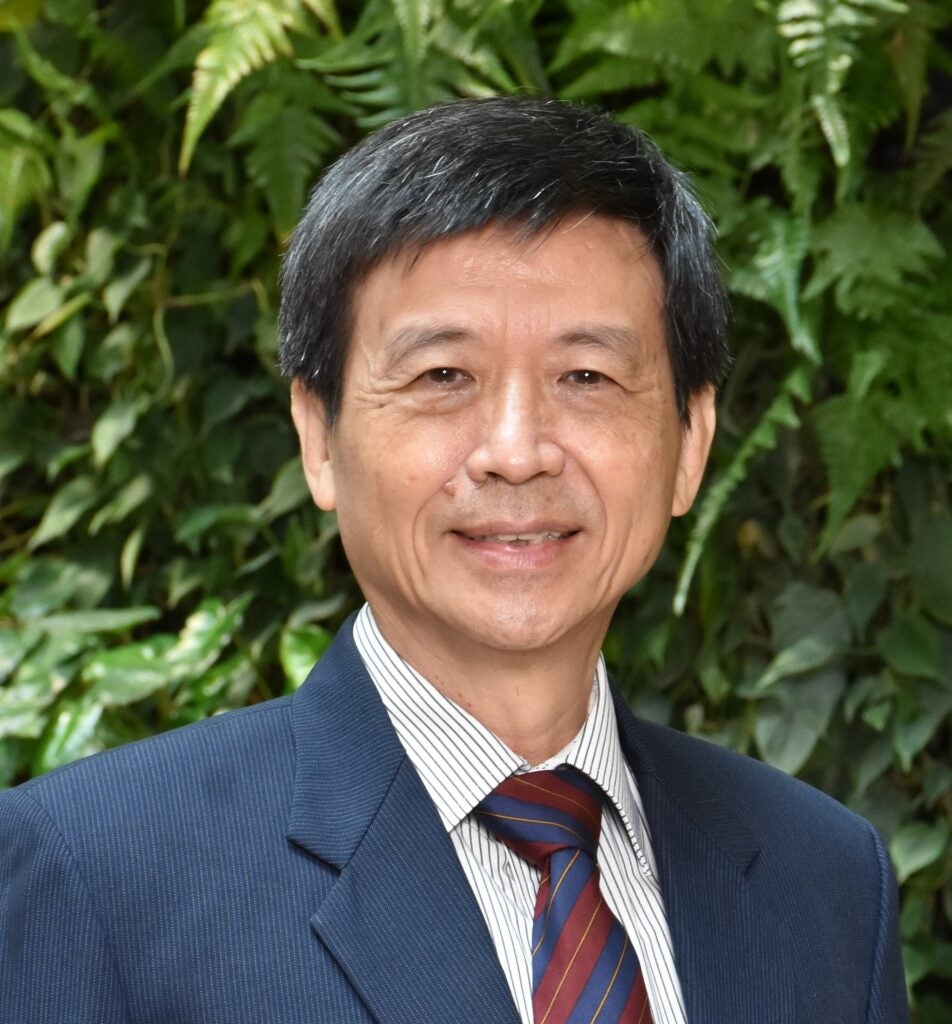
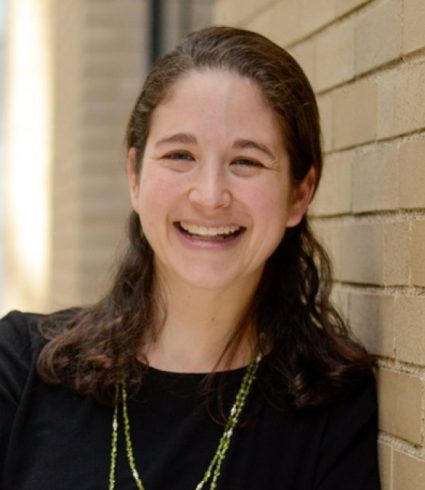
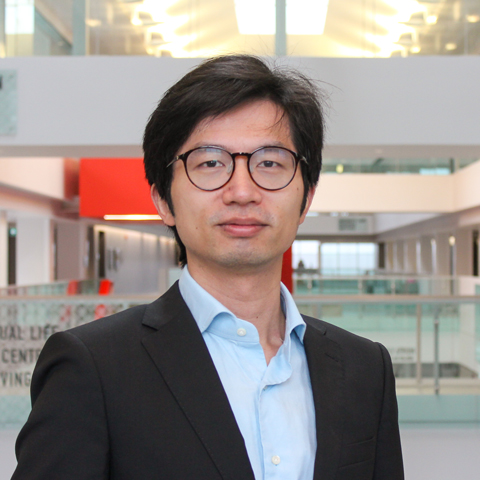
Sarah Billington is the UPS Foundation Professor of Civil and Environmental Engineering at Stanford University and a Senior Fellow at the Woods Institute for the Environment. Her research program focuses on sustainable building design, human wellbeing, and ethical supply chain practices. Education: PhD, University of Texas at Austin, Structural Engineering (1997) MSE, University of Texas at Austin, Structural Engineering (1994) BSE, Princeton University, Civil Engineering & Operations Research (1990) Her lab employs interdisciplinary methods to study how built environments impact human physical, psychological, and social wellbeing. Current projects include developing tools to quantify nature exposure in buildings, exploring affordable housing's role in wellbeing, and using AI to assess forced labor risks in material supply chains. While no longer active in this area, her group previously pioneered research on sustainable construction materials like bio-based composites and ductile cement-based composites. Her recent publications address topics such as nature integration in architecture, workplace design optimization, and health impacts of building materials. The Billington Lab at Stanford fosters collaborative team science, welcoming partnerships to advance occupant-centric engineering solutions.
Prof. Dr. Stefanie Hellweg serves as a Full Professor for Ecological Systems Design at the ETH Zürich , Department of Civil, Environmental and Geomatic Engineering. She is Deputy Head of the Institute of Environmental Engineering and leads groundbreaking research at the intersection of industrial ecology, life cycle assessment, and circular economy systems. PhD in Environmental Engineering (ETH Zürich, 2000) Industrial Engineering Degree (Karlsruhe University, 1996) Her research develops advanced methodologies for environmental impact assessment of products and technologies, focusing on: Life Cycle Assessment (LCA) with correlated uncertainty modeling Circular economy implementation in chemical and energy sectors Industrial symbiosis optimization for heat and nutrient flows Urban wastewater systems redesign for resource recovery Chemical pollution analysis in plastic materials Key publication trends reveal expertise in: Hybrid wastewater treatment systems Energy-efficient greenhouse cultivation Exergy analysis for sustainability metrics Machine learning applications in environmental modeling Policy-relevant industrial ecology studies She actively participates in global sustainability initiatives as: President of the International Society of Industrial Ecology (ISIE) Member of UN Environment's International Resource Panel Editorial board member for leading environmental journals
Leena Aarikka-Stenroos is a Professor at Tampere University, leading the Research Centre for Managing Circular Economy (ManCE). She holds a Doctor of Science degree in Economics and Business Administration from Turku School of Economics (2011). Her research focuses on circular economy innovation, business models, sustainability transitions, and value creation mechanisms. She has pioneered studies on catalysts for circular economy ecosystems, B2B customer referencing, and the role of digital technologies in enabling circular value chains. Academic Qualification: PhD in Economics and Business Administration (Turku School of Economics, 2011) Roles: Head of Research Centre for Managing Circular Economy, Tampere University Research Interests: Circular Economy, Sustainability, Business Models, Innovation Management, Value Creation Her work contributes to UN Sustainable Development Goals, particularly addressing climate action and responsible consumption. Key contributions include frameworks for circular business model innovation and stakeholder engagement strategies in sustainability transitions. She has received prestigious awards such as the Alex Gofman Award (2016) and multiple best paper recognitions. Her research spans industries like construction, textiles, and healthcare, emphasizing cross-sector collaboration. Recent articles explore emotional dynamics in innovation, ethical value co-creation, and AI-driven value creation in B2B contexts. She actively collaborates internationally, contributing to conferences and editorial boards. Her work bridges theoretical insights with practical business strategies for environmental sustainability.
LU Wen Feng is an Adjunct Associate Professor in the Department of Mechanical Engineering at the National University of Singapore (NUS), affiliated with the College of Design and Engineering. His research focuses on advanced manufacturing technologies, including additive manufacturing, robotics, and AI-driven systems. He explores sustainable design methodologies, smart manufacturing innovations, and bioprinting applications. Key areas include optimizing material processes, enhancing mechanical properties of printed materials, and developing autonomous robotic solutions for industrial tasks. Contact: mpelwf@nus.edu.sg , located at E3-02-07. Research Interests : His work bridges AI and manufacturing, emphasizing Knowledge graph integration for additive manufacturing, Autonomous robotic systems in industrial settings, Bioprinting for tissue repair with smart bioinks, Topology optimization for lightweight and sustainable structures, Material characterization and process engineering for 3D-printed composites. Recent Article Trends : LU Wen Feng's 2025 articles highlight advancements in AI-augmented manufacturing systems (e.g., MaViLa, AutoMEX) and sustainable design workflows. His 2024 studies address material anisotropy, corrosion behavior, and topology optimization strategies for lattice structures. These trends reflect his interdisciplinary approach to solving challenges in additive manufacturing, robotics, and biomedical applications. Awards : No scientific awards explicitly mentioned. Advising & Grants : No current graduate students or grants listed. His research likely integrates industry-academia collaborations given the focus on applied manufacturing technologies. Labs/Teams : Not explicitly detailed, but his work suggests involvement in advanced manufacturing labs and AI-robotics teams at NUS.
Iris D. Tommelein serves as the Roy W. Carlson Distinguished Professor in the Civil and Environmental Engineering Department at the University of California, Berkeley's College of Engineering, where she directs the Project Production Systems Laboratory (P2SL). A globally recognized pioneer in Lean Construction, she has revolutionized architecture-engineering-construction (AEC) practices through research, industry workshops, and leadership since co-founding the Lean Construction Institute in 1997. Her educational foundation spans multiple disciplines: Ph.D. in Civil Engineering (Construction Engineering and Management), Stanford University, 1989 M.S. in Computer Science (Artificial Intelligence), Stanford University, 1989 M.S. in Civil Engineering (Construction Engineering and Management), Stanford University, 1985 B.S. (5-year degree) in Civil Engineer-Architect, Vrije Universiteit Brussel, Belgium, 1984 Professor Tommelein's research centers on transforming construction processes through Lean principles and digital innovation . Her work pioneers takt planning for workflow reliability, industrialized construction for labor and sustainability challenges, and mistakeproofing to eliminate errors. She integrates digital twins , AI , and optimization to develop practical decision-support systems for supply chains, logistics, and production management. Recent focus includes modular offsite construction and Industry 4.0 applications. Analysis of her 2023-2025 publications reveals intensifying research on takt planning maturity models and industrialized construction feasibility , with growing emphasis on mass timber automation and visual management systems. Her work consistently bridges lean theory with practical implementation across megaprojects, subcontracting networks, and heavy civil engineering. Her exceptional contributions have earned: Lean Pioneer Award (Lean Construction Institute, 2015) National Academy of Construction induction (2019) PPI Technical Achievement Award (2022) Robert B. Harris Award (University of Michigan, 2024) ASCE Construction Management Award (2024) - first woman recipient in 51 years Through the P2SL, she leads industry-collaborative research on production system design, mistakeproofing frameworks, and digital transformation. Her grant-funded projects develop assessment tools for industrialized construction adoption and takt planning methods adaptable to diverse project types. She actively mentors graduate students and drives knowledge transfer via workshops and the annual Construction Innovation Day. The Project Production Systems Laboratory (P2SL) operates as a global hub for construction innovation, partnering with owners, contractors, and suppliers to implement lean production systems. Current initiatives include developing serious games for mistakeproofing training, optimizing work density methods for heavy civil projects, and creating digital twins for real-time construction management.
Professor Phil Purnell is a Professor of Materials and Structures at the School of Civil Engineering, University of Leeds. His expertise spans materials science, infrastructure systems, circular economy, and interdisciplinary research. He leads projects addressing decarbonization, waste-to-resource systems, and sustainable construction materials. His roles include Deputy Head of School and advisor to UKRI, DEFRA, and the UK Government’s Circular Economy Taskforce. He holds visiting positions at the Royal College of Art and University of Cambridge. Education: PhD, BEng (Civil), and teaching qualifications (PCPCE, ACTLHE). His research focuses on circular economy applications in textiles, offshore wind, and foundational industries. Notable projects include the Textiles Circularity Centre, Yorkshire Circular Economy Living Lab, and Complex Value Optimisation for Resource Recovery (C-VORR). He advocates for systemic approaches to sustainability, integrating economic, technical, and environmental values. Research outputs emphasize decarbonization pathways, material lifecycle assessments, and robotics in infrastructure management. Collaborations with industry and policy bodies drive practical solutions for resource efficiency. His work bridges engineering, economics, and environmental science to address global challenges like waste management and climate change.
Dr. Bhavna Sharma is an Associate Professor and Director of the Chase L. Leavitt Master of Building Science Program at the USC School of Architecture. Her work focuses on decarbonization, bio-based materials innovation, and sustainable healthcare infrastructure. She leads the Keck USC Sustainable Healthcare Initiative (KUSHI) to advance environmentally conscious healthcare systems. Dr. Sharma holds a Ph.D. in Civil and Environmental Engineering from the University of Pittsburgh, with additional degrees in Art History and Architecture. Her research spans structural systems optimization from material harvesting to building-scale applications, emphasizing bio-composites like bamboo and timber. She co-chairs USC's Presidential Working Group on Sustainability, contributing to Assignment: Earth climate goals. Courses taught include seismic design, structural systems, and building science integration. Key research areas include lifecycle assessment in healthcare, seismic-resistant designs, and interdisciplinary standards for non-conventional materials. Her work bridges material science, architectural practice, and policy to address global sustainability challenges.
Pardis Pishdad is an Associate Professor and Graduate Program Director in the School of Building Construction at Georgia Institute of Technology’s College of Design. She directs the Smart Built Environment Eco-System (Smart Bees) Laboratory, focusing on integrating cyber-physical systems, digital twins, and innovative project delivery methods (e.g., IPD, Flash Tracking) for sustainable built environments. Her research bridges technology adoption, trust-building in construction contracts, and supply chain optimization. Education: PhD, Environmental Design and Planning (Virginia Tech) Master’s Degrees: Civil Engineering (Virginia Tech), Design Studies in Project Management (Harvard), Architecture (University of Tehran) Bachelor’s in Architectural Engineering (Azad University of Shiraz) Research Interests: Her work emphasizes sustainable construction practices using IoT, BIM, and blockchain. Key areas include lifecycle cost analysis, lean construction, and smart building technologies. She explores trust dynamics and collaboration in construction projects through game theory and process optimization. Recognition: 2018 ENR Top 20 Under 40 Professionals 2016 CII National Outstanding Researcher Award 2020-2022 Georgia Tech Provost Teaching Learning Fellow Advisory Roles: Academic Advisor for CII’s Supply Chain Management Community, Vice Chair of BuildingSMART’s BIM Forum 5D Taskforce. Formerly advised the Construction Management Association of America’s Board (2016–2018). Industry Collaboration: Partnerships with Turner Construction, GDOT, and VDOT. Research on Flash Tracking and blockchain has been integrated into industry practices. Labs & Teams: The Smart Bees Lab pioneers cyber-physical systems for smart buildings, exploring AI-driven solutions and sustainable construction frameworks.
Prof. Dr.-Ing. Johannes Henrich Schleifenbaum is a Professor and Chair of Digital Additive Production at RWTH Aachen University, where he leads research in the Profile area Production Engineering (ProdE). His work advances additive manufacturing (AM) through interdisciplinary approaches combining materials science, process engineering, and digital technologies. His research encompasses: Laser powder bed fusion (LPBF) process optimization and defect mitigation Development of novel alloys/composites for AM applications Sustainable manufacturing practices including material recycling Integration of AI/ML for accelerated material and process design Digital tools for automated design and distributed manufacturing Recent publications (2023-2025) demonstrate a strong focus on: Multi-material processing and microstructure control Machine learning-driven alloy development Standardization and scalability of AM processes Advanced simulations for meltpool dynamics and thermal behavior Applications in aerospace, construction, and biochemical engineering He leads the Chair of Digital Additive Production, collaborating with industry partners to translate research into industrial solutions for next-generation manufacturing.
Markus König is a Professor of Informatics in Civil Engineering at Ruhr University Bochum, where he has been researching and teaching since October 2009. His work focuses on Building Information Modeling (BIM), digital construction technologies, and civil engineering informatics, with significant contributions to the development and implementation of digital methods in German construction industry. Dr. König earned his degree in civil engineering with a focus on applied computer science at Leibniz University Hannover, where he also completed his doctorate on cooperative building planning at the Institute for Building Informatics. He subsequently held a junior professorship for Theoretical Methods of Project Management at Bauhaus University Weimar before joining Ruhr University Bochum. His research spans multiple cutting-edge areas including Building Information Modeling (BIM), construction process simulation, tunneling informatics, infrastructure asset management, and the application of artificial intelligence and computer vision in civil engineering. As chair of the Building Informatics Working Group from 2012-2016, he played a key role in developing the first national BIM curriculum for German universities and serves as editor of the book 'Building Information Modeling: Technological Foundations and Industrial Practice.' Analysis of his recent publications reveals a strong trend toward semantic technologies, digital twins, automated compliance checking, and the integration of AI in construction processes. His work increasingly focuses on information containers, ontology development, and the application of large language models to infrastructure data, reflecting the evolving landscape of digital construction. Dr. König's significant contributions to digital construction have been recognized with prestigious awards: Lower Saxony-Bremen Construction Industry Award (2017) for 'services in the development and introduction of digital construction in Germany' Konrad Zuse Medal (2020) While specific details about his advising and grant activities aren't explicitly mentioned in the provided text, his extensive publication record with numerous co-authors suggests active supervision of doctoral students and research staff. His involvement in multiple collaborative research projects is evident from his publication history. At Ruhr University Bochum, Professor König leads a research group focused on civil engineering informatics, with particular emphasis on BIM, digital construction technologies, and their application across the building lifecycle. His team appears to work at the intersection of computer science and civil engineering, developing innovative solutions for construction process optimization, infrastructure management, and digital transformation of the AEC industry.
Karel Van Acker is a full professor in the Faculty of Engineering Science at KU Leuven , leading the Sustainable Materials Processing and Recycling (SeMPeR) research group. His work focuses on integrating environmental and economic sustainability assessments, particularly for metallurgical residues and circular economy systems. Head of SeMPeR group Contact person for SeMPeR at Arenberg campus Head of Subdivision 39, Brussels Campus Research areas include: Circular Economy: Monitoring systems, stock-flow models, and business models Sustainability Assessments: Life Cycle Assessment (LCA), techno-economic analysis, carbon footprinting Resource Valorization: Steel slag mineral carbonation, rare earth reduction, biorefinery processes Key article trends: 2025 works emphasize steel slag carbonation for carbon capture, hydrogen storage technologies, and clothing sufficiency as circular economy strategies 2024 research explores car mobility circularity , AI environmental impacts , and policy integration for circular economy monitors Earlier works (2023-2020) address textile recycling , biomass to biofuels , and landfill mining using system dynamics Teaching responsibilities: Sustainable Materials Management (H00R6A) Environmental Impact Analysis (I0V86A) Material Selection & Sustainability (D0X32A) Global Challenges for Sustainable Society (H0O00A)
Summary Associate Professor Mehrdad Arashpour is an internationally recognized researcher and educator in construction and civil infrastructure, focusing on automation and information technologies. He leads the ASCII Lab at Monash University's Department of Civil and Environmental Engineering. His academic roles include Head of Construction Engineering and membership in the CIB's Working Commission on Off-site Construction (W121) and Infrastructure Task Group (TG91). Education: Ph.D., RMIT University, Australia M.Sc., Grenoble University, France B.Sc., IU University, Iran Research Interests: Digital twins, computer vision, robotics, BIM integration, sustainable construction, and automation in construction processes. His work contributes to UN Sustainable Development Goals, particularly in sustainable cities and communities. Grants & Awards: Over $6M in grants from ARC, Austroads, and industry partnerships. Recognitions include Editor's Choice Paper (ASCE, 2019) and Outstanding Reviewer (Elsevier, 2016). Teaching: Courses like Risk Management in Engineering Projects and Infrastructure Research Project. Advises on PhD topics in computer vision, robotics, and BIM. Labs & Collaborations: ASCII Lab focuses on smart, sustainable solutions for construction. Collaborates with global researchers and organizations like SPARC Hub and Building 4.0 CRC.
Massachusetts Institute of TechnologyUnited States
Elsa A. Olivetti is the Jerry McAfee (1940) Professor in Engineering and Professor of Materials Science and Engineering at MIT, and a MacVicar Faculty Fellow. She leads the Olivetti Group, focusing on sustainable materials design, recycling strategies, and computational models for environmental and economic impact assessment. Her work bridges materials science with sustainability, emphasizing circular economy principles and decarbonization. Education: B.S. in Engineering Science from University of Virginia (2000); Ph.D. in Materials Science and Engineering from MIT (2007). Her doctoral research centered on lithium-ion battery electrode materials. She joined MIT’s Department of Materials Science and Engineering (DMSE) in 2014 as an Assistant Professor, later advancing to full Professor. She co-directs the MIT Climate & Sustainability Consortium and chairs the MIT Climate Nucleus. Research interests include: sustainable materials systems, recycling-friendly material design, waste mining, and AI-driven materials discovery. She develops models for cost prediction, environmental impact analysis, and policy-relevant supply chain dynamics. Notable contributions include high-throughput zeolite design and battery recycling frameworks. Awards include the Bose Teaching Award (2021), NSF Early Career Award (2018), and Minerals, Metals & Materials Society Early Career Fellowship (2019). Her work emphasizes education and curriculum development, including courses for MIT’s Climate Scholars program. Labs/Teams: Olivetti Group (MIT), MIT Climate & Sustainability Consortium. Active in global sustainability initiatives, focusing on materials for energy transition and climate resilience.
Dr. Qian Zhang serves as Assistant Professor in the Robert M. Buchan Department of Mining at Queen's University's Smith Engineering, leading the Green Mining Value Chain (GreeMVC) Lab. His research develops strategic frameworks for sustainability and resilience throughout mining value chains, with emphasis on climate change mitigation and resource efficiency in global mineral systems. His academic foundation includes a Ph.D. in Urban Engineering from the University of Tokyo (awarded Japanese Government MEXT Scholarship), complemented by MSc and BSc degrees in Environmental Science plus a Minor in Economics from Peking University. Prior to his current role, he conducted postdoctoral research at the University of Victoria and University of Tokyo while consulting for the World Resources Institute on climate-energy initiatives. Dr. Zhang's expertise spans carbon footprint analysis , life-cycle assessment , and industrial ecology applied to mining systems. He employs advanced methodologies including input-output analysis and material flow accounting to model environmental pressures across urban infrastructure and mineral supply chains. His work specifically addresses greenhouse gas accounting, water-energy nexus challenges, and circular economy implementation in resource-intensive sectors. Recent publications reveal strong methodological convergence between artificial intelligence and environmental assessment, particularly in optimizing mining operations through reinforcement learning and geospatial analysis. Key thematic clusters include carbon accounting standardization, critical mineral sustainability, and policy-oriented modeling of environmental pressures throughout mineral value chains. His research program is supported by major competitive grants: NSERC Discovery Grant (2022-2027) SSHRC Institutional Grant (2023, 2025) NSERC Alliance Missions Grant (2023, 2024) Mitacs Accelerate Grant (2023, 2025) NFRF Exploration Grant (2025-2027) NRCan Energy Innovation Program (2025) Dr. Zhang actively mentors a dynamic research group comprising 10+ graduate students and postdocs, securing collaborative funding through institutional and federal channels. His GreeMVC Lab maintains active partnerships with industry leaders and government agencies to translate research into practical sustainability solutions for the mining sector, with current projects focusing on AI-driven fleet management and life-cycle assessment of mineral supply chains. The GreeMVC Lab operates as a multidisciplinary hub with structured mentorship programs, regular industry engagement events, and international collaborations including the COM symposium on sustainable circularity. The lab's physical space in Goodwin Hall supports advanced computational analysis of mining value chains while fostering innovation in green mining technologies through student-led research initiatives.
Professor Michael Bell is the Foundation Professor of Ports and Maritime Logistics at the University of Sydney Business School's Institute of Transport and Logistics Studies. He holds a BA from Cambridge University, MSc and PhD from Leeds University, and has held roles including Director of Imperial College London's PORTeC and academic positions at Newcastle University and Karlsruhe Technical University. His research focuses on ports, transport networks, sustainability, and intelligent transport systems. He has authored over 150 publications, including seminal works like Transportation Network Analysis . Current projects include circular economy diversification for ports and autonomous delivery systems. Awards include fellowship in multiple transport societies. Education: BA (Economics) Cambridge (1975), MSc (Transportation) Leeds (1976), PhD (Freight Distribution) Leeds (1981). Postdoctoral research at Karlsruhe Technical University (1982–1984). Research Interests: Ports logistics, transport network resilience, urban logistics, cybersecurity in supply chains, and sustainable transport policy. Publications span 40+ years, emphasizing empirical and theoretical advancements in maritime systems, network modelling, and policy analysis. Recent work explores autonomous systems integration and port diversification strategies. Grants include a 2023 iMOVE CRC project on land use trip surveys and a 2022 ARC Discovery Project on automated transport decisions. Media appearances address global trade disruptions (e.g., Suez Canal blockage), autonomous vehicles, and port sustainability. Led PORTeC (Imperial College) and co-founded the Institute of Transport and Logistics Studies at Sydney. Active in policy advisory roles for government agencies and industry bodies.