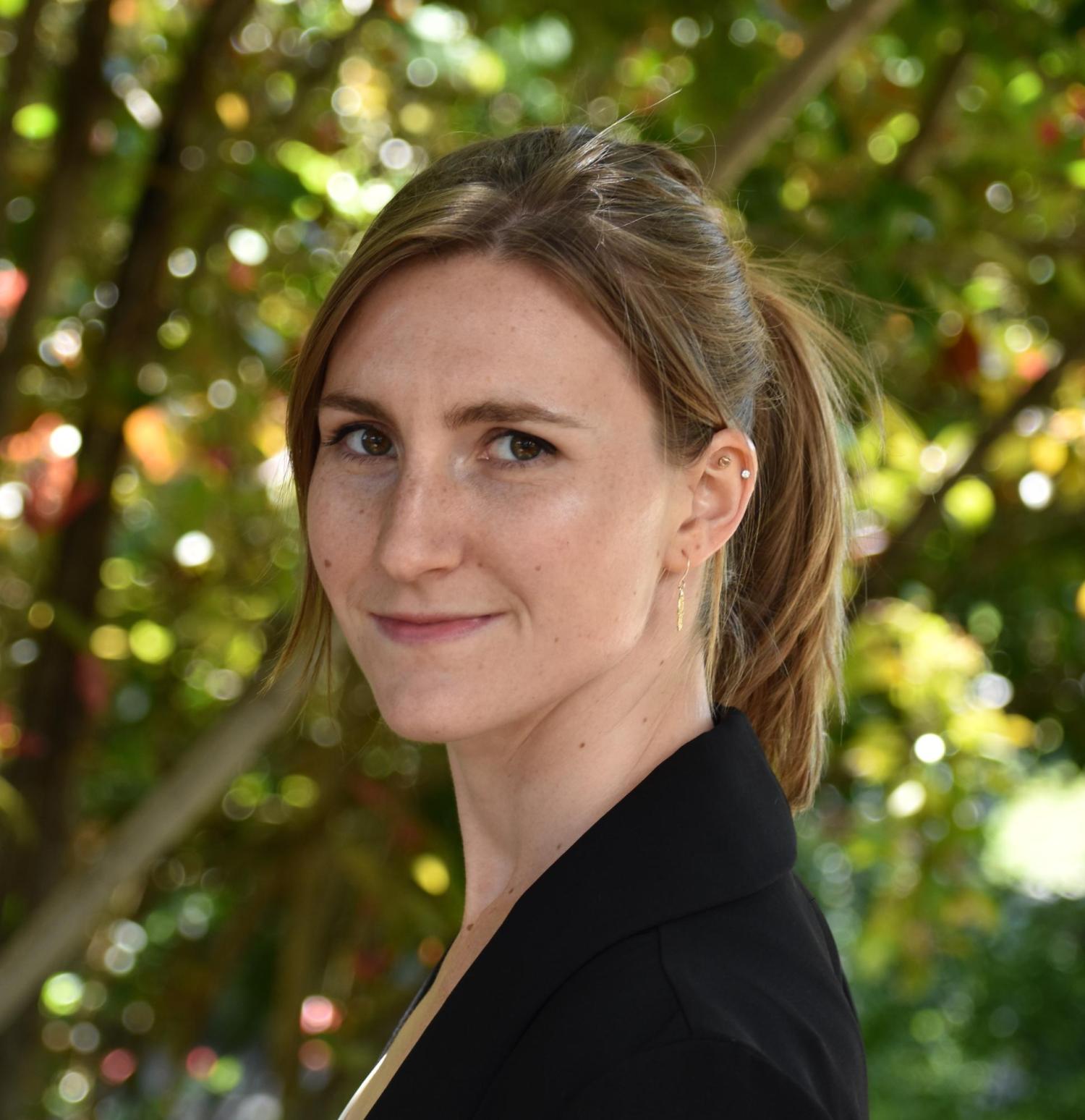
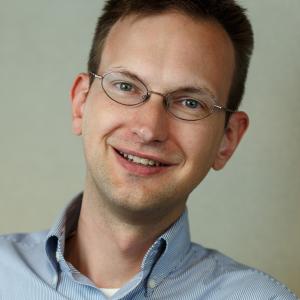
Esther Rolf is an Assistant Professor in the Department of Computer Science at the University of Colorado Boulder. Her research focuses on blending methodological and applied machine learning techniques to address social and environmental challenges, emphasizing usability, data-efficiency, and fairness. Her work includes developing algorithms for environmental monitoring with satellite imagery and advancing geospatial ML systems. Her research explores the multifaceted role of data representation in machine learning, particularly how spatial distribution and data acquisition impact model fairness and efficacy. Projects include formalizing representivity in training data and tackling evaluation challenges in geospatial ML applications. Recent publications highlight her expertise in satellite-based poverty mapping, multimodal data efficiency, and geospatial foundation models. She integrates specialized architectures and domain-specific benchmarks into her work. Best Paper Award, ICML (2018) Best Paper Award, NeurIPS Workshop on AI for Social Good (2019) NSF Graduate Research Fellowship Google Research Fellowship Esther's lab at CU Boulder recruits PhD students and postdocs interested in statistical/geospatial ML and context-driven research for real-world problems. She teaches graduate courses in machine learning and geospatial ML at CU Boulder.
Hima Lakkaraju is an Assistant Professor at Harvard University with dual appointments in the Harvard Business School and the Department of Computer Science. Her research focuses on trustworthy AI, including machine learning interpretability, fairness, privacy, and safety. She holds a PhD from Stanford University and has received accolades such as the Alfred P. Sloan Fellowship and NSF CAREER Award. Her work bridges algorithmic foundations and societal implications of AI, with applications in healthcare, policy, and business. Education: PhD in Computer Science from Stanford University (2013-2017). Academic background includes roles at IBM Research, Microsoft Research, and Adobe. Research Interests: Algorithmic Foundations of AI Interpretability and Explainable AI Fairness and Bias Mitigation Privacy-Preserving ML Generative Models and LLMs Ethical AI Policy and Regulation Key Achievements: Over 100 publications in top venues like NeurIPS and ICML; co-founder of the Trustworthy ML Initiative; featured in MIT Tech Review, Forbes, and Harvard Business Review. Current projects include the AI4LIFE research group and work on regulatory frameworks for AI. Advising and Grants: Supervises over 30 students across PhD, master's, and postdoc levels. Research supported by NSF, Sloan Foundation, Schmidt Sciences, Google, Amazon, and others. Initiatives include the Regulatable ML workshop and NeurIPS ethics co-chair roles. Labs and Collaborations: Leads Harvard's AI4LIFE group and collaborates with industry partners like Fiddler AI. Active in policy discussions on AI regulation and societal impact.
Professor David Clifton is the Royal Academy of Engineering Chair of Clinical Machine Learning at the University of Oxford’s Institute of Biomedical Engineering. He leads the Computational Health Informatics (CHI) Lab, focusing on AI-driven healthcare solutions with a strong emphasis on translational research in low- and middle-income countries (LMICs). His work spans digital health technologies, medical imaging analysis, and AI ethics. Clifton holds multiple fellowships, including from the Alan Turing Institute and Fudan University. Key affiliations include co-directorship of the Oxford-CityU Centre for Cardiovascular Engineering and involvement in the Wellcome Trust’s Flagship Centre in Vietnam. His research has been commercialized through spinouts like OBS Medical and Oxehealth. Notable projects include AI tools for non-invasive vital sign monitoring and pandemic response strategies using audio-based health data. Clifton’s awards include the IEEE Early Career Award (2022) and the Vice-Chancellor’s Innovation Prize. His lab’s Suzhou branch focuses on open-source digital health research using public datasets. Current research themes include multimodal data integration, generative AI in healthcare, and equitable AI deployment across global health systems.
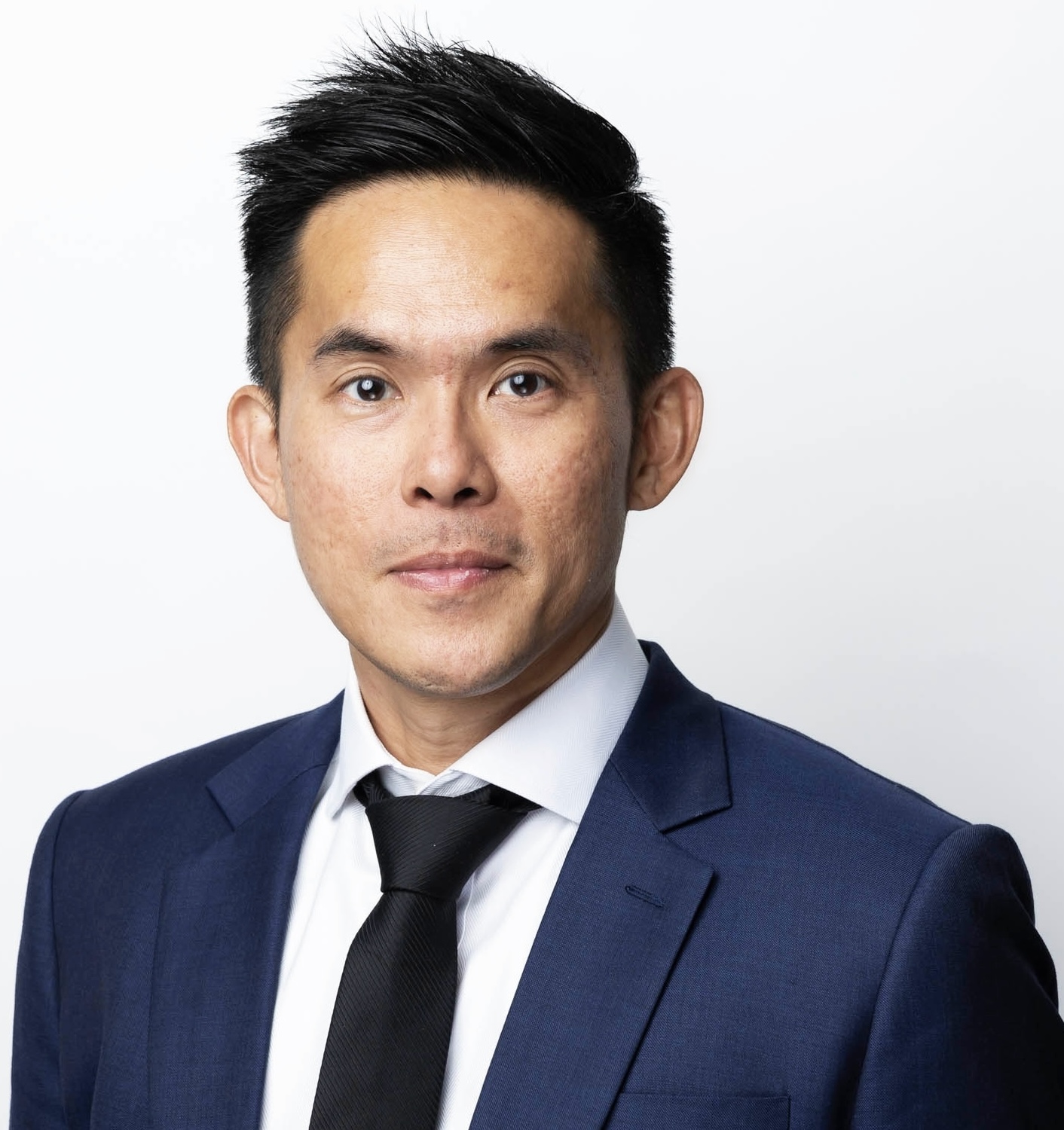
Professor Barney Tan serves as Professor of Information Systems and Senior Deputy Dean (Impact and Partnerships) at UNSW Business School. Previously, he held the position of Head of School (Information Systems and Technology Management) and was formerly Professor of Strategic Information Systems at The University of Sydney. Professor Tan completed his PhD in Information Systems at the National University of Singapore in 2012, following a Bachelor of Computing (Honors) in Information Systems from the same institution in 2004. His research focuses on strategic information systems, AI management and implementation, digital platforms and ecosystems, fintech, and information systems for sustainable development with particular emphasis on IT trends in the Asia-Pacific region including China and ASEAN countries. As an engaged researcher, Professor Tan is deeply passionate about translational research that contributes toward sustainable development and frequently provides advisory support to organizations he has studied, including national governments through his work with the United Nations International Think Tank for Landlocked Developing Countries. His research has been published in top-tier journals including MIS Quarterly, Information Systems Research, Journal of Association of Information Systems, Information Systems Journal, and The Journal of Strategic Information Systems. Senior Editor, Information Systems Journal (2022-Present) Senior Editor, Information Technology and People (2019-Present) Associate Editor, Internet Research (2020-Present) Associate Editor, Information and Management (2016-Present) Editorial Board Member, Information Systems Research (2022-Present) Editorial Board Member, IEEE Transactions on Engineering Management (2017-Present) Professor Tan has received numerous prestigious teaching and research awards throughout his distinguished career: 22 awards in 11 years at The University of Sydney SUPRA Teacher of the Year award for 2019 and 2020 SUPRA Supervisor of the Year award for 2019, 2020 and 2021 The University of Sydney Business School Dean's Award for Teaching in 2019 Multiple Dean's Citations for Teaching across various courses and semesters Professor Tan has successfully secured multiple competitive research grants: Hong Kong University Grants Committee General Research Fund (2020-2022): 'The Impact of Social Media on Digital Guanxi Formation in the Chinese Workplace', Co-Investigator, HKD$475,617 (A$88,286) The University of Sydney Business School Industry Partnership Grant (2017): 'International Think Tank for Landlocked Developing Countries Research Development Project', Chief Investigator, A$27,238 Zhejiang Gongshang University Strategic Research Grant (2016-2019): 'Emerging Digital Commerce Platforms: Development Patterns and Usage Behavior', Principal Investigator, CNY$300,000 (A$60,535) Multiple University of Sydney Bridging Support Grants (2015-2016) focused on digital commerce and Australian-China trade Professor Tan is frequently featured in mainstream media outlets including ABC News, Business Insider, Sydney Morning Herald, The Australian, News.com.au, The Australian Financial Review, CIO, and Bloomberg Businessweek, where he provides expert commentary on technology-related topics such as cryptocurrency, digital platforms, and China's tech landscape.
Cathy Wu is an Associate Professor at MIT, with affiliations in the Laboratory for Information and Decision Systems (LIDS), Department of Civil and Environmental Engineering (CEE), and Institute for Data, Systems, and Society (IDSS). Her research group focuses on integrating machine learning with model-based optimization to solve complex problems in transportation systems and cyber-physical systems. Academic Leadership: Class of 1954 Career Development Associate Professor (MIT) Research Grants: NSF CAREER Award, Amazon Robotics, Mathworks, MIT Mobility Initiative, US DOT, Microsoft Research, Cintra, Symbotic Research Interests : Wu's work bridges AI and engineering challenges in transportation. Key areas include: Hybrid ML/Model-based Optimization (large neighborhood search, branch-and-cut) Sustainable Mobility (Project Greenwave, eco-driving) Multi-Agent Coordination (warehouse automation, cooperative driving) Cyber-Professional Systems (generalization in RL, transfer learning) Recent work demonstrates significant advances in eco-driving (11-22% emissions reduction), large-scale multi-agent path finding (1000+ agents), and foundational RL methods for traffic control. Her group has produced 15+ major publications since 2015, with notable media coverage in Science, Wired, and NewScientist. Selected Scientific Awards NSF CAREER Award (2023) Ole Madsen Mentoring Award (2025) IEEE ITSS WiE/YP Fellowship (2024) Harold L. Hazen Teaching Award (2022) Her lab has advised 12+ graduate students and postdocs, including: Vindula Jayawardana (PhD '24, now at Anthropic) Sirui Li (PhD '25, now at Microsoft Research) Yining Ma (Postdoc, active researcher) Zhongxia Yan (PhD '24, now at Anthropic)
Cyrille Artho is an Associate Professor in the Division of Theoretical Computer Science at KTH Royal Institute of Technology, actively contributing to research in formal methods, software testing, and cybersecurity. His work spans model checking, smart contract security, and concurrent systems verification, with significant contributions to tools like Java Pathfinder and Modbat. PhD from ETH Zurich (2005) with dissertation on multi-threading fault detection Teaches Software Safety and Security, Software Engineering Fundamentals, and supervises degree projects His research focuses on developing formal techniques for safety-critical systems, particularly in blockchain security and distributed applications. Recent work emphasizes smart contract verification, anomaly detection in microservices, and trusted execution environments for secure cloud analytics. The 15 most recent publications reveal a strong trend toward blockchain security (6 articles), formal verification of distributed systems (5), and novel testing methodologies (4), with increasing integration of machine learning for vulnerability detection. As chair of the FTSCS workshop series and contributor to major conferences like ASE and ICST, Artho has significantly shaped the formal methods community. His leadership in organizing workshops demonstrates commitment to advancing safety-critical systems research. Principal investigator for C3.ai DTI Cyber Safety Cage for Networks project Develops Modbat framework for model-based API testing Active in Digital Futures research initiative at KTH
Timo Minssen is Professor of Law at the University of Copenhagen (UCPH) and the Founding Director of UCPH's Center for Advanced Studies in Bioscience Innovation Law (CeBIL). He also holds affiliations as an LML Research Affiliate at the University of Cambridge and an Inter-CeBIL Research Affiliate at Harvard Law School's Petrie-Flom Centre. With extensive expertise in Intellectual Property, Competition, and Regulatory Law, Minssen focuses on the legal aspects of emerging health and life science technologies, including genome editing, big data, artificial intelligence, and quantum technology. His educational background includes a German law degree (Staatsexamen) from Georg-August-University in Göttingen, and Swedish biotech & IPR related LL.M., LL.Lic., and LL.D. degrees from Lund University and Uppsala University. His PhD thesis on the patentability of biopharmaceutical technology in the US & Europe received the prestigious Swedish King Oscar award. 2024: TUM Global Visiting Professor, Technical University of Munich (Germany) 2016: Visiting Research Fellow, University of Cambridge (UK) 2014: Visiting Research Fellow, University of Oxford (UK) 2013-14: Visiting Scholar, Harvard Law School (US) 2012: LL.D. - Doctor of Laws (Swedish "juris doktor"), EU/US patent law, Lund University, Sweden Minssen's research spans AI & Big Data in Health & Life Sciences, Sustainable and responsible innovation & tech transfer, Pharmaceutical-, Life Science- & Biotech Law, Comparative European & US Patent Law, Intellectual Property Law & Open Innovation, and EU Competition- & US Antitrust Law. His work addresses legal issues throughout the lifecycle of health and life science products and processes, from R&D regulation to technology transfer and commercialization. His extensive publication record includes 7 books and over 200 articles and book chapters published in leading journals such as Science, Nature Biotechnology, JAMA, and Harvard Business Review. His research has been featured in The Economist, Financial Times, and other major media outlets. Minssen's recent work shows a strong focus on AI regulation, quantum technology law, and data governance in health contexts, reflecting the evolving landscape of technology and law. Scientific Awards and Recognition King Oscar award for best Jur. Dr. thesis (2014) Jorcks Fonds Forsknings Pris (Jorck's Foundation Research Prize) (2017) Awapatent Research Prize (2009) Max Planck Research Scholarship (2005) Visiting Scholar appointments at Harvard Law School, University of Oxford, and University of Cambridge Recipient of a Novo Nordisk Foundation Grant for a "Collaborative Research Program in Biomedical Innovation Law" (2018) As an advisor, Minssen serves international organizations including the WHO, WIPO, and EU Commission. He has supervised numerous PhD students in areas including pharmaceutical law, biotechnology patents, and antimicrobial resistance. His current research projects include the Novo Nordisk Foundation's International Collaborative Bioscience Innovation & Law (Inter-CeBIL) Programme (50 million DKK), CLASSICA: EU Horizon Project on AI-assisted surgery, and AI@Care: Law and Ethics and Algorithmic Bias in Healthcare. Minssen leads the Center for Advanced Studies in Bioscience Innovation Law (CeBIL), which serves as a hub for interdisciplinary research on the intersection of law, technology, and innovation in the health and life sciences. The center collaborates with institutions worldwide to address pressing legal challenges in emerging technologies.
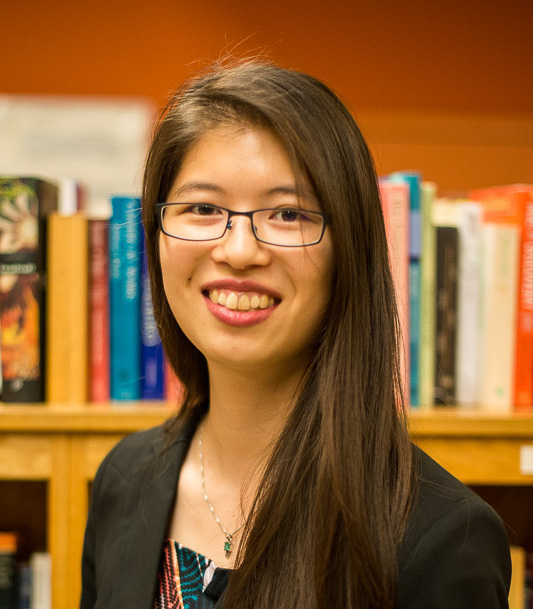
Yang Song is an ARC Future Fellow and Scientia Associate Professor at the School of Computer Science and Engineering , University of New South Wales (UNSW) . She serves as Associate Head of School (Research) and Co-Director of iCinema , focusing on AI and Computer Vision applications for social good. Education: BEng in Computer Engineering (Nanyang Technological University, Singapore), PhD in Computer Science (UNSW, 2013) Research Areas: Biomedical image analysis, human-centred AI, graph data modeling, neuro-symbolic learning, and AI trustworthiness. Her work develops domain-specific deep learning models for radiological segmentation, histopathology cancer analysis, and 3D reconstruction. Recent projects address explainability in LLMs, fairness in AI, and human-robot interaction frameworks. With over 200 peer-reviewed publications in top venues like CVPR , MICCAI , and NeurIPS , her research spans biomedical imaging, robotics, and general multimodal AI. Scientific Awards include: 2024: ARC Industrial Transformation Research Hub for Human-Robot Teaming 2023: Google Inclusion Research Award 2022: NHMRC Ideas Grant for computational brain imaging 2021: UNSW Engineering Research Excellence Award 2020: Scientia Fellowship (UNSW) 2019: ARC Future Fellowship She supervises 24 current PhD/MPhil students and has graduated 15 advisees, including placements at Harvard University and Siemens Healthineers. Her grants include collaborations with Surf Life Saving Australia and industry partnerships for AI-driven solutions.
Professor Dinusha Mendis is a leading academic in Intellectual Property and Innovation Law at Bournemouth University, where she serves as Director of the Centre for Intellectual Property Policy and Management (CIPPM). Her expertise bridges copyright law with emerging technologies like 3D printing, AI, blockchain, and the Metaverse, informed by extensive research and consultation with entities such as the European Parliament, UKIPO, and corporations like HP and Chanel. She holds a PhD from Edinburgh University and has authored seminal works on the intersection of technology and IP. BSc in Law from Aberdeen University LLM and PhD from Edinburgh University Called to the Bar of England and Wales Her research focuses on copyright challenges in immersive environments , AI-generated content regulation , and blockchain/NFTs . She led major studies for the European Commission and UKIPO , including the first peer-reviewed work on 3D printing and IP. Her 2019 co-edited book with Stanford and QUT scholars established foundational frameworks for additive manufacturing legal analysis. Recent publications highlight AI copyright disputes (2024 The Conversation ), NFT legal ambiguities (2022), and pandemic-era 3D printing (2020). Trends show increasing emphasis on decentralized IP systems and machine learning's impact on creative industries . Scientific Awards & Grants JSPS Visiting Professorship (2023) Daiwa Anglo-Japanese Foundation Grant (2024) EU Commission Research Funding (2020) AHRC Grant for 3D Jewellery Study (2017) As a PhD supervisor, she mentors researchers on AI copyright (Benjamin White), crypto-art (Bahar Dagli), and music creation law (Elizabeth Bailey). She contributes to global IP policy through the World Economic Forum's Metaverse Governance Team and EU IPR Enforcement Projects .
Azad J Naeemi is a Professor holding the Dean's Professorship in the School of Electrical and Computer Engineering at the Georgia Institute of Technology. He serves as Editor-in-Chief of the IEEE Journal on Exploratory Computational Devices and Circuits and Associate Director for Computation of the NSF-supported National Nanotechnology Coordinated Infrastructure (NNCI). His educational background includes a B.S. in Electrical Engineering from Sharif University (1994) and M.S./Ph.D. in Electrical and Computer Engineering from Georgia Tech (2001/2003). Prior to academia, he worked as a design engineer in Tehran (1994-1999) and as a research engineer at Georgia Tech's Microelectronics Research Center (2004-2008). Professor Naeemi's research spans nanotechnology with focus on emerging nanoelectronic devices, spintronics, ferroelectric devices, and design technology co-optimization for CMOS/beyond-CMOS technologies. His work bridges materials, devices, circuits, and systems, particularly investigating integrated circuits based on nanoscale devices and interconnects. Educational research includes experiential learning environments for engineering education. Recent publications (2024-2025) demonstrate strong emphasis on spin-orbit torque MRAM, ternary content addressable memories, ferroelectric/antiferroelectric devices, and plasmonic circuits. Key trends include energy-efficient hardware accelerators, neuromorphic computing applications, and compact modeling for advanced technology nodes. His scientific honors include: IEEE Solid-State Circuits Society James Meindl Innovators Award (2022) IEEE Electron Devices Society Paul Rappaport Award (2008) NSF CAREER Award (2013) SRC Inventor Recognition Award (2010) Multiple Georgia Tech teaching awards Professor Naeemi leads research supported by NSF (including NNCI infrastructure) and SRC. His editorial role with IEEE JXCDC positions him at the forefront of exploratory computational devices. He previously served as General Co-Chair for the IEEE International Interconnect Technology Conference (2013). His work connects with Georgia Tech's Microelectronics Research Center and national nanotechnology initiatives through the NNCI network, focusing on computational infrastructure for nanoscale device characterization and design.
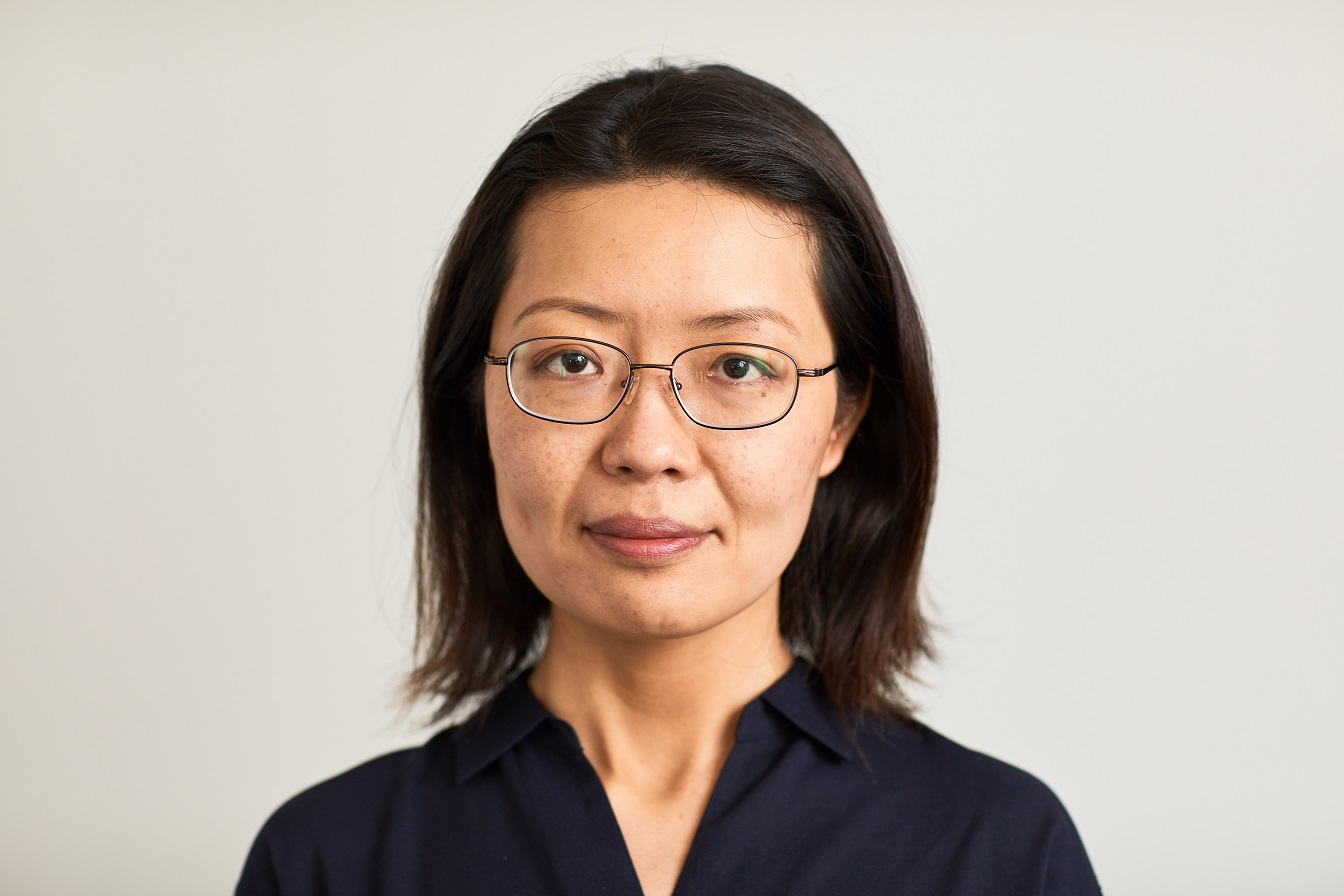
Prof. Dan Jiao is the Synopsys Professor of Electrical and Computer Engineering at Purdue University's Elmore Family School. She leads the Rapid-Heterogeneous Integration (Rapid-HI) Design Institute and serves as Editor-in-Chief of the IEEE Journal on Multiscale and Multiphysics Computational Techniques. Her research focuses on computational electromagnetics, multiphysics modeling, and AI-driven design automation for advanced integrated circuits and quantum systems. She has held academic positions since 2005, progressing from Assistant to Full Professor, and has extensive industry experience at Intel Corporation (2001–2005). Education: PhD in Electrical Engineering, University of Illinois at Urbana-Champaign (2001) Senior Staff Engineer at Intel Corporation (2001–2005) Research Interests: Fast numerical methods for large-scale electromagnetic analysis AI/ML integration in design automation (EDA/MDA) Quantum circuits and spin qubit systems Heterogeneous integration and advanced packaging Multiphysics co-simulation for nano-scale devices Signal/power integrity in high-speed systems Key Projects: Leads the NSTC AIDRFIC program (first NSTC R&D Jump Start project), the DARPA NGMM Rapid-HI Design Institute, and the GENIE-RFIC generative design tool initiative. Also directs the Consortium for Electromagnetic Science and Technology. Awards & Honors: 2022 ACES Computational Electromagnetics Award IEEE Fellow (2016) Intel Outstanding Researcher Award (2019) MTT-S Distinguished Microwave Lecturer (2020–2023) 2013 Schelkunoff Prize Paper Award Advising & Grants: Advised over 30 PhD/master's students and led projects funded by NSF, DARPA, Intel, SRC, and industry partnerships. Key grants include NSF CAREER (2008), ONR Young Investigator (2006), and multiple industry-sponsored initiatives. Labs & Teams: Rapid-HI Design Institute (DARPA NGMM) Quantum device co-design group Multiphysics modeling team
David Mimno is an Associate Professor and Chair of the Department of Information Science at Cornell University. He holds a PhD from the University of Massachusetts Amherst and previously worked at the Perseus Project and Princeton University. His research focuses on computational social science, natural language processing, and historical text analysis. Mimno is known for developing the MALLET toolkit, a widely used Java-based platform for machine learning in text processing. He teaches courses such as INFO 4940: How LLMs Work and INFO 6150/CS 6788: Advanced Topic Modeling. His work has been supported by the Sloan Foundation, NEH, and NSF. Mimno advises PhD students in Information Science and Computer Science, emphasizing interdisciplinary research at the intersection of computing and humanities/social sciences. He also contributes to initiatives like AI for Humanists, making large language models accessible for text-as-data research. Bachelor’s degree: Not explicitly stated in text PhD: University of Massachusetts Amherst Research Interests: Mimno explores large language models, topic modeling, cross-lingual semantics, and ethical AI applications in humanities and legal domains. His recent work addresses data curation practices for language models, LLM memorization of poetry, and generative AI’s societal impacts. He co-authored reports on generative AI in academic research and education. Grants & Collaborations: His projects include the Text as Data (TADA) conference and collaborations on generative AI law workshops. Mimno’s MALLET toolkit supports document classification, clustering, and topic modeling, with applications in cultural analytics and computational historiography.
Xiaojiang Du is the Anson Wood Burchard Endowed Professor at Stevens Institute of Technology, directing research in IoT security, AI security, and wireless networks. An IEEE Fellow and ACM Distinguished Member, he leads NSF-funded projects on secure IoT systems and cross-platform security vulnerabilities. Education PhD in Electrical Engineering, University of Maryland MS in Electrical Engineering, Tsinghua University BE in Electrical Engineering, Tsinghua University Research Focus: Develops security frameworks for IoT ecosystems and adversarial machine learning, with recent breakthroughs in smart home security anomaly detection. Honors: IEEE Fellow, ACM Distinguished Member, multiple best paper awards at IEEE conferences. Graduated PhD students hold faculty positions at UNC Charlotte, UL Lafayette, and ShanXi University. Professional Service: IEEE ComSoc Distinguished Lecturer, Associate Editor for IEEE Transactions, and General Co-Chair for IEEE/ACM IWQoS 2023. Secured $9M+ in research funding from NSF, NSA, and DOD.
Mehmet Esat Belviranli is an Assistant Professor in the Computer Science Department at the Colorado School of Mines, where he directs the High Performance Systems and Software Lab (HyperSys). His research focuses on increasing resource utilization in heterogeneous architectures through runtime systems, scheduling algorithms, and performance modeling, with publications in top venues including MICRO, PPoPP, and SC. Education: Ph.D. in Computer Science, University of California, Riverside (2016) M.S. in Computer Science, Bilkent University (2009) B.S. in Computer Science, Bilkent University (2006) Belviranli's research spans heterogeneous architectures, runtime systems, performance modeling, parallel programming, autonomous computing, deep learning acceleration, cyber-physical systems, and edge-cloud platforms. His work develops analytical models and programming abstractions to address resource management, scheduling, and security challenges in diversely heterogeneous systems, with applications in edge computing, autonomous systems, and machine learning acceleration. Recent projects emphasize real-world constraints and security implications. His publication trends reveal increasing focus on edge-cloud resource management (e.g., HARNESS), security vulnerabilities in heterogeneous systems (e.g., MC3), and deep learning acceleration under resource constraints. Key themes include memory contention modeling, scheduling for cyber-physical systems, and concurrent DNN execution, reflecting a shift toward practical deployment in security-sensitive edge environments. Scientific Awards: U.S. Air Force Research Lab Summer Faculty Fellowship Award (2022) U.S. Air Force Research Lab Summer Faculty Fellowship Award (2021) Oak Ridge National Laboratory Significant Event Award (2019) Best Paper Finalist, IEEE HPEC 2018 Outstanding Paper Award, DATE 2024 Belviranli mentors Ph.D. students Ismet Dagli (MLCommons Rising Star 2024, CGO'24 SRC finalist) and Justin Davis (DATE'24 Outstanding Paper Award winner). He has secured $2M+ in funding from NSF, DoE, and SRC, including an NSF-SaTC grant on mobile security (2024), a DoE grant on superconductive systems (2023), and an NSF FuSe grant on graphene nanoribbons (2023), often leading multi-institutional teams from Rochester, Virginia, Arizona, and Minnesota. The HyperSys Lab develops ecosystems for high-performance heterogeneous systems, with recent projects including HARNESS for edge-cloud resource management and MC3 for mobile SoC security. The lab has received equipment donations from Google Coral.ai and Xilinx, and collaborates with national labs on security challenges and next-generation semiconductor technologies.
Dr. Muhammad Imran is a Reader and Lecturer in Mechanical, Biomedical & Design Engineering at Aston University, UK. He is affiliated with the Energy and Bioproducts Research Institute (EBRI) and the College of Engineering and Physical Sciences. His research focuses on energy efficiency, waste heat recovery, and low-temperature power cycles such as Organic Rankine Cycle (ORC) and Supercritical CO₂ systems. He has contributed to the commercialization of ORC systems and collaborates internationally on hybrid energy systems, solar-thermal integration, and district heating networks. Dr. Imran holds a PhD in Energy System Engineering (2016), MSc in Thermal Power Engineering (2012), and BEng in Mechanical Engineering (2009). He has held academic roles at institutions in Pakistan, South Korea, and Denmark, including a Marie Curie Fellowship at the Technical University of Denmark. His awards include the Marie Curie Fellowship (EU), Innovation Award (South Asia Triple Helix), and multiple Research Excellence Awards from South Korea. He leads funded projects on hybrid energy systems for agriculture, waste heat recovery in industries, and sustainable energy solutions in developing countries. His editorial roles include associate editorships in Frontiers in Thermal Engineering and Resources, Environment and Sustainability . He supervises PhD students in renewable energy and low-temperature thermodynamic systems, with ongoing projects on solid-state heat pumps and advanced ORC control strategies. Dr. Imran’s work bridges engineering, data science, and environmental science to address energy challenges. Notable collaborations include projects in Ethiopia, Kenya, Nigeria, and Sudan, focusing on off-grid cold storage, smart irrigation, and biomass energy systems. His research outputs include over 130 peer-reviewed articles, patents, and contributions to international conferences.