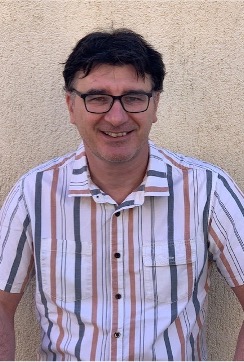
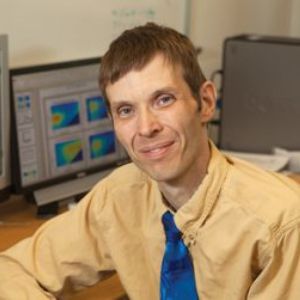
Jun Liu is an Assistant Professor in the Department of Mechanical and Aerospace Engineering at the School of Engineering and Applied Sciences, University at Buffalo. His research focuses on advanced energy materials, nano/micro-mechanics, and self-powered systems, with applications in triboelectric energy harvesting and scanning probe microscopy. Education: PhD, Materials Engineering, University of Alberta (2018) MS, Materials Science, Shanghai University (2015) BE, Materials Science and Engineering, Nanchang University (2012) Research Interests: Development of tribovoltaic and triboelectric systems for self-powered electronics Mechanical energy harvesting via dynamic heterojunctions and Schottky contacts 3D-printed hydrogel structures for energy absorption and flexible electronics Nanoscale characterization using atomic force microscopy Design of nanocomposite sensors and catalytic materials Publication Trends: His work emphasizes triboelectricity, nanoscale energy conversion, and sustainable materials. Recent articles explore bionic tactile sensing, tunable hydrogels, and quantum dynamics in sliding interfaces. Awards: SONY Faculty Innovation Award (2021) Nature Springer MINE Young Scientist Award (2020) International Contest of Applications in Nano/Micro Technology Prize (2013) Laboratory: Advanced Energy Materials and Nanomechanics Lab at University at Buffalo.
Georg Fantner is an Associate Professor at the Swiss Federal Institute of Technology Lausanne (EPFL) with dual appointments in the School of Engineering (STI) within the Institute of Bioengineering and the School of Life Sciences (SV) for teaching. He directs the Laboratory for Bio- and Nano-Instrumentation (LBNI) and holds leadership roles including President of the Open Science Strategic Committee and the Association des Professeurs de l'EPFL. Research Focus: Bioinstrumentation, Nanotechnology, Scanning Probe Microscopy, and Metrology Teaching: Structural Mechanics for Life Sciences, Metrology, and Metrology Practicals His research pioneers advanced instrumentation for nanoscale characterization, emphasizing data-driven approaches to enhance microscopy techniques. Recent work integrates deep learning with scanning probe microscopy for real-time biological imaging and develops novel MEMS devices for fluid-compatible nanoscale manipulation. Key innovations include hermetically sealed sample chambers for pathogen studies and deterministic nanotopography engineering. Professor Fantner actively mentors 7 current PhD students and has supervised 14 graduates. His laboratory fosters interdisciplinary collaboration across engineering, physics, and life sciences to advance nanoscale measurement technologies and instrumentation development.
Amir Farokh Payam is a Senior Lecturer in Electronics and Software at the School of Engineering, Ulster University, UK since 2019. He holds a PhD in Electronics Engineering-Nanotechnology and has previously worked at Instituto de Ciencia de Materiales de Madrid (2012–2015), Durham University (2016–2018), and University of Bristol (2018–2019). Education: B.Sc. and M.Sc. in Electrical and Electronics Engineering, PhD in Electronics Engineering-Nanotechnology His research focuses on dynamic Atomic Force Microscopy (AFM) , NEMS/MEMS , Surface Science , and Applied Nonlinear Control . Recent work explores nonlinear harmonics in AFM, solid-liquid interfacial dynamics, and single-cell biomechanical profiling. He leads projects on quantum sensor fabrication and cancer cell viscoelasticity analysis. Key trends in his 15 most recent publications (2025–2023) include advancements in nanoscale imaging , multifrequency AFM , viscoelastic material analysis , and biomedical applications such as viral protein sensing and corneal cell profiling. Collaborative projects span institutions in Ireland, Spain, and the UK. Scientific Awards: Editor's Highlights in Journal of Applied Physics (2018) and Nanotechnology (2015) Best Innovative Idea, Second International R&D Award of Iran (2012) Distinct Graduate Student, University of Tehran Visiting Study Scholarship, Instituto de Microelectronica de Madrid (2010) M.Sc. First Class Student (top among 15) He serves as Unit Director for Mechatronics II and Electronics II modules and supervises BEng/MEng research projects. Active research grants include Royal Society funding (2024–2026) for cancer cell biomechanics and an ongoing 2022–2026 project on solid-liquid interface dynamics.
Matthew Libera is a Professor of Material Science and Engineering at Stevens Institute of Technology, affiliated with the Charles V. Schaefer, Jr. School of Engineering and Science. He leads the Laboratory for Multiscale Imaging (LMSI), a shared facility for advanced imaging and analysis. His work focuses on biomaterials, hydrogels, infection-resistant surfaces, and electron microscopy techniques. Libera has held roles including Associate Dean of Engineering and Science (2013–2018) and has been a visiting professor at institutions like the University of Rhode Island (2021–2022). He chairs the Stevens Conference on Bacteria-Material Interactions and has authored numerous publications on antimicrobial surfaces and material characterization. His research interests span biomaterials-associated infections, directed self-assembly of polymers, and cryo-electron microscopy applications. He pioneered microgel-based antimicrobial coatings and developed molecular beacon technologies for diagnostics. Libera’s awards include the Morton Professorship for Teaching Excellence (2010–2011) and the Jess N. Davis Award for Research (1998). His work integrates nanotechnology, material science, and biomedicine to address challenges in infection prevention and biomaterial design. Libera’s publications highlight advancements in microgel functionality, surface patterning via electron-beam lithography, and antimicrobial delivery systems. His lab’s capabilities in multiscale imaging enable detailed studies of biomaterial-bacteria interactions. Ongoing efforts aim to optimize self-defensive materials for medical implants and diagnostic tools.
Cristian Ciobanu serves as Professor in the Department of Mechanical Engineering at Colorado School of Mines, where he has maintained continuous faculty appointment since 2004. His academic journey includes postdoctoral research at Brown University prior to joining Mines, with progressive promotions from Assistant to Associate to full Professor by 2014. Educational background: PhD in Physics, The Ohio State University (2001) MS in Physics, The Ohio State University (1998) BS in Physics, University of Bucharest (1995) His research program integrates computational and experimental approaches to address fundamental challenges in nanoscale surface physics and two-dimensional materials . Specialized expertise includes evolutionary algorithms for atomic structure optimization, development of materials for renewable energy applications, and investigation of self-organized nanostructures on crystal surfaces. Current work emphasizes machine learning applications in high-entropy alloy design and piezoelectric property engineering of layered systems. Publication trends reveal sustained focus on transition metal dichalcogenides, computational materials discovery, and piezoelectric response enhancement through alloying. Recent work increasingly incorporates machine learning for materials design while maintaining strong experimental validation through advanced microscopy and spectroscopy techniques. Key recognitions include: NSF Career Award (2009-2014) Research Excellence Award at Colorado School of Mines (2013) Fellow of the Institute of Physics (elected 2014) Ohio State Presidential Fellowship (2000-2001) Research funding has been secured through competitive mechanisms including the NSF Career Award, supporting his authorship of over 60 technical publications and a coauthored book on atomic structure determination. He actively advises graduate students in computational materials science and nanotechnology research within the Mechanical Engineering department. His scholarly activities are complemented by professional memberships in the Materials Research Society, American Physical Society, and American Vacuum Society. While specific laboratory facilities aren't detailed in source materials, his publication record indicates capabilities in computational modeling, scanning probe microscopy, and thin film characterization relevant to nanoscale materials research.
Gitanjali Kolhatkar is an Assistant Professor in the Department of Engineering Physics at McMaster University and holds a Canada Research Chair in Bioinspired Smart Materials (Tier 2). She is also an Associate Member of the McMaster School of Biomedical Engineering. Her research focuses on developing smart materials for neuromorphic computing, leveraging ferroelectric materials to mimic synaptic functions while optimizing energy efficiency. Key techniques include microwave-assisted hydrothermal synthesis, magnetron sputtering, and advanced characterization methods like aSNOM and AFM-IR. Education: BSc and MSc in Physics, University of Ottawa (2008, 2010) PhD in Electrical Engineering, University of Sherbrooke (2014) Postdoctoral Fellowship, Institut National de la Recherche Scientifique (2015-2019) Alexander von Humboldt Fellow, University of Kiel, Germany (2019-2022) Research Interests: Neuromorphic materials, piezoelectric/ferroelectric systems, III-V semiconductors, thin films, photovoltaics, and smart sensors. Her work bridges material nanostructure and macroscopic properties to enable applications like artificial synapses, energy harvesters, and tactile sensors. Scientific Awards: Alexander von Humboldt Post-doctoral Fellowship Canada Research Chair (Tier 2) Invited Professorship at Munich University of Applied Sciences Teaching & Labs: Instructs courses in semiconductor devices (ENGPHYS 3PN4) and manufacturing (ENGPHYS 4Z04). Her lab (JHE A318/A313) focuses on interdisciplinary materials research. Current projects emphasize neuromorphic systems and bio-inspired smart materials.
Karl S. Booksh is a Professor in the Department of Chemistry and Biochemistry at the University of Delaware's College of Arts & Sciences. His research integrates chemometrics with analytical spectroscopy to develop advanced chemical sensors for environmental, biomedical, and industrial applications. Education B.S., 1990, University of Alaska - Fairbanks Ph.D., 1994, University of Washington - Seattle Research interests focus on: Combining instrumental design with chemometric methods for enhanced sensor performance Development of fiber optic sensors (SPR, Raman, fluorescence) Machine learning applications in environmental monitoring (hydrothermal vents, soil analysis) Biomedical diagnostics (protein/cytokine detection, male infertility assays) Food chemistry (edible oil authentication, peroxide value prediction) Recent publications demonstrate expertise in: Portable spectroscopic systems (LIBS, DART TOFMS) Environmental and forensic chemical analysis Advanced data analysis for classification and detection Cultural heritage science (textile/pigment analysis) Industrial process monitoring and soft sensing His lab actively engages in educational outreach through: NSF-funded REU program for students with disabilities ACS Project SEED for economically disadvantaged high school students Hands-on research training in chemometrics and spectroscopy
H. Peter Lu is the Ohio Eminent Scholar and Professor in the Department of Chemistry at Bowling Green State University's College of Arts and Sciences. His research focuses on Single-molecule spectroscopy Protein conformational dynamics Interfacial electron transfer processes DNA damage recognition mechanisms Lu's work bridges chemical physics and molecular biology through Development of AFM-enhanced optical imaging techniques Investigations into mechanical force effects on biomolecules Studies of ion channel conformational changes Elucidation of non-Markovian enzymatic reaction dynamics His recent publications reveal trends in Mechanically-induced protein aggregation Force-sensitive receptor dynamics Metal ion effects on protein misfolding Biophysics of DNA repair proteins Advanced single-molecule manipulation tools Scientific recognition includes 2019-2020 BGSU Teaching Award 2014 American Physical Society Fellowship 2009 Olscamp Research Award Multiple PNNL Outstanding Performance Awards 2008 Nobel Symposium Invitations Lu's research group trains students in Single-molecule experimental techniques Protein interaction dynamics Advanced biophysical instrumentation Mechanobiology of cellular processes while maintaining collaborations across disciplines including materials science and computational biology.
Dr. Kyla Sask is an Assistant Professor in the Department of Materials Science and Engineering and Associate Member of the McMaster School of Biomedical Engineering. Her research focuses on biomaterials development and surface modification strategies for medical devices, particularly blood-contacting applications and pediatric devices. Dr. Sask holds a B.Sc. in Chemical Engineering from Queen's University (2006) and a Ph.D. in Biomedical Engineering from McMaster University (2012). Her educational background combines engineering principles with biomedical applications. Her research examines biomaterial interfaces with biological systems, with specific interests in: Surface modification strategies for enhanced biocompatibility Protein and cell interactions at material interfaces Antithrombogenic biomaterials for blood-contacting devices Polymer functionalization using bioactive molecules Nanostructured biomaterials for medical applications Dr. Sask's publications focus on surface modification techniques including polydopamine coatings, covalent immobilization strategies, and nanostructured surfaces to control biological responses. Recent work explores multifunctional surfaces that combine antithrombotic and antimicrobial properties. She teaches courses on biomaterials synthesis and characterization, including MATLS 4LB2 (Synthesis and Characterization of Biomedical Coatings) and MATLS 4Y03 (Advanced Biomaterials: Applications and Device Design). Her industry experience includes previous work at Interface Biologics Inc. developing antithrombogenic polymer technologies.
Prof. Dr. Stephanie Reich is a Professor of Experimental Solid-State Physics at the Freie Universität Berlin, leading the AG Reich research group within the Department of Physics. Her research focuses on nanoscale materials and their light-matter interactions, particularly in plasmonic systems, carbon nanotubes (CNTs), graphene, and transition metal dichalcogenides (TMDs). She explores phenomena such as ultrafast relaxation dynamics, excitonic states, and nanoscale optoelectronic properties. Key areas include plasmon-enhanced spectroscopy, functionalization of nanomaterials, and applications in nanophotonics. Prof. Reich's work bridges fundamental physics with practical applications, utilizing advanced techniques like Raman spectroscopy and near-field microscopy. Affiliations: Freie Universität Berlin, Institute of Physics, AG Reich Lab Equipment: Tunable Raman spectroscopy, fluorescence spectrometers, near-field microscopy (s-SNOM), AFM systems Research Interests: Prof. Reich investigates optical properties of low-dimensional materials, plasmonic nanostructures, and functionalized nanotubes. Her studies address topics such as exciton-photon coupling in 2D materials, energy transfer mechanisms in hybrid systems, and the design of nanoscale optical devices. Recent work emphasizes applications in energy conversion, sensing, and super-resolution microscopy. Recent Trends in Publications: Her research highlights advancements in plasmonic supercrystals, THz-driven phonon dynamics in hybrid perovskites, and collective electronic states in nanotube systems. These studies underscore the interplay between material structure and optoelectronic behavior, with implications for next-generation photonic technologies.
John R. Dutcher is a Professor and Research Chair in Novel Sustainable Nanomaterials at the University of Guelph's Department of Physics. His work bridges soft matter physics, biophysics, and sustainable nanotechnology through experimental studies of polymers, biopolymers, and bacterial systems at surfaces and interfaces. PhD in Condensed Matter Physics (Simon Fraser University, 1989) NSERC Postdoctoral Fellow (University of Arizona, 1989-1990) Director of University of Guelph’s B.Sc. Nanoscience program Research focuses on: Phytoglycogen nanoparticles from sweet corn for biomedical/personal care applications Machine learning analysis of polymer degradation in cross-linked pipes Bacterial motility and biofilm formation via optical microscopy Hydration forces and mechanical properties of nanomaterials His lab employs state-of-the-art equipment including AFMs, SPRi, and rheometers, with industrial partnerships like HeatLink. Recent publications analyze β-VAE applications in IR spectroscopy, acid hydrolysis effects on nanomaterials, and bacterial colony dynamics. Scientific honors include: Tier 1 Canada Research Chair in Soft Matter and Biological Physics (2006) Fellow, American Physical Society (2007) University of Guelph Innovation of the Year (2017) He has co-founded spin-off company Mirexus Biotechnologies and mentored over 50 graduate/undergraduate researchers, with alumni holding faculty positions at Waterloo, McMaster, and Lakehead University. Lab facilities include: Custom self-nulling ellipsometer TA Instruments DHR-3 rheometer Brookhaven BI200-SM light scattering system Thermo/Nicolet Continuum infrared microscope Wyatt SEC-MALS system Advanced microbiology/Biophysics equipment
Eric Pop is a Professor of Electrical Engineering and (by courtesy) Materials Science & Engineering at Stanford University's School of Engineering, where he leads the SystemX Heterogeneous Integration focus area. Previously, he served on the faculty at the University of Illinois at Urbana-Champaign (2007-2013) and worked at Intel Corporation (2005-2007). His academic background includes a PhD in Electrical Engineering from Stanford University (2005) and three degrees from MIT: MEng and BS in Electrical Engineering, and BS in Physics. His educational credentials: PhD in Electrical Engineering, Stanford University, 2005 MEng in Electrical Engineering, MIT BS in Electrical Engineering, MIT BS in Physics, MIT Professor Pop's research centers on the intersection of electronics, nanomaterials, and energy, with pioneering contributions to 2D materials (particularly transition metal dichalcogenides), semiconductor device physics, and thermal management. His work addresses critical challenges in contact engineering for atomically thin semiconductors, stability of oxide transistors, and energy-efficient neuromorphic systems. Current projects explore solvent doping techniques, strain engineering, and machine learning-assisted device characterization to enable next-generation electronics. Analysis of his 2023-2025 publications reveals dominant themes in 2D semiconductor transistors, oxide device reliability, and neuromorphic computing architectures. Key trends include the integration of hyperspectral microscopy for rapid material characterization, Monte Carlo simulations for thermal-electrical transport, and phase-change materials for artificial neurons. His research consistently bridges fundamental material science with practical device engineering, emphasizing industrial scalability and low-power operation. His scientific honors include: Presidential Early Career Award for Scientists and Engineers (PECASE) Young Investigator Awards from ONR, AFOSR, NSF, and DARPA Multiple best paper and best poster awards at international conferences with students Professor Pop actively mentors PhD and Master's students through directed research courses (EE 190/191/390/391), fostering award-winning projects in semiconductor device innovation. His research program is supported by substantial grants from federal agencies including NSF, DARPA, and the Department of Defense, with recent work focusing on heterogeneous integration and thermal management for 3D circuits. As Editor of 2D Materials and former General Chair of the Device Research Conference, he significantly influences the semiconductor research community. He directs the Pop Lab (poplab.stanford.edu), which maintains advanced nanofabrication and characterization facilities for semiconductor research. Current initiatives include developing flexible radio-frequency transistors exceeding 100 GHz, scalable production of transition metal dichalcogenide solar cells, and AI-accelerated thermal simulation pipelines for integrated circuit design. The lab's collaborative environment bridges electrical engineering, materials science, and computer science to address semiconductor industry challenges.
Nic Mullin is a Senior Experimental Officer at the School of Mathematical and Physical Sciences, University of Sheffield. He is affiliated with the Materials and Biological Physics Research Cluster, focusing on experimental techniques and their applications in interdisciplinary research. His work bridges physics, microbiology, and materials science, emphasizing atomic force microscopy (AFM) innovations and their use in biological and nanomaterial studies. Though his educational background is not explicitly detailed here, Mullin’s research expertise spans atomic force microscopy development, bacterial cell wall mechanics, spore surface architecture, and nanomaterials characterization. His projects include studying light-matter interactions in van der Waals heterostructures and developing high-resolution imaging methods for polymers and living systems. Mullin’s research interests prioritize understanding structural dynamics at the molecular scale, particularly in biological tissues and synthetic materials. He investigates how cell wall structure influences bacterial viability, mechanical properties of bone metastases, and the interplay between material composition and functional behavior in 2D systems and polymers. His contributions to AFM technology enhance imaging speed and resolution for applications in both physics and life sciences. His publications reflect advancements in AFM methodologies and their interdisciplinary applications, such as perovskite solar cell integration with carbon fibers and nanophotonic material design. These works highlight a trend toward merging microscopy innovations with practical challenges in energy, biomedicine, and materials engineering. Mullin has not listed any scientific awards, grants, or advisees in the provided information. His role emphasizes technical research support and experimental development within the university’s research infrastructure, based at the Hicks Building, F06. He collaborates within the Materials and Biological Physics Research Cluster, utilizing specialized facilities for high-resolution microscopy and nanoscale structural analysis. His research often involves interdisciplinary teams to address complex questions in biophysics, polymer science, and nanotechnology.
Ornella Cavalleri is an Associate Professor at the University of Genoa's Department of Physics for Life Sciences, Environment and Cultural Heritage. She holds roles in academic governance, including President of the Joint Commission of Teachers and Students, and Director of the Graduate School. Her research focuses on bio-organic nanostructures, nanosystems physics, and protein aggregation, with a particular emphasis on biomedical applications like boron neutron capture therapy for glioblastoma. She leads the OptMatLab research group and teaches courses in physics, biophysics, and medical physics across undergraduate and graduate programs in Pharmacy, Dental Surgery, Biology, and Physics. Her educational contributions include courses such as FISICA CON ELEMENTI DI FISICA MEDICA (Medical Physics Elements) and BIOFISICA (Biophysics) for Pharmacy and Physics degree programs. Cavalleri’s work integrates advanced microscopy techniques (AFM, SEM, XPS) with spectroscopic ellipsometry to investigate biomaterial interfaces, nanolithography, and molecular interactions. Key research themes include developing biomimetic vesicles for targeted cancer therapy and studying protein-DNA interactions at nanoscale interfaces. Recent publications highlight advancements in boron-loaded bio-vesicles for glioblastoma treatment, AFM-based nanolithography for biosensor design, and osteointegration of porous niobium oxides. Her interdisciplinary approach bridges physics, biology, and engineering, with applications in oncology, biomaterials, and diagnostic tools. Despite no explicitly listed awards, her extensive publication record reflects significant contributions to nanomedicine and biophysical instrumentation.
Dr. Michael Ruppert is a Senior Lecturer at the School of Mechanical and Mechatronic Engineering, University of Technology Sydney (UTS), specializing in Micro Precision Mechatronics that bridge electrical engineering and nanoscale technologies. His career spans research roles at the University of Newcastle and University of Texas at Dallas, with a PhD in Electrical Engineering from Newcastle (2017) and a Dipl.-Ing. in Automation Technology from Stuttgart (2013). His research focuses on Microelectromechanical Systems (MEMS) design Atomic Force Microscopy (AFM) innovations High-bandwidth sensor systems Nanotechnology applications in imaging and sensing Control systems for precision instrumentation He leads projects on dual-probe subsurface microscopy and femtoliter deposition facilities, secured over $1.6M in research funding, and commercializes sensor technologies through industry collaborations. Recent publications highlight advancements in MEMS cantilever design for low-temperature AFM Tip-enhanced Raman spectroscopy optimization Nanoceria-based biosensing mechanisms High-resolution eigenmode characterization Real-time demodulation techniques These works demonstrate his expertise in integrating sensor-actuator systems with multifrequency control algorithms. Scientific recognition includes 2018 IEEE Outstanding Paper Award 2019 MARSS Best Conference Paper 2021 Fresh Scientist NSW 2022 Newcastle Early Career Researcher Award He supervises PhD projects in advanced microscopy and contributes to editorial boards of IEEE and IFAC journals.