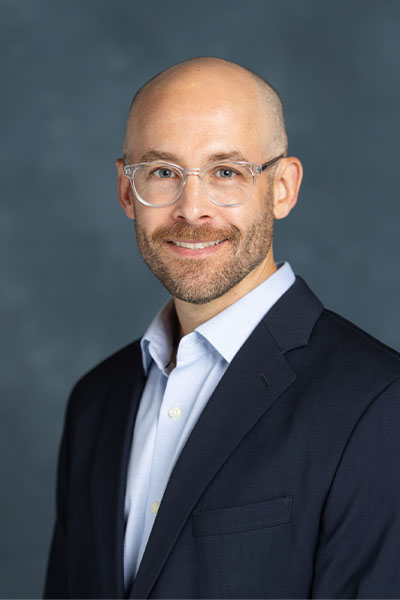
Andy Sarles is the James Conklin Fellow and Associate Professor in the Department of Mechanical, Aerospace and Biomedical Engineering at the University of Tennessee, Knoxville. He leads the Sarles Group, which specializes in bio-inspired materials and interfaces, focusing on biomembranes and neuromorphic computing. He holds a Ph.D. (2010) and M.S. (2006) from Virginia Tech and a B.S. (2004) from the University of Tennessee, Knoxville. His research explores biomimetic membranes for sensing, energy conversion, and actuation, alongside nanomaterial interactions and soft, reconfigurable materials. Key projects include droplet interface bilayers (DIBs) for neuromorphic systems and mechanotransduction studies. Rewarded with the NSF CAREER Award (2018), Tickle College Professional Promise in Research (2018), and UT Research Foundation Innovation Award (2016), his work bridges engineering and biology. He advises Ph.D. and M.S. students like Subhadeep Koner, Colin Basham, and Joseph Tawfik, advancing interdisciplinary research in adaptive materials. The Sarles Group’s lab develops cell-inspired materials for neuromorphic computing, with applications in smart sensors and bioelectronic interfaces. Recent breakthroughs include memristive biomembranes mimicking synaptic plasticity, published in ACS Nano and other journals.
Chun-Yi Su is a Professor in the Department of Mechanical, Industrial and Aerospace Engineering at Concordia University. His research focuses on advanced control systems, mechatronics, robotics, and precision engineering. He specializes in nonlinear control, hysteresis compensation, and adaptive systems applied to soft actuators, UAVs, and smart materials. Key research areas include: Control of dielectric elastomer actuators Fault-tolerant cooperative control of unmanned aerial vehicles (UAVs) Adaptive neural network-based control for nonlinear systems Data-driven approaches for power electronics and energy systems Recent work emphasizes: Soft robotics actuation mechanisms Fractional-order control strategies Resilient control under cyber-physical attacks Biomimetic robotic systems His lab develops innovative solutions for smart materials, mechatronic systems, and autonomous robotics. Applications span renewable energy systems, biomedical devices, and aerospace engineering. Active in collaborative research with industry partners.
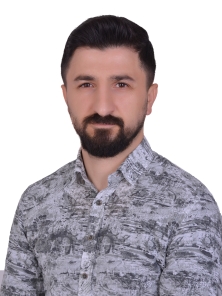
Mehrdad Ghandhari Alavijh is a Full Professor in Electric Power Systems at KTH Royal Institute of Technology. He leads research in power system dynamics, stability, and control, with a focus on FACTS (Flexible AC Transmission Systems), HVDC systems, and advanced control strategies. His work addresses challenges in grid reliability, renewable energy integration, and environmental sustainability. Education: Received M.Sc. (1995) and Ph.D. (2000) in Electrical Engineering from KTH. His research group develops innovative methods for secure, efficient power system operation, leveraging advanced monitoring and communication technologies. Research Interests: Power System Dynamics and Stability Transient Stability Assessment HVDC and FACTS Technologies Renewable Energy Integration Publications: Recent works focus on HVDC systems, battery storage, transient stability algorithms, and frequency control. His studies emphasize real-time monitoring and control strategies to enhance grid resilience against outages. Teaching: Supervises courses in power systems engineering, including degree projects in Electric Power Systems and Energy Innovation. Serves as an examiner and course responsible for multiple graduate programs.
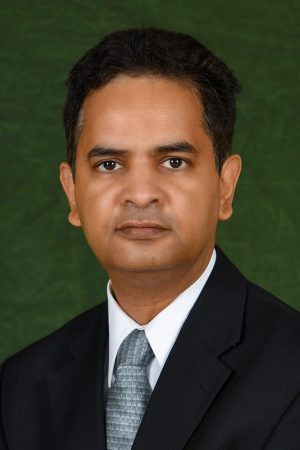
Yasser Mohamed is a Professor in the Civil and Environmental Engineering Department at the University of Alberta . His academic and professional focus revolves around construction engineering, discrete-event simulation, and process optimization for industrial and tunneling operations. He has also explored knowledge engineering techniques and the application of TRIZ (Theory of Inventive Problem Solving) to construction processes. Email: yaly@ualberta.ca Location: 7-269 Donadeo Innovation Centre For Engineering, Edmonton, AB Courses Taught: CIV E 603 (Construction Informatics), CIV E 606 (Design and Analysis of Construction Operations) His research emphasizes modeling construction processes using discrete-event simulation to optimize performance and develop synthetic environments for construction operations. Recent publications, however, indicate a shift toward power systems, focusing on DC microgrids , grid-forming converters , and renewable energy integration . Scientific Awards: None explicitly mentioned in the provided data. Advising and Grants: No formal advisees listed. A co-applicant on a CRD grant (2007–present) for synthetic environments in construction simulation.
Andrei-Constantin Braitor is a researcher specializing in control engineering and power systems, with a focus on DC microgrids, stability analysis, and power electronics. His work addresses challenges in voltage stability, overvoltage/overcurrent protection, and control design for DC microgrids in hybrid electric aircraft and meshed networks. He has collaborated with notable researchers such as Houria Siguerdidjane and Alessio Iovine on projects involving droop control, admittance matrix computation, and consensus-based control algorithms. Research Interests: DC Microgrid Stability and Control Distributed Control Systems Power Electronics Integration Aerospace Power Systems Nonlinear Dynamics in Power Networks His recent publications (2020-2025) explore advanced hierarchical control frameworks, fault-tolerant designs, and educational applications of control engineering through animated cartoons. He has contributed to both theoretical stability analysis and practical control implementations in meshed and parallel-operated converter systems. No scientific awards, grants, or lab affiliations were explicitly mentioned in the provided texts. His student advising record is currently empty.
Mehmet BÜYÜK is an Associate Professor at the Department of Electrical and Electronics Engineering, Faculty of Engineering, Adıyaman University. He serves as Vice Dean of the Faculty since August 2023. He holds a PhD from Çukurova University (2019) and has been an IEEE member since 2015. Education: BSc (2007-2012), MSc (2015), PhD (2019) in Electrical and Electronics Engineering from Çukurova University. Professional roles include Research Assistant (2015-2020), Research Lecturer (2020-2022), Assistant Professor (2022-2023), and current Associate Professor status. Research focuses on renewable energy systems, electric vehicles, power electronics converters, and grid integration challenges. Notable projects include wireless power transfer systems, V2G/V2H interfaces, and smart home energy management. Publications emphasize power quality solutions, inverter topologies, and fuel cell applications. Awards include multiple TÜBİTAK incentives and a Wiley Top Cited Article recognition. Active in reviewing for top journals like Renewable and Sustainable Energy Reviews. Current activities include leading the faculty as Vice Dean, supervising student projects, and collaborating on TÜBİTAK-funded research projects addressing renewable energy challenges and emergency power systems.
Fan Zhou is a Researcher at Aalborg University's Department of Thermal Engineering within the Faculty of Engineering and Science, specializing in hydrogen and electro-fuels. His work focuses on high-temperature proton exchange membrane (HT-PEM) fuel cells and solid oxide electrolysis systems, with applications in power-to-X and micro combined heat and power (micro-CHP) solutions. He holds a PhD awarded in February 2016 and maintains an active research profile with 27 documented publications. His research interests center on Fuel Cell Technology , Hydrogen and Electro-fuels , and Thermal Engineering , with specific expertise in performance degradation mechanisms, fault diagnosis using electrochemical impedance spectroscopy (EIS) and machine learning, thermal management, and dynamic operation of energy conversion systems. Current investigations address real-time monitoring challenges in residential microgrids and power-to-X applications, examining how operational parameters like temperature, pressure, and gas composition affect system efficiency and durability. Analysis of his 15 most recent publications (2021-2025) reveals a strong emphasis on data-driven approaches for fault detection in fuel cells, dynamic operation effects on electrolysis cells, and integration of clean energy systems. Key trends include the application of convolutional neural networks for online diagnostics, investigation of AC/DC frequency effects in solid oxide electrolysis, and development of control systems for micro-CHP applications using HT-PEM fuel cells. Dr. Zhou currently participates in two major research projects: Robust And Dynamic Electrolysis for Power-to-X (2024-2027), focusing on advanced electrolysis technologies for power-to-X applications, and FC-COGEN (2023-2025), developing micro combined heat and power systems. Both projects are funded by the Energy Technology Development and Demonstration Program (EUDP) and involve collaboration with industry partners and researchers including Søren H. Jensen and Simon L. Sahlin from AAU's Power Electronics and Drives group.
Mr. Yi Wang is a researcher at the Department of Mechanical Engineering, Imperial College London, specializing in Multi-scale Modeling of Powder Forging and related fields. His work bridges mechanical engineering, energy systems, and artificial intelligence. University: Imperial College London Department: Department of Mechanical Engineering Research Interests include electric vehicle-grid integration, microgrid resilience, reinforcement learning applications in energy systems, and multi-energy network optimization. His publications emphasize AI-driven strategies for low-carbon transitions and grid stability. Email: yi.wang12@imperial.ac.uk
Fuad N. Alhabill is a Senior Lecturer in Electrical & Electronic Engineering at the University of Huddersfield , affiliated with the School of Computing and Engineering . His academic profile focuses on advanced materials and energy systems. Research Interests : Photovoltaic (PV) Solar Energy Systems Renewable Energy Integration Power Electronics High Voltage Power Systems Insulation Materials Dielectric Properties Nanocomposites Publication Trends : Recent works emphasize nanocomposite dielectric materials for high-voltage applications, renewable energy grid integration, and solar energy system analysis. Key themes include nano-oxide filler impacts on insulation properties, stoichiometric effects in silicon nitride/epoxy systems, and fault current management in renewable grids. Doctoral Supervision : Actively supervises PhD students in topics related to photovoltaic systems, power electronics, and dielectric material innovations.
Prof. Dr. Osman Kukrer is a full-time faculty member at Eastern Mediterranean University (EMU), Faculty of Engineering, Department of Electrical and Electronics Engineering. He has been actively supervising graduate students in power electronics, control systems, and renewable energy integration since the 1990s. His research spans advanced power conversion topologies, including quasi-Z-source inverters multilevel converters active power filters grid-connected systems adaptive beamforming algorithms electric vehicle grid integration Notable contributions include the EMU Publication Citation Award (2017) and extensive supervision of 41 graduate theses, with research interests aligning with modern energy systems and signal processing techniques.
Professor Shujun Zhang is a faculty member at the Department of Computer Science, Electrical Engineering and Mathematical Sciences, Western Norway University of Applied Sciences (HVL). He specializes in power electronics, electric drives, and microgrid systems with applications in maritime engineering, renewable energy, and battery technology. His work bridges academia and industry through collaborative projects and technical consultancy. Power Electronics Electric Drives Microgrid for Maritime Systems Renewable Energy Integration Digital Real-Time Control Systems His research focuses on developing state-of-the-art power conversion systems, including modular multilevel converters and hybrid propulsion systems. He leads projects with industry partners like Siemens Bergen and Norwegian Electric Systems AS, emphasizing hardware-in-the-loop testing and embedded programming. Recent publications highlight applications of power electronics in electric ferry charging systems, DC/AC converter design, and stability analysis of hybrid microgrids. His lab features advanced equipment: Modular Multilevel Converter Prototypes Typhoon HIL 604 DSP/FPGA Boards Permanent Magnet and Induction Motors Basic Line HIL Machines
Cristina MOREL is a Permanent lecturer-researcher at ESTACA since 2020, specializing in electrical engineering and control systems. Previously, she held academic positions at ESEO (2016-2020) and the IUT of Angers (2000-2020), and began her career at the Technical University of Cluj-Napoca (1992-1999). Her research focuses on nonlinear dynamics, chaos control, and applications in power electronics and renewable energy systems. Dr. MOREL holds a Doctorate in Automatics and Applied Computer Science from the University of Angers (2005) and a Habilitation to Direct Research (2016). She earned her Graduate Engineer degree in Automation and Computer Science from the Technical University of Cluj-Napoca (1992), where she was Vice-major of her promotion. 2016: Habilitation to Direct Research in Electronics, University of Angers 2005: Doctorate in Automatics and Applied Computer Science, University of Angers 1992: Graduate Engineer in Automation and Computer Science, Technical University of Cluj-Napoca Her research spans chaos control , nonlinear dynamics , and their applications in power electronics and renewable energy systems . She pioneered anticontrol of chaos to reduce electromagnetic interference in power converters and developed novel maximum power point tracking (MPPT) algorithms for photovoltaic systems under partial shading. Current work focuses on fault diagnosis for electric vehicle powertrains using entropy analysis and neural networks. Recent publications (2022-2025) show strong focus on chaos applications for MOSFET thermal management, entropy-based fault diagnosis in inverters, and energy storage optimization for electric vehicles and drones. There is clear evolution toward data-driven approaches (neural networks) for fault detection and real-world applications in e-mobility. Dr. MOREL has received several academic honors early in her career: Winner of the National University Assistant Competition (Romania, 1996) Winner of the National University Preparation Competition (Romania, 1993) Winner of the national entrance exam to the Polytechnic School of Cluj-Napoca (1987, 15th out of 700 candidates) She has supervised five PhD theses and three Master's research projects on topics including fault diagnosis in polyphase machines, energy management for battery-ultracapacitor vehicles, and MPPT for photovoltaic systems. Her research is supported by collaborations with University of Angers, ESEO, and ESTACA laboratories. Dr. MOREL led the Automation and Electrical Engineering research group at ESEO (2016-2018) and the Energy and Environment option (2016-2020), conducting experimental work in power electronics and control systems laboratories focused on converter design and EV powertrain validation.
Donglei Emma Fan is a Professor in the Department of Mechanical Engineering at The University of Texas at Austin, with affiliations in the Materials Science and Engineering Program, Texas Materials Institute, and Electrical and Computer Engineering. Her research focuses on micro/nanoscale materials and devices for robotics, sensing, biomedicine, and water treatment. NSF CAREER Award (2012) NSF Mid-Career Advancement Award (2022) Fellow, Royal Society of Chemistry (2021) Fellow, American Institute for Medical and Biological Engineering (2024) Senior Member, National Academy of Inventors (2025) Her work includes the invention of Electric Tweezers for 20 nm precision nanomanipulation, discovery of light-semiconductor-electric-field interactions for nanodevices, and scalable fabrication of 3D hierarchical materials. Publications in Nature Nanotechnology , Science Advances , and Advanced Materials highlight her contributions to nanomotors, biomedical delivery, and clean energy solutions. She holds 9 granted and 8 pending patents, with 4 licensed to startups, and actively mentors through roles like the Ilene Busch-Vishniac Lectureship.
Dr. Sukumar Kamalasadan is a Professor and ECE Research Coordinator at the W.S. Lee College of Engineering, University of North Carolina at Charlotte. He holds a Ph.D. from the University of Toledo (2004), M.Eng. from Asian Institute of Technology (1999), and B.Tech. from University of Calicut (1991). His primary research focuses on smart grid design, renewable energy integration, power grid modernization, and real-time control systems. He has also been honored as a W.S. Lee College of Engineering Distinguished Scholar. Key research areas include microgrid management, optimal power flow (OPF) methodologies, inverter control technologies, and grid resilience strategies. His work addresses challenges such as distributed energy resource (DER) integration, voltage/frequency control in microgrids, and dynamic stability enhancement through advanced control architectures. Publications highlight innovations in OPF modeling (e.g., SOCP-based approaches), grid-forming/following inverter designs, and fault evaluation in active distribution networks. He has contributed to curricular updates in power engineering education, emphasizing situative pedagogy and concept map assessments. Grants and collaborations involve projects on decentralized grid operation, ancillary services via uninterruptible power supplies, and resilience evaluation of distribution systems against extreme weather events.
Professor Dirk Van Hertem is a faculty member at KU Leuven, Belgium, where he leads the Energy Transmission Competence Hub (ETCH) within the ELECTA division. He earned his M.Eng. (2001) from KHK Geel, M.Sc. (2003) and PhD (2009) from KU Leuven, and held a postdoctoral position at KTH Royal Institute of Technology (2010). His research focuses on power system planning, operation, and control, particularly for future transmission systems involving HVDC grids, offshore energy infrastructure, and supergrid concepts. Key research areas include: HVDC grid protection Underground power systems Cost-effective resilient energy supply Renewable energy integration Hybrid AC/DC system optimization He co-edited the seminal book HVDC GRIDS: For Offshore and Supergrid of the Future with researchers from UPC Barcelona and Cardiff University. His team includes 12 postdoctoral researchers and 24 PhD students working on topics ranging from grid restoration algorithms to cable fault localization and digital twin applications. Scientific distinctions: Fellow of the IEEE (PES, IAS) Active member of Cigré Principal investigator in multiple EU-funded projects Teaching responsibilities include advanced power system courses co-taught with senior professors. Regular PhD and postdoc vacancies are available through KU Leuven's job portal and the ETCH website.