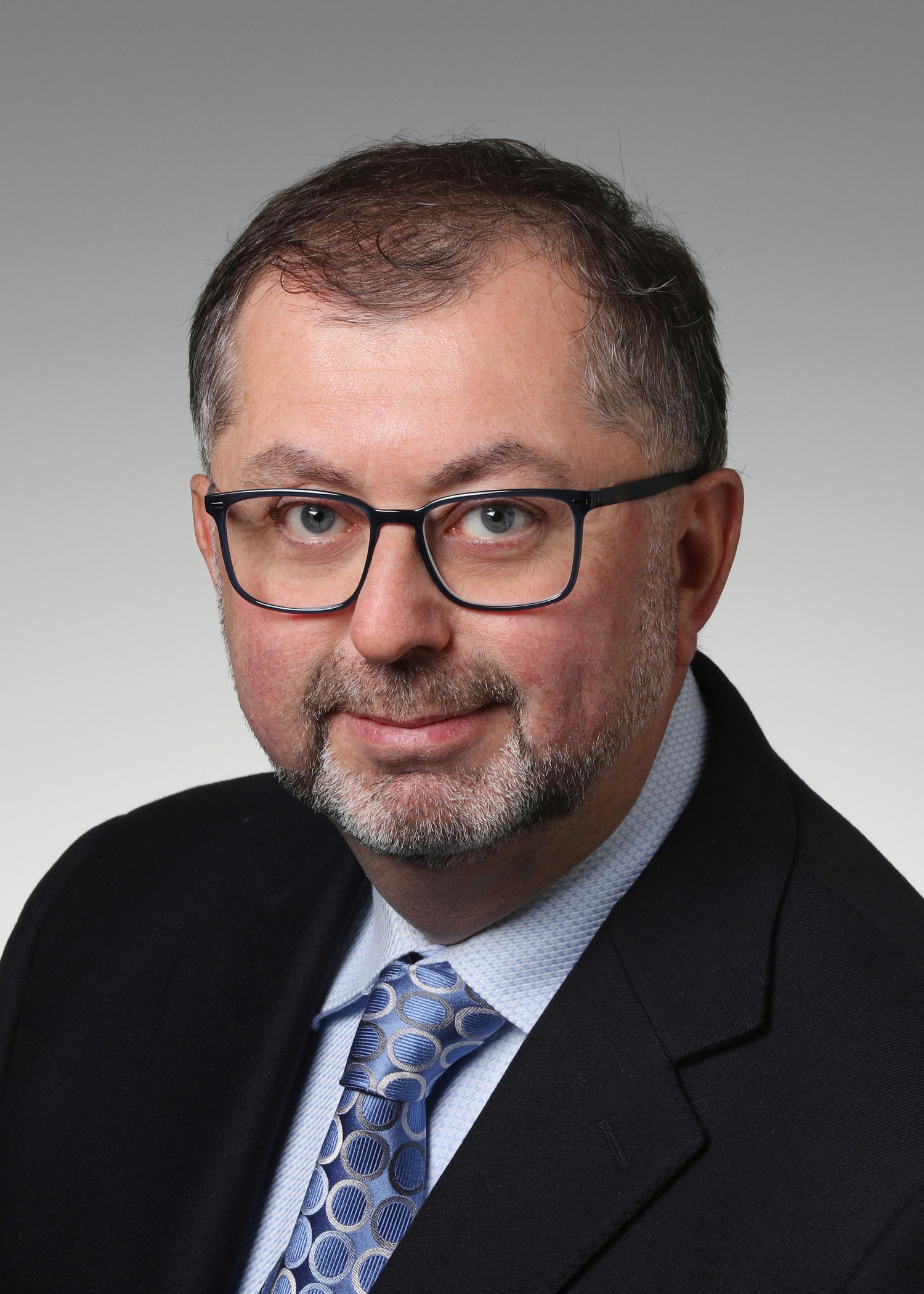
Halim Yanikomeroglu is a Full Professor and Chancellor's Professor at Carleton University's Department of Systems and Computer Engineering, part of the Faculty of Engineering and Design. His research focuses on wireless communications, including 5G/6G networks, non-terrestrial systems (HAPS/LEO satellites), MIMO, and cognitive radio. He has supervised numerous graduate students and holds IEEE Fellow status and the Harold Sobol Award. His work integrates machine learning, federated learning, and sustainability into next-generation networks. Affiliations: Carleton University, IEEE Education: Ph.D. (Toronto), M.A.Sc. (Toronto), B.Sc. (Middle East Technical University) Research interests span cellular networks, relay architectures, and energy-efficient systems. He pioneered cell-switching strategies for green networks and contributed to HAPS and UAV-based infrastructure. His recent work addresses NTN integration, AI-driven spectrum management, and 6G innovations. Awards include IEEE Fellow (2017) and multiple Research.com leadership accolades. His 150+ publications span journals like IEEE Transactions and conferences like ICC. Advising over 50 students, he emphasizes interdisciplinary solutions for future wireless challenges.
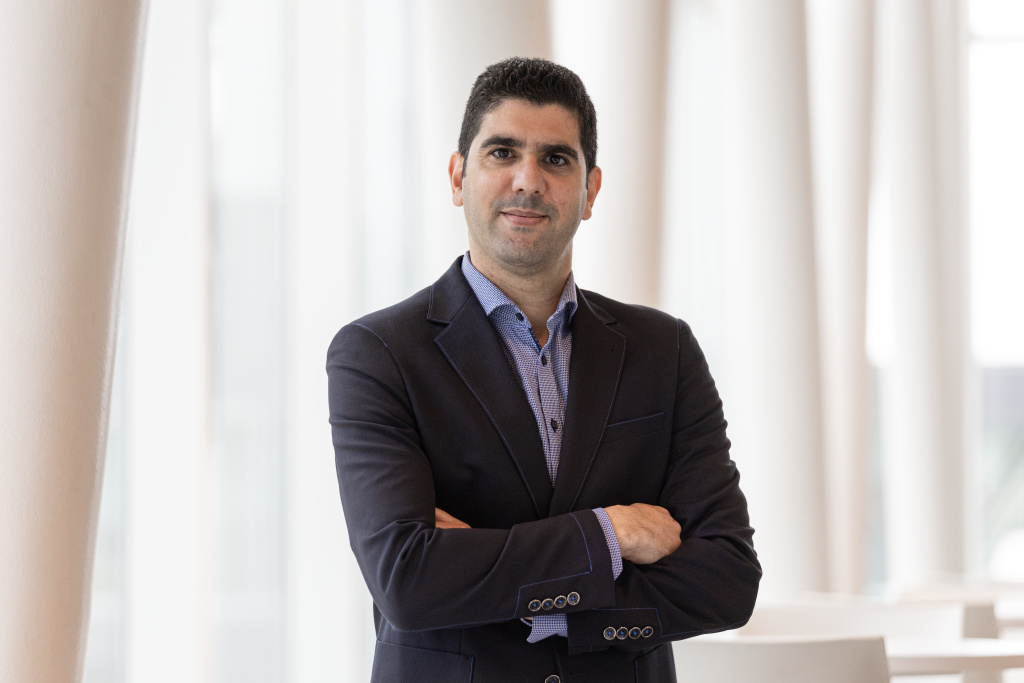
Georges Kaddoum is a Professor at École de technologie supérieure (ÉTS) , specializing in Electrical Engineering. He holds the Canada Research Chair in Unlocking the Power of IoT 6G-Networks and the LACIME – Communications and Microelectronic Integration Laboratory affiliation. His work bridges wireless communications, IoT, and machine learning. Research Interests include wireless communication systems, physical layer security, machine learning for networking, and 6G technologies. He focuses on optimizing network performance in challenging environments (impulsive noise, underwater, non-terrestrial networks) and developing AI-driven solutions for jamming mitigation, resource allocation, and secure IoT frameworks. Recent Publications highlight 6G-enabled vehicular networks, quantum-safe blockchain integration, federated learning for transportation systems, and deep learning-based receivers for chaotic communication systems. His work emphasizes semantic communication, interference management, and digital twin applications. Awards IEEE TCSC Award for Excellence in Scalable Computing (2022) Prix d’excellence de la relève (Université du Québec, 2018) Prix d’excellence en recherche (ÉTS, 2018) Multiple IEEE Exemplary Reviewer and Best Paper Awards (2014–2022) Supervision includes 15+ PhD/Master’s students working on topics like index modulation, physical layer security, UAV communications, and intelligent resource management. Research Units Ultra Research Chair on Intelligent Tactical Wireless Networks LACIME Laboratory Canada Research Chair in IoT 6G-Networks
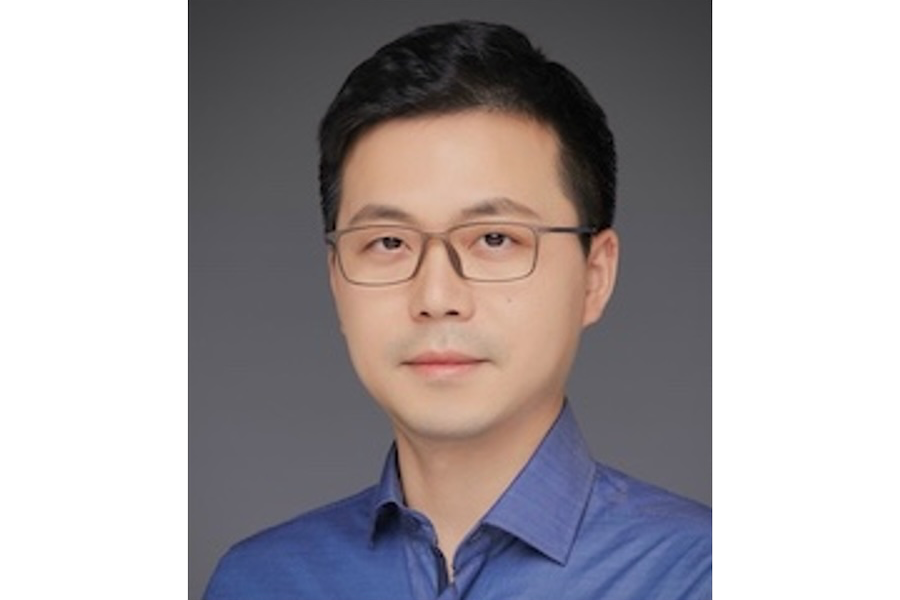
Noura Limam is a Research Assistant Professor at the University of Waterloo's Cheriton School of Computer Science. Her research spans network operations, with emphases on software-defined networking (SDN), 5G/6G architectures, network security, and autonomous network management. Recent work focuses on AI-driven solutions for encrypted traffic analysis, network slicing security, and satellite communication systems. She develops frameworks like Monarch for network slice monitoring and 5Guard for secure slicing. Contributions include blockchain-assisted authentication protocols, meta-reinforcement learning for threat mitigation, and novel handover mechanisms for non-terrestrial networks. Her publications demonstrate consistent innovation in making networks more adaptive, secure, and efficient.
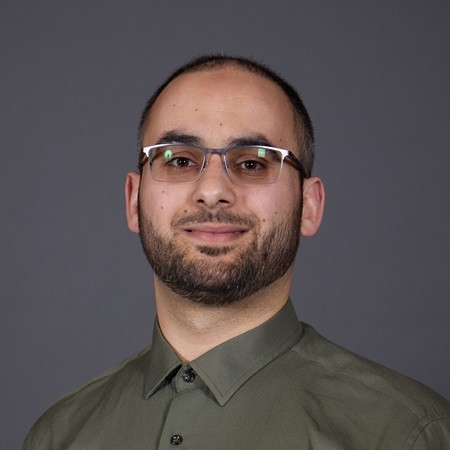
Md. Zoheb Hassan serves as an Assistant Professor in the Department of Electrical Engineering and Computer Engineering at Laval University, where he leads cutting-edge research in wireless communications and spectrum management. His academic role includes graduate recruitment and active participation in the university's research ecosystem, particularly through the Establishment of the Next Generation of Professors program funded by FRQNT. Dr. Hassan's research centers on spectrum sharing and management, wireless communication systems, and communications network control systems. He pioneers the integration of digital twin technology and machine learning to solve critical challenges in next-generation networks, including interference management in 5G/6G aerial corridors, Internet of Vehicles, and satellite-terrestrial integration. His work emphasizes practical implementations such as proof-of-concept demonstrations for tactical networks and proactive resource allocation in dynamic environments. Analysis of his 2024-2025 publications reveals a dominant trend toward AI-driven wireless resource optimization, with 12 of 15 recent papers featuring digital twins for interference management, spectrum sharing, and energy efficiency. Key thematic clusters include vehicular communications (4 papers), underwater IoT networks (2 papers), and hardware-impairment resilient designs (3 papers), demonstrating his focus on bridging theoretical advances with real-world deployment challenges across diverse network topologies. Dr. Hassan has secured significant competitive funding for his research initiatives: Digital Twin-Enhanced Interference Management for Next-Generation Radio Access Networks in the FR3 Band (FRQNT, 2025-2027) Center for Radio Frequency and Communications Systems, Technologies and Applications (FRQNT, 2024-2030) Context-Aware Spectrum Sharing and Management for Next Generation Wireless Networks (NSERC, 2024-2029) Development of innovative technologies for modeling predictive systems in urban mobility (MITACS, 2022-2026) Springboard to Discovery supplement for Context-Aware Spectrum Sharing (NSERC, 2024-2025) He actively mentors doctoral candidates, currently supervising Mahima Karim (PhD in Electrical Engineering, expected 2025) and Mohammadamin Parhizgar (PhD in Electrical Engineering, expected 2024). His supervisory approach combines theoretical rigor with practical problem-solving, focusing on spectrum management algorithms and digital twin implementations for next-generation networks. While specific laboratory affiliations aren't detailed in the source material, his projects indicate strong alignment with Laval University's wireless research infrastructure and the Center for Radio Frequency and Communications Systems.
Waël Jaafar is a Professor in the Department of Software Engineering and IT at École de technologie supérieure (ETS), a constituent school of the Université du Québec system in Montreal, Canada. His research spans multiple critical domains in modern communications and computing infrastructure, with a particular focus on next-generation wireless networks and intelligent systems. Dr. Jaafar holds a B.Eng. from Sup'Com Tunisie, and both M.Sc.A. and Ph.D. degrees from Polytechnique Montréal. His academic background provides a strong foundation for his interdisciplinary research that bridges theoretical concepts with practical engineering solutions. His research interests center around wireless communications systems, with particular emphasis on 5G/6G networks, UAV communications, space telecommunications, and machine learning applications for networking. He has developed significant expertise in federated learning techniques for distributed networks, cybersecurity applications for next-generation mobile systems, and edge computing architectures. His work frequently explores the intersection of communication theory, artificial intelligence, and network security, with applications ranging from industrial IoT to public safety communications. Analysis of his recent publications reveals a strong trend toward integrating artificial intelligence with wireless networking infrastructure, particularly focusing on UAV-assisted communications, federated learning approaches for distributed networks, and security enhancements for 5G/6G systems. His research demonstrates increasing emphasis on practical implementation challenges including energy efficiency, communication overhead reduction, and reliability in non-ideal network conditions. As an academic supervisor, Dr. Jaafar actively mentors numerous graduate students across various projects. He currently supervises doctoral candidates working on blockchain-enhanced security for 5G networks, green network slice orchestration, and federated learning approaches for Open RAN architecture. His master's students are engaged in diverse topics including LiDAR-based power line monitoring, multimodal behavioral authentication, and 5G/6G security using AI techniques. Dr. Jaafar is affiliated with two prominent research laboratories at ETS: LASI (Computer System Architecture Research Laboratory) and LACIME (Communications and Microelectronic Integration Laboratory). At LASI, he contributes to research in AI-based systems engineering, resource orchestration in edge/cloud environments, and intelligent network design. Through LACIME, he engages with broader communications research spanning from microelectronic components to complex communication systems, with particular focus on wireless networks and signal processing applications.
Hatem Abou-Zeid is an Assistant Professor at the Department of Electrical and Software Engineering in the Schulich School of Engineering , University of Calgary. He holds Adjunct Professor appointments at Queen’s University, Carleton University, and Ontario Tech University, Canada. With a Ph.D. in Electrical and Computer Engineering from Queen’s University (2014), his academic journey includes 7 years of industry research at Ericsson and Cisco , where he led R&D projects resulting in 15+ patents. Queen's University (Ph.D., Electrical and Computer Engineering) Arab Academy for Science, Technology and Maritime Transport (B.Sc. and M.Sc., Electronics and Communications Engineering) His research focuses on 5G/6G wireless networking , immersive communications , and robust machine learning for networks. Recent projects explore trustworthy AI , joint sensing and communication , and pediatric brain-computer interfaces (BCI) . He has published extensively in top venues like IEEE JSAC , GLOBECOM , and IEEE Transactions on Networking , with over 60 publications and 19 patent filings. His scientific awards include the Research Excellence Award 2023 (UCalgary), Early Research Excellence Award 2023 (Schulich), and Best Paper Awards at EMBC 2024 (as advisor) and IEEE ICC 2022 . He leads the WAVES Research Group , mentoring 10+ graduate students and postdocs. Collaborations span institutions like the Hotchkiss Brain Institute and industry partners such as Ericsson and European Space Agency .
Peng Hu is an Adjunct Professor at the University of Waterloo, focusing on cutting-edge research in satellite networks, 5G/6G non-terrestrial networks, and AI-driven solutions for space sustainability. His work emphasizes autonomous network management, edge computing in space, and IoT applications for industrial and healthcare systems. Research interests span satellite mega-constellations, space object detection via deep learning, and optimizing free-space optical (FSO) communication. He explores challenges in latency management, energy efficiency, and fault tolerance across heterogeneous networks, including UAV-assisted systems and industrial IoT. Key contributions include the SatAIOps framework for autonomous satellite operations and the SatNetOps multi-layer networking scheme. He has pioneered datasets like Satellite Object Detection (SOD) and developed anomaly detection methods using genetic algorithms and Monte Carlo dropout. Peng Hu’s recent work addresses global connectivity gaps via non-terrestrial networks and reviews reinforcement learning algorithms for space-air-ground integration. His technical leadership is reflected in workshops like the 5th IEEE ICC 2025 Satellite Mega-Constellations workshop.
Mohammad Ali Salahuddin is a Research Assistant Professor at the David R. Cheriton School of Computer Science, University of Waterloo , specializing in networking and machine learning. He holds a Ph.D. in Computer Science from Western Michigan University (2014), with prior academic roles at Université du Québec à Montréal and Concordia University. His research spans 5G network slicing, vehicular networks, and secure content delivery systems. Education: Ph.D. (2014, Western Michigan University); M.S. (2003, Western Michigan University); M.S. (2001, SZABIST); B.S. (1999, FAST-NUCES) Dr. Salahuddin's research focuses on 5G/6G network softwarization , autonomous threat mitigation , and machine learning for network management . His work integrates reinforcement learning and federated learning for scalable solutions in SDN/NFV , IoT , and edge computing . Recent studies address data drift in encrypted traffic classification and DDoS detection using outlier exposure-based federated learning . He has received multiple best paper awards at IEEE/IFIP NOMS (2023, 2022), IEEE CNOM (2021), and Kenneth C. Sevcik Outstanding Student Paper Award (ACM SIGMETRICS, 2021). His NSF-funded projects include vehicular cloud resource management and localization techniques. Dr. Salahuddin actively contributes to academic service as Vice-Chair of IEEE KW Section's Communications Society and TPC member for top conferences.
Dr. Mohammed Abuibaid is an Adjunct Research Professor at Carleton University's School of Information Technology and a Radio Virtual Distributed Unit (vDU) System Designer at Ericsson Canada. As a Senior IEEE Member, he contributes significantly to standards development through IEEE 802 Plenary Sessions and ITU-T Study Group 15 initiatives. His expertise lies in wireless communications with a focus on industrial applications, where he bridges academic research and industry implementation. Dr. Abuibaid earned his Ph.D. from Carleton University, Canada, where he has continued his academic contributions. His educational background has positioned him as a leading expert in next-generation wireless communication systems. Dr. Abuibaid specializes in Hyper-Reliable and Low-Latency Communications (HRLLC) for industrial automation, with research spanning 5G networks and beyond, Time-Sensitive Networking (TSN), Deterministic Networking (DetNet), Massive MIMO systems, and Edge Computing. His innovative approach integrates machine learning techniques to optimize network performance, particularly in balancing reliability with bandwidth utilization in industrial settings. His work addresses critical requirements for Industry 5.0, focusing on resilient networks that can support advanced manufacturing and automation systems. His publication record demonstrates a consistent focus on integrating wireless communication standards with industrial networking requirements. Dr. Abuibaid's research trajectory shows increasing sophistication in addressing the reliability-bandwidth tradeoff through machine learning frameworks and novel system designs that optimize resource utilization while maintaining critical performance metrics for industrial applications. Dr. Abuibaid has received notable recognition for his contributions: Best Industry Paper Award at the 2024 IEEE 10th World Forum on Internet of Things Senior Member of IEEE (since April 2024) As an academic mentor, Dr. Abuibaid supervises student research at Carleton University, focusing on next-generation wireless communication systems. His industry-academic partnership with Ericsson has resulted in significant research funding, including support from the Ericsson-Carleton Partnership Fund and MITACS Canada for the 5G-TSN for Industry 4.0 project. These collaborations have produced innovative solutions that address real-world challenges in industrial networking. Dr. Abuibaid has contributed to establishing the 6G Non-Terrestrial Networks Research Center, collaborating with global technology leaders like Keysight Technologies. His work spans both terrestrial and satellite communication systems, reflecting his comprehensive approach to next-generation network design. He actively participates in standards development through IEEE and ITU-T, ensuring his research has practical impact on emerging communication technologies.
Dr. Peng Hu is an Associate Professor in the Department of Electrical and Computer Engineering at the Price Faculty of Engineering, University of Manitoba, and an Adjunct Professor at the Cheriton School of Computer Science, University of Waterloo. He is a Professional Engineer and Senior Member of IEEE. His educational background includes: PhD in Electrical Engineering, Queen's University (2013) M.S. in Communications and Information Systems, Wuhan University of Technology (2007) B.S. in Information Engineering, Wuhan University of Technology (2004) Dr. Hu's research focuses on emerging networked systems including LEO satellite networks, Space-Air-Ground Integrated Networks, Non-Terrestrial Networks, Beyond 5G/6G, IoT, and Quantum Networks, with emphasis on protocols, architecture, security, resilience, and sustainability. He applies AI/ML for autonomous networking and edge computing to address societal challenges like digital divide, public safety, smart city/agriculture/aquaculture, climate action, and industry 4.0. His scientific recognition includes: 2022 Internet Society Mid-Career Fellowship (1 of 15 global fellows) NRC Innovative and Interdisciplinary Research Award NRC Inventor Fixed Milestone Award Dr. Hu has secured research funding from NSERC, NRC, OCI (formerly OCE), and the Optical SatCom Consortium for AI/ML-enabled network systems, satellite networks, and IoT projects. He actively mentors graduate students and collaborates with academic/industry partners. His service includes IEEE Open Journal of Communications Society Associate Editorship and IEEE LEO Satellites & Systems Project Working Group Co-Chairmanship. He leads the Autonomic Networking Research Group (autonomicnet.com), developing autonomous solutions for next-generation networked systems through interdisciplinary collaborations.
Cheng Li is a Full Professor and Department Head of Electrical and Computer Engineering at Memorial University of Newfoundland. He holds adjunct professorships at Harbin Institute of Technology and Xi'an University of Post and Telecommunications. His expertise spans wireless communications, underwater networks, and sensor systems. He has held academic roles since 1999, including leadership in Nokia Telecommunications and Baosteel. Education: B.Eng. (Hons.) and M.Eng. from Harbin Institute of Technology, followed by a PhD at Memorial University. His research focuses on energy-efficient wireless networks, underwater localization, and cooperative communication protocols. Research highlights include innovations in underwater acoustic sensor networks, vehicular ad-hoc networks, and integrated satellite-terrestrial systems. He has received 8 notable awards, including the Best Paper Award at IEEE ICC’2010 and the David Dunsiger Award. His work bridges academic and industrial applications, with contributions to standards like NECEC and IEEE conferences. He advises on network security, IoT, and multi-agent systems, with over 30 peer-reviewed publications since 2001.
Dr. Betty Li is an Adjunct Professor in the Department of Systems and Computer Engineering at Carleton University and a researcher at the Human Health Therapeutics Research Center. She holds a Ph.D. in Biomedical Engineering from the University of Western Ontario (2018), with prior degrees from Western Ontario (Master of Engineering Science, 2013) and the University of Toronto (Bachelor of Applied Science in Nanoengineering, 2011). Her research focuses on developing microphysiological systems, such as organ-on-chip models, using stem cells, 3D bioprinting, and biomaterials to advance preclinical drug discovery. Key research areas include biomaterials, biomechanics, and microfluidic design. Her recent publications (2023–2025) emphasize 6G networks, non-terrestrial networks (NTN), and AI-driven solutions for wireless communication challenges. She explores topics like federated learning in NTN, hemispherical antenna arrays for HAPS, and energy-efficient satellite IoT systems. Her work bridges biomedical engineering and telecommunications, addressing challenges in both fields. No scientific awards are explicitly mentioned in the text. She advises no listed students but collaborates on projects involving robotic aerial base stations and spectral efficiency optimization. Her lab work integrates interdisciplinary approaches for in vitro tissue modeling and sustainable network architectures.
Dr. Tri Nhu Do is an Assistant Professor in the Department of Electrical Engineering at Polytechnique Montréal, where he conducts cutting-edge research at the intersection of wireless communications and artificial intelligence. His academic journey spans institutions across Vietnam, South Korea, the United States, and Canada, bringing a global perspective to his work. Dr. Do is affiliated with the Advanced Microwave and Space Electronics Research Center (POLY-GRAMES) and contributes to the 'New Frontiers in Information and Communications Technologies' center of excellence. Dr. Do's research focuses on wireless communications systems, artificial intelligence applications in telecommunications, and integrated sensing and communication technologies. His work addresses critical challenges in next-generation wireless networks, particularly in security, resource allocation, and performance optimization. Recent research demonstrates a strong emphasis on applying deep learning, generative AI, and federated learning techniques to solve longstanding problems in wireless communications. His publication record shows remarkable productivity and impact, with numerous articles in top IEEE journals including IEEE Transactions on Communications, IEEE Transactions on Vehicular Technology, and IEEE Communications Letters. The research trends indicate a strategic shift toward integrating AI with traditional communication theory, particularly in security applications, reconfigurable intelligent surfaces, and UAV communications. Dr. Do teaches advanced courses in signal detection and estimation, communication theory, and digital transmission, sharing his expertise with the next generation of electrical engineers. His teaching reflects his research interests, providing students with both theoretical foundations and exposure to cutting-edge developments in the field.