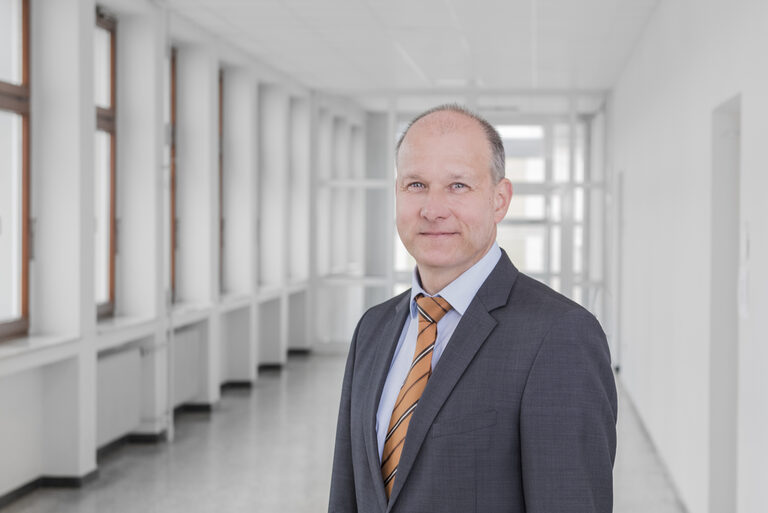
Lennart Svensson is a Professor at Chalmers University of Technology in the Signal Processing research group. His work focuses on nonlinear filtering, multi-object tracking, Bayesian statistics, and deep machine learning with applications in autonomous systems and sensor fusion. Research Interests Nonlinear Filtering and Bayesian Inference Multi-Object Tracking and Sensor Fusion Deep Learning for Autonomous Systems Performance Metrics (GOSPA, T-GOSPA) Lidar-Camera Fusion and Radiance Fields 5G SLAM and mmWave Sensing Publications Trends Recent work emphasizes uncertainty-aware multi-object tracking metrics, trajectory estimation using Poisson Multi-Bernoulli Mixtures, and sensor fusion techniques for autonomous driving. His research integrates Bayesian methods with deep learning for applications in automotive radar, lidar, and 5G positioning systems. Contact Email: lennart.svensson@chalmers.se
Iain Collings is a Professor in the School of Engineering at Macquarie University (since 2014), where he has served as Head of Department and Deputy Dean of School. He holds a PhD in Systems Engineering from the Australian National University (1995). Prior roles include nine years at CSIRO (Deputy Chief of Division, Research Program Leader) and academic positions at the Universities of Melbourne and Sydney. His research focuses on wireless communications, particularly MIMO systems, adaptive multiuser networks, and antenna design. He has published over 300 papers and pioneered technologies central to modern mobile and indoor wireless systems. Recent work includes contributions to mm-wave communication, satellite IoT networks, and chipless RFID sensing. Collings leads the Future Communications Research Centre and chairs the Australian Communications Theory Workshop steering committee. He is an IEEE Fellow, Australian Academy of Science member, and Associate Editor for Sensors . His YouTube channel (80k+ subscribers) promotes engineering education, and he recently published an educational paper on solutions-based learning at the AAEE Conference. Awards: Neville Thiele (2009), Stephen O. Rice (2011), multiple teaching excellence awards (2020-2022) Grants/Projects: ARC grants DP23 (mm-wave networks), LP20 (satellite IoT), and industry collaborations on robotics and implant chip manufacturing He actively advises on national research policy via the ARC National Intelligence Grant panel and chairs the NCICS committee for Information and Communication Sciences.
Leila Musavian is a Professor of Wireless Communications at the University of Surrey's Department of Electrical and Electronic Engineering within the Faculty of Engineering and Physical Sciences. She is a leading researcher in next-generation wireless communication systems with a focus on 5G/6G technologies, particularly in the areas of non-orthogonal multiple access (NOMA), energy harvesting communications, physical layer network coding, and ultra-reliable low-latency communications (uRLLC). Her research has significant implications for vehicular networks, IoT applications, and future wireless infrastructure. Her research interests span multiple critical areas of modern wireless communications, including energy-efficient resource allocation, security in wireless networks, massive MIMO systems, and reconfigurable intelligent surfaces. She has pioneered work on the performance analysis of NOMA systems under statistical quality of service constraints, which has become increasingly important for emerging applications requiring ultra-reliable and low-latency communications. Her research bridges theoretical foundations with practical implementations, often incorporating machine learning techniques for optimization of wireless networks. Her publication portfolio shows a clear evolution toward cutting-edge topics in wireless communications, with recent focus on holographic beamforming via dynamic metasurface antennas, robotic wireless energy transfer, and deep reinforcement learning applications for vehicular optical camera communications. These works demonstrate her ability to identify and address emerging challenges in next-generation wireless systems, particularly those related to 6G technologies and beyond. Professor Musavian has successfully supervised numerous PhD students who have gone on to become active researchers in the field, with many continuing to collaborate with her on cutting-edge projects. Her research has been supported by significant grants from national and international funding bodies, though specific grant details are not visible in the current dataset.
Christof Röhrig is a Professor at the FH Dortmund - University of Applied Sciences and Arts , conducting research at the Institute for the Digitalization of Work and Living Environments (IDiAL). He leads the Intelligent Mobile Systems Lab , focusing on robotics, wireless sensor networks, and kinematic modeling. His research spans mobile robotics , indoor localization , and industrial automation , with a strong emphasis on IoT , 5G networks , and rescue robotics . Key trends in his recent work include LoRaWAN localization , modular robot design , and digital twin architecture . He collaborates extensively on motion control , sensor fusion , and energy-efficient systems , though no specific students, awards, or grants are listed in the provided data. The lab at IDiAL explores robotics in emergency response and industrial IoT applications , with a focus on precision localization and collaborative automation .
Jonas Sjöberg is a Full Professor of Mechatronics at Chalmers University of Technology, where he leads the Mechatronic research group in the College of Engineering. His research spans multiple aspects of mechatronic systems with a strong focus on automotive applications. Sjöberg holds leadership roles in numerous research projects related to autonomous vehicles, vehicle control systems, and transportation safety. His research interests encompass a broad spectrum of mechatronics applications, with particular emphasis on model-based methods, signal processing, control systems, system identification, and optimization for design and product development of mechatronic systems. Sjöberg's work bridges theoretical control engineering with practical automotive applications, especially in the domains of Automotive Active Safety and Hybrid Electric Vehicles. Analysis of Sjöberg's recent publications reveals a strong research trajectory focused on autonomous vehicle technologies, with particular attention to vehicle dynamics control, intersection safety, road surface condition estimation, and optimization of vehicle maneuvers. His work demonstrates a consistent approach of applying advanced control theory to solve real-world transportation challenges, with increasing emphasis on machine learning techniques integrated with traditional control systems. Sjöberg actively supervises research and education at both undergraduate and graduate levels while leading multiple research projects funded by VINNOVA, the European Commission, and other organizations. His research group collaborates extensively with both academic institutions and industry partners in the automotive sector. His laboratory work focuses on mechatronic systems development, particularly for automotive applications including autonomous bicycles, bus docking systems, and vehicle control algorithms. The research group maintains strong connections with the automotive industry, particularly in Sweden's robust vehicle technology ecosystem.
Yichuang Sun is a Professor of Communications and Electronics at the University of Hertfordshire, leading the Communications and Intelligent Systems Research Group and the Electrical and Electronic Engineering Department. He holds a PhD from the University of York (1996) and has over 450 peer-reviewed publications, 5 authored books, and 40+ supervised PhD students. His research focuses on wireless communications (5G/6G, RIS-aided systems), RF/microwave circuits, neuromorphic computing, and machine learning applications. He serves as Editor or Guest Editor for 12+ IEEE/IET journals and chairs technical committees for IEEE conferences. Notably ranked in the World's Top 2% Scientists since 2019, he also advises global institutions like Oxford and the Royal Academy of Engineering. Education: PhD in Electronics, University of York, UK (1996) Research Interests: Wireless/Mobile Communications and Networks RF and Microelectronic Circuits Neuromorphic Computing and Machine Learning Memristor-based Systems Secure and Energy-Efficient Communications Grants & Projects (selected): Advanced mmWave MIMO 4D Radar for Traffic Detection (2024–2027) Wireless Power Transfer for Implantable Medical Devices (2023–2025) RFID System for Sample Management (2021–present) Labs/Teams: Leads the Communications and Intelligent Systems Research Group, collaborating on 6G, neuromorphic hardware, and IoT systems.
Artem Vilenskiy is a researcher in the Antenna Systems group at Chalmers University of Technology since 2019. His work focuses on developing active integrated array antenna concepts, 100+ GHz beam-steerable antennas and circuits, MMIC design, computational electromagnetics methods for radiation and scattering problems, and collaboration with Chalmers industrial partners. His educational background includes: MSc Degree (Specialist) in Electrical Engineering from Bauman Moscow State Technical University (BMSTU) in 2011 PhD Degree (Eng.) in "Antennas, Microwave Devices and Its Technology" from BMSTU in 2014 Dr. Vilenskiy's research spans multiple cutting-edge areas in microwave and antenna engineering, with particular emphasis on millimeter-wave and sub-THz frequency ranges. He specializes in reconfigurable intelligent surfaces (RIS), beam-steering technologies, and integrated antenna solutions for next-generation wireless communication systems. His work bridges theoretical electromagnetics with practical implementation challenges, often involving close collaboration with industry to address real-world telecommunications and radar applications. His expertise encompasses both novel antenna architecture design and associated microwave integrated circuits, with significant contributions to mmWave phased arrays and wireless power transfer systems. Analysis of his recent publications reveals a strong and consistent focus on millimeter-wave antenna systems, particularly in developing reconfigurable intelligent surfaces for 5G/6G applications, advanced beamforming techniques, and innovative antenna array architectures. His research spans frequencies from W-band (75-110 GHz) into the sub-THz range, addressing critical challenges in high-frequency wireless communication systems. The publications demonstrate a consistent emphasis on practical implementation, with many papers detailing circuit models, measurement techniques, and experimental validation of theoretical concepts across multiple application domains including satellite communications, wireless backhaul, and quantum computing interfaces. Dr. Vilenskiy has been actively involved in multiple significant research projects: Low-Thermal-Conductance and High-Density Microwave Interconnects for Cryogenic Quantum Computers (2024-2025) Energy Efficient, Beamforming Antenna-IC Integration Solutions for Future 100+GHz Telecommunication Systems (2021-2023) Antenna technologies for beyond 5G Wireless Communication (2020-2025) MyWave - Efficient Millimetre-Wave Communications for mobile users (2019-2023) Integrated Antenna Arrays (2016-2023) Prior to joining Chalmers, Dr. Vilenskiy worked at Samsung Research Institute Russia from 2011-2019 in various engineering roles including research engineer, expert engineer, and project leader. During 2015-2019, he also held a part-time Associate Professor position at BMSTU where he coordinated the MSc course "Applied Electrodynamics of Composite Media". His industry experience in mobile communication, automotive radar, robotics, and wireless power transfer provides valuable practical insights that complement his academic research in antenna systems.
Christian Wietfeld is a Professor at TU Dortmund, Germany, specializing in telecommunications, 5G/6G networks, and robotics. His research focuses on network slicing, machine learning for communications, vehicular networks, and intelligent reflecting surfaces. Affiliations: TU Dortmund Key Collaborations: Stefan Böcker, Benjamin Sliwa, Manuel Patchou His work spans 6G multi-X communications, private industrial networks, and disaster response robotics. Recent projects include mmWave reflector systems, predictive uplink slicing, and AI-driven network planning. 2024-2025 publications highlight advancements in 6G IRS, energy-efficient 5G, and vehicular connectivity. Sub-fields include beam management, digital twins, and non-terrestrial networks. He contributes to experimental frameworks like Open RAN and ns-3 simulations, emphasizing scalable solutions for industrial and emergency applications.
Dr. Yaguang Zhang is a Clinical Assistant Professor at Purdue University, jointly appointed in the Department of Agricultural & Biological Engineering (ABE) and the Department of Agricultural Sciences Education & Communication (ASEC) . Holding a Ph.D. in Electrical and Computer Engineering from Purdue (2021), he specializes in data science , digital agriculture , and UAV-aided wireless communication systems , with applications in intelligent transportation, proactive road maintenance, and engineering education. Education: Ph.D. and M.Sc. in Electrical and Computer Engineering (Purdue), B.Eng. in Communication Engineering (Tianjin University) Research Interests span cutting-edge domains including: Digital Agriculture: GPS-based field shape generation, product traceability trees, and automated metadata collection for agricultural operations Wireless Communication: Millimeter-wave channel modeling, UAV relay systems, and rural network coverage optimization Smart Infrastructure: Pavement condition assessment tools, sun-shadow simulation for road treatment, and vehicle automation platforms Recent Publications emphasize scalable solutions for agricultural IoT, machine learning in crop monitoring, and interoperable data frameworks. His scientific awards include: 2024 Outstanding Engineering Teacher (Purdue) 2024 ASABE Superior Paper Award 2020 FFAR Student Poster First Prize Multiple NSF/IEEE travel supports Grants from USDA, NSF, INDOT, and industry partners (CableLabs, Nokia) fund projects like tractor autopilot development, rural 6G networks, and pavement monitoring systems. He mentors graduate students in agricultural robotics , data science , and connected vehicle research .
Pedro Nardelli is a Full Professor (tenured) of IoT in Energy Systems at the LUT School of Energy Systems, Lappeenranta University of Technology (Finland). He holds a double doctoral degree in electrical engineering from the University of Campinas (Brazil) and communications engineering from the University of Oulu (Finland). As a Docent in Information Processing and Communications Strategies for Energy Systems, he leads research in cyber-physical systems, smart grids, and 6G-enabled energy networks. Research Interests : His work focuses on integrating IoT, AI, and communication technologies into energy systems. Key areas include cyber-physical systems, UAV-enabled networks, sustainable energy management, and cybersecurity in critical infrastructure. He emphasizes interdisciplinary approaches to address challenges in the green-digital transition. Projects & Leadership : He is Principal Investigator for projects such as 'Energy-Conscious Operation: Network Efficiency for Wireless Sustainability' (2024–2026) and coordinates the Finnish-Brazilian AI and 5G training program. Past roles include leadership in the 'Hydrogen and Carbon Value Chains in Green Electrification' initiative (2021–2024). Publications : Recent work explores topics like hybrid optimal power flow models, UAV-IRS NOMA systems, and energy-centric analysis. His research bridges theoretical frameworks with practical applications, emphasizing sustainability and resilience in energy networks. Labs & Teams : Leads the IoT Solutions group within LUT's MORE SIM research platform, focusing on simulation-driven innovation for energy systems.
Dimitrios D. Vergados is a Professor in the Department of Informatics at the University of Piraeus, holding the UNESCO Chair in 'Creative Cities in Motion: Urban Sustainable Mobility and Utilization of Cultural Resources.' As an IEEE Senior Member, he specializes in wireless networks, computer networks, and advanced digital technologies, with a focus on 5G, IoT, and smart systems. His research spans telecommunications systems , cloud computing , machine learning for industrial applications , and digital cultural heritage preservation . Recent work explores vehicular networks, drone communication in 5G architectures, and privacy challenges in smart cities. He has contributed to energy optimization, security frameworks, and digital twin implementations for sustainability. Key trends in his publications include the intersection of 5G security , IoT , and machine learning in industrial and healthcare contexts, alongside digital heritage modeling for cultural preservation. His work bridges theoretical and applied domains in telecommunications and smart technologies. Scientific Awards IEEE Senior Member Vergados has served as a committee member, technical program committee member, and reviewer for international conferences and journals. He previously chaired the UNESCO Chair and participated in national and international evaluations, including roles at the Hellenic Telecommunications and Post Commission. His research emphasizes interdisciplinary applications of digital systems in mobility, healthcare, and cultural management.
Dr. Martin Reisslein is a Professor in the School of Electrical, Computer, and Energy Engineering at Arizona State University (ASU), where he also serves as Program Chair of Computer Engineering. He earned his Ph.D. in Systems Engineering from the University of Pennsylvania (1998) and holds degrees from the University of Pennsylvania and Fachhochschule Dieburg, Germany. His research focuses on communication networks (e.g., 5G, optical networks, software-defined networking) and engineering education, with over 200 journal articles and 60 conference papers. He has led NSF-funded projects on network architecture optimization and K-12 engineering education. Education : Ph.D. (Systems Engineering, UPenn, 1998), M.S.E. (Electrical Engineering, UPenn, 1996), Dipl.-Ing. (FH) (Electrical Engineering, Fachhochschule Dieburg, 1994) Awards : NSF Career Award (2002), IEEE Fellow (2014), Bessel Research Award (2015), DRESDEN Fellowship (2016) Editorial Roles : Co-Editor-in-Chief of Optical Switching and Networking , Associate Editor for multiple IEEE journals His research spans communication networks (e.g., multimedia networking, optical systems) and engineering education (e.g., K-12 outreach, instructional design). Recent articles address cloud computing, 5G architectures, and cybersecurity in satellite systems. He teaches courses such as Communication Networks and oversees graduate research.
Dr. Ahsan Adeel is an Associate Professor of Cellular AI and Theoretical Neuroscience at the University of Stirling. He holds affiliations with multiple institutions including MIT, Oxford, and the Howard Brain Sciences Foundation. His research focuses on bridging cellular neurobiology with AI, particularly through the study of pyramidal Two-Point Neurons (TPNs) and their role in conscious processing. His work emphasizes developing biologically plausible AI models for healthcare, robotics, and neuromorphic computing. Education: B.Eng. in Electrical Engineering, MSc in Electronics, PhD in Cognitive Computing. Research interests include: Conscious Multisensory Integration (CMI), neuromorphic chip design, explainable AI (XAI), and applications in hearing aids, disaster management, and neurological disorders. His lab, the CMI Lab, explores how TPN mechanisms can overcome computational limitations of current AI. Key projects include a £4M EPSRC-funded hearing aid initiative, 5G-enabled environment planners for dementia patients, and collaborations with NASA/ESA on AI for space exploration. His work is featured in flagship journals like Frontiers in Computational Neuroscience and the €1.2B Human Brain Project. Awards include Fellowships from Howard Foundation, MIT, and Oxford, alongside recognition for contributions to neuromorphic computing and TPN research. He has over 30 publications and leads interdisciplinary teams across 10+ global institutions.
Prof. Manuel Sierra Castañer is a full professor at the Technical University of Madrid (UPM), serving as the Dean of the School of Telecommunications Engineering since May 2021. He holds a Telecommunication Engineering degree (1994) and a PhD (2000), both from UPM. His career includes roles as assistant and associate professor, research positions at Tokyo Tech and EPFL, and leadership in antenna measurement systems and international projects. He is a Senior Member of IEEE and Fellow of AMTA, with research focused on planar antennas and measurement systems. Notable achievements include the IEEE APS 2007 Schelkunoff Prize and leadership roles in EurAAP (Vice-Chair, General Chair for EuCAP 2022). He directed 7 PhD theses and led projects like FUTURE-RADIO and TERASENSE. His administrative roles include Director of International Cooperation at UPM (2010–2020) and leadership in the European School of Antennas. Key contributions span antenna design for 5G, satellite communications, and energy harvesting. He has authored 40+ journal papers and pioneered phaseless near-field techniques, robotic antenna measurement systems, and 3D-printed antenna components. His work bridges academic research with industry applications, emphasizing sustainable engineering education and global collaboration.
Ole Madsen is a Professor at the Department of Materials and Production within The Faculty of Engineering and Science at Aalborg University . His research focuses on Robotics and Automation , particularly in 5G Smart Production , AI for Manufacturing , and Industry 4.0 applications. He also holds a part-time position at Adding Robotics , applying his expertise in robot integration for industrial and healthcare settings. Research Interests : Robotics, Automation, AI, Sensor Systems, Modular Manufacturing, Welding Technology, Digital Twins, Human-Centered Robotics, Industry 4.0 His work spans 35+ years with over 205 publications , emphasizing smart production systems and robot-assisted processes . Key contributions include Swarm Production Architectures , 5G-Enabled Robotics , and Human-Robot Collaboration frameworks. He has supervised 10 PhD students and led major projects like RAU (Robot-Assisted Ultrasound) and GINP: Robotics & AI Innovation Network . Scientific Awards : SCAP2020 Best Presentation Award (2020) Ole's 31 projects include AP2030: Aseptic Factory 2030 (pharma production), AddSmart (robotics R&D), and 5G-Enabled Autonomous Systems . His 127 press/media mentions highlight advancements in robotic welding , industrial metaverse , and swarm production . He maintains an ORCID: 0000-0003-2133-2541 with extensive publication records across Swarm Robotics , Modular Manufacturing , and AI-Driven Production .