Xingwang Li is an active researcher affiliated with the School of Physics and Electronic Information Engineering at Henan Polytechnic University in Jiaozuo, China. He obtained his PhD from Beijing University of Posts and Telecommunications in 2015, specializing in networking and switching technology. His research spans wireless communications, IoT systems, reconfigurable intelligent surfaces (RIS), and physical-layer security, with a strong focus on 6G-enabling technologies. Dr. Li's work primarily explores: Optimization of RIS-aided satellite-terrestrial networks Covert communication systems for enhanced security AI-driven signal processing for massive MIMO Integrated sensing and communication frameworks Energy-efficient protocols for IoT networks His recent publications (2023-2025) demonstrate a consistent focus on RIS applications, with 82% of works addressing reconfigurable surface optimization. Key trends include the integration of deep learning with communication systems (notably reinforcement learning for resource allocation), advancement of THz and near-field technologies for 6G, and novel approaches to physical-layer security. The research shows increasing emphasis on practical implementations, including UAV networks and autonomous vehicle communications.
Jukka Manner is a Full Professor (tenured) of Networking Technology at Aalto University's Department of Communications and Networking (Comnet), School of Electrical Engineering. With a career spanning over two decades in internet technologies, he leads research in networking, wireless systems, and energy-efficient ICT solutions. Dr. Manner received his MSc (1999) and PhD (2004) degrees in computer science from the University of Helsinki. His academic journey has been marked by significant contributions to internet standardization through the IETF since 1999, where he served as co-chair of the NSIS working group. Professor Manner's research focuses on networking, software and distributed systems, with particular emphasis on wireless and mobile networks, transport protocols, energy efficient ICT and cyber security. His work bridges theoretical advancements with practical applications, addressing critical challenges in modern communication systems, sustainable networking practices, and security frameworks. His research group has made significant contributions to 5G technologies, UAV communications, and energy-efficient network design. His extensive publication record shows a clear evolution toward sustainability in networking technologies, with recent work focusing on energy efficiency in 5G systems, sustainable web technologies, and the environmental impact of digital infrastructure. The research demonstrates strong interdisciplinary connections between telecommunications engineering, computer science, and environmental science, with particular emphasis on reducing the carbon footprint of digital systems while maintaining performance. Cross of Merit, Signals (2014) Medal for Military Merits for contributions in national defence and C4 (2015) Professor Manner has supervised over 200 MSc theses and more than 20 doctoral dissertations, establishing himself as a dedicated mentor in the field. He has been principal investigator and project manager for over 15 national and international research projects, including serving as Academic Coordinator for the Finnish Future Internet research programme (2008-2012). His leadership extends to conference organization, having served as local co-chair of Sigcomm 2012 in Helsinki, and active participation as a peer reviewer and member of various Technical Program Committees. As an active contributor to internet standardization through the IETF, Professor Manner's work has practical impact on global networking technologies. His research group maintains strong connections with industry partners and participates in shaping future networking standards and practices, particularly in the areas of sustainable networking, 5G evolution, and security frameworks for emerging technologies.
Patrick Mitran is a full-time Professor at the University of Waterloo's Department of Electrical and Computer Engineering, within the Faculty of Engineering. His research focuses on advanced wireless communication systems, including 5G/6G technologies, millimeter-wave and sub-THz communication, digital predistortion techniques, MIMO systems, and beamforming architectures. He leads projects addressing challenges in transmitter linearization, network resource allocation, and hardware-efficient signal processing. Key research interests include optimizing frequency multiplier-based transmitters, mitigating inter-cell interference in massive MIMO networks, and developing algorithms for reconfigurable intelligent surfaces (RIS). His work often intersects hardware design, signal processing, and network optimization, with applications in next-generation wireless infrastructure. Recent publications highlight innovations in ultrawideband signal generation for 6G testing, practical RIS configurations, and FPGA-based real-time digital predistortion implementations. His contributions emphasize both theoretical advancements and practical system-level solutions. Dr. Mitran's research group collaborates on cutting-edge topics such as hybrid NOMA in multi-cell networks, adaptive coding modulation for Gaussian channels, and interference decoding strategies. His work has been published in top-tier journals and conferences, reflecting a sustained impact on modern wireless communication technologies.
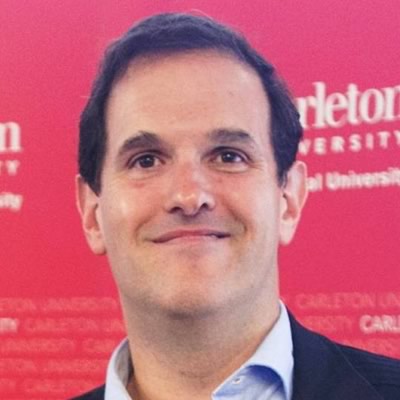
Dr. Gabriel Wainer is a Professor in the Department of Systems and Computer Engineering at Carleton University's Faculty of Engineering and Design. He leads the Advanced Real-Time Simulation Lab and specializes in modeling and simulation methodologies, particularly focusing on discrete event systems, real-time modeling, cellular automata, and DEVS formalism. Research Interests: Discrete event systems, DEVS formalism, cellular automata, real-time simulation, IoT applications, and parallel/distributed simulation Affiliation: Carleton University Recent publications highlight his work in advanced simulation frameworks, energy-efficient 5G systems using deep reinforcement learning, and pandemic modeling with cellular automata. His lab develops tools like PROMETHEUS and Devsmap for standardized DEVS model representation, while also exploring applications in wireless communication, building energy systems, and behavioral epidemiology.
Ebrahim Bedeer Mohamed is an Assistant Professor in the Department of Electrical and Computer Engineering at the University of Saskatchewan. He joined in July 2019, following roles as an Assistant Professor (Lecturer) at Ulster University, UK, and postdoctoral fellowships at Carleton University and the University of British Columbia. He holds a Ph.D. (Distinction) from Memorial University of Newfoundland (2014), with expertise in signal processing and wireless communications. His research focuses on optimizing communication systems through advanced signal processing techniques, including faster-than-Nyquist signaling, IoT network design, AI integration, and energy-efficient protocols. Key areas include next-generation communication networks, non-orthogonal modulation, and MIMO systems. Notable contributions include work on channel estimation for FTN signaling, RIS-aided wireless systems, and LR-FHSS protocols in IoT. His publications span spectral efficiency, interference minimization, and energy management in 5G/6G contexts. He actively seeks Ph.D. students with strong backgrounds in signal processing fundamentals. Awards and grants are not explicitly listed in the provided texts. His work emphasizes practical applications, such as UAV trajectory optimization for IoT data collection and energy-efficient caching strategies in dynamic networks.
Erik G. Larsson is a Professor and Head of the Division for Communication Systems within the Department of Electrical Engineering (ISY) at Linköping University (LiU), Sweden. He joined LiU in September 2007 and has previously held academic and research positions at the Royal Institute of Technology (KTH), University of Florida, George Washington University, and Ericsson Research. Research Interests: Enabling technologies for 6G wireless communication Statistical inference and signal processing Network science and complex networks Decentralized and federated machine learning over networks Physical layer security and privacy Energy-efficient digital signal processing His research group, active in areas like RadioWeaves and massive MIMO, focuses on robust, efficient, and secure wireless connectivity. Recent publications highlight trends in decentralized learning, resource allocation in wireless networks, and the integration of AI into mobile networks, particularly through projects like 'Turning the Air into an AI Computer' funded by the Knut and Alice Wallenberg Foundation. Scientific Awards and Honors: IEEE Signal Processing Magazine Best Column Award (2012, 2014) IEEE ComSoc Stephen O. Rice Prize (2015) IEEE ComSoc Leonard G. Abraham Prize (2017) IEEE ComSoc Best Tutorial Paper Award (2018) IEEE ComSoc Fred W. Ellersick Prize (2019) IEEE SPS Donald G. Fink Overview Paper Award (2023) IEEE Fellow Member, Royal Swedish Academy of Sciences (KVA) Gyllene Moroten Best Teacher Award (2021) Advising and Grants: He has supervised numerous Ph.D. and Licentiate students, many of whom now hold positions at leading industry and academic institutions. His research is currently funded by major organizations including the Knut and Alice Wallenberg Foundation, Swedish Foundation for Strategic Research (SSF), ELLIIT, Security-Link, Swedish Research Council (VR), and EU Horizon 2020 (H2020-SNS-6GTandem). Previous sponsors include VR, KVA, NSF, ORAU, and multiple EU FP7 and H2020 projects (e.g., MAMMOET, REINDEER, 5G-Wireless). Leadership and Service: He has served as Associate Editor for IEEE Transactions on Communications and IEEE Transactions on Signal Processing, chaired technical committees and steering committees in IEEE Signal Processing Society, and held leadership roles in major conferences such as the Asilomar Conference on Signals, Systems and Computers. He was a Visiting Fellow at Princeton University in 2015.
Vinod M. Vokkarane is a Professor in the Department of Electrical and Computer Engineering at the University of Massachusetts Lowell, where he serves as Director of the Center for Smart Cyber-Physical Systems (SCyPS) and Director of Advanced Computer Network Labs. Previously, he was an Associate Professor at University of Massachusetts Dartmouth from 2004 to 2013 and a Visiting Scientist at MIT's Research Laboratory of Electronics from 2011 to 2014. His extensive research portfolio spans multiple domains of advanced networking and cyber-physical systems. Dr. Vokkarane earned his educational foundation with a B.S. from University of Mysore, India (1999), followed by an M.S. (2001) and Ph.D. (2004) in Computer Science from the University of Texas at Dallas. His dissertation focused on optical burst-switched networks, establishing the foundation for his future research trajectory. His research interests center on Cyber-Physical Systems, Network Optimization, Reliability, Smart Grids, and Cyber-Security, with particular expertise in the design, analysis, and modeling of architectures, protocols, and algorithms for ultra-high speed networks including Optical networks, Grid/Cloud networks, and Big-data networks. His work bridges theoretical foundations with practical implementations, often addressing critical challenges in network reliability, security, and efficiency. His research has received significant recognition through numerous best paper awards and substantial external funding. Analysis of his recent publications reveals a clear evolution toward increasingly sophisticated integration of cyber-physical systems with power infrastructure, particularly in the areas of grid resilience and observability. His work has expanded from fundamental optical networking research to address critical infrastructure challenges, with a growing emphasis on machine learning applications for network optimization and power system monitoring. The recent focus on PMU networks, disaster resilience, and cyber restoration demonstrates his strategic pivot toward addressing national security and critical infrastructure protection challenges. UMass Dartmouth Scholar of the Year Award (2011) UMass Dartmouth Chancellor's Innovation in Teaching Award (2010-11) University of Texas at Dallas Computer Science Dissertation of the Year Award (2003-04) Multiple Best Paper Awards including IEEE GLOBECOM 2005, IEEE ANTS 2010, ONDM 2015, ONDM 2016, and IEEE ANTS 2016 Texas Telecommunications Engineering Consortium Fellowship (2002-03) Dr. Vokkarane has successfully mentored numerous graduate students who have contributed significantly to his research projects, with several going on to successful careers in academia and industry. His research has been consistently supported by major funding agencies including NSF, DOE, and USMC, with recent projects totaling over $5 million in funding. Current projects include Unified Post-Disaster Restoration Planning for Cyber-Physical Power Distribution Systems (ONR, $550K), CyberCARE: Northeast University Cybersecurity Center (DOE, $3.5M), and Flexible Spectrum Allocation in Next-Generation Optical Networks (NSF, $350K). He leads the Center for Smart Cyber-Physical Systems (SCyPS) and Advanced Computer Network Labs at UMass Lowell, where his research teams work on cutting-edge problems in network architecture, cyber-physical security, and infrastructure resilience. His labs collaborate extensively with national laboratories and industry partners to translate theoretical advances into practical solutions for real-world infrastructure challenges.
Francis Y. Yan is an Assistant Professor of Computer Science at the University of Illinois Urbana-Champaign (UIUC), holding an affiliate appointment in Electrical & Computer Engineering within the Grainger College of Engineering. He leads the Illinois Networked Systems and AI (NSAI) research group, focusing on building intelligent networked systems that are safe, robust, and performance-optimized through practical machine learning integration. Prior to joining UIUC in January 2025, he served as a Senior Researcher at Microsoft Research Redmond under Victor Bahl. His educational background includes: Ph.D. in Computer Science from Stanford University (2020), advised by Keith Winstein and Philip Levis B.S. in Computer Science (Yao Class) and B.A. in Economics from Tsinghua University (2015) Additional undergraduate studies at MIT Yan's research adopts a holistic approach to practical machine learning for networked systems, emphasizing judicious application rather than indiscriminate use. He builds real-world systems and research platforms to lay ML foundations, devises deployable algorithms using domain insights, and validates performance through extensive empirical evidence. His work consistently addresses operator concerns regarding ML deployment—focusing on safety, robustness, generalization, and efficiency—while strategically combining ML with classical networking and systems techniques. Analysis of his 15 most recent publications (2023-2025) reveals dominant themes in resource allocation for microservices (DeDe, Autothrottle), real-time video optimization (Mowgli, GRACE), and LLM-driven network algorithm design. His work bridges theoretical advances with industrial deployment, evidenced by platforms like Puffer (400,000+ users) and OpenNetLab that have become community standards for validating congestion control algorithms. His research has been recognized with top honors: USENIX NSDI Outstanding Paper Award (2024) for Autothrottle APNet Best Paper Award (2022) IRTF Applied Networking Research Prize (2021) USENIX NSDI Community Award (2020) USENIX ATC Best Paper Award (2018) for Pantheon Yan actively recruits master's and undergraduate researchers for his NSAI group, prioritizing self-motivated students for projects in networked systems and AI. His research is supported by industry collaborations (notably Microsoft) and manifests in deployable platforms like Puffer—which has enabled award-winning research at NSDI and SIGCOMM—and OpenNetLab for real-time communications. His work directly impacts production systems including Microsoft Teams and Bing. He founded and directs the Illinois Networked Systems and AI (NSAI) research group, which operates critical infrastructure including Puffer (a live TV service and research platform) and OpenNetLab. These platforms facilitate community-wide validation of novel algorithms, with Puffer alone supporting multiple best-paper awards at top conferences. Current workstreams span cloud resource management (Teal, Autothrottle, DeDe), low-latency video (Puffer, Tambur, Mowgli), and LLM-augmented systems (Nada, Designing Network Algorithms via LLMs).
Lin Zhong is the Joseph C. Tsai Professor of Computer Science at Yale University, leading the Efficient Computing Lab. He holds a Ph.D. from Princeton University and M.S./B.S. degrees from Tsinghua University. Previously, he served at Rice University from 2005 to 2019. His research focuses on optimizing computing efficiency, quantum error correction, operating systems, and mobile systems. Education: Ph.D., Princeton University M.S., Tsinghua University B.S., Tsinghua University Research Interests: His work spans quantum computing (e.g., decoding algorithms for surface codes), operating systems (safety, correctness, and lightweight kernels), and mobile/networking systems (massive MIMO, energy-efficient designs). Recent trends include integrating large language models (LLMs) into robotics and securing cloud-based AI workflows. Awards: NSF CAREER Award ACM SIGMOBILE RockStar (2014) and Test of Time (2022) Fellowships from IEEE and ACM Best Paper Awards at ACM MobileHCI, IEEE PerCom, ACM MobiSys, and more Lab & Teams: His Efficient Computing Lab explores systems for quantum error correction (e.g., FPGA-based decoders), secure embedded systems, and LLM-driven robotics. Projects include TimelyLLM (real-time LLM serving) and Blindfold (confidential memory management).
Yu Xiao is an Associate Professor at the Department of Information and Communications Engineering, Aalto University, specializing in edge computing, extended reality (XR), wearable computing, and crowdsensing. Their research contributes to the UN Sustainable Development Goals, particularly in education and technology innovation. Active in mobile cloud computing and decentralized systems Principal Investigator in EU-funded projects (EMIL, TUTL) Expert in 5G networks, autonomous systems, and human activity recognition Yu Xiao's work spans interdisciplinary domains, including healthcare (cardiovascular resuscitation devices) and urban mobility (autonomous vehicle interactions). They have received multiple awards, including Best Paper Awards and Nokia Foundation Scholarships. Focus on low-latency communication and multiagent reinforcement learning Developed frameworks like FediLive for decentralized social networks Contributed to 128+ publications and software tools Recent collaborations include institutions like Pontificia Universidad Católica de Chile and participation in IEEE committees. Their research integrates blockchain for secure IoT communication and advanced AR applications.
Assoc Prof Wu Hongjun is an Associate Professor at the Division of Mathematical Sciences, School of Physical & Mathematical Sciences, Nanyang Technological University (NTU). His research focuses on cryptography and information security, with notable contributions to lightweight authenticated encryption algorithms like TinyJAMBU and ACORN, as well as cryptanalysis of stream ciphers (e.g., ZUC, HC-128) and hash functions (e.g., JH, SHA-3 candidates). His academic career includes over 15 years of contributions to cryptographic standards, IoT security frameworks, and secure cloud data management. Key areas of expertise encompass symmetric-key cryptography, algorithm design for resource-constrained devices, and vulnerability analysis of cryptographic primitives. Prof Wu has authored influential papers on authenticated encryption modes (AEGIS, MORUS), lightweight cipher optimizations (ACORN), and cryptanalysis techniques applied to Feistel networks and stream ciphers. His work bridges theoretical cryptography with practical implementations across telecommunications, IoT, and cloud computing domains.
Prof. Slawomir Stanczak is a Full Professor in Network Information Theory at Technische Universität Berlin and Head of the Wireless Communications and Networks department at Fraunhofer Heinrich-Hertz-Institut (HHI). His expertise spans wireless communications, signal processing, and machine learning, with a focus on 5G/6G networks and reconfigurable intelligent surfaces. He has held visiting roles at RWTH Aachen University and Stanford University, and leads initiatives like the 6G Research & Innovation Cluster and the xG-Incubator project. Education: Dipl.-Ing. in Electrical Engineering, TU Berlin (1998) Dr.-Ing. (summa cum laude), TU Berlin (2003) Habilitation (venia legendi), TU Berlin (2006) Research & Awards: Recipient of the Best Paper Award from the German Communication Engineering Society (2014) Research grants from the German Research Foundation Co-authored over 200 peer-reviewed papers and two books Chair of the ITU-T Focus Group on Machine Learning for Future Networks (2017-2020) Leadership & Projects: Chairman of 5G Berlin association since 2020 Coordinator of 6G Research & Innovation Cluster and CampusOS flagship project Project lead of xG-Incubator (StartUpConnect initiative) Teaching: Offers courses on Machine Learning and Wireless Communication at TU Berlin.
Riccardo Raheli is a Full Professor at the University of Parma , Department of Engineering and Architecture, with a career spanning over three decades in Information and Communication Technologies (ICT). He has served as Chair of the Councils for Telecommunications and Communication Engineering programs, and as representative of the University of Parma in CNIT and its Members' Assembly. Education: Laurea in Electronic Engineering (University of Pisa, 1983), M.Sc. in Electrical and Computer Engineering (University of Massachusetts, 1986), Postgraduate Diploma (Scuola Superiore Sant'Anna, 1987) Key Roles: President of Degree Councils (2002-2018), CNIT Committee Member (2000-2005), Editorial Board member for IEEE Transactions, Springer and MDPI journals His research bridges telecommunications , digital signal processing , and healthcare applications , producing extensive international publications and industrial patents. He has co-authored monographs including Detection Algorithms for Wireless Communications (Wiley, 2004) and LDPC Coded Modulations (Springer, 2009). Recent article trends show interdisciplinary work in automotive stress monitoring (IoT/Matlab-based systems), video processing for healthcare (neonatal seizures, respiratory monitoring), and acoustic field control (microphone virtualization, personal sound zones). His work spans machine learning applications in automotive systems, stochastic acoustic modeling , and power-line communications . Scientific Leadership : Co-Chair for IEEE conferences (ICC 2010, GLOBECOM 2011, ISPLC 2020) Editorial roles in 7+ international journals Grants & Collaborations : Led industrial patents in communications systems Coordinated CNIT Technical Reports series (2025) He teaches Wireless Communications and Digital Signals Laboratory , emphasizing Matlab/Simulink proficiency. His laboratory sessions focus on practical implementation of signal processing algorithms, requiring full software installation on personal devices.
Marco Di Renzo is a CNRS Professor (Directeur de Recherche Titulaire) at University of Paris-Saclay, affiliated with CentraleSupelec and the Signals and Systems Laboratory (L2S). He serves as Coordinator of the Communications Networks Area at the DigiCosme Laboratory of Excellence and Editor-in-Chief of IEEE Communications Letters. His academic leadership includes membership in the Ph.D. School on ICT Admission Committee at Paris-Saclay University. His educational background includes a Laurea (cum laude) and Ph.D. in Electrical Engineering from University of L'Aquila, Italy (2003, 2007), and a Habilitation à Diriger des Recherches from University Paris-Sud (2013). Laurea (cum laude), Electrical Engineering, University of L'Aquila (2003) Ph.D., Electrical Engineering, University of L'Aquila (2007) Habilitation à Diriger des Recherches, University Paris-Sud (2013) Di Renzo's research focuses on next-generation wireless communications, particularly reconfigurable intelligent surfaces (RIS), 6G technologies, and stochastic geometry modeling. His work bridges theoretical communication theory with practical implementations in cellular networks, millimeter-wave communications, and ultra-wide band systems. Recent publications demonstrate leadership in holographic metasurfaces, integrated sensing and communication (ISAC), and AI-empowered network design, establishing him as a pioneer in electromagnetic wave manipulation for future networks. His award-winning publications span RIS-aided communications, channel modeling, and security frameworks. Analysis of his recent work reveals consistent focus on three pillars: (1) fundamental electromagnetic theory for wave manipulation, (2) practical RIS implementations across frequency bands, and (3) integration with AI for network optimization. His articles frequently address industrial applications including factory automation and space-air-ground networks. Di Renzo's scientific recognition includes: IEEE Fellow (2020) and IET Fellow (2020) Highly Cited Researcher (Web of Science, 2019) SEE-IEEE Alain Glavieux Award (2017) Multiple Best Paper Awards (IEEE ICC, EURASIP) Nokia Foundation Visiting Professorship (2020) As Principal Investigator for CNRS, he coordinates multiple Horizon 2020 projects including SURFER, PathFinder, and MetaWireless. His leadership extends to serving as Project Coordinator for H2020 5Gwireless, 5Gaura, MAPNET, and REDESIGN. With over 350 publications, 17,000+ citations, and h-index of 66+, his research group maintains strong industry partnerships with Nokia and other telecommunications leaders. Di Renzo directs the Signals and Systems Laboratory (L2S) at Paris-Saclay and coordinates the DigiCosme Excellence Lab's Communications Networks Area. His team specializes in electromagnetic modeling for wireless networks and has pioneered the European Telecommunications Standards Institute (ETSI) Industry Specification Group on RIS. The group maintains active collaborations with Aalto University (Finland), University of Technology Sydney (Australia), and University of L'Aquila (Italy).
Jim Dowling is a distributed systems researcher at KTH Royal Institute of Technology, focusing on large-scale distributed systems, machine learning, and big data. His work emphasizes improving system dependability, performance, security, and scalability through middleware, peer-to-peer systems, and cloud-native solutions. He leads courses such as Advanced Course in Large Scale Machine Learning and Deep Learning and Scalable Machine Learning and Deep Learning , demonstrating his commitment to education in AI and distributed computing. His research spans topics like feature stores, Kubernetes integration, and AI-driven environmental analytics (e.g., ANIARA project for edge infrastructure automation and ExtremeEarth for Copernicus data analysis). He has contributed to scalable ML pipelines, cloud storage systems (HopsFS-S3), and hyperparameter optimization tools like Maggy. Key projects include the Hopsworks platform for machine learning operations and the development of cloud-native tools for big data analytics. His work bridges theoretical distributed systems research with practical applications in AI, healthcare, and environmental science. He has advised on numerous collaborative initiatives but no formal students are listed. His grants and lab activities are centered around Hopsworks and the ANIARA project, reflecting his focus on scalable, self-managing systems.