Matthew O'Toole is an Associate Professor at Carnegie Mellon University's School of Computer Science, holding joint appointments in the Robotics Institute and Computer Science Department. His research focuses on computational imaging, integrating optics, electronics, and computational processing to innovate visual information capture and display. Education: PhD (Computer Science, University of Toronto, 2016), MSc (2009), BSc (Honors Computer Science and Mathematics, University of British Columbia, 2007). Prior roles include Banting Postdoctoral Fellow at Stanford University and visiting scholar at MIT Media Lab's Camera Culture group. Research interests emphasize programmable imaging systems, transient imaging, non-line-of-sight sensing, and holographic displays. Key innovations include vibration sensing via dual-shutter optics and radar super-resolution for autonomous vehicles. Awards include runner-up best paper recognitions at ICCV 2007, CVPR 2014, and SIGGRAPH 2017 dissertation honors. Advisees include Dorian Chan and Arjun Teh. Grants supported by Canadian Banting Fellowships. Active in workshop organization (CVPR Computational Cameras 2016-2017) and course development on computational imaging at SIGGRAPH 2014. Labs/Teams: Leads research in computational imaging and robotics at CMU, collaborating with industry partners like NVIDIA and MDA. Current projects explore LiDAR-radar fusion, holographic projection systems, and dynamic scene reconstruction.
David Lindlbauer is an Assistant Professor at the Human-Computer Interaction Institute (HCII) of Carnegie Mellon University, where he leads the Augmented Perception Lab and co-directs the CMU Extended Reality Technology Center. His research bridges human perception, extended reality (AR/VR), and computational interaction techniques, focusing on developing systems that dynamically adapt interface elements based on environmental context, user cognition, and task requirements. He completed his PhD at TU Berlin under Prof. Marc Alexa and held a postdoctoral position at ETH Zurich's Advanced Interactive Technologies lab. His work has been published extensively at top venues including ACM CHI, UIST, and IEEE VR, with research themes spanning gaze tracking, spatial audio optimization, haptic feedback, and multimodal notification systems. Media outlets like MIT Technology Review and Fast Company Design have featured his innovations. Dr. Lindlbauer has received prestigious grants from Meta, NSF, and ETH Zurich, and serves on program committees for CHI, UIST, and ISMAR. He has been recognized with Best Paper awards at ISS 2023 and CHI 2016, and his lab develops tools like MineXR for personalized XR interfaces and RealityReplay for temporal change visualization in mixed reality environments.
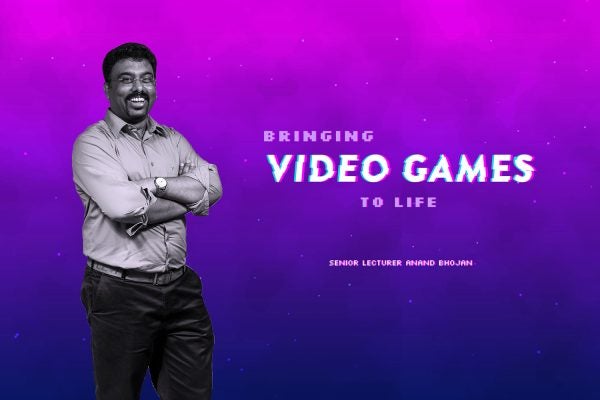
Anand Bhojan is an Associate Professor (Educator Track) at the Department of Computer Science, School of Computing, National University of Singapore (NUS). He is a member of the Communication and Internet Research Lab and serves on the Graduate Studies Committee. Dr. Bhojan is also the founder of Anuflora Systems and Virtual and Augmented Reality Labs (www.varlabs.org), and serves as Associate Editor of Computers and Electrical Engineering Journal, Elsevier, and Vice President of International Researchers Club, Singapore. Dr. Bhojan earned his Ph.D. in Computer Science & Engineering from NUS in 2011, where his thesis was nominated for the Best PhD Thesis Award. He also holds a Professional Master's in Computer Applications from Bharathidasan University (1999), a Bachelor's degree in Computing with Gold Medal (University topper) from Bharathiar University (1994), and a Postgraduate Certificate in Teaching Higher Education from University of Sheffield, UK (2003). His research spans multiple domains including Distributed Computing and Wireless Networks (IoT, Security, Blockchain), Artificial Intelligence (Generative AI, FinTech), and Entertainment Computing with focus on Games, VR/AR/Metaverse technologies. Dr. Bhojan leads the Metaverse Foundry research group which focuses on content generation for games & XR simulations across multiple domains including entertainment, healthcare, and architecture, while also experimenting with innovative teaching methods for entertainment media technologies. Dr. Bhojan's recent research has pioneered hybrid rendering techniques that strategically combine ray tracing and rasterization to create more realistic video game graphics without compromising performance. His work addresses critical challenges in real-time rendering, particularly in depth of field and motion blur effects, with the goal of making Hollywood-quality graphics accessible on a wider range of hardware. Earlier work focused on energy efficiency in mobile gaming, including power management techniques and latency optimization for cloud gaming. Among his notable achievements: 2012 Nominated for Best PhD Thesis Award (Wang Gungwu Medal & Prize), NUS 2011 Dean's Graduate Research Achievement Award (PhD), SoC, NUS 2006 Best R&D Project award from TOTE Board, Singapore 1995 Gold medal for first Rank (out of 4000) in Computing, Bharathiar University Dr. Bhojan has served as Organizing Chair and Program Chair for multiple international conferences and has delivered keynote talks at IEEE/ACM International Conferences. He teaches courses including Computer Networks Practice, Game Development, Interaction Design for Virtual and Augmented Reality, and Game Development Project. He leads the Metaverse Foundry research group and the Virtual and Augmented Reality Labs, where undergraduate and graduate students have won multiple research and innovation awards. His research bridges entertainment, education, and emerging technologies with practical applications in making immersive experiences more accessible across different hardware capabilities while maintaining energy efficiency.
Chris Harrison is an Associate Professor at Carnegie Mellon University's School of Computer Science, directing the Future Interfaces Group . His research focuses on novel human-computer interaction technologies, including haptics, AR/VR/XR, and ubiquitous computing. Research Interests: Ubiquitous Computing, Human-Centered AI, Physical Interfaces (Sensing, Haptics, Fabrication), AR/VR/XR, Social Computing Advisees: Daehwa Kim, Nathan DeVrio, Vimal Mollyn, Vivian Shen Scientific Recognition: Forbes 30 Under 30 (Science), MIT Technology Review 35 Innovators Under 35, Smithsonian Innovator (2013), Google/Microsoft/Qualcomm Fellows Contact: chris.harrison@cs.cmu.edu His recent publications explore advanced haptic systems (Reel Feel, Fluid Reality), body-centric sensing (SkinTrack), and environment-embedded interfaces (Wall++). Current work integrates UWB/IMU fusion for pose estimation and synthetic jet haptics.
Gordon Wetzstein is an Associate Professor of Electrical Engineering and, by courtesy, Computer Science at Stanford University. He leads the Stanford Computational Imaging Lab and co-directs the Stanford Center for Image Systems Engineering (SCIEN). His research focuses on computational imaging, wearable computing, and neural rendering, blending computer graphics, vision, AI, and optics. Education: Ph.D., Computer Science, University of British Columbia (2011) Diploma, Media Systems Science, Bauhaus University (2006) Research Interests: His work spans computational displays , holography , non-line-of-sight imaging , and AI-driven optical systems . Key projects include Autofocals (gaze-contingent eyeglasses) and neural holography systems. He explores applications in AR/VR, medical imaging, and scientific visualization. Publications: Recent work includes advances in 3D holography, gaze-tracking systems, and AI-optics integration. His papers address challenges in display efficiency, light-field processing, and real-time imaging. Awards: Fellow of Optica NSF CAREER Award (2016) PECASE (2019) ACM SIGGRAPH Significant New Researcher Award (2018) Advising & Grants: He advises over 20 doctoral and postdoctoral students. His lab collaborates with industry (e.g., Raxium, Google) and has secured grants from NSF, DARPA, and private foundations. Labs & Teams: His lab develops cutting-edge systems like neural holography and non-line-of-sight imaging. The SCIEN center fosters interdisciplinary image systems research.
Zhiyong Huang is an Associate Professor at the National University of Singapore (NUS) School of Computing. He holds multiple leadership roles, including Deputy Director of the NUS Business Analytics Centre, Director of the Computing Translational Research & Development (C-TReND) Centre, and Assistant Dean (Industry Relations). He is also a Senior Principal Investigator at the NUS Chongqing Research Institute. Education: PhD in Computer Science from École Polytechnique Fédérale de Lausanne (EPFL), MEng and BEng in Computer Engineering from Tsinghua University. Leadership: Senior Member of ACM and IEEE, Pioneer Member of ACM SIGGRAPH, and Chair of the Singapore ACM SIGGRAPH Chapter. Research Interests: His work spans Data Analytics, Machine Learning, Computer Vision, Human-Robot Interaction, and Computer Graphics. Key projects include the NUS Digital Twin initiative and secure data analytics pipelines. Article Trends: Recent publications focus on time series generation, cryptocurrency benchmarks, medical image registration, and phishing detection. These works integrate machine learning, computer vision, and multimodal systems. Scientific Awards: Finalist, World Technology Summit & Awards (Entertainment, 2010) Bronze, National Science and Technology Progress Award (1992) Tsinghua 12.9 Distinguished Young Teacher Award (1989) Grants & Service: Extensive involvement in Singapore's IT Standards Committee, review panels for EDB SIIRD projects, and editorial roles. He has served as PC co-chair, local chair, and reviewer for numerous conferences and journals.
Prof. Marc Stamminger is a Professor of Visual Computing at FAU since 2002, leading the Chair of Computer Science 9 (Computer Graphics). His work focuses on algorithms for synthesizing and analyzing images through 3D modeling, LiDAR/Radar capture, and light simulation. He co-leads FAU Solar, applying 3D modeling for environmental lighting analysis under varying conditions. Stamminger has published over 250 papers, winning prestigious awards like the Siggraph Test-of-Time Award. He holds executive roles in Eurographics and is Vice Dean of FAU's Technical Faculty. Research interests span neural rendering , 3D reconstruction , radar imaging , and medical visualization . Recent work emphasizes radiance field rendering (e.g., VR-Splatting, INPC) and radar-based human motion tracking. His lab's FAU Solar project integrates large-scale 3D models with environmental lighting simulations. Publications trends highlight neural rendering optimizations , radar-MIMO systems , and agricultural digital twins . Key collaborations involve medical imaging (e.g., vocal fold reconstruction) and autonomous driving data generation. Awards: Siggraph Test-of-Time (2023?), 2× Siggraph Best-Of-Show Grants/Teams: FAU Solar Lab, Eurographics leadership, FAU Vice Dean Labs: Chair of Computer Science 9, FAU Solar Initiative
Mark Lee is an Adjunct Professor in the People Analytics department at NYU’s Tandon School of Engineering, specializing in Technology Management and Innovation. He holds a Ph.D. in Engineering Psychology from Georgia Institute of Technology (1996). Currently, he serves as Head of Research, Analytics, and Business Development at UL ComplianceWire, focusing on pharmaceutical and medical device manufacturing training. His research leverages large datasets to improve healthcare safety through regulatory compliance and best practices. Courses taught include Human Factors Engineering, Workplace Design, and Predictive Analytics. Education: Ph.D. in Engineering Psychology, Georgia Tech (1996) Key Roles: Adjunct Professor, Head of Research at UL ComplianceWire Research Focus: Human Factors, Training Systems Design, Healthcare Compliance His work spans auditory display systems for aviation (e.g., 3D audio cockpit interfaces) and ergonomic design for industrial products. Recent projects emphasize data-driven solutions for regulatory challenges in life sciences. Publications highlight studies on visual search strategies, age-related cognitive performance, and application of signal detection theory in decision-making. He actively collaborates with industry and government entities, exemplified by the FDA-UL Cooperative Research Agreement.
Ilker Yildirim is an Assistant Professor of Psychology at Yale University, where he leads the Cognitive and Neural Computation Lab (CNCL). He received his Ph.D. from the University of Rochester in 2014. His research focuses on understanding how perception transforms raw sensory signals into meaningful representations of objects and scenes through computational modeling approaches. His research interests include: Computational modeling of visual perception and cognition Intuitive physics and physical reasoning Bayesian inference and probabilistic models in cognition Integration of graphics and physics engines in cognitive modeling Neural mechanisms of object representation Attention and resource allocation in dynamic scenes Yildirim's lab develops computational frameworks that bridge cognitive processes with neural mechanisms, using tools including probabilistic models, simulation engines, and deep learning. His work often involves testing these models through behavioral and neural experiments to create unified accounts of perception and cognition. His recent publications reveal a strong focus on how humans perceive physical properties of objects, particularly soft materials and liquids, and how attention dynamically allocates resources during scene perception. Among his notable achievements is receiving an NSF CAREER award for his project "CAREER: CompCog: Reverse-engineering neural mechanisms of object cognition with multilevel computational modeling," which will run from 2025 to 2030. His Nature Human Behaviour paper by Qi Lin was featured on CBS News, Germany's NZZ, and Wired Italy. Yildirim mentors a diverse group of graduate students and postdocs working on various aspects of perception, cognition, and computational modeling. His students have received prestigious awards including the Jane Olejarczyk Award and the Leonard J. Savage Prize.
Gerd Bruder is an Associate Professor at the University of Central Florida , affiliated with the Department of Computer Science . He previously held positions as a Research Associate Professor at UCF's Institute for Simulation and Training (2016-2022), Post-Doc at University of Hamburg (2014-2016), and Post-Doc at University of Würzburg (2011-2014). Habilitation : Computer Science, University of Hamburg (2017) Ph.D. : Computer Science, University of Münster (2011) M.Sc. : Computer Science (minor in Mathematics), University of Münster (2009) Research Interests : Gerd Bruder's work focuses on Extended Reality (XR) systems, spanning Virtual Reality (VR) , Augmented Reality (AR) , and Mixed Reality (MR) . Key areas include human factors , digital twins , 3D user interfaces , and perceptual modeling , with applications in healthcare, military operations, architecture, and smart environments. Recent Publications highlight innovations in XR locomotion , trust calibration with autonomous agents, spatial cognition , and haptic-visual integration . His 2025 articles address task-switching efficiency in XR and collaborative mixed reality design. Scientific Awards : Best Paper at ACM VRST 2023 2021 TechConnect Innovation Award Best Demo at ACM SUI 2021 Multiple Best Paper Awards (2016-2023) Best Poster & Demo Awards (2015-2020) Patents include systems for medical simulation , smart environment interruption management , and adaptive AR interfaces . His work bridges academic research and practical applications across VR, AR, and MR domains.
Professor Julie Harris is a faculty member at the University of St Andrews, holding the position of Professor of Psychology within the School of Psychology and Neuroscience since 2005. She previously held academic posts at Newcastle University and the University of Edinburgh, and conducted postdoctoral research at the Smith-Kettlewell Eye Research Institute in California. Her research focuses on human visual processing, including vision and camouflage, depth perception, binocular stereopsis, and eye movements in natural environments. She earned a BSc in Physics from Imperial College London and a DPhil from Oxford University. Research interests include exploring how visual systems process environmental cues for depth and motion, with applications in camouflage design and stereo display technologies. Her lab employs psychophysical, behavioral, and computational methods. Notable projects address countershading camouflage effectiveness, motion-in-depth perception, and visual-motor interactions in driving scenarios. Selected grants include funding from BBSRC, Leverhulme Trust, and Medical Research Scotland. Collaborations span evolutionary biology, neuroscience, and applied vision science. She supervises PhD students Federico De Filippi and Rebecca Maguire. Awards include the Davida Teller Award Nomination and Fellowship in the Society of Biology. Labs/Teams: Julie Harris Lab (St Andrews), St Andrews Vision Labs, and the Institute of Behavioural and Neural Sciences. Current projects investigate warning signal design, visual perception in virtual environments, and the impact of visual processing on driving ability.
Dr. Ian Stavness is a Professor and Department Head in the Department of Computer Science at the University of Saskatchewan. His research focuses on interdisciplinary applications of computer science, including deep learning in agriculture, biomedical computation, and 3D display technologies. He leads the Biological Imaging & Graphics (BIGLAB) laboratory, which develops tools for plant phenotyping and musculoskeletal modeling. Education: Ph.D. in Computer Engineering, University of British Columbia, 2010 M.A.Sc. in Computer Engineering, University of British Columbia, 2006 B.Sc. in Computer Science & B.Eng. in Electrical Engineering, University of Saskatchewan, 2004 Research Interests: Deep Learning for Plant Phenomics & Agriculture 3D Displays and VR/AR Technologies Musculoskeletal Biomechanical Simulation (OpenSim, ArtiSynth) Computer Vision and Image Analysis Awards: ACM CHI 2019 Honourable Mention ACM VRST 2018 Polyphony Digital Award Key Projects: Deep Plant Phenomics Platform Parametric Human Project (Digital Human Modeling) P2IRC (Plant Phenotyping & Imaging Research Center)
Jiro Katto is a Professor at Waseda University's School of Fundamental Science and Engineering, where he has been conducting research and teaching since 1999. He received his Ph.D. from the University of Tokyo and has established himself as a leading researcher in multimedia signal processing and computer networks. His academic journey includes positions as Associate Professor (1999-2004), Professor (2004-present), and Director at NEDO (2004-2008), along with research experience at NEC C&C Laboratories (1992-1999) and a Visiting Scholar position at Princeton University (1996-1997). Professor Katto's research interests focus on Multimedia Signal Processing and Computer Networks, with particular expertise in video compression, 5G network performance, and learned image compression techniques. His work bridges theoretical advancements with practical implementations, as evidenced by his extensive publications in top-tier conferences and journals. His research group has made significant contributions to point cloud compression, latency compensation in remote systems, and hardware-accelerated video encoding for UHD streaming. His publication record is impressive, with 276 papers cited 3,323 times in Scopus and 6,169 times in Google Scholar, reflecting his substantial impact in the field. His recent work shows a strong trend toward applying deep learning techniques to traditional signal processing problems, particularly in the areas of image and video compression, where his team has developed novel approaches to improve compression efficiency while reducing computational complexity. Electric Telecommunications Promotion Foundation Telecommunications System Technology Award (2023) Takayanagi Kenjiro Foundation Takayanagi Kenjiro Achievement Award (2020) Institute of Image Information and Television Engineers Fellow (2020) Institute of Electronics, Information and Communication Engineers Fellow (2015) IEICE Communications Society Activity Contribution Award (2006) IEICE Academic Encouragement Award (1995) SPIE VCIP 1991, Best Student Paper Award (1991) Professor Katto has served on numerous prestigious committees including IEEE ComSoC Tech News Editorial Board, IEEE Technical Program Committees for major conferences (Globecom, ICC, ICIP), and editorial boards for several academic journals. His leadership in the academic community extends to chairing conferences like IWAIT 2011 and serving as Editor-in-Chief for journals in his field. His research has practical applications in commercial 5G networks, video streaming services, and remote monitoring systems, demonstrating the real-world impact of his work.
Nicholas Antipa is an Assistant Professor at the University of California San Diego's Jacobs School of Engineering, in the Electrical and Computer Engineering department. His research focuses on the co-design of optical systems and algorithms to develop advanced computational imaging systems, leveraging innovations in 3D printing, sensors, machine learning, and AI. He holds a PhD in Computational Imaging from UC Berkeley and previously worked at the Lawrence Livermore National Lab on optical metrology for the National Ignition Facility. His work includes pioneering projects like the DiffuserCam and Miniscope3D, which enable high-dimensional optical signal capture and 3D microscopy. Education: PhD in Computational Imaging, UC Berkeley (2020) MS in Optics, University of Rochester Institute of Optics BS in Optical Science and Engineering, UC Davis Research Interests: Computational imaging systems, single-shot high-dimensional optical capture, lensless imaging, and applications in neuroscience and marine science. His lab explores novel optical designs, compressed sensing, and AI-driven imaging techniques to push the boundaries of conventional systems. Scientific Awards: Best Paper at ICCP 2019, 2016 Best Demo at ICCP 2017 No. 2 in Optica 15 Top-Cited Articles (2020) Affiliations: Director of the Computational Imaging Systems Lab at UCSD. Collaborates with institutions like Lawrence Livermore National Lab and the Scripps Institution of Oceanography for projects in marine sediment mapping and underwater object detection. His lab emphasizes open-source tools, such as the DiffuserCam Raspberry Pi tutorial.
Yogananda Isukapalli is a Teaching Professor and Vice Chair in the Computer Engineering Program at the Electrical and Computer Engineering Department , University of California, Santa Barbara . He joined the faculty in Winter 2017 after a career as a staff scientist at Broadcom (2010–2017), where he designed Wi-Fi chips (11n/11ac/11ax) and worked on underwater wireless communication models during a postdoctoral stint at Scripps Institution of Oceanography (2009–2010). His PhD in Communication Theory and Systems from UC San Diego (2009) forms the basis of his expertise in wireless systems and digital design .