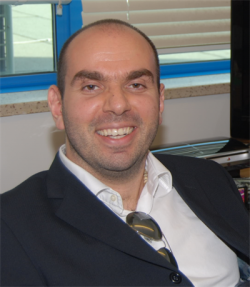
Andreas Bulling is a Professor at the Institute for Visualisation and Interactive Systems , University of Stuttgart, Germany. His research focuses on Human-Computer Interaction , Eye Tracking , and Computer Vision , with applications in Machine Learning , Virtual Reality , and Information Visualization . 2025 Publications: HOIGaze (Extended Reality), ChartQC (Data Visualization), HAIFAI (Human-AI Interaction), SummAct (Behavioral Summarization), Chartist (Chart Reading). 2024 Contributions: HumanEYEze (Multimodal AI), HOIMotion (3D Object Detection), MultiMediate'24 (Engagement Estimation), Unified Model of Saliency (Scanpath Prediction). His recent work explores gaze estimation , interactive behavior modeling , and privacy-preserving eye-tracking systems . Key subfields include Extended Reality , Neural Networks , and Behavioral Biometrics . While no explicit scientific awards are mentioned, his research has been widely cited (8,003 total citations) and downloaded (132,740 times). Andreas leads projects in Interactive Systems and collaborates with institutions such as Aalto University , KU Leuven , and National University of Singapore . His lab focuses on eye movement analysis , human motion forecasting , and task-driven input modeling .
Christos Gatzidis serves as Executive Dean of Bournemouth University's Faculty of Science and Technology since October 2023, overseeing six departments including Computing and Informatics, Creative Technology, and Psychology. Previously Deputy Dean (2021-2023) and Head of Creative Technology Department (2016-2021), he was appointed Professor in Creative Technology in November 2019. The Faculty leads five REF Units of Assessment and secures funding from AHRC, NIHR, and Innovate UK for research spanning digital healthcare, gaming technologies, and cultural heritage applications. His educational qualifications include: PhD in Information Science, City University London (2010) PG Cert in Research Degree Supervision, Bournemouth University (2010) MA in Computer Animation, Teesside University (2003) BSc (Hons) in Computer Studies (Visualisation), University of Derby (2002) Professor Gatzidis specializes in computer graphics with research spanning virtual reality, serious games, and digital healthcare applications. His work bridges technical innovation and practical implementation, particularly in mindfulness prototypes for healthcare and stroke rehabilitation systems. Current projects focus on the multidisciplinary application of gaming technologies in medical contexts, emphasizing user experience and therapeutic outcomes through collaborations with industry partners. His publication record (2014-2025) demonstrates evolving expertise from foundational computer graphics research in terrain generation and deformation to applied work in healthcare, cultural heritage, and music education. Key trends include virtual reality for therapeutic mindfulness, usability studies in mobile gaming, and digital cultural presentation techniques, reflecting a trajectory toward socially impactful technological solutions with strong industry translation. No scientific awards are documented in the provided information. He has supervised PhD students and secured competitive research funding, including two Innovate UK Knowledge Transfer Partnerships. His principal investigator role in a virtual reality mindfulness prototype project exemplifies his approach to translating academic research into practical industry solutions, with current focus on expanding knowledge exchange activities to support the University's civic engagement mission. As Executive Dean, he leads faculty-wide research strategy across six departments, fostering interdisciplinary collaborations particularly in digital healthcare and cultural heritage. His personal research integrates computer graphics expertise with clinical applications through partnerships with healthcare providers and technology companies, driving innovation in therapeutic VR systems and educational gaming platforms.
Jon McCormack is a Professor jointly appointed in Monash University's Faculty of Art, Design & Architecture (MADA) and Faculty of Information Technology. He founded and directs SensiLab, a research facility focusing on computational creativity, human-machine interfaces, and generative systems. His work spans electronic media art, evolutionary music, and artificial life. McCormack holds a PhD in Computer Science from Monash University, along with degrees in Computer Science, Applied Mathematics, and Film/Television. Research interests include computational creativity, tangible interfaces, and cybernetic systems. Notable projects include 'Explainable Artificial Creativity' (ARC-funded) and 'Building 4.0 CRC,' addressing architectural innovation through AI. He has been recognized with awards for collaborative projects like the Blundstone Intelligent Footwear for Healthcare. McCormack's recent articles explore AI-driven art, generative systems, and interdisciplinary design. His work bridges artistic practice with technical innovation, emphasizing ethical and creative dimensions of human-AI collaboration. SensiLab serves as a hub for practice-based research in digital media and interactive systems. Education: PhD in Computer Science, Monash University (2004) Bachelor of Science (Honours), Computer Science/Applied Mathematics, Monash University (1987) Graduate Diploma in Film/TV, Swinburne University (1986) Bachelor of Science, Computer Science/Applied Mathematics, Monash University (1985) Key Projects: Lead investigator on 'Explainable Artificial Creativity' (2022–2026) Co-investigator in 'Building 4.0 CRC' (2020–2027), exploring AI-driven architectural design Awards: 2022 Designers Australia Award for Blundstone Footwear 2020 'On the Machine Condition' Prize McCormack's lab, SensiLab, fosters collaborations across disciplines, producing exhibitions, software, and theoretical frameworks for computational creativity. He actively supervises PhD students in practice-based research, emphasizing the intersection of art and technology.
Dr. Maxime Cordeil is a Senior Lecturer in Human Centred Computing at the School of Electrical Engineering and Computer Science, The University of Queensland. His research focuses on Virtual and Augmented Reality technologies for data interaction, interactive visualization systems, and AR interfaces for industry applications. He has authored over 60 publications in top-tier venues such as ACM CHI and IEEE VR, and was nominated as Australia's Field Leader in Computer Graphics in 2021 and 2022. Research Interests: Data visualization, immersive analytics, medical imaging, collaborative systems, and human-computer interaction. Current Projects: Includes embedded visualizations for sports performance, interactive machine learning in 3D environments, and mixed-reality applications in forensic science. PhD Supervision: Actively guiding students in topics like immersive gesture exploration, AR for digital health, and collaborative VR systems. His work bridges theory and practice, with tools like IATK (Immersive Analytics Toolkit) and the MADE-Axes hardware system. He collaborates with industry partners like Raytracer and CSIRO, focusing on applications in space exploration, underwater training, and remote operations. Awards: Multiple best paper recognitions at ISS and CHI, plus industry-driven research grants. Labs: Leads the Immersive Analytics research group at UQ, specializing in embodied interaction and spatial computing.
Jonathan Roberts is a researcher at Bangor University, UK, with a focus on data visualization, visual analytics, and educational technology. His work bridges computer science and creative design, particularly in data art exhibitions and authentic learning. Key research areas: Data Visualization, Visual Analytics, Educational Technology, Digital Art Recent publications explore generative AI in visualization design, multiple-view patterns for time series data, and frameworks for creative learning. His collaborations span institutions like QUT, University of Manchester, and University of Cambridge. Notable awards include VAST 2012 Honorable Mention and VAST 2010 Analytic Process Recognition. He contributes to visualization pedagogy and has co-authored works on haptic interfaces, immersive analytics, and coastal data modeling.
Professor Jinman Kim is a Professor in the School of Computer Science at the University of Sydney and Director of the Biomedical Data Analysis and Visualisation (BDAV) Lab. He also serves as Research Director of the Telehealth and Technology Centre at Nepean Hospital. His research focuses on machine learning applications in biomedical image analysis, visualization, and multi-modal data processing. Kim holds a PhD in Computer Science from the University of Sydney (2006) and has held roles including Senior Lecturer (2013), Associate Professor (2016), and Professor (2022). He is an Area Editor for Computer Methods and Programs in Biomedicine and actively contributes to AI-driven healthcare initiatives. His academic journey includes a Marie Curie Fellowship at the University of Geneva (2010) and leadership roles in projects like the ARC Training Centre in Innovative Biomedical Engineering. He co-leads the Digital Health Imaging initiative under the Faculty of Engineering’s Digital Science Initiative. Kim has developed teaching programs such as the Master of Digital Health and Data Science, co-taught with the Faculty of Medicine and Health. Research interests span AI in medical imaging, telehealth systems, and interdisciplinary biomedical engineering. His work includes advancements in PET/CT fusion, tumor segmentation, and medical visual analytics. Kim’s lab explores applications like AI in dental education, cutaneous lymphoma detection, and fair AI models for healthcare. Notable collaborations include the Telehealth Remote Monitoring System for chronic patients and contributions to datasets like the HRDC Challenge for hypertension classification. His labs prioritize translating AI innovations into clinical tools for improved healthcare accessibility and precision.
Bernhard Jenny is an Associate Professor at Monash University's Faculty of Information Technology, specializing in immersive visualization and geospatial data. He holds a PhD in Cartography from ETH Zurich and has held previous roles at Oregon State University and RMIT University. His research focuses on virtual reality (VR), augmented reality (AR), and cartographic innovations for geospatial data representation. Education: Doctor of Sciences in Cartography, ETH Zurich (2010) Postgraduate Certificate in Computer Science, ETH Zurich (2005) Master of Science in Surveying, EPFL (2000) Research Interests: Combines cartography, computer graphics, and human-computer interaction to explore VR/AR applications for geospatial data. Current work includes immersive analytics, terrain visualization, adaptive map projections, and storytelling with geospatial data. Recent Articles: Focus on ambient occlusion for terrain shading, grammars for immersive visualization transitions, and AR/VR interfaces for spatial data. Awards: Henry Johns Award (2007, 2011, 2012) ETH Medal (2010) Best Paper Honorable Mentions (ACM CHI, DIS) Grants & Projects: Leads initiatives like the 'Immersive Analytics' extension and 'National Geographic Relief Shading' project. Collaborates on neural networks for cartographic relief shading and sustainable development goals (SDGs). Labs & Teams: Heads the Embodied Visualisation Lab at Monash, focusing on immersive analytics and geovisualization tools.
Jan G. Bjaalie is Professor of Neuroinformatics and Dean of Research and Innovation at the University of Oslo Faculty of Medicine . Since 2023 he heads the faculty’s research and innovation strategy, while directing the Neural Systems and Graphics Computing Laboratory at the Institute of Basic Medical Sciences. Education: 1990 Ph.D. in Neuroanatomy, University of Oslo 1986 M.D., University of Oslo Research interests revolve around collaborative and open neuroscience, digital brain atlasing, and the cyber-infrastructures that enable data sharing. He leads efforts to build next-generation atlases that integrate multi-scale brain architecture and connectivity data, and to develop ontologies and FAIR-compliant platforms for global neuroscience. Recent work emphasizes in silico integration of rodent and human imaging datasets, leveraging machine-learning registration tools and cloud-based services such as EBRAINS. The goal is to transform how brain data are stored, visualised and reused across laboratories worldwide. Scientific output & impact: A scan of publications from 2023-2025 reveals a strong focus on digital atlas frameworks, automated image registration (DeepSlice, DeMBA), open data standards (AtOM ontology), and large-scale analyses of genetic influences on brain structure in Alzheimer’s models. These works collectively advance reproducible, high-throughput neuroanatomy and cross-species translation. Grants & leadership roles: Coordinator/Partner in EU Flagships EBRAINS 2.0, BRAIN Health, Human Brain Project (2013-2026) Infrastructure Director, Human Brain Project (2018-2023) Leader of Neuroinformatics Platform & EBRAINS Data Services (2017-2023) Head of Institute of Basic Medical Sciences (2009-2016) Executive Director, International Neuroinformatics Coordinating Facility (INCF) (2006-2008) Chair, International Brain Initiative (2021-) Editorial & governance service: Founding Chief Editor Frontiers in Neuroinformatics (2007-), Section Editor Brain Structure and Function (2002-2020), member of the INCF Governing Board and EBRAINS AISBL Management Board, and numerous international advisory panels on data governance and ethics. His laboratory hosts the Norwegian Neuroinformatics Node and collaborates closely with global consortia to deliver open-access atlases, software pipelines and FAIR data standards that underpin modern neuroscience.
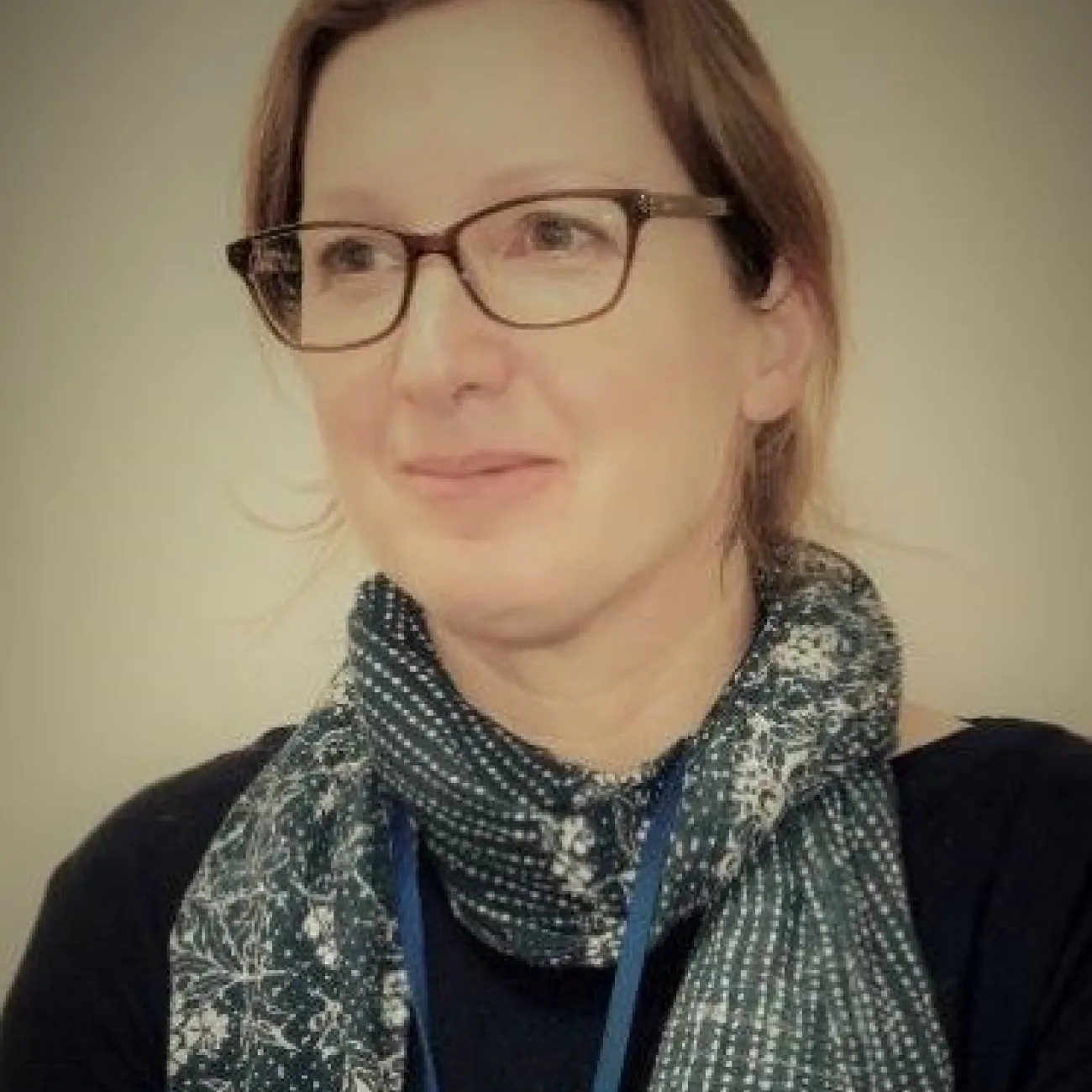
Sarah Goodwin is an academic affiliated with Monash University in Australia, specializing in data visualization, immersive analytics, and human-computer interaction. She holds a PhD in Visualisation for Household Energy Analysis from City University London (2015). Her research focuses on developing innovative visualization techniques for complex data, particularly in energy systems, healthcare, and geographic information. Key contributions include the Australian Cancer Atlas project (2024), which addressed geostatistical uncertainty visualization, and work on mixed-reality technologies embedding human values (2025). She collaborates extensively with researchers like Tim Dwyer and leads the Data Visualisation and Immersive Analytics Research Lab at Monash. Her publications span journals like IEEE Transactions on Visualization and Computer Graphics and conferences such as CHI and IEEE VAST. Research highlights include gaze analytics tools (VETA), tangible immersive systems (Uplift), and energy consumption visualization frameworks.
Dr. Jane Cleal is an Associate Professor in Reproductive Cell Biology at the University of Southampton’s Faculty of Medicine. She leads research on placental and maternal tissue mechanisms, focusing on fetal development, lifelong health, and interventions to improve pregnancy outcomes. Her work integrates systems biology with molecular and cellular approaches. Education: PhD in Medicine, University of Southampton (2005) BSc (Hons) Molecular Cell Biology, University of Southampton (2001) Fellow of the Higher Education Academy (2013) Teaching Roles: Deputy Programme Lead for the BM6 widening access to medicine degree Module Lead for MEDI0011 Human Structure & Function 1 Her research interests span placental and endometrial biology, vitamin D regulation, and the impact of maternal exposures on fetal programming. Key areas include fetal growth, obesity, and cardiometabolic health. Recent work explores endometrial gland function in miscarriage risk and climate change effects on developmental health in Caribbean communities. Publications highlight placental transport mechanisms, vitamin D’s role in pregnancy, and computational models of drug diffusion. She has supervised 3 current PhD students and secured grants from Wessex Medical Research, BBSRC, and Wellbeing of Women. Awards: Fellow of the Higher Education Academy (2013) External Roles: Editorial Board Member, British Journal of Nutrition (2012–2018) Council Member, Physiological Society (2009–present) Reviewer for Irish Government research panels (2017–2023) Outreach: Public engagement on reproductive science and healthy lifestyle choices.
Dr. Sicily Fung Fung Ting is a Lecturer at the School of Information Technology (SoIT), Monash University. She earned her Ph.D. in Engineering (2020) from Multimedia University, specializing in breast cancer classification and visualization using deep neural networks. Her research focuses on deep learning applications in medical image analysis, expert systems, and biomedical engineering. Notably, her work has been recognized with the 2020 WSIS Prize (Champion) and the 2023 FIT Dean's Education Excellence Award. Education: Ph.D., Engineering (2020), Multimedia University MEng.Sc., Visualisation for Early Brain Infarct Detection (2017), Multimedia University BEng (Hons), Electronics & Robotics (2014), Multimedia University Research Interests: Deep Learning for Medical Imaging Computer-Aided Detection (CAD) Telehealth Systems Biomedical Signal Processing Key Projects: FRGS 2022: RewardQNet Framework for Intracranial Aneurysm Segmentation GEMS 2025: AI-Driven Neuroimaging Tool for Aneurysm Detection Her publications span journals like Expert Systems with Applications and Computerized Medical Imaging and Graphics , with impactful contributions to breast cancer classification and brain lesion segmentation. She actively engages in academic outreach, including public lectures and industry collaborations.
Christoph Bernhardt is a Senior Researcher and former director of the research focus “Contemporary History and Archives” at the Leibniz Institute for Research on Society and Space (IRS) in Erkner. He is also an adjunct professor of modern and contemporary history at the Institute of History within the Faculty of Philosophy at Humboldt University of Berlin. His academic affiliations reflect a strong commitment to interdisciplinary urban and environmental history, particularly focusing on the built environment in the German Democratic Republic (DDR) and broader European contexts. Leibniz Institute for Research on Society and Space (IRS), Erkner: Senior Researcher, former Director (until April 2023), Deputy Director (2019–2022) Humboldt University of Berlin: Adjunct Professor, Institute of History, Faculty of Philosophy Member of the Sustainability Steering Group of the Leibniz Association and the Sustainable University Commission of Humboldt University Christoph Bernhardt’s research centers on European urban and environmental history, with a particular emphasis on Berlin, socialist urban planning in the DDR, Cold War architecture, and transnational urban development. His work critically examines the interplay between political power, spatial governance, and environmental change. He has explored topics such as the “autogerechte Stadt” (car-friendly city), polycentric governance along the Upper Rhine, and the role of urban spaces in totalitarian regimes. His methodological approach often bridges historical analysis with digital humanities, as seen in his work on 3D reconstructions of Nazi-era forced housing and digital archiving of architectural collections. An analysis of his most recent publications reveals a consistent focus on the political dimensions of urban space across different historical periods—from imperial Berlin and Nazi Germany to the DDR and Cold War transnational networks. His work increasingly engages with transnational and comparative frameworks, especially in environmental governance and socialist architecture, highlighting entanglements between East and West, Europe and Asia. He frequently collaborates on edited volumes and special journal issues, demonstrating a leadership role in shaping scholarly discourse in urban history. Christoph Bernhardt is actively involved in academic service and sustainability initiatives. He has served as co-editor of the journal Moderne Stadtgeschichte and the book series Beiträge zur Stadtgeschichte und Urbanisierungsforschung . He was a co-applicant for the DFG Research Training Group “Cultural and Technical Values of Historic Buildings” and a principal investigator in the Leibniz Research Network “Value of the Past”. He has also contributed to numerous third-party funded projects on urban transformation, Cold War planning, and historical governance. His leadership roles in academic commissions and editorial boards underscore his influence in the field. Co-editor, Moderne Stadtgeschichte Co-editor, Beiträge zur Stadtgeschichte und Urbanisierungsforschung (Franz Steiner Verlag) Full member, Historical Commission of Berlin Former board member, Society for Urban History and Urbanization Research (GSU, 2000–2022) Former member, International Committee of the European Association for Urban History (EAUH, 2018–2024) Bernhardt leads and participates in several major research projects, including “Crafting Entanglements: Afro-Asian Pasts of the Global Cold War” (2023–2026), “Urban Authenticity: Creating, Contesting, and Visualising the Built Heritage in European Cities Since the 1970s (UrbAuth)”, and studies on urban planning in Nazi Germany and the DDR. His work often involves interdisciplinary collaboration, especially in digital reconstruction, cartographic analysis, and transnational historical networks.
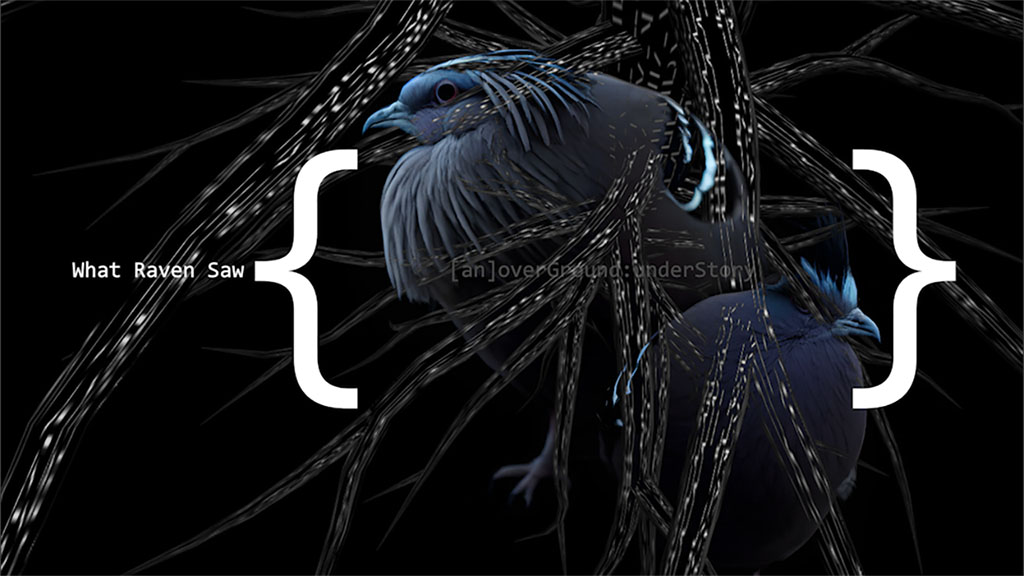
Dr. Andrew Burrell is a Senior Lecturer in Visual Communication at the University of Technology Sydney's Faculty of Design and Society. He is a practice-based researcher and educator exploring virtual and digitally mediated environments as sites for the construction, experience, and exploration of memory as narrative. His work sits at the intersection of digital media, virtual reality, and environmental humanities, with a particular focus on more-than-human ecologies and queer approaches to virtual environments. Andrew's research investigates the relationship between imagined and remembered narrative and how the multi-layered biological and technological encoding of human subjectivity may be portrayed within, and inform the design of, virtual environments. His networked projects in virtual and augmented environments have received international recognition, with recent works including "Twice, again" and "overGround:underStory," which explore the role of memory and forgetting in machine-mediated spaces and more-than-human encounters between physical and virtual ecologies. His creative practice informs his traditional research outcomes, which include publications in journals such as the Leonardo Electronic Almanac and Virtual Creativity. Andrew is particularly interested in how emerging and speculative technologies are implicated in more-than-human ecologies, and he uses creative practice to research and understand the complexities of these technologies. Andrew is a member of the UTS Visualisation Institute, a multidisciplinary research group focused on the creation of data visualizations, stories, and immersive experiences, and the School of Design's Critical Visualisation research group. He has received funding from various sources including the Australian Research Council (ARC) Discovery Projects and Create NSW. Research Interests Virtual and Augmented Reality as narrative spaces Memory construction in digital environments More-than-human ecologies and digital storytelling Queer approaches to virtual embodiment Creative applications of machine learning and AI Data visualization and environmental storytelling Accessibility and ethics in digital humanities Notable Projects Twice, again : Examines the role of memory and forgetting in machine-mediated spaces overGround:underStory : Explores entangled networks between physical and virtual ecologies Waves of Words : ARC Linkage initiative investigating language movement in pre-colonial times can't buy me love : A virtual environment collaboration with Amala Groom Layered Horizons : A geospatial humanities research platform Scientific Recognition MMUVE IT - Inter-Arts Office Australia Council Grant (2008) International presentations at conferences including ISEA (International Symposium on Electronic Art) Teaching and Supervision Andrew is an advocate for studio-based learning in which students design solutions to real-world questions through iteration and experimentation. He considers design as an anchor for interdisciplinary practice and regularly brings cross-disciplinary perspectives into his teaching. He currently supervises five PhD and master's students, with an interest in working with students at the intersection of traditional and practice-based research approaches. Research Themes in Recent Publications Andrew's recent publications demonstrate a consistent focus on the intersection of virtual environments, narrative construction, and ecological thinking. His work explores how digital technologies can be used to create new forms of storytelling that acknowledge our entanglement with non-human entities. There's a strong emphasis on ethical considerations in digital design, particularly regarding accessibility and representation. His research also investigates the application of machine learning technologies in creative practice, examining both their potential and limitations for representing human experience.
Professor Aileen Bell currently serves as Head of the Dental School and Professor of Oral Surgery and Dental Education at the University of Glasgow, positions she has held since 2021. She leads the Glasgow Dental School within the School of Medicine, Dentistry & Nursing, overseeing dental education programs and research initiatives. Her academic career at Glasgow spans over three decades, beginning with her PhD research in 1990 and progressing through clinical training to her current leadership roles. Professor Bell's educational background includes: BSc with Honours First Class in Biology, University of Stirling (1990) PhD in Effects of Alcohol on Rat Lingual Epithelium, University of Glasgow (1993) BDS with Honours, University of Glasgow (1998) - Most Distinguished Graduate Postgraduate Certificate in Academic Practice, University of Glasgow (2007) Certificate of Completion of Specialist Training in Oral Surgery (2008) Professor Bell's research focuses on two primary areas: Educational Research and Three Dimensional Imaging. She has pioneered work in digital and blended learning approaches in dental education, particularly through the innovative use of 3D visualization technologies. Her work with the Community in Dental Research and Scholarship at Glasgow Dental School has significantly influenced modern dental pedagogy. She has a special interest in 3D Imaging and Digital Technology as educational tools, building on her earlier work with the £1.5 million NHS Education for Scotland Funded project on 2D and 3D Visualisation Supporting Interactive Dental Education. Analysis of Professor Bell's recent publications reveals a strong emphasis on educational innovation, particularly in response to the challenges of the COVID-19 pandemic. Her work demonstrates a clear trajectory toward digital transformation in dental education, with significant contributions to virtual assessment methods, blended learning models, and technology-enhanced teaching approaches. There is also a consistent thread of research connecting her clinical expertise in oral surgery with educational applications of 3D imaging technology, particularly in the context of cleft lip and palate surgery outcomes. Professor Bell has received numerous professional recognitions: Most Distinguished Graduate for 1998, University of Glasgow Dean Webster Prize Lord Provost's Prize for highest marks in Dental School Examinations T.C. White Medal for outstanding performance in MFDS examination Fellow of the Higher Education Academy Fellow of the International Team for Implantology (2015) As an educational leader, Professor Bell has served as Director of Dental Education since 2012, Deputy Director of Dental Education prior to that, and currently as Head of the Dental School. She chairs the Intercollegiate Specialty Fellowship Examination in Oral Surgery and serves as Training Programme Director for Specialty Training in Oral Surgery in the West of Scotland. Her grant portfolio includes significant funding, notably a £1.5 million NHS Education for Scotland project on 3D visualization for dental education and an educational grant from a major Dental Implant company for teaching implantology to undergraduates since 2012. Professor Bell leads and collaborates with multiple interdisciplinary teams, including the Community in Dental Research and Scholarship at Glasgow Dental School and the Association of British Academic Oral and Maxillofacial Surgeons National Education Group. Her work has involved collaborations with Computing Science, Clinical Psychology, Statistics, and Plastic Surgery departments on applications of 3D imaging in facial trauma and cleft lip/palate surgery outcomes. She is currently exploring digitally guided surgery and robotics as both clinical and educational tools.
Matthew Butler is an Associate Professor in the Department of Human-Centred Computing at Monash University's Faculty of Information Technology. His research focuses on Inclusive Technologies , particularly improving access to visual information for people who are blind or have low vision (BLV) through innovations like 3D printing, conversational agents, and multisensory interfaces. He has over 20 years of academic experience and held leadership roles including Deputy Dean (Education) and Associate Dean (Learning and Teaching). Education: PhD in Computing Education (Monash University, 2010) Graduate Certificate of Higher Education (Monash University, 2006) Bachelor of Engineering (Electronic and Computer Engineering, Monash University, 1996) Research Interests: Matthew’s work emphasizes participatory design with the BLV community, addressing challenges in data exploration, orientation/mobility, arts/culture access, and education . Key projects include accessible data visualization systems, inclusive museum experiences, and tactile navigation tools. His contributions align with UN Sustainable Development Goals related to education and disability inclusion. Grants & Projects: Accessible Data Exploration and Analysis for Blind People (Australian Research Council, 2023–2027) Inclusive Gallery Experiences: Bendigo Art Gallery Project (Helen Macpherson Smith Trust, 2019–2022) Co-leads the Monash Assistive Technology and Society Centre’s Education Pillar Awards: Senior Fellow of the Higher Education Academy Labs/Teams: Active contributor to Monash’s Assistive Technology and Society research initiatives, focusing on multisensory design for disability inclusion.