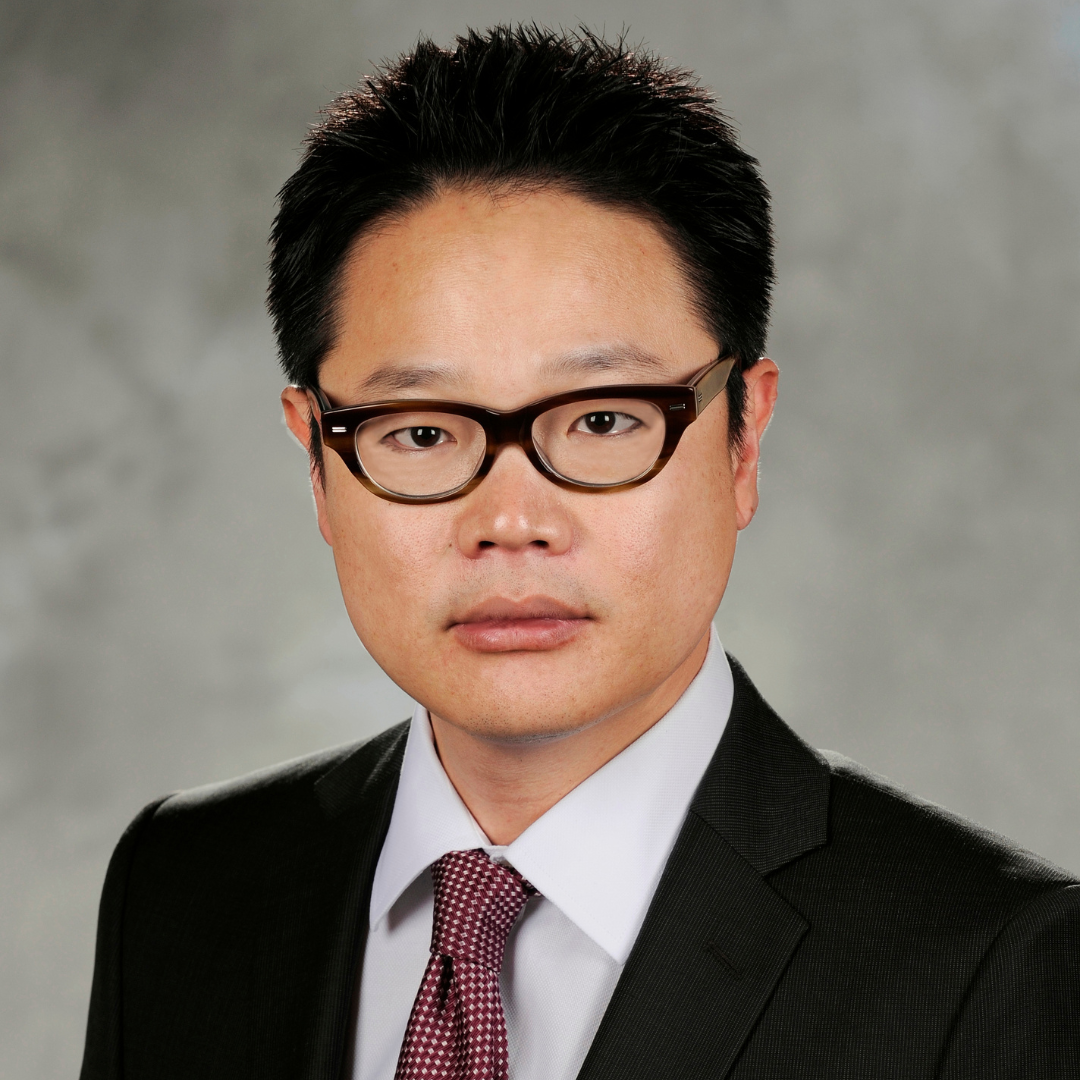
Sung-Kyu Lim is a Professor and the Motorola Solutions Foundation Professor in the School of Electrical and Computer Engineering at the Georgia Institute of Technology, where he serves as director of the GTCAD Laboratory. His educational background includes: B.S. in Computer Science from the University of California, Los Angeles (UCLA) in 1994 M.S. in Computer Science from UCLA in 1997 Ph.D. in Computer Science from UCLA in 2000 Professor Lim's research focuses on advancing VLSI design automation through physical design methodologies, 3D circuit integration, quantum circuit layout, micro-architecture exploration, and reconfigurable circuit optimization. His work bridges theoretical graph theory with practical electronic design automation challenges to improve circuit performance and scalability. His notable scientific distinctions include: NSF CAREER Award (2006) Advisory Board Member of ACM SIGDA (since 2003) Technical Program Committee roles for ICCD, ISPD, ISCAS, ASPDAC, and GLSVLSI conferences He leads the GTCAD Laboratory at Georgia Tech, driving innovation in computer-aided design tools for next-generation integrated circuits and systems.
State University of New York at New PaltzUnited States
Wafi Danesh is an Assistant Professor in the Department of Engineering Programs at SUNY New Paltz, part of the School of Science & Engineering. He holds a PhD in Electrical and Computer Engineering from the University of Missouri Kansas City (2022). Prior to academia, he served as a Senior Engineer I - Design at Microchip Technology Inc. (2022-2023). His research focuses on hardware security, leveraging machine learning for FPGA Trojan detection and secure 3D IC design. Teaching interests include System-on-Chip Design, Digital Logic Fundamentals, and Computer Architecture. Education: PhD in Electrical and Computer Engineering, University of Missouri Kansas City, 2022 Research Interests: Dr. Danesh explores cutting-edge methods to enhance hardware security, including AI-driven approaches for IoT device protection and thermal management in 3D integrated circuits. His work bridges machine learning and physical hardware vulnerabilities, emphasizing FPGA security and PUF-based solutions for wireless systems. Publications Trends: His articles span FPGA Trojan detection via NLP and unsupervised learning, thermal challenges in 3D ICs, and neuromorphic computing innovations. Recent work highlights automated security tools and multi-valued computing for energy efficiency. Awards: None explicitly listed in the provided materials. Advising & Grants: No formal advisees or grants are mentioned. His professional activities center on research and teaching.
University of Illinois Urbana-ChampaignUnited States
Martin D. F. Wong is the Edward C. Jordan Professor of Electrical and Computer Engineering and Executive Associate Dean of the College of Engineering at the University of Illinois. A pioneer in Electronic Design Automation (EDA) and VLSI circuit design, his work has significantly advanced chip design methodologies through algorithmic innovations. He holds over 450 publications and has been recognized with prestigious awards, including the ASP-DAC Most Frequent Author Award and the inaugural EDA Research Award from Synopsys. Wong’s research focuses on EDA, computational lithography, and 3D integrated circuits. He has mentored 48 PhD students, many of whom have excelled in academia and industry. His contributions include foundational frameworks like OpenILT (Inverse Lithography Technique) and Xplace (global placement). He is an IEEE Fellow and has served as a Distinguished Lecturer for the IEEE Circuits and Systems Society. Key Achievements: Recipient of six best-paper awards in chip design and routing optimization Developed GPU-accelerated tools for static timing analysis and global routing Advances in machine learning applications for EDA, including congestion prediction and hotspot detection Wong’s legacy combines technical innovation with mentorship, shaping the future of semiconductor design and manufacturing.
Paul Franzon is the Cirrus Logic Distinguished Professor and Associate Department Head for Graduate Affairs at the Department of Electrical and Computer Engineering, North Carolina State University. He holds a PhD and Bachelor's in Electrical Engineering and a Bachelor's in Physics/Mathematics from the University of Adelaide, Australia. His research focuses on quantum information science, machine learning-driven hardware design, 3D integration, and high-speed systems. Education: PhD in Electrical Engineering, University of Adelaide (1988) Bachelor's in Electrical Engineering, University of Adelaide (1984) Bachelor's in Physics and Mathematics, University of Adelaide (1982) Research Interests: Quantum computing and algorithm optimization AI-driven design automation for 3D integrated circuits High-speed communication systems Hardware security and FPGA acceleration Awards & Honors: IEEE Fellow (2006) Alcoa Foundation Distinguished Engineering Research Award (2005) NC State Alumni Distinguished Undergraduate Professor Award (2003) NSW Australia Expatriate Scientist Award (2003) Advising & Grants: Advised PhD student Priyank Kashyap (2023 graduate) Recipient of NSF Young Investigators Award (1993) Labs & Collaborations: Center for Advanced Electronics Through Machine Learning (CAEML) IEEE EPS Society (Associate Editor)
Alan Mantooth is a Distinguished Professor holding the Twenty-First Century Research Leadership Chair in Engineering within the Department of Electrical Engineering at the University of Arkansas, Fayetteville. He serves as Director of the National Center for Reliable Electric Power Transmission (NCREPT), Executive Director for GRAPES (NSF I/UCRC) and SEEDS (DoE Center), and Deputy Director of the NSF Engineering Research Center for Power Optimization of Electro-Thermal Systems (POETS). His educational background includes: B.S. in Electrical Engineering, University of Arkansas M.S. in Electrical Engineering, University of Arkansas Ph.D. in Electrical Engineering, Georgia Institute of Technology Dr. Mantooth's research centers on analog/mixed-signal IC design, power electronics CAD, and semiconductor device modeling with emphasis on harsh-environment applications. His pioneering work in silicon carbide (SiC) and gallium nitride (GaN) power systems has enabled high-temperature operation for electric vehicles and renewable energy infrastructure, significantly advancing reliability in extreme conditions. His 2025 publications reveal strong trends toward AI-driven power electronics (e.g., SolarFormer++ for PV profiling), wide-bandgap device modeling (β-Ga2O3, SiC), and innovative packaging solutions. Key themes include reliability engineering for extreme environments, multi-physics optimization, and explainable AI for safety-critical power systems. Major scientific recognition includes: IEEE Fellow (2009) for power electronic device modeling Three R&D 100 Awards (2009, 2014, 2016) for SiC power modules IEEE Power Electronics Society Technical Achievement Award (2019) Multiple university teaching/research awards including SEC Faculty Achievement Award (2015) As an exceptional mentor (UA Outstanding Mentor 2006-2008), he co-founded Lynguent and Ozark Integrated Circuits. His centers NCREPT, GRAPES, and SEEDS have secured major funding from NSF, DoE, and industry partners, supporting over 350 refereed publications and numerous patents. Current research focuses on AI-enhanced power electronics, recyclable packaging, and next-generation wide-bandgap device characterization. He leads the NCREPT test facility and multi-institutional teams developing grid-connected power electronic systems, secure energy delivery architectures, and thermal management solutions for high-power-density applications, with direct impact on electric transportation and renewable energy integration.
Sara Achour is an Assistant Professor jointly appointed to the Computer Science and Electrical Engineering departments at Stanford University. She earned her PhD in Computer Science from MIT in 2021. Her research develops programming languages, compilers, and runtime systems for emerging analog computing platforms. Dr. Achour leads research in hardware-aware optimization frameworks and novel analog compute paradigms, with applications spanning quantum computing, IoT devices, and neuromorphic systems. Her research focuses on: Bridging software abstractions with unconventional hardware capabilities Energy-efficient computing paradigms for edge devices Cross-layer optimization of analog and hybrid computing systems Publication analysis reveals consistent themes in analog computing architectures, hardware-aware optimizations, and emerging computing platforms. Recent work explores quantum compilation techniques, hyperdimensional computing optimizations, and hardware security metrics. Dr. Achour advises multiple graduate students including: 16 doctoral candidates across computer architecture and quantum computing 10 master's students in software-hardware co-design She maintains active research collaborations through the Stanford SystemX Alliance.