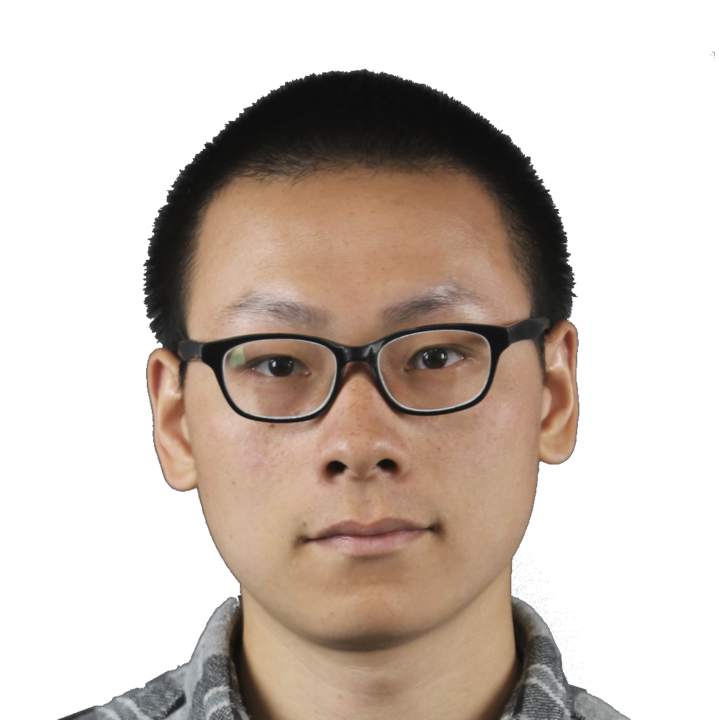
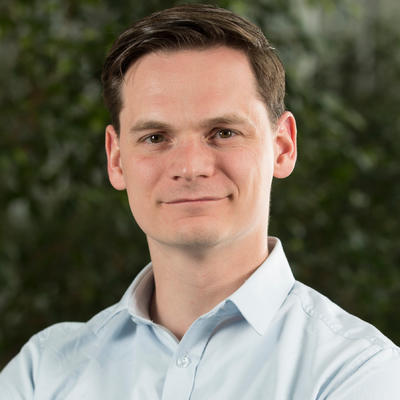
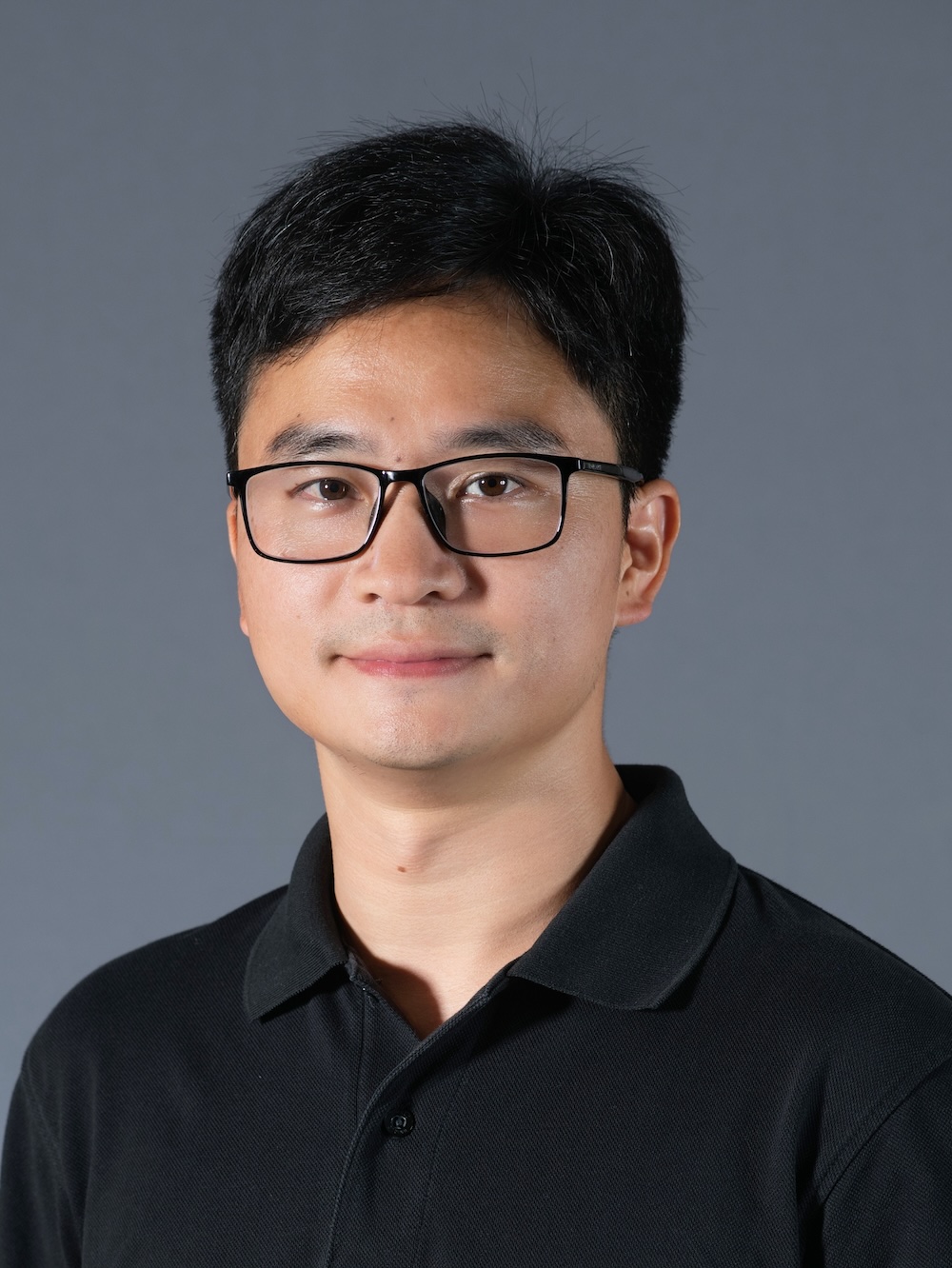
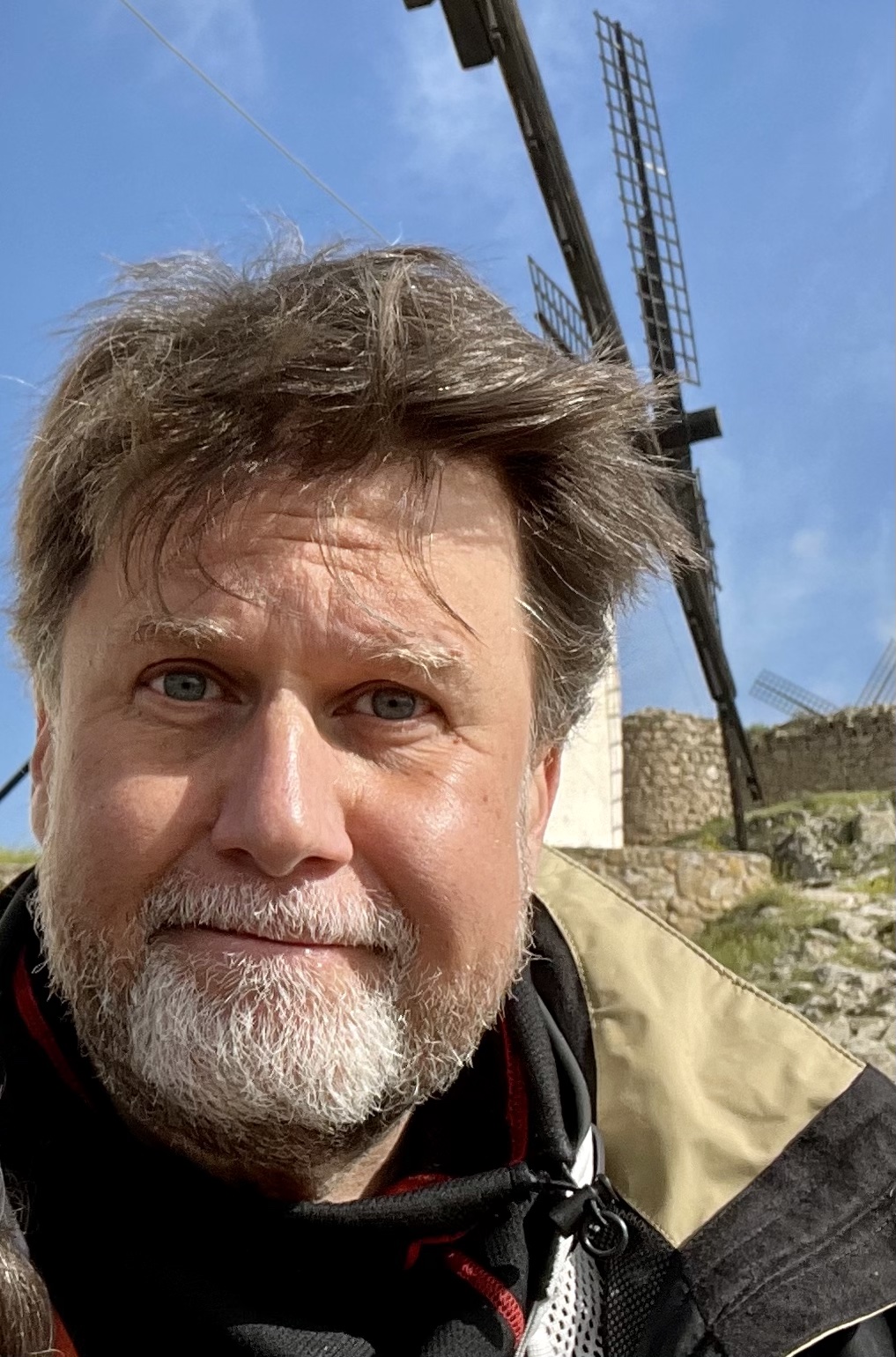
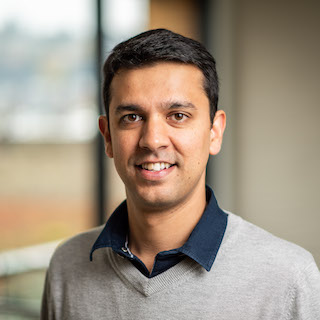
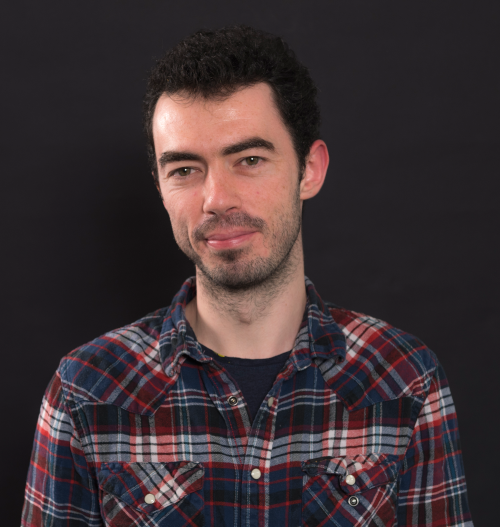
Zhenzhang Ye is a researcher affiliated with the Computer Vision Group at the Technical University of Munich (TUM) , part of the TUM School of Computation, Information and Technology. His work focuses on Photometry-Based Reconstruction , Optimization , and Geometry Processing , with additional interests in Visual SLAM , Deep Learning , and Biomedicine . Research Interests : Optimization techniques, Photometry-Based Reconstruction, and geometric processing for computer vision tasks. Publications : Active contributor to conferences like CVPR, AISTATS, AAAI, and ICCV, with recent works on 3D human motion prediction, hypergradient estimation, and photometric stereo. Contact: yez@in.tum.de
Szymon Rusinkiewicz is the David M. Siegel ’83 Professor and Chair of the Department of Computer Science at Princeton University. His research bridges computation with the visual and tangible world, focusing on 3D shape, motion, and appearance. Department Chair: Computer Science University: Princeton University Research Areas: Computational fabrication, 3D scan acquisition/registration/reconstruction, machine learning for image/shape analysis, robotic localization/planning, and appearance/performance capture for digital humans. Applications include cultural heritage documentation, non-photorealistic shading models for illustrative depiction, and interdisciplinary work with robotics and machine learning.
Nils Daniel Meyer-Kahlen is a Postdoctoral Researcher at Aalto University's Department of Information and Communications Engineering in Espoo, Finland. Affiliated with the Virtual Acoustics research group and Aalto Acoustics Lab, his work bridges theoretical audio engineering with practical virtual reality applications through cutting-edge spatial audio research. His research focuses on room acoustics modeling, binaural rendering, and perceptual evaluation in virtual environments. Key interests include blind estimation of acoustic parameters, machine learning applications for audio synthesis, and the development of transfer-plausible audio for augmented reality. He investigates how humans perceive spatial audio cues and develops methods to improve authenticity in mixed reality through psychoacoustic validation. Recent publications reveal strong trends in deep learning for room impulse response generation, novel reverberation techniques like Dark Velvet Noise, and perceptual evaluation frameworks. His work consistently addresses virtual reality audio challenges including motion-to-sound latency, room transition rendering, and the impact of early reflections on spatial perception. As part of Aalto's Acoustics Lab team, Dr. Meyer-Kahlen contributes to Finland's leading spatial audio research hub known for chamber music hall studies, sauna acoustics exploration, and open dataset creation like the multi-room transition energy decay collection. The lab maintains strong industry collaborations while advancing fundamental audio science.
Dr. Marcel Köster is a researcher affiliated with the Ubiquitous Media Technology Lab at the German Research Center for Artificial Intelligence (DFKI) and the Saarland Informatics Campus. His work focuses on GPGPU computing, particle simulations, compilers, and optimization techniques. Email: Marcel.Koester@dfki.de Phone: +49 681 85775 7750 Location: Gebäude D3 1, Room 0.13, Saarbrücken Research Interests Dr. Köster's research integrates GPU computing with simulation algorithms and compiler optimization. He contributes to advancements in parallel processing, domain-specific languages, and scientific visualization through both theoretical exploration and practical implementations. His publications highlight innovative applications of GPU acceleration to heuristic optimization, state generation, and particle simulations. These works demonstrate expertise in thread compaction, shared memory utilization, and warp scheduling. Teaching Experience Dr. Köster has taught multiple courses at HBK Saar, including: Artificial Intelligence (Summer 2019) Grundlagen der Medieninformatik (Winter 2016/17) Physical Simulations on Media Facades (Winter 2015/16) Core Lecture: Compiler Construction (Winter 2013/2014)
Donald Degraen is a Lecturer at the University of Canterbury 's Human Interface Technology Laboratory (HIT Lab NZ) within the Faculty of Engineering . His research intersects haptic perception , digital fabrication , and virtual reality , focusing on physical artifacts that enhance digital experiences. Current appointments: Lecturer at HIT Lab NZ (2024-present) Education: PhD in Computer Science (2023), M.Sc. in Electrical Engineering (2012), B.Sc. in Industrial Engineering (2005) Research Expertise spans multiple domains: Human-Computer Interaction : User-centered design methods, psychophysical experiments Virtual Reality : Physical gamification, haptic feedback systems Digital Fabrication : 3D printing (FDM, SLA, SLS), procedural generation Haptic Experience Design : Tactile texture generation, sensory substitution Living Media Interfaces : Ambient feedback systems, plant-based interfaces Recent publications demonstrate expertise in: Haptic feedback mechanisms (TactStyle, WinDirect) Physical gamification (EcoMeal, Hakoniwa) VR interaction techniques (CollabJam, spatial haptics) Exergaming applications Metamaterials for haptics Passive haptic devices Supervision : Registered to guide Master's/Doctoral students with 6 research-based degrees supervised (2023-2025). Courses taught include Human Interface Technology - Design and Evaluation (HITD602) and Human Interface Technology - Prototyping and Projects (HITD603).
Kai Han is an Assistant Professor at The University of Hong Kong's School of Computing and Data Science, where he directs the Visual AI Lab. His research focuses on computer vision, machine learning, and artificial intelligence with specific interests in open-world learning, 3D vision, generative AI, and foundation models. He aims to achieve principled visual understanding and build reliable AI systems that close the intelligence gap between machines and humans. Dr. Han's research interests span multiple areas in visual AI, with particular emphasis on developing methods for open-world visual understanding. His work addresses fundamental challenges in category discovery, visual correspondence, 3D reconstruction, and generative modeling. He has made significant contributions to novel category discovery, open-set recognition, and visual correspondence problems, with his AutoNovel framework being particularly influential in the field. His current research explores the intersection of generative models and visual understanding, particularly focusing on how foundation models can be leveraged for comprehensive visual analysis. His publication record demonstrates a clear evolution from traditional computer vision problems toward more challenging open-world scenarios and generative approaches. Early work focused on 3D reconstruction of transparent and mirror surfaces, while more recent publications explore category discovery, visual correspondence, and generative AI. The trend shows increasing focus on foundation models, large language model integration with vision systems, and creating more robust visual understanding systems that can handle real-world open-set scenarios. Best Paper Runner-Up Award at CVPR Workshop on Continual Learning in Computer Vision, 2022 Outstanding Reviewer for ICCV 2021 (top 5%) Outstanding Reviewer for CVPR 2021 Outstanding Reviewer for CVPR 2020 Travel Award, ICLR 2020 Doctoral Consortium Travel Grant, ICCV 2017 Dr. Han actively mentors PhD students and postdocs, with numerous students appearing as first authors on his publications. His lab has secured multiple funding opportunities including HKU-PS, HKPFS, PGS, HKU-BICI, and HKU-ASTRI scholarships. He serves as Area Chair for major conferences including CVPR 2026, ICLR 2026, and AAAI 2026, demonstrating his standing in the research community. His lab, the Visual AI Lab, focuses on creating robust visual understanding systems that can handle real-world scenarios beyond closed-set recognition.
Michal Španěl is an Associate Professor in the Department of Computer Graphics and Multimedia at the Faculty of Information Technology, Brno University of Technology. His academic work centers on visual computing with emphasis on practical implementations and system architectures. His research spans Computer Graphics , Virtual Reality , and 3D Visualization , focusing on real-time rendering techniques, scientific visualization frameworks, and multimedia system design. Key methodologies include GPU programming, interactive visualization pipelines, and cross-platform graphics applications. Dr. Španěl maintains active scholarly identifiers including ORCID iD 0000-0003-0193-684X, ResearcherID G-9639-2016, and Scopus Author ID 22836945200 for tracking his academic contributions.
Mårten Sjöström is a Professor in Signal Processing at Mid Sweden University, where he serves as the highest representative of the research subject Computer and System Sciences and is part of the managerial group of the Department of Information and Communication Systems (IKS). He leads the Realistic 3D research group and has extensive experience in both academic and industrial settings. His educational background includes a Master of Science from Linköping University (Applied Physics and Electrical Engineering, 1992), a Technical Licentiate degree from the Royal Institute of Technology, Stockholm (Signal Processing, 1998), and a PhD from Ecole Polytechnique Federale de Lausanne (Modelling of Non-linear Systems, 2001). He obtained his Docent degree (Associate Professor) in 2008 and Professor's degree in Signal Processing in 2013. His primary research focuses on Multi-Dimensional Signal Processing with emphasis on System Modelling and Identification. He has successfully applied these techniques to Image and Video Processing, Multi-media Communications, and currently specializes in Multi-Scopic 3D and Light Field Technology including capture, processing, coding, and presentation/visualization. His work spans theoretical foundations to practical implementations across various application domains. His recent publication record demonstrates a clear trajectory toward advanced light field and 3D imaging technologies, with significant contributions to compression algorithms, depth estimation techniques, quality assessment metrics, and telepresence applications. His research bridges theoretical signal processing with practical industrial implementations, particularly in remote operation, mining applications, and immersive visualization systems. Best Paper Award at MMEDIA 2013 Quality Reviewer Award at ICME 2013 Professor Sjöström has supervised an extensive number of doctoral and licentiate students, with numerous current PhD candidates expected to complete their degrees in 2025. His teaching portfolio covers a wide range of subjects including Applied Signal Processing, Automatic Control, Computer Hardware and Architecture, and specialized PhD courses in Video Processing and Realistic 3D. He has led numerous research projects both current and completed, including IMMERSE, PLENOPTIMA, and various initiatives in 3D video technology and visualization. As founder and head of the Realistic 3D research group, he directs activities focused on synthesis and capture of 3D images and video, rendering techniques for virtual perspective views, system modeling for 3D capture and presentation, coding of 3D content, quality metrics and assessments, and remote control and measurement systems. The group maintains strong industrial collaborations across multiple sectors.
Sergio Canazza is an Associate Professor at the Department of Information Engineering , University of Padova, Italy. He holds key roles in academic leadership as advisory editor for the Journal of New Music Research and as founder of the Sound and Music Processing Lab . His work bridges music technology , audio restoration , and cultural heritage preservation . Degree in Electronic Engineering, University of Padova CEO, AudioInnova (University spin-off) Research Interests : Expressive information processing in music Auditory displays and cross-modal interaction Preservation of musical cultural heritage Interactive multimedia systems for education AI-driven audio restoration Digital philology for time-based media Scientific Contributions span 20+ years of European/National projects and 200+ publications. His recent work focuses on: Generative AI for IoT sound communication Standardization of audio preservation (ARP technology) Reactivation of historical computer music systems Visual anomaly detection in audio tapes Interactive environments for music education 3D reconstruction of ancient instruments Awards : StartCup Veneto 2010 (Sound and Music Lab) StartCup Veneto 2012 (TechnoTale project) Start Cup 2006 (ARCHIMEDES project) Leadership Roles : Project Manager, EU Culture Program Director, University of Padova's Multimedia Center (2013-2016) Owner of audio preservation patents
Aniruddha Kembhavi is an Affiliate Associate Professor at the University of Washington's Computer Science & Engineering department and currently serves as Director of Science Strategy at Wayve AI in London, UK. Previously, he led computer vision efforts as Senior Director at Allen Institute for AI (AI2) in Seattle and contributed to Microsoft's Image and Video Search division. His research spans 20+ years in Computer Vision , Robotics , and Embodied AI , focusing on open-source frameworks like AI2-THOR and Molmo. His work emphasizes procedural environment generation , vision-language integration , and 3D asset creation , with large-scale datasets such as Objaverse becoming foundational in 3D computer vision. CVPR 2025 Best Paper (Honorable Mention) CVPR 2023 Best Paper Winner Neurips 2022 Outstanding Paper CoRL 2024 Outstanding Paper IROS 2024 Best Mobile Manipulation Paper ICRA 2024 Best Paper Winner Allen Institute Test Of Time Award 2020 NVIDIA Pioneer Award 2018 His recent publications analyze vision-language models , 3D generation evaluation , and diffusion architectures for unified generation. He actively contributes to community-building as Program Chair for ICCV 2025 and Senior Area Chair for CVPR 2024.
Raoul de Charette is a Research Director in computer vision at Inria Paris, leading the Astra-Vision group within the ASTRA team. His academic journey includes a PhD from Mines Paris (2012) and Habilitation (HDR) in 2022, with research stints at Carnegie Mellon University (2011), Mines Paris (2013), and the University of Makedonia (2014). His educational background comprises: PhD from Mines Paris (2012) Habilitation (HDR) (2022) De Charette's research centers on robust and interpretable visual scene understanding , spanning 3D scene reconstruction, domain adaptation, material recognition, and physics-grounded vision foundation models. His work integrates physical principles and synthetic data to enhance model robustness in real-world scenarios like autonomous driving and urban environments. Key contributions include uncertainty-aware 3D scene completion (PaSCo), material extraction from single images (Material Palette), and prompt-driven domain adaptation (PODA). Recent publications reveal a strategic shift toward vision-language integration, material-centric scene understanding, and foundation models that minimize labeled data dependency. His group pioneers physics-informed approaches to improve interpretability and resilience against environmental challenges like adverse weather conditions. Key scientific recognition includes: Best Paper Honorable Mention at EGSR 2025 for MatSwap ELLIS Membership PR[AI]RIE-PSAI Fellowship De Charette actively mentors four PhD students—Fatima Balde, Mohammad Fahes, Ivan Lopes, and Tetiana Martyniuk—often in industry collaborations with Valeo.ai and Kyutai. He secures funding through fellowships and industry partnerships, regularly opening PhD positions (including a 2025 opening for Physics-Grounded Vision Foundation Models). As an area chair for CVPR, ECCV, WACV, and IROS, he shapes the field through conference leadership and co-organizing initiatives like the African Computer Vision Summer School. He directs the Astra-Vision group within Inria Paris' ASTRA team, driving interdisciplinary research at the intersection of computer vision, machine learning, and physics-based modeling for real-world deployment in robotics and intelligent transportation systems.
Björn Ommer is a full Professor at Ludwig Maximilian University of Munich (LMU) where he heads the Computer Vision & Learning Group. Previously, he was a full professor at Heidelberg University and served as a director of the Interdisciplinary Center for Scientific Computing (IWR) and the Heidelberg Collaboratory for Image Processing (HCI). He is affiliated with multiple prestigious institutions including the Bavarian AI Council, ELLIS unit Munich, the Helmholtz Foundation, and the Munich Center for Machine Learning (MCML). Dr. Ommer received his PhD from ETH Zurich where he was awarded the ETH Medal for his dissertation 'Learning the Compositional Nature of Objects for Visual Recognition.' After completing his doctoral studies, he held a post-doctoral position in the Computer Vision Group of Jitendra Malik at UC Berkeley. His primary research interests span all aspects of semantic image and video understanding based on deep machine learning, with particular emphasis on generative approaches for visual synthesis (including Stable Diffusion), invertible deep models for explainable AI, deep metric and representation learning, and self-supervised learning paradigms. His work has significant interdisciplinary applications in digital humanities and neurosciences. His extensive publication record demonstrates a clear progression toward increasingly sophisticated generative models, culminating in the development of Stable Diffusion. His recent work focuses on improving diffusion models, exploring flow matching techniques, and developing more controllable generative systems with applications across multiple domains. German AI-Prize 2024 Technology-Prize of Eduard-Rhein-Foundation 2024 Nominated for German Future Prize of the President of Germany ELLIS Fellow ETH Medal for Dissertation Best Paper Award at CVPR'21 AI for Content Creation Workshop Professor Ommer serves as an associate editor for IEEE T-PAMI and has held significant leadership roles in major computer vision conferences including program chair for GCPR and Senior/Area Chair for CVPR, ICCV, ECCV, and NeurIPS. He delivered the opening keynote at NeurIPS'23 and has supervised numerous PhD students who have gone on to positions at leading technology companies including Amazon, Facebook, and Apple. His research group is located in downtown Munich and actively recruits talented students and researchers for cutting-edge work in computer vision and machine learning.
Togan Tong serves as Associate Professor in the Department of Building Information at Yıldız Technical University's Faculty of Architecture, where he has maintained continuous academic service since 1992. His expertise spans computational design methodologies and immersive technology applications within architectural practice and education. His educational foundation includes: Bachelor of Architecture from Yıldız University (1988) Master of Architecture in Building Science from Yıldız Technical University (1990) Ph.D. in Building Information from Istanbul Technical University (2000) Research initiatives focus on Architectural Computing , Building Information Modeling , and Immersive Technologies , with particular emphasis on human-computer interaction in design environments. Current projects explore VR/AR interfaces for architectural modeling, computational space planning algorithms, and game-based historical reconstruction systems. Publication analysis reveals a pronounced shift toward immersive educational applications since 2020, with significant contributions in VR ergonomics, spatial cognition studies, and BIM integration methodologies. His work bridges technical computing and architectural pedagogy through systematic reviews and empirical interface studies. Academic mentorship includes supervision of 9 theses across architectural computing disciplines. Professional activities extend to Digital Design Education Consultancy for the Istanbul Metropolitan Branch of the Chamber of Architects, influencing curriculum development at institutional levels. Operational activities center around the YTU Bot Group research collective, utilizing the university's digital design infrastructure for advanced visualization projects and computational prototyping in architectural contexts.
Ingrid Scholl is a Professor at the University of Applied Sciences Aachen , specializing in computer science education. She teaches modules including Algorithms and Data Structures , Computer Graphics , Image Processing , and Virtual Reality/Augmented Reality . Her interdisciplinary project DataLake - Big Data Analysis and Visualizations focuses on extracting insights from large datasets using VR/AR technologies. Key Research Areas : Artificial Intelligence, Autonomous Systems, Virtual Reality, Medical Imaging, and Parallel Programming. Projects : Development of low-energy sensors for environmental monitoring, digital twin modeling of buildings for VR visualization, and collaborative VR experiences via HTC Vive. Publications highlight her work on autonomous mining vehicles, scene generation for AI training, and volume rendering in VR. Her recent contributions focus on operational design domains and mapping approaches in autonomous systems.
Markus Wacker serves as Professor of Computer Graphics at the Faculty of Computer Science and Mathematics, Dresden University of Applied Sciences (HTW Dresden). His office is located in room Z348 with direct contact via +49 351 462 2684. His research focuses on visual computing disciplines requiring: Real-time rendering techniques 3D animation pipelines Interactive game systems Digital compositing workflows Media production methodologies Spatial visualization frameworks Professor Wacker teaches core modules across Media Informatics and Applied Computer Science programs including Computer Graphics/Visualization II, Advanced Computer Animation, and Interaction/Game Techniques for undergraduate and graduate students in semesters 2-7.