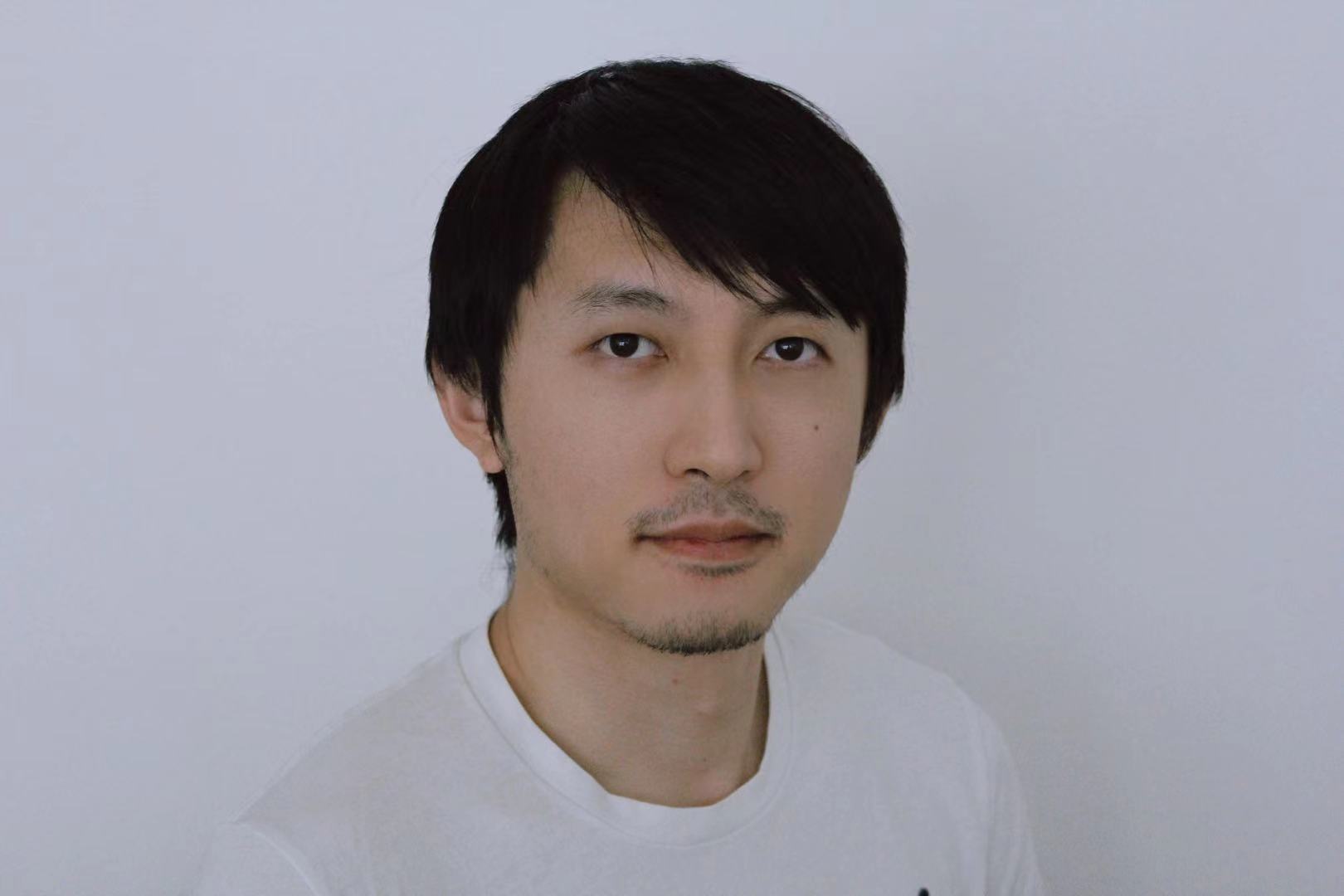
Jie Song is a postdoctoral researcher at ETH Zurich affiliated with the Advanced Interactive Technologies lab. Their work bridges structured information and deep learning pipelines, with applications in hand/body-pose estimation, 3D human reconstruction, and view synthesis. Research Interests: Deep Learning, Computer Vision, 3D Reconstruction, Human Pose Estimation, Motion Capture, 6D Pose Estimation Affiliation: ETH Zurich, Advanced Interactive Technologies lab Jie's recent publications (2023-2025) focus on monocular video-based 3D human modeling, Gaussian rendering, and motion synthesis. Collaborations span institutions like ETH Zurich and MPI Tuebingen, with applications in robotics, augmented reality, and sports analytics. Scientific Awards: 3DV Best Paper Award (2017), Qualcomm Innovation Fellowship Finalist (2015), Swisscom Innovation Award (2014), Birkigt Scholarship (2013), National Scholarship (2009/2010) Jie has supervised multiple student projects, including personalized neural avatars and skeleton-based motion modeling. They serve as a Teaching Assistant for courses like Visual Computing and Machine Perception at ETH Zurich.
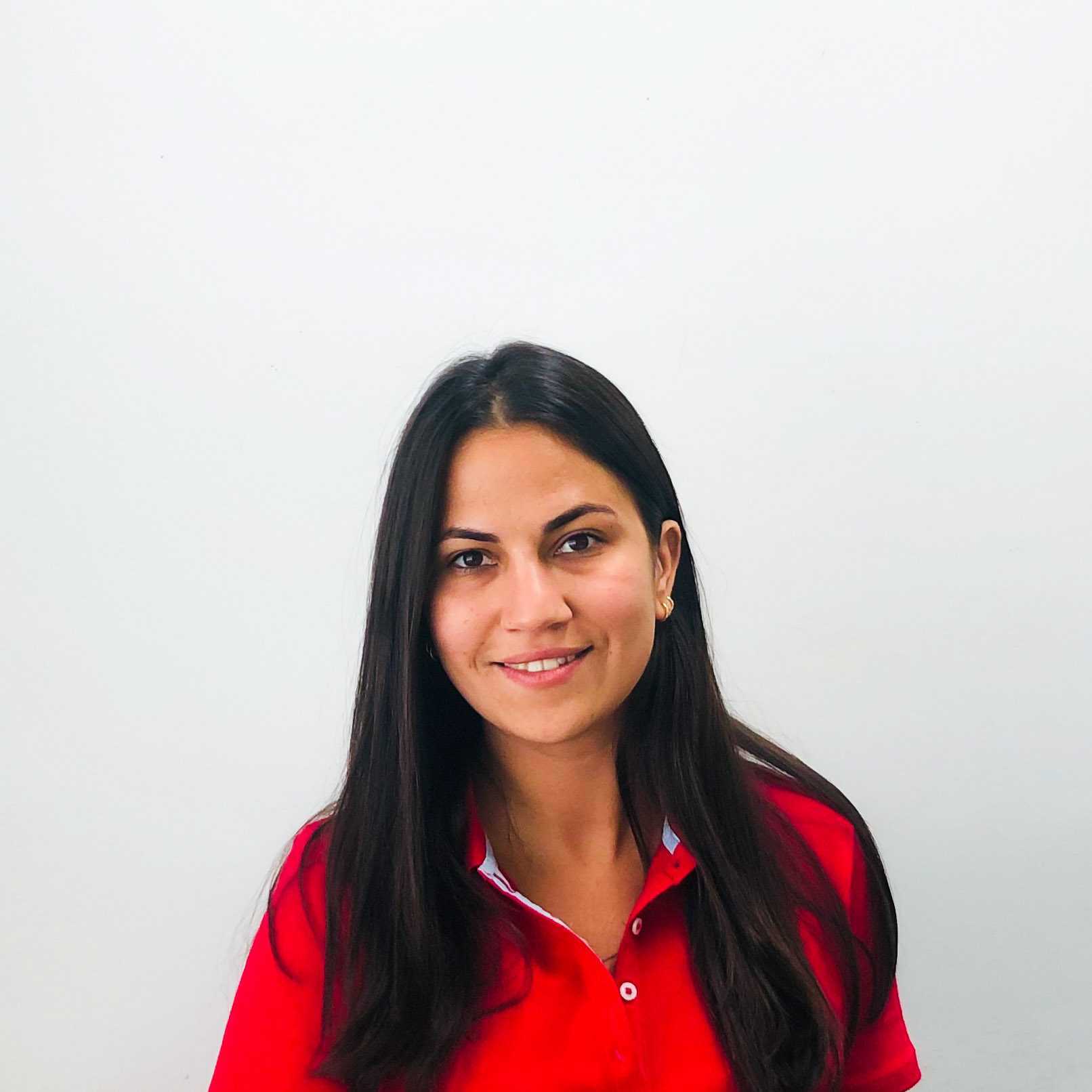
Eline Le Breton is a researcher in geophysics and tectonics with affiliations to Universität Potsdam and earlier institutions like Université de Rennes 1. Her work focuses on lithospheric deformation, plate kinematics, and seismic hazard assessment across diverse regions including the Mediterranean, Andes, and Atlantic Ocean. Research interests include: Crust-mantle decoupling during subduction Extensional tectonics at oceanic transform faults 3D seismic tomography of back-arc basins Lithospheric heterogeneity in collision zones Tectono-sedimentary evolution of Tethyan margins Her recent publications analyze Adriatic plate motion, Alpine lithospheric structure, and Andean shortening mechanisms. She employs field studies, seismic inversion, and geodynamic modeling to investigate fault reactivation and mantle processes. Collaborations span international institutions, including participation in the DFG Priority Program "Mountain Building Processes in Four Dimensions (MB-4D)."
Aysim Toker is a Ph.D. candidate at the Chair for Computer Vision and Artificial Intelligence , affiliated with the Technical University of Munich . She works under the supervision of Prof. Dr. Laura Leal-Taixe and Prof. Dr. Xiaoxiang Zhu on interdisciplinary projects. Research Focus: Deep learning, sequence analysis, and remote sensing. Key Contributions: Advancing video object segmentation, Earth observation models, and anonymization techniques. Collaborations: Partnered with international researchers across multiple institutions. Publications span top venues like eLife , ICCV , NeurIPS , and CVPR , with a focus on: Deep learning architectures for multi-modal tasks Image and video analysis in remote sensing and anonymization Tracking and segmentation algorithms Her work bridges foundational computer vision research with applications in Earth science and privacy-preserving technologies.
Dr. Torsten Sattler is a computer vision researcher at RWTH Aachen University, Germany, specializing in image-based localization and 3D scene reconstruction. His work focuses on developing efficient algorithms for camera pose estimation relative to large 3D models, with significant contributions to mobile localization systems and scalable reconstruction techniques. His primary research interests include: Image-based localization and pose estimation Large-scale 3D scene reconstruction Structure-from-Motion techniques Efficient correspondence search algorithms Mobile vision applications Point cloud processing and rendering Dr. Sattler's publication record shows a clear progression from fundamental algorithm improvements to practical systems for real-world applications. His research demonstrates particular expertise in optimizing RANSAC implementations, developing direct 2D-to-3D matching techniques, and creating memory-efficient solutions for mobile devices. The trend in his work moves toward increasingly complex systems that address practical challenges in urban-scale localization and reconstruction. Award: Best Paper Award at the ICCV Workshop on Big Data in 3D Computer Vision (2013) Dr. Sattler has maintained strong collaborations with researchers including Bastian Leibe and Leif Kobbelt. His work bridges theoretical computer vision with practical applications in augmented reality, robotics, and mobile navigation systems, often providing publicly available source code and project pages to support reproducibility and further research.
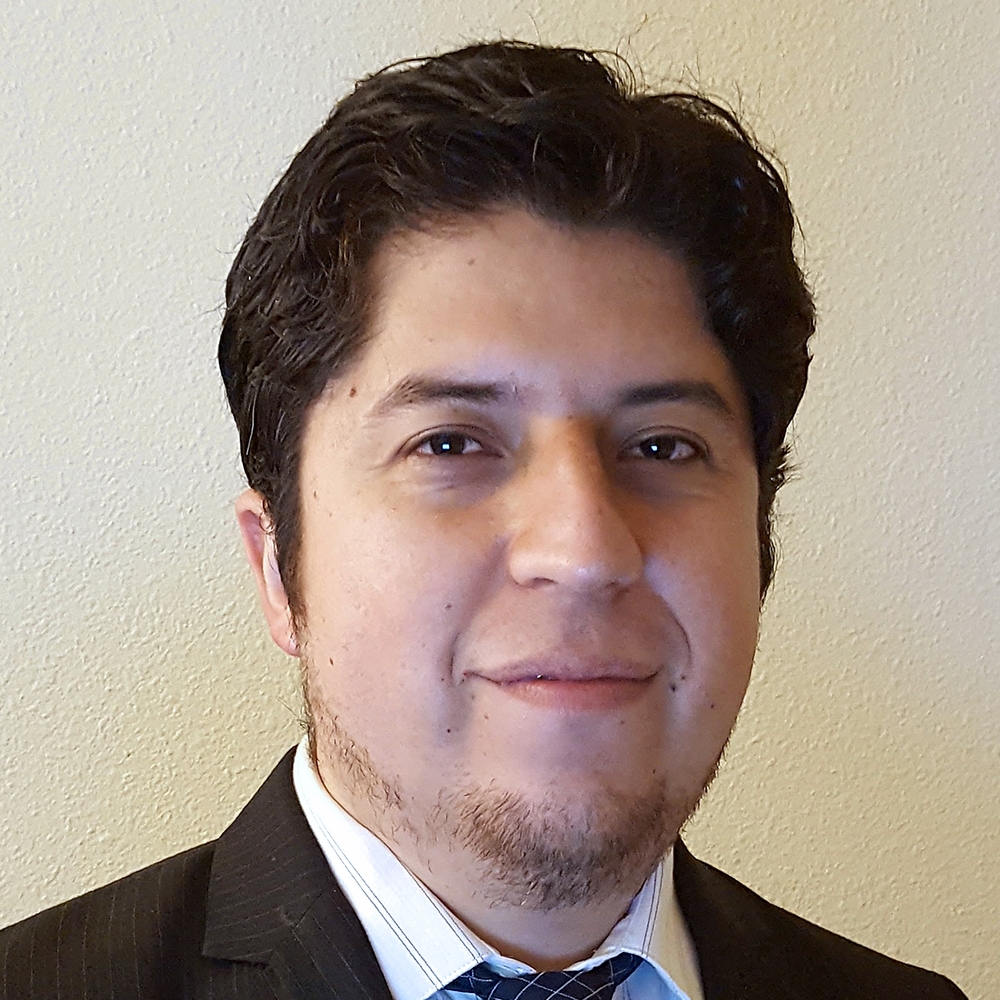
Jorge Macedo is an Assistant Professor and Frederick L. Olmsted Early-Career Professor at the School of Civil and Environmental Engineering , Georgia Institute of Technology. He received his B.S. and M.S. in civil engineering and soil mechanics from the Peruvian National University of Engineering (2007-2011), followed by M.S. (2014) and Ph.D. (2017) in Geoengineering from UC Berkeley. Education: B.S. Civil Engineering (2007), Peruvian National University of Engineering M.S. Soil Mechanics (2011), Peruvian National University of Engineering M.S. Geoengineering (2014), UC Berkeley Ph.D. Geoengineering (2017), UC Berkeley His research focuses on geotechnical earthquake engineering , advanced numerical modeling (FEM, FDM, MPM), performance-based design , and mining geotechnics . He applies machine learning and reliability tools to assess seismic risks, particularly in liquefaction and residual drift modeling. Recent work examines nonergodic ground motion models, slope stability under subduction earthquakes, and mine tailings behavior. The 2025-2024 publications highlight trends in machine learning for hazard assessment , nonergodic ground motion modeling , and mine tailings analysis . Articles address slope systems, liquefaction effects, and physics-informed neural networks in seismic analysis. Scientific Awards: Young Researcher Award (2023), ISSMGE Technical Committee NSF CAREER Award (2022) Dr. Macedo's work bridges academic research with industry applications , including collaborations with Golder Associates and contributions to geotechnical asset management in Georgia. He actively participates in curriculum development, emphasizing data analytics and computational skills.
Laura M. Wallace serves as a Research Professor at the University of Texas Institute for Geophysics (UTIG) with a joint appointment at GNS Science in New Zealand. Her pioneering work focuses on geodetic analysis of crustal deformation at plate boundaries, particularly slow slip events in subduction zones like New Zealand's Hikurangi Margin. In 2018, she co-led IODP Expedition 375 aboard the JOIDES Resolution, drilling into active slow slip zones to install long-term monitoring observatories. Education: Ph.D. in Earth Sciences, University of California, Santa Cruz B.S. in Geology, University of North Carolina at Chapel Hill Research Focus: Wallace's work centers on tectonics and crustal deformation , utilizing land-based GPS and seafloor geodetic instruments to study subduction zone dynamics . Her 2002 discovery of slow slip events at Hikurangi revolutionized understanding of fault behavior, revealing how fluid pressure and lithological heterogeneity control slip patterns. She integrates geodetic data with seismic and drilling results to model earthquake cycles. Publication Trends: Recent work (2023-2025) analyzes spatiotemporal evolution of slow slip using multi-instrument approaches (GNSS, InSAR, seafloor sensors), with emphasis on New Zealand's seismic hazard models. Key themes include fluid-mediated fault weakening, seamount subduction effects, and probabilistic forecasting of megathrust events. Leadership & Grants: Wallace secured major funding through IODP for Expedition 375, enabling core sampling and observatory deployment at Hikurangi. She contributes to national hazard assessments for New Zealand, developing geodetic strain rate models and deformation frameworks for seismic hazard maps. Collaborative Infrastructure: She leverages UTIG's geodetic networks and GNS Science partnerships, utilizing JOIDES Resolution drilling data and SMART subsea cable initiatives for real-time offshore monitoring. Her lab integrates field observations with numerical modeling to predict subduction zone behavior.
Luis Merino is an Associate Professor at the School of Engineering, Universidad Pablo de Olavide (UPO), Seville, Spain. He founded and leads the Service Robotics Laboratory and contributed to establishing the Systems Engineering and Automation division at UPO. He served as Vice-Dean for five years and currently coordinates the Computer Science degree program. Education: Ph.D. in Robotics from the University of Seville (2007), supervised by Anibal Ollero. Research: Focuses on cooperative robotic systems, human-robot collaboration, localization/navigation techniques, and machine learning in social robotics. His work includes leading 2 H2020, 4 FP7, 3 National R&D, and 3 Andalusian regional projects. Notable projects: MBZIRC 2020 (PI), collaboration with Honda Research Institute Japan, and EU-funded initiatives. He advocates for open-source code/datasets and industry technology transfer. Scientific Awards: ABB Award to the Best Doctoral Dissertation on Robotics (2007) Best Paper Award at ROBOT2019 Professional Roles: Associate Editor for Image and Vision Computing and IEEE Robotics and Automation Letters . Serves on ICRA/IROS conference program committees. Grant reviewer for FONDECYT (Chile), SBIR (USA), and ERC.
Emily Baird is a Professor at the Department of Zoology, Stockholm University , leading interdisciplinary research at the intersection of sensory ecology , neuroethology , and comparative morphology . Her work focuses on how insects like dung beetles and bumblebees process visual information to guide behavior in diverse environments. Key Collaborations : Dlife Project with University of Southern Denmark and University of Kiel (Human Frontiers Science Project) INVISMO Project with Lund University (Swedish Research Council) Research Themes : 3D micro-CT analysis of insect eyes Neural mechanisms for straight-line orientation Flight control in cluttered environments Mechanical principles of dung beetle ball rolling Techniques : Behavioral experiments, X-ray microtomography, computational modeling, ray-tracing simulations.
Stephen J Guy is an Associate Professor in the Department of Computer Science and Engineering at the University of Minnesota's College of Science and Engineering. His research focuses on robotics, multi-agent systems, and human-computer interaction with applications in biomedical engineering and digital entertainment. University of Minnesota, College of Science and Engineering Department of Computer Science and Engineering Active research in multi-agent navigation and biomedical applications Dr. Guy's work spans robotics and computer science, with particular emphasis on multi-agent navigation , crowd simulation , and path planning . His research also extends into biomedical applications such as motion analysis for developmental disorders and digital game design for interactive entertainment. Recent publications demonstrate expertise in motion tracking and behavioral analysis. His work on augmented reality games (2024) and multi-agent coordination (2020) represent key contributions to human-computer interaction and autonomous robotics. No specific scientific awards were identified in the scraped data. Dr. Guy collaborates across disciplines including biomedical engineering (e.g., Tourette Syndrome research) and retail analytics (trajectory pattern analysis with Tesco PLC). He serves as Principal Investigator for multiple NSF-funded projects related to robotics and human well-being.
Ioannis Andreadis is a Professor in the Department of Electrical and Computer Engineering at the School of Engineering, Democritus University of Thrace. He has been a faculty member since 1993, following his appointment as a Visiting Professor at the School of Technological Applications of TEI Kavala (1991-1992). His academic journey began with a Diploma in Electrical Engineering from Democritus University of Thrace (1983), followed by an M.Sc. in Electrical Engineering & Electronics (1985) and a Ph.D. in Instrumentation & Analytical Science (1989), both from the University of Manchester. Professor Andreadis's research spans the Design and Implementation of Electronic Systems with particular emphasis on Intelligent Systems and Machine Vision . His work has resulted in over 230 publications in international journals, book chapters, and conference proceedings. He has made significant contributions to image processing, particularly in mathematical morphology, color image processing, and real-time implementation of image processing algorithms. His research has practical applications in seismic signal processing, crowd management systems, and 3D reconstruction technologies. The analysis of his recent publications reveals a strong focus on advanced image processing techniques, with increasing integration of deep learning approaches. His work spans both theoretical foundations (such as entropy estimation and moment calculations) and practical applications (including image stabilization, multi-focus image fusion, and crowd management systems). The interdisciplinary nature of his research connects electrical engineering, computer vision, and signal processing with applications in safety engineering, structural analysis, and robotics. Among his notable achievements are the IET Image Processing Premium Award (2009) , Best Paper Award at PSVIT 2007 , and Best Paper Award at EUREKA 2009 . He was elected Fellow of the Institute of Engineering & Technology (IET) in 2006 and Fellow of the Institute of Measurement & Control (InstMC) in 2021. He has also served as Subject Editor of the IET Electronics Letters and as Guest Editor for special issues of Pattern Recognition journal. Professor Andreadis has supervised 14 PhD theses , 21 Master's theses , and 88 Diploma works , demonstrating his commitment to academic mentoring. His research has been supported by significant grants including the EDUnet project (€280,000), wireless network implementation (€37,000), laboratory infrastructure development (€120,000), school information systems support (€478,000), the RESCUER project (€350,000 as Deputy P.I.), and the EDUSAFE project (Marie Curie Actions). He leads the Electronics Laboratory at Democritus University of Thrace, which has undergone significant infrastructure development through multiple funding sources. His work on the RESCUER project demonstrates collaboration with European partners on emergency risk management systems, while his EDUSAFE involvement shows commitment to advanced AR/VR safety systems development. His research group applies computational intelligence techniques to diverse challenges from seismic analysis to pedestrian evacuation modeling.
Dr. Kevin Austin is a Research Fellow at the School of Mechanical and Mining Engineering, Faculty of Engineering, Architecture and Information Technology at the University of Queensland. His work is affiliated with the Future Autonomous Systems and Technologies research group, where he focuses on automation and robotics applications in mining engineering. Dr. Austin received his academic qualifications from the University of Queensland, including a Bachelor (Honours) of Engineering and a Doctor of Philosophy. Dr. Austin's research centers on mining automation and autonomous systems for heavy machinery operations. His work spans several key areas including dragline operation planning, excavation sequencing, terrain mapping for autonomous bulldozers, and hyperspectral imaging for ore grade discrimination. He has made significant contributions to the development of algorithms for mining equipment automation, particularly in the areas of Monte-Carlo Tree Search for dragline operation planning and Iterative Closest Point variants for terrain scan matching. His research bridges theoretical advances in robotics and artificial intelligence with practical applications in the mining industry, focusing on improving efficiency, safety, and productivity. Dr. Austin has been involved in numerous research projects funded by industry partners including Caterpillar Inc and the Australian Coal Association Research Program (ACARP). His current research focuses on coal stockpile management for remote bulldozers, semi-autonomous bulldozers for mine site rehabilitation, and articulated truck automated systems. His work demonstrates a strong industry connection with practical applications in mining operations. As an academic supervisor, Dr. Austin has served as an Associate Advisor for multiple PhD and Master's students at the University of Queensland. His supervision portfolio includes research on real-time terrain mapping for autonomous bulldozers, mission planning for autonomous excavation, dragline excavation sequencing, and scan matching for terrain mapping in open-pit mining. His collaborative approach is evident in his work with other faculty members, particularly Professor Ross McAree. Dr. Austin's laboratory and research team work closely with industry partners through the Future Autonomous Systems and Technologies group. They maintain strong connections with mining equipment manufacturers and coal mining operations, ensuring their research addresses real-world challenges in the mining sector. Their facilities likely include simulation environments for mining equipment operation, testbeds for autonomous systems, and data analysis platforms for mining process optimization.
Francois Lauze is an Associate Professor at the Department of Computer Science , University of Copenhagen, affiliated with the Image Analysis, Computational Modelling and Geometry research group. His work bridges mathematical rigor and practical applications in image processing and shape analysis. Research Focus: Mathematical Image Analysis (variational/PDE methods) Differential and Riemannian geometry for shape statistics Applications: image inpainting, motion estimation, segmentation, medical imaging Contact: Email: francois@di.ku.dk Phone: +4535335671, +4521553933 Location: Universitetsparken 1, 2100 Copenhagen Ø Recent publications highlight advancements in SE(3) group CNNs for diffusion imaging, locally orderless networks for efficient processing, and refractive multi-view stereo techniques. His work integrates geometric modeling with computational implementations, emphasizing medical and video applications.
Prof. Jan De Beenhouwer is a faculty member at the University of Antwerp, affiliated with the Department of Physics and the imec Vision Lab. His research focuses on advanced computational imaging techniques, particularly in X-ray tomography, phase contrast imaging, and reconstruction algorithms for medical and industrial applications. His primary research interests include: Development of novel X-ray imaging methodologies like edge illumination phase contrast Advanced CT reconstruction algorithms for sparse-view and dynamic systems Integration of deep learning with tomographic reconstruction Industrial applications including defect detection and material characterization Biomedical imaging such as bone structure analysis and tissue modeling Analysis of recent publications (2024-2025) reveals strong emphasis on: Innovations in phase contrast imaging hardware and simulation tools Advanced reconstruction techniques for motion compensation and sparse data AI-powered approaches for industrial inspection and biomedical research Development of open-source tools (CAD-ASTRA) for the tomography community He leads research at imec Vision Lab, focusing on both fundamental imaging physics and practical applications. The lab collaborates extensively with industrial partners on non-destructive testing solutions.
Christopher Crick is an Associate Professor in the Department of Computer Science at Oklahoma State University. He leads the Robotic Cognition Laboratory, focusing on grounding developmental psychology and cognitive science in embodied AI systems, while improving robotics through human cognition-inspired models. University: Oklahoma State University Department: Computer Science Academic Rank: Associate Professor Email: chris.crick@okstate.edu, chriscrick@cs.okstate.edu Research Interests: Artificial Intelligence Cognitive Science Human-Robot Interaction Atmospheric Sciences (via UAV applications) Machine Learning Medical Informatics Scientific Activities: NSF-funded research in robotics, UAVs, and AI Professional memberships: Cognitive Science Society, ACM, AAAS Editorial roles and conference reviewing in robotics and AI Lab: Robotic Cognition Laboratory
Johannes Gräff is an Associate Professor at EPFL, affiliated with the Bioengineering Institute (BMI) under the School of Life Sciences (SV). He also serves as Director of the Neuroscience Doctoral Program (EDNE) and holds roles in the Synapsy Research Center (SRC). His research focuses on interdisciplinary applications of control systems, robotics, and data-driven optimization in bioengineering and manufacturing. Gräff leads the Prof. Gräff Unit (UPGRAEFF) and teaches courses on neuroscience and general biology. He advises multiple doctoral students and contributes to academic governance through roles in doctoral commissions and program management. His expertise spans adaptive control, Bayesian optimization, and closed-loop systems, with applications in precision engineering, additive manufacturing, and neuroscientific instrumentation. Gräff’s work bridges theoretical control methodologies with practical industrial and biomedical challenges, emphasizing safety and efficiency in automation. He oversees the Neuroscience Doctoral Program, guiding interdisciplinary research training, and maintains administrative responsibilities in EPFL’s academic and research structures. His lab (graefflab.epfl.ch) focuses on advancing technologies for autonomous systems and precision control in dynamic environments.