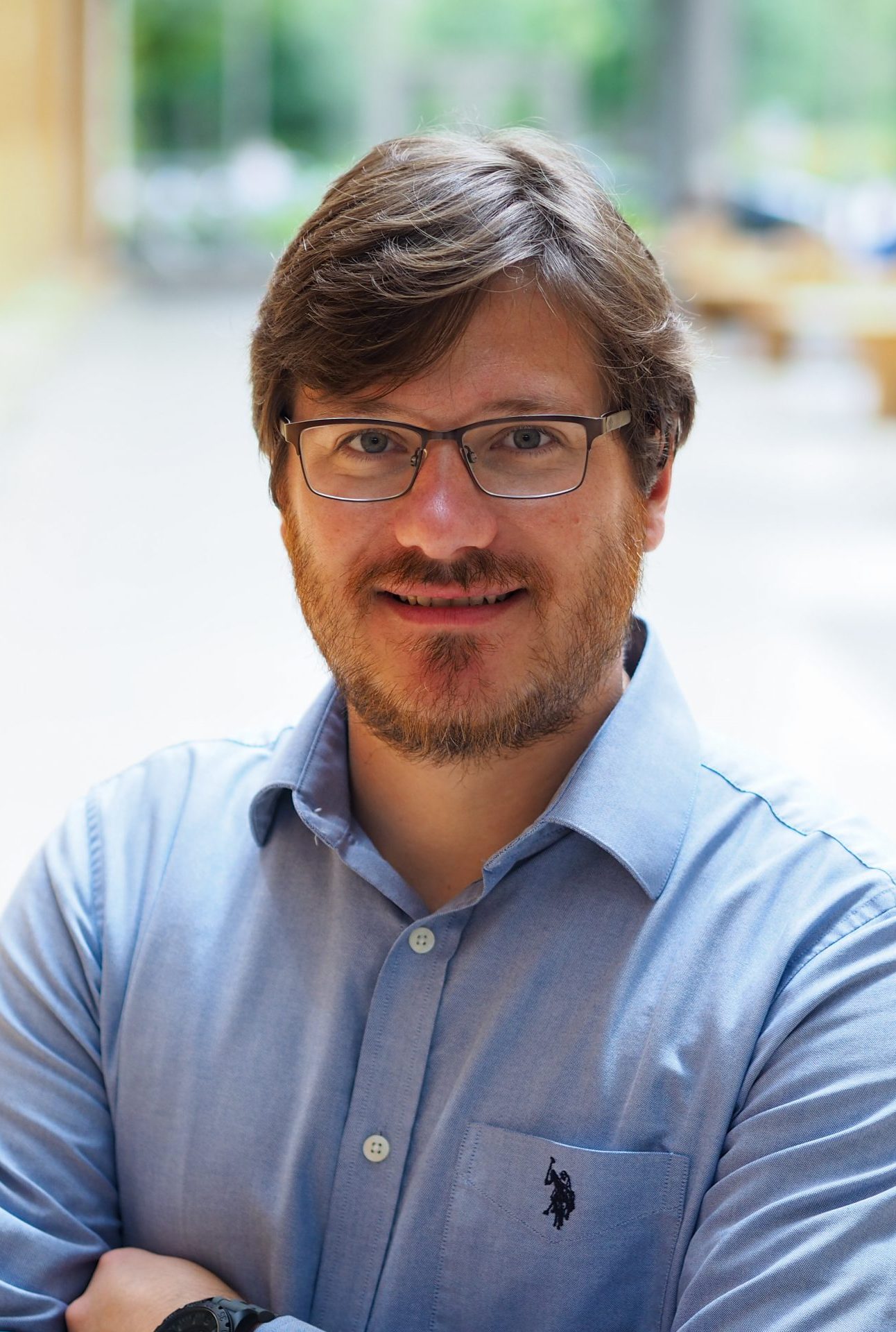
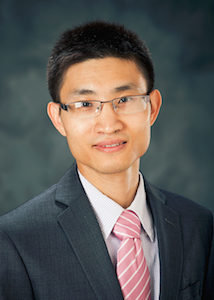
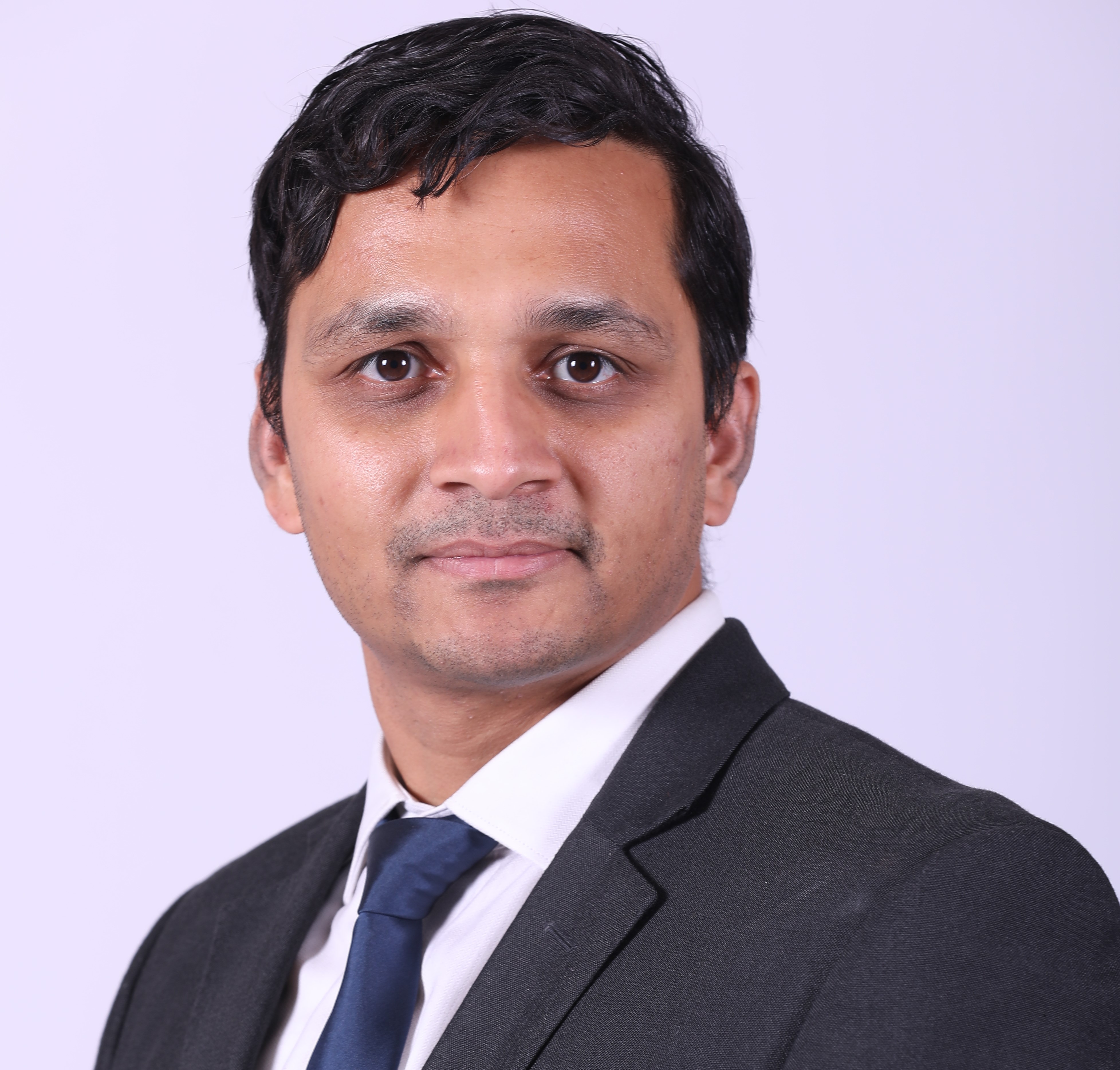
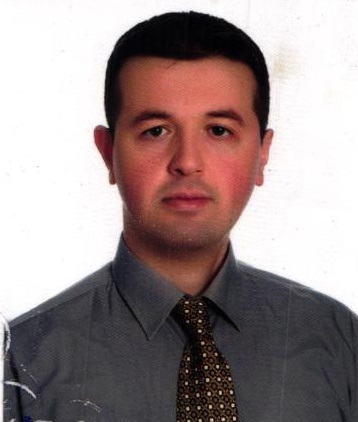
Dr. Pan Zhang is a Researcher at the Department of Mechanical Engineering, Imperial College London, specializing in materials modeling and micro-mechanics. His work focuses on crystal plasticity modeling, particularly the generation of microstructures for polycrystalline materials to support finite element analysis. He holds a BSc and MSc in Control Engineering and a PhD in Mechanical Engineering. Research interests include Voronoi tessellation applications, optimization using evolutionary algorithms, and material behavior under extreme conditions. His contributions span computational geometry, composite materials, and supply chain environmental impact analysis. Publications highlight advancements in grain structure simulation, cryptographic integration in embedded systems, and cloud-based privacy-preserving techniques. Collaborations include projects with Professors Liliang Wang and Daniel Balint, though he is not directly listed as a supervisor for the mentioned PhD studentships. No scientific awards are explicitly stated, but his work demonstrates expertise in interdisciplinary engineering and computational methods.
Dr Sacha Cavelier is a Research Fellow at the Faculty of Engineering, School of Mechanical, Medical and Process Engineering, Queensland University of Technology (QUT) . His work focuses on biomedical engineering , biomaterials , and 3D printing applications for tissue and bone regeneration. His research includes: Developing 3D-printed medical composites with enhanced mechanical and thermal properties Designing biodegradable bone grafts reinforced with titanium mesh Investigating multizonal scaffolds for osteochondral regeneration Studying molecular-scale bone toughness through osteopontin crosslinking Characterizing spinal dura mater and pericranium mechanical properties Recent publications highlight his expertise in biomimetic nanointerfaces , calcium sulfate composites , and weak interface mechanics for tissue engineering. His work integrates materials science with regenerative medicine to advance clinical solutions.
Mauricio Ponga is an Associate Professor at the Department of Mechanical Engineering, University of British Columbia (UBC), Faculty of Applied Science. His research focuses on computational mechanics, multiscale modeling, and material failure analysis. He holds a Ph.D. and M.Sc. from the University of Seville, a B.S. from the University of La Plata, and completed postdoctoral work at Caltech. Education: B.S. (University of La Plata), M.Sc. (University of Seville), Ph.D. (University of Seville), Postdoctoral Fellowship (Caltech) Research Interests Mechanics of materials under extreme conditions Multiscale modeling (atomic to continuum) Thermal and electronic transport in materials Material failure mechanisms (spallation, twinning) Industrial applications (batteries, superconductors) Recent Publications highlight his work on high-entropy alloys, polymer brushes, 2D materials, and novel simulation methods like local two-temperature molecular dynamics (l2T-MD) and accelerated mesodynamics (aMD). Projects include collaborations with TRIUMF, NSERC, and FP Innovations. Labs & Collaborations Principal Investigator of the Modeling and Simulation Research Group at UBC Collaborations with S2SES (Coanda-effect screens), DND (gradient nano-grained alloys), and Caltech (postdoctoral work)
Alexei V. Tivanski is a Professor in the Department of Chemistry at the University of Iowa, College of Liberal Arts and Sciences. His research group specializes in physical and analytical chemistry using advanced Atomic Force Microscopy (AFM) techniques to study systems at the nanoscale. Education: PhD in Chemistry (University of Pittsburgh), MS in Physics and Technology (Moscow Institute of Physics and Technology) Research focuses on two primary themes : Nanoscience/Materials Science: Investigating size-dependent electrical, mechanical, and (photo)-reactivity properties of nano- and macro-dimensional solids for applications in sensing, energy storage, and device development. Atmospheric/Environmental Chemistry: Applying AFM-based methods to measure humidity-dependent 3D morphology, water uptake, phase state, and surface tension of submicrometer environmental particles, with implications for climate modeling and air quality studies. The group's publications demonstrate expertise in AFM nanomechanics, aerosol particle characterization, and interdisciplinary collaborations spanning environmental science, materials engineering, and biomedical applications. Affiliations: University of Iowa Chemistry Stores, Materials Analysis and Fabrication (MATFab), Nuclear Magnetic Resonance (NMR) Facility, and Shared Instrumentation resources. Contact: Phone: 319-384-3692 Address: E272 Chemistry Building, University of Iowa, Iowa City, IA 52240
Lei Chen is an Assistant Professor in the Department of Mechanical Engineering at Mississippi State University, College of Engineering. His research focuses on advanced computational modeling techniques applied to materials and mechanical systems. Education: Ph.D., Mechanical Engineering, National University of Singapore (NUS), Singapore, 2012 M.E., Materials Processing, Huazhong University of Science & Technology (HUST), China, 2007 B.E., Materials Processing, Huazhong University of Science & Technology (HUST), China, 2005 His research interests lie at the intersection of computational mechanics and materials science, particularly in fracture modeling, multi-scale simulations, and phase-field methods. He develops and applies advanced numerical techniques to model phenomena such as dendrite growth in batteries, microstructure evolution in alloys, and mechanical behavior of biological and composite materials. His work integrates finite element methods, smoothed finite element methods (S-FEM), and phase-field models with crystal plasticity and multi-physics coupling. The recent publications highlight a strong trend in computational modeling of energy materials and structural integrity. Key themes include phase-field simulations of lithium dendrite formation, multi-scale modeling of polycrystal grain growth, and advanced fracture mechanics using edge-based strain smoothing techniques. These works span disciplines from battery technology to biomaterials, demonstrating a versatile and impactful research program. Scientific Awards and Honors: Travel Fellowship, Enabling Methods for Materials Innovation, University of Florida, 2015 Travel Grant, USNCCM13, 2015 Z. Hsu Scientific Paper Award, 2015 Vice-Chancellor's Research Fellowship, QUT, AUS Chinese Excellent Self-financed Student Abroad Scholarship, 2012 President Graduate Fellowship (top 5%), NUS, 2009–2011 Research Graduate Scholarship, NUS, 2007–2011 Outstanding Graduate Student Award, HUST, 2006 Excellent Bachelor Graduate Award, HUST, 2005 First-Class Scholarship, HUST, 2002–2004 Dr. Chen has advised research students and collaborated extensively with leading researchers such as Long-Qing Chen. His work is supported by academic grants and institutional fellowships. He has contributed to significant advancements in computational methods for fracture and microstructure modeling. He has also published in high-impact journals and presented at major international conferences. He is actively involved in research related to energy storage systems, additive manufacturing, and biological materials, often leveraging high-performance computing and image-driven simulations. His lab focuses on developing robust and accurate numerical frameworks for predicting material behavior across scales.
Christoph Veyhl is a Professor at the University of Applied Sciences Mannheim, College of Engineering, Department of Mechanical Engineering. He specializes in materials science and mechanical engineering with a focus on cellular metals, finite element analysis, and industrial computed tomography. Research Interests: His work explores the mechanical and thermal properties of sintered metallic structures, additive manufacturing, and 3D printing technologies. Utilizing micro-computed tomography and advanced numerical simulations, he investigates anisotropy, strain rate sensitivity, and thermal conductivity in cellular materials like metallic foams and hollow sphere structures. Publications: With 14 publications and 422 citations, his research spans topics from scan quality estimation in industrial CT using neural networks to mechanical testing of diffusion-bonded hollow spheres. Key methodologies include finite element analysis and lattice Monte Carlo simulations. Contact: Email: c.veyhl@hs-mannheim.de | Phone: +49 621 292 6154 | Office: Building L, Room 252
Prof. Dr. Christian Motz is a Professor in the Department of Materials Science at Saarland University, within the Faculty of Natural Sciences and Technology. He leads the research group focused on the Experimental Methodology of Materials Science, specializing in the investigation of structure-mechanical property relationships across macro, micro, and nanoscales. His research centers on advanced characterization techniques, particularly atomic force microscopy (AFM), scanning electron microscopy (SEM), and light microscopy, enabling precise topographic and mechanical analysis of materials. Key research areas include: Micro- and nanomechanics under varying defect structures, temperatures, and environments Fatigue and fracture behavior of complex materials Structure, stability, and mechanical performance of nanocrystalline materials Discrete dislocation dynamics simulations for modeling plasticity The group leverages a suite of microscopy tools to extract multi-scale information, overcoming limitations of conventional imaging methods by using AFM for true 3D surface topography with high resolution. This enables accurate assessment of surface features critical to material performance. Prof. Motz collaborates within a multidisciplinary environment and contributes to advancing experimental methodologies for materials characterization. No specific scientific awards or student advisement details were mentioned in the provided text.
Ewa Bednarczyk is an Assistant Professor at the Department of Machine Design and Biomedical Engineering , Faculty of Mechanical and Industrial Engineering, Warsaw University of Technology. Her research focuses on mathematical modeling of pathological tissue changes, in vitro experiments on mechanically stimulated cell cultures, and development of novel materials/structures for tissue engineering applications. She has completed a scientific traineeship at the Joint Research Centre in Italy. PhD in Mechanical Engineering (2020), Warsaw University of Technology MSc & Engineer's Degree in Mechanics and Weaponry Technology Research Interests: Interdisciplinary work at the intersection of biomedical engineering and mechanical engineering, with emphasis on: Pathological tissue modeling (osteoarthritis, angiogenesis, osteophytes) 3D printing for biomedical applications Finite element analysis of microstructure and cartilage roughness Development of biocompatible films/starch-based materials Labs & Teams: Leader of Edward Józef Brzeziński Laboratory for Advanced Biomedical Engineering Technologies Member of Zespół Mechaniki i Technik Uzbrojenia (Weapons Mechanics and Technology Team) Member of Zespół Konstrukcji Maszyn i Inżynierii Biomedycznej (Machine Design and Biomedical Engineering Team)
Dr. Uphar Chamoli is a biomechanist affiliated with the University of New South Wales and the Spine Labs at St. George Hospital (Kogarah). His research focuses on musculoskeletal biomechanics, particularly spinal pathologies and orthopaedic implants, bridging academia and industry for clinical translation. Education: BTech in Mechanical Engineering (2008), Indian Institute of Technology, Dhanbad MPhil in Biological Sciences (2012), UNSW Sydney PhD in Spine Biomechanics (2016), UNSW Sydney Research Interests center on orthopaedic biomechanics, finite element modeling, in vitro biomechanical testing, diagnostic imaging (CT, MR, Ultrasound, X-ray), and clinical study design. His work examines lumbar disc herniation, segmental stiffness loss, and recurrent herniation factors, developing novel imaging and computational techniques for patient-specific models. Scientific Awards include the Best Abstract & Presentation (2017, Asia-Pacific Society of Lateral Access Surgery), Young Investigator Award (2014, St. George & Sutherland Medical Research Symposium), and multiple scholarships from UNSW and international institutions. Supervision spans orthopaedic biomechanics, finite element modeling, and clinical outcomes analysis. Current PhD candidates include Vivek Ramakrishna (smart spinal implants), Xiaolong Chen (microdiscectomy studies), Kyle Sheldrick (MRI post-processing algorithms), and Geoff Smith (critical shoulder angle research).
Alicja Anuszkiewicz, D.Sc., is an Associate Professor at the Institute of Electronic Systems within the Faculty of Electronics and Information Technology at Warsaw University of Technology (PW). With 35 publications, 6 projects, and 1 patent, her work focuses on optics, fiber Bragg gratings (FBG), birefringence engineering , and sensor development . Her research spans nanostructured optical fibers , mode-division multiplexing , and medical/photonics applications . Academic Rank: Associate Professor Email: alicja.anuszkiewicz@pw.edu.pl Consultations: Mondays 14:15–15:15 Research Highlights : Developed numerical tools for FBG spectral analysis in few-mode fibers. Engineered nanostructured ZEBRA fibers for polarization-insensitive sensors. Optimized weakly-coupled few-mode fibers for telecommunications systems. Created 3D-printed mechanical elements with embedded FBG sensors. The tag cloud derived from her work includes optoelectronics, UV radiation, fiber optic sensors , and graded index optics . Her bibliometric indices (h-index: 7, Total CiteScore: 111.2) reflect significant impact in automation, electronics, and space technologies .
Professor UĞUR AYDIN is affiliated with Gaziantep University Faculty of Dentistry in the Department of Clinical Sciences . He has held various academic positions since 2016 including Professor (2023–), Associate Professor (2017–2023), and Assistant Professor (2011–2017). His education includes a Medical Specialization in Endodontics (2016–2020) from Ondokuz Mayis University Institute of Health Sciences and a Türkiye Licence in Dentistry (2016–2020) from Marmara University Faculty of Dentistry . His research interests focus on Endodontics with emphasis on Laser Applications , Root Canal Biofilm Removal , and Dental Material Evaluation . His work explores Cyclic Fatigue Resistance of Instruments , Smear Layer Elimination , and Dentinal Crack Formation during endodontic procedures. He has supervised 25+ theses at dental specialization, master’s, and PhD levels. His grants include 7 national research projects supported by TÜBİTAK and Higher Education Institutions, such as projects on Laser Dentistry , Photodynamic Therapy , and Apical Pressure Dynamics . He has co-authored 28 scientific articles and 1 book chapter on Endodontic Radiology .
Hao Li is a MSCA Postdoc Fellow and Visiting Scholar at LIP6 , affiliated with the University of Southern Denmark in the Department of Mechanical Engineering . His research focuses on advanced computational methods for topology optimization in thermal, fluid, and structural engineering systems. Education: Not explicitly stated in the provided text. Current Projects: Leading EU-funded research on heat exchanger design using multiscale models and machine learning. Dr. Li's work spans multiscale topology optimization, level-set methods, and fluid-structure interaction, with applications in microchannel cooling, compliant mechanisms, and biodegradable composites. His recent publications highlight advancements in 3D conjugate heat transfer, adaptive meshing, and eigenfrequency maximization. The trends in his research output (2017–2025) emphasize thermal-fluid systems , high-resolution structural optimization , and manufacturable composite designs . Notable subfields include triply periodic minimal surfaces for cooling channels, nonlinear buckling analysis, and phasor-based dehomogenization techniques. Teaching & Supervision: Currently supervising projects on topology optimization frameworks for heat sinks and high heat flux cooling. His past projects (2018–2023) include research on piezoelectric transducers and thermal-fluid system design. Labs & Collaborations: Collaborates with institutions in Japan and France, focusing on experimental validation and industrial applications. His network includes partnerships with researchers in structural mechanics, computational fluid dynamics, and additive manufacturing.
Dr. Lior Medina is a Senior Lecturer at the School of Mechanical Engineering, Tel Aviv University, specializing in nonlinear meta-micro-structures (MMS) and their applications in micro-electro-mechanical systems (MEMS), multistable structures, and energy harvesting. Education: B.Sc. and M.Sc. Magna Cum Laude in Mechanical Engineering from Tel Aviv University (2010, 2012). Postdoctoral Fellowships: Israel Ministry of Science, Broadcom, Israel Science Foundation, Tel-Aviv–Northwestern joint fellowship, Blavatnik fellowship. His research combines theoretical and experimental approaches to study coupled microstructures under electrostatic actuation, with a focus on stability properties and characterization methods. Recent work includes investigations into Kirigami-based nanoscale 3D configurations and bistable/tristable microbeams. Scientific Awards: Israel Ministry of Science Fellowship Broadcom Grant Israel Science Foundation Grant Tel-Aviv–Northwestern Postdoctoral Fellowship Blavatnik Postdoctoral Fellowship
Martin Fagerström is a Professor at the Department of Material and Computational Mechanics, Chalmers University of Technology. His research focuses on computational modeling of damage and fracture in lightweight materials, particularly fiber-reinforced polymers, with applications spanning crashworthiness, sports engineering, and health technology. He serves as Co-director of the Health Engineering Area of Advance and coordinator of Chalmers Sports & Technology. Affiliation: Chalmers University of Technology Department: Material and Computational Mechanics Research Areas: Computational fracture mechanics, damage modeling, composite materials, finite element analysis, sports and health engineering His recent publications emphasize multi-fidelity data fusion, machine learning integration with transfer learning, and advanced finite element techniques for predicting elasto-plasticity and delamination in woven composites. Projects led or co-led include SCALE (circular aluminum alloys), REaL-tIme (anisotropic carbon composites), and LIGHTer Academy (lightweight vehicle technology).
Dr Irvin Teh is a Senior Research Fellow at the University of Leeds' School of Medicine, affiliated with the Leeds Institute of Cardiovascular and Metabolic Medicine (LICAMM) and the Biomedical Imaging Science group. He serves as MRI Lead for the Experimental and Preclinical Imaging Centre (ePIC) and Impact Champion for LICAMM, focusing on advanced diffusion MRI techniques for cardiac microstructural analysis. PhD in MRI Physics, Imperial College London MSc in Biomedical Engineering BSc in Mechanical Engineering His research bridges preclinical and clinical MRI, emphasizing diffusion tensor imaging to quantify myocardial microstructural changes in diseases like hypertrophic cardiomyopathy. Techniques such as q-space trajectory imaging and motion-compensated tensor encoding are central to his work, validated through collaborations, phantoms, and complementary imaging modalities. His methods aim to improve non-invasive cardiac diagnosis without ionizing radiation. Recent publications highlight advancements in high-gradient cardiac diffusion imaging, outlier detection algorithms, and multi-centre validation studies. He advocates for collaborative research, leading educational modules and training programs, and holds leadership roles in ISMRM and SCMR committees.