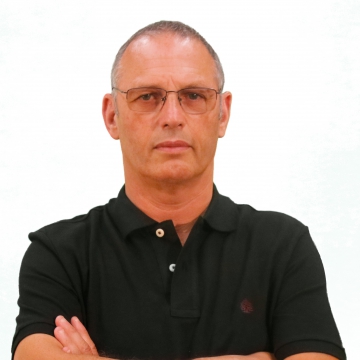
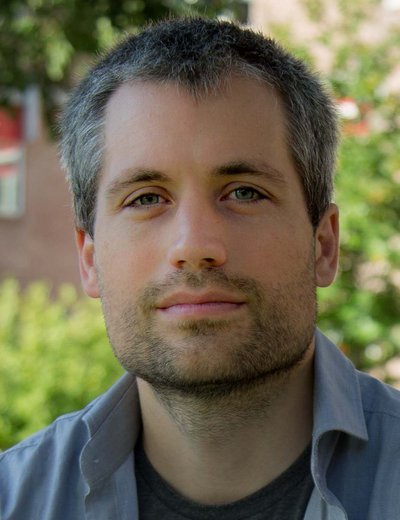
Alexandre José da Costa Velhinho is an Assistant Professor at the College of Sciences and Technology, Universidade Nova de Lisboa. His work bridges materials mechanics, composite fabrication, and the Circular Materials Economy. PhD in Materials Science (focus on Composite Materials) from Universidade Nova de Lisboa (2004) Research Focus: He specializes in heterogeneous materials (composites, cellular materials, functionally graded materials) and structural metamaterials like auxetic and anepectic materials. His work spans: Modeling elastic behavior of metal matrix composites Simulation of ceramic particle distribution and thermomechanical properties Processing techniques: centrifugal casting, additive manufacturing, friction stir processing Characterization methods: microtomography, thermal/mechanical testing Damage analysis (tribocorrosion in ceramic-reinforced composites)
Katrin Ellermann is a University Professor (Professor) at the Institute of Mechanics , Graz University of Technology (TU Graz), Austria. Her research spans rotordynamics , nonlinear vibrations , biomedical engineering (particularly aortic dissection modeling), and offshore systems . She has developed advanced numerical methods like the Numerical Assembly Technique and applied fractional derivative damping models to rotor systems. Her work integrates computational mechanics with applications in industrial machinery and cardiovascular diagnostics via impedance cardiography. Her research interests include: Stability and vibration analysis of mechanical systems Computational modeling of aortic dissection and thrombosis Application of polynomial chaos expansion and sensitivity analysis Control systems using Kalman filters and mechatronic simulations Nonlinear dynamics in offshore structures Advanced damping models via fractional calculus Recent publications focus on rotordynamics (balancing techniques, damping models) and biomedical simulations (SynthAorta dataset, false lumen thrombosis). She has also contributed to fault detection in railway and offshore systems.
Sang Il Park is a Professor in the Department of Software at Sejong University, South Korea, where he has been a faculty member since 2007 following postdoctoral work at Carnegie Mellon University's Robotics Institute (2005-2007) and a brief research position at Japan's Digital Human Research Center. Ph.D. in Computer Science, KAIST (2004) M.S. in Computer Science, KAIST (1999) B.S. in Computer Science, Yonsei University (1997) Professor Park's research centers on Computer Graphics , with deep expertise in Character Animation , 3D Geometry Processing , and Image Processing . His research fingerprint shows dominant activity in Motion Capture (100%), Transition Graphs (72%), and Motion Synthesis (72%). His work has evolved from foundational research in human motion capture to incorporating deep learning techniques for image restoration, demonstrating both consistency in core interests and adaptation to emerging technologies. His publication pattern reveals a sustained research program with significant outputs in 2008, 2010, 2014, 2018, and continuing through 2023. The research spans from character animation and motion synthesis to practical applications like document processing and weathering simulation, showing remarkable breadth within his specialized domain. h-index: 12 Total citations: 933 Presented pioneering research at ACM SIGGRAPH Referenced in 4 patents and 2 Wikipedia pages Professor Park leads the Computer Graphics Lab at Sejong University, where he mentors graduate students and conducts research in animation, modeling, rendering, and computational photography. His patent portfolio includes innovations in facial expression restoration and motion synchronization, demonstrating the practical impact of his research beyond academia.
Dr. Stavros Nousias is a researcher at the Chair of Computing in Civil and Building Engineering at the Technical University of Munich , focusing on applications of Artificial Intelligence in the Built Environment . His work bridges Knowledge Representation and Reasoning , Geometry Processing , and Machine Learning to advance construction informatics and digital twinning. Research Interests: AI for building evacuation prediction, technical drawing segmentation, BIM optimization, and respiratory disease modeling. Publications: 15+ peer-reviewed articles on topics including graph neural networks for construction simulations, pulmonary airflow analysis, and heritage site monitoring. Supervised Theses: Guided projects on AI-based BIM command prediction and robotized construction simulation . Labs: Active in the BIM-Lab and Robotic Fabrication Lab . Teaching: Co-instructor for courses like Artificial Intelligence in Engineering and Computation in Engineering 1 .
Professor Jenny leads the Jenny Research Group at ETH Zürich, specializing in turbulent reactive flows, rarefied gas kinetics, and biomedical fluid dynamics. Her work bridges fundamental research with industrial applications in energy systems and fluid mechanics. Develops advanced turbulence models (TDDM, hybrid LES/RANS) for multi-scale flows Pioneers data assimilation frameworks for RANS simulations using adjoint methods Advances particle-based stochastic algorithms for fractured porous media transport Her recent publications emphasize adaptive time integration techniques, probabilistic modeling of non-linear transport phenomena, and optimized simulation tools for hydrogen storage systems. The group's methodological innovations focus on reducing computational costs while maintaining physical accuracy through novel regularization strategies. Key applications include combustion device optimization, high-pressure tank filling analysis, and fractured reservoir simulations. Current projects integrate machine learning with traditional CFD methods to address challenges in droplet clustering, flame surface density propagation, and supersonic spray dynamics. The research framework spans from direct numerical simulations of fundamental flow physics to industrial-scale hybrid modeling implementations.
Professor Steven Dufour is a Full Professor in the Department of Mathematics and Industrial Engineering at Polytechnique Montréal. With a career spanning over two decades since completing his Ph.D. in 1999, he has established himself as an expert in numerical modeling, particularly in the areas of finite element methods and multiphase systems. His academic journey began with B.Sc. and M.Sc. degrees from the University of Montreal, followed by a Ph.D. from Polytechnique Montréal. Professor Dufour's research focuses on the numerical modeling of free surface flows in industrial processes, with expertise recognized by NSERC in modeling, simulation, and finite element methods (topic 2107) and polyphase systems (topic 2202). Professor Dufour's research interests span computational fluid dynamics, finite element analysis, and more recently, the integration of machine learning techniques with traditional numerical methods. His work has evolved from foundational research in adaptive finite element methods for multiphase flows to cutting-edge applications combining physics-informed neural networks with computational fluid dynamics, electromagnetic field analysis, and millimeter-wave sensing. His publication record demonstrates consistent research productivity, with 23 publications documented across computational mathematics and engineering applications. The most recent publications from 2024 show his adaptation to emerging methodologies in computational science, particularly the application of physics-informed neural networks to solve complex fluid dynamics problems. NSERC Expertise: Modeling, simulation and finite element methods (2107) NSERC Expertise: Polyphase Systems (2202) Supervised 7 doctoral students to completion Supervised 13 master's students to completion Professor Dufour has maintained active research funding and supervision throughout his career, mentoring students in both theoretical numerical methods and practical engineering applications. His collaborative work spans multiple engineering disciplines, connecting computational mathematics with real-world industrial and biomedical problems.
Dr. Adam Lamęcki serves as an Associate Professor at Gdańsk University of Technology within the Faculty of Electronics, Telecommunications and Informatics. His primary affiliation is with the Department of Microwave and Antenna Engineering, where he conducts research on advanced microwave components and electromagnetic systems. Contact information includes email adalamec@pg.edu.pl and phone +48 58 347 2917. His research focuses on microwave filter design , antenna engineering , and computational electromagnetics , with particular expertise in 3D-printed components, dispersive-delay structures, and multipactor simulation. Recent work demonstrates innovation in coaxial-line filters for Earth observation systems, compact beam-switching antennas for ISM bands, and self-equalized Chebyshev microwave filters using frequency-variant coupling networks. Analysis of his 2024-2025 publications reveals strong emphasis on practical RF component implementation and open-source simulation tools , with applications spanning telecommunications, satellite systems, and industrial microwave devices. His work consistently bridges theoretical microwave theory with experimental validation. Lamęcki leads significant research projects funded through Poland's National Science Center, including PRELUDIUM BIS and OPUS grants focused on advanced mesh deformation techniques for electromagnetic structure optimization. His projects operate within the Faculty of Electronics, Telecommunications and Informatics under agreements UMO-2020/39/O/ST7/02897 and UMO-2013/09/B/ST7/04202.
Professor Greg Maguire serves as Professor of Animation at Belfast School of Art, Ulster University. His work bridges academic research and industry practice in animation and visual effects. His research interests focus on facial animation, 3D animation techniques, and AI applications in animation . Key areas include deep learning for audio-driven facial animation, spectral mesh processing, and the intersection of animation with literary adaptation. His work demonstrates strong industry relevance through collaborations with major studios. Professor Maguire's recent publications reveal trends toward AI integration in animation pipelines , with significant focus on facial animation systems and neural network applications. His work spans academic research (peer-reviewed articles) and industry practice (game development, visual effects). Professor Maguire actively promotes industry-academia collaboration through initiatives like Northern Ireland's animation cluster 'Toody Threedy' and partnerships with Northern Ireland Screen, Skillset, and US-based companies. His work includes developing flexible learning programs for animation professionals. He has established significant industry connections through work with Lucasfilm Animation, Industrial Light & Magic, and Walt Disney Feature Animation, contributing to major productions including Avatar and Harry Potter films.
Jannis Teunissen is a researcher in the Multiscale Dynamics group at Centrum Wiskunde & Informatica (CWI), the Dutch national center for mathematics and computer science. He also serves as a visiting lecturer at the Centre for mathematical Plasma Astrophysics at KU Leuven. Education: BSc in Physics & Astronomy and Master in Computational Science from University of Amsterdam PhD in computational plasma physics at CWI (obtained "cum laude") Postdoctoral research at KU Leuven's Centre for mathematical Plasma Astrophysics Dr. Teunissen's research focuses on computational plasma physics, particularly on simulating electric discharges. His work bridges theoretical modeling, computational methods, and experimental validation. He develops advanced computational techniques for studying streamer discharges, which are fast-moving ionized channels that form the first stage of sparks. These phenomena have important applications in environmental technology, high-voltage engineering, and atmospheric science. His research employs a range of computational methods including adaptive mesh refinement (AMR), plasma fluid modeling, particle-in-cell simulations, geometric multigrid solvers, and high-performance computing techniques. More recently, he has been applying machine learning methods to space weather research. Analysis of his publication history shows a strong focus on streamer discharge phenomena across different gas mixtures, with emphasis on macroscopic parameterization, electric field measurements, and radio emission calculations. Hershkowitz Early Career Award and Review (2024) from Plasma Sources Science and Technology Early Career Scientist Prize on Plasma Physics (2023) from IUPAP Student Award of Excellence of the Gaseous Electronics Conference (2015) PhD obtained "cum laude" (2015) Dr. Teunissen has been actively involved in several research projects including "Reliable nExt GENERation Actuation sysTEms (REGENERATE)" and "Plasma for Plants: Towards controlled and efficient plasma-activated water generation for a cleaner environment." His work has resulted in numerous publications focusing on streamer discharges in various gas mixtures, their radio emissions, electric field measurements, and computational modeling approaches. His research has significant implications for understanding natural phenomena like lightning and developing more environmentally friendly alternatives to traditional insulating gases used in high-voltage technology.
Dr. Luca Ferrarini serves as an Assistant Professor within the Department of Information Technologies at the University of Limassol, Cyprus. With over ten years of industry experience as an IT project manager and data analytics consultant, he bridges academic research with practical applications in healthcare, medical imaging, and business domains through expertise in machine learning, databases, and cloud computing. His educational foundation includes: A Master of Science in Computer Engineering earned cum laude from the University of Modena and Reggio Emilia (Italy), where his thesis was developed at the Burnham Institute in San Diego through collaboration with the University of California San Diego. A Doctor of Philosophy in Computer Science awarded with honor from Leiden University (Netherlands), followed by post-doctoral research at the same institution focusing on computational analysis of MRI brain images for neurodegenerative conditions. Dr. Ferrarini's research program centers on solving industry and social challenges through digital technologies. His primary technical expertise spans machine learning, database systems, and cloud computing infrastructure . Current projects demonstrate applied focus in two key areas: developing natural language processing systems for automatic email classification in hospitality industry customer relationship management, and conducting bibliometric analyses of digital transformation literature using complex network theory to identify research trends and emerging subfields. Analysis of his publication history reveals a strong interdisciplinary trajectory, beginning with biomedical applications (particularly in neuroimaging and vascular biology) and evolving toward business-oriented digital solutions. His work consistently applies advanced computational methods to extract meaningful insights from complex datasets across healthcare and enterprise contexts, demonstrating adaptability in translating core technical skills to domain-specific challenges. Bringing substantial industry experience to academia, Dr. Ferrarini's current research involves collaboration with tier-1 hospitality chains on NLP applications while mapping the evolution of digital transformation research through network analysis. Though specific details of student supervision and grant funding aren't provided, his project descriptions indicate active industry partnerships and applied research orientation.
Fabrice Lamarche serves as an Associate Professor at Université de Rennes 1 within the ESIR School of Engineering, while maintaining dual affiliation with the MimeTIC research team at IRISA / INRIA Rennes. His academic career spans uninterrupted service since 2004, evolving from Assistant Professor roles at IFSIC (2003-2009) to current positions at ESIR. As co-founder of Golaem (2009), he bridges academic research with commercial application in crowd simulation technology. His institutional journey includes sequential membership in SIAMES (2004-2006), Bunraku (2007-2011), and MimeTIC (2011-present) research teams at INRIA. Lamarche earned his PhD in Computer Sciences from Université de Rennes 1 in 2003 with thesis work on virtual human autonomy. His educational foundation includes a Master of Computer Sciences specializing in Computer Graphics and AI (1999-2000), a Master of Engineering from INSA de Rennes (1997-2000), and a Technical degree from IUT de Limoges (1995-1997). His research program centers on virtual human behavior modeling with emphasis on decision-making systems, path planning under environmental constraints, and crowd simulation architectures. Key innovations include TopoPlan for human-scale navigation and frameworks integrating high-level task scheduling with low-level motion planning. This work addresses fundamental challenges in creating autonomous virtual characters capable of navigating complex 3D environments while exhibiting realistic behaviors, with applications spanning virtual reality, gaming, and simulation-based training systems. Publication analysis reveals consistent output from 2001-2014, evolving from foundational behavioral animation (2001-2004) to sophisticated crowd simulation systems (2013-2014). A notable trajectory shows increasing integration of cognitive modeling with motion planning, alongside exploration of Brain-Computer Interfaces for virtual navigation. Recent work demonstrates particular strength in semantic decomposition of urban environments and time-space constrained task scheduling. His scientific contributions have earned significant recognition: Rennes city medal (2009) for research excellence Second prize at Deutsch Telekom Awards (FMX 2008) for TopoPlan/MKM integration As an active researcher and educator, Lamarche advises students through Université de Rennes 1 while leveraging INRIA resources and Golaem industry partnerships. His publication record indicates sustained grant funding, particularly through INRIA channels, with collaborative projects extending to neuroscience applications via Brain-Computer Interface research. The MimeTIC team affiliation provides infrastructure for multimodal interaction research in complex virtual environments. Lamarche's laboratory work through MimeTIC focuses on developing practical implementations of virtual human autonomy systems. His research group maintains strong industry connections via Golaem, which commercializes crowd simulation technology. Current efforts emphasize semantic understanding of virtual urban spaces and robust path planning under dynamic constraints, building on foundational work in topological navigation and behavioral decision systems.
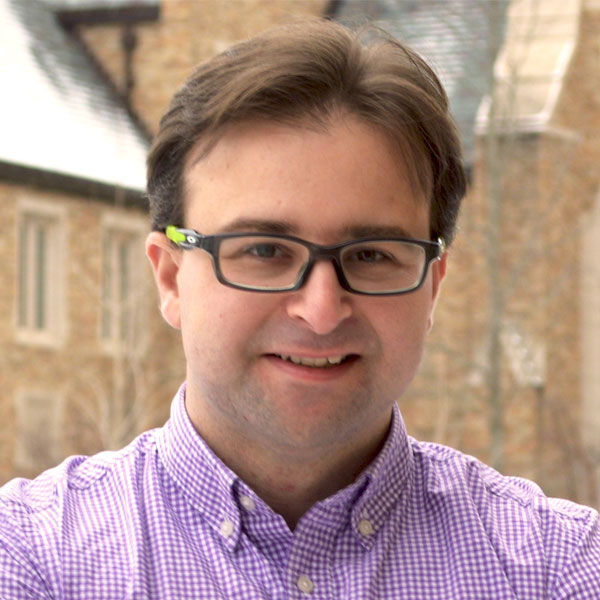
Albert Cerrone serves as a Research Assistant Professor in the Department of Civil & Environmental Engineering & Earth Sciences at the University of Notre Dame's College of Engineering and holds a concurrent appointment as Senior Research Fellow at the Oden Institute, University of Texas at Austin. His work bridges academic research and industrial applications through Digital Twin technologies. Dr. Cerrone earned his PhD in 2014 from Cornell University under Tony Ingraffea, specializing in multiscale modeling of microcrack nucleation in superalloys. Prior to Notre Dame, he conducted durability research on ceramic matrix composites at GE Research's Lifing Technologies Laboratory. His research integrates machine learning with computational mechanics to advance Digital Twin frameworks across geospatio-temporal domains and materials systems. Key applications include probabilistic storm surge forecasting using high-fidelity hydrodynamics models, durability assessment of additively manufactured metals, and ultrasound-mediated biofilm disruption for inflammatory disease therapies. He employs transformer networks for real-time hydrodynamic error correction and develops geometric modeling tools for viral and biofilm structures. Recent publications demonstrate a clear trajectory toward operationalizing Digital Twin concepts, with increasing emphasis on machine learning integration for coastal inundation modeling and cross-disciplinary materials characterization. His work spans fundamental mechanics to deployable operational systems like NOAA's STOFS-2D-Global. Dr. Cerrone actively collaborates with NASA Langley on additive manufacturing projects and contributes to cystic fibrosis treatment research with Trinity College Dublin. His laboratory work includes computational modeling using ABAQUS, DREAM.3D, and custom Python frameworks for mesh generation and geometric reconstruction. Developed Polycrystal Volume Mesher for microstructure meshing Created Virion to Shell code for virus geometric modeling Teaches Solid Mechanics, Statics, and Engineering Programming