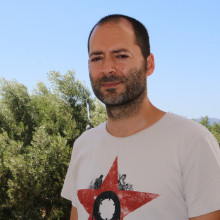
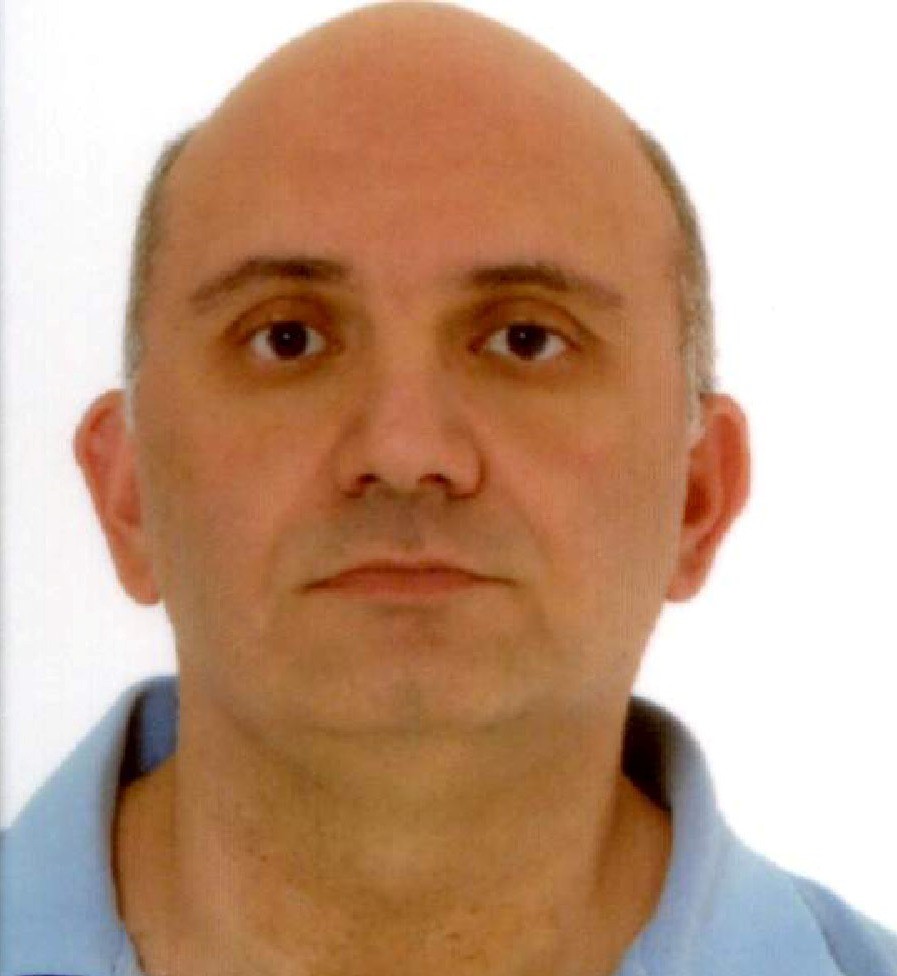
Dr. Pinon Hermida Victor is a Researcher at the Institute of Electronic Structure and Laser (IESL) under the Foundation for Research and Technology – Hellas (FORTH). He holds a PhD in Physics from the University of A Coruña (2011) and has conducted extensive research on Laser-Induced Breakdown Spectroscopy (LIBS), focusing on femtosecond lasers, double-pulse configurations, and applications in material analysis, archaeology, and environmental science. His career includes roles at Applied Photonics Ltd (UK) as Senior Applications Scientist (2014-2020) and postdoctoral fellowships at FORTH-IESL through the Marie Curie ATLAS program (2006-2008). Research interests span LIBS methodology development, optical fiber systems for high-power lasers, and software for spectral analysis. Notable contributions include portable LIBS instrument design and radiation-resistant optical components for nuclear facilities. Awards include the 2008 LIBS Contest and the 2011 Premio Extraordinario de Doctorado. Recent work focuses on applying LIBS to archaeological mollusc shell analysis for climate and environmental studies. He collaborates internationally on LIBS quantification challenges and instrument durability in harsh environments. Education: PhD in Physics (2011), University of A Coruña; Diploma in Physics (2001), University of Santiago de Compostela Key Roles: Senior Applications Scientist (Applied Photonics), Marie Curie Fellow (FORTH-IESL), Researcher (Laboratory of Industrial Applications of Lasers) Lab Affiliations: IESL-FORTH and University of A Coruña laser labs
Dimitris Maroulis is a Professor at the Department of Informatics and Telecommunications, University of Athens, leading the Real-Time Systems and Image Analysis Lab (RTS-image). With over 20 years of experience in data acquisition and real-time systems, and 15 years in image/signal analysis, he collaborates extensively with Greek and European hospitals in biomedical informatics. He has led 5 R&D projects and authored 150+ papers with 1400+ citations. University of Athens: Professor (2000–present) Meudon Observatory: Research Fellow (3 years) & Long-term Collaborator (10+ years) Research Interests focus on real-time systems , image/signal processing , and biomedical applications . Key areas include automated segmentation of proteomic images, noise removal methods, and stereo image coding. His 15 most recent publications (2003–2012) span 3D imaging , medical image analysis , and biomedical informatics , with sub-fields like autostereoscopic displays, wavelet-based coding, and computer-aided diagnosis. Awards : Best Paper Award (2012: Integral Image Analysis) Projects include European and national R&D initiatives in image analysis and real-time systems. Labs : RTS-image Lab develops methodologies for biomedical and proteomic applications.
Sotiris Christodoulou is an Associate Professor at the Department of Electrical and Computer Engineering within the College of Engineering at the University of Peloponnese. He also serves as a research associate at the 'Diofantos' Institute of Computer Technology and Publishing. His academic career spans multiple institutions where he has taught graduate and undergraduate courses across seven different universities since 2004. Dr. Christodoulou earned his B.A. in Computer Engineering and Informatics from the University of Patras in 1994 and completed his PhD in Web Engineering from the same institution in 2004. His educational background established the foundation for his extensive research career focused on web technologies and applications. His primary research interests include Web Engineering, Web Application Performance Optimization, Web Code Quality, Semantic Web technologies, Hypermedia Systems, and emerging Web 2.0 and Web 3.0 technologies. His work extends to Virtual Interactive Environments, 3D and Augmented Reality applications, and Spatial Hypertext systems. Christodoulou's research bridges theoretical web engineering principles with practical applications in cultural heritage, education, and urban infrastructure systems. His research output comprises over 45 publications in international journals, book chapters, and conferences, accumulating more than 450 citations. He has participated in over 23 European and National Research and Development Projects focused on web software technology, hypermedia applications, and 3D educational and cultural applications. Professional member of ACM Professional member of IEEE Member of organizing committees for over 15 international scientific conferences Reviewer for recognized international journals (ACM, IEEE, etc.) Christodoulou has extensive teaching experience across seven universities, specializing in programming languages, web software engineering, software quality, and data management. His research projects typically combine applied research with cutting-edge technology implementation for real-world problems in large organizational information systems. He maintains regular office hours at Building K, Office K2.02 at the University of Peloponnese, with appointments available on Mondays and Thursdays.
Georgios Bardis is a permanent Assistant Professor at the Department of Informatics and Computer Engineering , School of Engineering , University of West Attica . He holds a PhD in Informatics from University of Limoges (2006), an MSc in Software Systems from University of California, Santa Barbara (1994), and a Diploma in Computer Engineering & Informatics from University of Patras (1992). His career spans multiple academic roles, including Lecturer at University of West Attica (2018-2021) and Professor of Applications at TEI of Athens (2010-2018). Research Interests : Focus on Intelligent Computer Graphics , Declarative Modeling , and Multicriteria Decision Analysis . His work integrates AI into 3D scene synthesis, urban planning, and semantic decision systems. Awards : Master Microsoft Office Specialist (MOS), 2003 NAT Scholarships for Academic Excellence (1989-1992) 1984 Monetary Prize from Hellenic Mathematical Society Leadership : Member of AKIIS Research Lab (University of West Attica), Editorial Board of International Journal of Systems Biology and Biomedical Technologies , and Reviewer for International Journal of Digital Earth . Publications : 5 peer-reviewed journals, 2 books, 8 book chapters, and 22 conference papers. Key areas include WebGL avatars, urban data analysis, and 3D modeling with AI.
Emmanouil Z. Psarakis is an Associate Professor at the Department of Computer Engineering & Informatics , University of Patras, Greece. Born in 1963, he has been affiliated with the university since 2005 and is a member of the Signal Processing and Communications Lab . His academic journey includes teaching courses such as Signals and Systems Theory , Digital Signal Processing , and Computer Vision and Graphics . PhD in Computer Engineering and Informatics, University of Patras (1991) Dr. Psarakis is renowned for his research in image processing , computer vision , and signal processing , with applications in biomedical imaging , seismology , and robotics . His work spans deep learning , filter design , and 3D reconstruction , reflecting a multidisciplinary approach. His 15 most recent publications (2020–2025) focus on sign language recognition , adversarial defense , 3D shape analysis , and medical imaging . These works integrate machine learning , stochastic modeling , and computer vision to address challenges in video summarization , image inpainting , and seismic signal analysis . Dr. Psarakis has supervised over 10 PhD students , including Fotini Fotopoulou (2016–2019) and Panagiotis Georgantopoulos (2020–2023). He has participated in EU-funded , Hellenic , and bilateral R&D projects related to biomedical signal processing , robot vision , and forest fire monitoring . He leads the Signal Processing and Communications Lab , which collaborates with institutions like the Computer Technology Institute and international universities. His contributions include filter design , image alignment , and stereopsis techniques , with a focus on practical implementations in telecommunications and medical diagnostics .
Ioannis Andreadis is a Professor in the Department of Electrical and Computer Engineering at the School of Engineering, Democritus University of Thrace. He has been a faculty member since 1993, following his appointment as a Visiting Professor at the School of Technological Applications of TEI Kavala (1991-1992). His academic journey began with a Diploma in Electrical Engineering from Democritus University of Thrace (1983), followed by an M.Sc. in Electrical Engineering & Electronics (1985) and a Ph.D. in Instrumentation & Analytical Science (1989), both from the University of Manchester. Professor Andreadis's research spans the Design and Implementation of Electronic Systems with particular emphasis on Intelligent Systems and Machine Vision . His work has resulted in over 230 publications in international journals, book chapters, and conference proceedings. He has made significant contributions to image processing, particularly in mathematical morphology, color image processing, and real-time implementation of image processing algorithms. His research has practical applications in seismic signal processing, crowd management systems, and 3D reconstruction technologies. The analysis of his recent publications reveals a strong focus on advanced image processing techniques, with increasing integration of deep learning approaches. His work spans both theoretical foundations (such as entropy estimation and moment calculations) and practical applications (including image stabilization, multi-focus image fusion, and crowd management systems). The interdisciplinary nature of his research connects electrical engineering, computer vision, and signal processing with applications in safety engineering, structural analysis, and robotics. Among his notable achievements are the IET Image Processing Premium Award (2009) , Best Paper Award at PSVIT 2007 , and Best Paper Award at EUREKA 2009 . He was elected Fellow of the Institute of Engineering & Technology (IET) in 2006 and Fellow of the Institute of Measurement & Control (InstMC) in 2021. He has also served as Subject Editor of the IET Electronics Letters and as Guest Editor for special issues of Pattern Recognition journal. Professor Andreadis has supervised 14 PhD theses , 21 Master's theses , and 88 Diploma works , demonstrating his commitment to academic mentoring. His research has been supported by significant grants including the EDUnet project (€280,000), wireless network implementation (€37,000), laboratory infrastructure development (€120,000), school information systems support (€478,000), the RESCUER project (€350,000 as Deputy P.I.), and the EDUSAFE project (Marie Curie Actions). He leads the Electronics Laboratory at Democritus University of Thrace, which has undergone significant infrastructure development through multiple funding sources. His work on the RESCUER project demonstrates collaboration with European partners on emergency risk management systems, while his EDUSAFE involvement shows commitment to advanced AR/VR safety systems development. His research group applies computational intelligence techniques to diverse challenges from seismic analysis to pedestrian evacuation modeling.
Konstantinos G. Arvanitis is a Professor in the Department of Natural Resources Management & Agricultural Engineering at the Agricultural University of Athens, affiliated with the Agricultural Engineering Laboratory. He holds a PhD in Electrical and Computer Engineering from the National Technical University of Athens and has held diverse research and teaching roles across Greek institutions. Teaches courses on electrical engineering, sensors, automation, and AI in agriculture Supervised 2 PhD, 9 MSc theses, and guides 6 ongoing PhD projects Member of FEANI, EurAgEng, and IFAC Technical Committee (2000-2017) His research integrates IoT, machine learning, and cyber-physical systems into agricultural practices, focusing on precision agriculture and sustainability. He contributes to editorial boards of journals like Sensors and Energy , and has published over 342 technical works with significant citation metrics. His recent work explores quantum technologies, edge computing, and 3D printing in agricultural systems, emphasizing energy efficiency and educational innovation. He actively reviews for 130+ journals and conferences.
Chrysanthos Maraveas is an Assistant Professor at the Department of Technology and Natural Resources Management & Agricultural Engineering in the School of Environment and Agricultural Engineering at the Agricultural University of Athens since 2022. He earned his PhD in Structural Engineering from the University of Manchester and has held postdoctoral research positions at the University of Liège (EU-funded) and the University of Patras (Greek Ministry of Development-funded). Research Interests : Applications of AI and quantum computing in agriculture Sustainable materials and biodegradable polymers from agricultural waste Internet of Things (IoT) for greenhouse optimization Structural durability and corrosion resistance in agricultural environments Plastic waste management in agrifood systems 4D printing for sustainable agricultural plastics Scientific Recognition : Ranked in the top 2% of scientists worldwide by Stanford University (based on citations and h-index) Publications focus on: Cybersecurity in Agriculture 4.0/5.0 Smart sensors and edge computing for resource management Biopolymer innovations and nanotechnology Structural analysis of agricultural systems Sustainable construction materials from agro-waste Fire resistance in steel and composite structures
Athanasios G. Kanatas is a Professor at the Department of Digital Systems, University of Piraeus, Greece, and Director of the Telecommunication Systems Laboratory. He holds a Ph.D. in Mobile Satellite Communications from NTUA (1997), and has held roles such as Dean of the School of Information & Communication Technologies (2013–2017) and IEEE Communications Society Chairperson (1999). Education: Diploma in Electrical Engineering (NTUA, 1991), M.Sc. in Satellite Communication Engineering (University of Surrey, 1992), Ph.D. in Mobile Satellite Communications (NTUA, 1997). Research focuses on V2X communications, UAV-assisted networks, antenna design, stochastic geometry, and cybersecurity. He has published over 200 papers and authored 6 books, and leads projects in 5G/6G systems and integrated sensing-communication networks. His work includes pioneering contributions to aerial relay placement, fluid antenna systems, and hybrid beamforming techniques. He serves as Editor of IEEE Transactions on Wireless Communications, Associate Editor of IEEE Transactions on Antennas and Propagation, and is a Senior IEEE Member since 2002. Recent activities include extending the deadline for M.Sc. program applications and promoting internships for students. Labs/Teams: Directs the Telecommunication Systems Laboratory, collaborating on projects like ARGOS RFI monitoring and UAV corridor-assisted IoT networks. His research emphasizes practical implementation through prototyping and experimentation, with applications in aerospace, IoT, and intelligent transport systems.
Dr. Sotirios Kontogiannis is a Researcher and Director of the Distributed MicroComputer Systems Laboratory (MCSL) at the Department of Mathematics, University of Ioannina. He holds a PhD in Software Engineering from Democritus University of Thrace (2012), with a focus on load balancing algorithms for distributed systems. His career spans academic and private sector roles, including software development, research in FP7 projects, and technical leadership at TEKMON Geomatics. He currently teaches courses on Database Systems, Parallel Algorithms, and Educational Technologies at the University of Ioannina. Education: 5-year Engineering Diploma (DUTH, 2003), MSc in Microelectronics and Information Systems (DUTH, 2006), PhD in Load Balancing Algorithms (DUTH, 2012). Research Focus: Distributed systems, IoT protocols, sensor networks, big data, and smart agriculture technologies (e.g., beekeeping monitoring systems, wine fermentation frameworks). His work integrates IoT, AI, and edge computing to address challenges in agriculture, accessibility, and environmental monitoring. Notable inventions include patented smart beehive systems and tactile navigation tools for visually impaired individuals.
Professor Panagiotis Demestichas serves as a faculty member in the Department of Digital Systems at the University of Piraeus, where he has been a Professor since April 2012. He heads the Laboratory of "Telecommunication Networks and Integrated Services" and has held significant leadership positions including Chair of the Department of Digital Systems from 2011 to 2015. His academic journey began with Bachelor's and Doctoral degrees in Electrical Engineering from the National Technical University of Athens. Professor Demestichas' educational background includes: Bachelor's Degree in Electrical Engineering, National Technical University of Athens Doctoral Degree in Electrical Engineering, National Technical University of Athens His research spans the forefront of telecommunications and network technologies, with particular expertise in 5G and emerging 6G systems. Professor Demestichas focuses on smart/cognitive/autonomic management and convergence of ICT infrastructures, SDN/NFV technologies, cognitive radio networks, and cloud and Internet of Things solutions. His work addresses critical challenges in spectrum management, network architecture design for beyond 5G systems, and the integration of artificial intelligence into network management frameworks. His research has significant implications for vertical industries including transportation, manufacturing, and smart cities, where reliable high-speed connectivity is essential. Professor Demestichas' publication record demonstrates a consistent focus on next-generation network technologies, with recent work emphasizing 6G architecture, sustainable network design, and industry-specific applications of advanced telecommunications. His research trajectory shows a clear evolution from 5G foundational work toward pioneering 6G concepts, with increasing emphasis on AI integration, sustainability, and cross-industry applications. The collaborative nature of his research is evident through participation in major European projects. Throughout his career, Professor Demestichas has held leadership positions in numerous significant research initiatives including: Project Coordinator of the OneFIT project (2010-2012) Technical Manager of the E3 project (2008-2009) Chairman of WWRF working groups, most notably the WGC "Communication Architectures and Technologies" (2004-2015) Technical Programme Committee Chair for the European Conference on Networks and Communications (EUCNC 2016) Active participation in European research programs including RACE II, ACTS, BRITE/EURAM, EURET, IST/FP5, IST/FP6, and ICT/FP7 As an educator, Professor Demestichas has made substantial contributions to academic development. He has supervised ten completed PhD theses and currently guides three additional doctoral candidates. He teaches Computer Networks I & II at the undergraduate level and has contributed to the development of research capacity through his leadership roles. His laboratory's research activities are partly funded by the European Union under Horizon 2020, reflecting the significance and impact of his work in the international research community. Professor Demestichas leads the Laboratory "Telecommunication Networks and Integrated Services" (http://tns.ds.unipi.gr), which serves as a hub for advanced research in telecommunications. The laboratory focuses on cutting-edge projects related to 5G/6G technologies, network virtualization, and intelligent network management. Through this laboratory, Professor Demestichas fosters collaboration between academia and industry, particularly in the areas of vertical industry applications of advanced networking technologies.
Konstantinos A. Tsintotas is an Assistant Professor at the Department of Information and Electronic Engineering, International Hellenic University. His research focuses on artificial intelligence, robotics, computer vision, and their applications in smart cities, healthcare, and manufacturing. He is actively involved in advancing AI-driven systems for critical infrastructure management, robotic vision, and embedded device technologies. His work spans theoretical advancements and practical implementations, including projects like SLAM algorithms for autonomous navigation, deep learning models for medical diagnosis, and IoT-integrated smart supply chains. Tsintotas also explores ethical implications of AI in human action recognition and contributes to neuromorphic computing through spiking neural networks. Key technical contributions include ReJSHand (real-time hand pose estimation), fall detection systems for embedded devices, and visual place recognition frameworks. His interdisciplinary approach bridges computer science, electrical engineering, and biomedical applications, reflecting a strong commitment to innovation at the hardware-software interface. Notable trends in his publications emphasize AI ethics, multimodal perception for robotics, and low-power embedded solutions. Ongoing work includes advancing digital twin technologies for supply chains and refining bio-inspired neural architectures for robotics applications.
Angelos Amanatiadis is Assistant Professor of Robotics at the Department of Production and Management Engineering, Democritus University of Thrace (DUTH), Greece. He received his Diploma and Ph.D. (Hons.) from the Department of Electrical and Computer Engineering at DUTH in 2004 and 2009, respectively. His research focuses on autonomous robotic systems , computer vision , machine learning , and real-time embedded systems . His publications (35+ journal papers, 50+ conference papers) cover topics like autonomous vehicle localization, 3D object detection, educational robotics, and image processing. He has received the Stavros Niarchos Award for Promising Young Scientists and IKY Postdoc Scholarship . He contributes to the field as Associate Editor of the International Journal of Advanced Robotic Systems and HardwareX Journal, and as a program committee member for 10+ international conferences. His recent work includes leading the development of Greece’s first Hellenic Autonomous Vehicle (HAV) using deep learning and AI. He teaches courses on Control Systems, Big Data Analytics, Robotics, and Computational Intelligence. His research has been featured in media outlets like BBC, Bloomberg, IEEE Spectrum, and Popular Science.
George Matsopoulos is Professor in Biomedical Engineering at the National Technical University of Athens, heading the Biomedical Engineering Laboratory. His research focuses on medical image processing, diagnostic support systems, and health information technologies. With over 300 publications, he develops computational methods for medical data analysis and leads the BIOMIG research group specializing in medical informatics and neuroimaging applications. Primary research areas include multidimensional medical data fusion, digital biosignal processing, telemedicine systems, and visualization techniques. His laboratory utilizes advanced computational tools including ITK, VTK, and CUDA to address clinical challenges in medical imaging and diagnostics.
Panagiotis Filntisis is a PostDoctoral researcher at the National Technical University of Athens , supervised by Prof. Petros Maragos. His work focuses on computer vision and audio processing for affective computing , particularly in areas like body emotion recognition, visual emotion translation, and 3D facial expression reconstruction. Key research projects include: TeachBot : Exploring educational robotics e-Prevention : Developing emotion recognition systems BabyRobot : Investigating multi-party interaction iMuSciCA : Applying multimodal perception in music education He has published extensively on multimodal fusion techniques in child-robot interaction, with recent work appearing in IEEE Robotics and Automation Letters and ICASSP. Contact: filby@central.ntua.gr