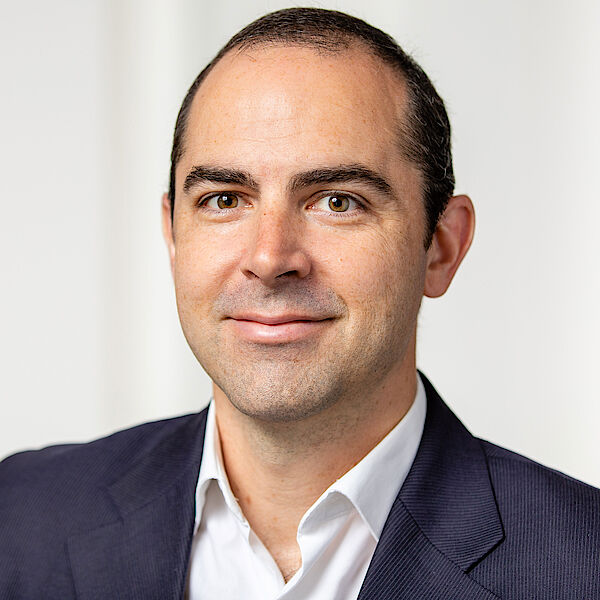
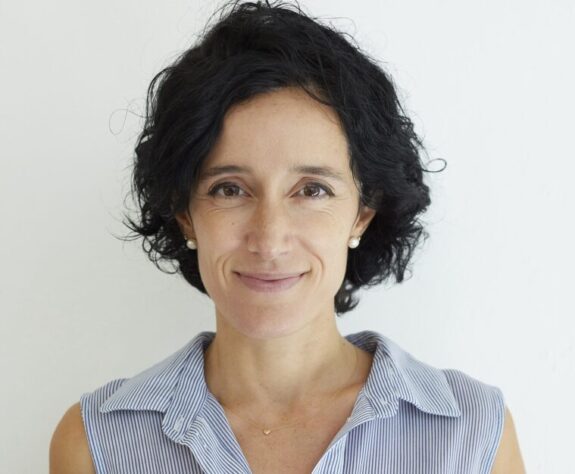
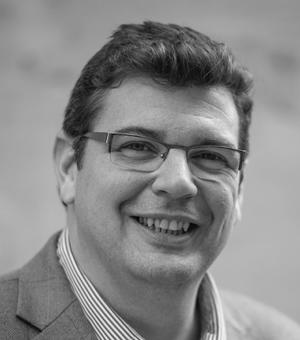
Guillermo Gallego is a Professor of Robotic Interactive Perception at the Faculty of Electrical Engineering and Computer Science , Technische Universität Berlin , holding the Einstein Center Digital Future (ECDF) Professorship since 2019. His research bridges robotics , computer vision , and applied mathematics , focusing on optimization methods for interdisciplinary imaging and control problems. Education : PhD in Electrical and Computer Engineering (Georgia Tech, 2011), MS in Mathematics (Georgia Tech, 2009), MS in Electrical Engineering (Georgia Tech, 2007), MS in Mathematical Engineering (Universidad Complutense de Madrid, 2005). Gallego's work explores event-based vision to enhance robot perception through low-latency sensing and real-time 3D reconstruction . He previously held postdoctoral positions at the Institute of Neuroinformatics (University of Zurich/ETH Zurich) and Technical University of Madrid (Marie Curie Experienced Researcher). His interdisciplinary projects span applications in ocean remote sensing , autonomous driving , and space exploration . Key scientific awards include the Fulbright Fellowship (2005-2010) and Marie Curie Experienced Researcher (2011-2014). His recent publications focus on event camera algorithms for optical flow , SLAM , and noise estimation , reflecting his leadership in event-based vision research. Collaborations include institutions like University of Zurich , Georgia Tech , and University of Pennsylvania . Research Grants : Funded through ECDF and Marie Curie programs. Labs : Affiliated with the Einstein Center Digital Future and Institute of Neuroinformatics (Zurich/ETH Zurich).
Peter Mooney is a Lecturer in the Department of Computer Science, Faculty of Science & Engineering at Maynooth University. His research focuses on Volunteered Geographic Information (VGI), OpenStreetMap, spatial data analysis, and geospatial data integration in applications such as environmental monitoring and pervasive health systems. Institution: Maynooth University School: Faculty of Science & Engineering Department: Computer Science Role: Lecturer Mooney's research explores the use of crowdsourced geospatial data, particularly through OpenStreetMap, analyzing data quality, community roles, and integration into location-based services. His work bridges technical analysis with policy considerations in geospatial data management. Recent publications highlight his contributions to understanding spatial data dynamics, including attribute changes in OpenStreetMap, characteristics of edited objects, and applications of VGI in environmental systems. He also investigates the intersection of haptics and GIS for novel interaction methods. Contact: peter.mooney@mu.ie
Leif Kobbelt serves as a University Professor at RWTH Aachen University, leading the Computer Graphics Group within the Department of Computer Science (Informatik 8). His research focuses on advancing geometry processing, interactive visualization, and computer graphics through innovative algorithmic solutions and interdisciplinary collaborations. Professor Kobbelt's research program centers on geometry acquisition and processing, with significant contributions to mesh generation, surface reconstruction, and neural rendering techniques. His work bridges theoretical geometry with practical applications in computer vision, photo-realistic image synthesis, and multimedia data transmission, often involving collaborations with industry partners and international research teams funded by DFG and EU sources. Recent publications (2023-2025) reveal a strategic integration of deep learning with traditional geometry processing, particularly in Gaussian splatting for real-time rendering, NeRF-based 4D content generation, and robust mesh Boolean operations. His group maintains leadership in quad mesh optimization and surface mapping while expanding into immersive visualization techniques for complex data analysis. The group has earned recognition through prestigious awards: Günter Enderle Best Paper Award at Eurographics 2023 Best Paper Award (1st place) at Symposium on Geometry Processing 2022 Honorable Mention for Best Paper at ACM Symposium on Virtual Reality Software and Technology Funding from Deutsche Forschungsgemeinschaft and European Union programs supports the group's research infrastructure and international collaborations. The team actively supervises graduate theses while developing open-source software tools that translate theoretical advances into practical industry applications, particularly in digital fabrication and immersive visualization systems. The Computer Graphics Group operates as a central hub for visual computing research at RWTH Aachen, maintaining strong ties with both academic institutions and technology companies. Their recent work on virtual reality educational tools and high-fidelity 3D reconstruction systems demonstrates commitment to knowledge transfer and real-world impact beyond traditional publication venues.
Alison Langmead serves as Clinical Associate Professor and Director of the Visual Media Workshop in the Department of Art History and Architecture at the University of Pittsburgh's Dietrich School of Arts and Sciences, with a joint appointment as Associate Professor in the School of Computing and Information. Her work bridges digital humanities, visual culture studies, and information management history through mindful technological application. Education: PhD, Columbia University MLIS, University of California at Los Angeles Langmead's research centers on the intersection of digital methods and visual/material culture, examining historical information practices alongside contemporary computational approaches. She pioneers sustainable digital scholarship frameworks while critically analyzing AI's role in art historical connoisseurship and cultural preservation. Her work emphasizes intentional technology use that respects scholarly integrity and humanistic values. Recent publications reveal consistent focus on collaborative digital art history methodologies, computational modeling of visual data, and sustainable infrastructure development. Key trends include network analysis applications, role-based collaboration frameworks, and ethical considerations in AI-driven art scholarship, demonstrating evolution from technical implementation toward systemic sustainability and human-centered design. Scientific Awards: Award for Excellence in Graduate Mentoring, Dietrich School of Arts and Sciences, University of Pittsburgh, May 2023 Langmead actively mentors graduate students through the DHRX initiative while securing significant research funding. Her current grants include 'Teaching Art History with AI' (PI, 2023-present), 'InfoEco Cookbook' (2021-2022), and 'The Socio-Technical Sustainability Roadmap' (PI, 2015-2018, ongoing dissemination), reflecting her commitment to practical digital scholarship frameworks. As Director of the Visual Media Workshop, Langmead cultivates interdisciplinary collaboration across campus, creating spaces where faculty and students develop innovative digital research tools while critically examining technology's role in scholarly practice and cultural preservation.
Dr. Xiong Yi is an Assistant Professor at the School of System Design and Intelligent Manufacturing (SDIM) at Southern University of Science and Technology (SUSTech) in Shenzhen, China. He leads the Computational Design and Fabrication (CoDeFab) research group, focusing on the integration of computational design methods with advanced manufacturing technologies, particularly in the field of additive manufacturing. Dr. Xiong has established himself as a leading researcher in computational design for additive manufacturing, with a strong international research background spanning Europe and Asia. Dr. Xiong's educational journey includes: Doctor of Science (DSc) in Engineering Design and Production from Aalto University, Finland (2012-2016) Master of Science (MSc) in Machine Automation from Tampere University of Technology, Finland (2010-2012) Bachelor of Engineering (BEng) in Mechanical Engineering from Hubei University of Technology, China (2006-2010) Dr. Xiong's research primarily focuses on computational design and fabrication methodologies, with particular emphasis on design for additive manufacturing (DfAM), intelligent manufacturing systems, and smart materials. His work bridges the gap between theoretical design principles and practical manufacturing constraints, developing novel approaches for the production of complex engineered products. He has pioneered research in continuous fiber-reinforced composite additive manufacturing, developing innovative process planning and optimization techniques that enable the production of high-performance structural components. His research in electrothermally controlled origami and 4D printing of smart materials represents cutting-edge work at the intersection of materials science, mechanical engineering, and computational design. Dr. Xiong's recent publications reveal a strong focus on continuous fiber-reinforced composites, with significant contributions to 4D printing, metamaterials, and intelligent process planning. His work integrates computational design with manufacturing constraints, creating novel approaches for topology optimization, toolpath planning, and structural design that consider both performance requirements and manufacturability limitations. The research demonstrates increasing sophistication in materials science applications, particularly in programmable materials and multi-functional structures. Dr. Xiong has received multiple prestigious awards for his research contributions, including: Best Presentation Award at the 24th Chinese Conference on Mechanisms and Machine Science (IFToMM CCMMS2024) Best Presentation Award at the International Conference on Frontiers of Additive Manufacturing Research (RAAM 2024) Best Paper Award at the International Conference on Design for 3D Printing (ICD3DP 2023) PhD Scholarship from Aalto University (2016) Research Travel Grant from the International Association for Vehicle System Dynamics (IAVSD) (2013) National Scholarship from the Ministry of Education (2008) As a dedicated educator and mentor, Dr. Xiong serves as a PhD supervisor at SUSTech and has successfully guided students who have gone on to pursue advanced studies and careers at prestigious institutions including Hong Kong Polytechnic University, Beihang University, DJI Innovations, and Singapore's A*STAR research institute. His research is supported by multiple competitive grants, including key projects from the National Key R&D Program of China, the National Natural Science Foundation of China, and provincial and municipal funding agencies. Dr. Xiong also serves on the editorial board of the Journal of Engineering Design and as a guest editor for Composites Communications, contributing to the advancement of his field through scholarly service. Dr. Xiong leads the CoDeFab research group, which maintains a strong collaborative culture focused on 'design leading manufacturing, manufacturing driving design, and digital-intelligent integration.' The group has developed several advanced manufacturing platforms, including multi-axis continuous fiber-reinforced composite additive manufacturing systems, smart composite additive manufacturing platforms, and multifunctional soft matter open manufacturing platforms. With a focus on practical applications and innovation, the CoDeFab group actively collaborates with industry partners and has established a joint laboratory to bridge academic research with industrial implementation.
Deliang Fan is an Associate Professor at the School of Electrical, Computer and Energy Engineering, Arizona State University, Tempe, AZ. His research focuses on AI hardware, in-memory computing, and neuromorphic systems. He received his MS and PhD from Purdue University under Prof. Kaushik Roy. Education: PhD, Purdue University (2015) Research Interests: AI Hardware, In-Memory Computing, Adversarial AI, Neuromorphic Computing His work spans cross-layer co-design for AI applications, including deep learning, bioinformatics, and graph processing. He has authored 170+ peer-reviewed papers and developed hardware solutions for spintronic and memristor-based systems. Recent publications emphasize efficient architectures for transformers, federated learning, and robust neural networks. Awards include the NSF Career Award and multiple best paper recognitions. He serves in editorial and organizational roles for leading conferences like DAC, ISQED, and GLSVLSI.
Dante Fratta is a Professor in the Department of Civil & Environmental Engineering at the University of Wisconsin-Madison, where he has been actively involved in research and teaching since 2000. His work focuses on geotechnical engineering, environmental monitoring, and fiber optic sensing technologies. Education: PhD (1999) – Georgia Institute of Technology M.A.Sc. (1995) – University of Waterloo Diploma (1993) – Universidad Nacional de Córdoba Research Interests: Geomaterial process evaluation using elastic and electromagnetic waves, fundamental physical behavior of soils and rocks, geophysical assessment of near-surface environments, and distributed fiber optic sensing methods. Recent Publication Trends: He has pioneered applications of Distributed Acoustic Sensing (DAS) and fiber optic technologies for geotechnical, environmental, and energy infrastructure monitoring, including wind turbines, geothermal systems, and mining operations. Scientific Awards: Benjamin Smith Reynolds Award for Excellence in Teaching (2012) Chi Epsilon Excellence in Teaching Award (2008) Best Paper Award, GeoCongress Sensing Methods and Devices Track (2006) Distinguished Alum, Universidad Nacional de Córdoba (2013) Multiple keynote and invited speaking engagements Teaching: Fratta teaches graduate and undergraduate courses in geotechnical engineering, including Foundations, Applied Geophysics, and Pre-Dissertator Research, with active involvement in Spring 2025 classes.
Daragh Byrne is an Associate Teaching Professor at the Carnegie Mellon University School of Architecture , with courtesy appointments in the School of Design and Human-Computer Interaction Institute (HCII) . Previously an Assistant Research Professor at Arizona State University’s School of Arts, Media and Engineering, he manages the NSF-funded XSEAD project and leads MakeSchools , a catalog of making practices in higher education. PhD in Digital Media from Dublin City University (2011) M.Res. in Design and Evaluation of Advanced Interactive Systems from Lancaster University B.Sc. in Computer Applications from Dublin City University His research explores experiential media systems through Internet of Things and tangible interaction design , focusing on how computational tools can capture human experience and enable multidisciplinary collaboration. Key projects include Sentient Concrete (thermochromic architectural surfaces) and Spooky Technology (speculative design around invisible technologies). He has developed CMU’s Designing for the Internet of Things course since 2016, creating hands-on curricula for connected product design. Recent publications examine creative physical computing education , AI-driven documentation systems , and XR-enabled skill training . Awards include multiple CMU research grants and the CHI 2018 Best Paper Award . He actively advises PhD and Masters students in Computational Design, emphasizing human-centered design and speculative technology research .
Laia Mogas-Soldevila serves as Assistant Professor of Graduate Architecture and Director of DumoLab Research at the University of Pennsylvania's Stuart Weitzman School of Design, pioneering radically sustainable material practices that bridge science, engineering, and the arts for architectural and product design innovation. Her academic credentials include: Interdisciplinary doctorate in biomaterials science, biomedical engineering, and advanced design from Tufts University School of Engineering Two master’s degrees from the Massachusetts Institute of Technology School of Architecture Licensed architect with Fine Arts minor from Polytechnic University of Catalonia and École Nationale Supérieure de Beaux-Arts Dr. Mogas-Soldevila's research reimagines matter as a fundamental design driver through biomaterials and bio-based fabrication , emphasizing environmental justice and circular economy principles. Her work partners with scientists to develop unprecedented material capabilities, spanning from molecular-scale biopolymer engineering to full-scale architectural applications that address climate challenges. Analysis of her 15 most recent publications (2020-2025) reveals dominant themes in carbon-sequestering living materials, agricultural waste valorization, and adaptive biological skins. These works consistently bridge architecture, material science, and environmental engineering, with increasing focus on participatory design and urban farming applications as seen in her 2024 Portable Bioremediation Technologies project. Her scientific recognition includes: Johnson&Johnson Foundation Woman in STEM2D Scholar Award Research funding encompasses Penn's Research Foundation Grant, Environmental Innovation Grant, Sachs Art Innovation Grant, and Global Engagement Fund, supporting her interdisciplinary exploration of sustainable material systems. Her pedagogy cultivates novel theory and applied methods for biomaterial implementation across design disciplines. As DumoLab Research Director, she leads cross-disciplinary collaborations developing material-driven computational workflows for digital fabrication, with recent projects exhibited at MoMA, Milan/London Design Weeks, and ACADIA conferences, translating laboratory innovations into tangible environmental solutions.
Miklós Szócska is a Professor and Dean of the Faculty of Public Health at Semmelweis University, Budapest. He also serves as the Director of the Healthcare Management Training Center and Head of the Institute of Digital Health Sciences. His career bridges academic leadership with healthcare policy, including roles as Secretary of State for Health (2010–2014), where he focused on evidence-based health policy, public health taxes, and e-health systems. Education: General Practitioner, Semmelweis University (1989) Master of Public Administration, Harvard University's John F. Kennedy School of Government (1998–1999) PhD, Semmelweis University (2008) Research Interests: Szócska's work spans network analysis , leadership and change management , crisis communication , social innovation , and big data/AI applications in healthcare . His recent studies focus on reconstructing 3D histological structures via machine learning, global mortality linked to pathogens, and tobacco control policies. Article Trends: His publications emphasize global health metrics (e.g., mortality decomposition, colorectal cancer risk factors) and digital health innovations (AI, e-health). Systematic analyses from the Global Burden of Disease Study frequently inform his research. Academic Affiliations: He leads the Institute of Digital Health Sciences and chairs the Faculty of Public Health at Semmelweis University. His international roles include Board Membership at the European Health Forum Gastein and Supervisory Board positions at EIT Health.
Dr Timothy Clack serves as the Chingiz Gutseriev Research Fellow in Archaeology and Anthropology at the University of Oxford, where he is Director of Studies for undergraduates at St Peter's College and co-convenes the MSc Archaeology of Colonialism. His research spans East Africa, South Atlantic, Central Asia, and the Caucasus regions, focusing on the interplay between past and present through material culture. His core research investigates how the past is choreographed in the present to legitimize contemporary power structures. Key themes include: Culture and conflict dynamics in modern warfare Heritage identity construction among semi-nomadic communities Pastoralist cultural heritage preservation Media representations of archaeological narratives Material legacies of colonial conflict Methodologically, he integrates archaeological fieldwork with anthropological theory and experiential landscape approaches. Recent publications (2022-2025) reveal a pronounced shift toward climate-conflict intersections, particularly through the Climate Change & (In)Security Project. His work examines heritage destruction in Ukraine/Afghanistan, Falklands War archaeology, and cultural property protection frameworks, establishing critical links between environmental change, security threats, and material heritage. Dr Clack actively mentors doctoral researchers while securing major funding from the Arts and Humanities Research Council, British Academy, and Boise Fund. His collaborative projects demonstrate exceptional interdisciplinary reach: Current Supervision: Kristen Barrett-casey (Iraq/Afghanistan heritage reconstruction), Yuxin Fu (Sacred heritage in China/Singapore), Beth Timmins (Conflict impacts on communities) Major Projects: Falklands War Mapping Project (Glasgow University), Mursiland Heritage Project (Cambridge/Florida State), Roots of Divided Societies (Lancaster University) His leadership spans multiple international teams investigating cultural heritage in conflict zones, with particular emphasis on decolonization frameworks, endangered heritage preservation, and climate security applications. Project outputs include digital battlefield reconstructions, policy recommendations for cultural property protection, and community-based heritage initiatives across Africa and the South Atlantic.
Joakim Lindblad is a Professor at the Department of Information Technology, Uppsala University , and holds affiliated roles as Senior Research Associate at the Mathematical Institute of the Serbian Academy of Sciences and Arts, and Head of Research at Topgolf Sweden AB. With over two decades of expertise in image analysis and machine learning , his work bridges computational methods with biomedical applications. Key affiliations: Uppsala University, Serbian Academy of Sciences, Topgolf Sweden Specializations: Deep Learning, Multimodal Image Registration, Quantitative Microscopy His research focuses on reliable image processing frameworks that integrate intensity and spatial information , particularly for biomedical applications . Recent publications highlight innovations in autofluorescence-based cancer detection , self-supervised one-class learning for sparse instance identification, and rotation-equivariant CNNs for robust analysis of cytology images. Recent article trends demonstrate expertise in multimodal image analysis (2024: 3 papers), oral cancer detection (2025: 2 papers), and multiscale biomedical imaging . His 2025 work on the Uppsala Storytelling Dataset introduces novel frameworks for multimodal dataset creation in AI research. While no scientific awards are explicitly mentioned, his extensive publication record (2000-2025) across top venues like Pattern Recognition , PLOS ONE , and IEEE Transactions indicates significant academic impact. His methodological contributions span stochastic distance transforms , fuzzy set defuzzification , and multimodal image registration techniques. Collaborative work with researchers like Nataša Sladoje and interdisciplinary teams has produced innovations in automated cytology analysis , TEM image enhancement , and AI-driven medical diagnostics . His 2021-2022 projects introduced contrastive learning approaches for multimodal image registration and explainable AI frameworks for infant engagement analysis.
Anders Haug serves as Associate Professor at the Department of Business and Sustainability (DBS) within the University of Southern Denmark's Kolding campus. Having joined the university in 2008 as Assistant Professor in the Department of Entrepreneurship and Relationship Management before transitioning to his current role in 2010, his academic career spans over 15 years of research and teaching in operations, supply chain, and digital transformation contexts. His work bridges theoretical rigor with practical industry applications, particularly in engineer-to-order manufacturing and logistics sectors. Education: PhD in communication, representation and automation of design knowledge (2005-2007) Haug's research centers on information and knowledge management systems, with deep expertise in data quality frameworks, knowledge-based configuration, and digitalization of business processes. His fingerprint reveals distinctive contributions to product configuration systems, digital twin applications, and supply chain resilience—particularly examining how configurators transform warehouse services, manufacturing processes, and product-service ecosystems. Recent work increasingly addresses sustainability through green dynamic capabilities frameworks and life cycle assessment tools, maintaining strong empirical grounding via case studies in Danish manufacturing. Analysis of his 2024-2025 publications shows converging trends: digital technologies (configurators, digital twins) are examined through operational performance lenses while addressing sustainability imperatives. These works span operations management, information systems, and strategic management disciplines but consistently prioritize practical implementation frameworks for manufacturing SMEs. The research demonstrates methodological diversity—from conceptual modeling to empirical case studies—with strong industry relevance in logistics, engineering-to-order contexts, and manufacturing digitization. Scientific Awards: Top read paper in Business 2017/18 (Wiley) (2019) Haug has supervised 34 teaching courses between 2018-2024 covering business information systems, digitalization projects, and supply chain management. His academic service includes extensive peer reviewing for conferences like NOFOMA and DRS, plus organizational roles in Nordic business research networks. While specific grant details aren't provided, his 175+ research outputs and industry collaborations (evidenced by consultant work since 2006) indicate substantial research funding engagement. Media contributions on 3D printing and business process efficiency demonstrate effective knowledge transfer to practitioners. Though no dedicated research lab is specified, Haug's extensive co-authorship network—including collaborations on projects like digital twin implementation and configurator development—reveals embeddedness in multiple research collectives. His industry-facing approach manifests through case studies with logistics providers, manufacturer partnerships, and practical frameworks for warehouse service design and supply chain resilience.
Dr. Adrian Rodriguez is a full-time Lecturer in the Walker Department of Mechanical Engineering at The University of Texas at Austin. He also works as an Engineering Content Developer for zyBooks (a Wiley brand), focusing on interactive textbook development. Research Focus Multibody Dynamics and Contact Mechanics Nonlinear Dynamics of Mechanical Systems Electro-Mechanical System Modeling Innovative Engineering Education Methods Accessibility in STEM Materials His publications reveal a strong emphasis on educational technology, with 12/15 articles addressing interactive learning tools, DEI initiatives, and accessibility solutions for EFL and visually impaired students. This aligns with his professional development work in modern teaching practices. Academic Journey B.S. in Mechanical Engineering from UT Austin M.S. and Ph.D. in Mechanical Engineering from UT Arlington Prior teaching roles at University of Texas at Arlington (2014-), Austin Community College (Adjunct Professor), and outreach programs Specialized Expertise Dr. Rodriguez bridges mechanical engineering research (notably in frictional contact dynamics) with educational innovation through his dual roles in academia and zyBooks content development.
Associate Professor Zhidong Li is a prominent researcher at the Data Science Institute within the Faculty of Engineering and Information Technology at University of Technology Sydney (UTS), Australia. With over a decade of experience in data science and machine learning, he leads impactful research bridging theoretical advancements with practical applications across multiple critical infrastructure domains. Dr. Li earned his PhD from the University of New South Wales, Sydney, Australia, and previously served as a senior engineer at Data61, CSIRO (Commonwealth Scientific and Industrial Research Organisation), Australia's federal government agency for scientific research. His research spans machine learning, data mining, pattern recognition, image processing, and human-computer interaction with applications in water, gas, traffic, urbanization, visitor economy, agriculture, environment, finance, property market, railway, law, electric and health sectors. His work particularly focuses on developing interpretable AI models, temporal point processes, and practical applications for smart infrastructure management. His extensive publication record reveals strong thematic consistency in applying advanced machine learning techniques to infrastructure management problems, with particular emphasis on water systems. His research demonstrates progression from fundamental algorithm development toward increasingly sophisticated applications with real-world impact, especially in temporal modeling, graph neural networks, and fairness in AI systems. Scientific Awards 2022 R&D Excellence Award NSW Water Award 2021 UTS Medal for Research Impact for the Vice-Chancellor's Awards for Research Excellence 2018 Australian Museum Eureka Prize for Excellence in Data Science 2019 Victorian iAwards - Industrial & Primary Industries Merit for 'Predictive Analytics for Water Pipe Maintenance' Multiple AWA research innovation awards (NSW, National, QLD) Dr. Li actively supervises Masters and PhD students and leads numerous funded research projects across diverse sectors. His collaborative approach is evident through partnerships with water utilities, transport agencies, and various CRC projects focusing on Food Agility, Digital Finance, and Smartcrete. His work on the world's first independently-audited ethical talent AI in partnership with Reejig demonstrates his commitment to translating research into real-world solutions that address societal challenges while maintaining ethical standards.