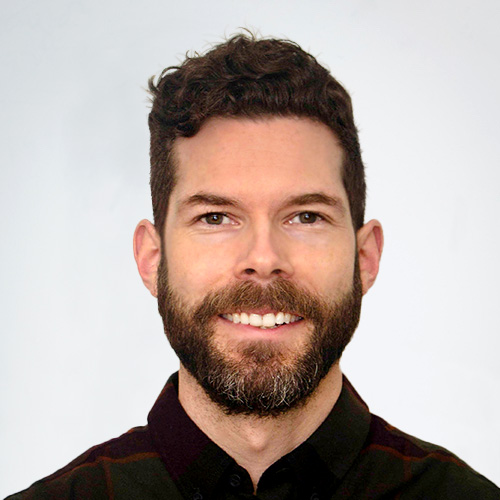
Avery Berman is an Assistant Professor in the Department of Physics at Carleton University and a Scientist at the University of Ottawa Institute of Mental Health Research (IMHR) at The Royal. His work focuses on advancing functional MRI (fMRI) techniques for high-resolution imaging of brain activity and physiology, with applications in neuroscience and mental health disorders. PhD in Biomedical Engineering and MSc in Medical Radiation Physics from McGill University Postdoctoral research at Harvard Medical School and the Martinos Center for Biomedical Imaging Research Interests include: High-resolution fMRI at 7 Tesla Biophysical modeling of vascular networks Quantitative biomarkers for oxygen metabolism PET-MRI hybrid imaging systems Neurovascular coupling in mental illness Scientific Awards include: NSERC Canada Graduate Scholarship (Master's) CIHR Canada Graduate Scholarship (Doctoral) CIHR Postdoctoral Fellowship (top 10/600 applicants) NSERC Postdoctoral Fellowship (top Physics section recipient) Research Funding from NSERC, CFI, and institutional support from Carleton University and IMHR. His lab develops the open-source BOLDsωimsuite software for fMRI signal modeling and collaborates with Canada-wide vascular training programs.
Dr. Darius Popovas is a researcher at the Institute for Applied Photogrammetry and Geoinformatics (IAPG), Jade University of Applied Sciences, Oldenburg, Germany. He is a member of the Laboratory for Optical 3D Metrology, contributing to advancements in photogrammetry and 3D scanning technologies since 2020. His research focuses on photogrammetry , 3D metrology , and virtual simulation , with specific interests in developing laser scanner simulators for digital twin environments, educational applications, and robotic missions. His work integrates computer vision, geomatics, and educational technology to create innovative simulation tools that bridge theoretical research with practical industrial and academic implementations. Between 2020 and 2024, Popovas co-authored six publications demonstrating a progression from foundational simulator development to applications in dynamic scanning and geodetic network planning for robots. This trajectory highlights increasing complexity in virtual scanning technologies, with recent work emphasizing real-time processing, sensor simulation, and integration into digital twin frameworks for industrial and educational contexts. He is a key contributor to the DAAD-funded project "Virtual laser scanner simulator for digitizing the teaching environment" (2019-2024), which develops software for generating simulated 3D point cloud data to enhance teaching methodologies in photogrammetry and geoinformatics through virtual laboratories and digital training resources. Within the IAPG, Popovas collaborates in the Laboratory for Optical 3D Metrology under Prof. Dr. Thomas Luhmann, working alongside a multidisciplinary team including Dr. Maria Chizhova and Dr. Denys Gorkovchuk. The laboratory actively organizes the Oldenburg 3D Days conference series, serving as a platform for disseminating research in optical metrology and fostering industry-academia partnerships.
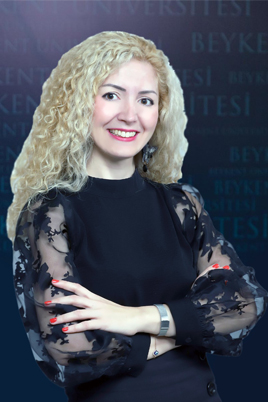
Sevgi AYDIN serves as an Assistant Professor in Logistics Management at Beykent University's Faculty of Business. Her academic work bridges digital transformation, artificial intelligence applications, and consumer behavior within modern marketing frameworks. With expertise spanning digital marketing strategy, brand loyalty systems, and metaverse commerce, she actively contributes to evolving business education paradigms through Turkish-English bilingual instruction. Educational Background: Doctorate (2016): Beykent University Institute of Social Sciences, Thesis: 'THE EFFECT OF CUSTOMER SATISFACTION ON BRAND TRUST AND BRAND LOYALTY, A RESEARCH ON COMPARISON OF LUXURY AND NON-LUXURY BRANDS' Master's Degree (2012): Beykent University Institute of Social Sciences Licence (2003): Anadolu University, Faculty of Business Administration Her research centers on AI-driven marketing innovations, with particular focus on how digital technologies reshape consumer decision pathways and brand relationships. Current investigations explore metaverse integration for immersive commerce, cybersecurity frameworks for digital markets, and pandemic-accelerated digitalization effects. Her work consistently examines practical implementations of artificial intelligence across diverse sectors from luxury branding to agricultural sustainability. Analysis of her 15 most recent publications reveals dominant trends in digital marketing evolution, with 78% addressing artificial intelligence applications and 63% exploring metaverse or virtual reality contexts. Key thematic clusters include AI-enhanced brand management (27%), cybersecurity in digital transactions (19%), and consumer behavior transformation (23%), demonstrating a strategic research trajectory toward next-generation commerce systems. Academic Supervision: SEVİL AYDIN (2024): 'THE USE OF SOCIAL MEDIA IN HOSPITAL CHOICE AND THE EFFECT OF WORD-OF-MOUTH MARKETING ON BRAND LOYALTY' RUKEN BAYONET (2021): 'The role of the food engineer in ensuring occupational health and safety management in food businesses producing hot meals' MERYEM BALTACI (2023): 'The Future of Graphic Design and the Impact of Artificial Intelligence on Graphic Design: Maw Agency Client Applications'
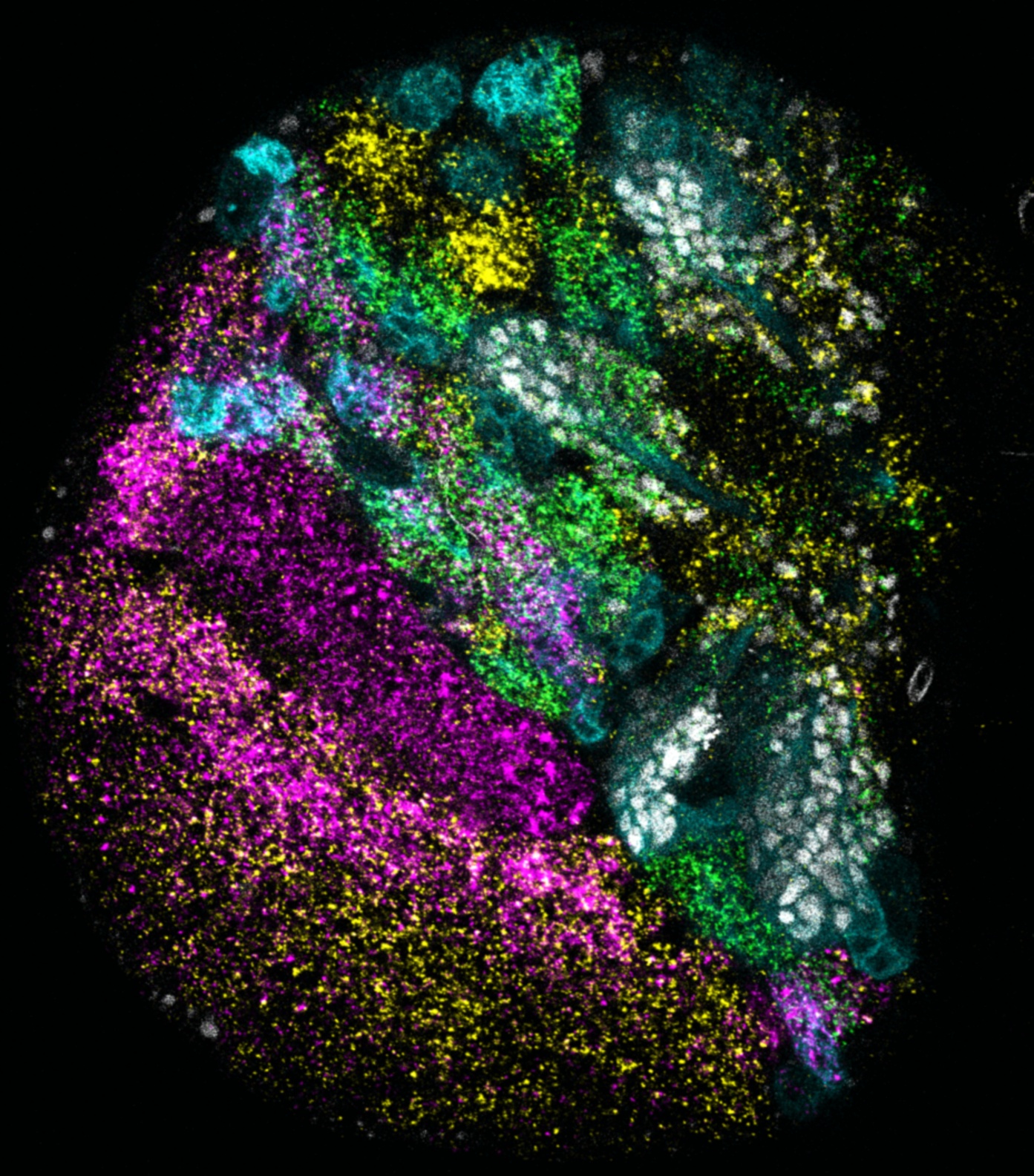
Dawen Cai, Ph.D., is an Associate Professor at the University of Michigan Medical School in the Department of Cell and Developmental Biology , with a secondary affiliation in the Biophysics Department under the College of Literature, Science, and the Arts (LS&A). He is also affiliated with the Neuroscience Graduate Program at the Medical School. His research focuses on integrating computational and experimental approaches to study neuronal subtype determination using scRNA-seq and in situ analysis. His research explores the intersection of RNA biology, neuroscience, and bioinformatics. He develops tools for multispectral imaging and lineage tracing to decode neural development and connectivity in Drosophila and mammalian models. His work combines single-cell transcriptomics with advanced microscopy to identify marker genes and model neuronal architecture. The articles reflect a strong interdisciplinary focus on neuroscience and biomedical imaging. Recent publications highlight innovations in 3D imaging technologies, image compression algorithms, and machine learning applications for medical image segmentation. These works emphasize scalable solutions for high-resolution data analysis, advancing tools for neurophysiology, and leveraging RNA sequencing to map neural development. No scientific awards were explicitly mentioned in the text. Dawen Cai actively recruits PhD students and postdoctoral fellows for the Cai Lab, prioritizing candidates with wet-lab skills, bioinformatics expertise, and experience in quantitative image processing. His lab emphasizes training in interdisciplinary research, paper/grant writing, and critical thinking.
Jianke Zhu is a Professor at the College of Computer Science and Technology of Zhejiang University . He obtained his Ph.D. in Computer Science and Engineering from The Chinese University of Hong Kong and conducted postdoctoral research at the BIWI Computer Vision Lab, ETH Zurich . His research focuses on Computer Vision and Machine Learning , with a particular emphasis on 3D scene understanding, LiDAR-based mapping, and neural rendering. Dr. Zhu’s research spans several subfields, including 3D Reconstruction , Semantic Segmentation , Multimodal Learning , and Autonomous Driving . His work integrates Neural Networks , LiDAR Processing , and Uncertainty Quantification to address challenges in real-time and adverse conditions. Selected Recent Trends: 2025 publications highlight his work in Hexagonal Mesh-based Neural Rendering , Instance-aware 3D Scene Understanding , and Efficient Visual Projectors for Multimodal LLMs . Earlier works include Box2Mask for Instance Segmentation (2024) and Token Selection for Point Cloud Learning (2025). Scientific Awards : Senior member of the IEEE Advising and Grants : As a Doctoral Supervisor , he mentors students in advanced topics like LiDAR Odometry and Multi-view Stereo Recovery . His projects have attracted funding for autonomous driving , 3D scene modeling , and neural rendering .
Luciano Castillo is a Professor at the School of Mechanical Engineering within the College of Engineering at Purdue University . His research spans turbulent boundary layers, wind energy, renewable energy integration, and bio-inspired engineering, with a focus on societal impacts such as energy-water nexus and social equality. Turbulent Flow Modeling with emphasis on initial conditions and micro-surfaces Wind Energy optimization and boundary layer interactions Renewable Energy Integration with water and thermal storage Biomedical Engineering applications in respiratory flow studies His recent publications explore robotics for classroom safety, mangrove-inspired erosion prevention, and renewable-powered desalination. Awards include the Alumni Distinguished Career Award (2023), ASME Fellow (2013), and multiple best paper awards. He leads initiatives like the US-Mexico Energy Corridor and contributes to interdisciplinary labs focusing on energy and societal challenges.
Frode Eika Sandnes is a Professor at the Department of Information Technology , Faculty of Technology, Art and Design , Oslo Metropolitan University , focusing on Human-Computer Interaction and Universal Design of ICT . His research spans innovative interaction techniques, skill reuse, pattern recognition, image analysis, and intelligent systems. Current research trends include accessibility in digital education, lightweight deep learning models, and physical interface usability Recent publications analyze color picker efficiency, 3D-printed prosthetics, and authentication technologies His work integrates interdisciplinary approaches to enhance usability and inclusivity in technology. Notable projects involve automated readability assessments and AI applications in diverse domains like aquaculture and medical diagnostics.
Prof. Dr. Martin Raubal is a Full Professor at the Institute for Cartography and Geoinformation, Department of Civil, Environmental and Geomatic Engineering, ETH Zurich. He leads research on spatial decision-making, mobile GIS, and location-based services, with applications in transportation, energy, and aviation. His work integrates cognitive engineering and eye-tracking to analyze human mobility and interaction with geospatial systems. Doctorate in Geoinformation (with distinction), Vienna University of Technology (2001) MS in Spatial Information Science and Engineering, University of Maine (1997) Dipl.-Ing. in Surveying Engineering and Geoinformation, Vienna University of Technology (1998) His research focuses on spatiotemporal human mobility, cognitive models for GIS, and sustainable urban systems. Key projects include the Digital Underground initiative at the Singapore-ETH Centre and the Empirical Use and Impact Analysis of Mobility-as-a-Service (EIM). Awards include the UV-Helava Prize and multiple best paper recognitions. Recent publications emphasize 3D spatial analysis, AI-driven geospatial tools, and causal inference in mobility modeling. Collaborations span institutions like Lufthansa Systems, SBB, and ETH-IVT. His lab investigates applications such as electric vehicle charging networks, bikeability indexes, and augmented reality in transportation planning.
Professor Laura Allen is a distinguished academic at University College London's Bartlett School of Architecture, where she holds the position of Professor of Architecture and Augmented Landscapes. She has served in various leadership roles including Director of Publications and Public Events and BSc Architecture Programme Director. Her work bridges traditional architectural practice with cutting-edge digital technologies, focusing on how architecture interacts with landscapes in the digital age. Allen's research explores the intersection of physical and virtual spaces, examining how digital documentation and representation can preserve and transform our understanding of architectural heritage. Professor Allen's educational background includes a Diploma of Architecture from University College London (1993) and a Bachelor of Arts (Honours) from Brighton Polytechnic (1990). Her academic journey reflects a strong foundation in both theoretical and practical aspects of architecture, preparing her for her current role at the forefront of architectural innovation. Professor Allen's research interests center around augmented landscapes, digital preservation of architectural heritage, and the evolving relationship between physical spaces and their digital representations. She investigates how emerging technologies like 3D scanning and augmented reality can transform traditional architectural practices and documentation methods. Her work particularly focuses on endangered architectural sites, exploring how digital documentation can serve as both preservation tool and new medium for architectural expression. Allen examines the "envirogrammic" response in architecture - where environmental conditions directly inform design processes and outcomes. Professor Allen's recent publications reveal a consistent focus on the intersection of architecture, landscape, and digital technologies. Her work spans from practical documentation projects like the 3D scanning of Robin Hood Gardens to theoretical explorations of architectural drawing in the digital age. A recurring theme is the examination of how traditional architectural practices are transformed by digital tools, with particular attention to landscape architecture, environmental design, and the representation of space. Her publications demonstrate a progression from physical architectural interventions toward increasingly sophisticated digital documentation and representation techniques. Professor Allen has received several prestigious recognitions for her contributions to architecture and design: Fellowship from the Royal Society of Arts (2009) Academician of the Royal Cambrian Academy (2007) Judge for the Hackney Design Awards (2007) As an educator, Professor Allen has mentored numerous architecture students through the Bartlett School's Unit 11, guiding projects that explore terra incognita, future fictions, and innovative approaches to architectural design. Her students have received notable awards including multiple Saint Gobain Innovation Awards. Under her guidance, students have developed projects examining Swiss Alpine landscapes, urban infrastructure, and the future of architectural practice. Professor Allen's teaching emphasizes the integration of theoretical exploration with practical design solutions, preparing students to address complex architectural challenges in the 21st century. Professor Allen co-founded Smout Allen, a research practice that explores the relationship between architecture, landscape, and digital technologies. Through this practice, she has developed projects like the British Exploratory Land Archive and Infractus, which examine how digital documentation can preserve and reinterpret architectural heritage. Her work often involves collaboration with artists, technologists, and other architects to create innovative approaches to architectural representation and documentation.
Adam Wax is a Professor of Biomedical Engineering and Professor of Physics at Duke University , where he leads cutting-edge research in optical spectroscopy for cancer detection , novel microscopy techniques , and low-coherence interferometry . As a member of both the Duke Cancer Institute Faculty Network and Duke Institute for Brain Sciences , he bridges engineering and biomedical applications. Education: B.S. from Rensselaer Polytechnic Institute (1993), M.A. (1996) and Ph.D. (1999) from Duke University Honors: Fellow, American Institute for Medical and Biological Engineering (2014); Fellow, SPIE (2010); Fellow, OSA (2010); NSF CAREER Award (2004) His research focuses on biomedical optics , particularly optical coherence tomography (OCT) and quantitative phase microscopy , with applications in early cancer detection , subcellular imaging , and clinical diagnostics . Recent work emphasizes low-cost, portable OCT systems for point-of-care applications and multimodal imaging combining spectroscopy with phase analysis. Scientific awards include: Fellow, American Institute for Medical and Biological Engineering (2014) Fellow, International Society for Optics and Photonics (2010) Fellow, Optical Society of America (2010) National Science Foundation CAREER Award (2004)
Robb W Lindgren is a Professor at the University of Illinois at Urbana-Champaign with appointments in Curriculum and Instruction and Educational Psychology . He serves as Associate Dean for Research in the College of Education and holds affiliations with the National Center for Supercomputing Applications (NCSA) , Beckman Institute for Advanced Science and Technology , and Center for Social & Behavioral Science . His research focuses on Embodied learning through gesture and physical interaction Design of mixed/augmented reality educational systems Collaborative STEM education with immersive technologies Recent publications highlight his work in: Biochemistry simulations using haptic feedback (2024) VR-based spatial reasoning for astronomy education (2023) Metaverse learning environments with theory-driven design (2023) Climate change simulations with full-body tracking (2022) His research group explores how physical movement and gestural interfaces shape scientific understanding and conceptual change. Key collaborations include work with Jee Hyang Park , Jun Kang , and Thomas Kim , focusing on Gesture-mediated collaboration XR learning analytics Agency in embodied design
Sotiris Christodoulou is an Associate Professor at the Department of Electrical and Computer Engineering within the College of Engineering at the University of Peloponnese. He also serves as a research associate at the 'Diofantos' Institute of Computer Technology and Publishing. His academic career spans multiple institutions where he has taught graduate and undergraduate courses across seven different universities since 2004. Dr. Christodoulou earned his B.A. in Computer Engineering and Informatics from the University of Patras in 1994 and completed his PhD in Web Engineering from the same institution in 2004. His educational background established the foundation for his extensive research career focused on web technologies and applications. His primary research interests include Web Engineering, Web Application Performance Optimization, Web Code Quality, Semantic Web technologies, Hypermedia Systems, and emerging Web 2.0 and Web 3.0 technologies. His work extends to Virtual Interactive Environments, 3D and Augmented Reality applications, and Spatial Hypertext systems. Christodoulou's research bridges theoretical web engineering principles with practical applications in cultural heritage, education, and urban infrastructure systems. His research output comprises over 45 publications in international journals, book chapters, and conferences, accumulating more than 450 citations. He has participated in over 23 European and National Research and Development Projects focused on web software technology, hypermedia applications, and 3D educational and cultural applications. Professional member of ACM Professional member of IEEE Member of organizing committees for over 15 international scientific conferences Reviewer for recognized international journals (ACM, IEEE, etc.) Christodoulou has extensive teaching experience across seven universities, specializing in programming languages, web software engineering, software quality, and data management. His research projects typically combine applied research with cutting-edge technology implementation for real-world problems in large organizational information systems. He maintains regular office hours at Building K, Office K2.02 at the University of Peloponnese, with appointments available on Mondays and Thursdays.
Sinead O'Keeffe is a Research Fellow at the University of Limerick in the Faculty of Science and Engineering , specifically within the Department of Electronic and Computer Engineering . Her research bridges the technical domain of optical fiber sensor development with critical applications in radiation therapy and sports medicine. Primary Research Themes Medical radiation dosimetry using optical fiber sensors Brachytherapy dose monitoring systems Sports injury prevention in Gaelic football and running Mental health literacy in rural farming communities Key Technical Contributions Development of scintillation-based dosimeters Characterization of perfluorinated polymer fibers 3D printed sensor systems for clinical and rehabilitation applications Interdisciplinary Applications Prostate cancer radiotherapy dose measurement Mental health intervention programs for athletes Work-family conflict analysis in Irish farming Email: sinead.okeeffe@ul.ie
Professor Craig Radford at the University of Auckland's Faculty of Science specializes in Marine Science with a focus on sensory systems and underwater soundscapes. Holding a PhD from Auckland , MSc from Canterbury , and BSc from Waikato , his research examines sensory physiology in fish and crustaceans, vocal communication mechanisms, and anthropogenic sound impacts. Current teaching includes Marine 702 Techniques in Marine Science and BioSci 334 - The Biology of Marine Organisms Postgraduate supervision topics span lateral line function, multisensory processing, ontogenetic hearing changes, and ecoacoustic indices His work on passive acoustic monitoring (149+ outputs) reveals trends in marine bioacoustics, particularly in shark hearing physiology , crustacean sound detection , and anthropogenic noise mitigation . Key collaborations exist with marine technologists and statisticians for developing machine learning boat classification systems and ecoacoustic biodiversity metrics. Research extends to auditory evoked potential thresholds across elasmobranchs, shark sleep electrophysiology , and global soundscape synthesis projects. Current projects include analyzing recreational boat noise impacts in Hauraki Gulf and investigating directional hearing mechanisms in sharks using advanced bioimaging techniques.
Dr. Christopher Hassall is an Associate Professor of Animal Biology at the School of Biology, University of Leeds , with research spanning entomology, climate change impacts, urban ecology, and conservation science. He leads the Hassall Lab and the BioDAR Project , which uses weather radar for biodiversity monitoring. Research Interests Quantifying insect abundance via weather radar (BioDAR/PestDAR/DRUID projects) Urban freshwater ecosystems and socio-ecological dynamics Evolution of insect camouflage/mimicry and flight behavior Climate change impacts on pollinators and invasive species Shadow diversity and extinction studies (Leverhulme DTP Co-Director) Scientific Awards Fellow of the Higher Education Academy Fellow of the Royal Entomological Society Advising : Supervises postgraduate researchers including Sicily Fiennes , Isabella Flowers , and Mx Solanum Foulstone , with a focus on interdisciplinary extinction studies and urban entomology.