Dongwook Kim is affiliated with the Korea Advanced Institute of Science & Technology (KAIST) as a faculty member in the Department of Business and Technology Management under the College of Business. His research spans multiple domains including machine learning, robotics, signal processing, and biomedical engineering. Key contributions in Computer Vision (CNN-based semantic segmentation, 3D point cloud analysis) Significant work in Hardware Design (energy-efficient processors, neuromorphic computing) Interdisciplinary expertise in Medical Imaging (bone age assessment, retinal biomarkers) and Cybersecurity (attack detection, network analytics) Publications since 2015 demonstrate sustained innovation in AI applications , Signal Processing , and Smart City Governance . His work often integrates theoretical advances with practical implementations in real-world systems. No scientific awards or student mentorship details are explicitly documented in the provided records.
Ario Sadafi is a researcher at the Technical University of Munich (TUM) , affiliated with the Chair of Computer Science Applications in Medicine under Prof. Nassir Navab. His work spans medical image analysis , machine learning , and computational pathology , with a strong focus on developing AI-driven solutions for microscopic imaging in hematology and oncology. Research Focus: Multiple Instance Learning for weakly supervised medical image classification. Explainable AI for biomedical single-cell imaging. Continual and cross-domain learning for robust diagnostic models. Microscopic image analysis for blood cell disorders and leukemia subtyping. Teaching Contributions: Sadafi has been actively involved in teaching courses such as Computer Aided Medical Procedures , Medical Augmented Reality , and Deep Learning for Medical Applications . He also supervises practical courses and seminars in 3D Computer Vision and Machine Learning in Medical Imaging . Labs & Collaborations: He works closely with the MEDIA (Medical Image Analysis) and NARVIS labs at TUM, contributing to projects in surgical data science , generative models , and robotics & ultrasound . Publications Impact: His research output (2018–2025) emphasizes AI-driven hematology , with applications in red/white blood cell classification, leukemia subtype diagnosis, and interpretable deep learning models for clinical use.
Sergey Tulyakov is the Director of Research at Snap Inc. , leading the Creative Vision team. His work focuses on enhancing creator capabilities through computer vision , machine learning , and generative AI , with applications in 2D/3D/4D video generation, editing, and personalization. He pioneered video generation frameworks like MoCoGAN and First Order Motion Model , and has been recognized for BEST IN SHOW AWARD at SIGGRAPH Real-Time Live! 2020. PhD (2012-2017): University of Trento, Italy MSc (2010): Belorusian State University of Informatics and Radioelectronics B.Eng (2009): Belorusian State University of Informatics and Radioelectronics His research interests span computer vision , generative models , 3D reconstruction , and personalization , with a focus on making large models efficient and mobile-compatible . Recent publications highlight advancements in 4D video generation , text-guided 3D composition , and lightweight architectures . Key scientific awards include the SIGGRAPH Real-Time Live! 2020 Best in Show for Interactive Video Stylization. He has also served on technical program committees for top-tier conferences like CVPR, ICCV, SIGGRAPH, and NeurIPS since 2022. His team organizes tutorials and keynotes, including courses on Deep Generative Models and Efficient Neural Networks . While no direct student names are listed, his collaborative work spans 60+ top-tier publications.
Jean Laurens is a Group Leader at the Ernst Strüngmann Institute (ESI) for Neuroscience in Cooperation with Max Planck Society in Frankfurt, Germany, where he heads the Laurens Lab. His research focuses on understanding how we sense our own motion and orient ourselves in three-dimensional space through neural mechanisms. His research interests include: Three-dimensional navigation and the neural basis of the 'brain compass' through head-direction cells in the limbic system Sensory signals for spatial navigation and how the brain integrates self-motion signals with visual landmarks Self-motion sensation and how the brain merges multiple sensory signals from the inner ear, vision, and proprioception with motor commands Laurens employs a multidisciplinary approach combining mathematical modeling and extracellular neuronal recordings in behaving Marmoset monkeys. His work spans computational neuroscience, systems neuroscience, and vestibular research, with significant contributions to understanding 3D orientation coding, gravity sensing in neural circuits, and spatial cognition. Recent publications demonstrate his focus on neural attractor networks, multisensory integration, and the representation of spatial orientation relative to gravity. His laboratory team includes researchers Francesca Lanzarini, Farzad Ziaie Nezhad, and Deepak Surendran, with Sogand Ghiasi managing laboratory operations. The Laurens Lab has been featured in media outlets including Süddeutsche Zeitung, with coverage of their work on balance mechanisms published in November 2020 and an article titled 'Du kannst mich Affe nennen' published on August 30, 2024.
Mohit Mendiratta is a PhD student in Computer Science at the Universität des Saarlandes and a Researcher at the Max-Planck-Institut für Informatik, Germany. He is part of the Visual Computing and Artificial Intelligence department (Department 6) under the Graphics, Vision & Video group led by Prof. Dr. Christian Theobalt. His research focuses on advancing computer vision, machine learning, and computer graphics, particularly in areas like 3D human avatars, text-driven editing, and video semantic segmentation. Education includes a Master's in Visual Computing from Universität des Saarlandes (2018–2021) and an undergraduate degree in Electronics and Electrical Engineering from KIIT, Bhubaneswar, India (2013–2017). He has held roles such as Research Assistant at the Max Planck Institute and Fraunhofer Institute, and industry experience as an Associate Software Engineer at Zentron Labs. His research interests span developing novel techniques for photorealistic 3D avatars, text-based editing systems, and zero-shot semantic segmentation using diffusion models. He collaborates on projects like AvatarStudio and TEDRA, advancing applications in virtual reality and human-computer interaction. Mohit contributes to the Saarbrücken Research Center for Visual Computing and is affiliated with the International Max Planck Research School on Trustworthy Computing. His work bridges theory and practical applications in AI-driven visual computing.
Hedvig Kjellströmeröm is Professor at KTH Royal Institute of Technology and affiliated with the Max Planck Institute for Intelligent Systems. Her research develops methods for interpreting human and animal behavior through computer vision, with applications in computational aesthetics, communicative behavior analysis, and embodied AI. She serves as Editor-in-Chief for CVIU and was Program Chair for CVPR 2025.
Zhen Liu is an Assistant Professor at the School of Data Science, CUHK-Shenzhen. His research focuses on generative models, 3D representations, and the synergy of spatial and semantic understanding in AI systems. With a PhD from Mila and Université de Montréal, he develops foundational methods for physics simulation, 3D assembly, and semantic reasoning in neural networks. His work bridges machine learning with applications in computer vision and graphics, emphasizing: Generative architectures for 3D content creation Diffusion model alignment techniques Efficient parameter finetuning strategies Dr. Liu mentors students in AI research and contributes to advancing 3D generative modeling paradigms.
Gerard Pons-Moll is an Affiliated Researcher with Perceiving Systems at the Max Planck Institute and Professor at the University of Tübingen. His research focuses on computer vision, particularly 3D human modeling and motion capture using machine learning approaches. He develops methods to perceive and model humans in 3D from images and video. His work bridges computer graphics and computer vision to create virtual humans that move and interact realistically. Current projects involve learning-based approaches for human pose estimation and developing datasets/simulators for human motion understanding.
Prof. Liqiu Meng serves as Chair of Cartography and Visual Analytics at the Technical University of Munich (TUM). He specializes in advanced geospatial research, digital cartography, and human-technology collaboration frameworks. Current Faculty at TUM Chair of Cartography and Visual Analytics Research Focus: His work bridges cartographic theory with cutting-edge technology, covering topics like 3D urban modeling, AI ethics visualization, geovisual analytics, and spatiotemporal data interpretation. Urban Morphology Analysis AI Ethics Cartography Geovisual Analytics 3D City Data Integration Location-Based Service Design Publications: Recent works (2025-2024) demonstrate expertise in explainable AI for urban analysis, multi-agent systems for geospatial interaction, and advanced spatial modeling techniques. Contact: liqiu.meng@tum.de | contact.lfk@ed.tum.de
Dr. Gaël Kermarrec is a researcher at the Boundary Layer Meteorology Group , part of the Institute of Meteorology and Climatology within the Faculty of Mathematics and Physics at Leibniz University Hannover . His work focuses on atmospheric turbulence, GNSS applications, and remote sensing for environmental monitoring. Boundary layer meteorology Turbulence theory GNSS signal processing Terrestrial laser scanning Climate change impacts Geodetic time series analysis His research integrates advanced mathematical models like LR B-splines and Matérn covariance with large eddy simulations to study: Atmospheric turbulence effects on optical/GNSS signals Hydrospheric mass loading Deformation analysis of terrain/port infrastructure Climatic sea-level changes Machine learning for remote sensing The 15 most recent articles (2025-2023) demonstrate his focus on: GNSS-based turbulence detection AI-enhanced climate mapping Advanced surface approximation techniques Multi-sensor data fusion Stochastic modeling of geodetic observations Environmental impacts on optical measurements He has developed tools like the Klimascanner QGIS plugin for urban climate resilience and contributes to: Understanding atmospheric scale lengths Improving TLS/GNSS deformation monitoring Analyzing hydrospheric changes Wavefront modeling Ionospheric corrections
Prof. Dr. sc. techn. ETH Oliver Staadt is Full Professor of Computer Science and Chair of Visual Computing at the University of Rostock , Germany. Since 2023 he also serves as Director of the Institute for Visual and Analytic Computing within the Faculty of Computer Science and Electrical Engineering . Previously he was Dean (2016–2018) and Vice Dean (2010–2016) of the same faculty. Education Ph.D. in Computer Science, ETH Zürich (2001) M.Sc. in Computer Science, TU Darmstadt (1994) Research Interests Prof. Staadt’s research spans virtual and augmented reality , computer graphics , visualization , telepresence , immersive analytics , and human–computer interaction . A particular focus lies on real-time rendering and display technologies for large high-resolution display systems, depth-image enhancement for RGB-D sensors, and interaction techniques that leverage spatial cognition and eye-tracking. His work is frequently applied to collaborative settings and microgravity environments, including experiments aboard parabolic flights and the International Space Station. Recent Publication Trends Between 2019 and 2021 his output centers on foveated rendering , AR viewpoint guidance , collaborative analytics on wall-sized displays , and embodied interaction metaphors . Earlier work addressed bandwidth-efficient telepresence, depth-image filtering, and physically-based animation. The corpus reveals a steady evolution from fundamental graphics algorithms toward applied immersive systems. Scientific Awards & Honors Fellow of the Eurographics Association Associate Editor, IEEE Transactions on Visualization and Computer Graphics (past) Associate Editor, Computers & Graphics (past) Associate Editor, Computer Animation and Virtual Worlds (past) Associate Editor, Frontiers in Virtual Reality (current) Chair, Expert Group on Virtual & Augmented Reality, German Informatics Society (2013–2020) Advising & Funding He has successfully supervised more than ten PhD graduates whose dissertations range from collision detection and physically-based animation to 3D interaction in microgravity and predictive user modeling. Current PhD researchers include Bipul Mohanto, Mana Takhsha, and Sven Kluge. His projects are supported by national and EU programs such as EVOCATION, SMOOTH, ARGuide, 3DPick, DIVA, and Telepresence. Labs & Teams Prof. Staadt leads the Visual Computing Group at Rostock, operating state-of-the-art facilities including large tiled display walls, VR/AR laboratories, and motion-capture systems. The institute hosts interdisciplinary collaborations with partners in visualization, computer vision, psychology, and aerospace engineering.
Stephanie Käs is a Researcher at RWTH Aachen University specializing in Human Pose Estimation (HPE) and gesture recognition using CNN-based methods and Video Language Models applied to fisheye imagery. Her interdisciplinary background spans particle physics and railway engineering data science projects, with strong emphasis on science communication and agile project management. Her research focuses on overcoming challenges in 3D human pose estimation from distorted fisheye images, temporal consistency in motion recognition, and gesture-based human-robot interaction. She actively develops novel approaches for monocular 3D pose estimation and foundation model applications in robotics, with contributions to datasets like FISHnCHIPS for fisheye image analysis. Stephanie supervises multiple ongoing theses including motion recognition, visual anonymization, and anatomical realism evaluation in AI-generated imagery. She leads the Stratospheric Balloon Research Project (StratoGI) at JLU Gießen and has extensive teaching experience in machine learning, computer vision, and statistics at RWTH Aachen and JLU Gießen.
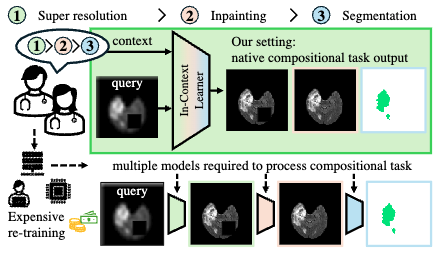
Prof. Dr. Erik Rodner is a faculty member at the University of Applied Sciences Berlin (HTW Berlin), where he serves as a Professor for Machine Learning and Data Science. He also contributes to the School of Engineering Sciences - Technology and Life. His research spans computer vision, machine learning, and biomedical applications, with a focus on learning with limited data, robust visual recognition models, and medical image analysis. He has developed innovative methods for medical diagnostics, industrial classification, and anomaly detection. Recent publications (2025-2016) highlight his expertise in visual in-context learning, semi-weakly segmentation, and active learning frameworks. He has collaborated with institutions such as ZEISS Group, Friedrich Schiller University Jena, and UC Berkeley. Scientific Awards: Award for Excellent Teaching (2023)
Armin Grunwald serves as Head of the Institute for Technology Assessment and Systems Analysis (ITAS) at Karlsruhe Institute of Technology (KIT) and Head of the Office of Technology Assessment at the German Bundestag (TAB). Since 2007, he has held the Chair of Philosophy and Ethics of Technology at KIT's Institute of Philosophy, building on his previous professorship at the University of Freiburg (1999-2007). His leadership positions include membership in the German Ethics Council, the National Advisory Board for Repository Search, and the Science-Policy Advisory Board of ETH Zürich. Grunwald's research focuses on the theory and practice of technology assessment, ethics of technology, sustainability concepts, and digital transformation. His work explores humanity's relationship with technology, particularly examining how digitalization challenges human self-understanding and autonomy. He investigates philosophical questions surrounding artificial intelligence, anthropocentrism in the Anthropocene, and the ethical dimensions of technological progress. His extensive publication record demonstrates consistent scholarly output across multiple disciplines. Recent work shows increasing focus on AI ethics, the philosophical implications of digital transformation, and technology assessment methodologies for addressing grand societal challenges. His publications span philosophical analyses, empirical studies on technology implementation, and policy-relevant assessments for governmental bodies. Grunwald has supervised numerous doctoral students across interdisciplinary fields including energy transition, AI governance, urban sustainability, and technology ethics. His leadership extends to directing major research initiatives through ITAS, which serves as Germany's parliamentary technology assessment body providing scientific advice to the Bundestag on emerging technologies and their societal implications.
Dr. Anne Koelewijn is an Assistant Professor leading the Biomechanical Motion Analysis and Creation (BioMAC) group at Friedrich-Alexander-Universität Erlangen-Nürnberg (FAU) since 2019. Her research bridges biomechanics, computational modeling, and wearable technology to analyze human movement. She holds a Junior Professorship in Computational Movement Science within the Department of Electrical-Electronic-Communication Engineering. Her educational background includes a Doctor of Engineering in Mechanical Engineering from Cleveland State University (focus: prosthesis design and gait simulations), an MSc in Mechanical Engineering (BioMechanical Design specialization), and a BSc in Aerospace Engineering , both from Delft University of Technology. She completed postdoctoral work at École Polytechnique Fédérale de Lausanne on neuromuscular control. Research interests center on human movement optimization , neuromuscular control mechanisms , and in-the-wild movement analysis . Her work integrates musculoskeletal modeling, optimal control theory, and machine learning to study gait adaptations, exoskeleton design, and pathological movement patterns (e.g., Parkinson’s disease). Publications emphasize predictive simulations , wearable sensor technology , and biomechanical energy optimization , with recent advances in radar-based motion capture, inertial pose estimation, and digital twin applications for medical engineering. Promising Scientist Award , International Society of Biomechanics (2023) Best Paper Award , 5th International Symposium on Wearable Robotics (2020) She leads the BioMAC research group, focusing on computational methods for movement science and collaborating internationally on projects involving exoskeletons, injury prevention, and neuroprosthetics.