Professor Carlo Harvey is a creative technologist at the School of Digital Arts (SODA), Manchester Metropolitan University. His interdisciplinary research merges games , machine learning , virtual production , and cultural heritage reinterpretation . He leads industry collaborations with entities like Jaguar Land Rover and Epic Games, focusing on AI-driven interactive audio, real-time visualization, and accessibility solutions. Award-winning projects : TIGA, Innovate UK, and Epic Games MegaGrant for Accession Industry partnerships : Automotive sector, cultural institutions His research spans human-computer interaction , multisensory virtual environments , and acoustic-visual cross-modal perception . Recent publications address robotic simulations, motion alignment, and haptic feedback systems. Scientific recognition : TIGA Award, Innovate UK Funding, Epic Games MegaGrant Advocacy : Digital inclusion, creative collaboration, social impact of technology
Professor Gabriel Brostow is a faculty member in the Department of Computer Science at University College London (UCL), where he leads research in Computer Vision and Human-Computer Interaction. He also serves as Chief Research Scientist and Senior Director of the R&D Team at Niantic, the company behind Pokémon GO. His work bridges academic research and industry applications, focusing on developing AI systems that enhance human capabilities through what he terms 'Human in the Loop AI'—now commonly referred to as Human-Centered AI. Brostow completed his BS in Electrical Engineering at UT Austin, followed by a PhD with Irfan Essa at Georgia Tech. He then pursued postdoctoral research with Roberto Cipolla's Computer Vision & Robotics Group at Cambridge University as a Marshall Sherfield Fellow, and with Marc Pollefeys in ETH Zurich's CVG Group. His research explores how AI, particularly Computer Vision, can serve as 'super-tools' for professionals across various domains including filmmaking, architecture, robotics, and scientific research. Specific interests include assistive technology for everyday life, authoring systems that maximize user effort, 3D reconstruction, depth estimation, and vision-language models. His work often involves creating systems that are validated through real-world human interaction to ensure practical utility. Analysis of his recent publications reveals a strong focus on practical applications of Computer Vision that directly interact with humans. His research spans 3D scene understanding, depth estimation, sketch-based interfaces, and multimodal AI systems. There's a clear emphasis on creating benchmarks and tools that facilitate human-AI collaboration, with applications in assistive technology, urban planning, filmmaking, and biodiversity monitoring. His work frequently appears at top conferences including CVPR, NeurIPS, ECCV, and CHI. Marshall Sherfield Fellowship Brostow actively mentors PhD students, with current advisees including Ross Murphy, Skanda Koppula, Gizem Unlu, Omiros Pantazis, and Jamie Watson. His alumni include numerous PhD graduates and MSc students who have gone on to successful careers in academia and industry. He emphasizes selecting students based on passion and potential rather than just academic credentials, valuing traits like helpfulness, drive, and hunger to learn. His research is supported through collaborations with major institutions and companies including DeepMind, MIT, and the University of Edinburgh. He leads a research group at UCL that collaborates closely with Niantic's R&D team, creating a unique bridge between academic research and industry application. His team's work frequently involves developing novel Computer Vision techniques that are validated through real-world human interaction, ensuring practical utility alongside technical innovation. The group explores blue-sky research problems with applications ranging from assistive technology to professional tools for filmmakers, architects, and scientists studying diverse environments.
Professor Wayne Luk is a Professor of Computer Engineering at the Department of Computing, Faculty of Engineering, Imperial College London. He leads the Programming Languages and Systems Section and the Custom Computing Research Group, and directs the EPSRC Centre for Doctoral Training in High-performance Embedded and Distributed Systems and the Centre for Advanced Financial Engineering. He previously served as a Visiting Professor at Stanford University from 2006 to 2009. His research spans FPGA acceleration, quantum computing, deep learning optimization, and algorithm-hardware co-design, with affiliations to the CRUK Convergence Science Centre and the Engineering Secure Software Systems group. His research interests include computational modeling for particle physics, causal discovery in agent-based systems, and high-throughput digital electronics. Notable contributions include FPGA-accelerated algorithms for neural networks, quantum circuit simulation, and Bayesian optimization frameworks. His work emphasizes practical applications of reconfigurable hardware in fields like medical imaging, high-energy physics, and financial systems. Professor Luk is a Fellow of the Royal Academy of Engineering, IEEE, and BCS. His publications focus on advancing hardware-aware machine learning, FPGA-based acceleration techniques, and scalable design methodologies. His research bridges theoretical computer science with applied engineering, addressing challenges in real-time systems, embedded computing, and next-generation computing architectures. His academic leadership includes directing interdisciplinary centers and training programs, fostering collaboration across computing, engineering, and physics. Current projects explore quantum computing tools, causal inference systems, and high-performance graph neural networks for particle physics applications.
Dr. He Wang is an Associate Professor in the Department of Computer Science at University College London (UCL), affiliated with the Virtual Environment and Computer Graphics (VECG) group and the UCL Centre for Artificial Intelligence. He holds a Visiting Professorship at the University of Leeds and previously served as an Associate Professor and Lecturer there, as well as a Senior Research Associate at Disney Research Los Angeles. His research focuses on computer graphics, vision, and machine learning, with notable contributions to crowd simulation, generative models, and physics-informed neural networks. Dr. Wang earned his BEng from Zhejiang University and his PhD from the University of Edinburgh, followed by postdoctoral work at the University of Edinburgh's School of Informatics. He has been recognized as a Turing Fellow and serves as an Academic Advisor to the Commonwealth Scholarship Council and an Associate Editor of Computer Graphics Forum . His research spans cutting-edge topics including 3D reconstruction, adversarial attacks on motion recognition, and AI-driven groundwater modeling. He has supervised six PhD students to completion and actively engages in collaborative projects, consultancy, and grant evaluations. His lab welcomes students through dedicated recruitment channels.
Laura Toni is an Associate Professor in the Department of Electronic and Electrical Engineering at University College London's Faculty of Engineering Sciences. She serves as the leader of a research team focused on advanced signal processing and machine learning applications, documented at https://lasp-ucl.github.io . Additionally, she holds prestigious affiliations as an ELLIS (European Laboratory for Learning and Intelligent Systems) Member and Turing Fellow Alumni. PhD in Electrical Engineering, University of Bologna (2009) MS in Electrical Engineering, University of Bologna (2005) Professor Toni's research spans theoretical and applied aspects of machine learning with particular emphasis on graph-based approaches. Her work integrates signal processing techniques with modern AI methodologies to address complex problems in communication systems, multimedia processing, and scientific discovery. She has made significant contributions to reinforcement learning theory, graph signal processing, and their applications across diverse domains including drug discovery and immersive technologies. Analysis of her recent publications reveals a strong focus on graph-based machine learning approaches, with increasing emphasis on reinforcement learning applications. Her work demonstrates a progression from theoretical foundations to practical implementations, particularly in multimedia processing, network science, and drug discovery applications. Many of her recent papers combine graph neural networks with diffusion models and reinforcement learning for complex prediction and generation tasks. Professor Toni has received notable recognition through her ELLIS membership and Turing Fellow Alumni status, which represent significant achievements in the European AI research community. ELLIS (European Laboratory for Learning and Intelligent Systems) Member Turing Fellow Alumni As an academic leader, Professor Toni supervises postgraduate students and leads a research team at UCL, focusing on cutting-edge projects at the intersection of signal processing and machine learning. Her team has secured research funding through various channels including European initiatives and industry partnerships, enabling them to pursue ambitious projects in graph learning, reinforcement learning, and multimedia processing. The team actively collaborates with institutions worldwide, including previous connections with UCSD and EPFL. Professor Toni leads the LASP research group at UCL (https://lasp-ucl.github.io), which focuses on Large-scale Adaptive Signal Processing for intelligent systems. The team comprises researchers working on graph signal processing, reinforcement learning, and multimedia applications, with strong connections to both theoretical foundations and practical implementations across various domains including healthcare, communications, and immersive technologies.
Anthony Steed is a Professor in the Department of Computer Science at University College London, where he leads the Virtual Environments and Computer Graphics group and serves as deputy head of department. His work focuses on real-time interactive virtual environments and related technologies. His research interests include: Virtual Reality and Augmented Reality Real-time Graphics and Interactive Virtual Environments Networking for Tightly Synchronous Telecollaboration 3D User Interfaces and Novel Forms of Interaction Perceptual and Cognitive Issues in Mixed Reality Haptics and Telepresence Professor Steed has made significant contributions to the field through his co-authored books "Networked Graphics" (2010) and "Computer Graphics and Virtual Environments: From Realism to Real-Time". He has also contributed to puzzle design, co-authoring "The Gentle Art of Filling Space" with Michael Dowle. His notable recognition includes the IEEE VGTC Technical Achievement Award (2016). Professor Steed supervises several doctoral students and post-doctoral fellows, and teaches courses including Research Methods, Virtual Environments, and Perception and Interfaces at both undergraduate and MSc levels.
Dr. Frederick Li is an Associate Professor in the Department of Computer Science at Durham University, UK. He holds editorial roles as Associate Editor of Frontiers in Education (Digital Education) and Editorial Board Member of Virtual Reality & Intelligent Hardware. His research focuses on Computer Graphics, Machine Learning, Geometric Modelling, Collaborative Virtual Environments, Visual Aesthetics, and Educational Technologies. He earned his B.A. (Hons) and M.Phil. from The Hong Kong Polytechnic University and his Ph.D. in Computer Graphics from City University of Hong Kong. Prior roles include Assistant Professor at HK PolyU and project manager of a Hong Kong Government ITF-funded project. **Education**: B.A. (Computing Studies) and M.Phil. from HK PolyU; Ph.D. in Computer Graphics (CityU Hong Kong). **Research Interests**: His work spans mesh saliency detection, human-object interaction recognition, cloud modeling, face beautification, and educational technology. Recent achievements include awards for papers (e.g., Best Paper at ITiCSE 2014) and recognition such as EPSRC Peer Review College membership. He leads Durham's Undergraduate Board of Examiners and has been an external examiner at Northumbria University. **Awards**: Best Paper (ACM ITiCSE 2014), Outstanding Paper (ICALT 2013), EPSRC Peer Review College (2024), Outstanding BMVC 2024 Reviewer. **Grants & Labs**: His research is supported by grants from EPSRC and others. He collaborates with the Centre for Vision and Visual Cognition, VIViD, and AIHS group at Durham.
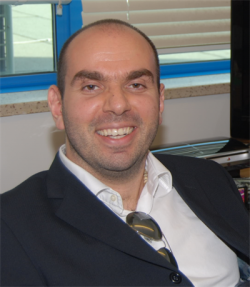
Christos Gatzidis serves as Executive Dean of Bournemouth University's Faculty of Science and Technology since October 2023, overseeing six departments including Computing and Informatics, Creative Technology, and Psychology. Previously Deputy Dean (2021-2023) and Head of Creative Technology Department (2016-2021), he was appointed Professor in Creative Technology in November 2019. The Faculty leads five REF Units of Assessment and secures funding from AHRC, NIHR, and Innovate UK for research spanning digital healthcare, gaming technologies, and cultural heritage applications. His educational qualifications include: PhD in Information Science, City University London (2010) PG Cert in Research Degree Supervision, Bournemouth University (2010) MA in Computer Animation, Teesside University (2003) BSc (Hons) in Computer Studies (Visualisation), University of Derby (2002) Professor Gatzidis specializes in computer graphics with research spanning virtual reality, serious games, and digital healthcare applications. His work bridges technical innovation and practical implementation, particularly in mindfulness prototypes for healthcare and stroke rehabilitation systems. Current projects focus on the multidisciplinary application of gaming technologies in medical contexts, emphasizing user experience and therapeutic outcomes through collaborations with industry partners. His publication record (2014-2025) demonstrates evolving expertise from foundational computer graphics research in terrain generation and deformation to applied work in healthcare, cultural heritage, and music education. Key trends include virtual reality for therapeutic mindfulness, usability studies in mobile gaming, and digital cultural presentation techniques, reflecting a trajectory toward socially impactful technological solutions with strong industry translation. No scientific awards are documented in the provided information. He has supervised PhD students and secured competitive research funding, including two Innovate UK Knowledge Transfer Partnerships. His principal investigator role in a virtual reality mindfulness prototype project exemplifies his approach to translating academic research into practical industry solutions, with current focus on expanding knowledge exchange activities to support the University's civic engagement mission. As Executive Dean, he leads faculty-wide research strategy across six departments, fostering interdisciplinary collaborations particularly in digital healthcare and cultural heritage. His personal research integrates computer graphics expertise with clinical applications through partnerships with healthcare providers and technology companies, driving innovation in therapeutic VR systems and educational gaming platforms.
Changjian Li is an Assistant Professor in the School of Informatics at the University of Edinburgh. He leads the GraphViX Group (Graphics, Vision and X) and is a member of the Institute of Perception, Action and Behaviour (IPAB). His research spans computer graphics, computer vision, and human-computer interaction with a focus on 3D generation and analysis. Education: Bachelor's Degree from Shandong University (2014) Ph.D. from the University of Hong Kong (2019) under Prof. Wenping Wang Postdoc at University College London (UCL) with Prof. Niloy Mitra Starting Researcher position at Inria with Dr. Adrien Bousseau Research Interests: Changjian's research focuses on sketch-based 3D modeling, CAD modeling, point cloud processing, and medical imaging applications. He develops systems that bridge intuitive sketching with precise CAD workflows, enhances 3D animation pipelines, and applies neural methods to sparse medical data reconstruction. Scientific Recognition: Best Paper Honorable Mention Award (MICCAI 2021) CADTalk selected as Highlight (CVPR 2024 top 10%) ACM SIGGRAPH Asia 2018 cover image selection ACM SIGGRAPH Asia 2015 technical paper highlight CVPR 2019 poster highlighted in 'Computer Vision News' Advising & Collaborations: He mentors postdocs and PhD students including Duolikun Danier, Haocheng Yuan, Ankan Bhunia, and Lei Zhong. Former advisees include Salvatore Esposito (now at Edinburgh), Guangshun Wei (Shandong University), and Mingjun Yang (University of Melbourne). Collaborates with Oisin Mac Aodha, Hakan Bilen, and Niloy Mitra. Professional Service: Currently serves as Associate Editor for IEEE TVCG and participates in program committees for SIGGRAPH Asia, SIGGRAPH, EuroGraphics, and Geometry Design and Computing (GDC) conferences.
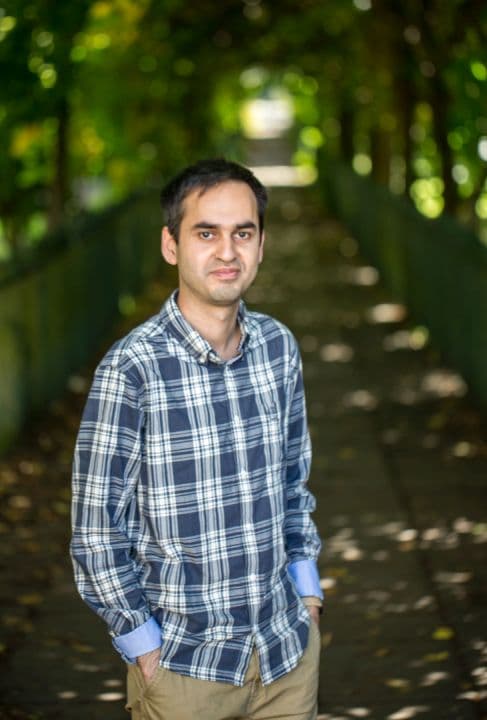
Dr. Danial Chitnis is a Chancellor's Fellow and Lecturer in Electronics at the School of Engineering, University of Edinburgh. He holds a DPhil in Engineering Science from the University of Oxford (2013) and has expertise in microelectronics, biomedical engineering, and quantum imaging. His research focuses on SPAD arrays, time-of-flight sensors, and wearable optical systems for biomedical applications. Education: BSc in Electronics Engineering, Chamran University of Ahvaz (2002–2007) MSc in Advanced Microelectronics Systems Engineering, University of Bristol (2007–2008) DPhil in Engineering Science, University of Oxford (2009–2013) Research Interests: Single-Photon Avalanche Diode (SPAD) arrays for optical communications and biomedical imaging Quantum-enhanced imaging via QuantIC Hub Wearable sensors for near-infrared spectroscopy (NIRS) AI-driven automation in test and measurement systems Articles Trends: Recent work emphasizes AI integration in electronics design, photon-counting receivers for 6G networks, and portable biomedical devices. Notable contributions include SYCL-based acceleration of circuit simulations and FPGA-driven time-to-digital converters. Grants & Collaborations: Principal Investigator of multiple grants, including EPSRC-funded projects on AI-enhanced human-machine interfaces and quantum technology applications. Collaborates with UCL, QuantIC, and industry partners like Keysight Technologies. Labs/Teams: Co-investigator at QuantIC, the UK Quantum Technology Hub in Quantum Enhanced Imaging. Leads interdisciplinary research on detector arrays and systems for quantum physics and consumer cameras.
Professor Maja Pantic is a Professor of Affective & Behavioural Computing at the Department of Computing, Faculty of Engineering, Imperial College London. Her research focuses on artificial intelligence, image processing, and audio-visual speech recognition. She leads projects in multimodal systems, including facial analysis, emotion recognition, and speech-driven animation. Affiliations include the AI for Healthcare initiative, the Artificial Intelligence Network, and the Machine Learning Network. Her work addresses challenges in real-time speech enhancement, cross-modal learning, and synthetic data generation. Recent publications emphasize advancements in audiovisual speech synthesis, lip-reading, and emotion-aware systems. She has contributed to datasets like KAN-AV and SEWA DB, advancing research in face analysis and affective computing.
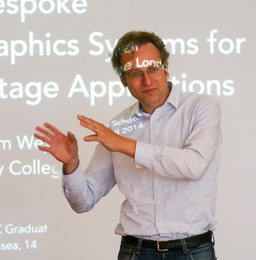
Tim Weyrich is Professor of Visual Computing (part-time) at University College London and Professor of Digital Reality at Friedrich-Alexander University Erlangen-Nürnberg. He leads the Digital Reality Lab and has affiliations with the Virtual Environments and Computer Graphics group at UCL, Eurographics, and the EPSRC Doctoral Training Centre (SEAHA). Previously, he held a Postdoctoral Teaching Fellowship at Princeton University. Research Interests: Content creation and computational photography Appearance modeling and fabrication Point-based graphics and cultural heritage analysis Digital humanities and 3D printing Article Trends: Recent work focuses on neural radiance fields (FruitNeRF++), 3D Gaussian splatting, mmWave radar inverse rendering, and texture anomaly detection. Applications span autonomous systems, cultural heritage, and medical imaging. Scientific Awards: Best Paper Honourable Mention (BMVC 2022) Best Student Paper Award (EG Workshop on GCH 2014) Honorable Mention (Eurographics 2011) Best Student Paper Honourable Mention (BMVC 2018) ACM SIGCHI Best Paper Honourable Mention (CHI 2013)
Professor Hossein Rahmani serves at the School of Computing and Communications , Lancaster University , with a focus on Computer Vision and Machine Learning . His career spans institutions like the University of Western Australia (PhD), Shahid Beheshti University (MSc), and Isfahan University of Technology (BSc). Research Interests : Computer Vision, Machine Learning, Video Analysis, Action Recognition/Detection, Object/Human Pose Estimation, 3D Reconstruction, Diffusion Models, Human-Object Interaction Editorial Roles : Associate Editor for IEEE Transactions on Neural Networks and Learning Systems , Pattern Recognition , ACM Computing Surveys ; Area Chair for CVPR 2025, ICLR 2025, ECCV 2024, IJCAI 2024 His recent work leverages diffusion models for domain-generalized object pose estimation, 3D scene editing, and human mesh recovery, published in top venues like TPAMI , CVPR , ICCV , and ECCV . He received the Best Scientific Paper Award from the International Conference on Pattern Recognition and actively supervises 5 PhD students with interdisciplinary projects in digital health and data science.
Dr. Paul Henderson is a Lecturer in Machine Learning at the School of Computing Science, University of Glasgow. He holds a BA in Mathematics (University of Cambridge, 2009), an MSc in Informatics (University of Edinburgh, 2010), and a PhD in Computer Vision (University of Edinburgh, 2018). His research focuses on generative AI, probabilistic machine learning, and minimally-supervised approaches to 3D computer vision, with applications in healthcare, computer graphics, and physical sciences. Education: PhD in Computer Vision (University of Edinburgh, 2018) MSc in Informatics (University of Edinburgh, 2010) BA in Mathematics (University of Cambridge, 2009) His work spans generative models, medical imaging, and robotics. Notable contributions include datasets like Flat’n’Fold and techniques in diffusion models for text-to-image retrieval. He has received grants including the Royal Society Research Grant (2022-2023) and the Vesuvius Challenge Autosegmentation Prize (2025). He supervises PhD students in topics such as medical image segmentation and generative AI. Teaching: CS5002 Advanced Programming, CS4061/CS5014 Machine Learning.
Dr. John McGowan is a Lecturer at the School of Computing Engineering and the Built Environment , Edinburgh Napier University. His work bridges Music Therapy , Interaction Design , and Assistive Technologies for autistic individuals. Research Focus: Development of the CymaSense application—a real-time 3D audio-visual tool for augmenting music therapy sessions. This research explores how interactive cymatics (sound visualization) can improve communication and social interaction for people on the autism spectrum. Research Trends: His publications emphasize multi-sensory environments , therapeutic software systems , and user-centered design for neurodiverse populations. Recent work addresses stress triggers in autistic adults using augmented reality and mobile technologies . Supervision: Co-supervised PhD projects on topics including auditory selective attention in mixed reality and adaptive sound design for video games . Grants: Secured funding from Edinburgh Napier University and Arts & Humanities Research Council ( Audio Mostly 2023 conference ). £5,000 grant (AHRC) for embodied music interaction research Labs: Affiliated with the Centre for Interaction Design , contributing to interdisciplinary projects in health technology and creative arts .