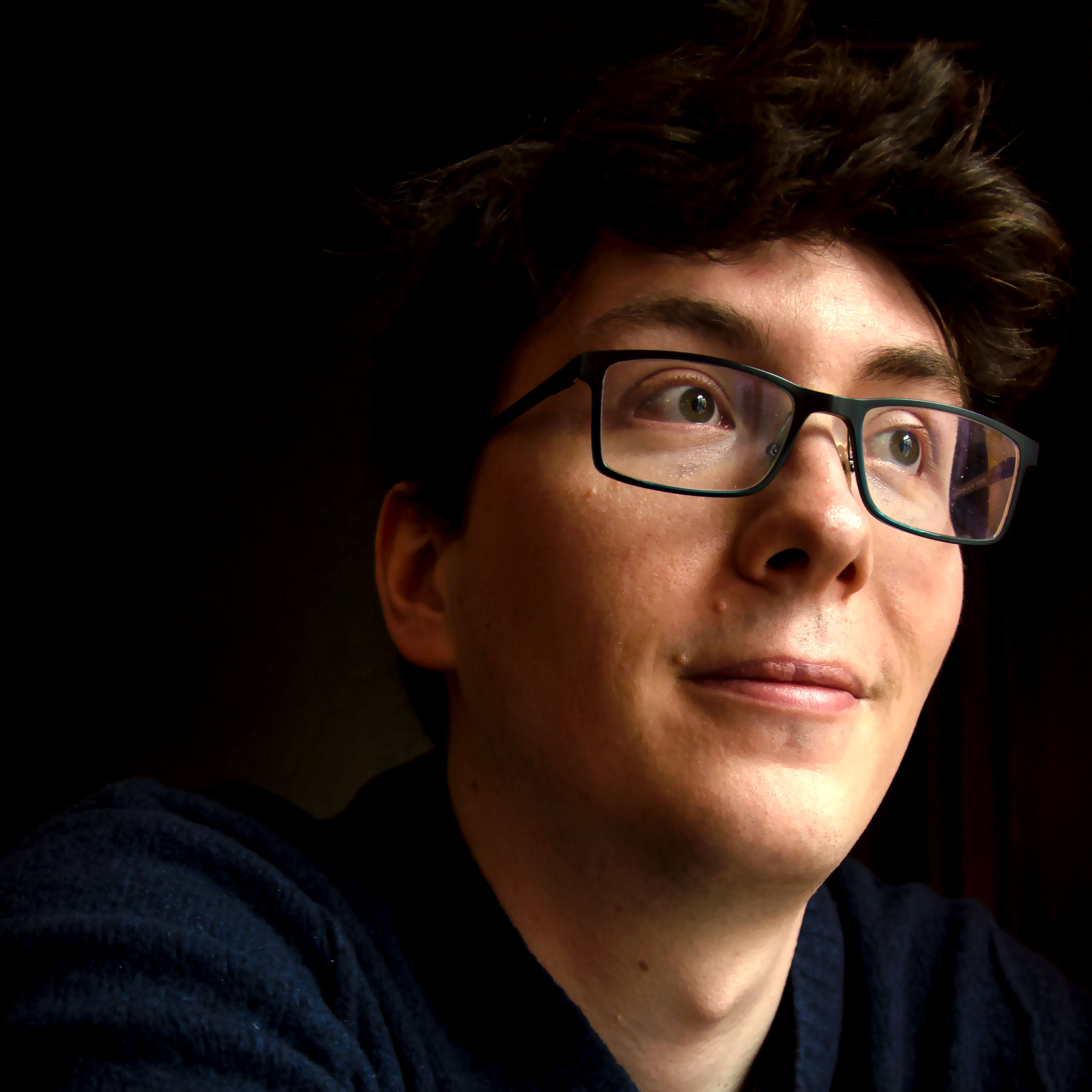
Christian Rupprecht is an Associate Professor at the Department of Computer Science, University of Oxford, specializing in computer vision and machine learning. His research focuses on unsupervised learning, 3D reconstruction, and visual understanding. His work includes contributions to conferences such as GCPR'25, ICCV'25, and CVPR'25, with papers spanning topics like correspondence estimation, animal pose modeling, and synthetic data generation. He leads projects within the prestigious Visual Geometry Group (VGG). Notably, his paper VGGT received the Best Paper Award at CVPR'25. His research integrates deep learning and geometric modeling, emphasizing robustness and generalization in visual systems. Best Paper Award at CVPR'25
Houman BOROUCHAKI is a Professor at the University of Technology of Troyes (UTT), France, with over 20 years of academic leadership. He has served as Head of the Automatic Mesh Generation and Advanced Methods (GAMMA3) project team since 2008 and previously led the Laboratory of Mechanical Systems and Concurrent Engineering (LASMIS) (2005-2007). His work bridges academic research and industrial applications through collaborations with INRIA , French Petroleum Institute (IFPEN) , Dassault Aviation , and others. Research Interests: A pioneer in adaptive meshing , he focuses on finite element methods , geometric modeling , and numerical simulations . His innovations underpin mesh generation algorithms , 3D triangulation software , and industrial applications in metal forming, composite simulation, and subterranean modeling. Scientific Trends: His recent work emphasizes metric-based meshing , high-order geometric validity , and parallel processing for mesh generation , with applications in petroleum reservoirs, aviation surfaces, and nanomaterials. His Google Scholar profile reflects 25+ years of contributions to meshing and simulation. Teaching: With 22 years of experience, he teaches courses on meshing , numerical analysis , geometric modeling , and computer graphics at UTT, covering undergraduate to PhD levels. Labs & Teams: He leads the interdisciplinary GAMMA3 team and has contributed to LASMIS (mechanical engineering), L2n (CNRS-UMR 7076) (nanomaterials), and LIST3N (computer science).
Rémi Giraud is an Associate Professor at ENSEIRB-MATMECA (Bordeaux INP) in the Electronic department, conducting research at the IMS laboratory within the Signal and Image Processing group (MOTIVE team). He is also a member of the In2Brain research group. Dr. Giraud received his M.Sc. in telecommunications from ENSEIRB-MATMECA and a Master's in signal and image processing from the University of Bordeaux in 2014, graduating with honors as top of his class. He completed his Ph.D. in computer science at the University of Bordeaux in 2017, followed by a year as Assistant Professor before becoming Associate Professor in 2018. Current position: Associate Professor at ENSEIRB-MATMECA (Bordeaux INP), Electronic department Research affiliation: IMS laboratory, Signal and Image Processing group, MOTIVE team Additional affiliation: In2Brain research group Education: PhD in Computer Science (2017, University of Bordeaux), M.Sc. in Telecommunications and Signal/Image Processing (2014, ENSEIRB-MATMECA and University of Bordeaux) His research focuses on image processing and analysis, deep learning, and computer vision, with particular expertise in (un)supervised image segmentation, colorization, matching techniques, irregular under-representations (superpixels), spatial relations, and medical imaging (3D MRI applications). His work bridges theoretical computer vision with practical medical applications, developing algorithms that enhance image understanding in both general and specialized contexts. Dr. Giraud has developed several significant methodologies including SCALP (Superpixels with Contour Adherence using Linear Path), TASP (Texture-Aware SuperPixel), DSP (Dual Superpixel Descriptors), and NNSC (Nearest Neighbor-based Superpixel Clustering). His publications demonstrate consistent advancement in superpixel segmentation techniques with increasing focus on medical imaging applications, particularly brain MRI analysis. He currently supervises multiple PhD students including Julien Walther (working on Deep Learning Models from Structural Image Representations), Eloi Navet (An AI Assembly for Neurological Disease Prediction), Edern Le Bot (Holistic Brain MRI Segmentation), and Matthieu Vilain (Semi-supervised Deep Learning for image sequences). His research has resulted in numerous publications in top-tier conferences and journals, with a clear trajectory from theoretical algorithm development to practical implementation in medical contexts.
Pierre Alliez is a Senior Researcher and Team Leader at Inria Sophia Antipolis – Méditerranée, leading the TITANE project-team. He holds roles such as President of the Inria Evaluation Commission and Scientific Coordinator of the Inria-DFKI partnership. His research focuses on Geometry Processing, including mesh compression, surface reconstruction, and optimal transportation. Alliez has authored numerous scientific publications and book chapters, receiving accolades like the Eurographics Young Researcher Award (2005) and ERC grants (IRON, TITANIUM). His academic activities include supervising over 50 PhD students and postdoctoral researchers, and leading projects like GRAPES (Learning and Processing Shapes) and BIM2TWIN (digital twin construction). He has served on editorial boards for Computer Graphics Forum and ACM Transactions on Graphics , and organized major conferences like Pacific Graphics and Eurographics. His work bridges computational geometry, computer graphics, and applied mathematics, with practical applications in 3D printing, cultural heritage, and urban modeling. Education: No specific educational details provided, but has authored a textbook on Polygon Mesh Processing (AK Peters, 2010). Research Interests: Geometry Processing, Mesh Generation, Surface Reconstruction, Optimal Transport, and 3D Data Analysis. Grants & Projects: ANR Pisco, ERC IRON, BIM2TWIN, GRAPES, and collaborations with industries like Dassault Systèmes and Dorea Technology. Labs/Teams: Leads the TITANE team at Inria, contributing to software like CGAL and advancing open-source tools for geometric processing.
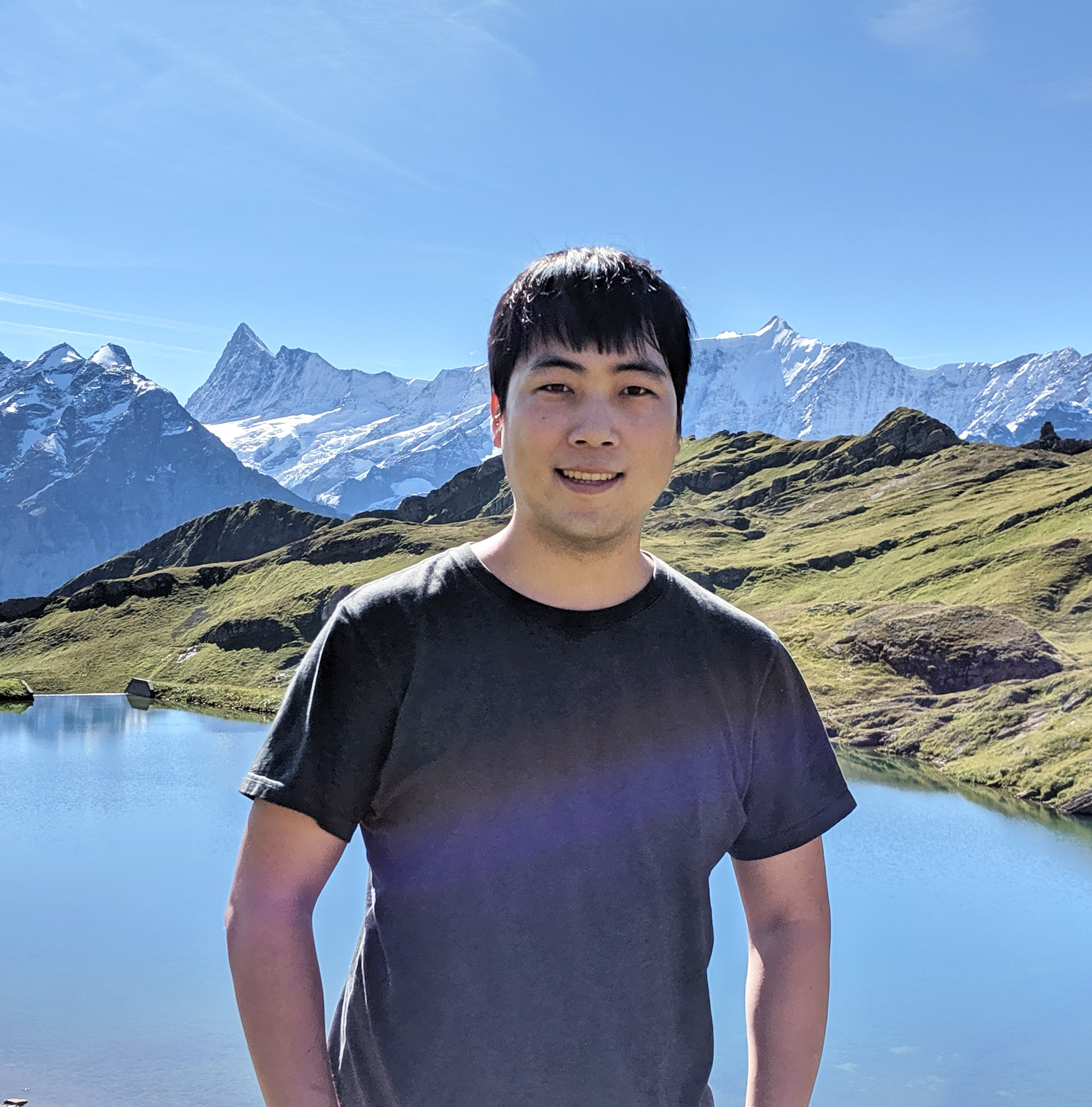
Taein Kwon is a postdoctoral research fellow at the Visual Geometry Group (VGG) within the Department of Engineering Science at the University of Oxford, working under Prof. Andrew Zisserman. Previously, he completed his PhD at ETH Zurich under Prof. Marc Pollefeys and earned master's and bachelor's degrees from UCLA and Yonsei University, respectively. His educational background includes: Bachelor's in Electrical Engineering from Yonsei University, Seoul, Korea Master's degree from UCLA PhD from ETH Zurich (defended July 2024) His research spans Egocentric Vision, Action Recognition, Hand-object Interaction, Video Understanding, AR/VR, and Multi-modal Learning, with emphasis on first-person perspective analysis for AI assistants and human-computer interaction. His work integrates 3D reconstruction, pose estimation, and multimodal signals to model complex human activities and physical interactions. Analysis of his 2021-2025 publications reveals a consistent focus on egocentric vision datasets (H2O, HoloAssist, EgoPressure) and novel frameworks for hand-object interaction, action recognition, and gesture understanding. His research demonstrates strong interdisciplinary connections between computer vision, robotics, and human-centered AI, with increasing emphasis on pressure sensing, co-speech gestures, and cross-modal alignment. His scientific recognition includes: CVPR Egovis 2022/2023 Distinguished Paper Award for HoloAssist (July 2024) SNSF Postdoc.Mobility fellowship (May 2024) He actively mentors students on egocentric vision projects, supervising master's theses, semester projects, and collaboration initiatives leading to publications at top conferences. His research is supported by the SNSF fellowship and industry collaborations with Meta Reality Labs and Microsoft Research. As part of Oxford's Visual Geometry Group, he contributes to cutting-edge computer vision research while maintaining strong ties with ETH Zurich's computer vision community through ongoing collaborations and dataset development efforts.
Laurent Caraffa is a Researcher at Université Gustave Eiffel, working at the LaSTIG laboratory of IGN (National Institute of Geographic and Forest Information). His research focuses on large-scale 3D data processing, including surface reconstruction from point clouds and images, leveraging triangulated structures and implicit methods. His work also covers indexing and searching within point clouds for large-scale place recognition, with applications in urban environments and navigation systems. Caraffa's research interests span 3D Data Processing, Surface Reconstruction, Point Cloud Processing, Large-scale Place Recognition, Indexing and Retrieval, Big Data, Cloud Computing, Mathematical Optimization, 3D Mapping, and Photogrammetry in degraded conditions. His work bridges theoretical computational geometry with practical applications in geographic information systems and autonomous navigation. His publication record demonstrates significant contributions to distributed 3D processing, particularly through advancements in Delaunay triangulation, watertight surface reconstruction, and neural radiance fields. Recent work shows a clear trajectory toward more efficient and scalable methods for processing massive 3D datasets, with growing emphasis on implicit representations and learning-based approaches for 3D reconstruction. Caraffa actively participates in the scientific community through organizing events like the Big Data Day 2023 at IGN and contributing to major research projects. His work has resulted in publications in top-tier conferences including ICLR, CVPR, ISPRS, and IEEE Big Data, establishing him as a significant contributor to the field of large-scale 3D data processing. As a research supervisor, Caraffa currently co-supervises four PhD students working on projects funded by AID, Criteo, and Huawei, focusing on large-scale place recognition, implicit representations for 3D reconstruction, and 3D reconstruction in degraded conditions. He is also the co-founder of ExtraLabs, a company developing distributed computing solutions for cooperative digital twins, demonstrating the practical impact of his research.
Christophe Charrier is a Full Professor in Forensics and AI at Université de Caen Normandie, affiliated with GREYC UMR CNRS 6072 and IUT Grand Ouest Normandie's Multimedia and Internet Department (Dept. MMI). He obtained his PhD in Computer Science from Université Jean Monnet (Saint-Etienne) in 1998, followed by an HDR (Habilitation à Diriger des Recherches) in 2011 from Université de Caen Normandie. His academic journey includes roles as a Postdoctoral Researcher at Université Laval (1998-2001), Associate Professor at IUT Saint-Lô (2001), and Visiting Scholar/Professor positions at University of Texas at Austin (2008) and University of Sherbrooke (2009-2011). His research focuses on Digital Image and Video Forensics (e.g., deepfake detection), Image/Video Quality Assessment , Computational Vision , and Biometrics (fingerprint quality, template update, presentation attack detection). He leads the SAFE research group since 2016 and collaborates with the E-payment & Biometrics team at GREYC. His work integrates machine learning for quality metrics, biometric system evaluation, and forensic analysis. Recent publications highlight advancements in deepfake detection , 3D mesh quality assessment , and biometric security . Articles span journals like Intelligent Service Robotics (2024), IEEE Access (2024), and conferences such as CORESA (2024) and Cyberworlds (2023-2024). His studies on fingerprint systems, behavioral biometrics, and environmental impacts on data quality underscore his interdisciplinary approach. Scientific Awards : Best PhD Paper Award (ASONAM 2022) Best Full Paper Award (CW2022) He has mentored 14 PhD students since 2003, including notable alumni like Xinwei Liu (Zhejiang Wanli University) and Antoine Cabana (ALTEN, Toulouse). His projects span biometric certification, latent space manipulation, and 3D mesh evaluation, often in collaboration with institutions in Canada, Norway, and Morocco.
François Goulette is a Professor and Deputy Director of the Computer Science and Systems Engineering Unit (U2IS) at ENSTA Paris, part of Institut Polytechnique de Paris. His research focuses on 3D point cloud processing, LiDAR perception, and autonomous systems within the Robotics Center (CAOR). His primary research interests lie in 3D point cloud processing , LiDAR perception , and autonomous systems . His work spans fundamental algorithm development to practical applications in autonomous driving, cultural heritage digitization, and robotics. He has made significant contributions to domain generalization of LiDAR perception, semantic segmentation of 3D point clouds, and point cloud registration techniques. The analysis of his recent publications reveals a strong focus on domain generalization for LiDAR perception systems, with multiple papers addressing challenges in 3D semantic segmentation across different environments. His work combines multi-scale architectures , unsupervised learning , and dataset creation to advance the state-of-the-art in autonomous systems perception. The research spans both theoretical algorithm development and practical applications in urban environments. François Goulette leads research activities within the Robotics Center (CAOR) at ENSTA Paris. His team develops advanced techniques for 3D environment understanding, with applications in autonomous vehicles, cultural heritage preservation, and industrial robotics. The research combines computer vision, machine learning, and robotics to solve challenging problems in 3D perception and scene understanding.
Marie-Paule Cani is a Professor of Computer Science at École Polytechnique (since May 2017), on leave from Grenoble INP and Inria . She leads the STREAM team at the LIX laboratory (CNRS, École Polytechnique) and collaborates externally with the IMAGINE team at Inria. Her research focuses on advancing intuitive methods for creating 3D shapes and virtual worlds, emphasizing user control and model-based knowledge. Education: 1987: M.Sc. in Computer Science, École Normale Supérieure & University Paris XI 1990: Ph.D. in Computer Graphics, University Paris XI (advisor: Claude Puech) 1995: Habilitation in Computer Science, Institut National Polytechnique de Grenoble Research Interests: Her work spans shape modeling , computer animation , and procedural modeling . She pioneered methods such as implicit surfaces, physically-based animation, and sketch-based interfaces. Recent projects include combining procedural models with intuitive user interactions to streamline 3D content creation. Awards & Recognition: ERC Advanced Grant (2011) for the EXPRESSIVE project 2011 Eurographics Technical Contributions Award 2012 CNRS Silver Medal 2013 Election to Academia Europaea Leadership & Service: She created and led the STREAM (2017–present), IMAGINE (2011–2016), and ÉV@NCE (2003–2010) research teams. She has served as President of Eurographics (2017–present), Technical Paper Chair of SIGGRAPH 2017 , and on editorial boards of ACM Transactions on Graphics , Computer Graphics Forum , and others. Labs & Teams: Active in the LIX laboratory and collaborates with Inria's IMAGINE team. Her work bridges academic research and industrial applications in computer graphics and animation.
Sidonie Christophe is a Senior Researcher (Directrice de Recherche, DR1) at UMR LASTIG, a joint research unit of Université Gustave Eiffel, IGN-ENSG, and EIVP. She serves as co-director of the LASTIG laboratory and leads research in geovisualization, map design, and interactive spatial data exploration. She also holds a part-time advisory role (60%) at the French Ministry of Higher Education and Research in the domain of digital technology, environment, climate, and sustainable urban development. PhD in Geographic Information Sciences Senior Researcher, DR1, MTECT Co-Director, LASTIG Laboratory (since 2021) Former Team Leader, GEOVIS (Geovisualization, Interaction, and Immersion) Advisor, Environment and Urban Climate, French Ministry of Higher Education & Research Her research centers on innovative methods for 2D/3D and nD geospatial data visualization, with a focus on enabling spatio-temporal understanding through visual and non-visual spatial thinking. Her work integrates principles from geographic information science, human-computer interaction, and computer graphics. Key areas include urban climate visualization, tactile and augmented reality for accessibility, expressive cartographic rendering, and cognitive aspects of map design. She investigates how aesthetic and semiotic choices impact map comprehension and utility. The 15 most recent publications reflect a strong trend in interactive and accessible geovisualization, particularly for urban and environmental applications. Topics include neural map style transfer, 3D urban climate analysis, tactile maps for the visually impaired, augmented reality in geography, and visual analytics for crisis and climate data. There is a consistent emphasis on user-centered design, interdisciplinary integration, and the development of tools for decision-making under uncertainty. Scientific Recognition and Service: Invited speaker at major conferences (IEEEVIS, AGILE, ICC, CPGIS) Co-organizer of international workshops (e.g., GeoVIS, ISPRS AR/VR sessions) Leader of national research projects (ANR ORACLES, ANR ACTIVmap, ANR ECOCIM) Recipient of international mobility grants (AMICI I-SITE FUTURE) Contributor to national glossaries and research strategy (e.g., French photogrammetry glossary) Advising and Grants: Sidonie Christophe actively supervises PhD students and postdoctoral researchers, including Markie Jiang, Maria-Jesus Lobo, and Alexandre Mielniczek. She leads or participates in multiple funded research projects such as ANR ORACLES (marine flooding visualization), ANR ACTIVmap (tactile 3D maps), and ANR ECOCIM (eco-design of city information models). Her advisory role at the MESR involves shaping national research strategy in digital and environmental sciences. Labs and Research Teams: She is a core member of the GEOVIS team (Geovisualization, Interaction, and Immersion) at LASTIG and previously served as its leader. As co-director of LASTIG, she plays a central role in the leadership and strategic direction of the entire laboratory, which comprises over 100 researchers across four teams: ACTE, GEOVIS, MEIG, and STRUDEL.
Christophe Hurter is a Researcher at the National School of Civil Aviation , specializing in Artificial Intelligence , Data Visualization , and Human-Computer Interaction . His work bridges Aviation Technology , Neuroscience , and Extended Reality (XR) , focusing on enhancing human performance through AI-driven systems. Affiliation: National School of Civil Aviation (Faculty Member, AI axis) Research Interests include: Explainable AI for aviation systems Neurophysiological monitoring using thermal imaging Eye tracking and cognitive processes in memory retrieval Graph and trajectory visualization for air traffic control Augmented/Virtual Reality interfaces for remote collaboration Event-based vision systems for spiking neural networks Recent article trends highlight his expertise in machine learning for medical diagnostics , XR applications in aviation , and visual analytics for human factors research . His work often addresses real-world challenges in air traffic control, piloting training, and biomedical data interpretation.
Xavier Décoret is a researcher at INRIA since October 2003, specializing in computer graphics with core expertise in real-time rendering, visibility algorithms, and level-of-detail techniques. He teaches courses at Grenoble (Master IVR program) and École Polytechnique, including Java programming, virtual image creation, and advanced image synthesis. His educational background includes: PhD in Computer Graphics under François Sillion Post-doctoral position at MIT under Frédo Durand Décoret's research spans non-photorealistic rendering, shadow computation, and GPU-accelerated algorithms. He develops practical graphics tools including XdkWRL (VRML parsing), Argstream (command-line arguments), and XdkBibTeX (BibTeX handling), emphasizing real-world implementation for interactive systems. His 2008 publications reveal trends toward efficient interactive rendering techniques, with contributions in dynamic stylization, label placement, soft shadows, and GPU voxelization—highlighting innovations in plausible visual effects for real-time applications. He is affiliated with the Artis research team at INRIA, focusing on virtual reality and computer graphics advancements.
Thierry Duval is a Professor in the Department of Computer Science (INFO) at IMT Atlantique , Brest campus. His work focuses on Virtual Reality (VR) , Human-Computer Interaction (HCI) , and 3D Interaction in collaborative environments.
Dominique Bechmann is a **Professor of Computer Science** at the University of Strasbourg, affiliated with the **Department of Computer Science** within the **Sciences Collegium**. He is also a researcher at the **ICube Lab** (UMR 7357 CNRS-University of Strasbourg). His academic career spans over three decades, including roles as Head of the IGG Computer Graphics and Geometry research group (1997–2022) and Head of the National Research Group GdR IG-RV (2014–2021). He holds a Habilitation (1995) and PhD (1989) from the University of Strasbourg, with postdoctoral research at IBM's Thomas Watson Research Center (1989–1990). His research focuses on **Computer Graphics**, **Geometric Modeling**, and **Virtual Reality**, with key contributions in free-form deformation, 3D modeling of anatomical structures, and interaction techniques in immersive environments. He has led projects like the ICT-Asian initiative on Virtual Reality (2004–2007) and organized conferences such as AFRV 2012 and AFIG-EG France 2005. His teaching spans undergraduate and graduate levels in algorithms, computer graphics, and computational geometry. Bechmann has held numerous leadership roles, including Head of the Computer Science Department (1997–2000), Vice-Head of LSIIT Lab (2009–2012), and member of the National Commission of Universities (CNU) section 27 (2007–2011). His work bridges theoretical computer graphics with practical applications in medicine, architecture, and collaborative systems.
Boris Bordeaux is a PhD researcher at the University of Burgundy , affiliated with the Geometric Modeling team within the LIB Laboratory . His research focuses on the design of lightweight structures and computational geometric modeling. Research Work: Boris has contributed to the development of fractal structures with locally controlled lacunarity, presented at the International Conference in Central Europe on Computer Graphics (WSCG 2024). This work intersects geometric modeling and structural optimization. Teachings : He delivers 54 hours of practical work in Year 1 Computer Science courses. Team Affiliation : Geometric Modeling team, LIB Laboratory, University of Burgundy