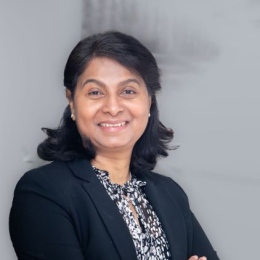
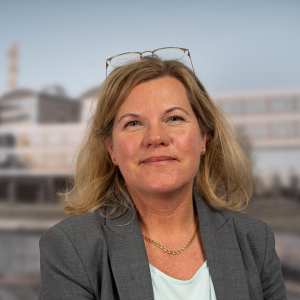
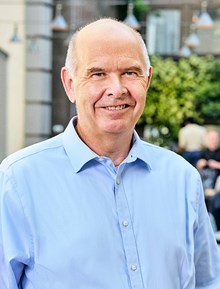
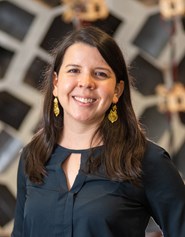
Mehdi Abdollahi is an Associate Professor at Chalmers University of Technology's Department of Food and Nutrition Science. His research focuses on alternative proteins, food biotechnology, and plant-based hybrid foods, with emphasis on sustainable utilization of food side streams, legumes, cereals, and microalgae as future protein sources. Develops pH-shift technology and ultrasound-assisted methods for protein extraction Specializes in hybrid food engineering via fermentation and biorefinery Works on 3D food printing and high-moisture extrusion for food analogs Researches collagen and biobased food packaging materials His work includes >100 peer-reviewed publications, 4 book chapters, and 3 patents. Current projects involve collaborations with Arla Foods, Lantmännen, and Nordic Seafarm, addressing sustainable seafood systems and plant-protein hybridization. 2024 Bertebos Prize recipient 2025: Recognized among Sweden's Top 101 Sustainability Figures Mentors 7 PhD students and 3 postdocs while collaborating with European institutions like Kristianstad University and Ankara University. His group explores biorefinery strategies, hybrid food functionality, and innovative packaging solutions.
Aji Mathew is a Professor at the Department of Materials and Environmental Chemistry, Stockholm University. He holds a PhD in polymer chemistry from Mahatma Gandhi University (2001) and conducted postdoctoral research at CERMAV (Grenoble, France) and NTNU (Trondheim, Norway). His academic career includes roles as an assistant professor (2007–2011) and associate professor (2011–2015) at Luleå University of Technology before becoming an associate professor (2015) and subsequently a professor (2017) at Stockholm University. His research focuses on bio-based nanocomposites and sustainable materials, particularly nanocellulose and its applications in environmental remediation, advanced materials, and circular economy solutions. His group, the Aji Mathew Group , specializes in designing bio-based materials for diverse applications, including water treatment, 3D printing, and biomedical uses. Key projects involve upcycling textile waste, developing eco-friendly composites, and creating functional hydrogels. His work bridges fundamental polymer chemistry with practical sustainability challenges. Publications highlight innovations like nanocellulose-based foams, zeolitic frameworks for water purification, and bio-based coatings. While no awards are explicitly mentioned, his extensive peer-reviewed contributions reflect significant scholarly impact. His research emphasizes scalability and real-world applicability, addressing global environmental and material science challenges.
Professor Ingrid Undeland leads the Marine research group at the Division of Food and Nutrition Science, Department of Life Sciences at Chalmers University of Technology. She is a distinguished researcher with expertise spanning marine food science, lipid chemistry, and blue biorefining, having established herself as a leading figure in sustainable seafood research and marine biotechnology. Her educational background includes food science studies from Linnaeus University and a PhD in bioscience from Chalmers University of Technology and SIK (now RISE). Between 1999-2002, she was a post-doctoral fellow at University of Massachusetts Marine Station, which significantly shaped her research trajectory in marine food science. Professor Undeland's research focuses on pioneering next-generation seafood through innovative value chains from seaweed, small pelagic fish, fish side streams, mussels, and microalgae. Her specialized expertise lies in marine lipids and proteins, particularly their stabilization, isolation from complex sources, and nutritional properties including digestibility. She has extensive experience with antioxidant strategies using plant-derived side streams or extracts and fundamental studies of fish hemoglobins as pro-oxidants. Her work also encompasses innovative technologies for biomass fractionation and nutrient recycling to build blue biorefineries, along with in vitro digestion models and general seafood analytics. Beyond marine research, she explores filamentous fungi as sustainable alternative food protein sources. The trends in her recent publications reveal a strong emphasis on valorizing marine resources through advanced processing techniques. Her work increasingly focuses on sustainable extraction methods for seaweed proteins, particularly Ulva fenestrata, and developing antioxidant strategies using berry side streams to stabilize fish proteins. There's a growing interest in understanding the nutritional properties and digestibility of alternative marine proteins, along with environmental assessments of processing technologies. Her research consistently bridges fundamental science with practical applications for creating sustainable seafood value chains. Swedish representative in Nordic Lipidforum, WEFTA, and EuCheMS Editorial board member of Journal of the Aquatic Food Product Technology Member of the National Committee for Nutrition and Food Science at the Royal Swedish Academy of Sciences Co-founder of the startup company AquaFood H-index of 47 according to Google Scholar Professor Undeland has an extensive record of academic mentorship, having supervised or currently supervising 23 PhD students, 14 postdoctoral researchers, and examining over 25 MSc students. Her research is supported by numerous grants, including the WaSeaBi Project which focuses on valorizing seafood side-streams through holistic value chain design. She collaborates with various industry partners and academic institutions across Europe. Her laboratory includes technicians Dr. Karin Larsson and Dr. Rikard Fristedt, and she leads a dynamic research team working on multiple projects related to marine biorefining and sustainable seafood development. Her research group operates within well-equipped facilities at Chalmers University, with specialized laboratories for marine food analysis, protein extraction, lipid oxidation studies, and in vitro digestion modeling. The team also maintains cultivation systems for seaweed and filamentous fungi, enabling integrated research from raw material production to final product development.
Johan Liu is a Full Professor in Electronics Production at Chalmers University of Technology, Sweden, and leads the Electronics Materials and Systems Laboratory within the Department of Microtechnology and Nanoscience. He is a member of the Royal Swedish Academy of Engineering Sciences and an IEEE Fellow, with over 500 publications and 75 patents in nanoelectronics and thermal management. Education: Master's and Ph.D. in Materials Science from the Royal Institute of Technology (KTH), Sweden His research focuses on graphene-based thermal interface materials, carbon nanotubes for 3D integration, and advanced packaging solutions. Recent work includes laser-induced graphene films, nano-soldering techniques, and biomedical nanoscaffolds. His publications span high-impact journals like Nature Communications , Advanced Materials , and IEEE Transactions , with recent trends emphasizing thermal conductivity enhancement, composite materials, and nanofluids. Johan has received prestigious awards including the IEEE Exceptional Technical Achievement Award and IEEE CPMT Best Paper Award. He has secured funding from the National Science Foundation (NSF), Swedish Board for Strategic Research (SSF), Vinnova, and EU Horizon 2020 programs. His lab specializes in scalable graphene synthesis, CNT array engineering, and reliability testing of nanomaterials in electronics.
Professor Klas Tybrandt leads the Soft Electronics group at Linköping University's Laboratory of Organic Electronics (LOE), focusing on stretchable materials and bioelectronics integration with the human body. He holds a Master's (2007) and PhD (2012) from LiU, followed by postdoctoral research at ETH Zurich (2013-2014). Promoted to Professor in 2024, he oversees the Wallenberg Wood Science Center (WWSC), WISE, and AFM initiatives. His work spans Stretchable batteries Neural interfaces Organic thermoelectrics and has earned awards like the ERC Consolidator Grant (2023) and Wallenberg Academy Fellow (2022). His research emphasizes sustainable materials and energy harvesting. Education: PhD in Organic Bioelectronics (LiU, 2012) ETH Zurich Postdoc (2013-2014) Research interests include soft electronics and biohybrid systems , with breakthroughs in gold nanowire electrodes and stretchable electrofluid batteries . Over 70 peer-reviewed articles and 7 patents underscore his contributions to organic electronics. Grants & Funding: ERC Consolidator Grant (€2M) Wallenberg Academy Fellowship (SEK 36M) Labs/Teams: Head of Soft Electronics group (LOE), active in WWSC and WISE consortia.
Sophie Isaksson Hallstedt is a Full Professor at Chalmers University of Technology, conducting research in Sustainable Product Development (SPD) with a focus on strategic sustainability integration in product innovation. She holds appointments at both Chalmers and Blekinge Institute of Technology, and serves on international Design Society committees. Key Research Areas: Strategic socio-ecological sustainability, digital decision support tools, circular value chains, and sustainability in emerging technologies. Notable Projects: SUSTAIN (aerospace sustainability), Circular Design Nexus (user behavior analysis), and Digital Materials Ecosystems. Awards & Recognition: Featured in Royal Swedish Academy of Engineering Sciences (IVA) 100-list (2020, 2023). Publications: Over 80 peer-reviewed works demonstrating methods for sustainability maturity assessment, impact evaluation, and progress visualization. Teaching & Education: Developed master's programs and PhD courses in sustainability-driven product development. Collaborates extensively with industry partners like GKN Aerospace and VINNOVA. Current work examines predictive models for user behavior and sustainability implications of additive manufacturing.
Cecilia Persson is a Professor at Uppsala University in the Department of Materials Science and Engineering; Biomedical Engineering. She leads the BioMaterial Systems (BMS) research group within the Division of Biomedical Engineering, focusing on the development of new biomaterials through additive manufacturing. She also directs a Competence Centre in Additive Manufacturing for the Life Sciences and the national Research Technology Platform WISE Additive. 2018, Professor in Materials Science, Uppsala University 2015, Docent (Assoc. Prof.) in Engineering Science with Specialization in Materials Science, Uppsala University 2009, PhD in Mechanical Engineering, University of Leeds 2004, MSc in Materials Engineering, European degree (EEIGM) with triple diploma Persson's research focuses on biomaterials, biomechanics, materials science, and additive manufacturing. Her work takes an integrated approach to solving clinical and sustainability problems, combining materials science, mechanical and biological engineering with new technologies like 3D printing and machine learning. Key research areas include magnesium-based alloys for bone substitutes, titanium-based alloys for permanent implants, and machine learning methods to enhance manufacturing efficiency. Analysis of her recent publications shows a strong emphasis on additive manufacturing of biomaterials, particularly magnesium and titanium alloys. Her work explores microstructure control, mechanical properties optimization, antibacterial properties, and patient-specific implant design. The research demonstrates a clear trajectory toward more sustainable, patient-adapted medical solutions using advanced manufacturing techniques. Persson has received funding from prestigious organizations including the Swedish Research Council (VR), the Knut and Alice Wallenberg Foundation (KAW), the Swedish Foundation for Strategic Research (SSF), Sweden's Innovation Agency (VINNOVA), and the EU. As an academic leader, Persson has served as Section Dean of Engineering (2020-2023), President of the Scandinavian Society of Biomaterials (2019-2023), and Coordinator of EU Innovative Training Network NU-SPINE (2019-2023). Her BioMaterial Systems research group takes an integrated approach to solving clinical and sustainability problems, bridging fundamental scientific mechanisms with high societal relevance.
Pär Åhlström is a Professor at the Department of Entrepreneurship, Innovation and Technology at the Stockholm School of Economics (SSE), and serves as Vice President of Degree Programs. He holds the prestigious Torsten and Ragnar Söderberg Chair in Business Administration. His research focuses on lean manufacturing, agile processes, sustainability in operations, and innovation management. He is affiliated with the Mistra Center for Sustainable Markets. Åhlström’s work bridges theory and practice, emphasizing dynamic capabilities, quality management, and the integration of IT with lean principles. His research spans longitudinal studies in manufacturing and services, exploring topics like organizational slack in R&D, modular product design, and healthcare process optimization. He has published extensively across academic journals and presented at international conferences. His awards include the Torsten and Ragnar Söderberg Chair, reflecting his scholarly contributions. His articles highlight trends in sustainable business performance, lean service adoption, and the evolving role of technology in operations. He actively engages in educational leadership, shaping curricula and overseeing degree programs at SSE.
Johan Jansson is an Associate Professor in Scientific Computing at KTH Royal Institute of Technology and BCAM (Basque Center for Applied Mathematics). He leads research in predictive Direct FEM Simulation (DFS) for aerodynamics and multiphase flows, and co-founded Icarus Digital Math as CEO. His work includes the FEniCS open-source finite element software project and MOOC-HPFEM educational initiatives. He holds roles as Director of the Center for Digital Math and collaborates internationally in computational science. Research focuses on high-performance computing (HPC), fluid-structure interaction (FSI), biomedical modeling, and renewable energy systems. Notable contributions include adaptive FEM frameworks for turbulent flow, vocal fold simulations, and wave energy converter modeling. His work bridges academic research with industrial applications, leveraging FEniCS-HPC and Unicorn solvers. Key achievements include election to the IVA Royal Swedish Academy of Sciences 100-list and securing the Severo Ochoa Center of Excellence Award. He has pioneered open-source tools like SimTek and contributed to major projects like the Salter Sink and vocal production modeling. Teaching responsibilities include courses on database technology, computational fluid mechanics, and research methodology. He actively engages in large-scale simulation projects involving marine energy, cardiac ablation protocols, and aerodynamic optimization.
Björgvin Hjörvarsson is a Professor in Physics at Uppsala University's Department of Physics and Astronomy, specifically within the Materials Physics division where he served as Head until 2024. He is Principal Investigator of the Super ADAM project, Sweden's national neutron facility, and an elected member of both the Royal Academy of Sciences and the Royal Society of Sciences in Uppsala. His research spans low-dimensional aspects of phase transitions, particularly in magnetism and hydrogen in metals. His work has evolved to emphasize finite size effects on structural and magnetic ordering, additive manufacturing, and energy storage and transformation. His research methodology heavily relies on neutron scattering techniques and international collaborations across experimental and theoretical physics. Hjörvarsson's recent publications (2022-2025) reveal a strong focus on metallic glasses produced via additive manufacturing, artificial spin ice systems, magnetic superlattices, and advanced characterization techniques. His work bridges fundamental physics with practical applications in energy storage, materials engineering, and biomedical technologies. Vattenfalls Energistipendium (1985) Liljewalchs scholarship (1989) Good-Guy Award from Fysiska Sällskapet (1990) Idée award from Uppsala University (1995) Benzelius award from Royal Society of Sciences of Uppsala (1995) Letterstedtska award from Royal Swedish Academy of Sciences (2003) Hjörvarsson has supervised 27 PhD students to completion, 1 licenciate student, and currently guides 9 PhD students while supervising 2-3 master's students annually. His research is supported by significant infrastructure including the Super ADAM neutron facility at ILL, Grenoble, which he initiated and developed as Sweden's national neutron scattering infrastructure. Beyond traditional research, he's known for innovative outreach efforts including educational videos on neutron science. Hjörvarsson leads the Materials Physics research group, which maintains strong international collaborations and focuses on experimental condensed matter physics with connections to engineering applications. His team operates specialized laboratories for thin film growth, magnetic characterization, and neutron scattering experiments, supporting both fundamental research and industrial applications.
Henrik Andersson is an Associate Professor (Docent) at Mid Sweden University's Department of Engineering, Mathematics and Science Education (IMD) in Sundsvall. His research spans multiple interdisciplinary fields at the intersection of materials science, nanotechnology, and energy harvesting. Andersson's research focuses on printed electronics , triboelectric nanogenerators , and paper-based electronics . His work explores innovative approaches to energy harvesting from everyday movements and environmental sources, with particular emphasis on sustainable and biodegradable materials. He has made significant contributions to understanding the triboelectric properties of various materials, including human body interactions, plant-based materials, and novel composites. His recent publications reveal a strong trend toward green energy solutions using waste materials like paper, development of high-performance sensors for healthcare applications, and exploration of novel materials for energy storage and conversion. His research has practical applications in wearable technology, IoT devices, and sustainable energy solutions. Andersson leads and participates in multiple research projects including IMPHET (Innovation environment for advanced Materials and Processes with Sustainable Energy Applications), LEAP (Large-area Energy Application Platform), and STORE (Electrical energy storage). These projects demonstrate his commitment to developing practical, sustainable energy solutions through interdisciplinary collaboration. His work bridges fundamental materials research with practical applications, particularly in developing manufacturing processes for printed electronics on paper substrates and exploring new applications for triboelectric phenomena in everyday environments.
Damien Motte serves as a Senior Lecturer at the Department of Design Sciences within Lund University's Faculty of Engineering (LTH), Sweden. His role integrates teaching innovation with research in engineering design and product development methodologies across industrial contexts. His academic credentials include: PhD in Product Development from Lund University Research Master in Industrial Engineering from École Centrale Paris MSc in Industrial Engineering from École des Mines d’Albi Motte's research spans production engineering, human work science, and ergonomics with emphasis on agile transformation in manufacturing, 3D food printing applications, and AI-enhanced failure analysis. His work bridges technical design processes with organizational behavior and business model innovation, particularly examining knowledge boundaries in large-scale transformations and emerging technologies' impact on traditional engineering practices. Recent publications reveal an interdisciplinary trajectory connecting engineering design with business strategy and organizational dynamics. Key trends include applying agile principles to hardware development, leveraging additive manufacturing for sustainable food systems, and integrating large language models into reliability engineering frameworks—demonstrating consistent focus on methodological innovation at the intersection of human factors and technical systems. No scientific awards were documented in available sources. Motte actively contributes to academic development through PhD supervision and editorial work. He has served as second supervisor for four doctoral candidates while maintaining editorial board membership for the International Journal of Design Creativity and Innovation, reflecting commitment to both research mentorship and scholarly discourse. No dedicated laboratory or research team affiliations were specified in the source material.
Pererik Andreasson is a Lecturer at the Academy of Information Technology , Halmstad University. His research focuses on 3D printing, materials science, electromagnetic compatibility testing, and wireless communication. Key contributions include optimizing 3D-printed radar lenses, advancing phase-change material characterization via femtosecond x-ray diffraction, pioneering augmented reality methods for electromagnetic field visualization, and developing substrate integrated waveguide antennas for IoT devices. 3D printing of optical components Dynamic processes in phase-change materials Augmented reality for electromagnetic testing IoT antenna design His recent work on frequency-adjustable SIW antennas (2024) and AR-based EMC visualization (2021) demonstrates cross-disciplinary innovation. While no scientific awards are documented, his 15+ publications since 2007 highlight sustained expertise in material science and wireless technologies.
Jose Gabriel Martinez Gil is an Associate Professor at Linköping University, affiliated with the Department of Physics, Chemistry and Biology (IFM) and the Sensor and Actuator Systems (SAS) research unit. His work focuses on electroactive materials, particularly conducting polymers, for applications in soft robotics and multifunctional devices. Education: PhD in Electrochemistry from Universidad Politécnica de Cartagena (2015) Current Role: Research Fellow at Linköping University His research addresses the limitations of traditional rigid robotics by developing soft, lightweight actuators that mimic biological systems. These materials undergo reversible changes in volume, color, and porosity, enabling innovations like soft exoskeletons and glucose-powered artificial muscles , as highlighted in 2019 and 2022 news items. Recent publications emphasize double coiled yarn actuators , bioelectroactive surfaces , and 3D-printed textile actuators . These studies explore electro-chemo-mechanical processes and material optimization for soft robotics. Awards include recognition for his PhD dissertation as the best at Universidad Politécnica de Cartagena and the Antonio Aldaz award from the Spanish Royal Society of Chemistry. He is part of the Bionics and Transduction Science unit and the interdisciplinary Forum Scientium Graduate School , reflecting his multidisciplinary background in electronics, robotics, and electrochemistry.
Elena Vazquez Peña is an Associate Professor at Umeå School of Architecture, Umeå University. She holds a Ph.D. in Architecture from Penn State and a professional degree from Universidad Nacional de Asunción. Her work bridges computational design, smart materials, and architectural innovation. She has pioneered research in adaptive building systems using bistable materials, shape memory alloys, and kinetic structures. Education: Ph.D. in Architecture, Pennsylvania State University Master of Science in Architecture, Pennsylvania State University Graduate Certificate in Additive Manufacturing, Pennsylvania State University Professional Degree in Architecture, Universidad Nacional de Asunción Research focuses on: Smart materials for adaptive buildings Computational tools for kinetic façade design Sustainable architectural technologies Parametric design methodologies Recent projects include developing shape-morphing devices with shape memory alloys and exploring low-cost acoustic solutions through origami patterns. Awards : 2023 ARCC Dissertation Award 2022 Rustum & Della Roy Innovation Award 2018 ARCC King Medal 2016-2018 Fulbright Scholar Teaching emphasizes project-centered learning using parametric design tools. Courses include Architecture Studio, Robotics in Architecture, and Shape Grammars. She leads the Digital Materials Research Group and collaborates on the UmArts Art & AI research project.